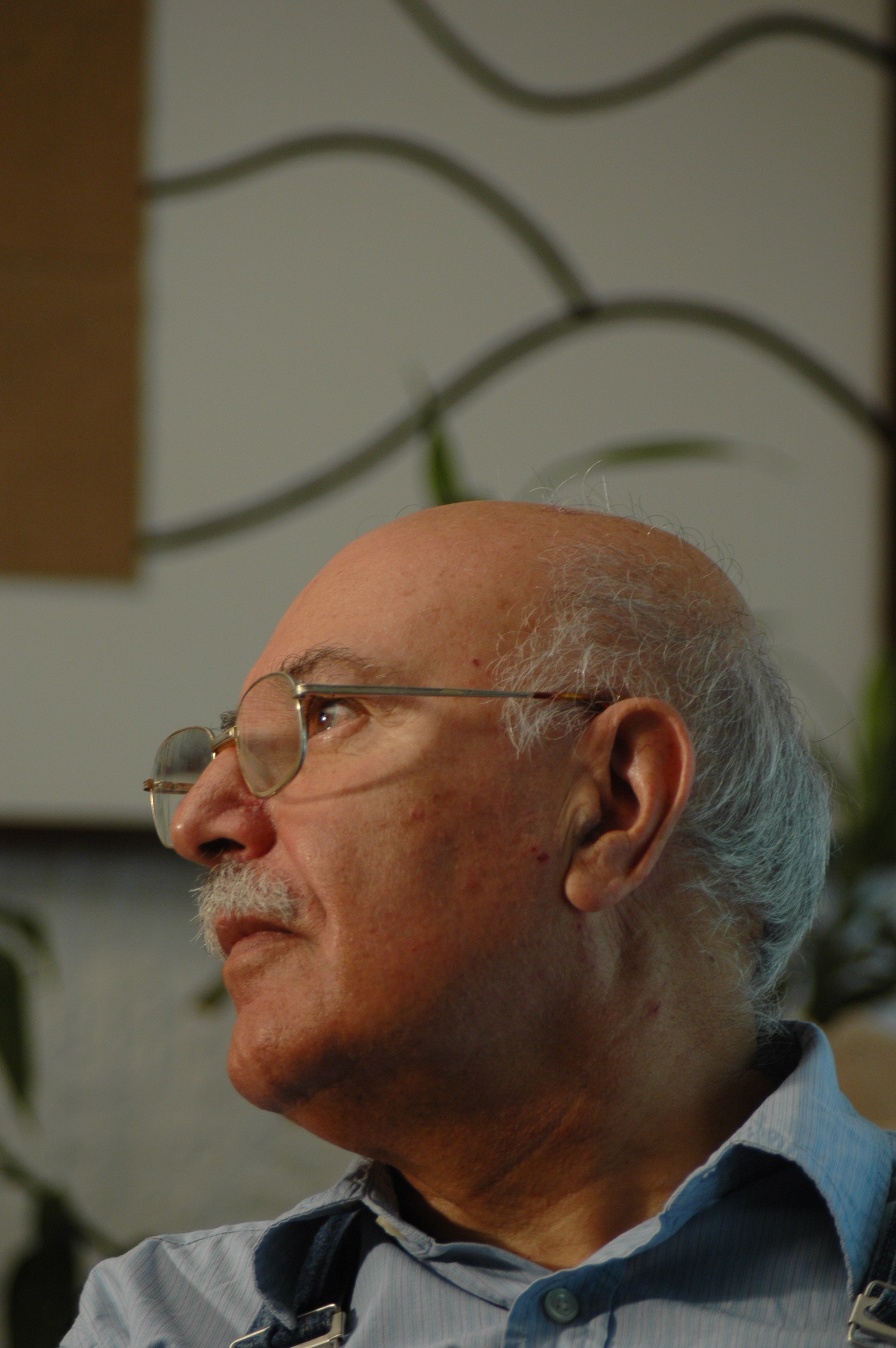
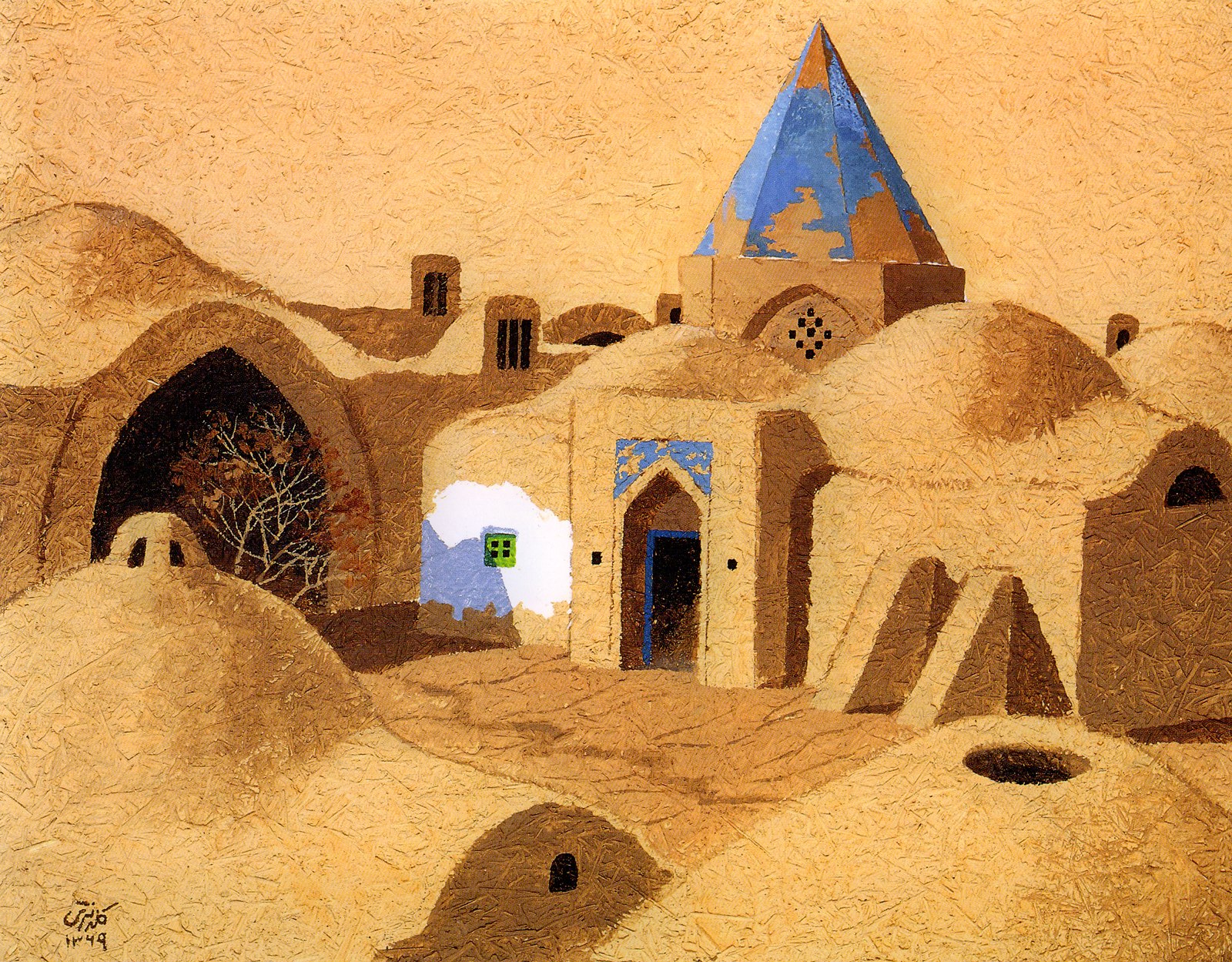
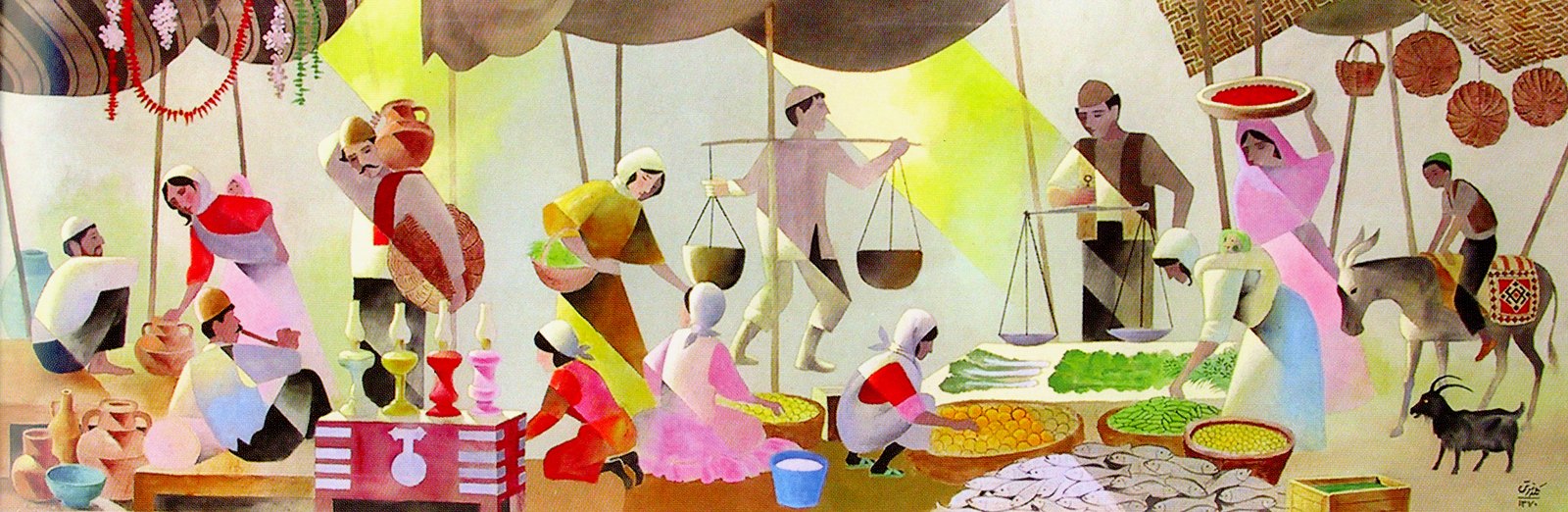
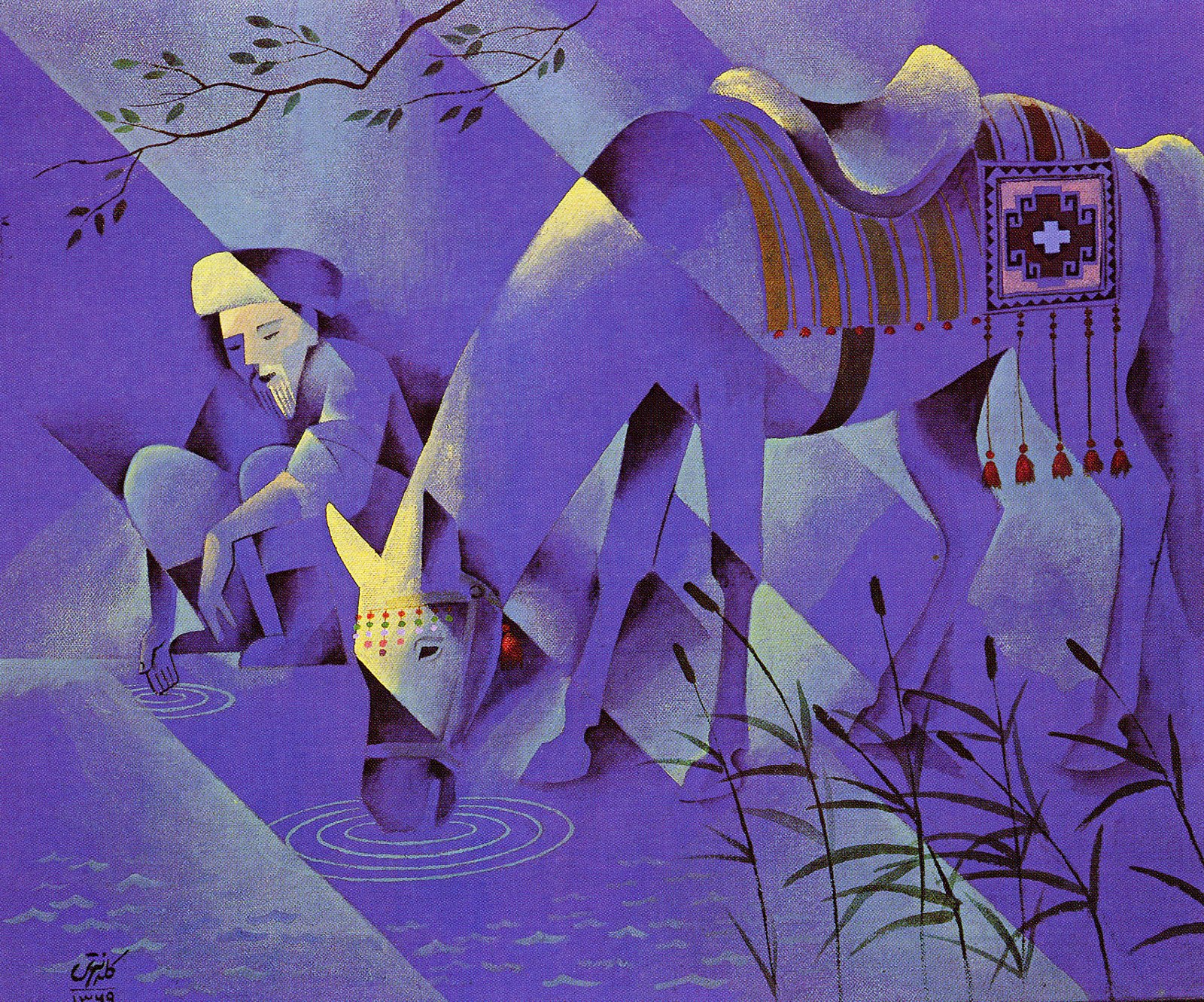
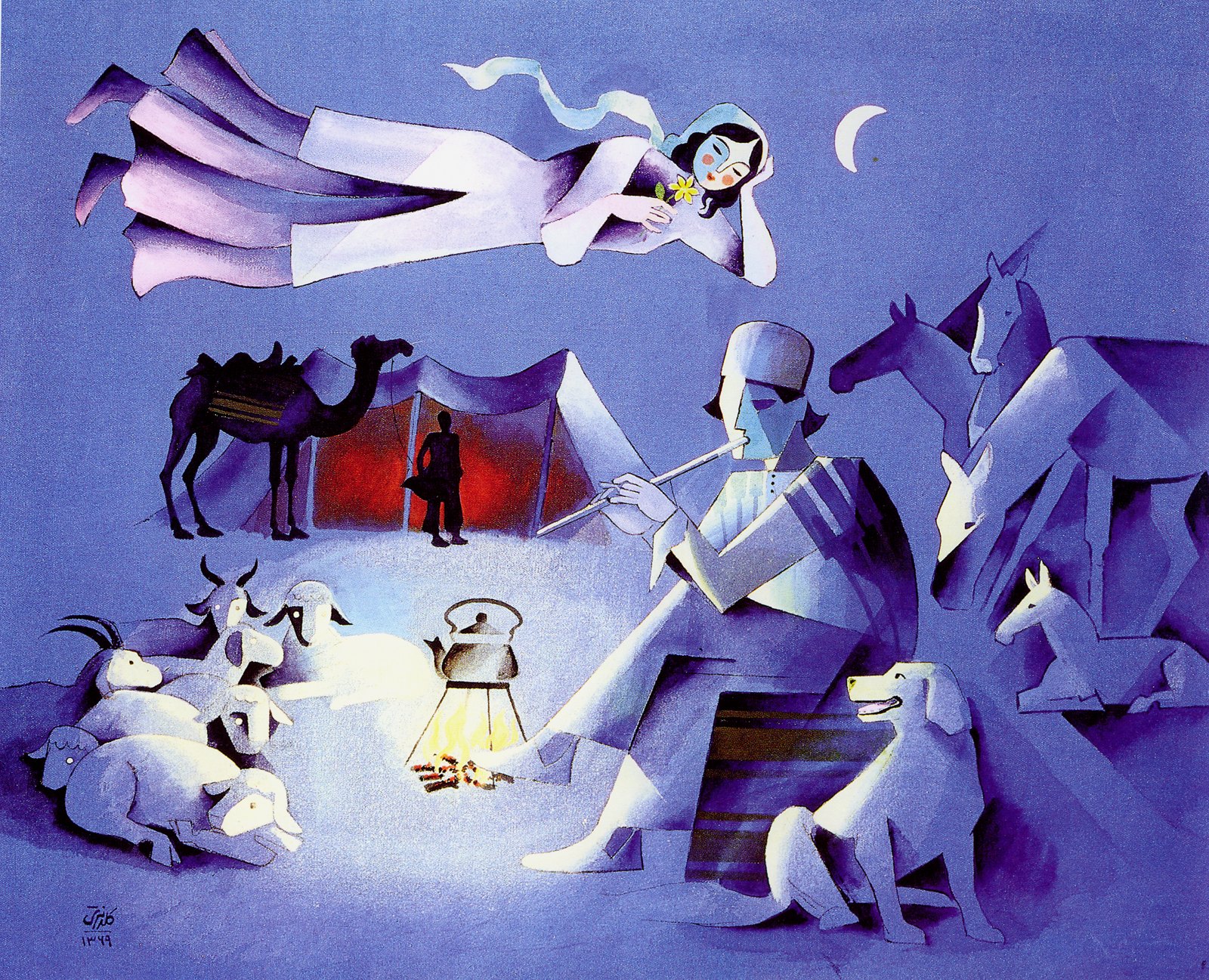
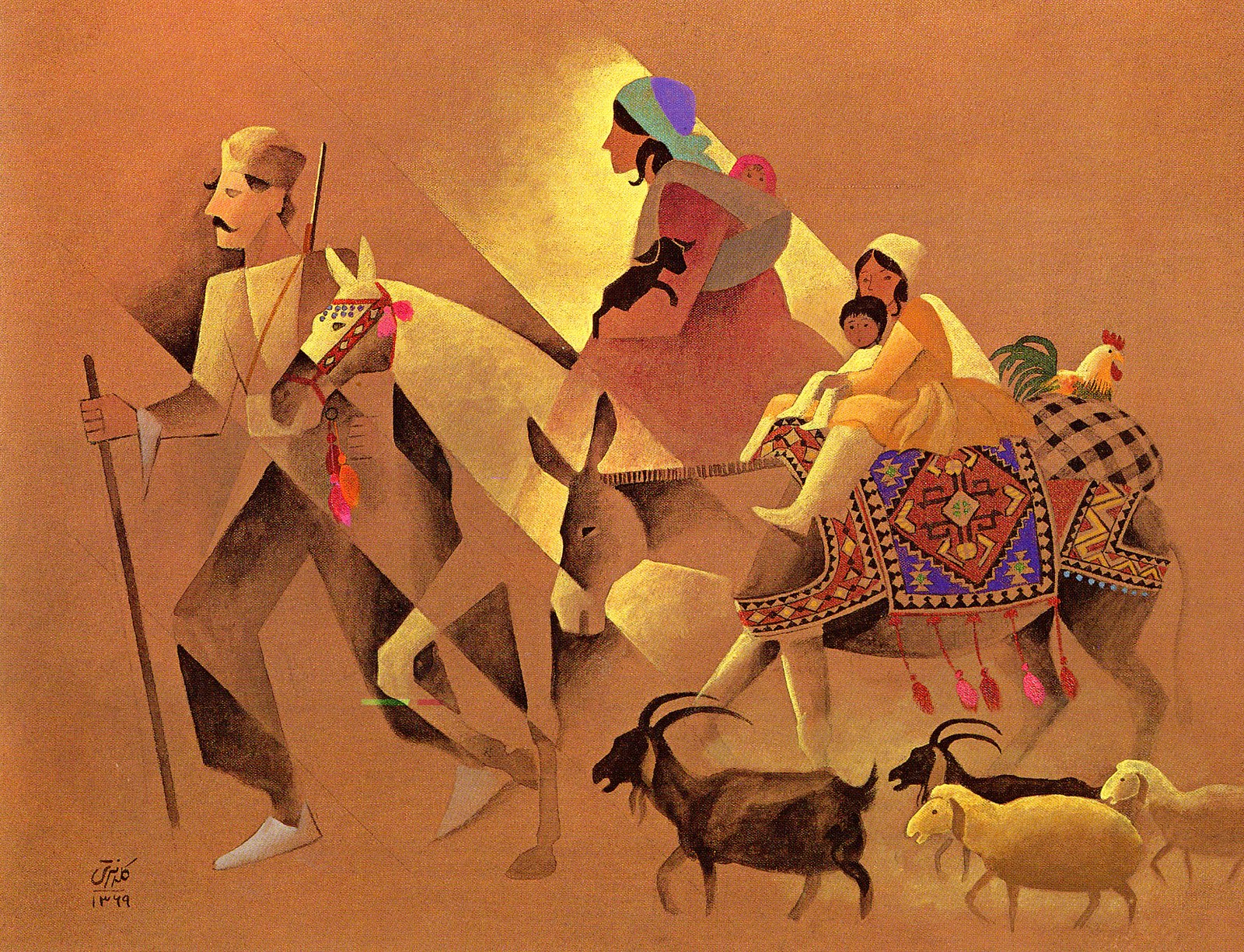
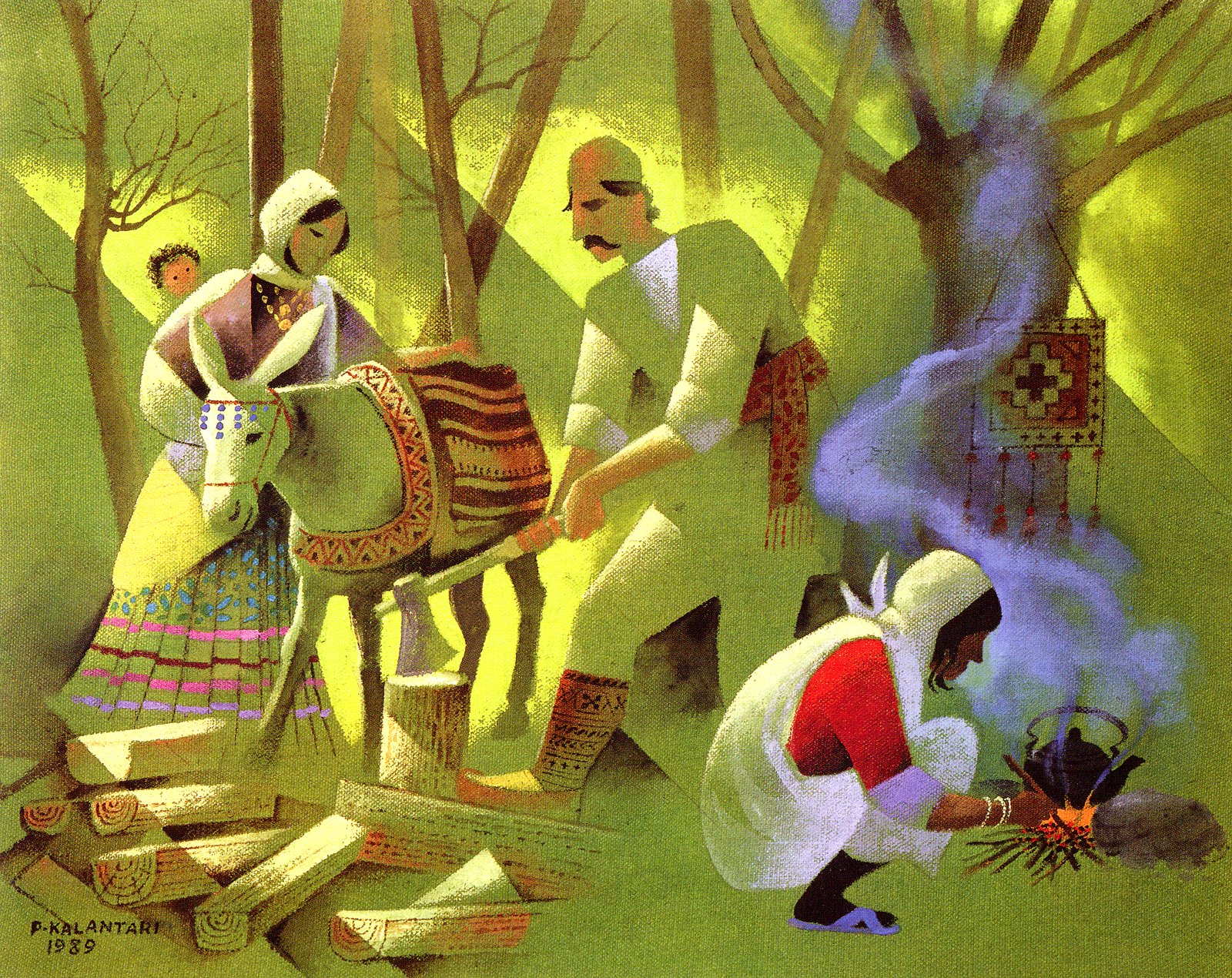
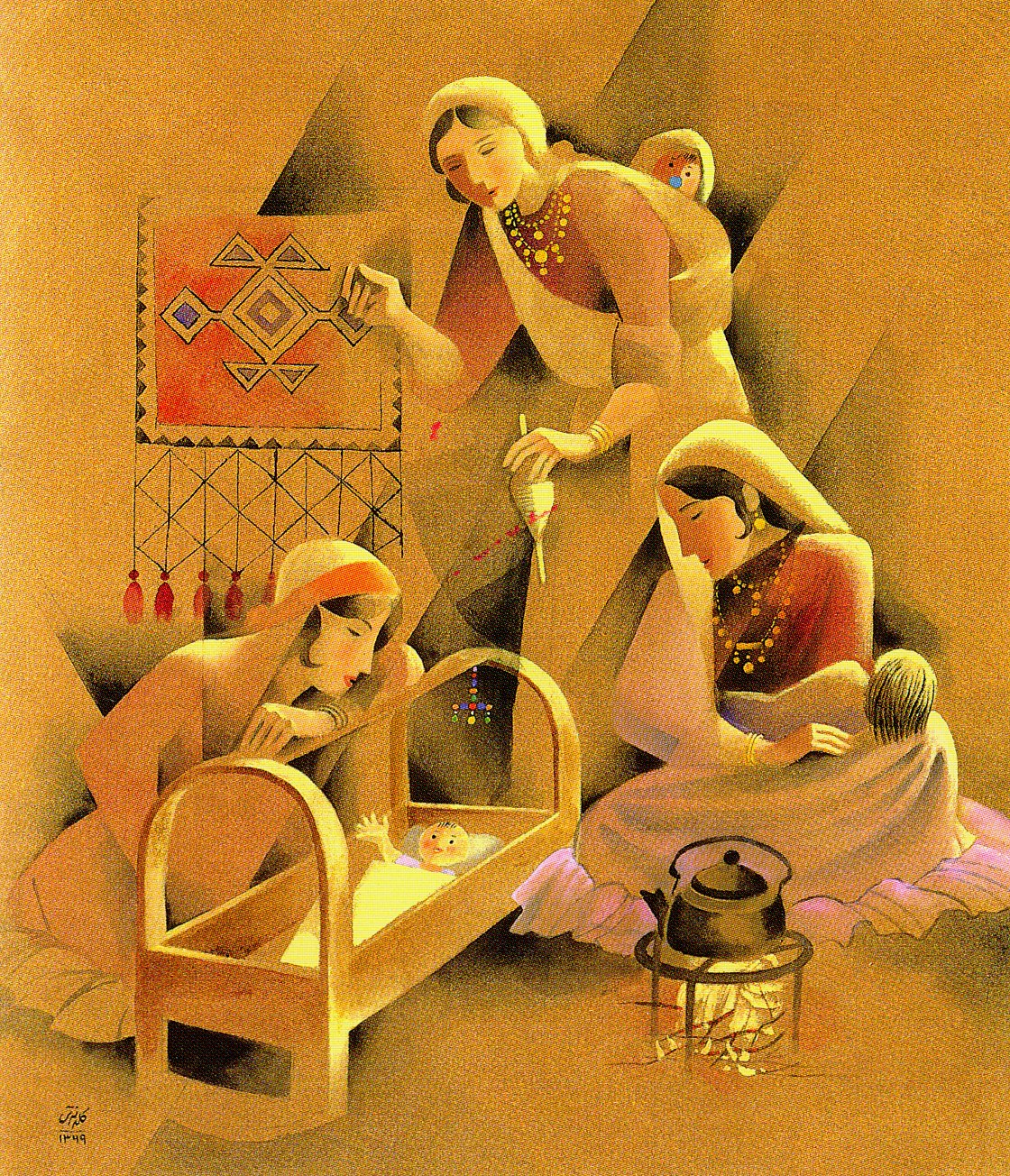
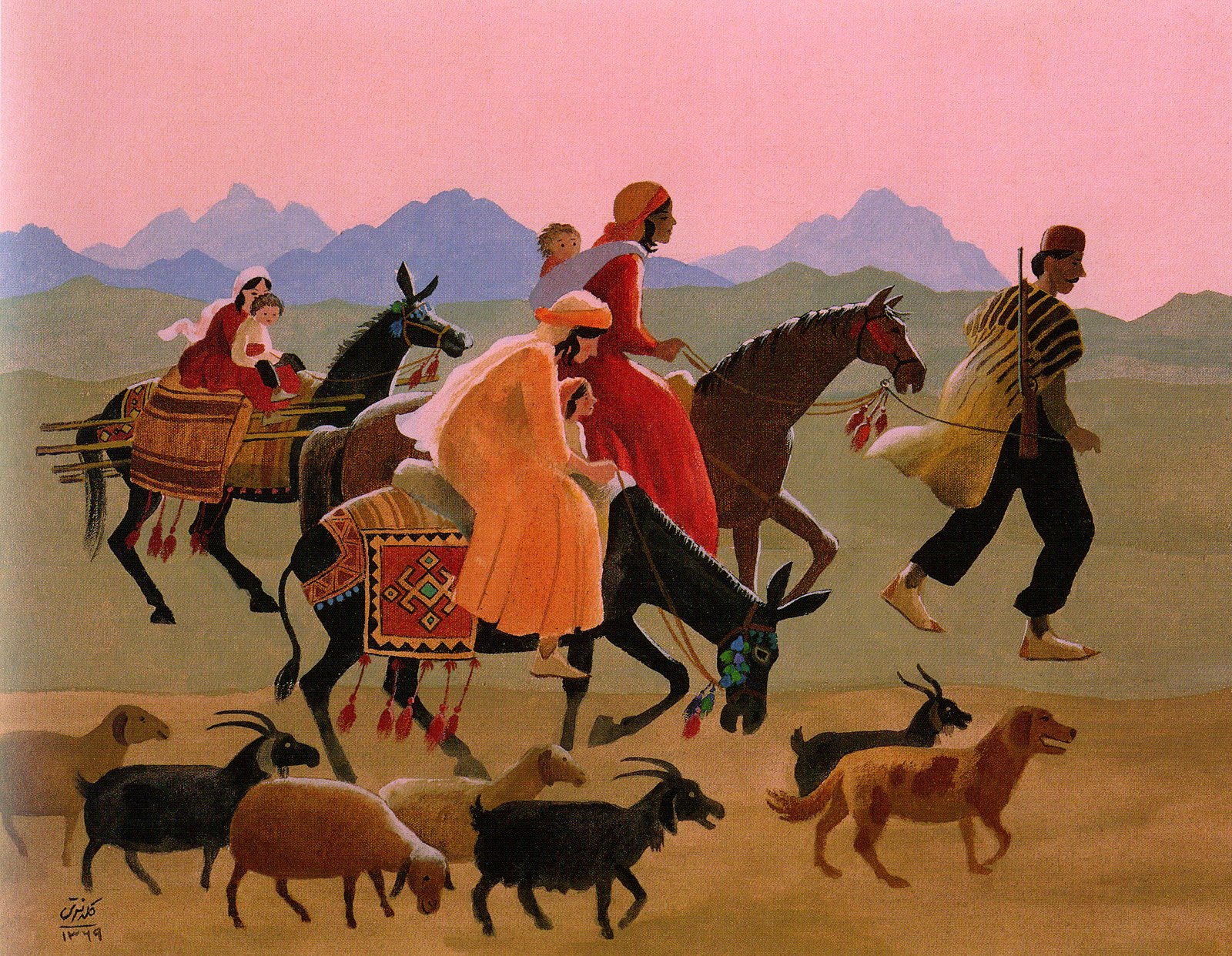
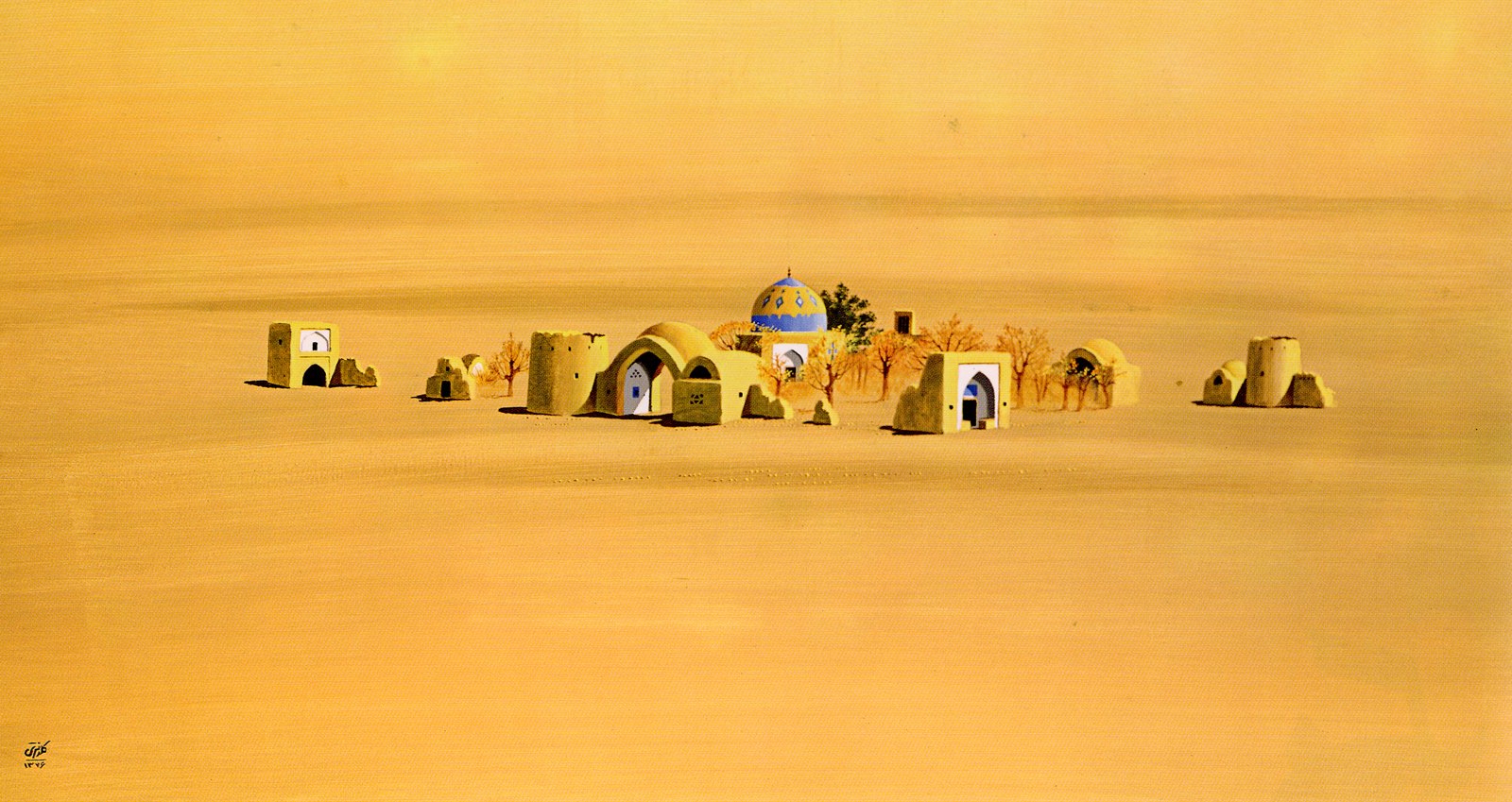
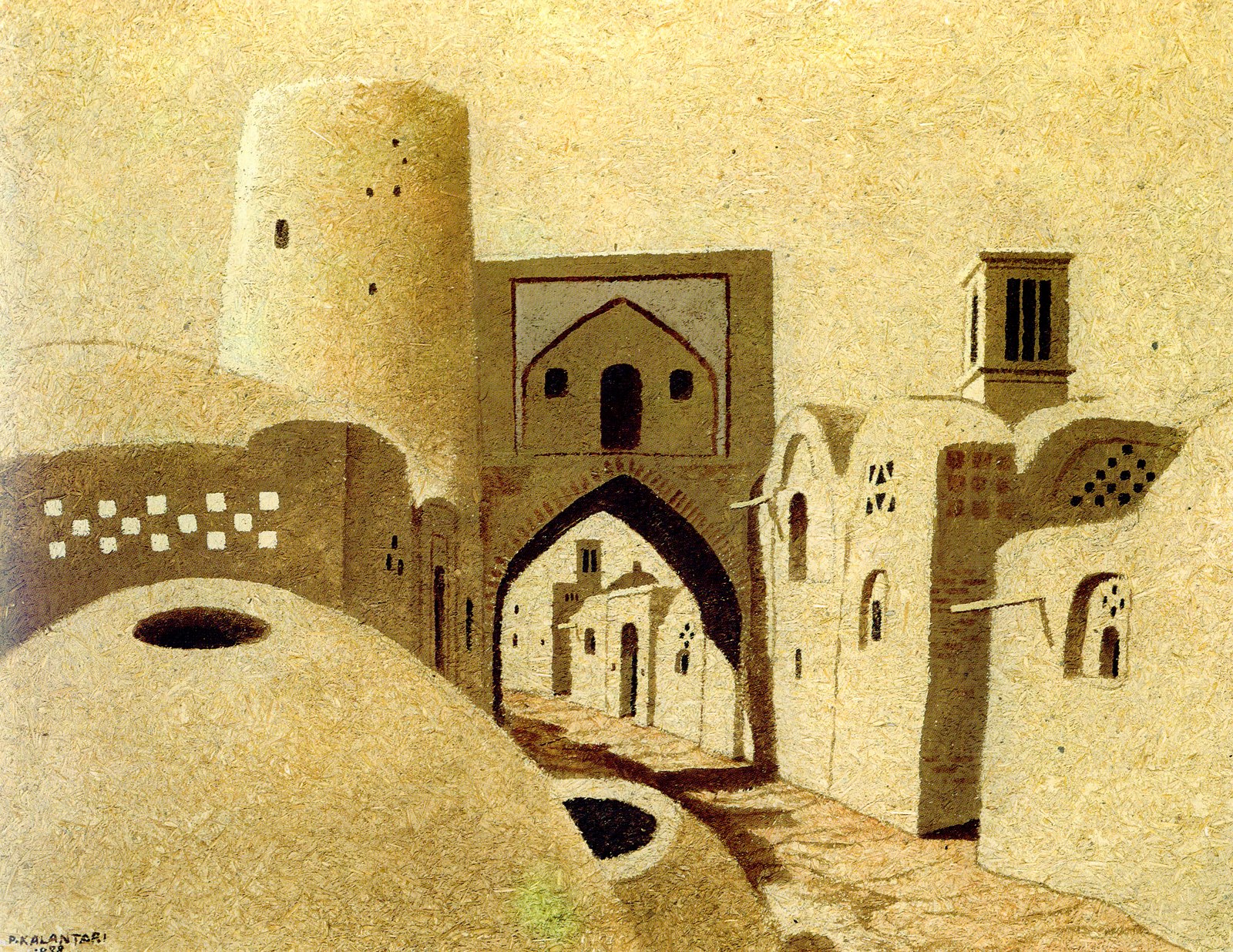
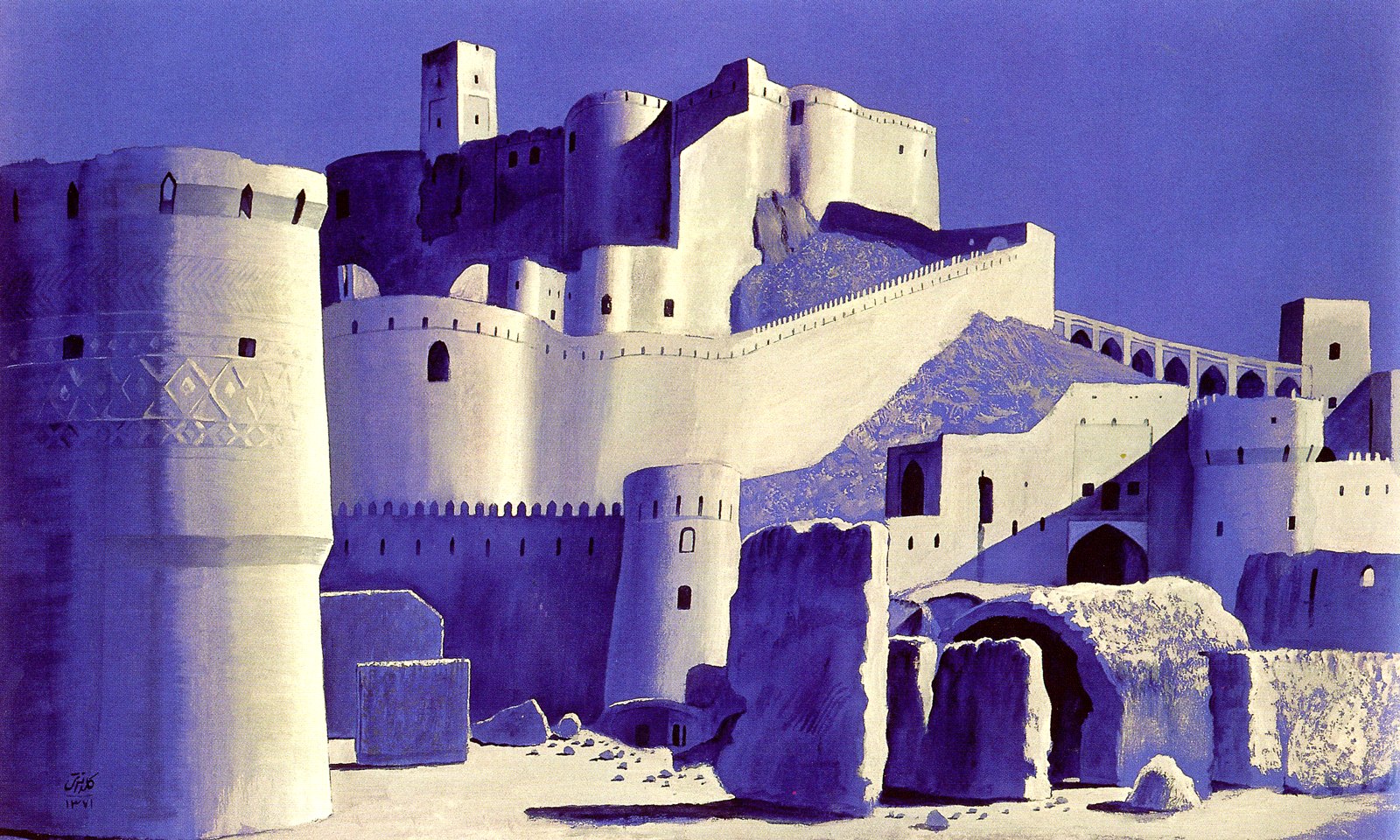
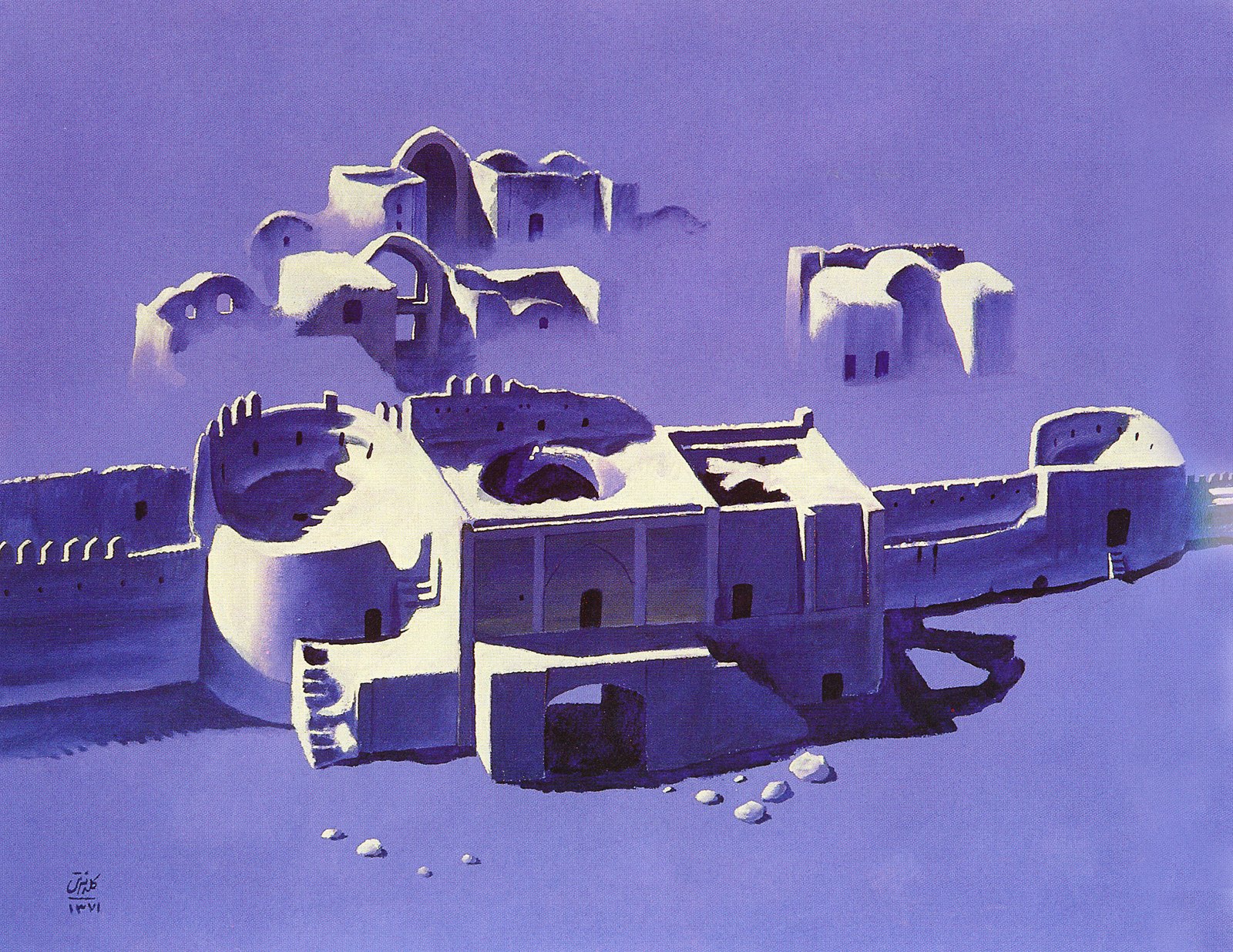
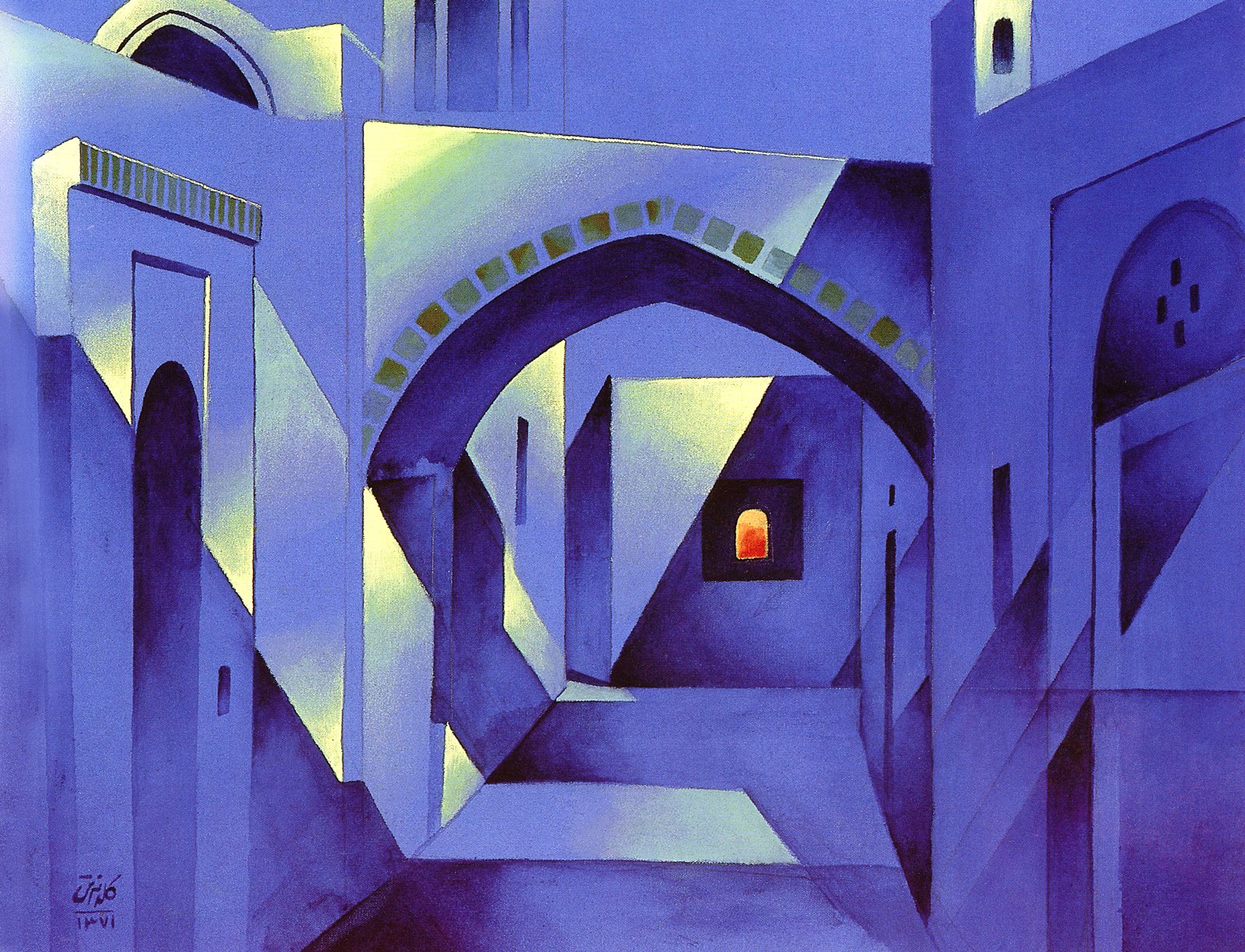
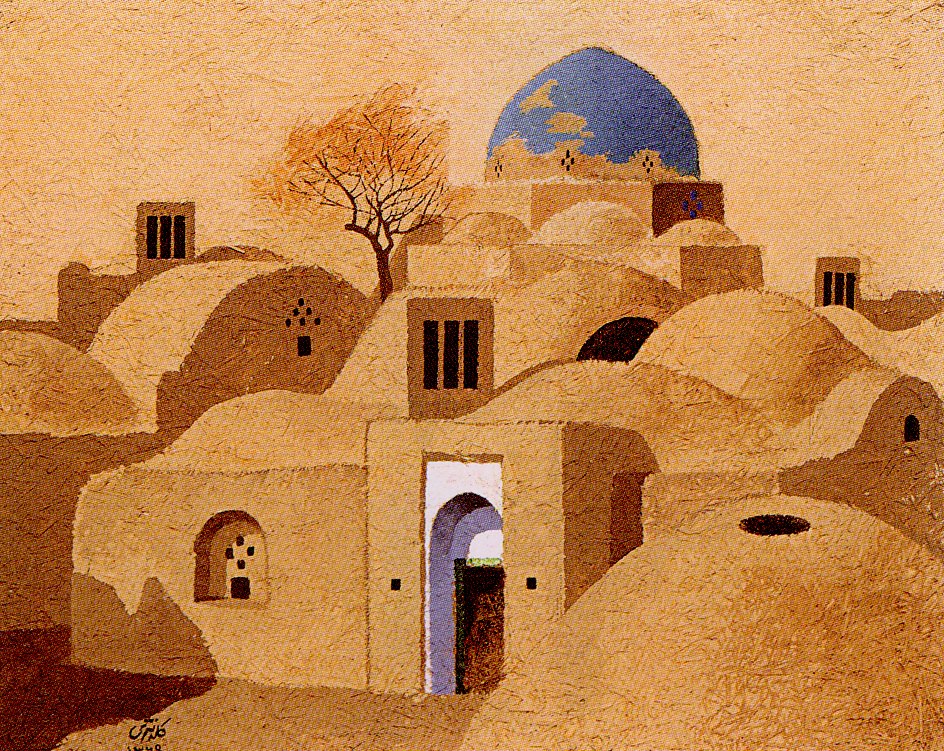
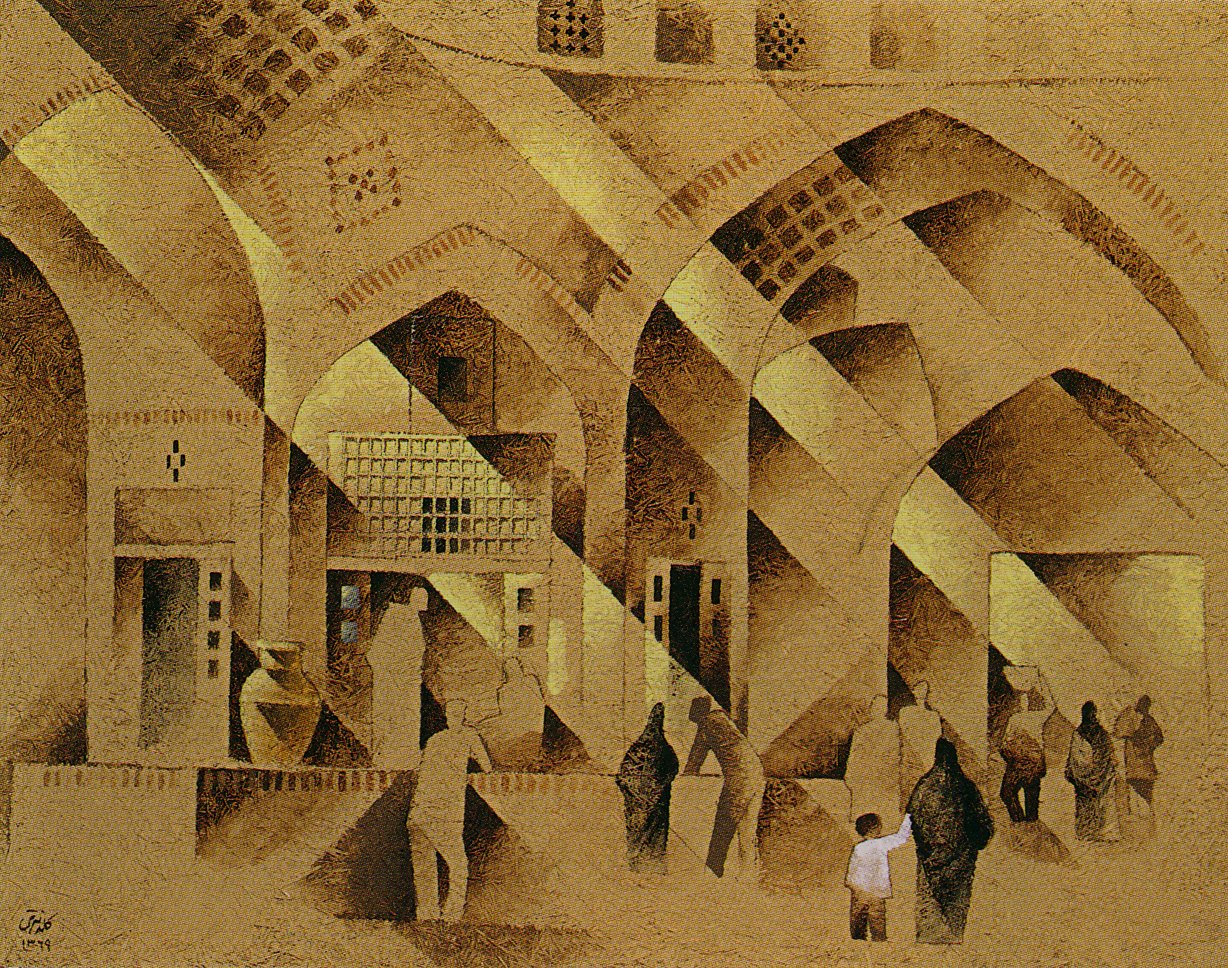
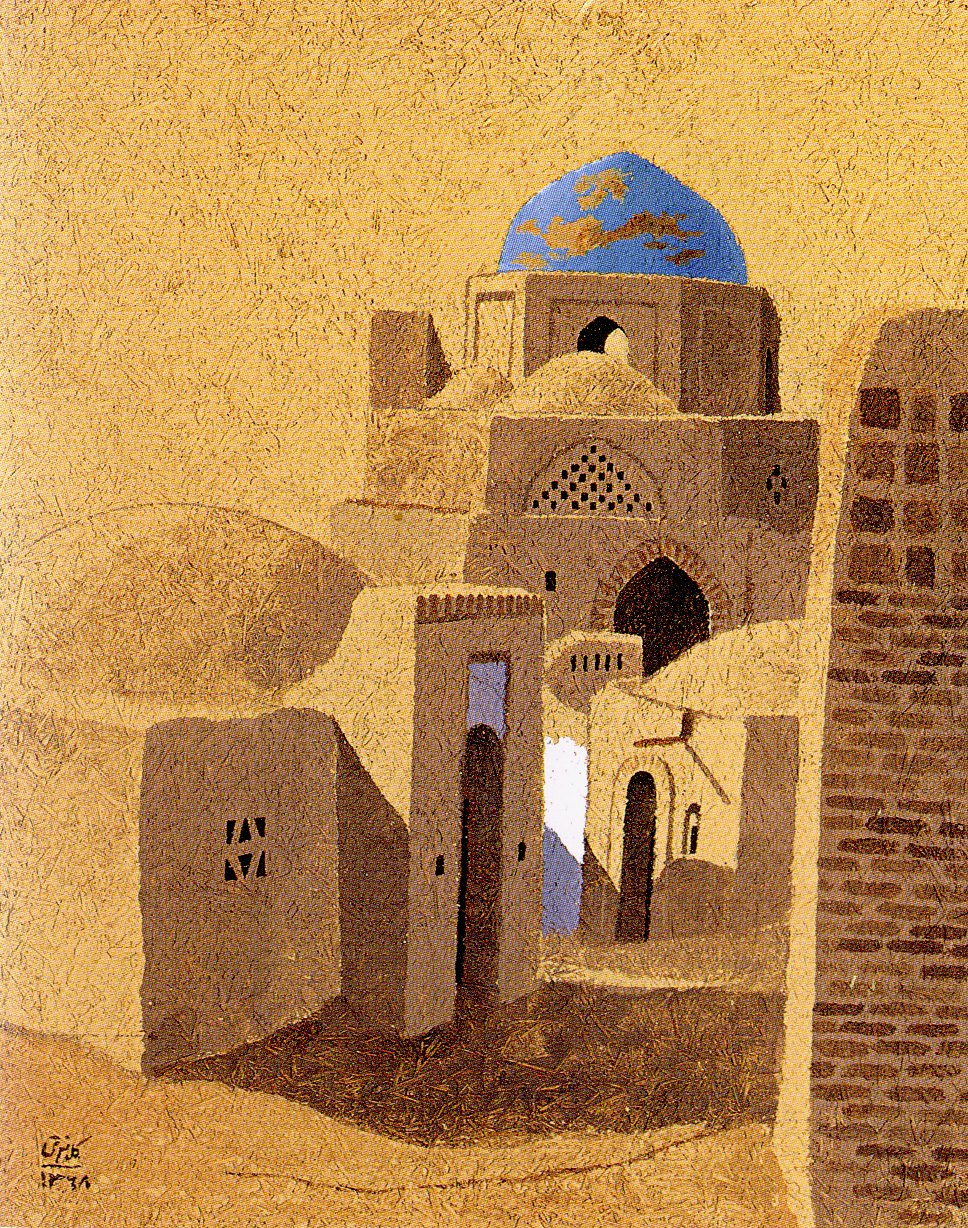
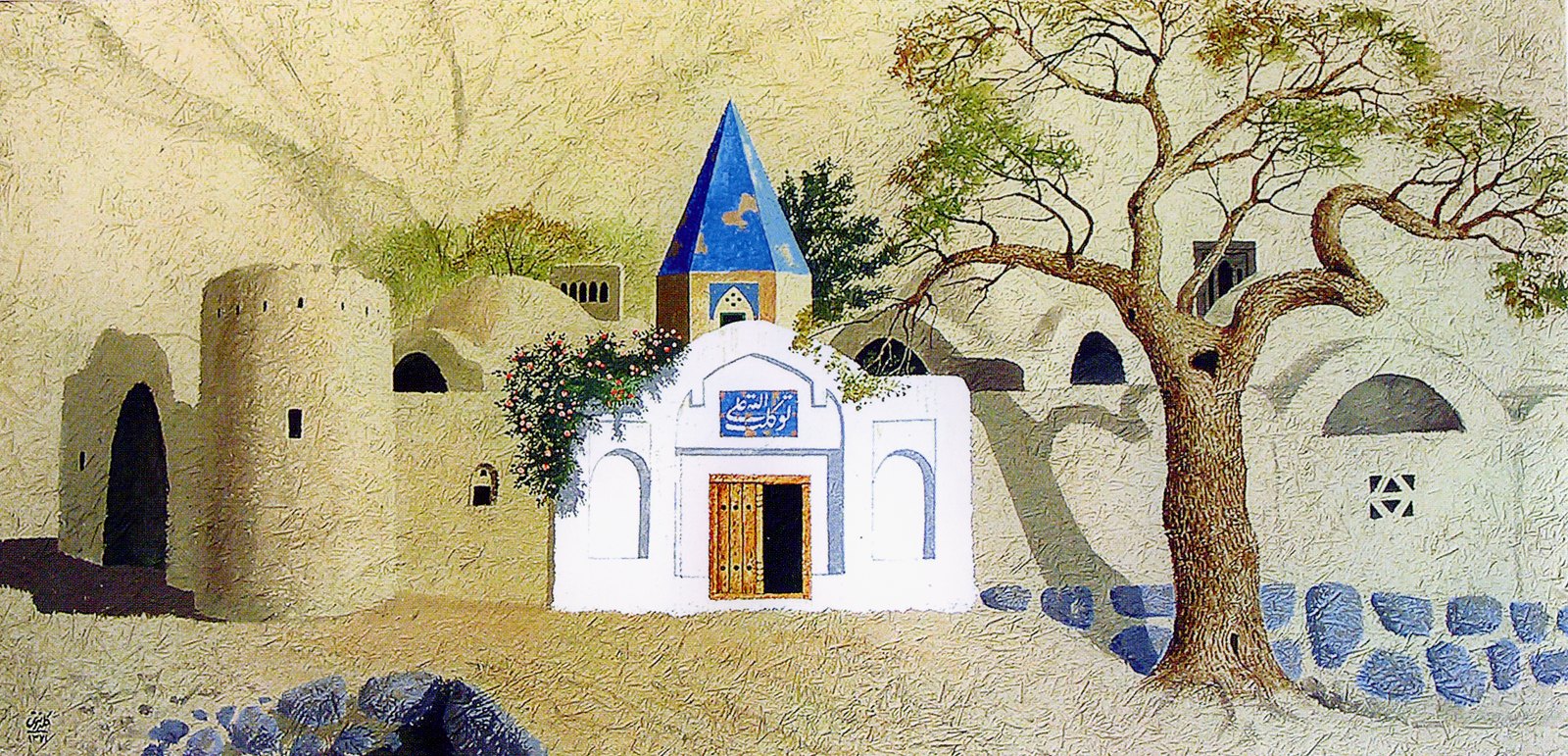
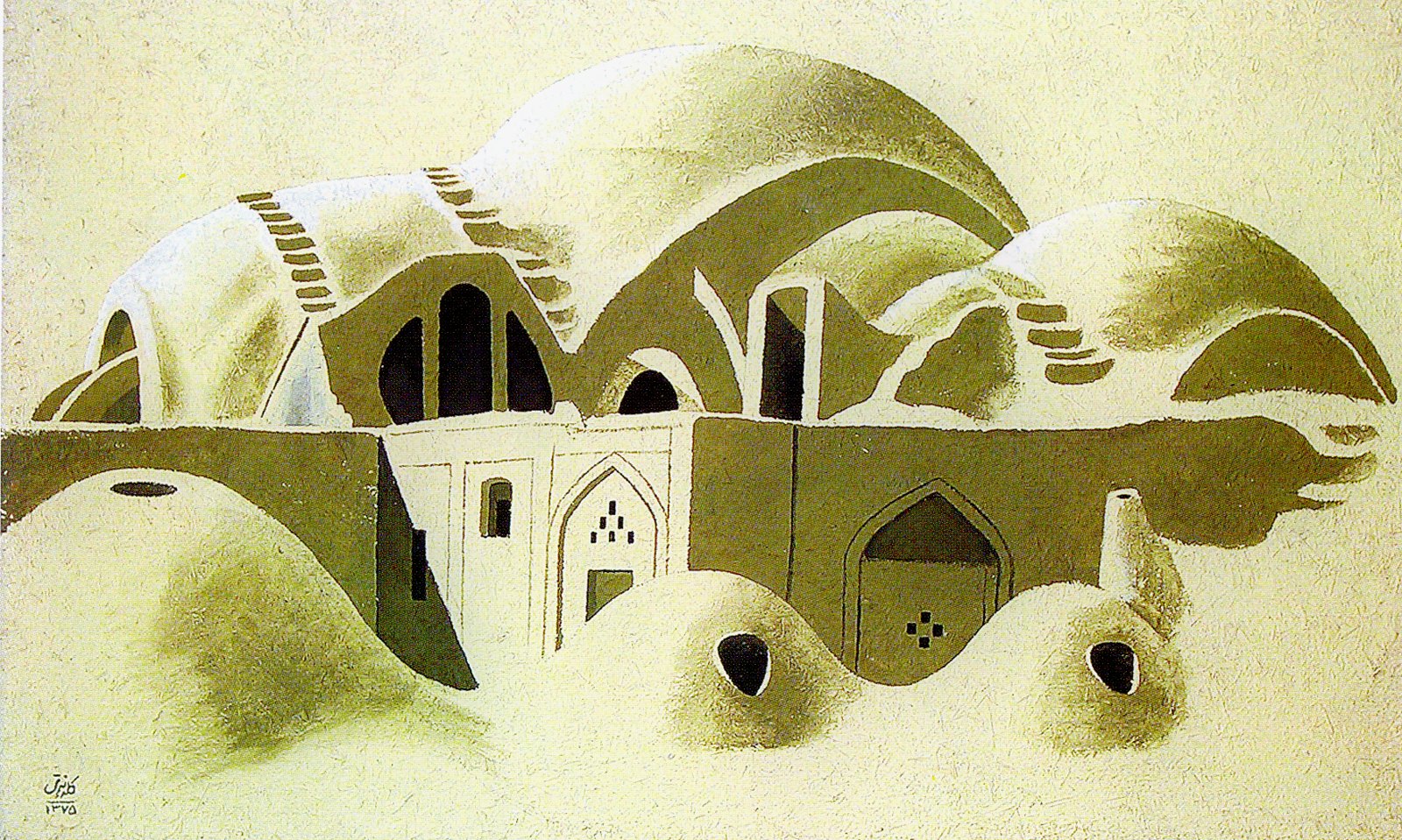
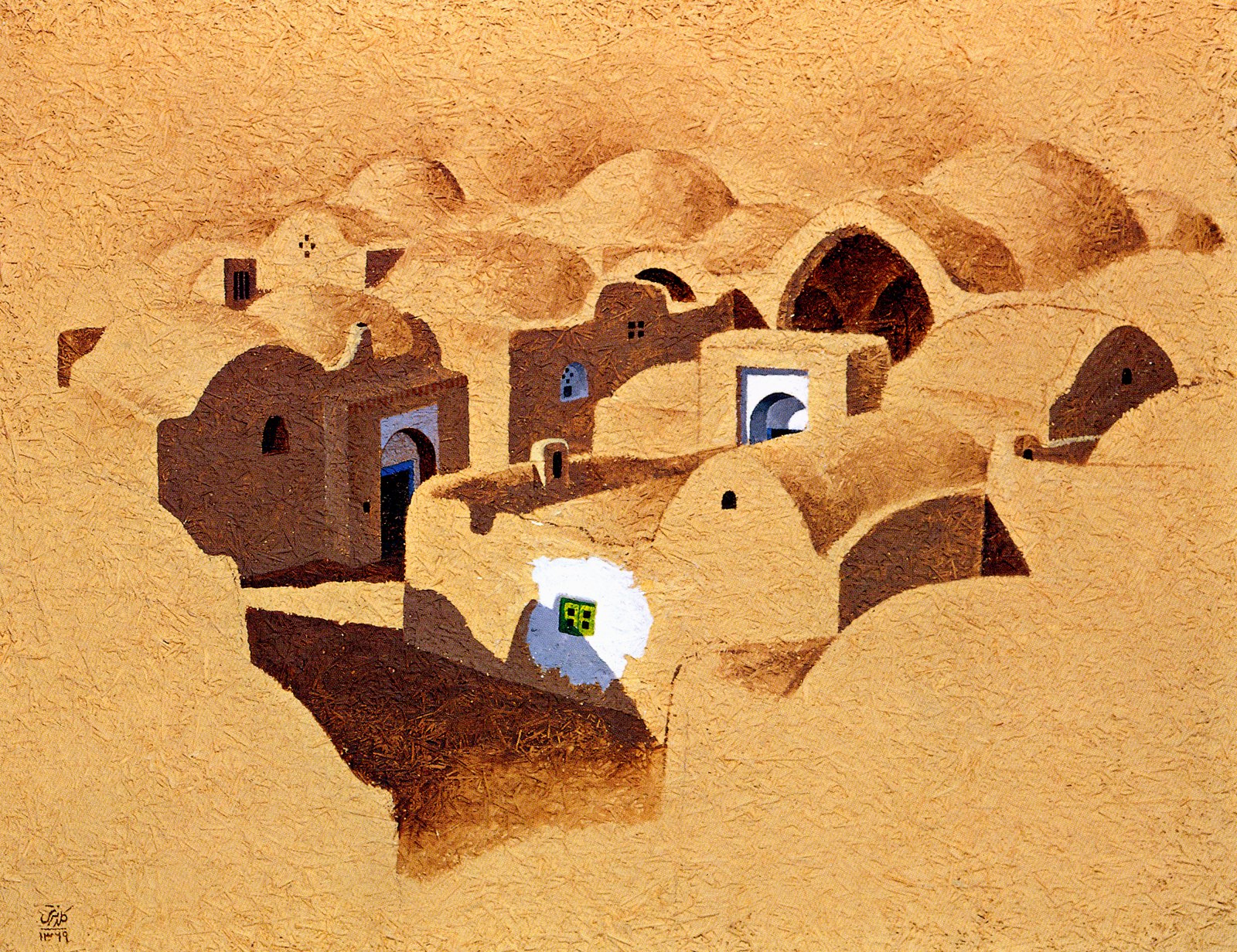
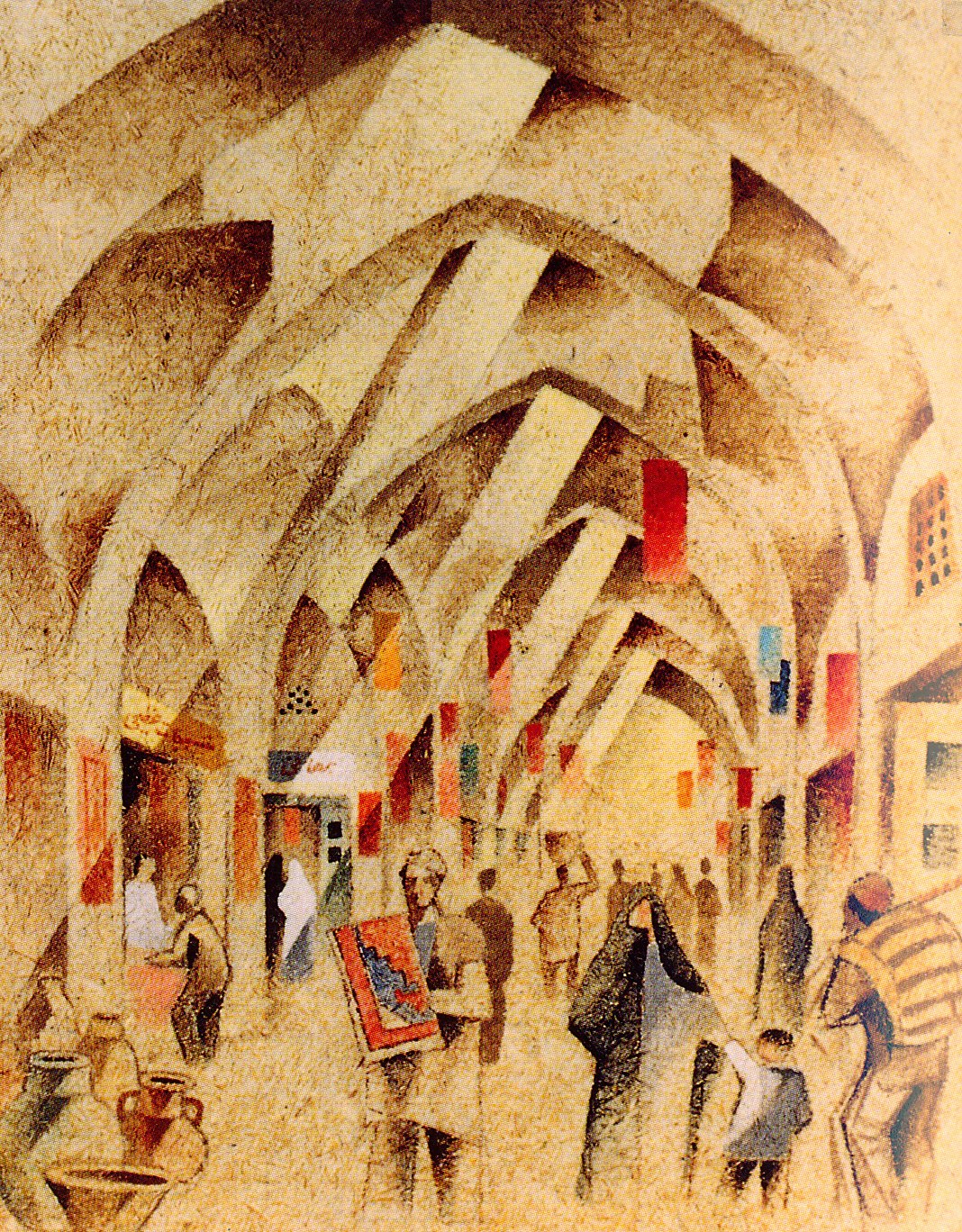
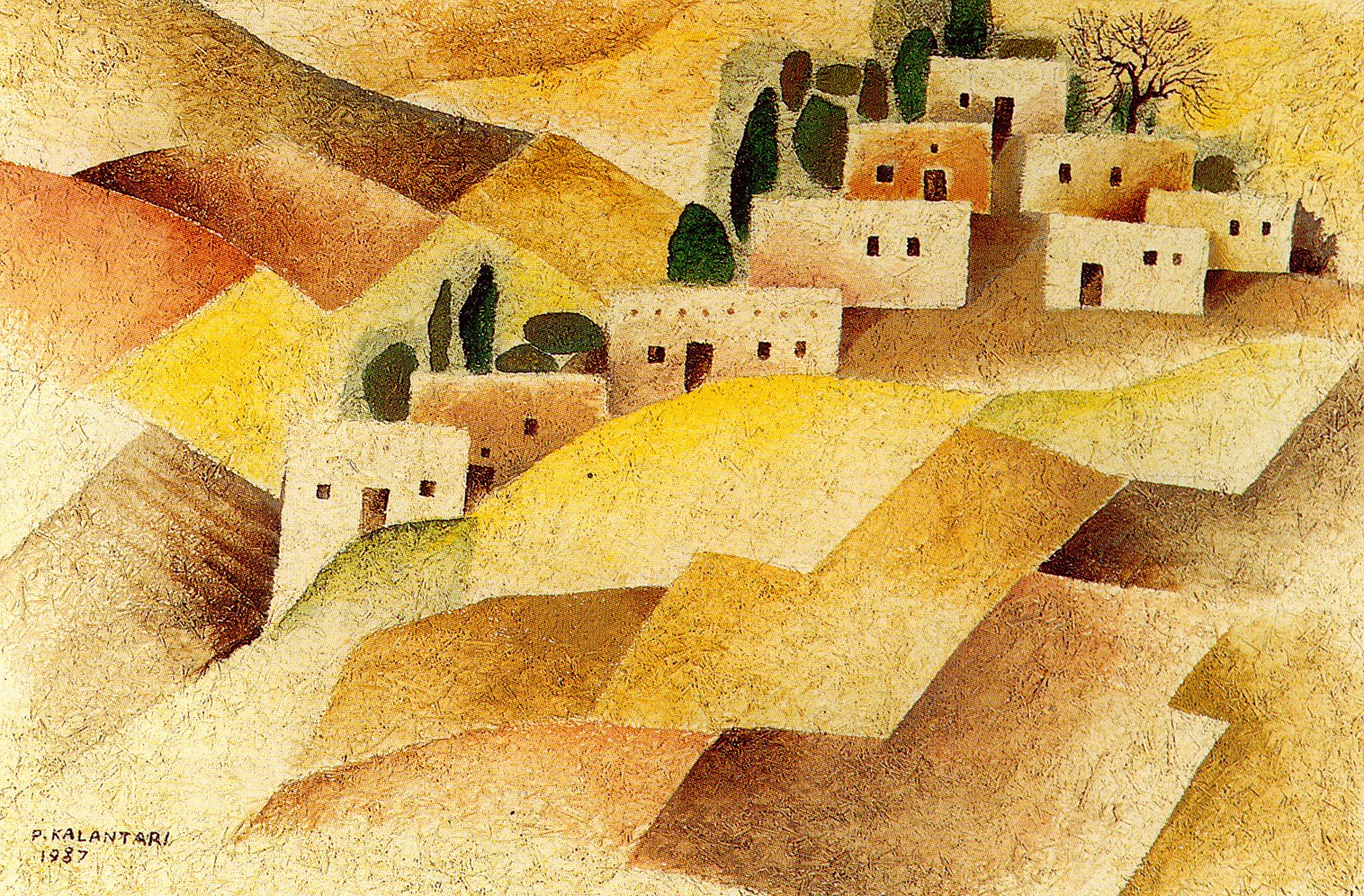
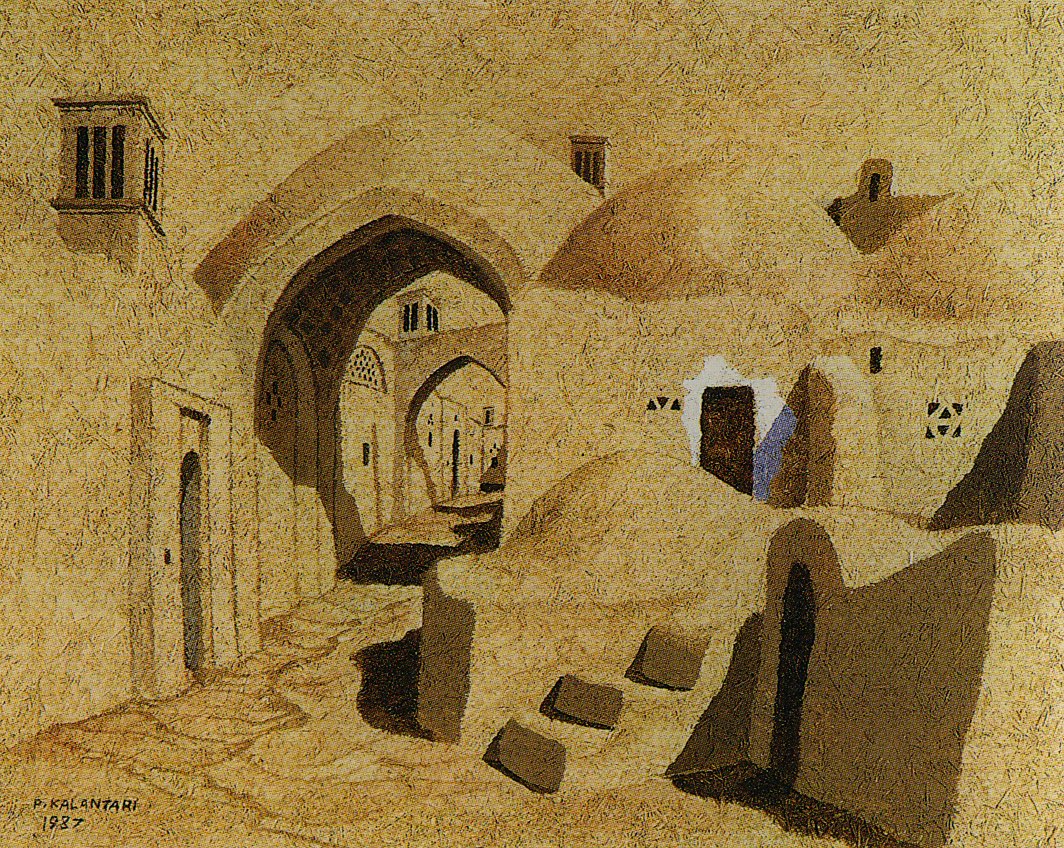
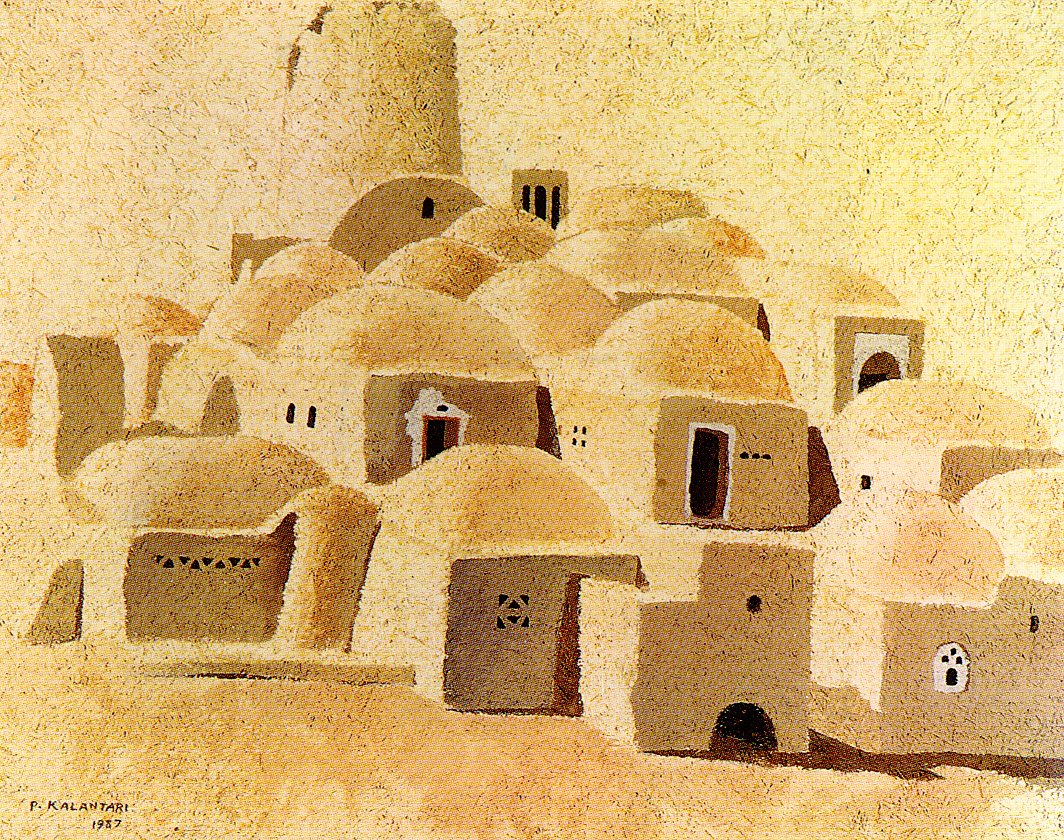
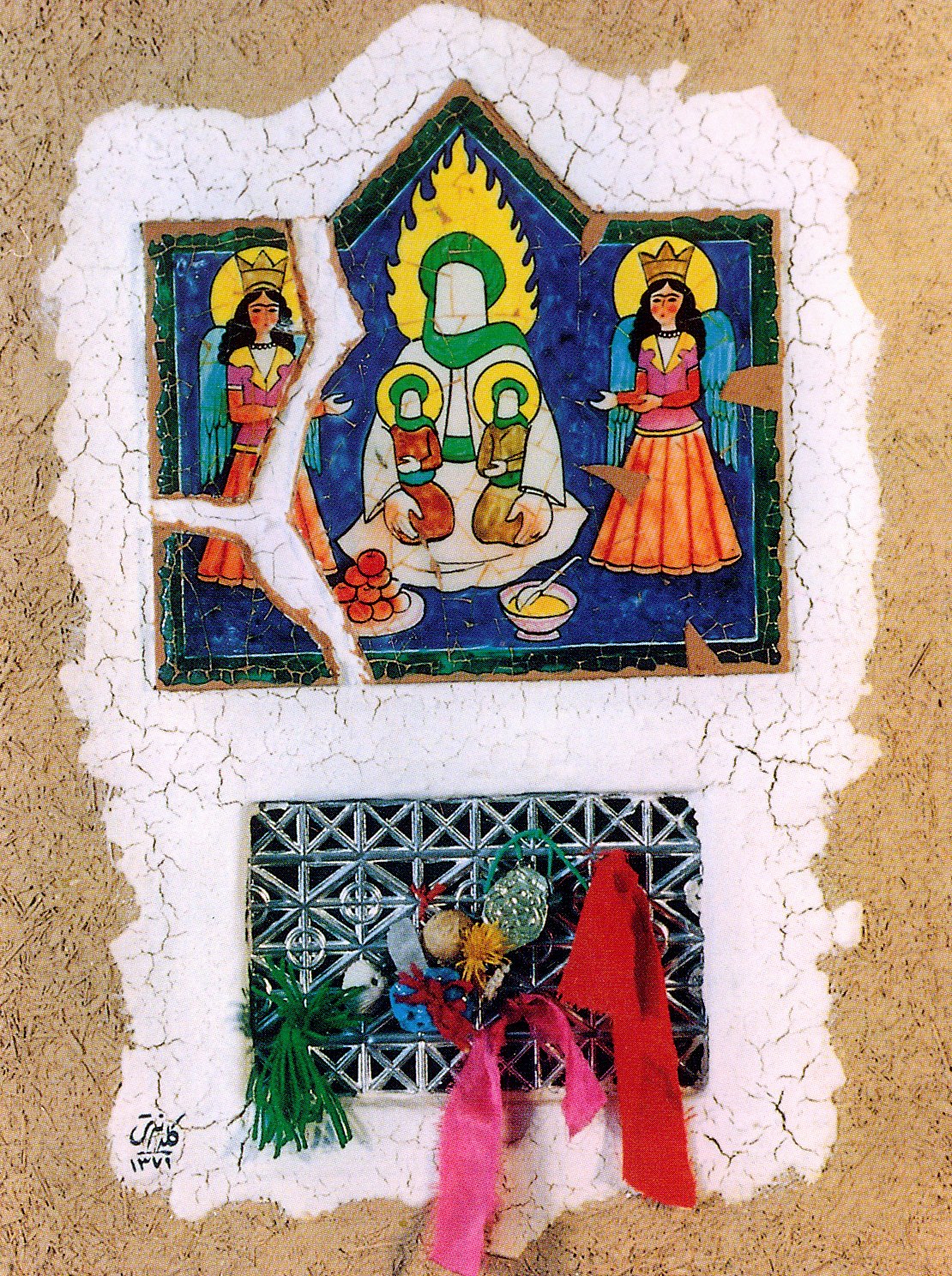
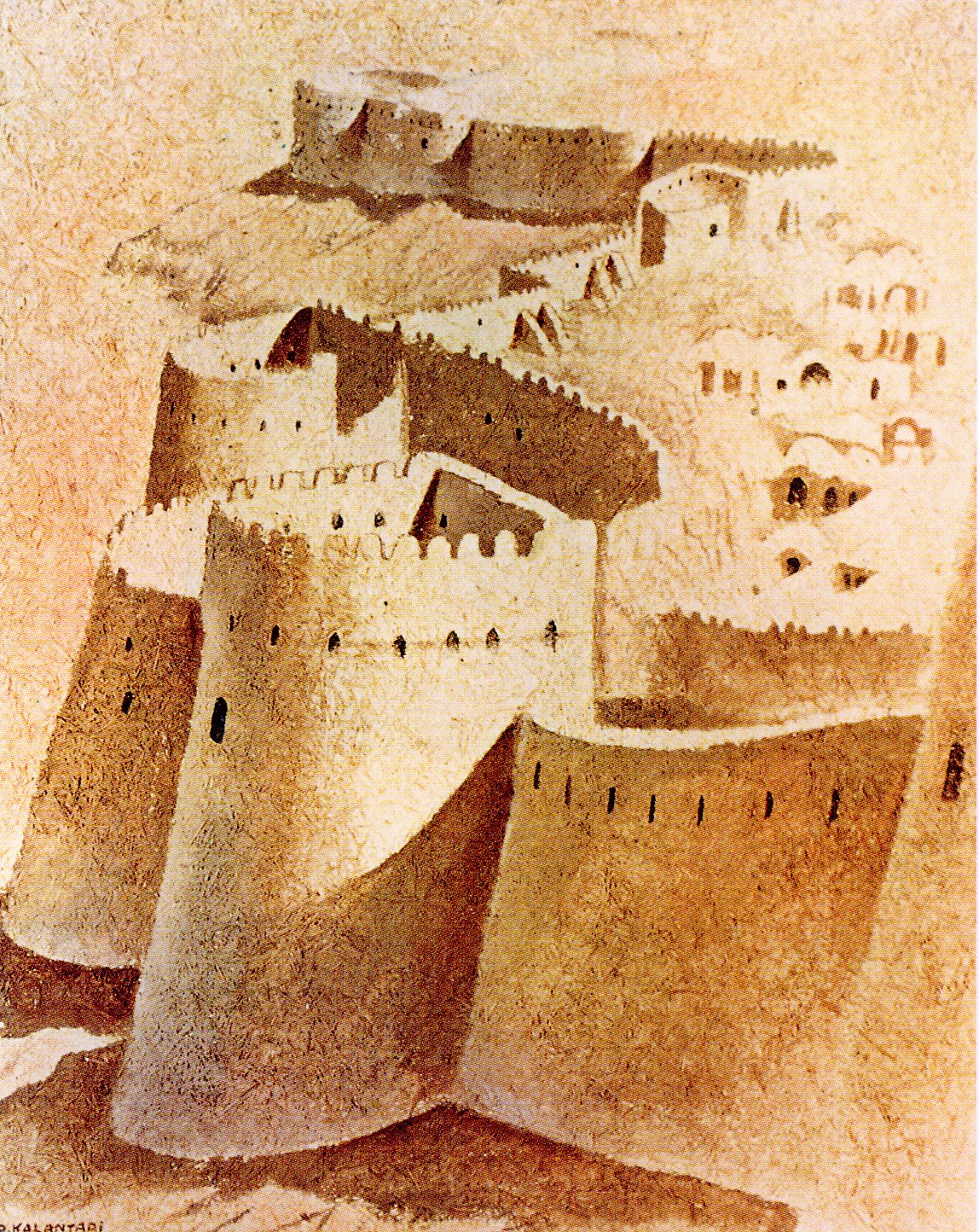
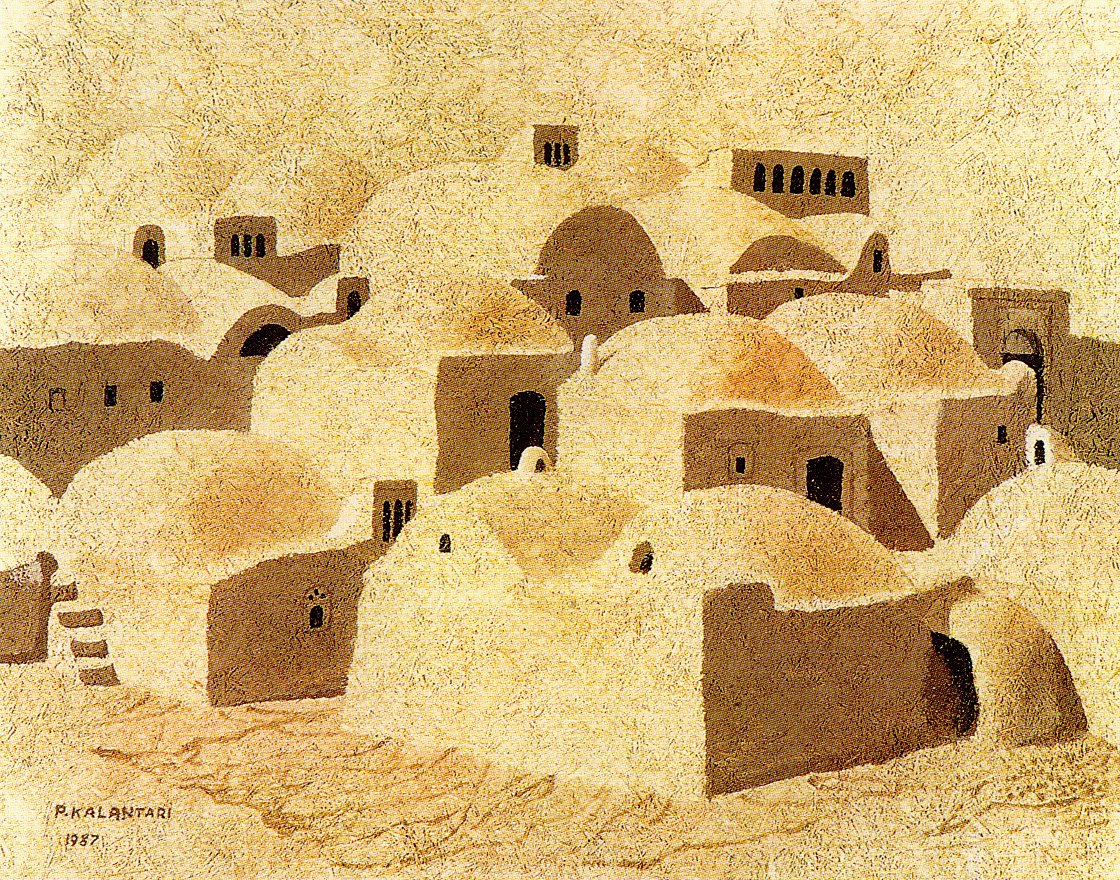
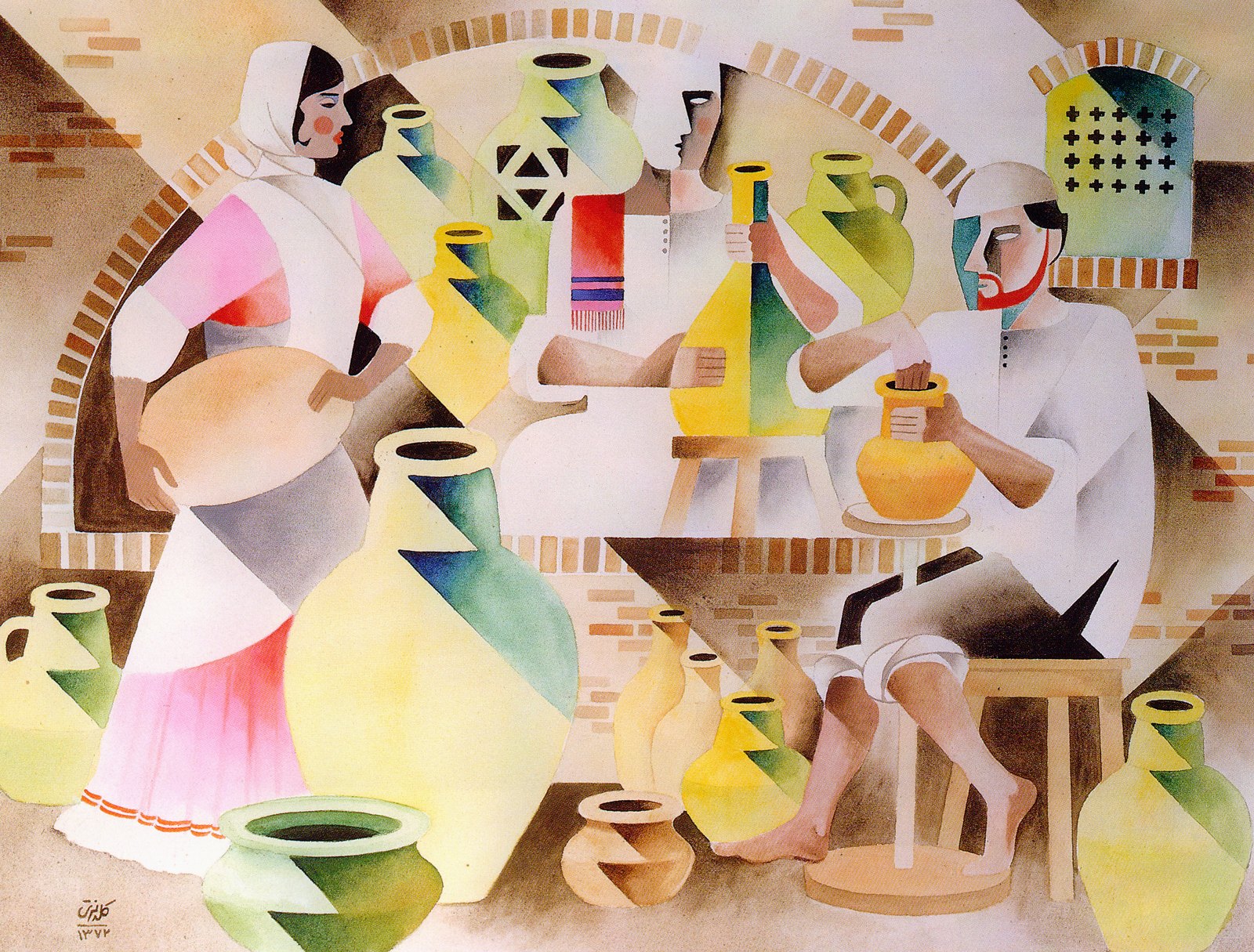
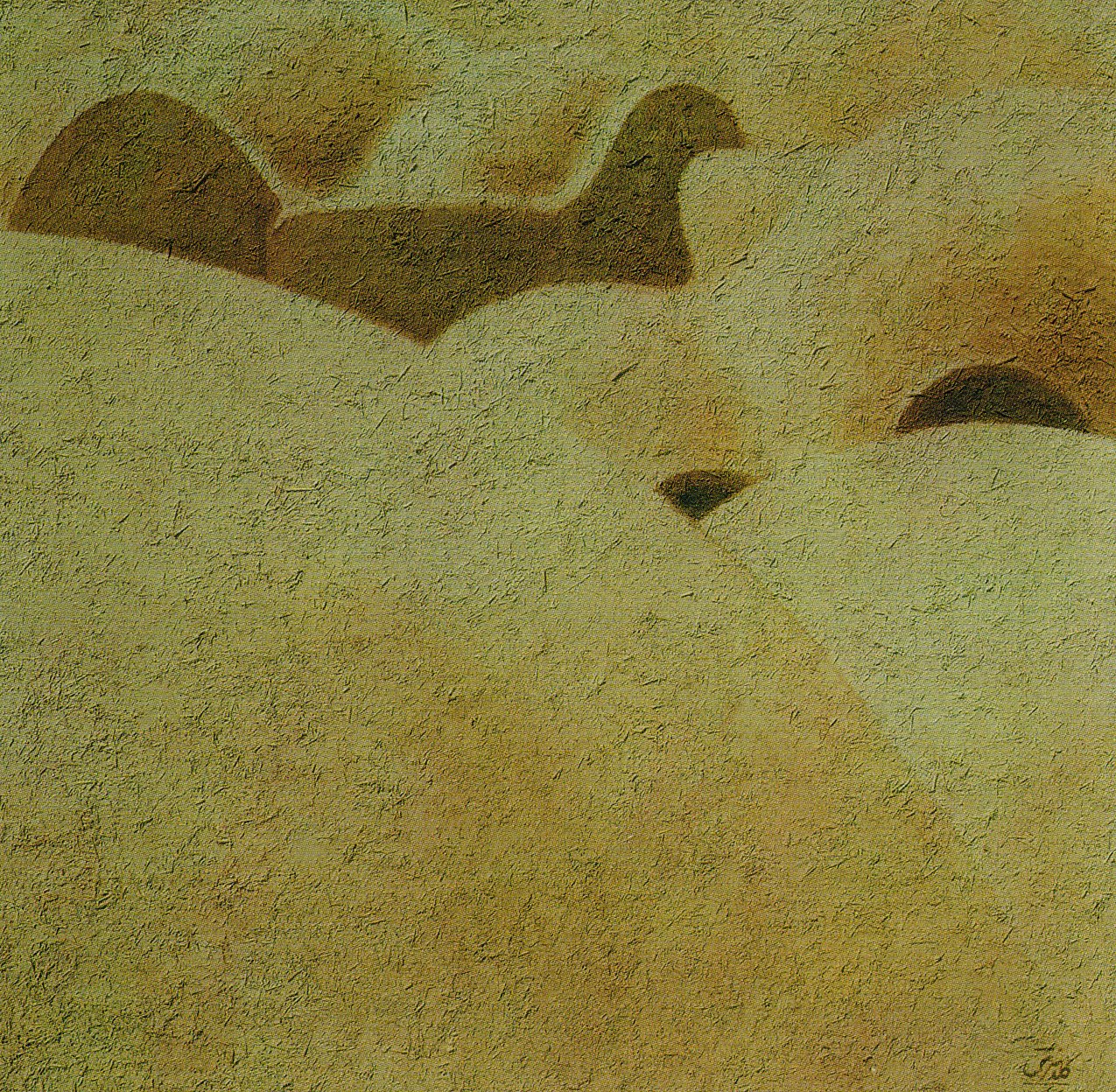
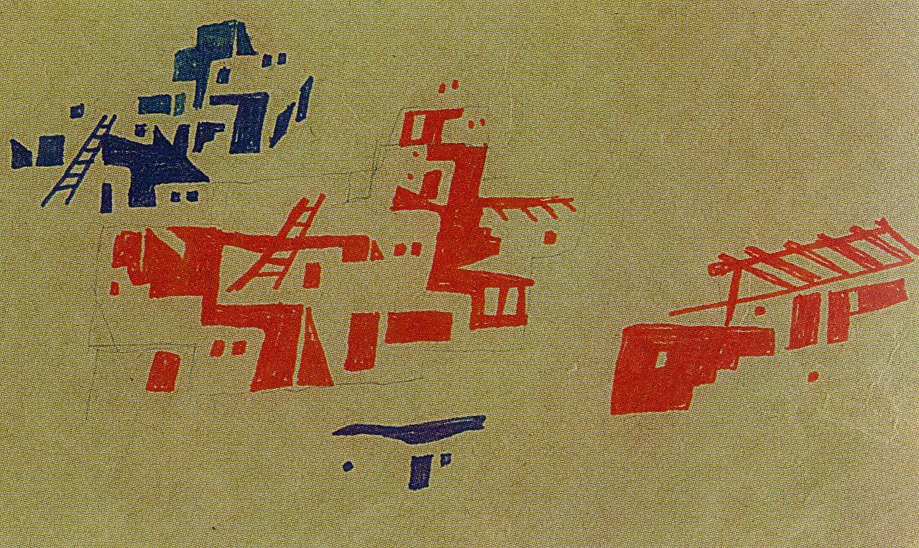
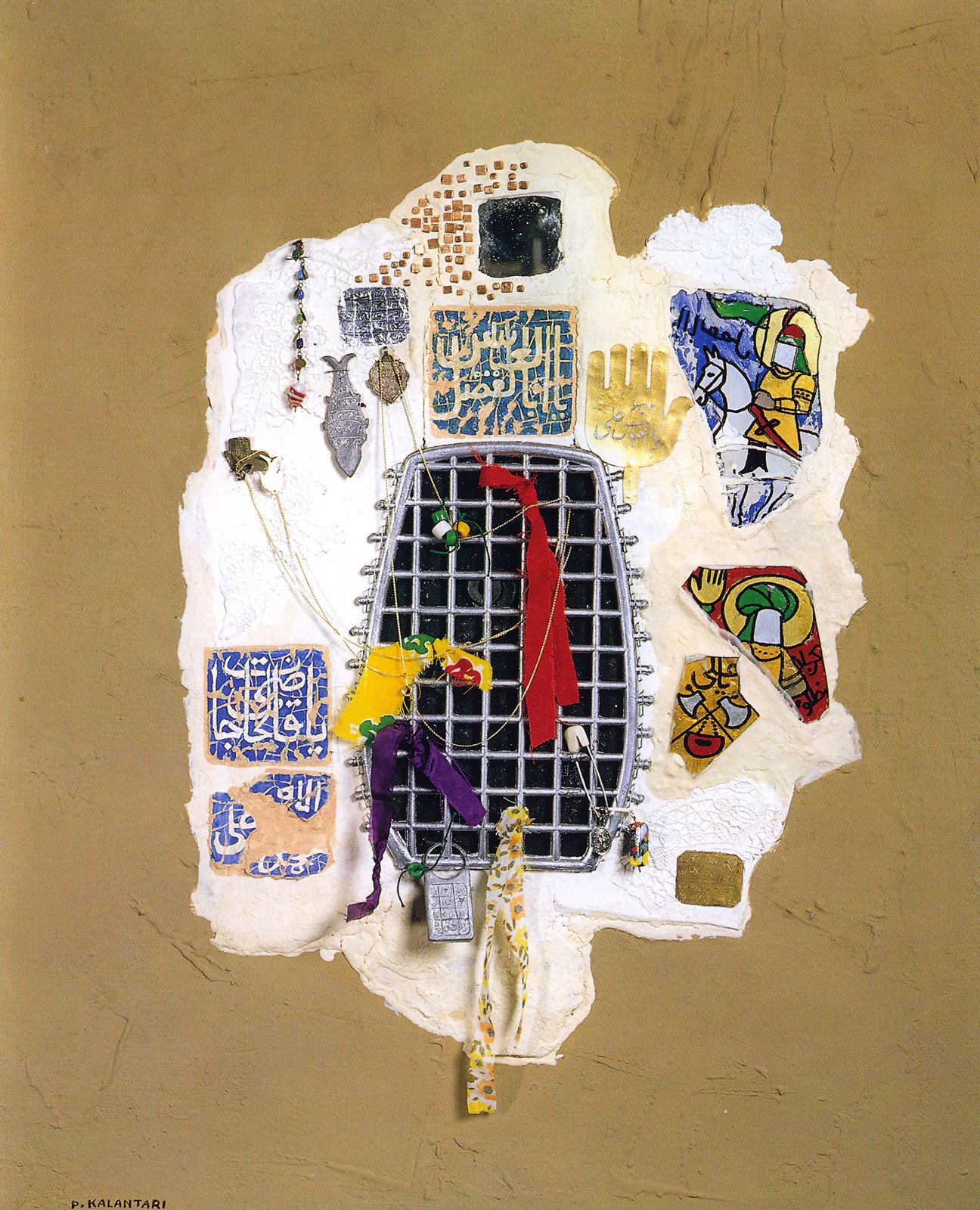
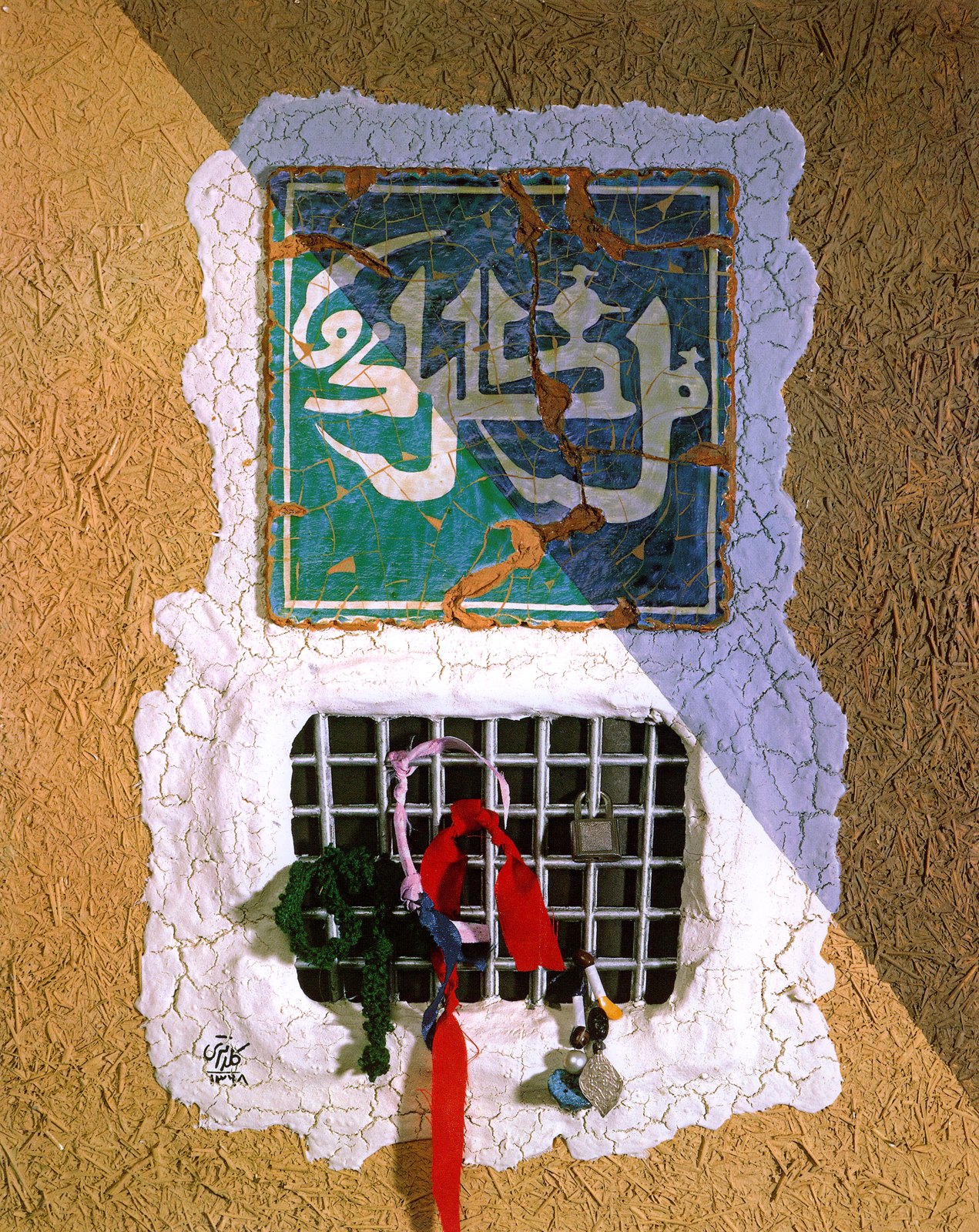
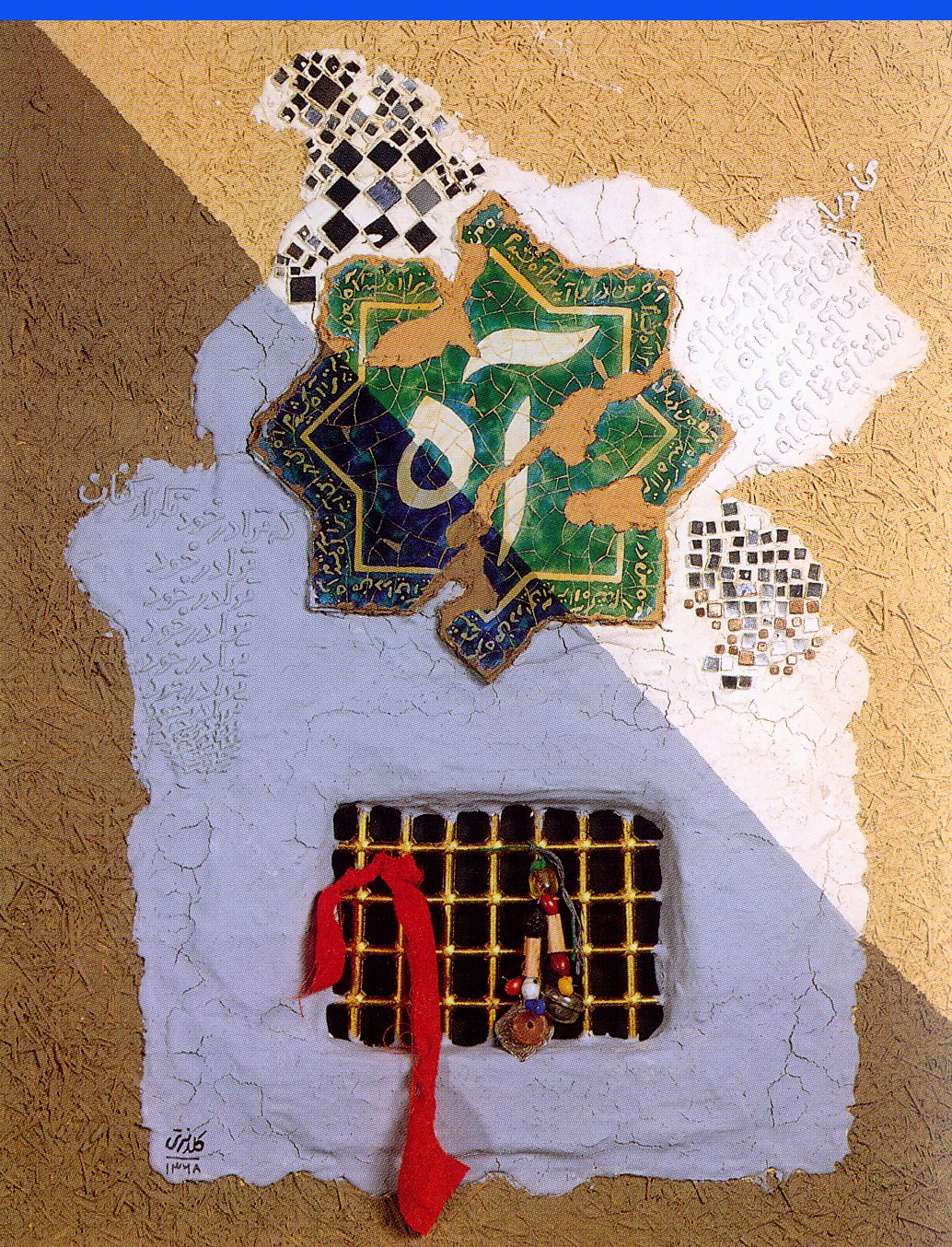
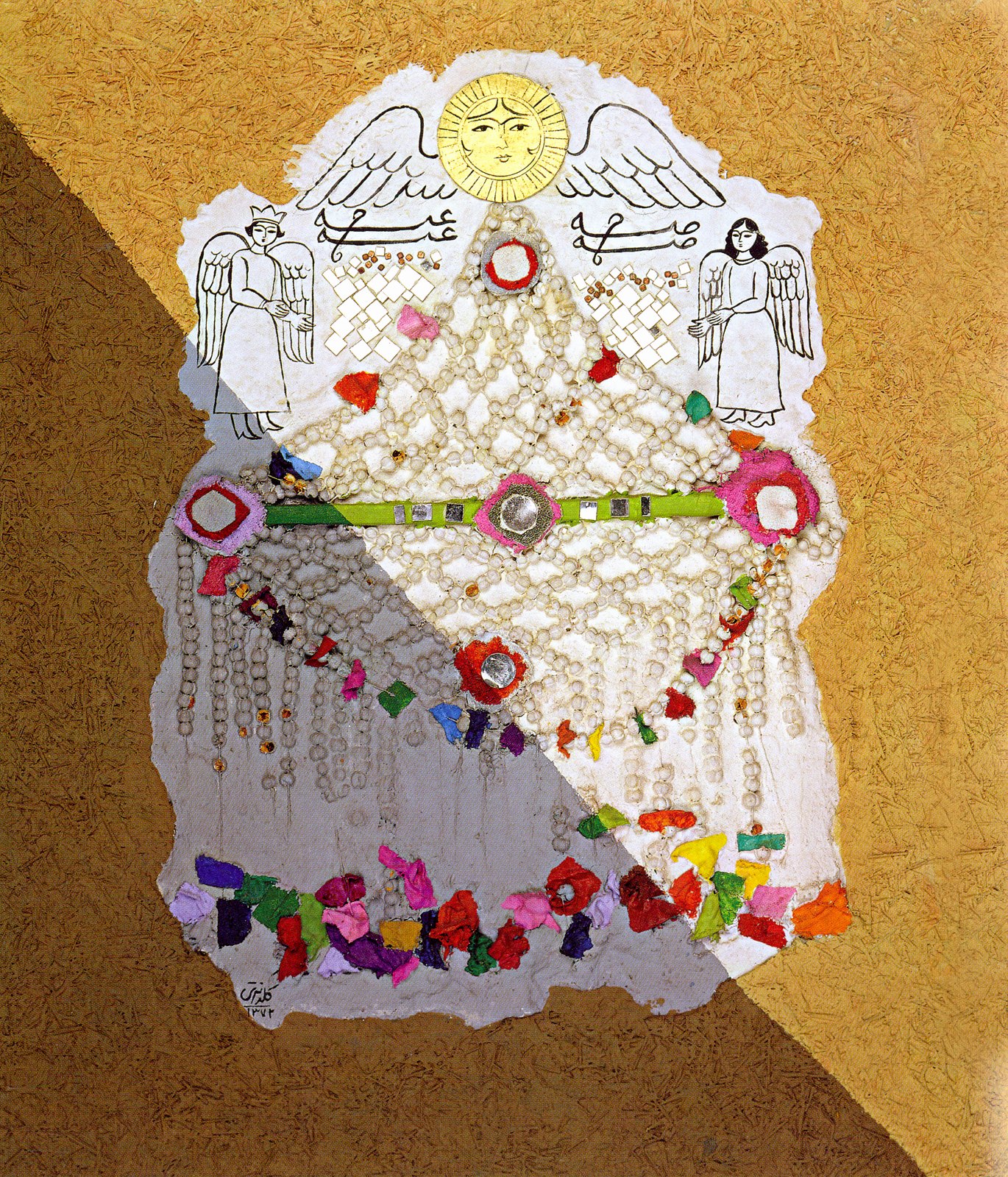
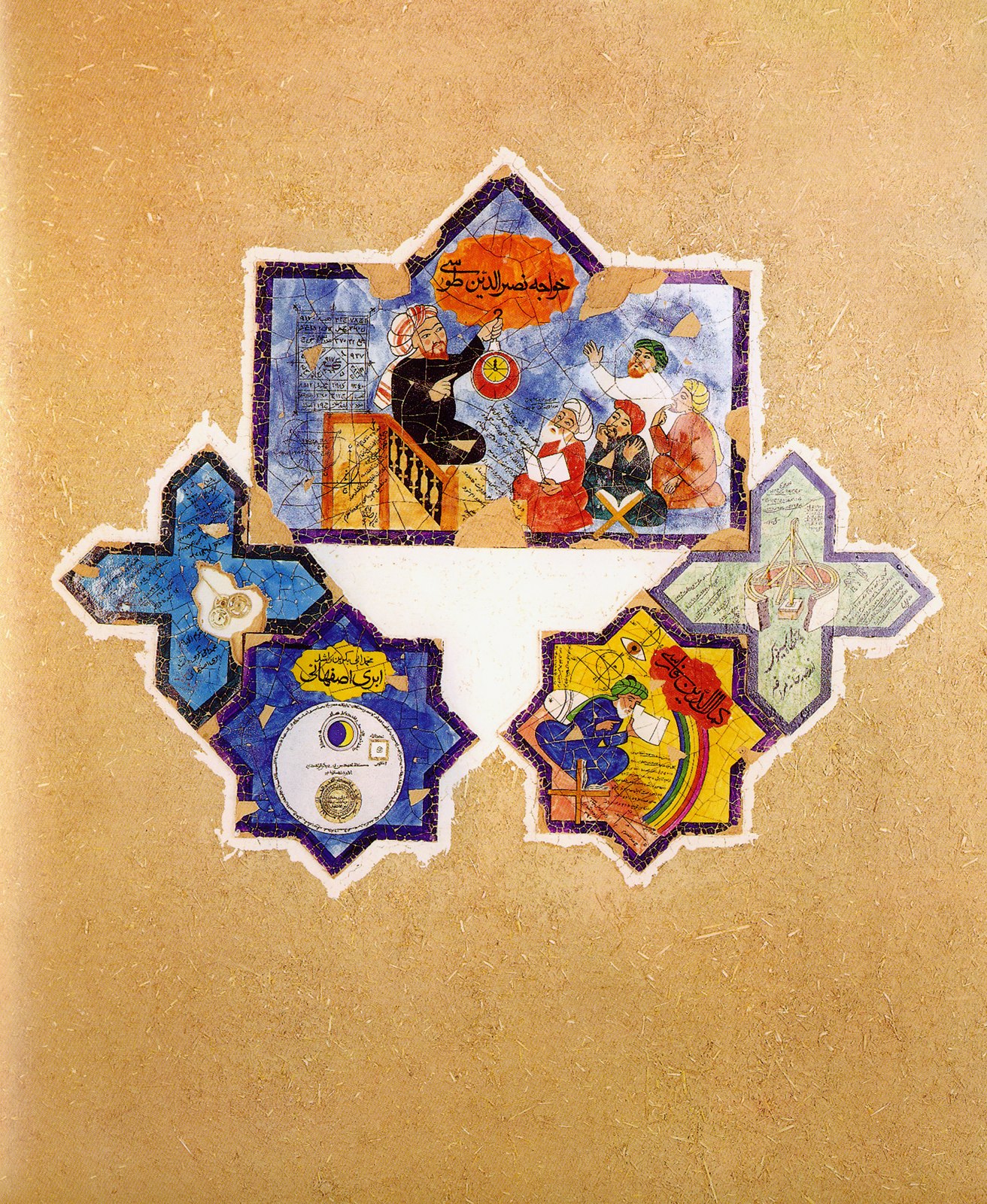
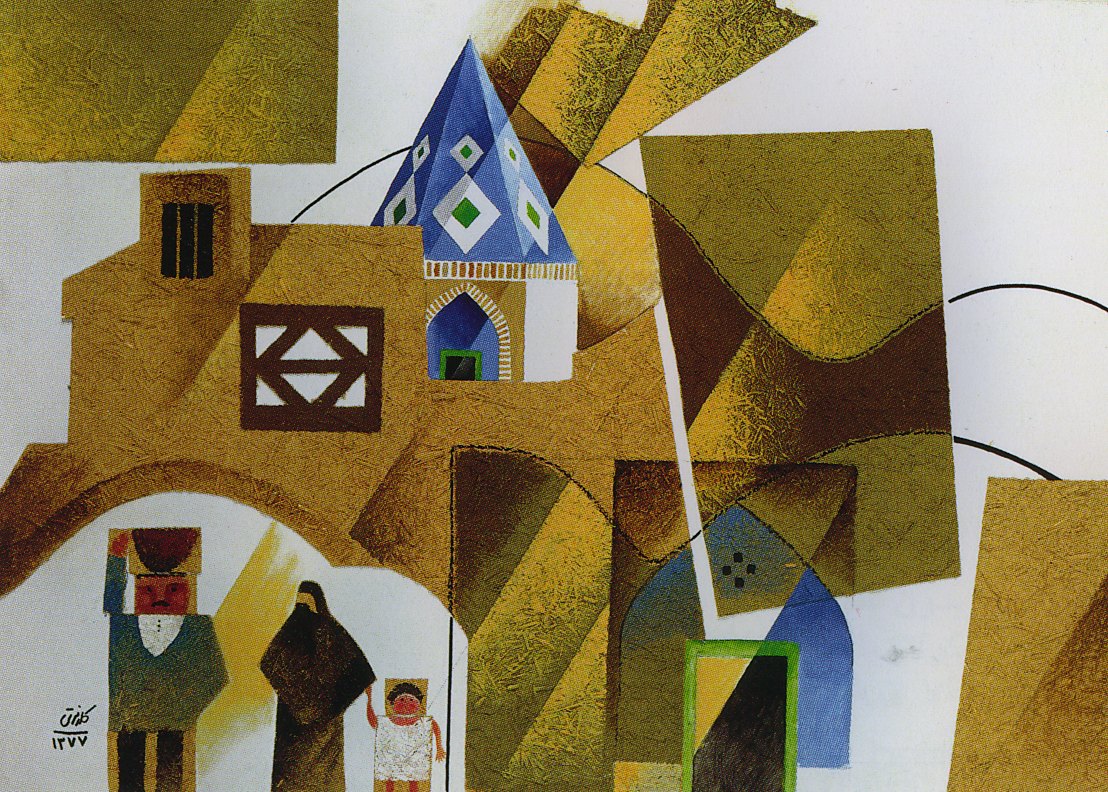
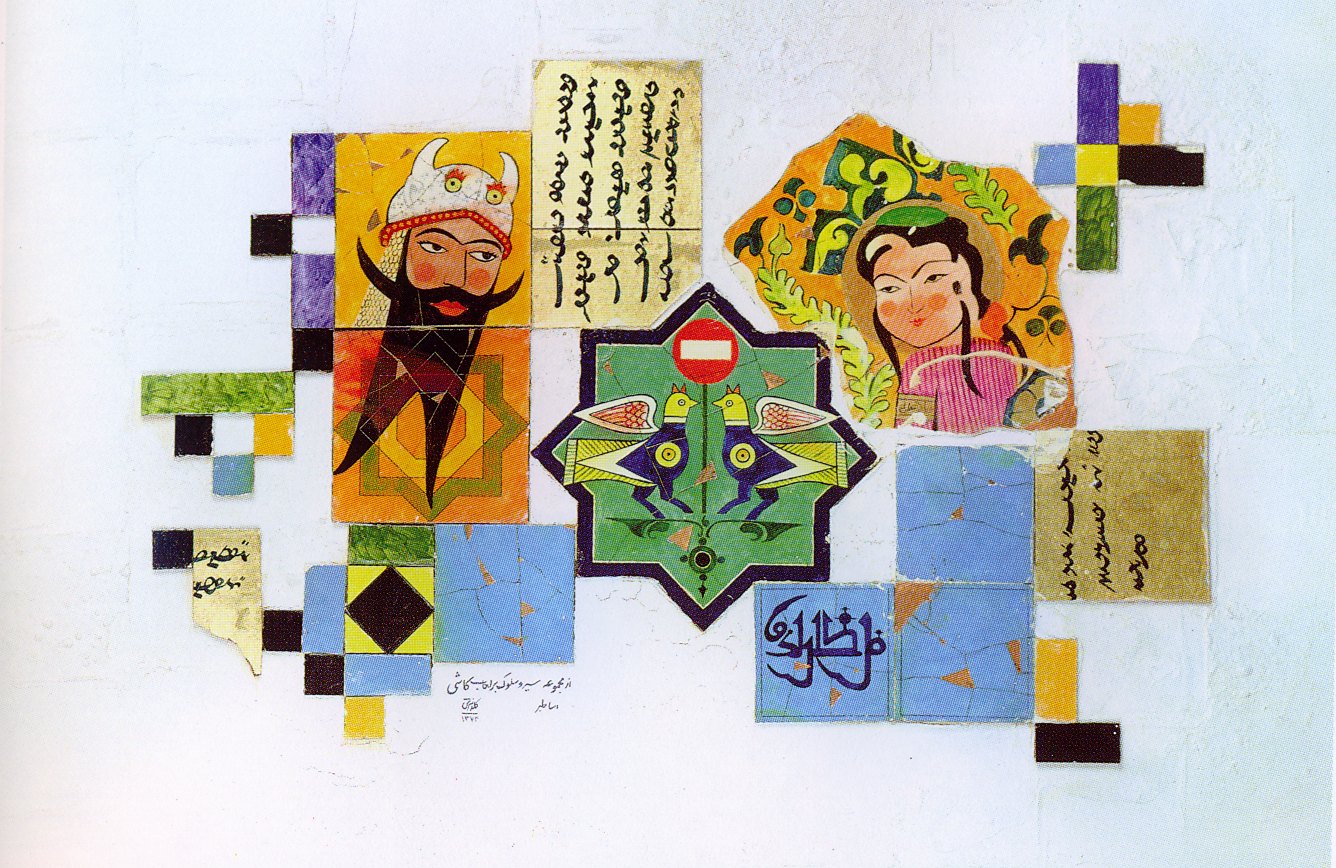
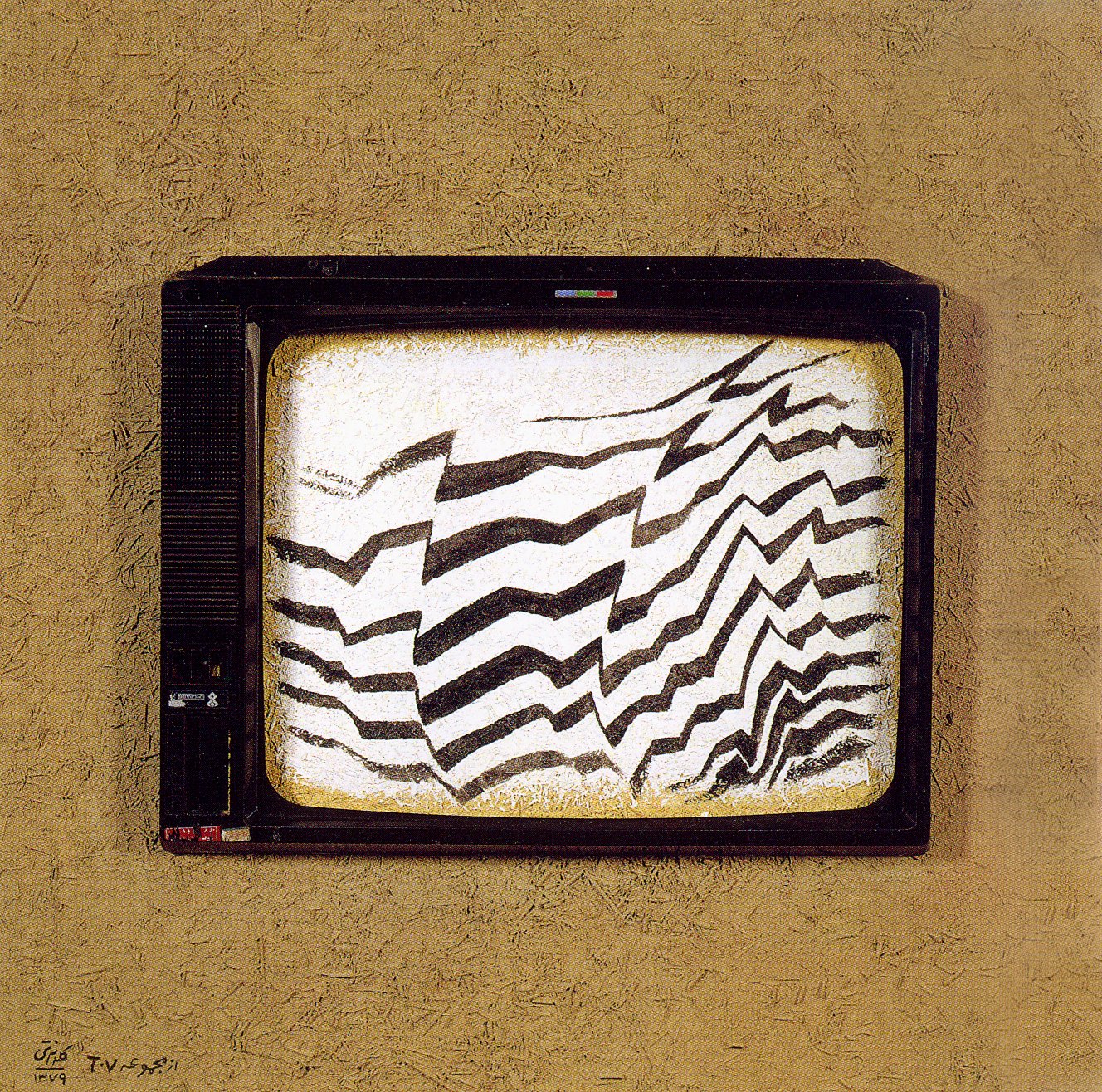
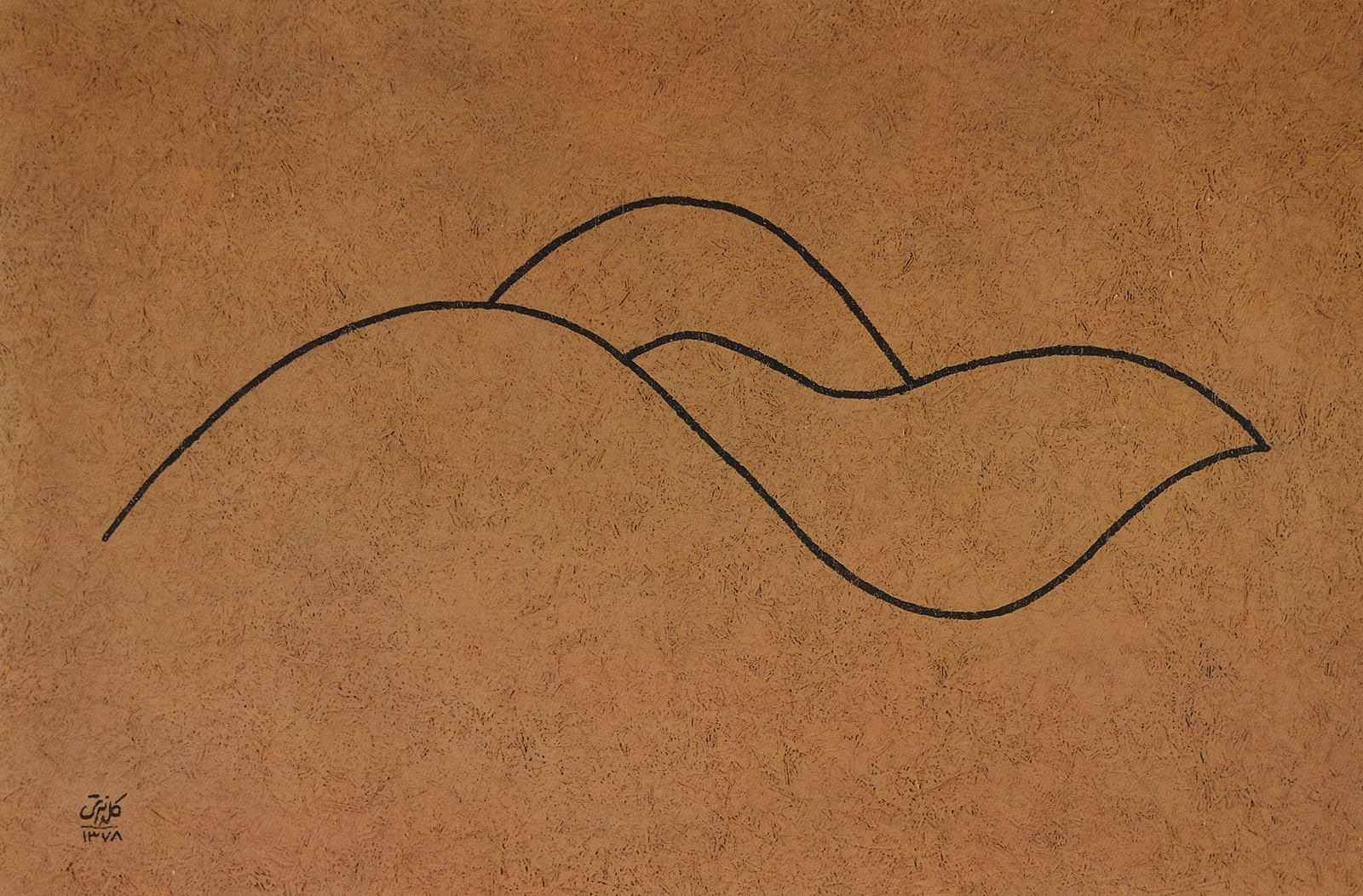
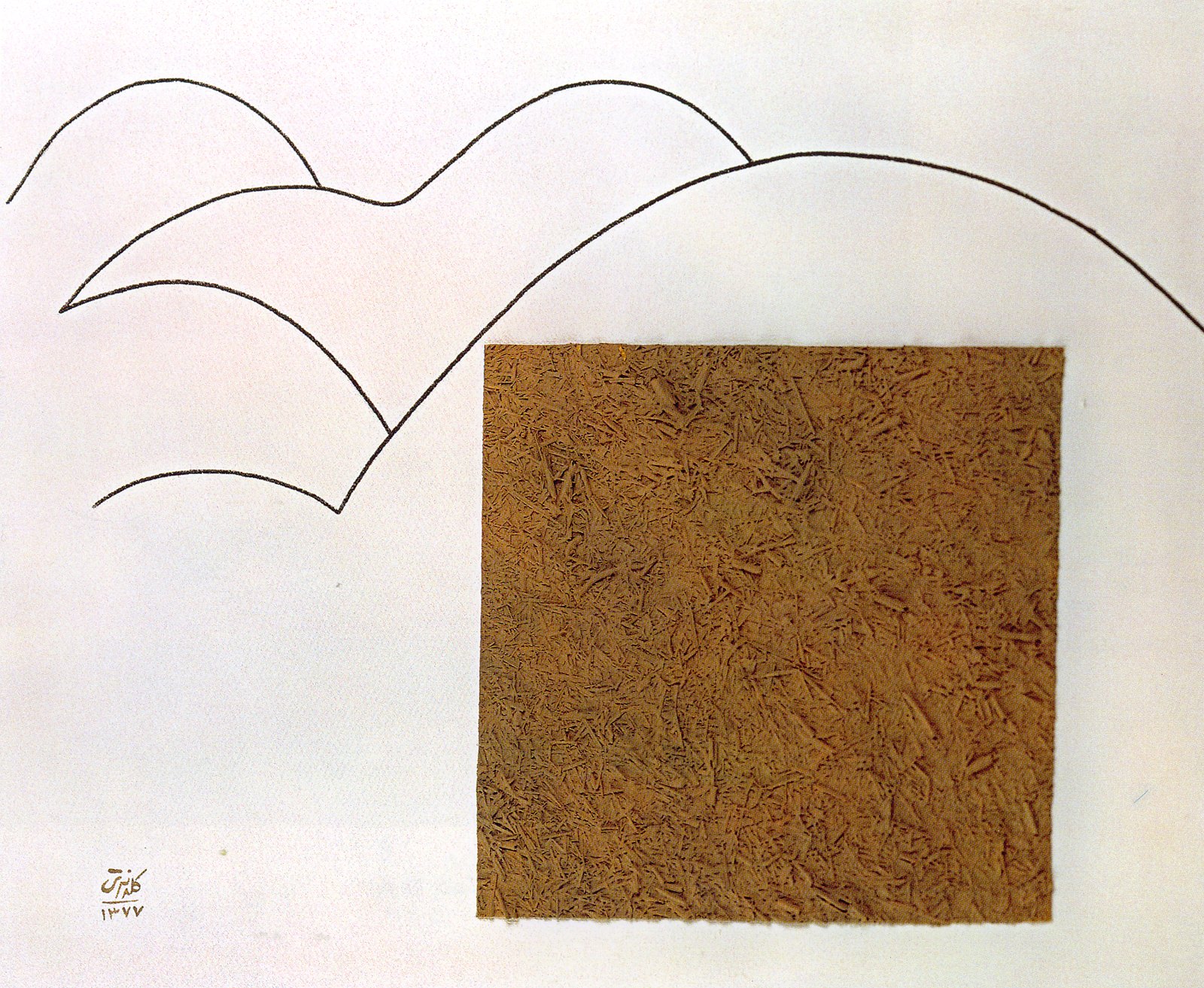
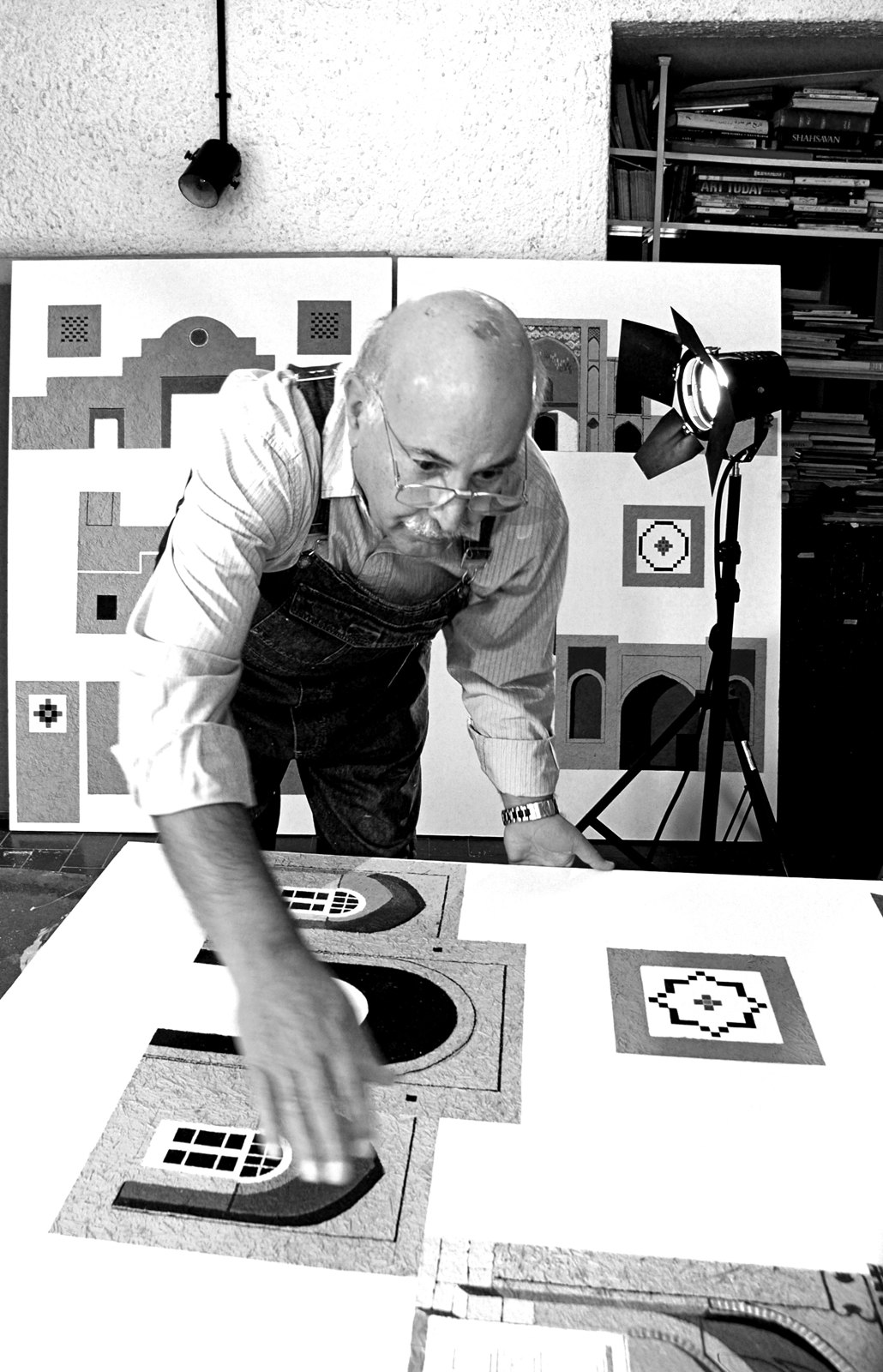
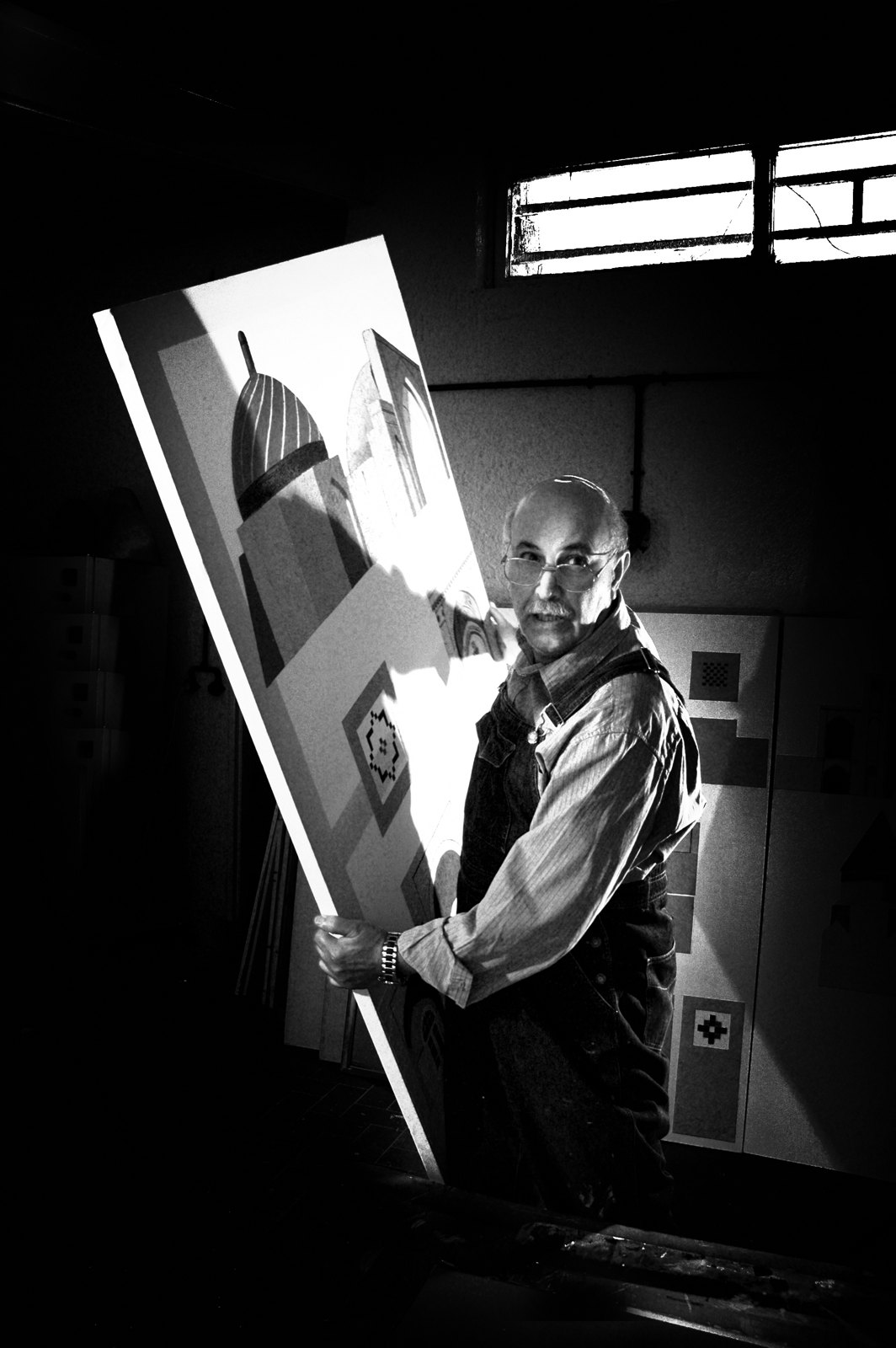
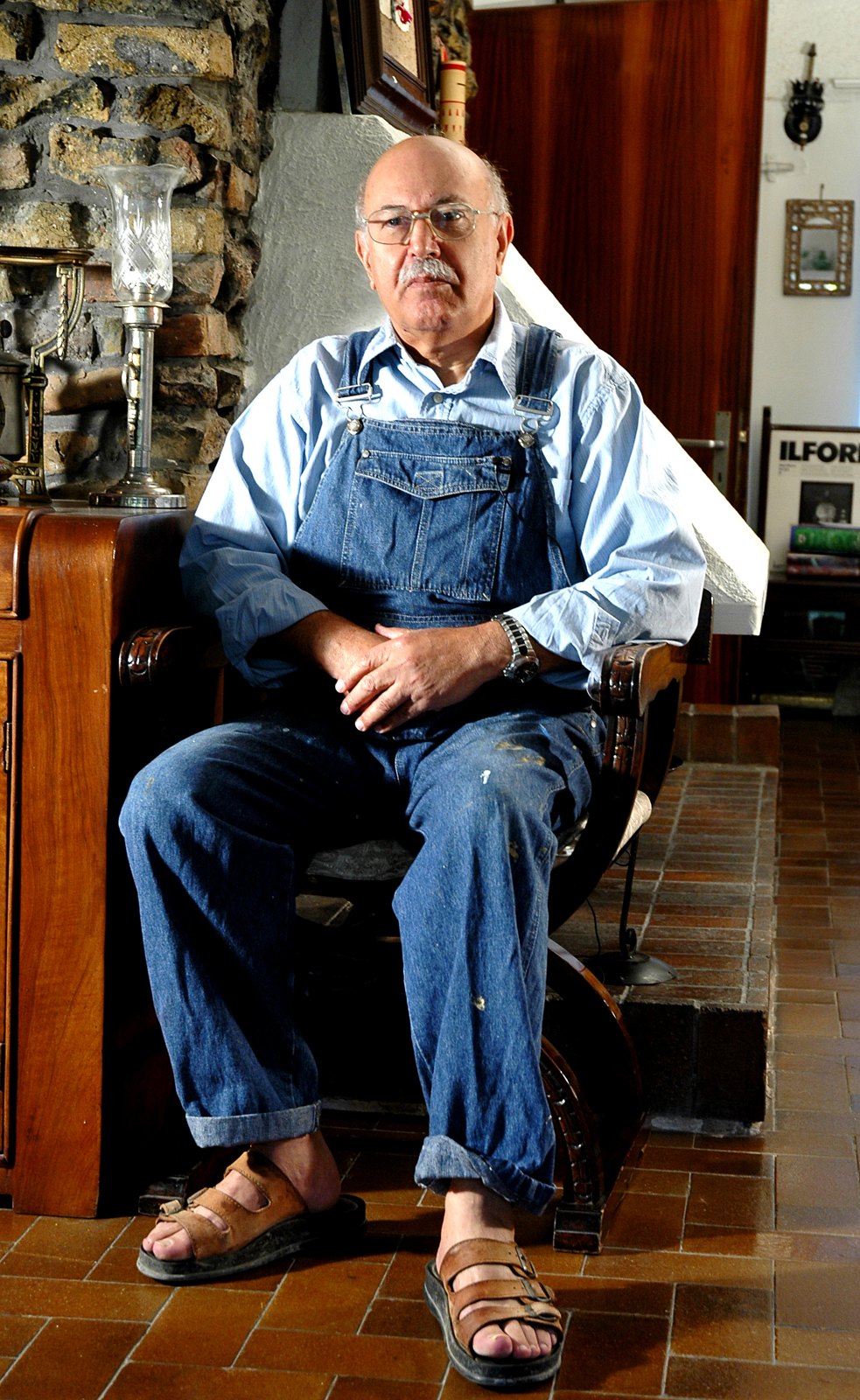
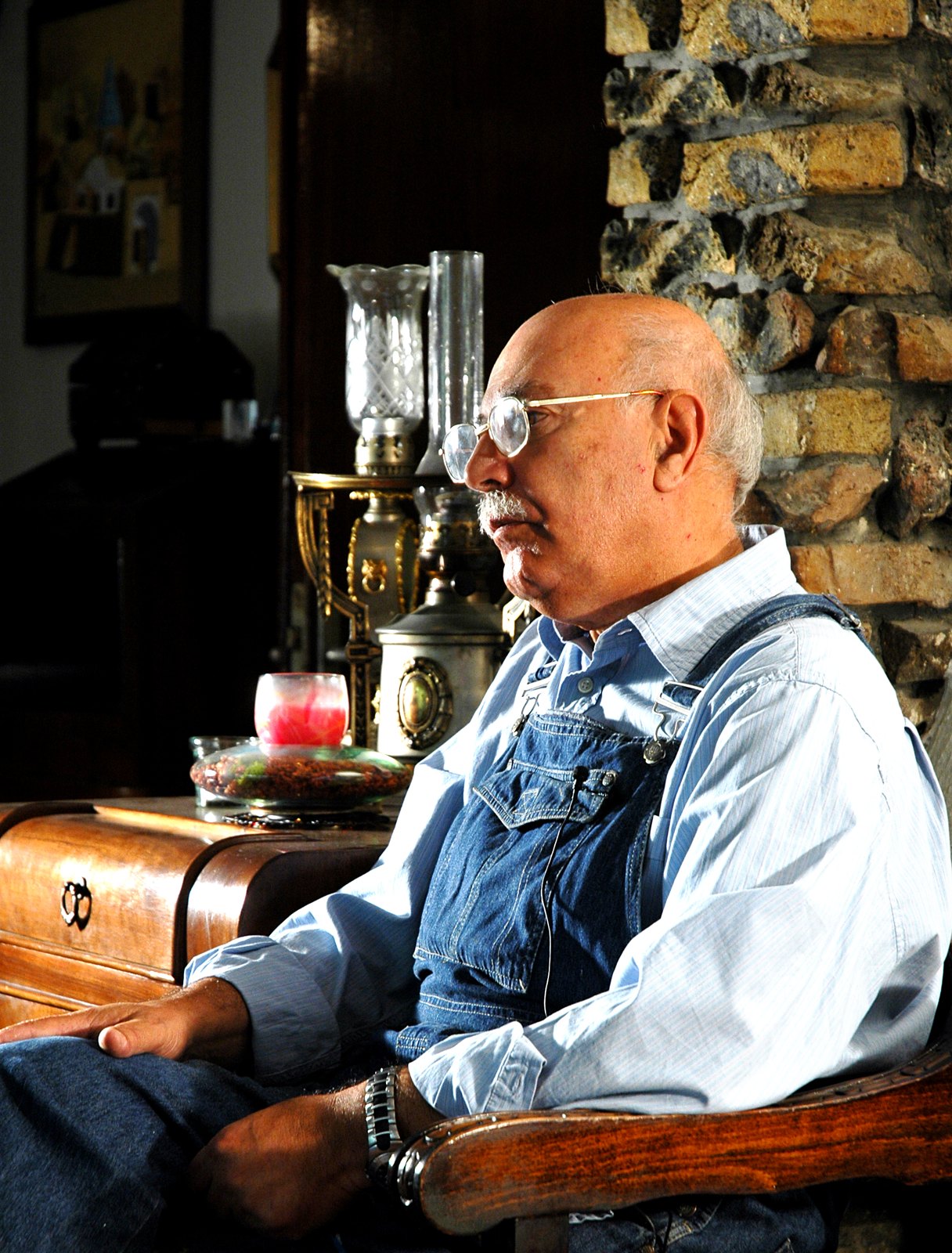
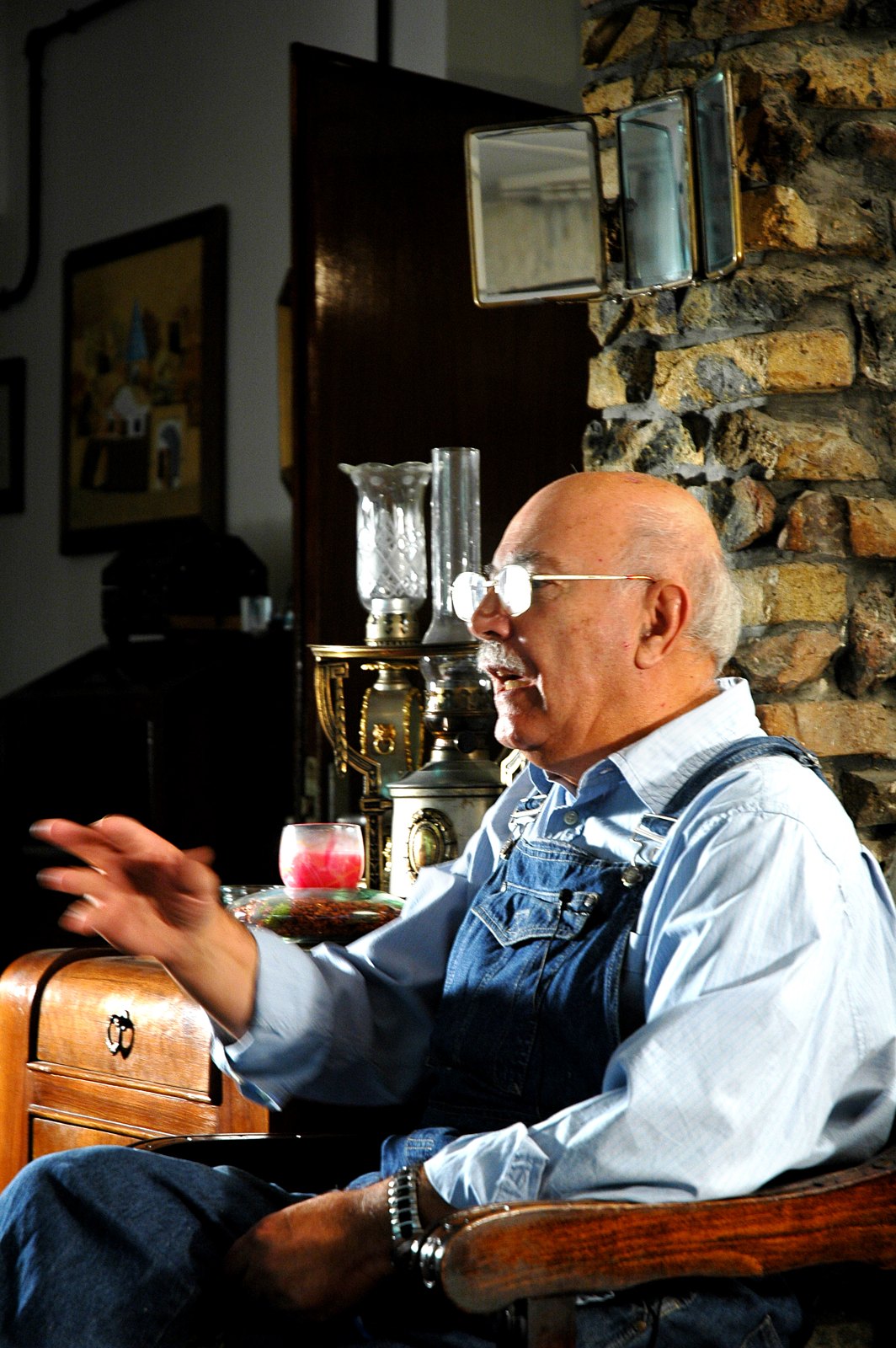
Parviz Kalantari (1931–2016) was an Iranian painter, illustrator and writer, known for paintings made with kahgel, a mixture of earth and straw. His work draws on earthen architecture, nomadic life and the visual traditions of Iran, bringing their materials and forms into modern painting.
پرویز کلانتری (۱۳۱۰–۱۳۹۵)، نقاش، تصویرگر و نویسندهٔ ایرانی، بهویژه با نقاشیهای کاهگلیاش شناخته میشود. او معماری خشتی، زندگی عشایری و سنتهای تصویری ایران را دستمایهٔ آثاری قرار داد که مواد و فرمهای بومی را با نقاشی مدرن پیوند میدهند.
Film
Film by Farivar Hamzeyi · Watch on YouTube
Interview
Edited and translated from the interview transcript supplied by Farivar Hamzeyi. The opening recollections retain the third-person narration of the supplied text.
A childhood of colour and lines
On the first day of the Persian year 1310, as the sun rose and the new year began, a child was born. Having opened his eyes beside the haft-sin table, he was named Parviz.
At two or three, the child wore a long white shirt. Whenever he found a coloured button, he asked his mother to sew it onto the shirt.
Show MoreShow Less
At eight or nine, he took a piece of charcoal and wrote on an alley wall: “If you want to know me, follow this line.” He drew the line in twists and turns, along one alley and into the next, until he suddenly found himself in an unfamiliar neighbourhood. Lost, he began to cry. He thought he could follow his line home, but it had become so tangled that he could no longer find his way.
Learning to see
I began school at Razi Primary School during Reza Shah’s reign. My secondary-school years coincided with the war and the events of September 1941. Afterwards, I entered Tehran’s Faculty of Fine Arts, which had been modelled on the École des Beaux-Arts in Paris. Its library was a window onto the outside world. In its books we encountered modern painters, from Van Gogh and Gauguin to the Post-Impressionists, the Fauves, Picasso, Braque and others. Their work raised many questions for us. There was fertile ground for exploration and new ideas.
I cannot remember exactly when I graduated. If I am not mistaken, by 1960 I had finished my studies and travelled to America with a group of textbook authors, because I illustrated schoolbooks. After returning to Iran, I held an exhibition at the faculty. That led to an invitation to teach drawing part-time, to architecture and sculpture students. Becoming a drawing teacher was decisive for me.
As a student, I had already found work in advertising as a graphic artist. At that time, a fine-arts student might paint a good portrait or work in oils, but would not necessarily know how to meet the advertising industry’s graphic needs with ink and paper. I was one of the few working in that field. I also became involved in a major textbook project with Zaman Zamani, another fine-arts graduate who was a few years older than me. Together we undertook the painting and illustration of schoolbooks.
A material that chose me
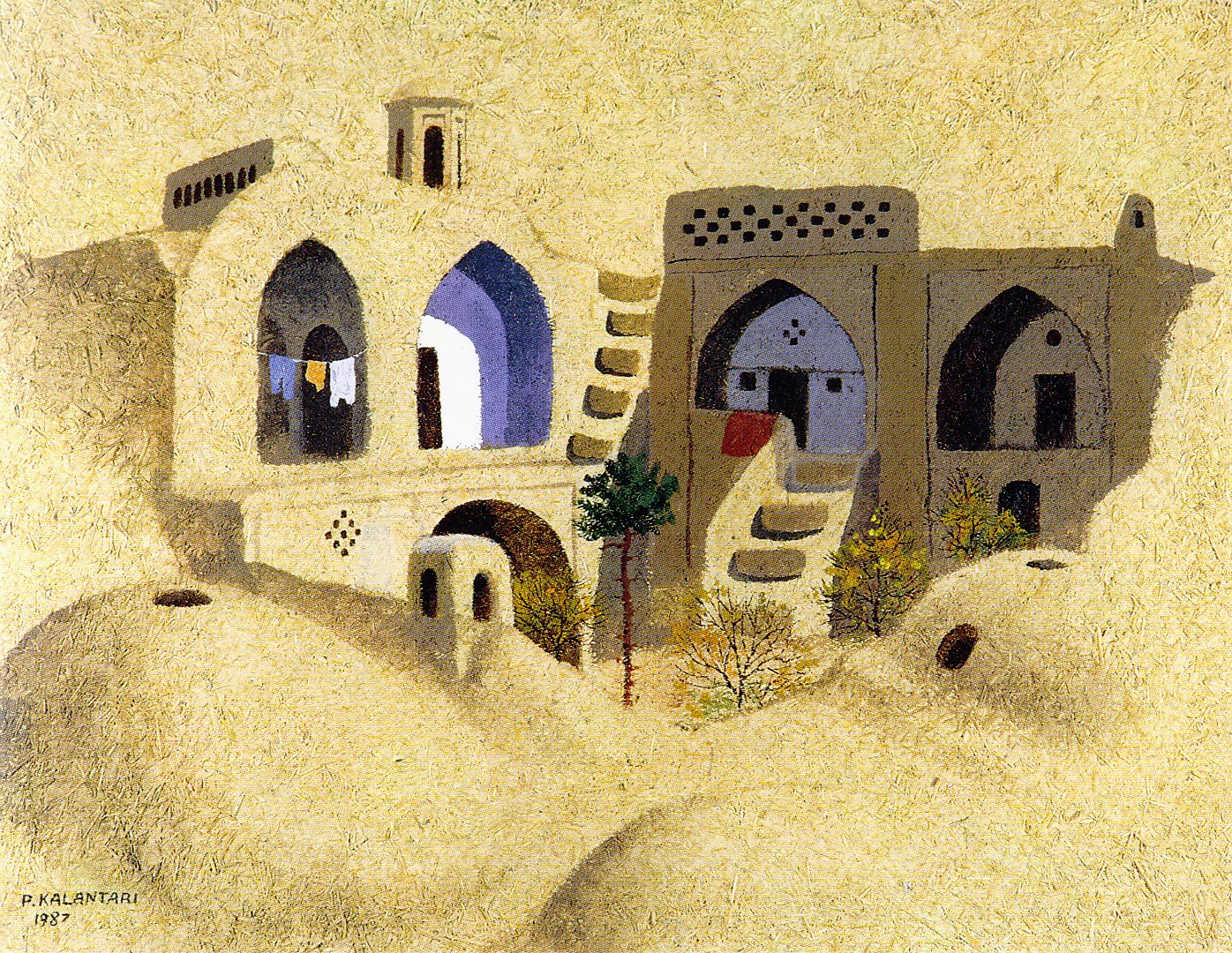
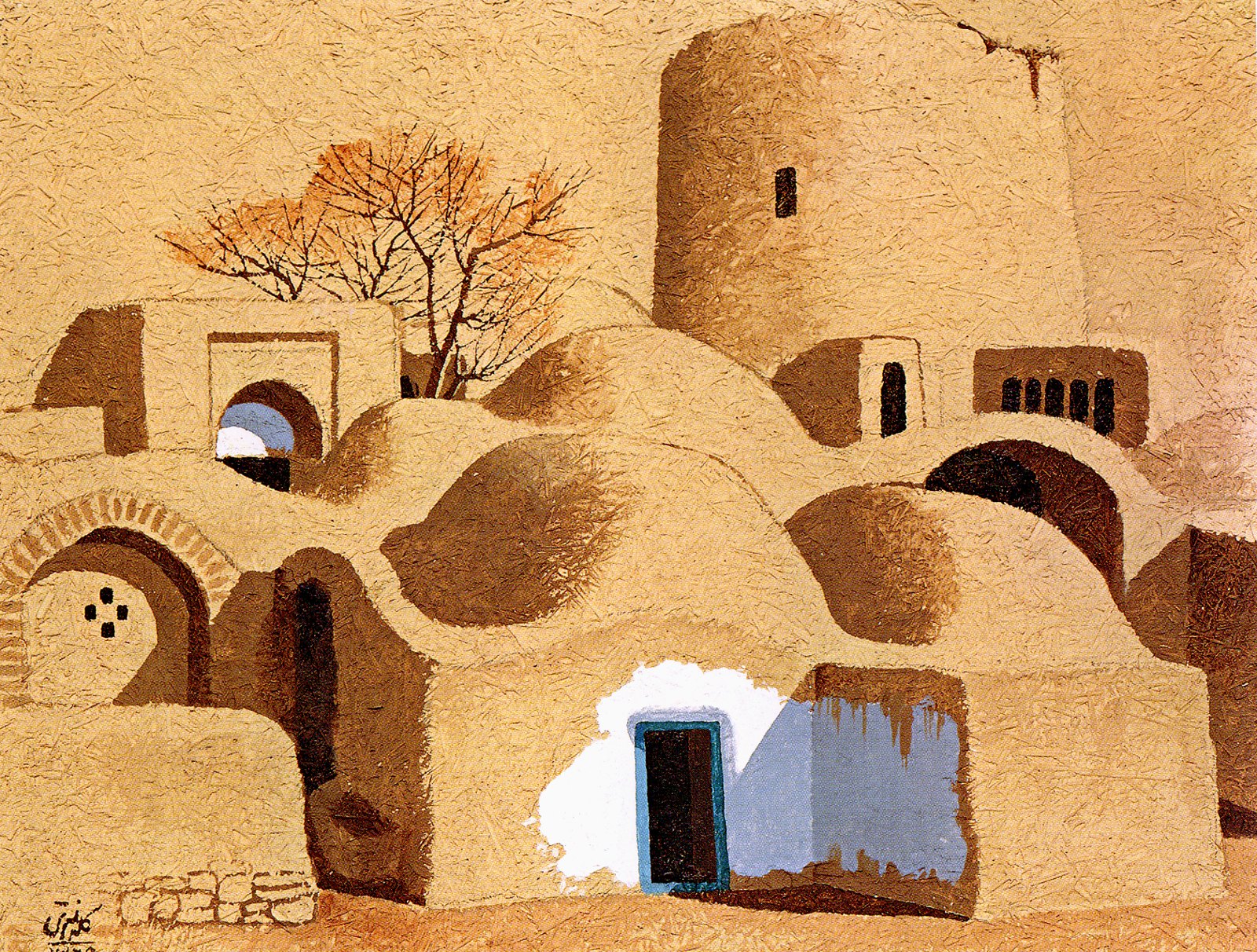
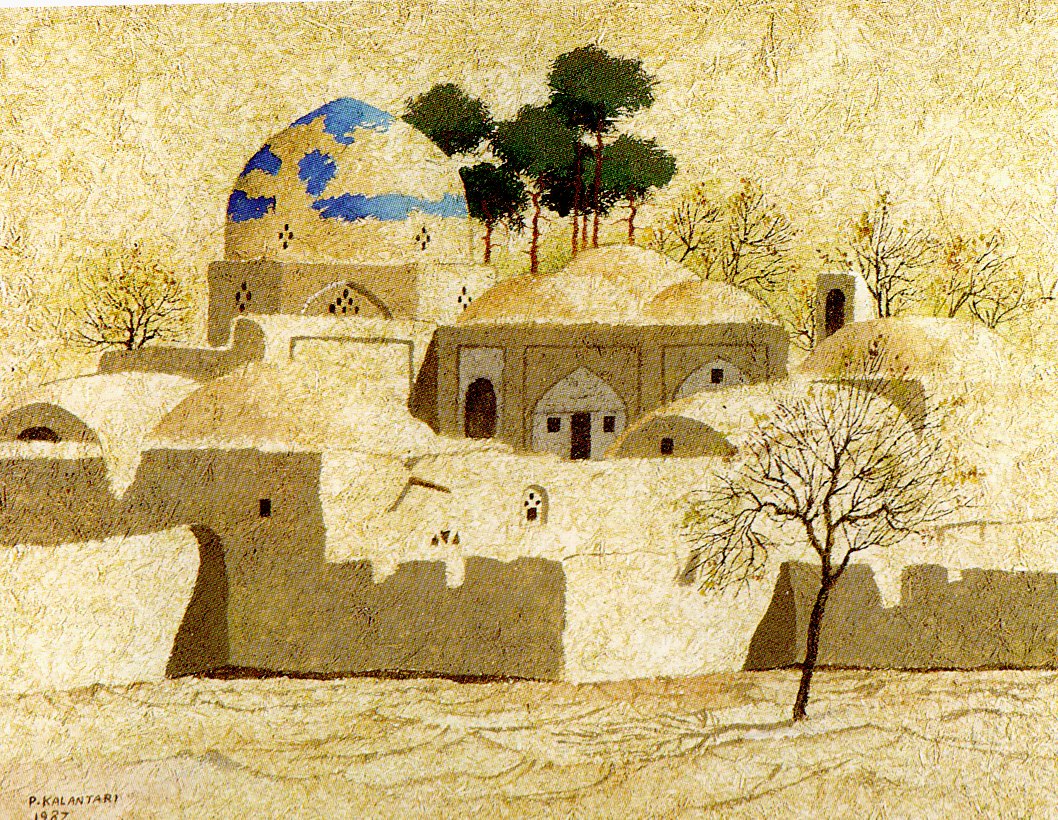
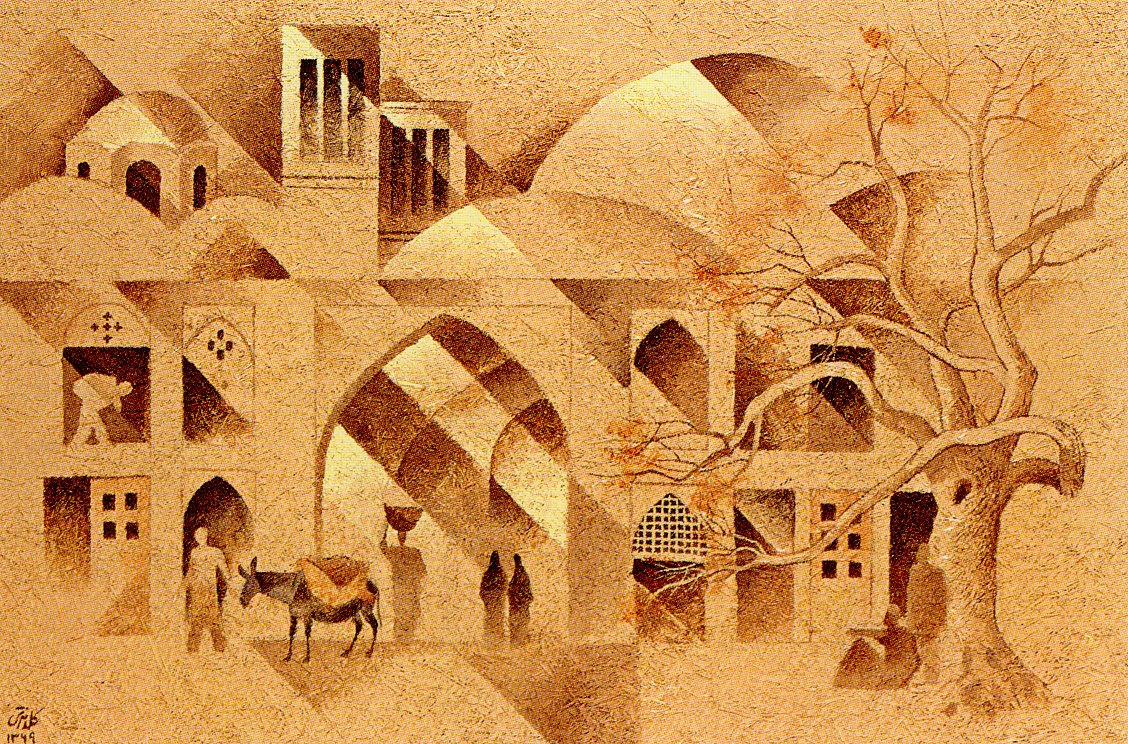
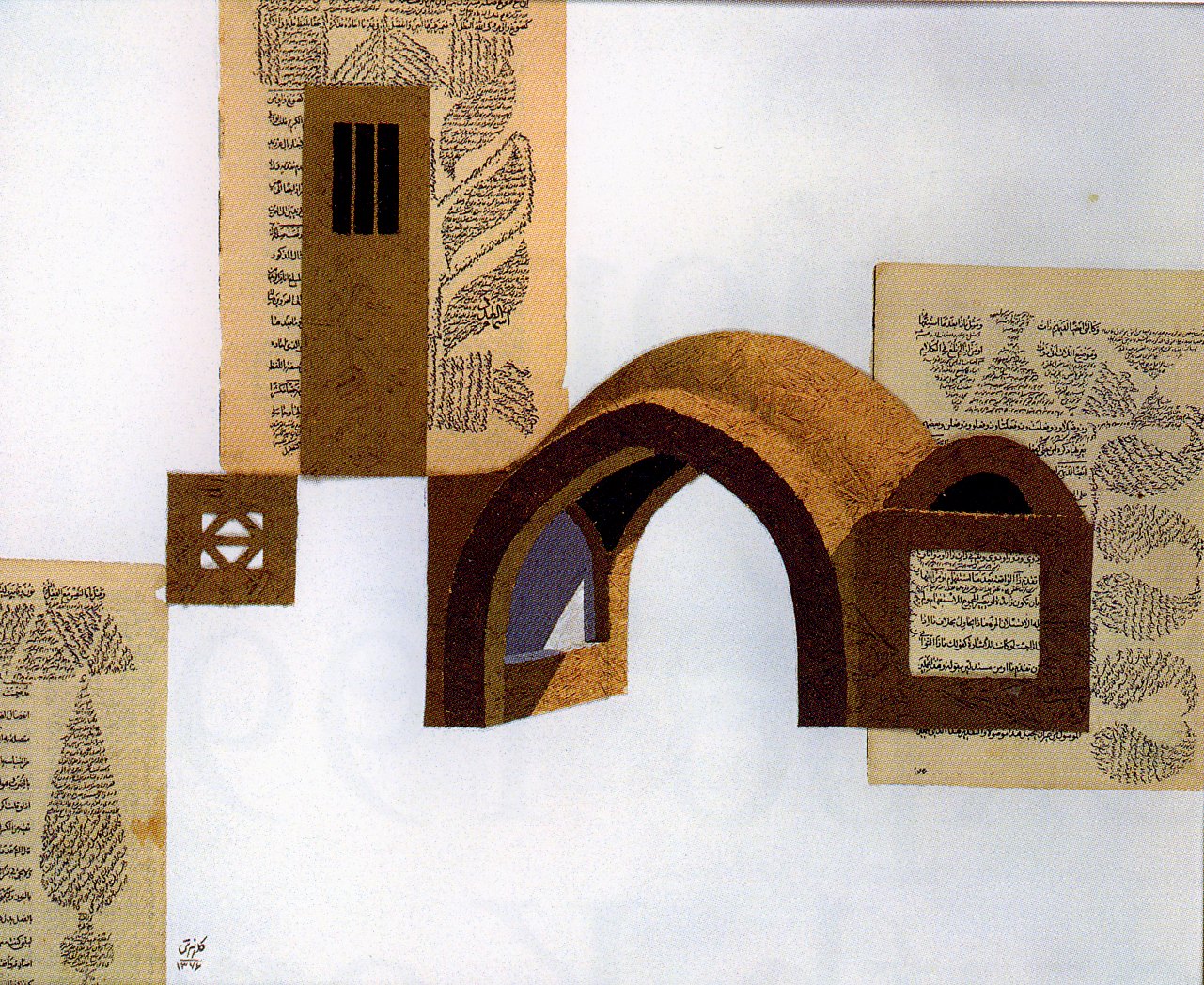
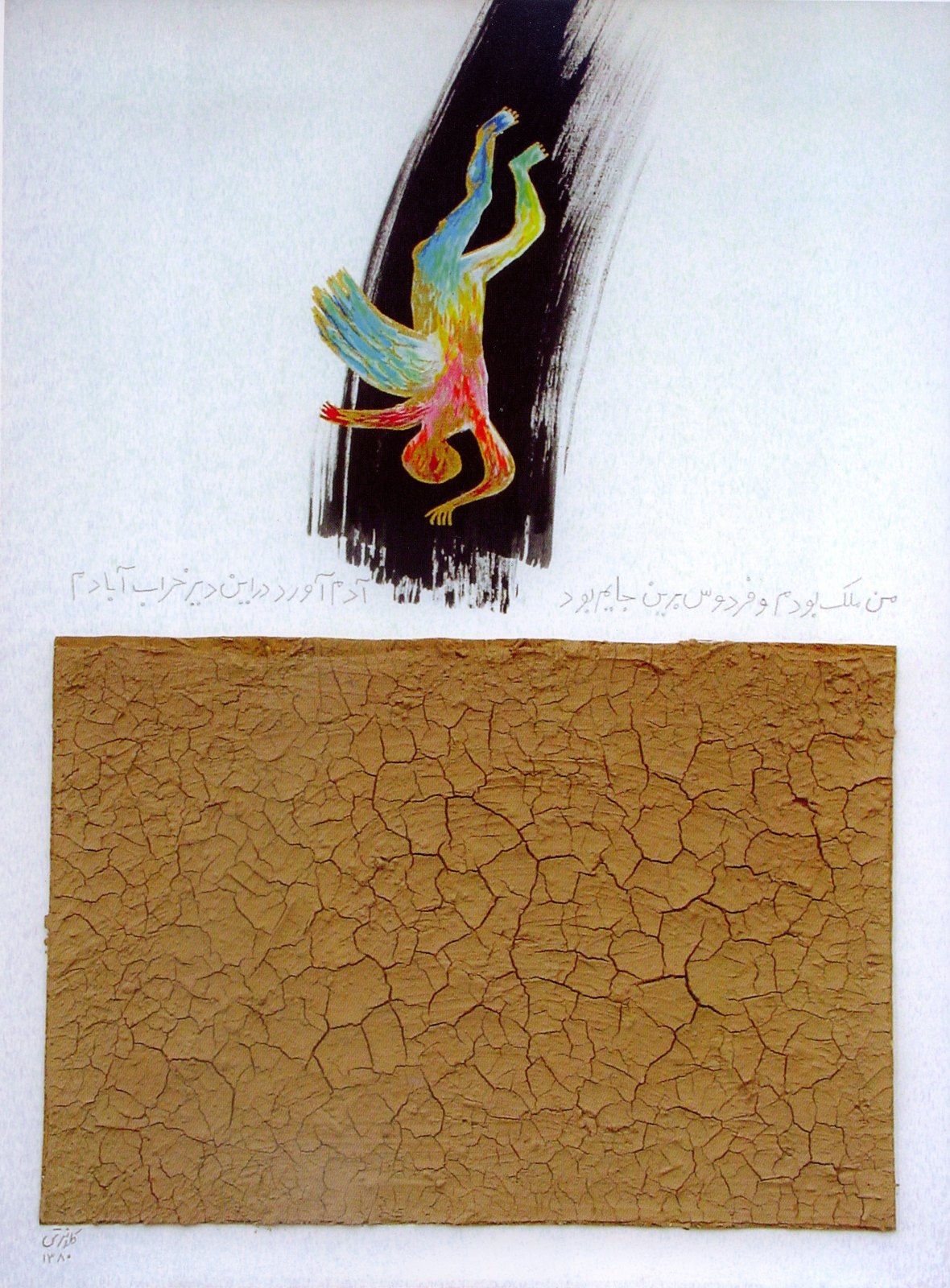
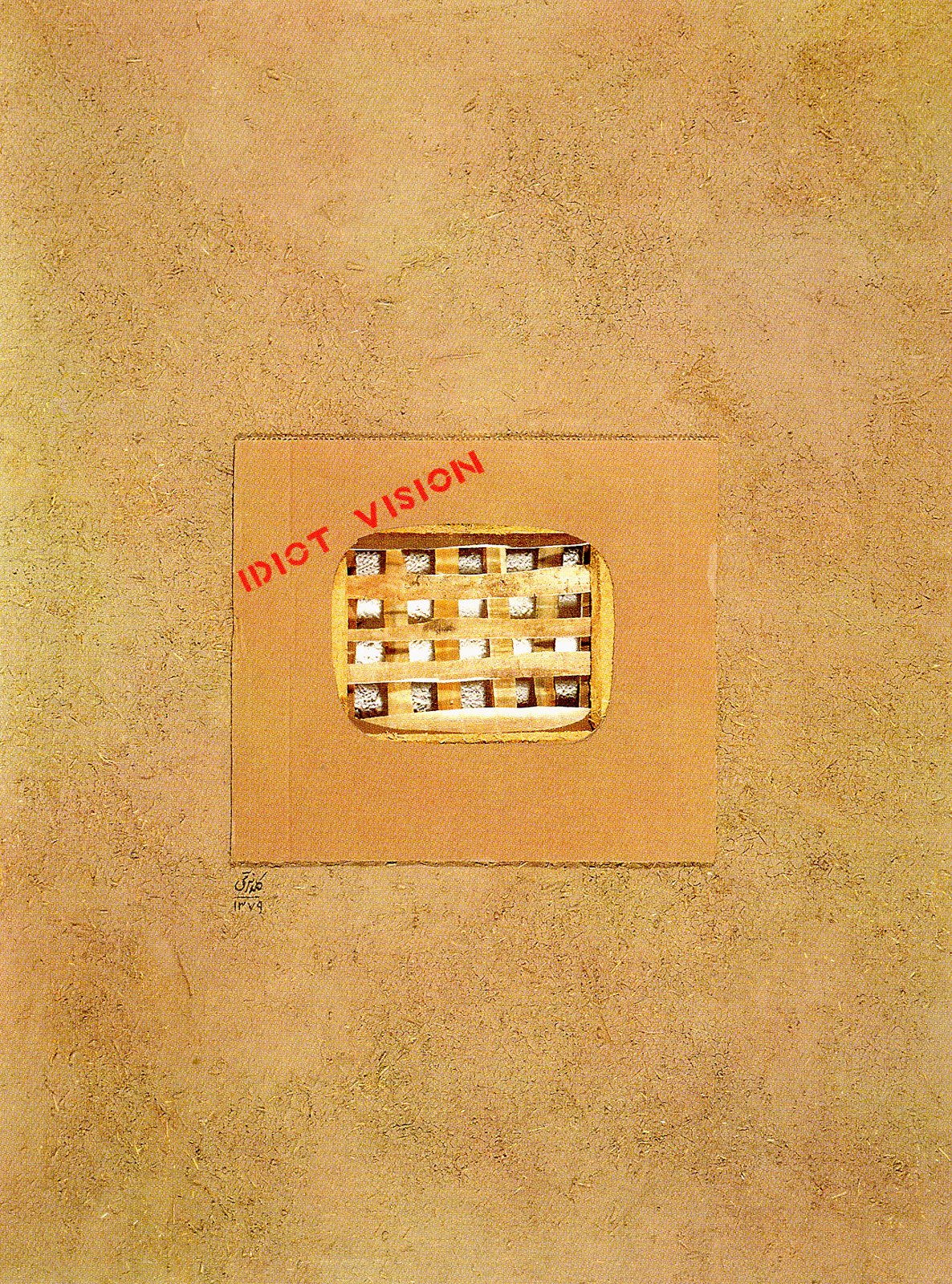
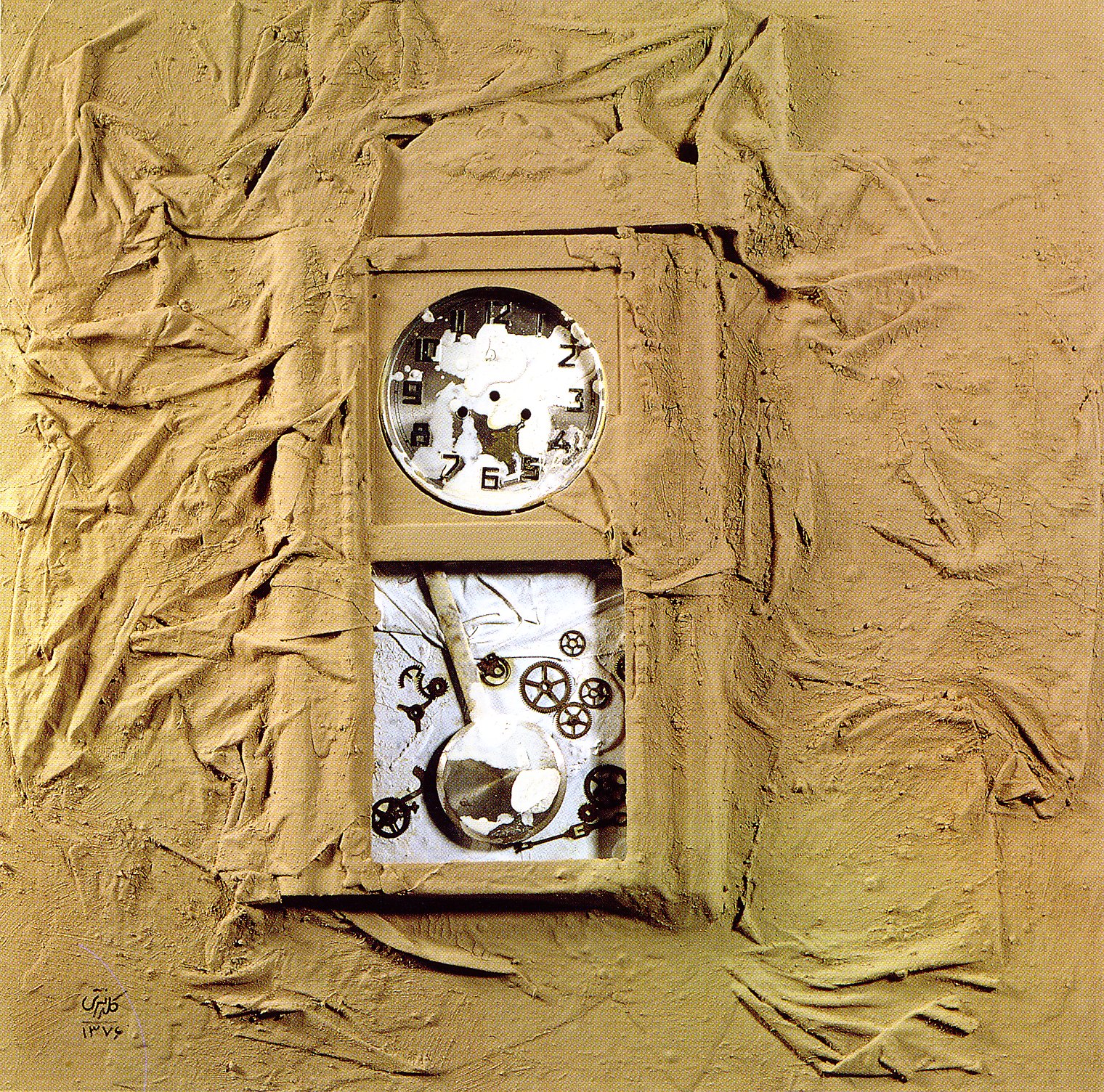
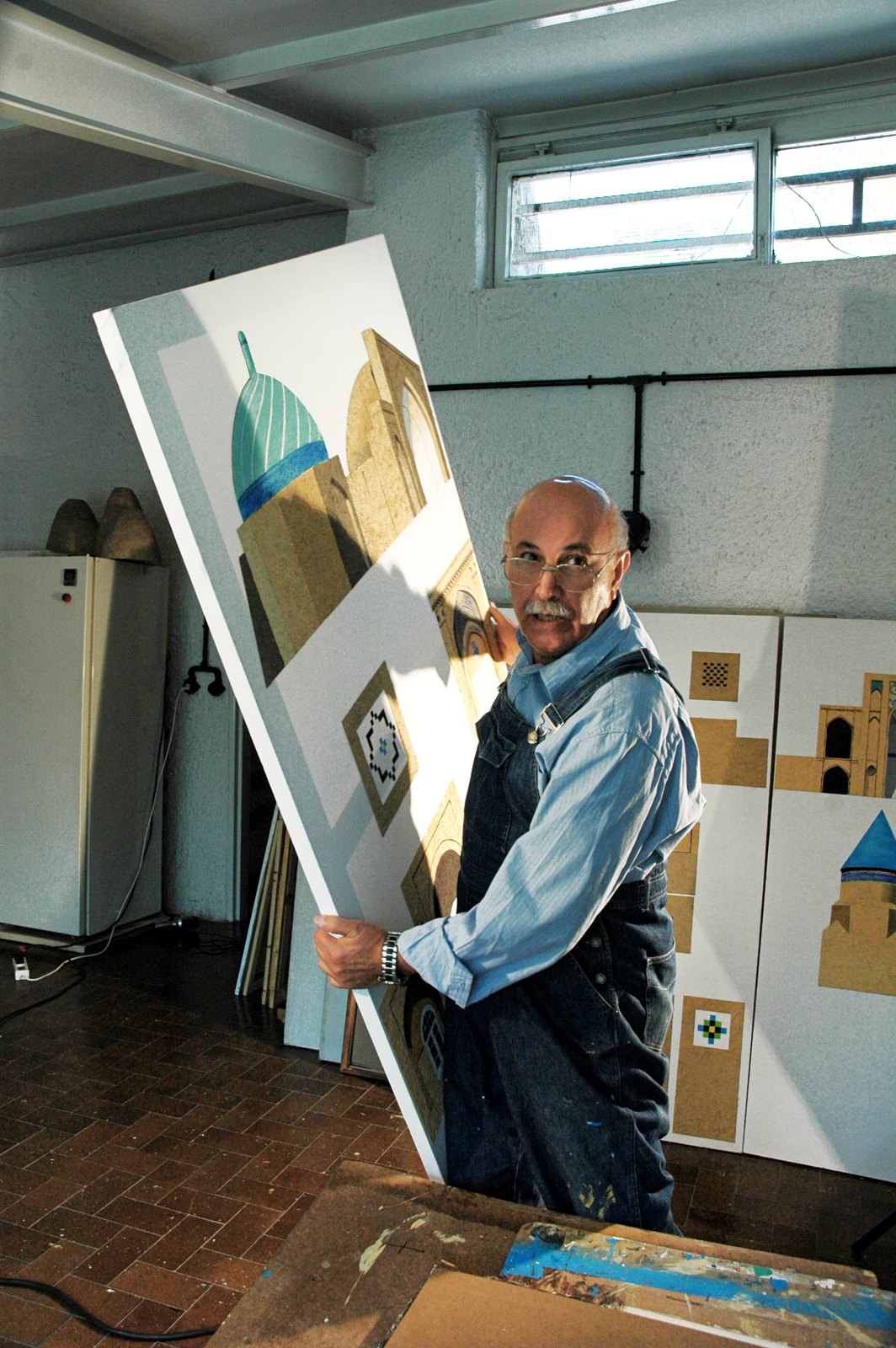
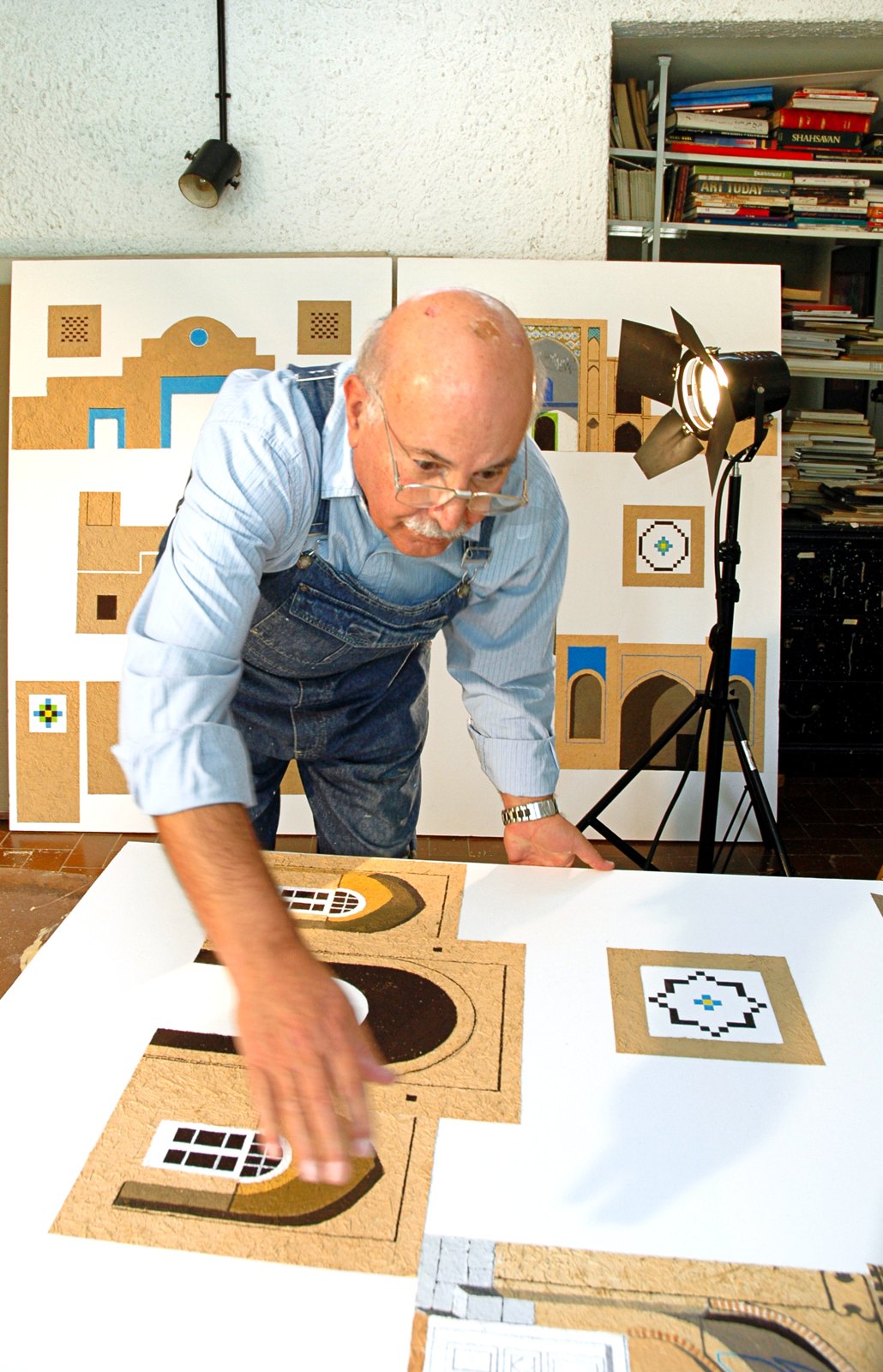
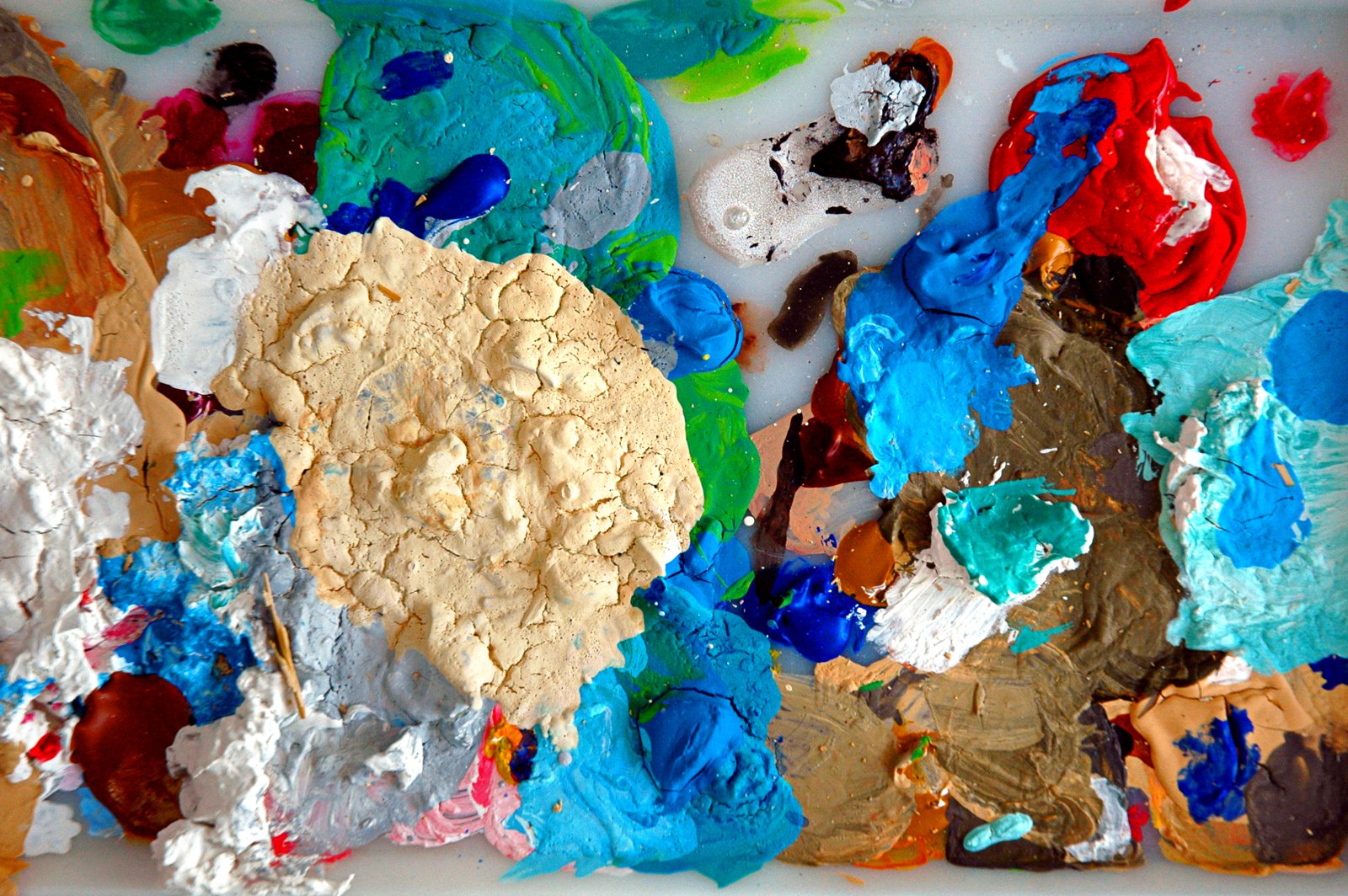
It was not really I who went looking for a style; the style chose me. While teaching architecture students to draw, I took them in the faculty bus to places such as the Bam Citadel and Kashan. They drew the earthen and adobe buildings. For five years I kept looking at those landscapes. Eventually, I painted them directly onto kahgel, a mixture of earth and straw. That was how my kahgel paintings began. I exhibited them at Seyhoun Gallery, and I have continued using this material ever since.
In the early years, the kahgel would crumble. Even when I fixed metal lath to a board and covered it with a centimetre of earth before painting, it remained vulnerable. Eventually, with the help of polymers, I was able to make the work lighter, larger and more durable.
I have used kahgel in different ways. For a time, I worked in a highly realistic manner. Now I am drawn to a minimal approach: saying very little, expressing the subject with two lines and two adobe bricks.
The moment of making
I am one of those unfortunate painters whose mind starts painting something else while the brush is working on the canvas. There is a good side to that: the mind is so active that, even when one painting is ready to be made, another is already taking shape. But it is also a serious difficulty. If I put aside the work I have planned and follow what my mind demands—what is probably my emotional need at that moment—what happens to the painting for which I had a particular purpose and may have spent a month making studies? Sometimes I follow that inner desire. Sometimes I tell it to wait and continue with the work in hand.
There is one principle in painting to which I remain faithful: the painter must know when to put down the brush. If you keep trying to improve a painting, you can make it worse and worse. A moment comes when the canvas has had enough colour, and you must stop. Whether the result is good or bad, it belongs to that particular moment in time. What matters is your state of mind and feeling at the moment of creation. Those feelings change; taste and sensibility develop. All of that is reflected in the work.
Alongside Iran’s nomads
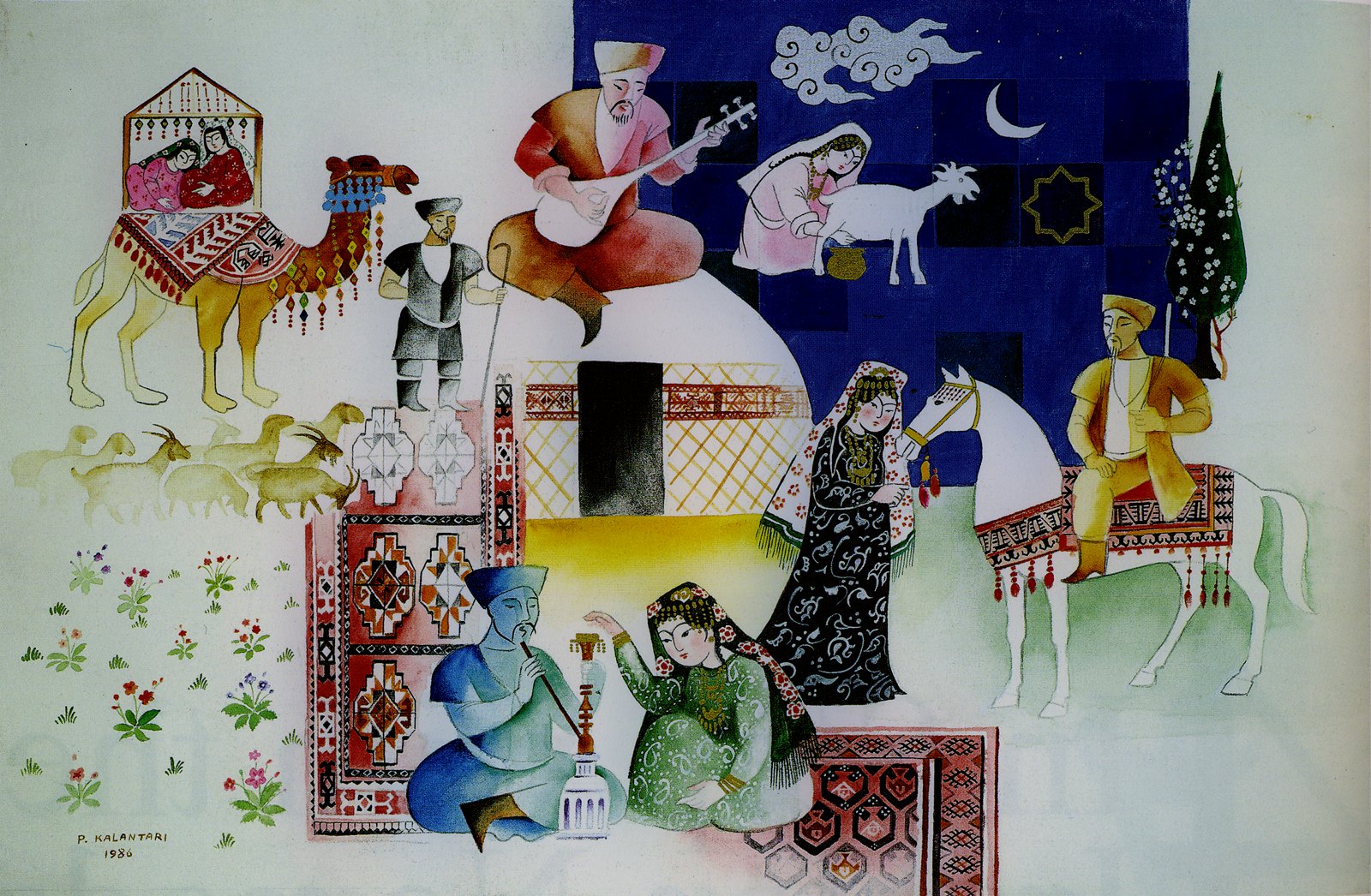
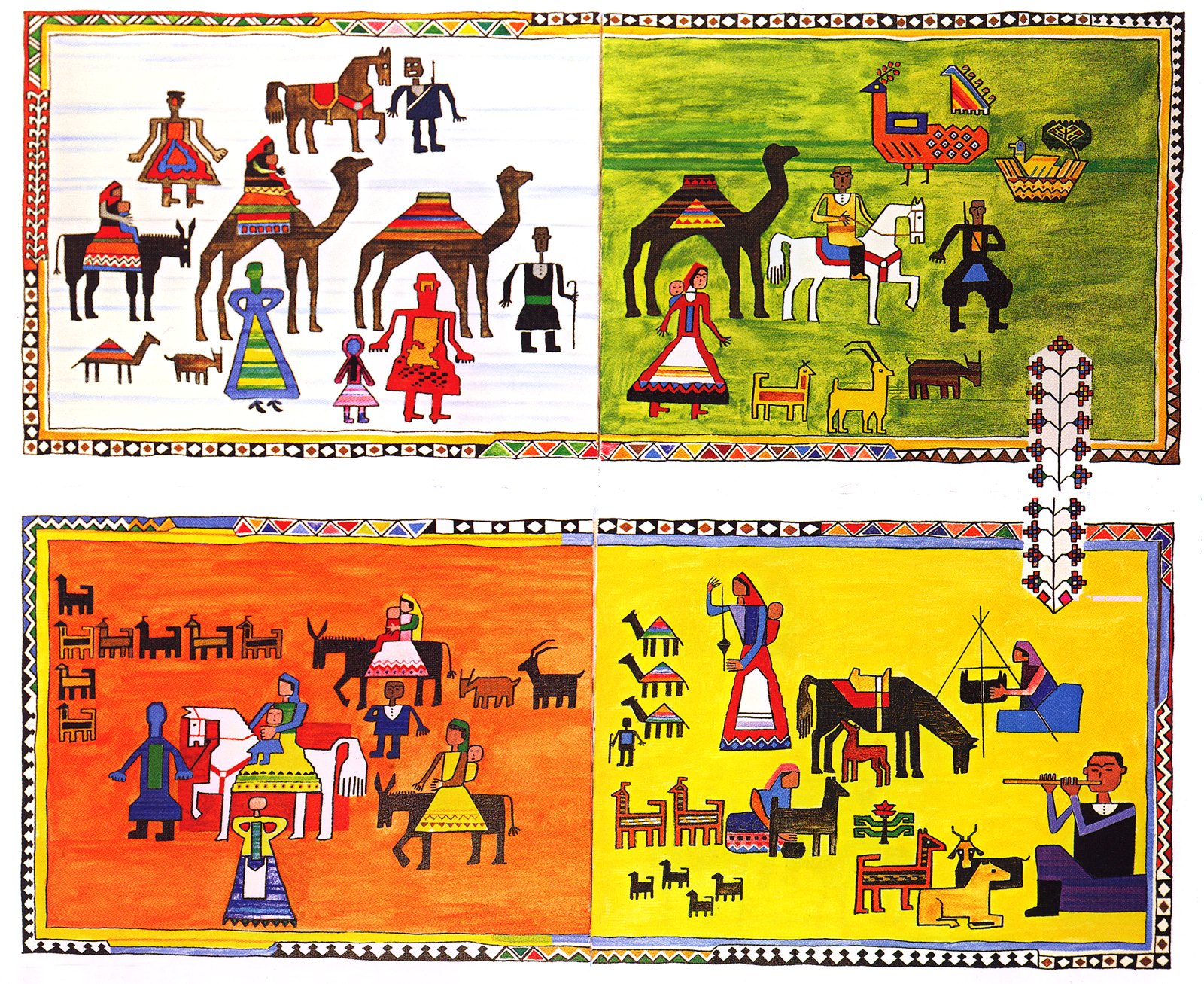
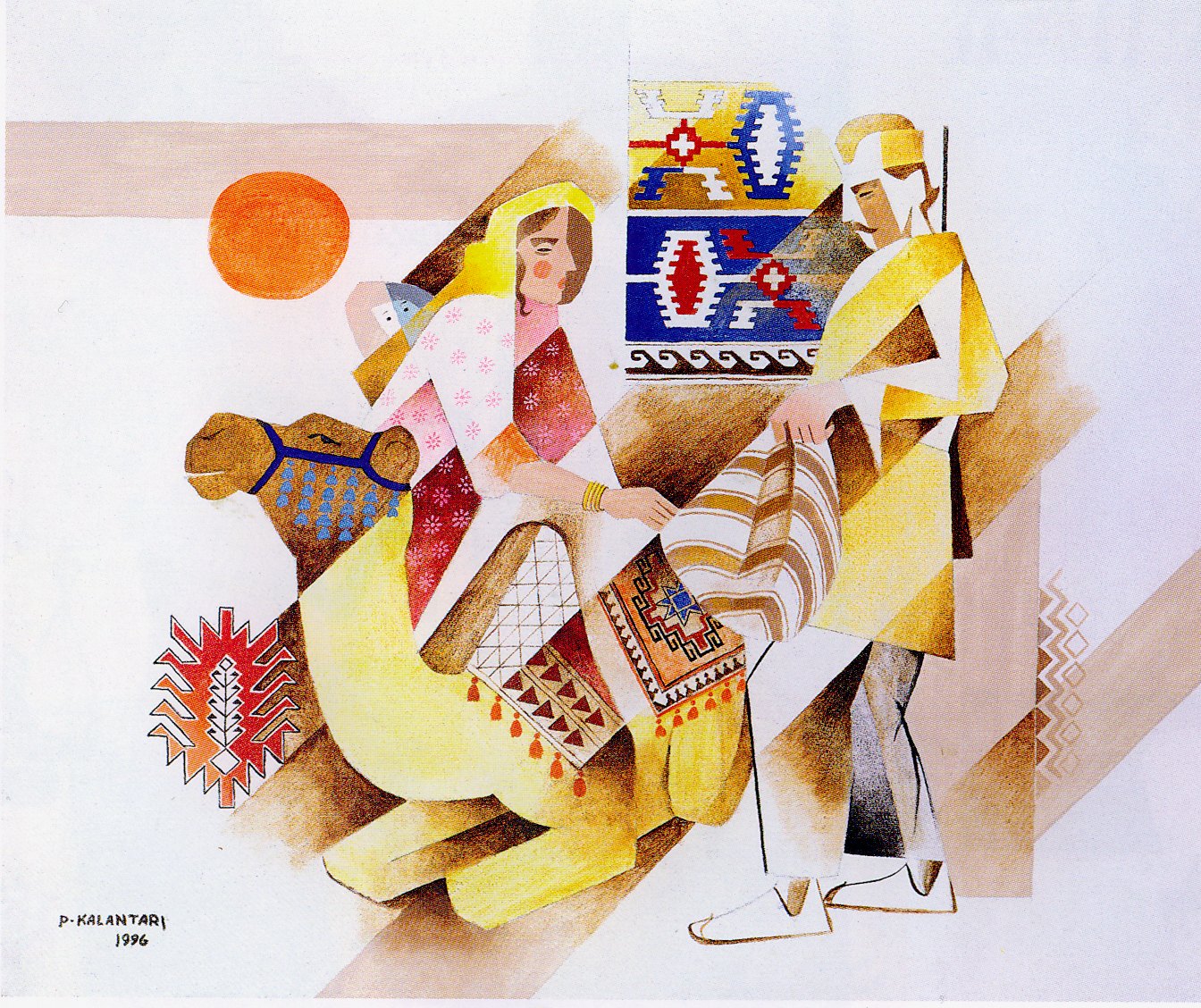
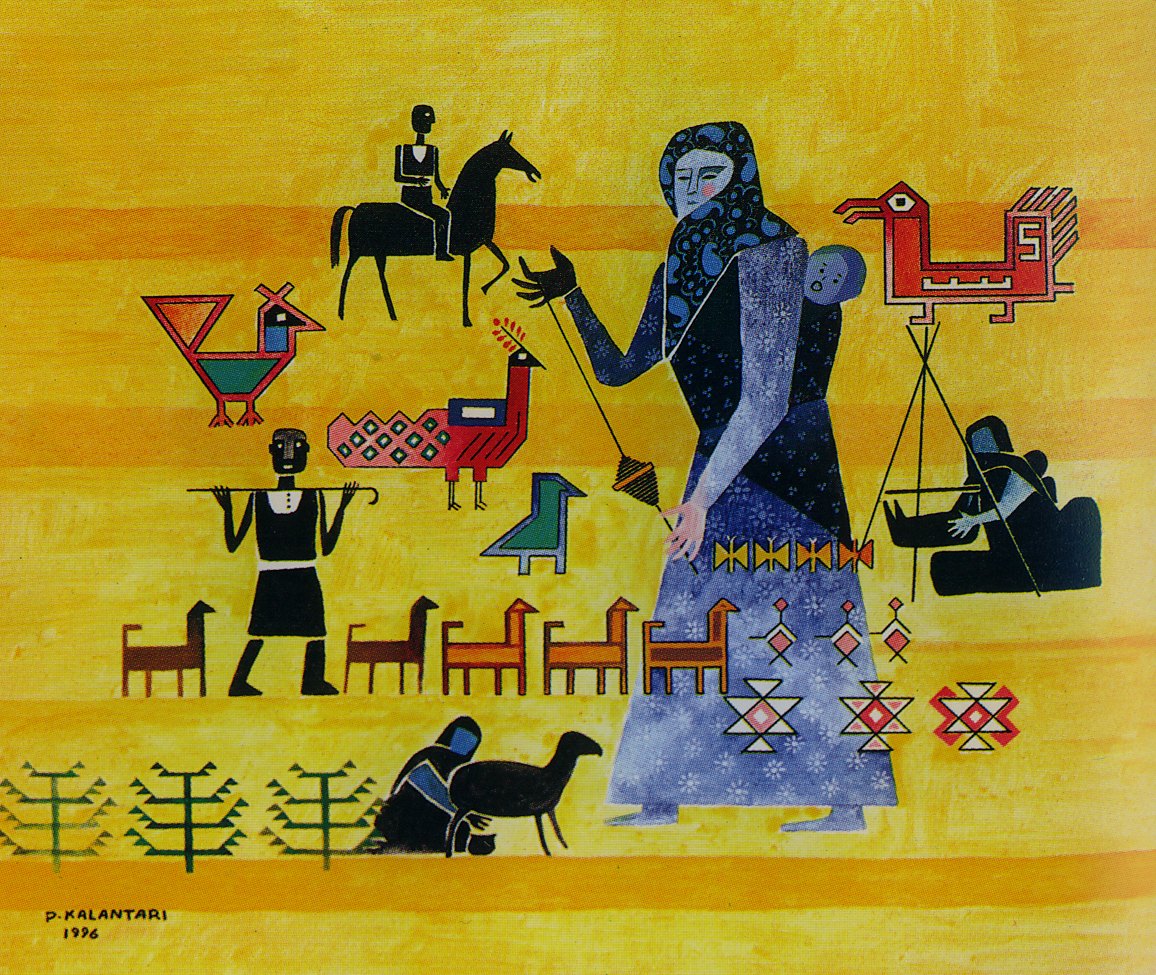
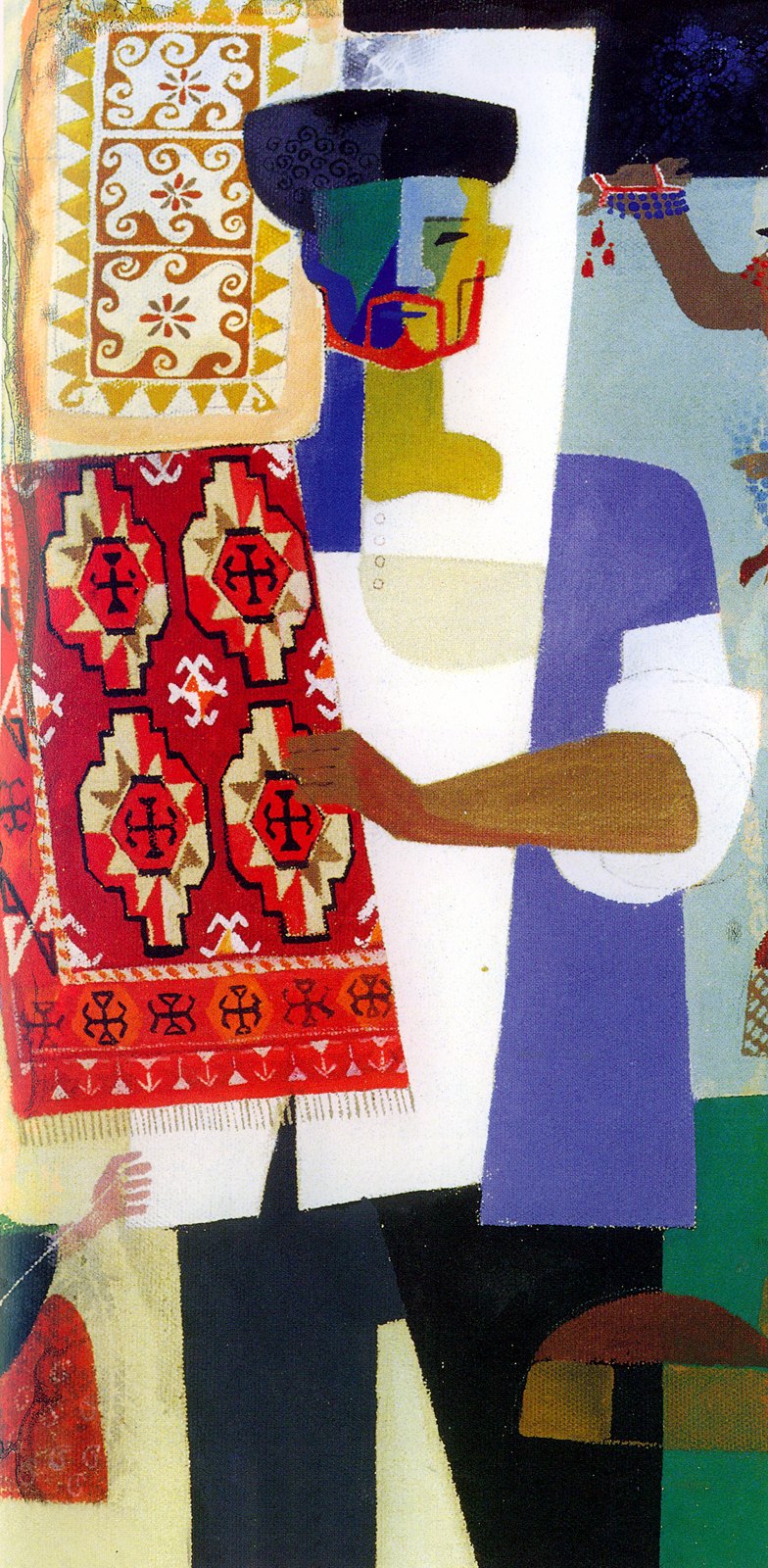
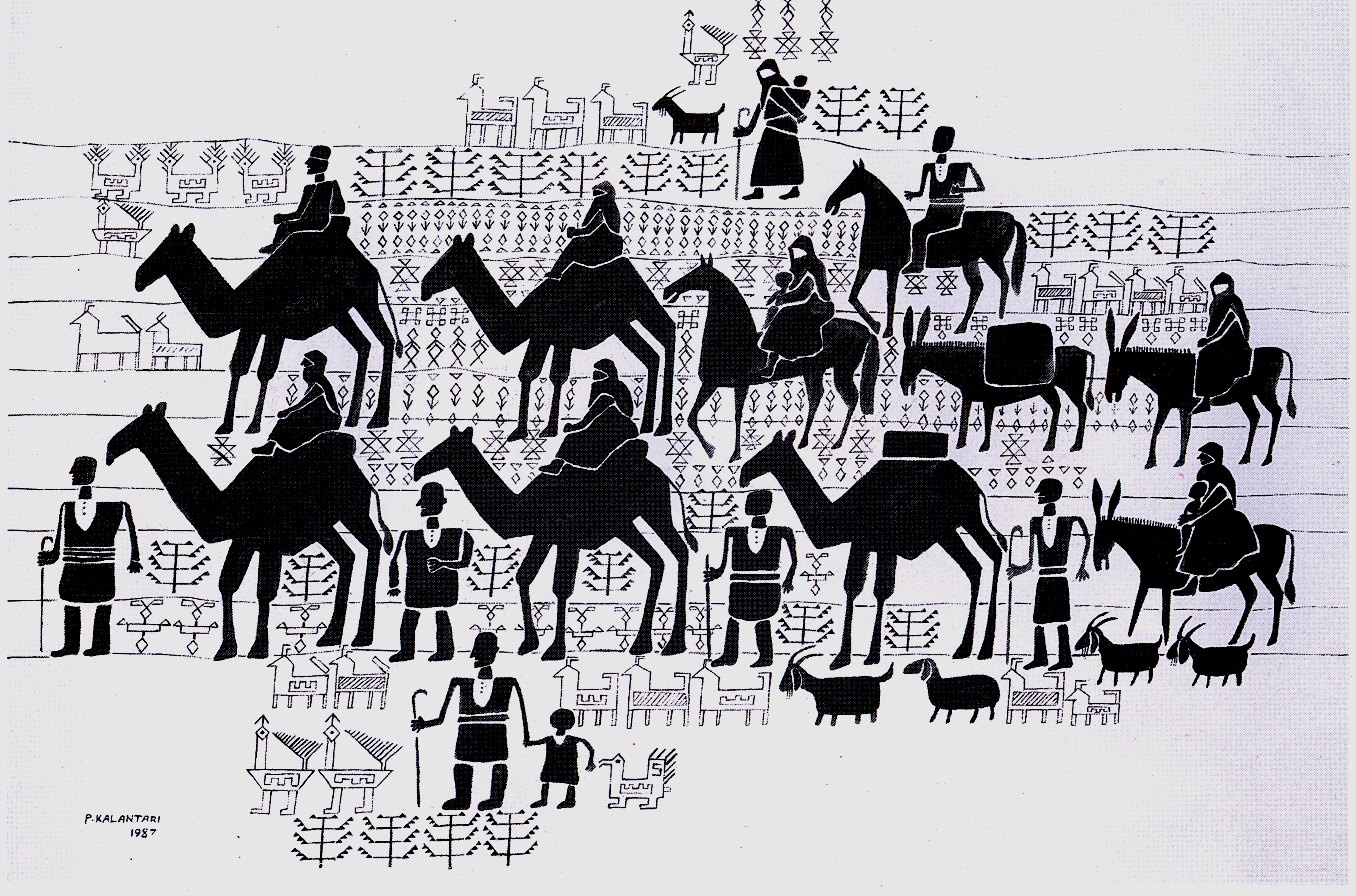
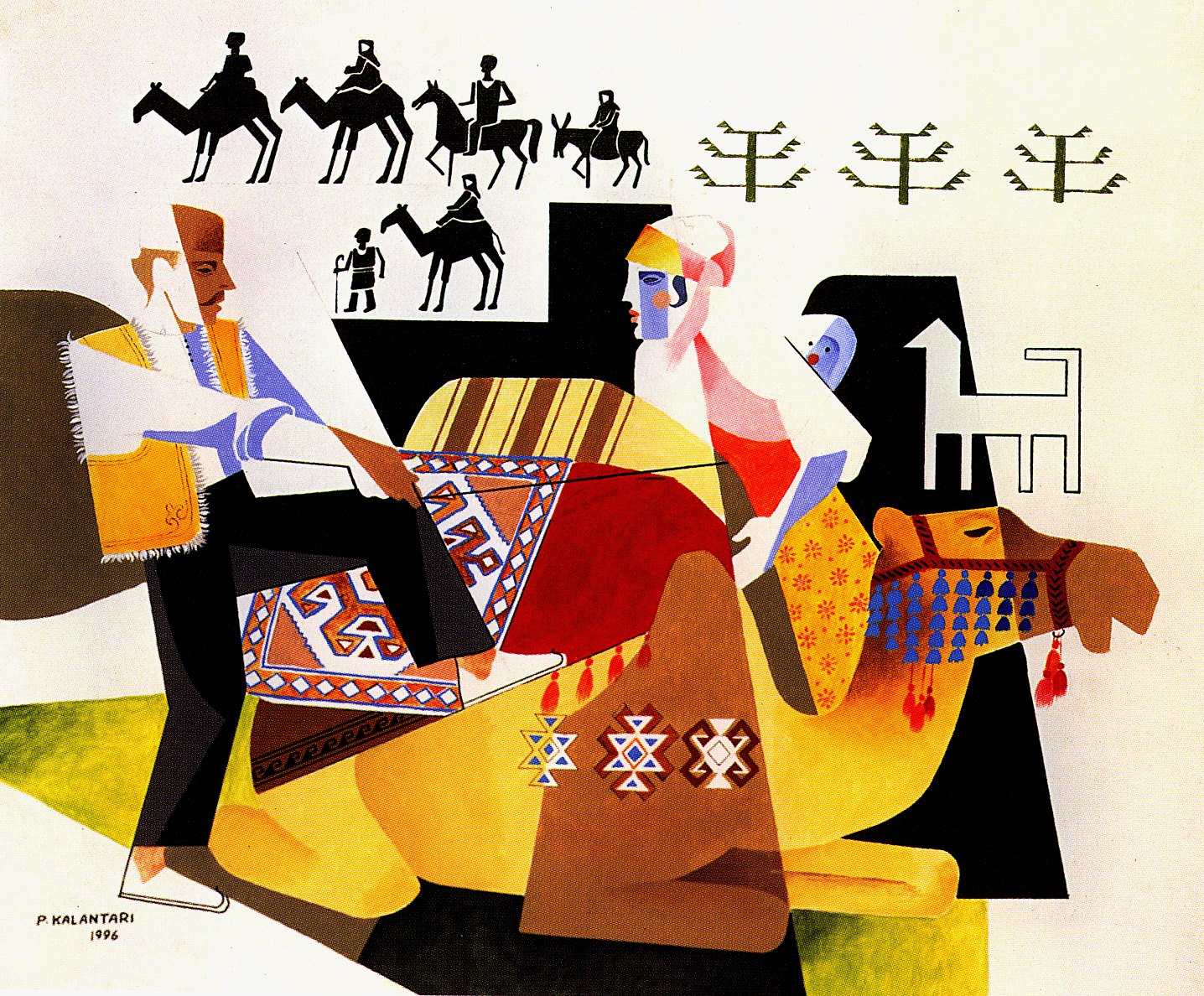
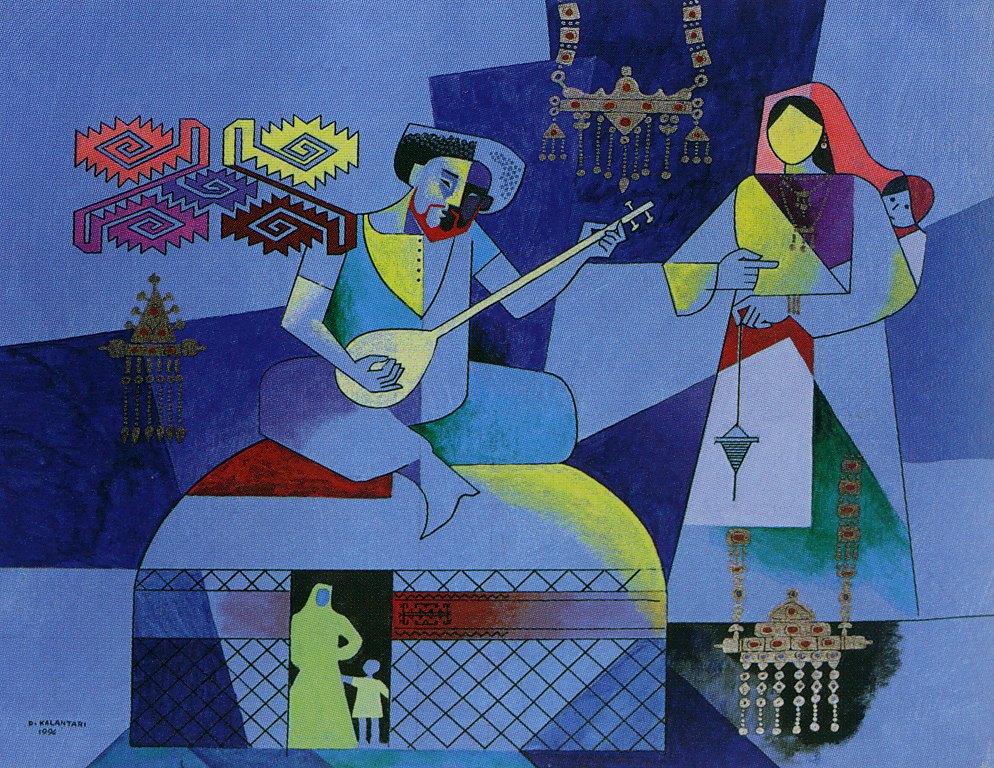
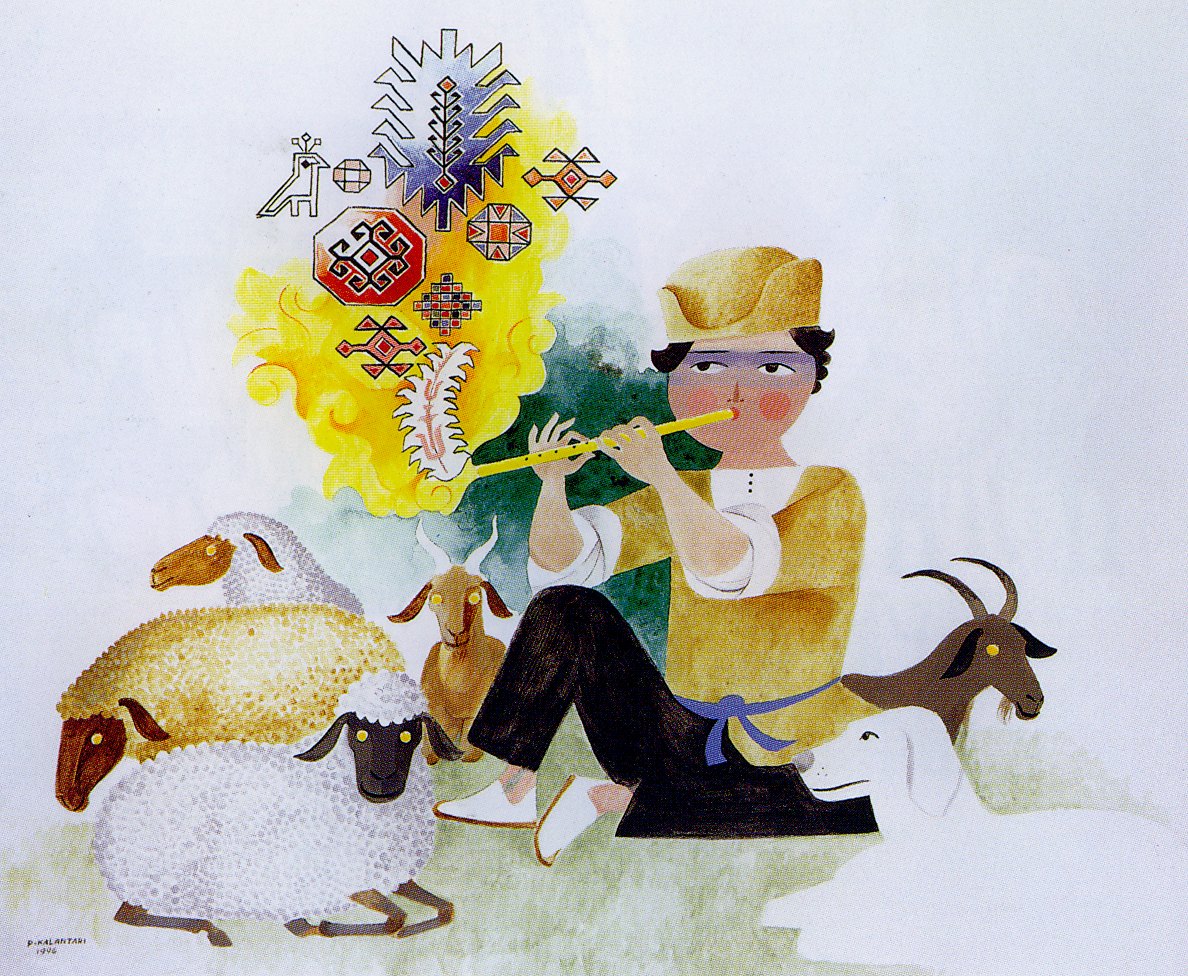
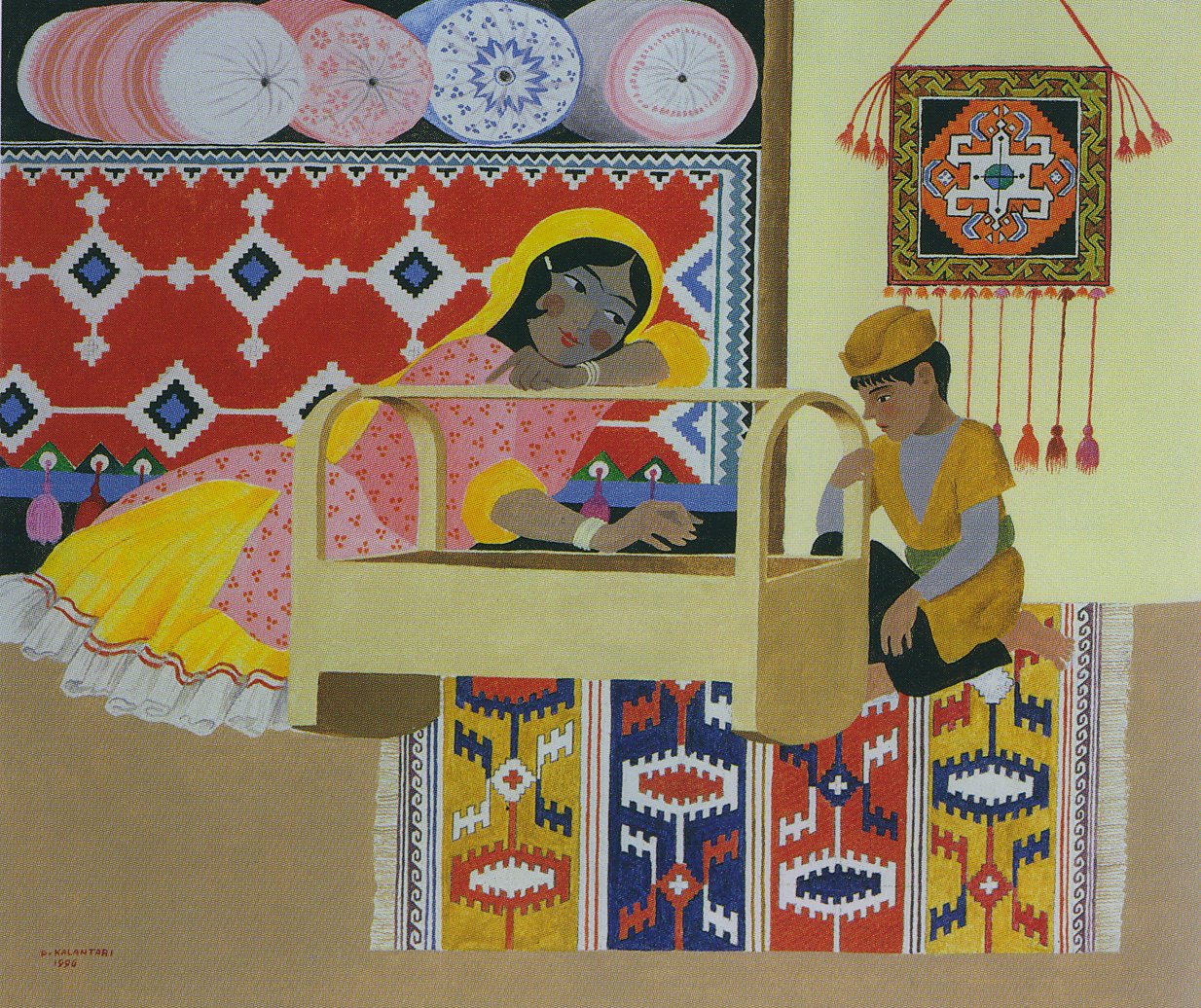
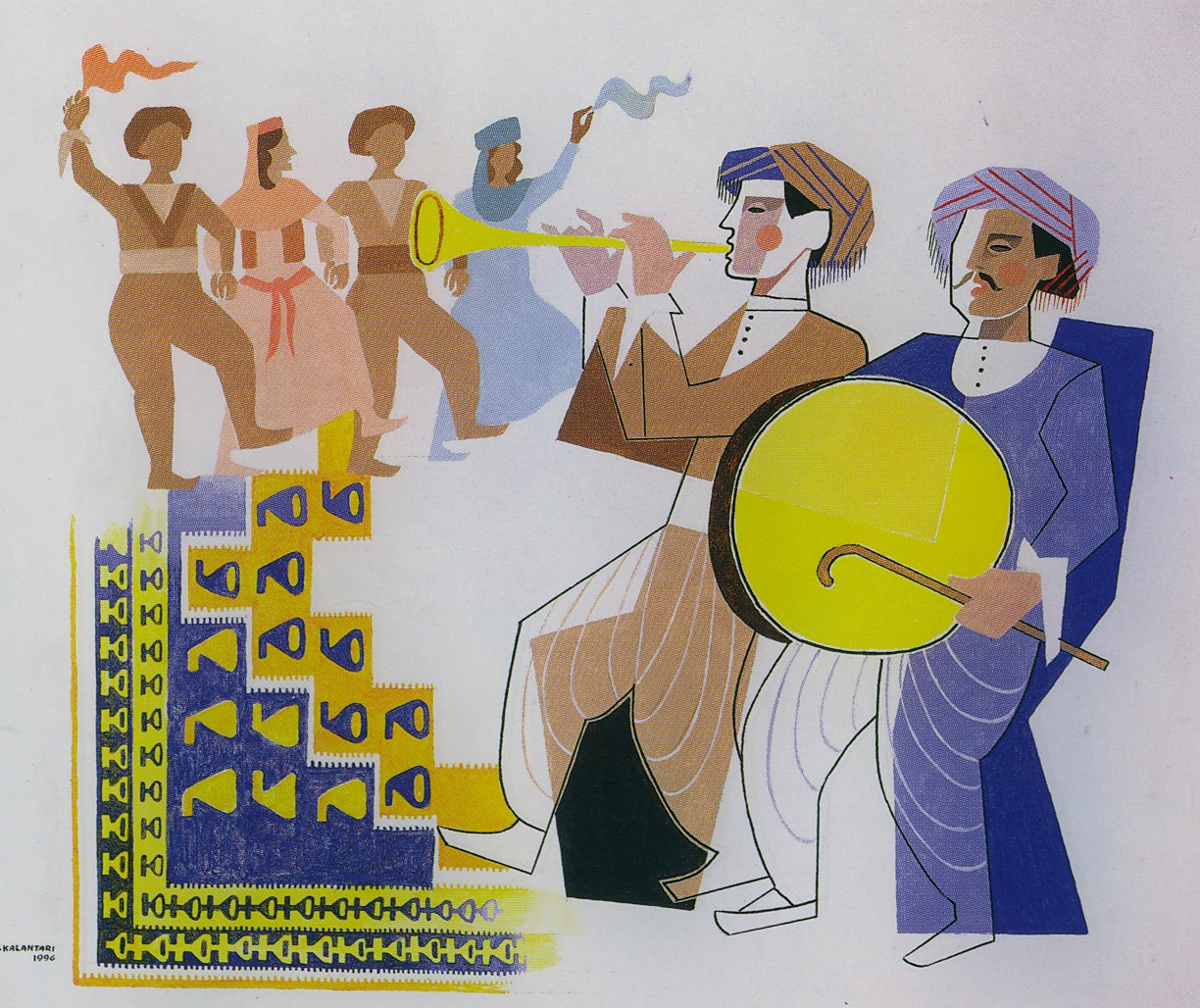
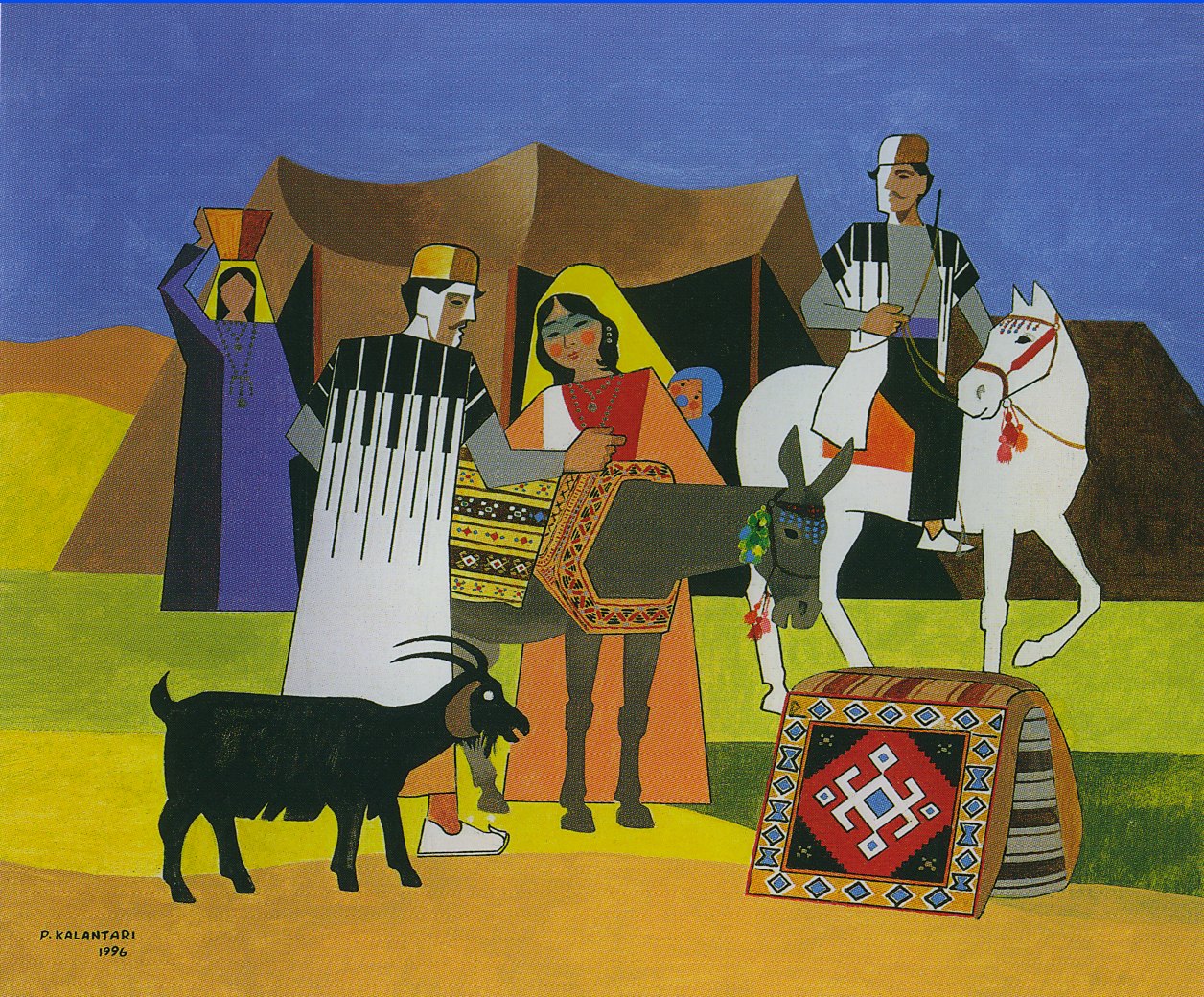
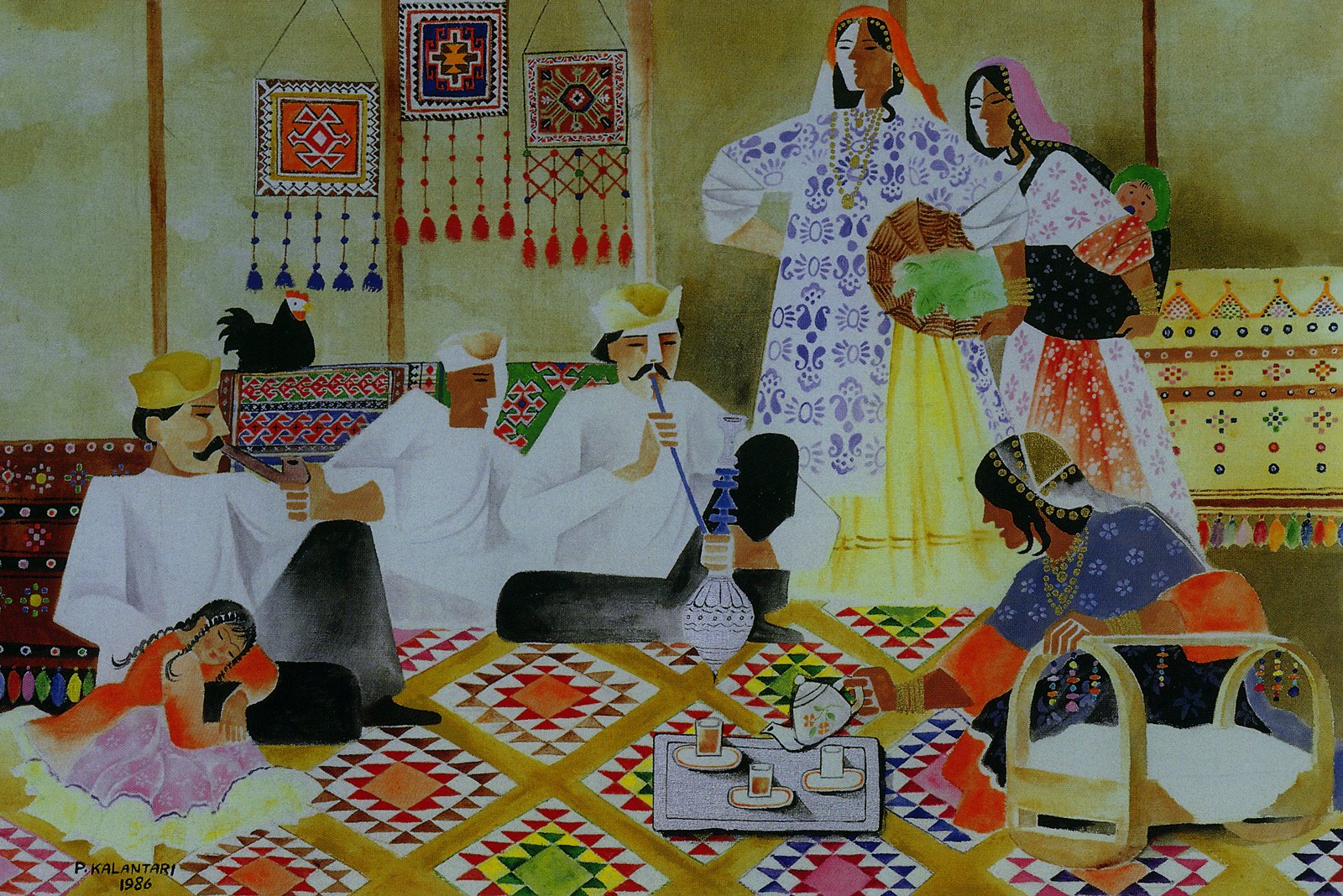
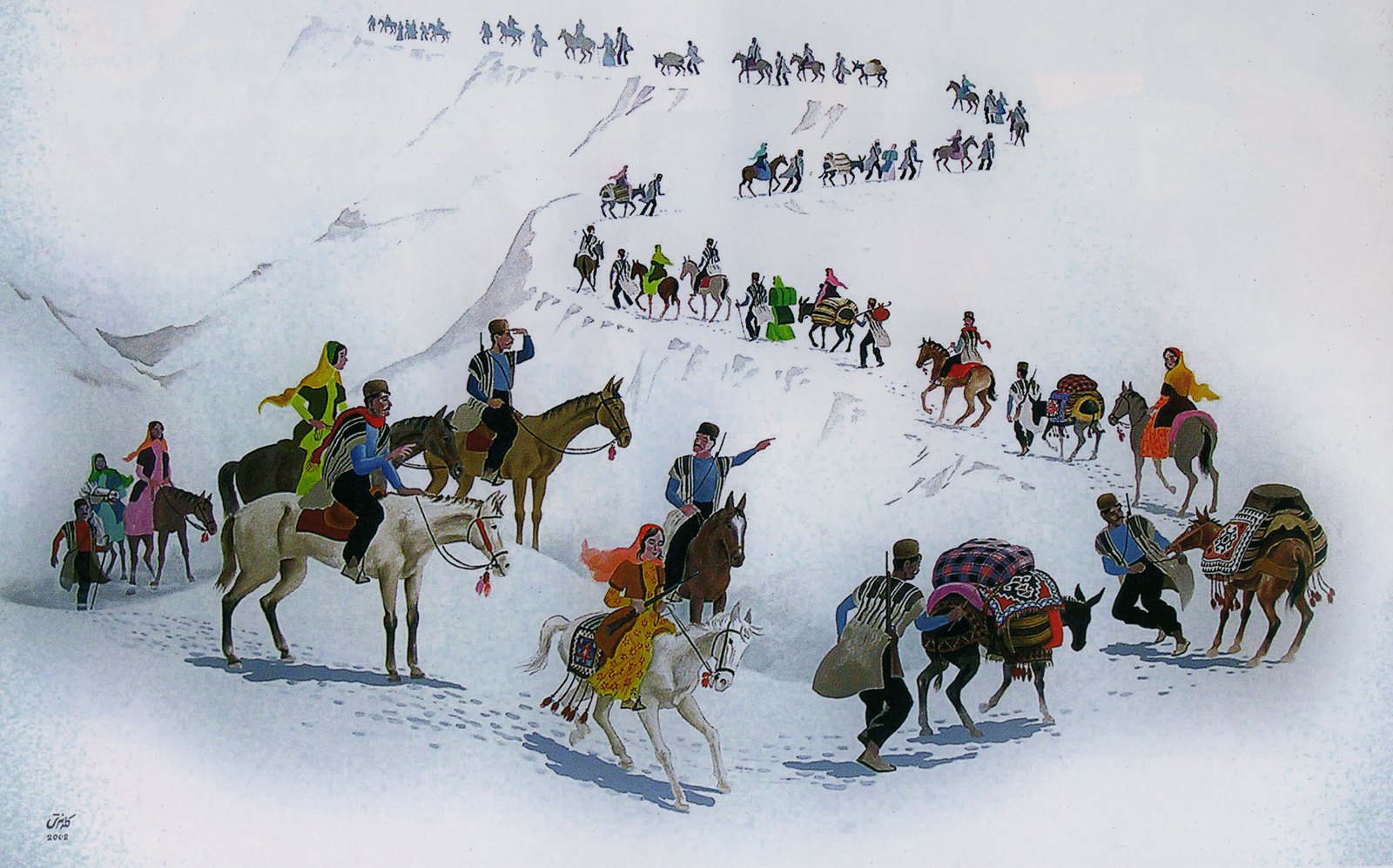
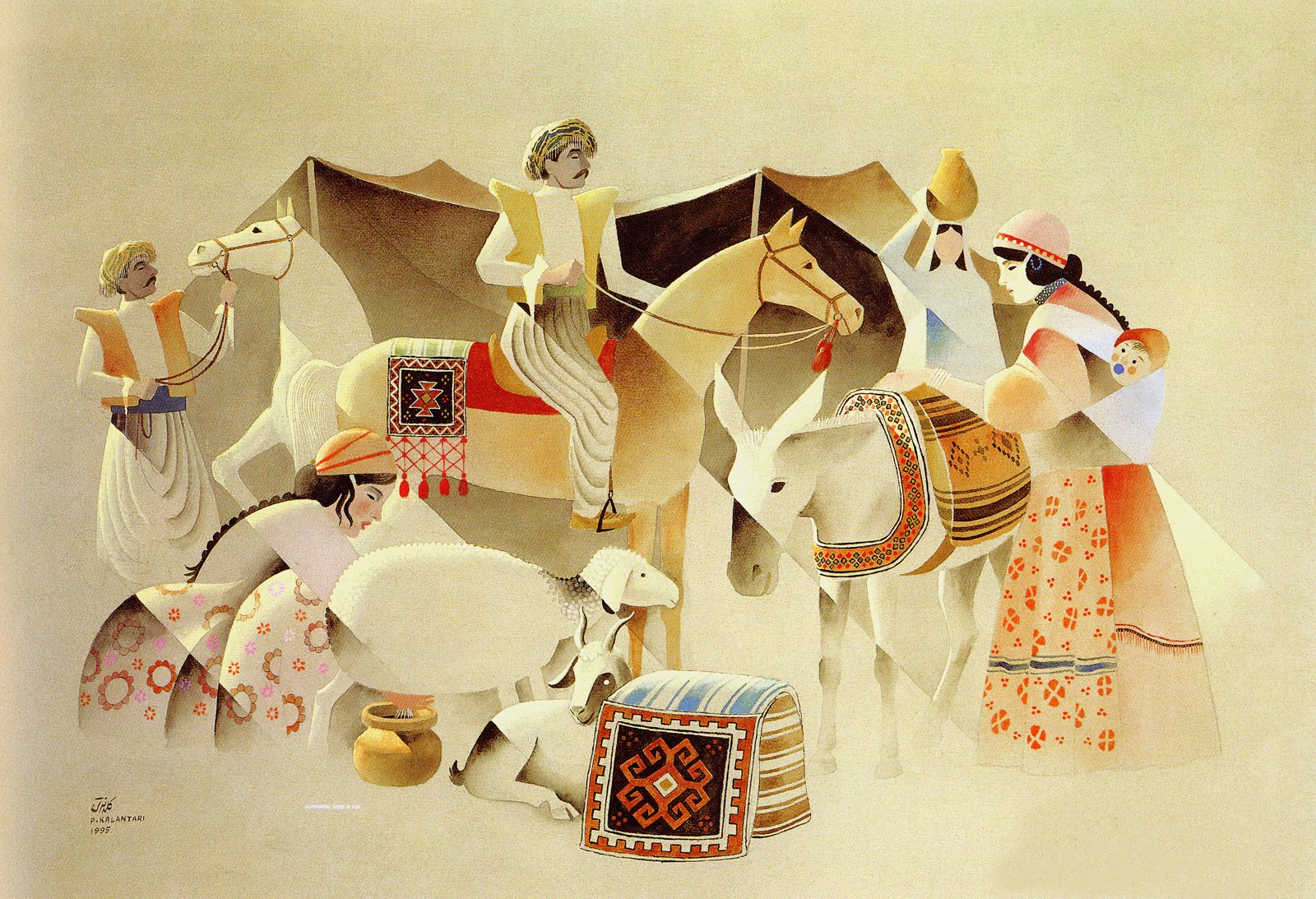
While working with the anthropology department on a museum devoted to nomadic life at Saadabad, I painted nomadic saddle covers and kilims. Only then did I really notice their beautiful geometry and recognise this territory as a subject for painting. I stayed home for an entire year and worked on nomadic life, producing a series called Alongside Iran’s Nomads, which was exhibited at Ketabsara.
The response was considerable. UNICEF reproduced some works as postcards. At UNICEF’s suggestion, one was issued as a United Nations stamp. Again, I had not simply chosen the nomads as a subject: life had brought me into contact with them. Ghereh, the carpet magazine published in Italy, also devoted a special feature to me, reproducing and introducing some of the work. The series therefore reached audiences beyond Iran.
Later, I realised that these paintings told the story of an academically trained painter standing outside, watching how nomadic people travelled and lived. There was too much distance between us. I thought it would be more honest to work from within the community, to put myself in a nomadic person’s place and see their own account of that life.
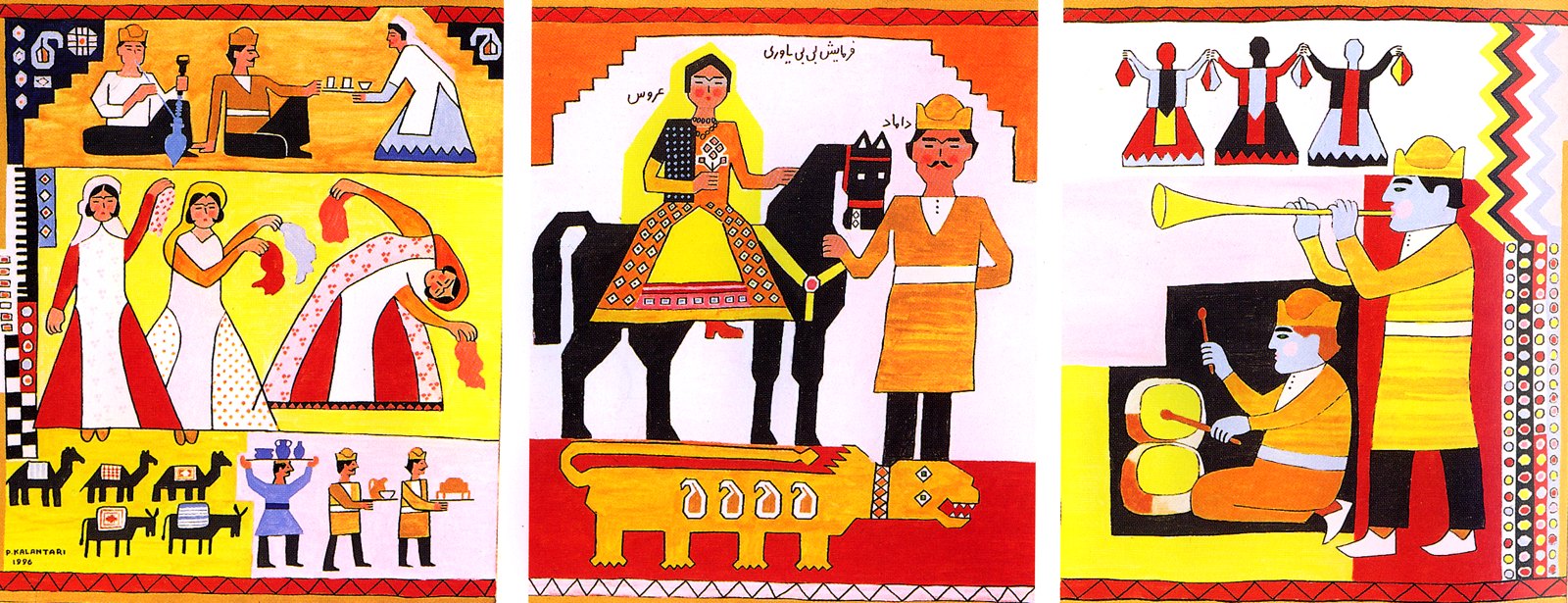
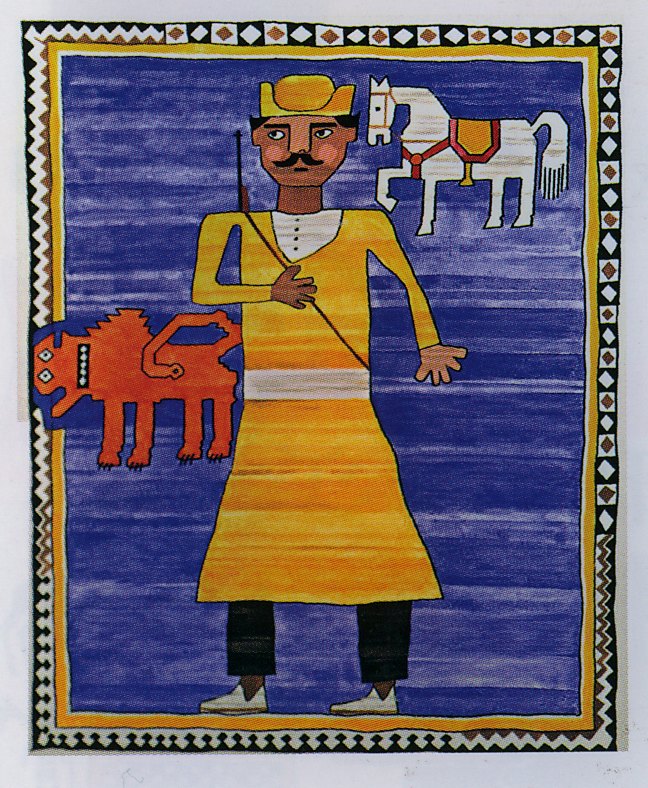
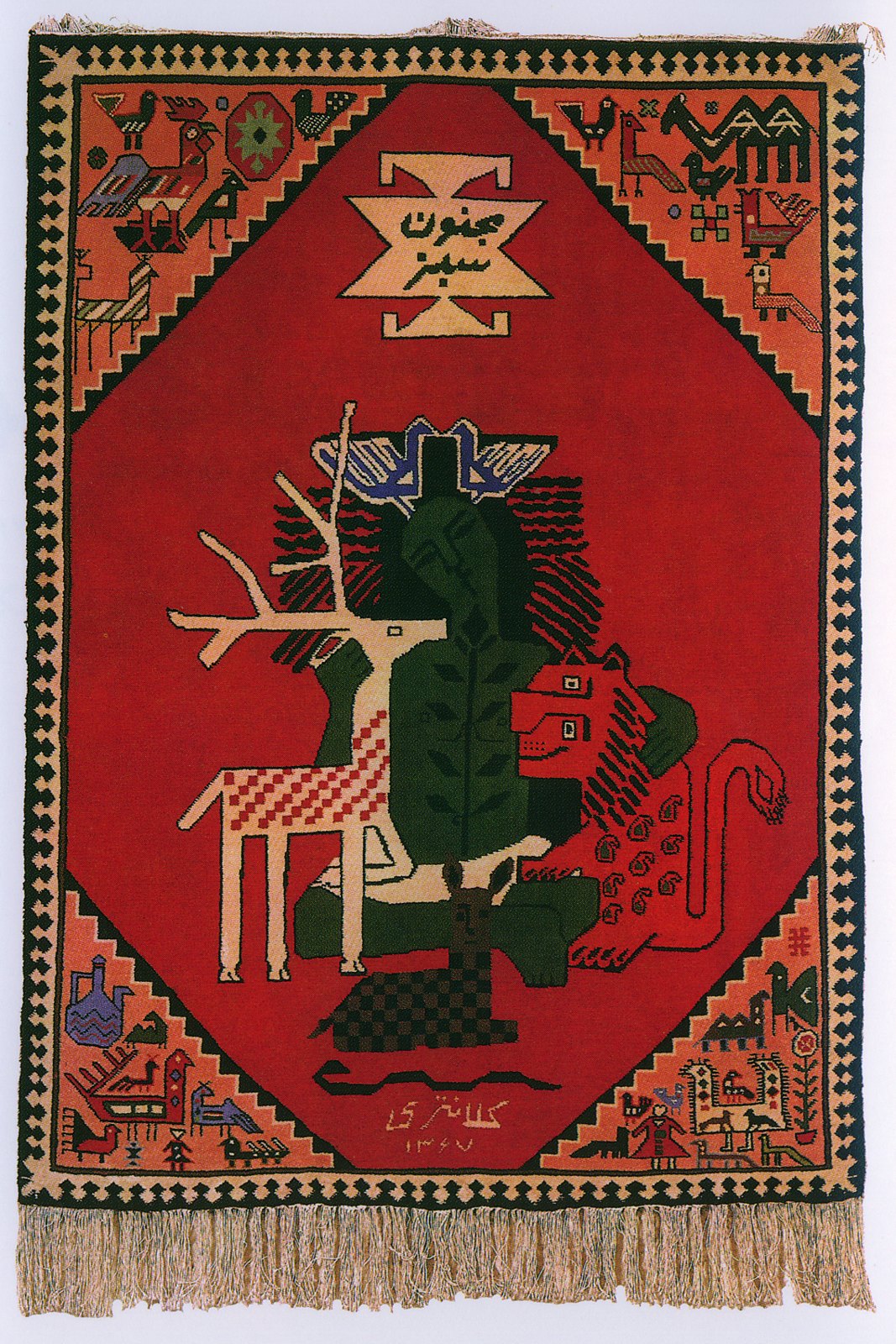
I had seen extraordinary gabbehs: with a simple visual language and without the restrictive rules of perspective, their makers pictured an entire world. Why should I not do the same? In a new period of work, I moved imaginatively inside that world and set aside the constraints of academic painting. I looked closely at gabbehs and drew on a book by a Danish researcher about their imagery. I painted as though the pictures themselves were a kind of gabbeh.
A wall for peace
An American conceptual artist had undertaken an important project around the time the Berlin Wall came down. As that wall was falling, she was building a low wall of peace and art. Artists from both sides were given ceramic tiles on which to leave an image, a poem or a message. The project drew considerable attention: a wall expressing peace was being made by the artistic and intellectual communities on either side.
A friend introduced me to her as a painter from Iran, from the Middle East. She welcomed me and invited me to leave something from my own country on the wall. I painted a simple black-and-white image on a ceramic tile, since I was unfamiliar with ceramic colours: two lovers, one giving the other a flower. But the frame of this simple, modern miniature was broken by a bomb that had entered their world. I explained that our literary history speaks of peace, friendship, love and kindness, yet at that moment we were caught in war. A bomb from Iraq had shattered that harmony.
A poetic spirit
Identity takes shape and changes through history. I have often thought about the phrase “the Iranian spirit.” What does it mean? My own interpretation is that it is a poetic spirit. An Iranian person does not have to study literature at university or be an important poet to be drawn to poetry.
You might walk down the street and see a pickup truck with the words “You cannot rewrite destiny” painted on the back. In Persian, the phrase plays on sarnevesht, destiny, and az sar nevesht, writing anew. I do not think it is a quotation from some great sage; the driver has written it. Look at the beautiful architecture of those words. Or listen to the rhythmic calls of street vendors selling cucumbers with blossoms still attached. We have all seen verses on the backs of trucks, written by drivers who may have had little formal schooling. That is why I say there is a poetic disposition in Iranian life, among the learned and ordinary people alike.
An elegy for my father
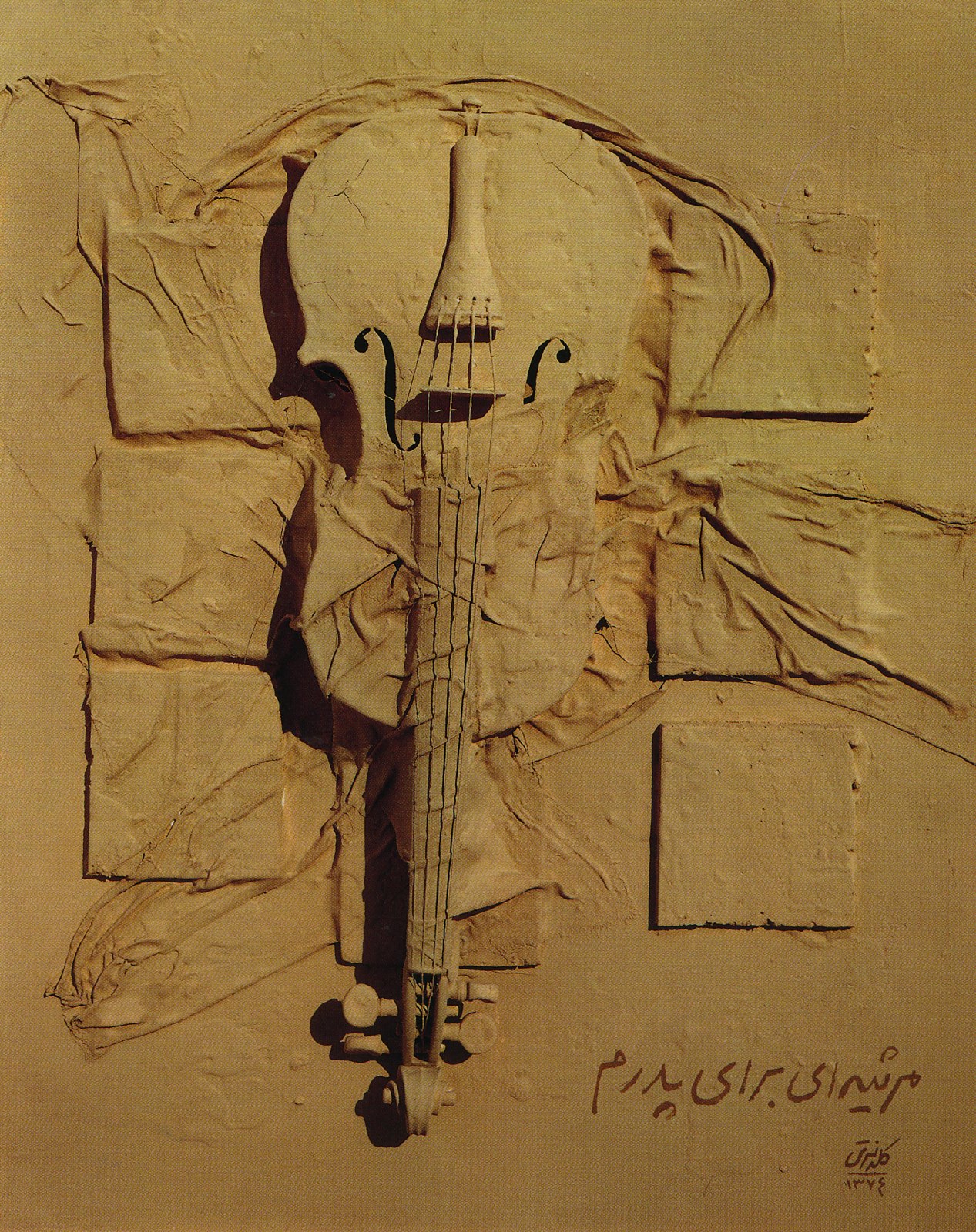
When my father died, during his burial I heard the sound of hundreds of violin bows in my ears. He had loved the violin. The sound stayed with me throughout the funeral. When we returned home, I told my wife that I wanted a violin. She was astonished: what use could I have for one while mourning my father? I could not find one at first, but a relative who played in the symphony orchestra helped. Violins were being imported from Russia at the time; somehow, we obtained one. I wrapped the actual violin in a shroud and buried it in the work. Beneath it I wrote An Elegy for My Father. A photograph appears in my book.
This was the beginning of a way of thinking about working directly with objects. There is no need to take up a palette, arrange your colours and paint a picture of a violin. That does not mean painting it is wrong. You first have to understand what you want to say. If the work expresses that intention, it is sufficient.
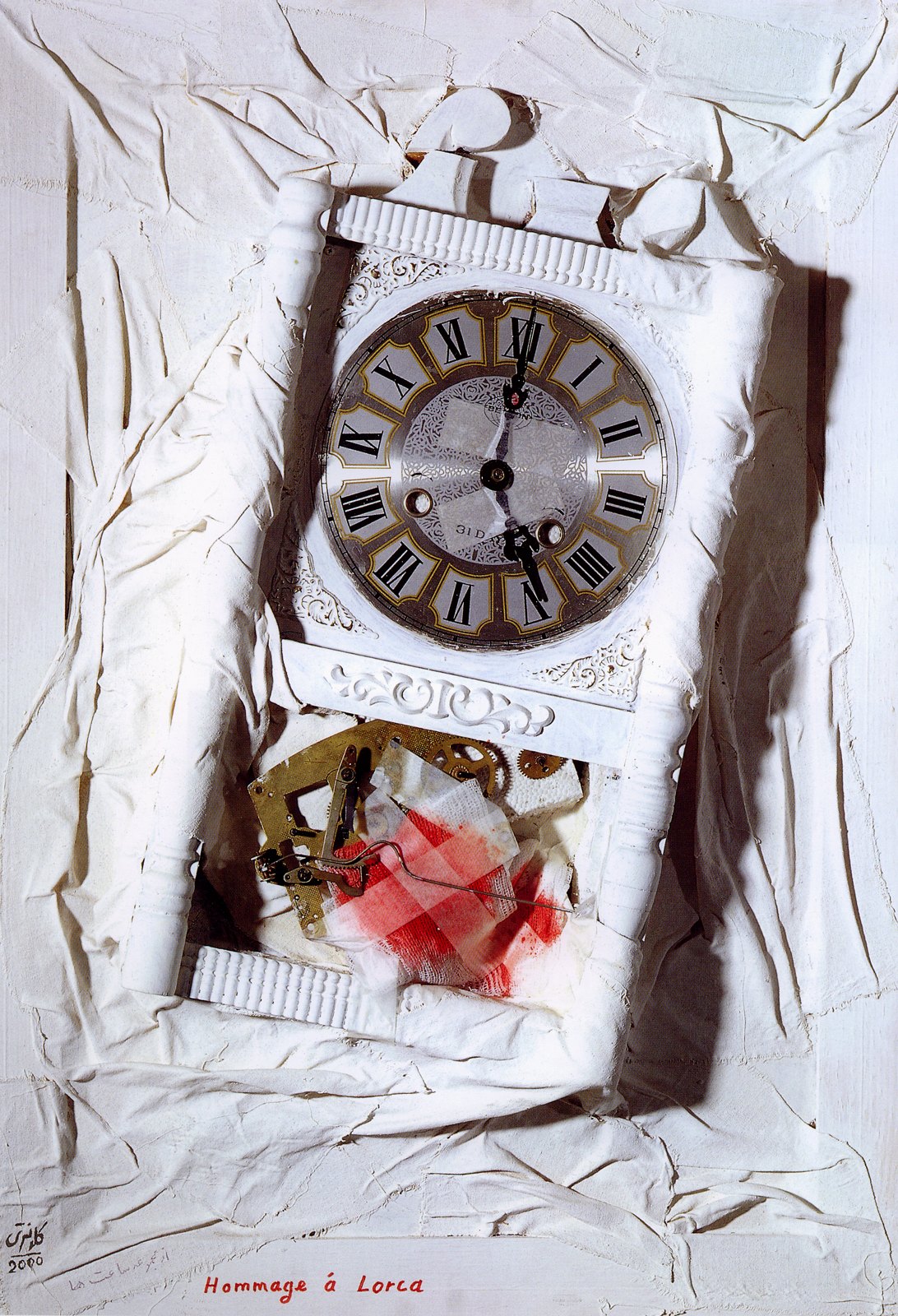
Another work of this kind was a clock, shown in a gallery in Madrid. It was an homage to Lorca and to “At five in the afternoon.” I removed the clock’s components, wrapped them in white cloth, made them bloodied and wounded, and put them back inside. Beneath it I wrote Homage to Lorca. Spanish visitors understood the reference as they passed. A work can be simple, yet difficult to achieve, and communicate through a contemporary form.
The person who looked
When I was a young secondary-school student, a man named Seyed Ali lived in my grandfather’s house. He was a village man from near Arak who worked as a labourer in Tehran. After my grandfather died, he came to live with us. He remained even after my parents’ deaths and helped with the household. Sometimes I would see him go into the sitting room, gaze at my paintings for long minutes, and then return to his work. I wondered what held his attention so deeply.
I have held many exhibitions and seen all kinds of visitors: elegantly dressed and perfumed people who walked around, chatted, showed off and professed to know about art, then left. I never saw some of them spend even a minute looking closely at a painting. I still think Seyed Ali was the best viewer my work ever had.
Those who come after us
At my age, one’s attention turns towards those who will come after. I want to know what the young people who remind me of my own youth think and feel, what interests them, what they think about painting and how they see the world.
I have always cared deeply about this. I firmly believe that the world does not end with us. Others are coming; I can hear their footsteps. They will shape the future.
ویرایششده بر پایهٔ متن مصاحبهٔ ارائهشده از سوی فریور همزیی. روایت سومشخصِ آغاز متن حفظ شده است.
کودکی با رنگ و خط
در نخستین روز سال ۱۳۱۰، روز شنبه وقتی که آفتاب طلوع میکرد و سال تحویل میشد، کودکی به دنیا آمد و چون سر سفره هفت سین چشم بر جهان گشود، پرویز نامیده شد
این کودک وقتی دو یا سه سال داشت پیراهن بلند سفیدی داشت که هر چه دکمه رنگی پیدا میکرد را برمیداشت و از مادرش درخواست میکرد دکمه را روی پیراهنش بدوزد.
نمایش بیشترنمایش کمتر
در هشت، نه سالگی با قطعه زغالی روی دیوار کوچه نوشت (اگر میخواهی مرا بشناسی سر این خط را بگیر و بیا )، خط را روی دیوار پیچاند و پیچاند و کشید و رفت تا آخر کوچه و کوچه بعدی و ادامه داد تا ناگهان دید در یک محله غریبه است و گم شده و شروع کرد به گریه و زاری. منطقش این بود که سر خط هایی که کشیده بود را بگیرد و برگردد ولی آنقدر این خط را پیچ در پیچ کشیده بود که نمیتوانست پیدا کند خودش را.
آموختنِ دیدن
من دبستان را در دبستان رازی شروع کردم در زمان رضا شاه، بعد رفتم دبیرستان که مصادف بود با دوران جنگ و وقایع شهریور ۱۳۲۰. بعد از دبیرستان رفتم به دانشکده هنرهای زیبای تهران که از روی الگوی بوزار پاریس ساخته بودند. کتابخانه دانشکده پنجره ای بود که دانشجو را با جهان بیرون آشنا میکرد. ما در کتابهای آنجا آثار نوگرایان را میدیدیم، از ونگوگ، گوگن گرفته تا پستامپرسیونیستها و فوویستها و همین طور تا پیکاسو و براک و دیگران را میدیدیم و برای ما سوال های زیادی مطرح میشد. نوجویی و نوگرایی برای ما زمینه خیلی مساعدی داشت.
من دقیقاً یادم نیست چه سالی فارغالتحصیل شدم ولی اگر اشتباه نکنم ۱۹۶۰، من فارغالتحصیل شده بودم، همراه مؤلفان کتب درسی به آمریکا رفتم چون من نقاش کتب درسی بودم. در مراجعت به ایران همان سال ۱۹۶۰در دانشکده نمایشگاهی گذاشتم و همین سبب شد که دانشکده از من برای تدریس پاره وقت طراحی دعوت به کار کرد و سرنوشت من اینطور شد که شدم آقای معلم طراحی در رسته معماری، معلم رشته طراحی در مجسمه سازی و این برای من خیلی تعیین کننده بود.
وقتی دانشجو بودم به عنوان یک گرافیست در بازار کار جذب تبلیغات شده بودم. در آن زمان دانشجوی دانشکده هنرهای زیبا نهایتاً میتوانست یک پرتره خوب بکشد یا با رنگ و روغن نقاشی بکشد، ولی هنوز نمی توانست کار گرافیک بکند و با ابزار دیگری مثل مرکب و کاغذ جواب نیازهای گرافیک بازار تبلیغات را بدهد، من یکی از معدود آدمهایی بودم که در آن زمان گرافیک کار میکردم و در همان زمان درگیر یک پروژه بزرگی شدم. در این پروژه من و «آقای زمان زمانی»که ایشان هم فارغالتحصیل دانشکده هنرهای زیبا بودند و چند سال بزرگتر از من عهده دار انجام کارهای نقاشی و تصویرسازی کتابهای درسی شدیم.
مادهای که مرا انتخاب کرد
در واقع من نبودم که دنبال سبک میرفتم، سبک بود که مرا انتخاب میکرد. این مورد را توضیح میدهم، تا زمانی که به دانشجوهای معماری تعلیم طراحی میدادم، آنها را با اتوبوس دانشکده میبردم (ارگ بم، کاشان )و این چشم اندازهای ساختمانهای گلی و خشتی را میدیدند و طراحی میکردند، من پنج سال تمام به این مناظر نگاه میکردم، عاقبت خود این چشم اندازها را مستقیم روی کاهگل نقاشی کردم و نقاشیهای کاهگلی من از همان زمان شروع شد. نمایشگاهی در گالری سیحون گذاشتم و از آن تاریخ به بعد همچنان تا الان از این ماده دست بر نمی دارم.
سالهای اول کار کاهگل خرد میشد، با اینکه رابیتس میکوبیدم به تخته یک سانت گل اندود میکردم و روی گل نقاشی میکردم، با این حال آسیب پذیر بود. تا اینکه بالاخره با کمک مواد پلیمری این کاهگل من هم با وزن کمتر وهم ابعاد بزرگتر مقاوم است.
با کاهگل به شیوه های گوناگون کار میکنم، یک دوره خیلی هایپررئالیستی کار کردم، در حال حاضر خیلی دوست دارم مینیمال کار کنم، یعنی خیلی کم و مختصر با دو تا خط و دوتا خشت موضوع را بیان کنم.
لحظهٔ آفرینش
من جزو آن دسته نقاشان شوربختی هستم که وقتی میخواهم نقاشی کنم و قلم مو به دست دارم و روی بوم کار میکنم، ذهنم یک نقاشی دیگر را میکشد، این یک وجه خوب دارد یعنی ذهن آنقدر فعال است که وقتی آماده شدی برای یک نقاشی وذهن فعال مشغول یک نقاشی دیگر است، ولی یکی از گرفتاریهای جدی من هم هست، یعنی اگر کاری را مشغول هستم بگذارم کنار و چیزی را که ذهنم تکلیف میکند که حتماً نیاز عاطفی آن زمان من است را انجام بدهم، پس تکلیف کاری که برایش برنامهریزی کردم و هدف خاص دارم و گاهی شاید یک ماه روی کار اتود کردم چه میشود، گاهی اوقات تن میدهم به میل درونیم و گاهی میگویم بماند برای بعد و کار خودم را انجام میدهم.
در نقاشی یک اصل هست که نسبت به آن وفادارم، مهمترین چیز برای نقاش این است که بداند قلم مو را کی کنار بگذارد و ادامه ندهد چون وقتی ادامه میدهی و میخواهی کار را بهتر کنی دائم خرابتر و خرابتر میشود، زمانی میرسد که بوم از رنگ سیر شده و باید کار را تمام کنی یا خوب شده یا بد، هر چه هست این کاری است که در این مقطع تاریخ تولید شده. ببینید آن چیزی که تعیین کننده است حس و حال آدم است در لحظه آفرینش اثر، این حس و حال عوض میشود، سلیقه و ذوق آدم تغییر پیدا میکند، پرورش پیدا میکند همهٔ اینها در اثر هنری انعکاس پیدا میکند.
همراه با عشایر ایران
در روند همکاری ام با اداره مردمشناسی در برپایی موزه کاربردی عشایر در سعدآباد، من جل و گلیمهای عشایری را نقاشی کردم و تازه متوجه هندسه زیبای این گلیمها شدم و متوجه این قلمرو برای نقاشی شدم. بنابراین یک سال تمام خانه ماندم و فقط روی موضوع عشایر کار کردم و مجموعه ای ساختم با عنوان همراه با عشایر ایران که در کتابسرا به نمایش در آمد. بازتاب فراوانی هم داشت یعنی بعضی به صورت کارت پستال از طرف یونیسف چاپ شد. یکی از کارها بنا به پیشنهاد یونیسف از طرف سازمان مللبهصورت تمبر چاپ شد و جزو سری تمبر های ویژه سازمان مللمنتشر شد و این من نبودم که عشایر را انتخاب کردم این زندگی بود که من را در برخورد با این موضوع قرار داد. همین کار عشایر را مجله (گره)که یکی از نشریات معتبر فرش در جهان است و در ایتالیا چاپ میشود، یک ویژه نامه به من اختصاص داد که بعضی از کارهایم را چاپ کرد و مرا معرفی کرد، بنابراین همراه با عشایر بازتاب بیرونی هم داشت.
بعد دیدم کارهایم درباره عشایر روایت یک نقاش دانشگاه دیده است که این طرف ایستاده و به این کوچندگان نگاه میکند که چگونه کوچ و زندگی میکنند و فاصله ام با آنها زیاد بود. دیدم سالمتر است که من از درون ایل این کار را بکنم، خودم را بگذارم جای یک ایلیاتی و روایت او را از ایل ببینم. و دیدم گبه هایی که واقعا محشر بودند، با یک زبان ساده بدون اعتنا به قواعد دست و پا گیر پرسپکتیو، تمام اینها را روی گبه تصویر کرده. پس چرا من نکنم، بنابراین یک دوره جدید آمدم درون ایل، فارغ از عوامل بازدارنده نقاشی آکادمیک واینها را نقاشی کردم. یک نگاه به گبه ها داشتم و یک کتابی هم دستم بود از یک محقق دانمارکی راجع به گبه و عناصری که به کار گرفته شده در آن، از اینها مدد و وام گرفتم و بهگونهای نقاشی کردم که انگار نقاشیها هم یک جور گبه هستند.
دیواری برای صلح
یک خانم هنرمند امریکایی، یک هنرمند مفهومی بود که کار بسیار مهمی کرده بود یعنی همزمان با فروپاشی دیوار برلین، یک پروژه ای اجرا کرده بود که جای آن دیواری که فرو میریخت این خانم یک دیوارکوتاه صلح و هنر میساخت، که به هنرمندان دو طرف دیوار تایلهای سرامیکی داده بود که نقشی از خودشان به یادگار بگذارند، شعری، پیامی، طرحی و این دیوار زیبا را ساخته بود و در دنیا خیلی سرو صدا کرده بود یعنی همزمان با فروپاشی دیوار برلین یک دیوار صلح از جامعه روشنفکران دو طرف دیوار در بیان صلح ساخته میشد.
دوستی داشتم که مرا به این خانم هنرمند معرفی کرد و گفت نقاشی است که از خاورمیانه آمده، از ایران آمده و آن خانم استقبال کرد و گفت اگر دوست داری، تو هم میتوانی یک یادگاری از سرزمین خودت در این دیوار بگذاری و من هم نقاشی کردم روی تایل سرامیکی و فقط با رنگ سفید کار کردم چون رنگهای سرامیک را نمیشناختم، سفید و سیاه یک طرح ساده کشیدم از دو دلداده که یکی به آن دیگری گل میدهد، ولی کادر این مینیاتور ساده مدرن شد با یک بمب شکسته و یک بمب آمد وسط اینها و توضیح دادم که تمام تاریخ ادبیات کشور ما حکایت از صلح و دوستی، عشق و مهرو مهربانی دارد، اما در این مقطع از تاریخ ما گرفتار جنگ هستیم و بمبی که از طرف عراق آمده این وضعیت را نابسامان کرده.
روح شاعرانه
بنابراین هویت یک چیز شکلپذیر است در طول تاریخ، من بارها به واژه (روح ایرانی)فکر کرده ام که این روح ایرانی چی هست ؟البته این استنباط شخصی من است که در یک جمع بندی کلی روح ایرانی یک روح شاعرانه است، یعنی هر ایرانی در هر صورت تمایل به شعر دارد، لازم نیست دانشگاه ادبیات رفته باشد یا شاعر مهمی باشد، ایرانی فطرتاً شاعر است. الان توضیح میدهم، وقتی در خیابان قدم میزنی و یک وانت را میبینی که پشتش نوشته(سرنوشت را نتوان از سر نوشت). فکر نمیکنم این جمله از حکیم بزرگی باشد، این متن را خود راننده نوشته، ببینید چه معماری زیبایی با کلمات انجام داده. یا شعری که فروشندگان دوره گرد برای تبلیغ محصولشان میخوانند (گل بسر داریم خیار)و امثال آن. جملات پشت کامیون ها را همه در جاده ها دیدیم از رانندگانی که شاید به زور دبیرستان را تمام کرده باشند، به همین دلیل است که میگویم ایرانی شاعر است یا طبیعت شاعرانه دارد و زندگیاش آکنده از شعر گونه هاست میخواهد آدم فاضلی باشد یا عامی.
مرثیهای برای پدرم
وقتی پدرم فوت کرد و طبق سنت مشغول دفن ایشان بودیم در همان لحظه صدای صدها آرشه ویولن در گوشم بود چون پدرم عاشق ویولن بود و صدای آن را بسیار دوست داشت. در تمام مراسم خاکسپاری صدای ویولن در گوشم قطع نشد. وقتی به منزل برگشتیم به همسرم گفتم ویولن میخواهم، خیلی تعجب کرد که در مراسم سوگواری پدرم ویولن به چه کارم میآید. خلاصه پیدا نکردم، یکی از اقوام که در ارکستر سمفونیک ویولن میزد گفت پیدا میکنم، آن زمان ویولن از روسیه وارد میشد ولی به هر طریقی بود ویولن را پیدا کردیم. من مستقیماً خود ویولن را کفن کردم و خاکش کردم و پایین کار نوشتم (مرثیه ای برای پدرم)که عکسش در کتابم هست.
این شروع یک نوع نگرشی شد که میتوان با خود اشیا کار کرد، هیچ احتیاجی نیست پالت دست بگیری، رنگها را بچینی و از روی ویولن نقاشی بکشی، البته به این معنا نیست که آنجور کار مردود است نه، اما اول باید ببینی مقصودت چیست، اگر کاری که داری میکنی بیان مقصود میکند، خیلی خوب و کافی است.
یکی از همین دست کارها، یک ساعت است که در نمایشگاهی در اسپانیا، گالری استکا در مادرید به نمایش گذاشتم. این ساعت (ادای احترام به لورکا)است و در ستایش منظومهٔ «در ساعت پنج عصر»
اجزای ساعت را درآوردم و در پارچه سفید پیچیده و خون آلود و زخمی گذاشتم توی ساعت و پایین کار نوشتم (ادای احترام به لورکا)، خوب هر اسپانیایی که از کنار تابلو رد میشد میفهمید این یعنی چه. یعنی کار میتواند ساده باشد، سهل و ممتنع باشد و بیان مقصود کند و با شیوه نو این کار را انجام بدهد.
کسی که نگاه میکرد
زمانی که جوان و دبیرستانی بودم، شخصی به نام سید علی در خانه پدربزرگم زندگی میکرد. روستایی ساده ای بود از اطراف اراک که در تهران کارگری میکرد. بعد از فوت پدربزرگم به منزل ما آمد، حتی بعد از فوت پدر و مادرم هم در منزل ما زندگی میکرد و به امور منزل میرسید. گاهی میدیدم به سالن میرود و دقایق طولانی به کارهای من خیره میشود و بعد میرود دنبال کارش. من تعجب میکردم که چه چیزی در این کارها آنقدر او را مجذوب میکند.
من نمایشگاه زیاد برگزار کرده ام و خیلی اشخاص مختلف برای بازدید به این نمایشگاه ها میآمدند. آدمهای شیک و عطرآگین، گشتی میزدند با هم صحبت میکردند و به هم پز میدادند و ادعای هنر شناسی میکردند و میرفتند. هیچ وقت ندیدم حتی دقیقه ای به کاری دقت کنند، هنوز هم فکر میکنم بهترین بیننده کارهای من سید علی بود و بس.
آیندگان
اما سنی که الان من دارم، سنی است که آدم همه توجه اش به آیندگان است، دلم میخواهد ببینم اینها که تکرار نوجوانی من هستند چه افکاری و چه حسی دارند، چه علایقی دارند، نظرشان راجع به نقاشی چیست، اصلاً دنیا را چگونه میبینید.
من راجع به این موضوع خیلی حساسم. بههرحال من از آن دسته آدمهایی هستم که همیشه راجع به این موضوع حساس بوده ام و سخت معتقدم دنیا با ما تمام نمیشود، آیندگان میآیند و صدای پایشان را میشنوم، آنها آینده را رقم خواهند زد.
Artworks
Show MoreShow Less



























Archive photographs


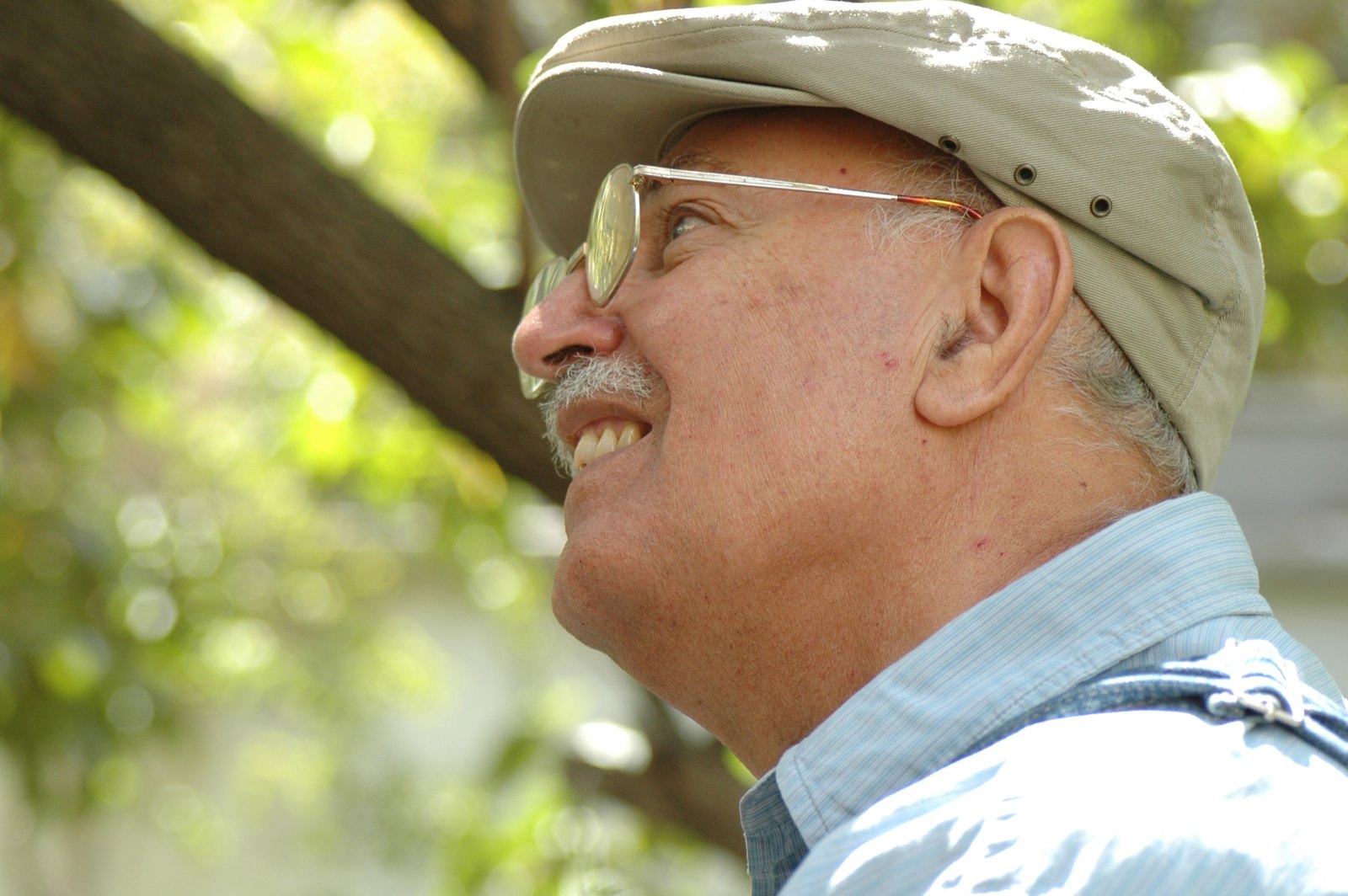


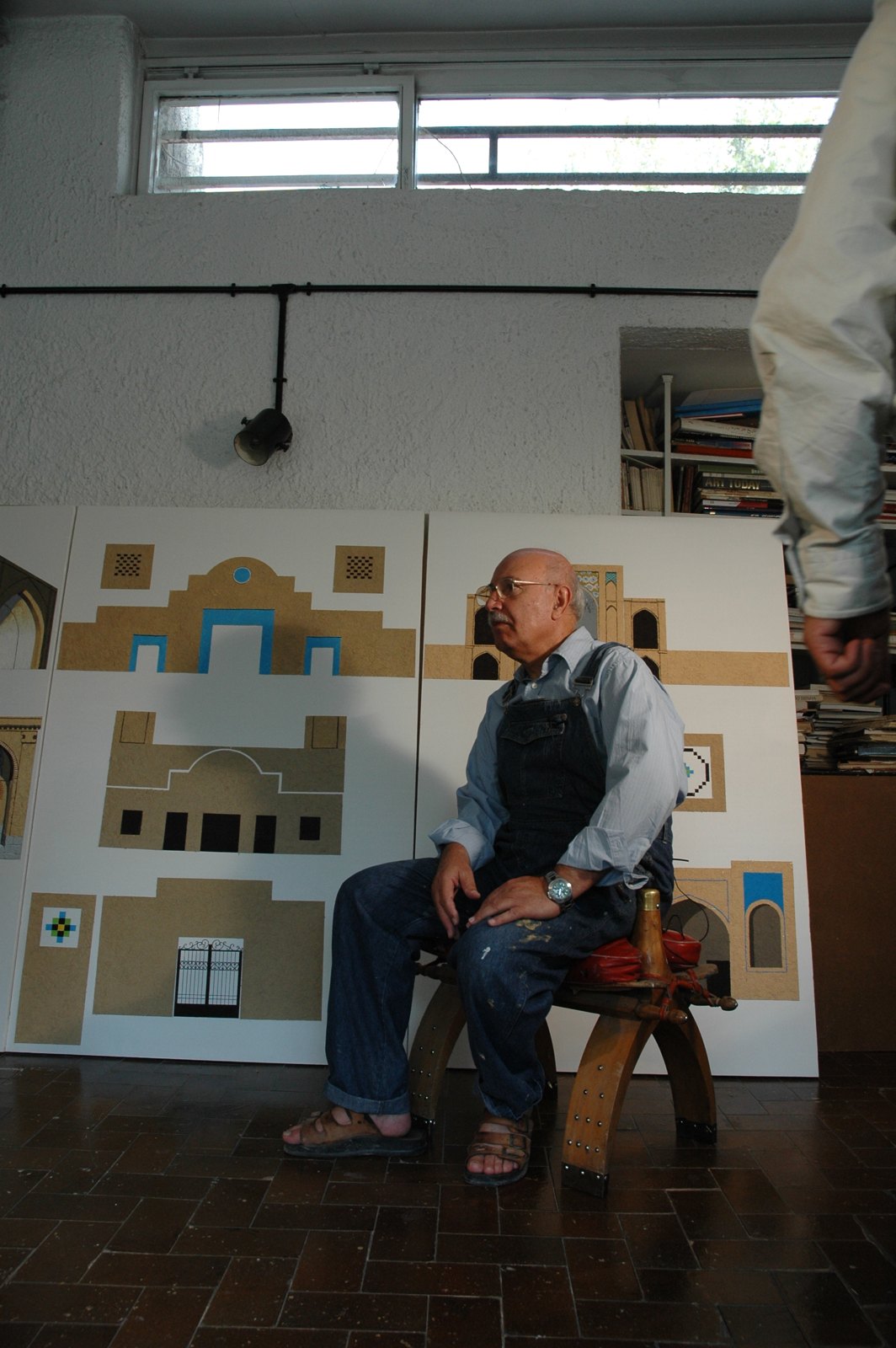
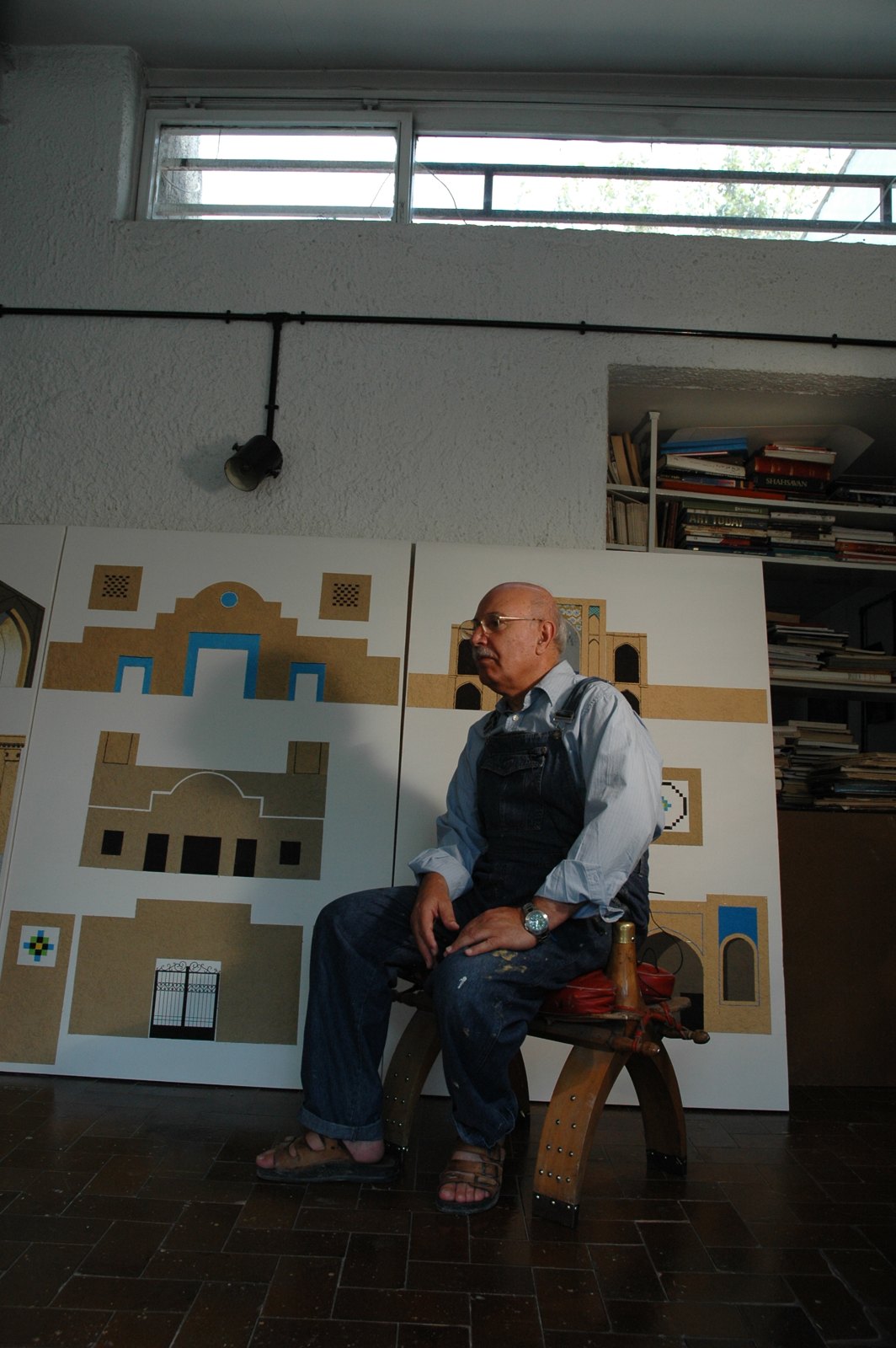
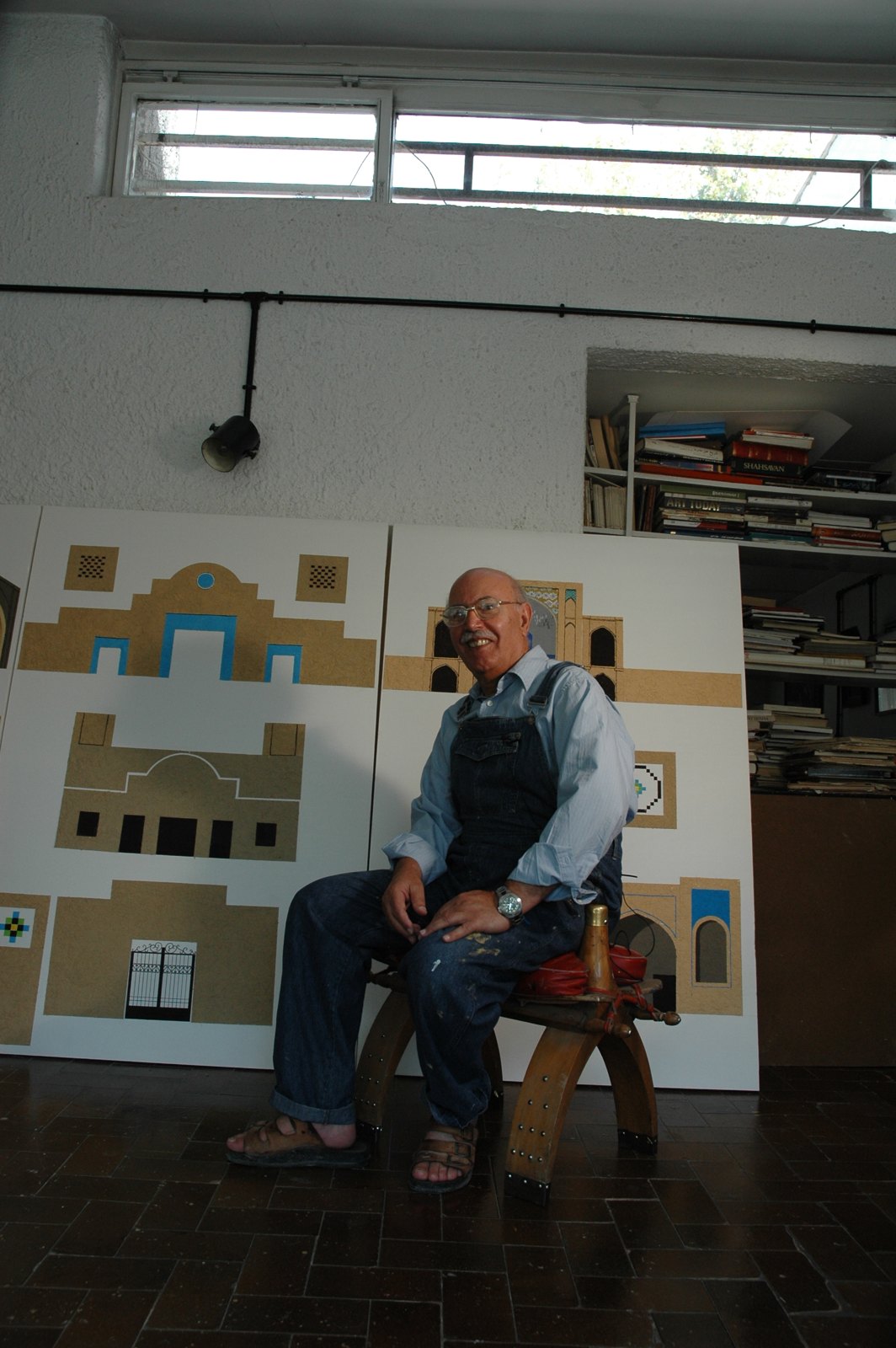

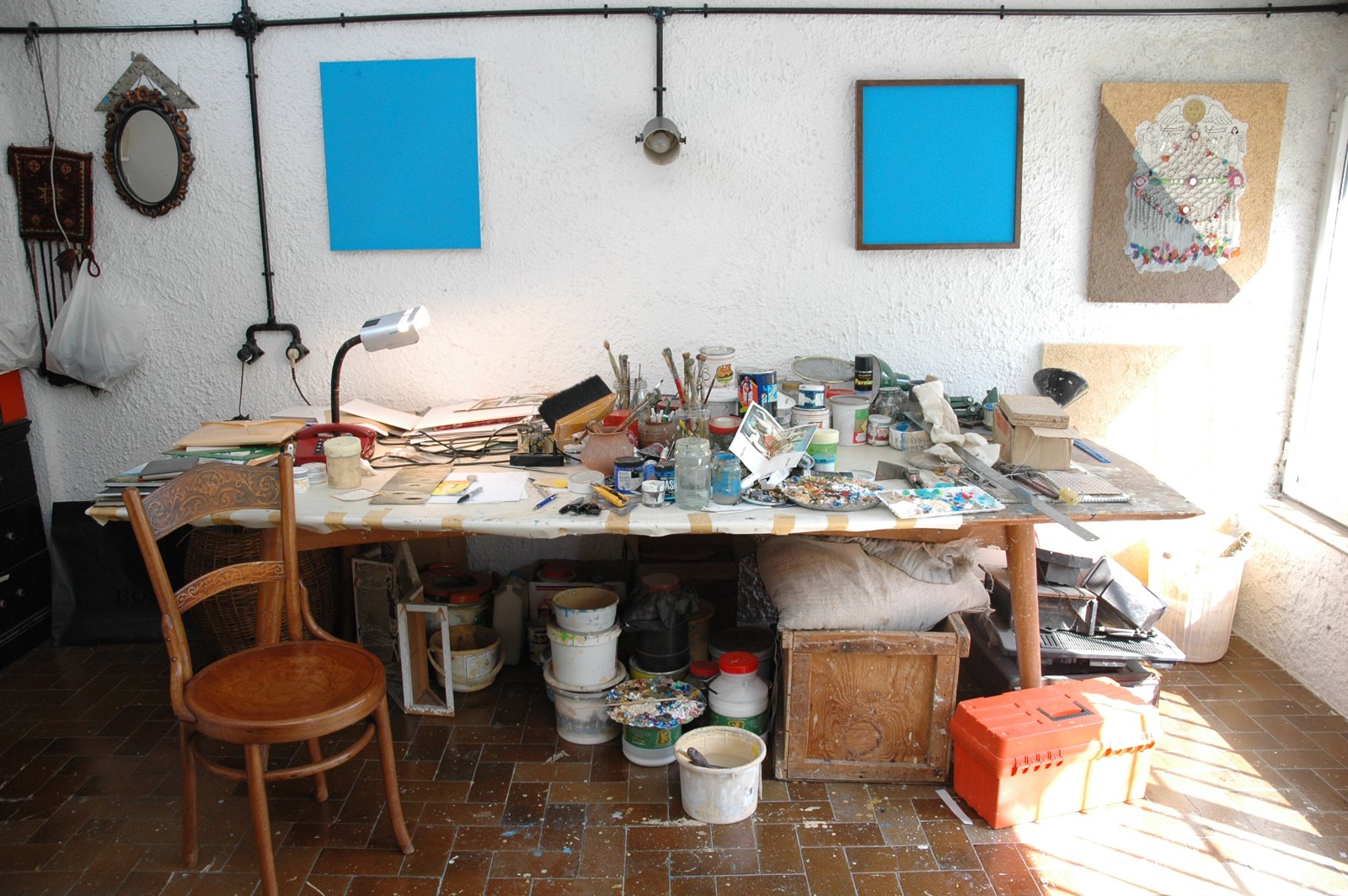
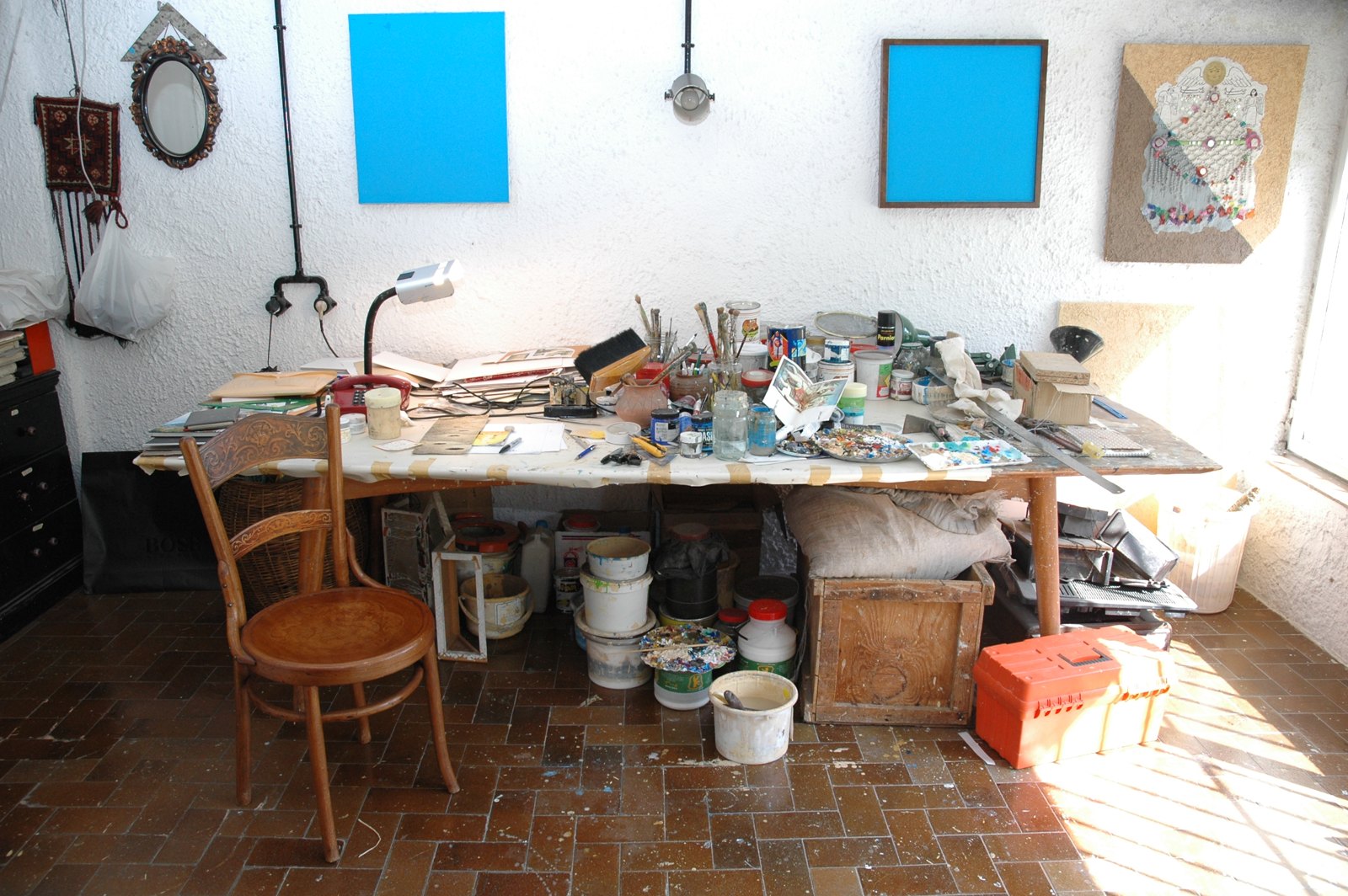
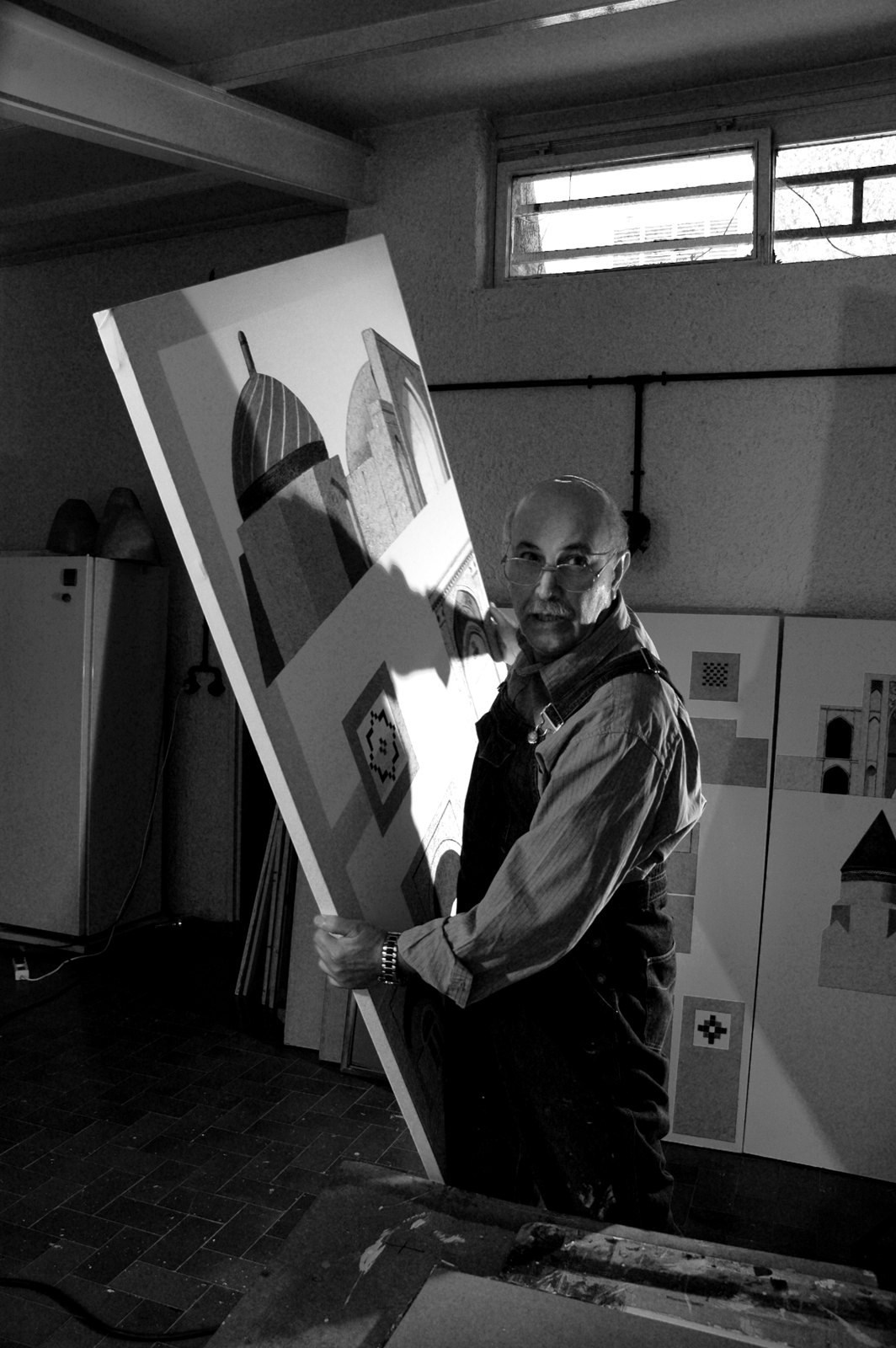
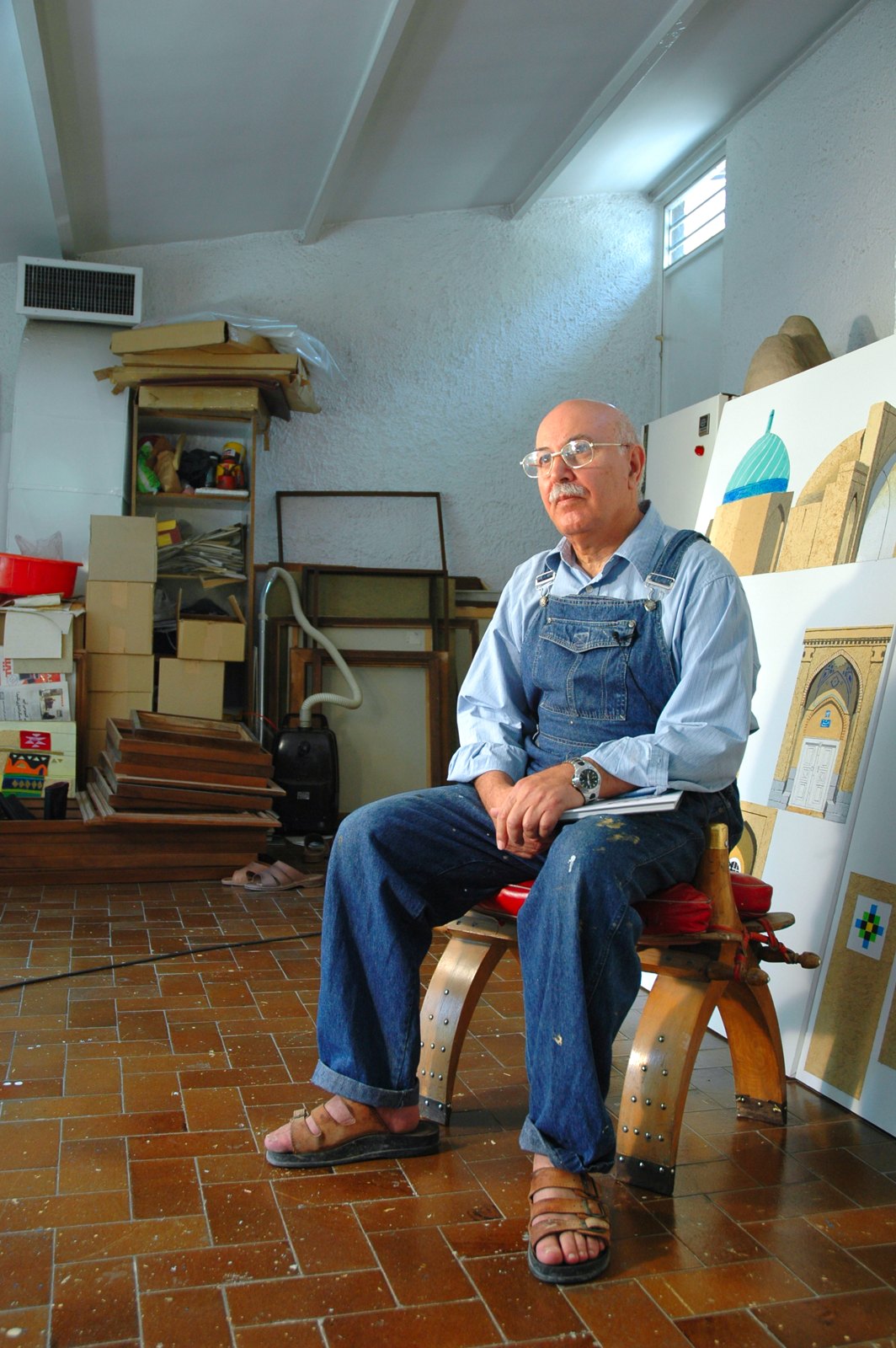
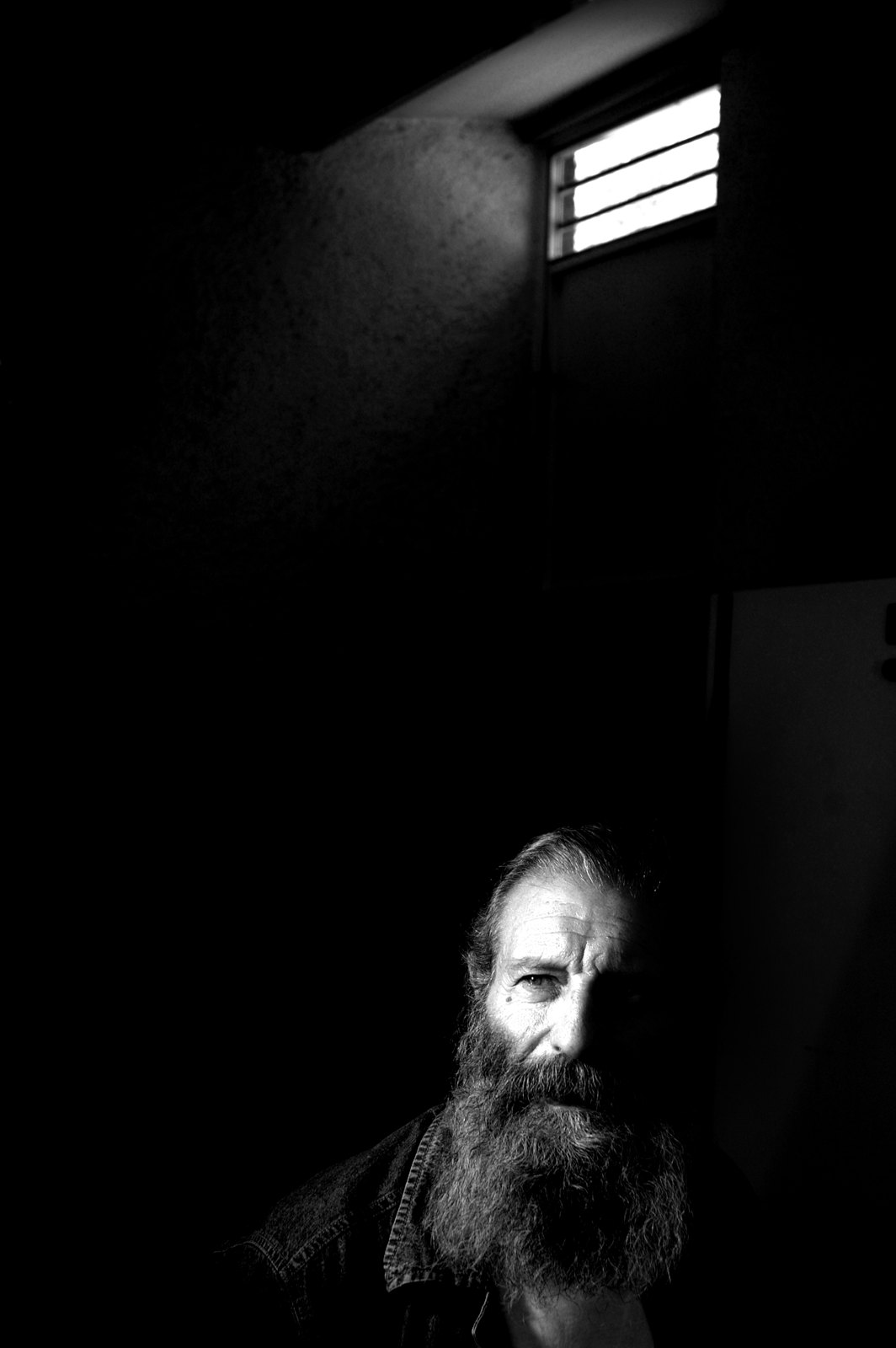
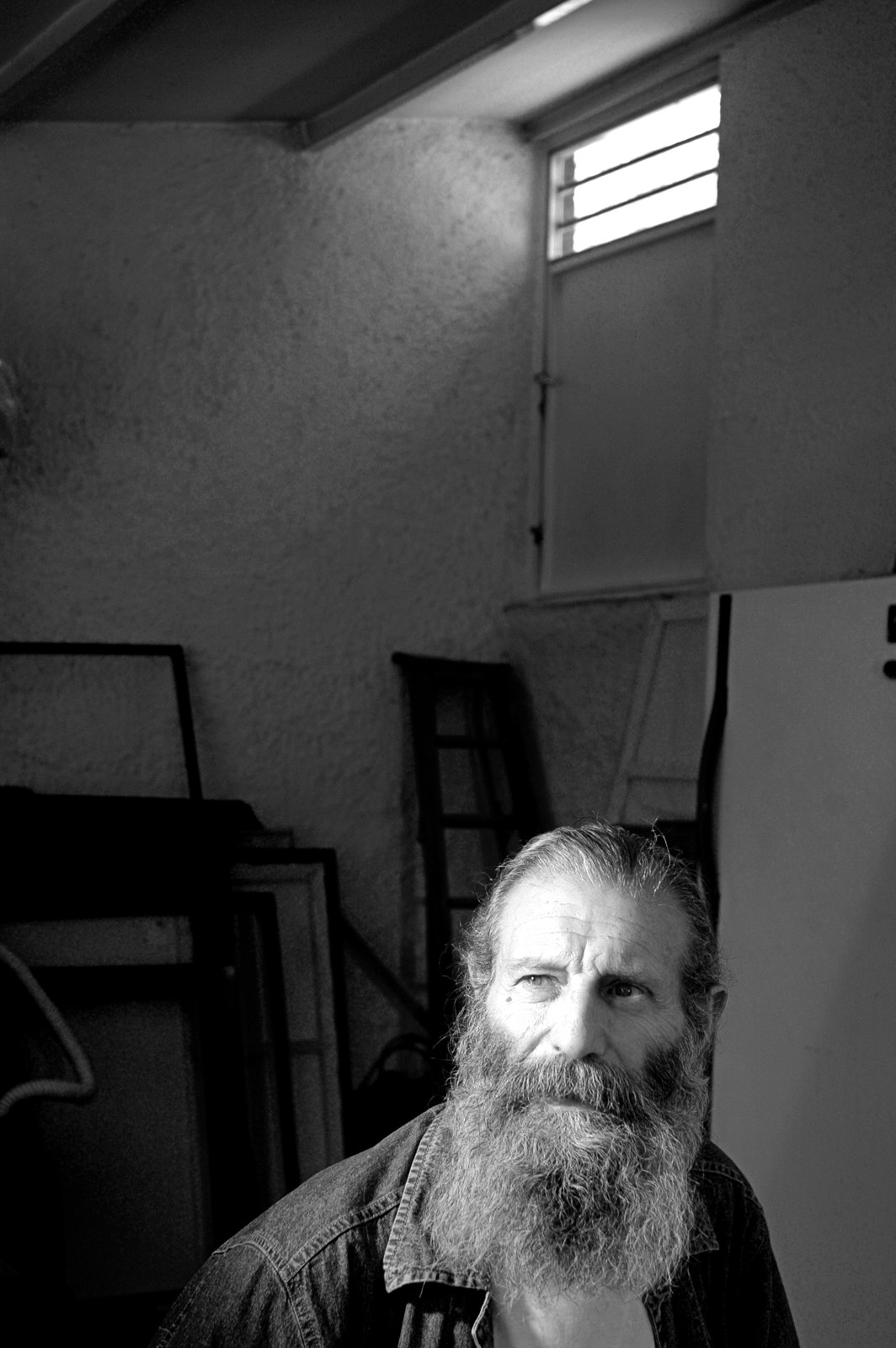
Archive photographs · Black and white


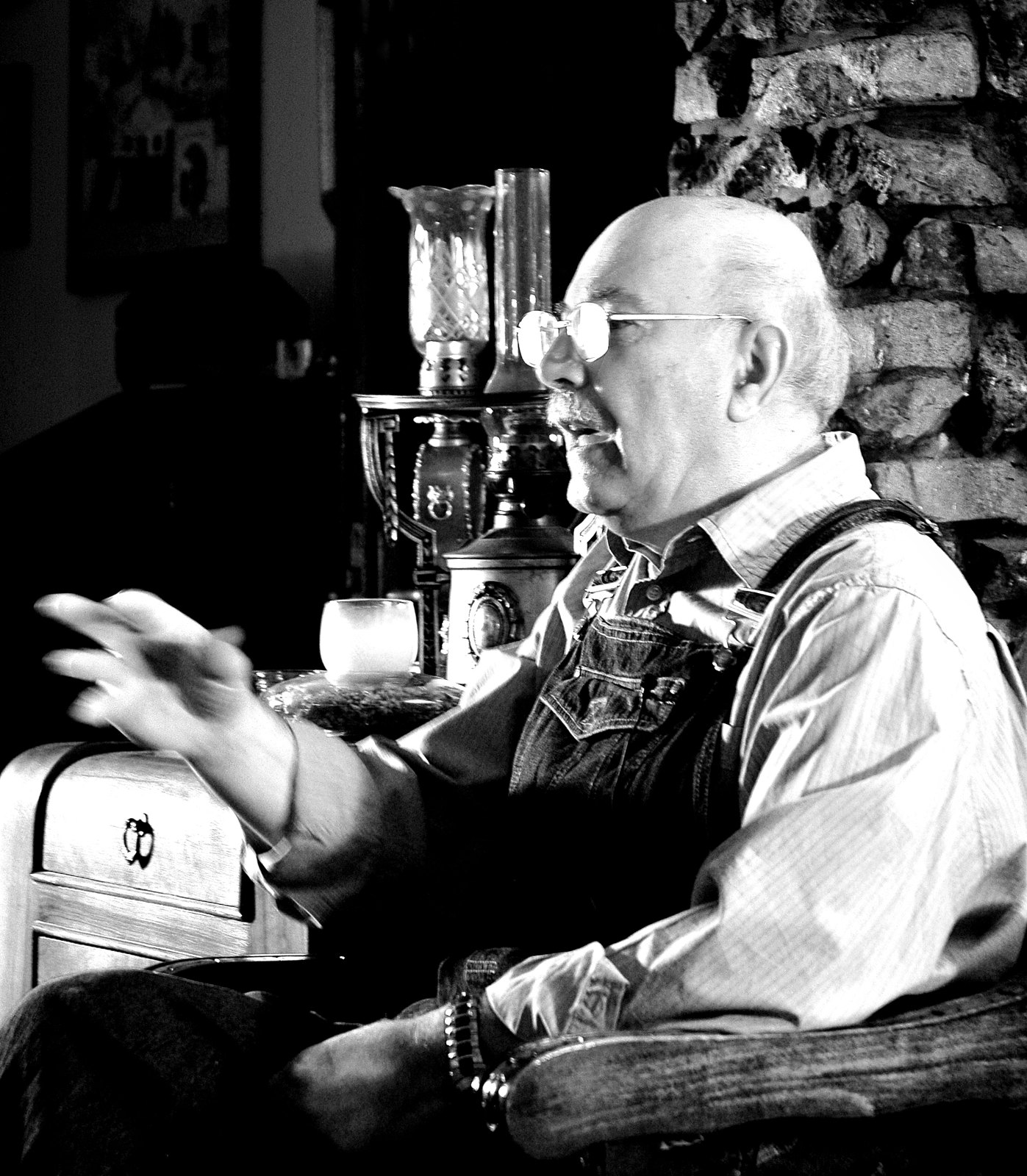

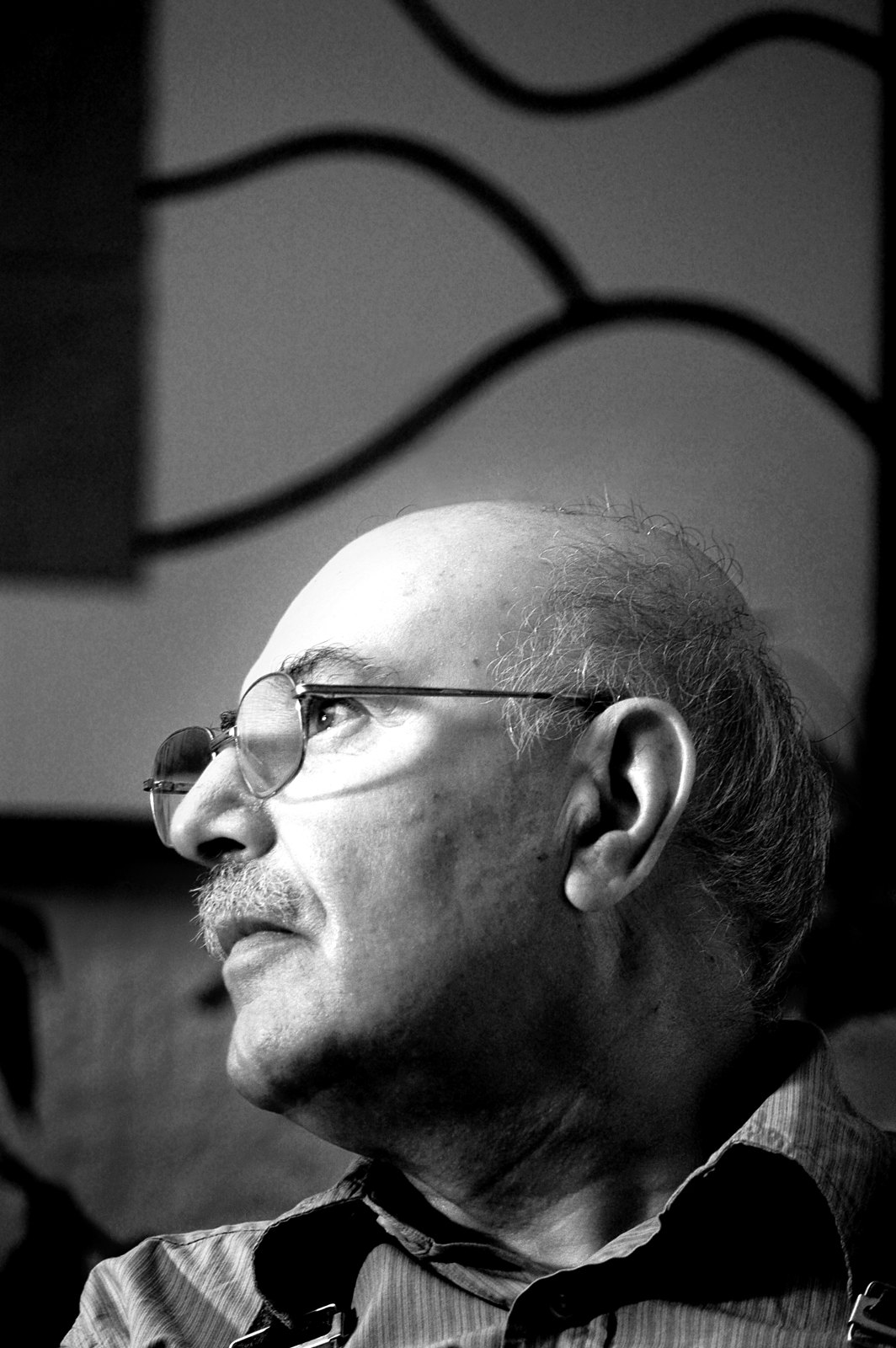


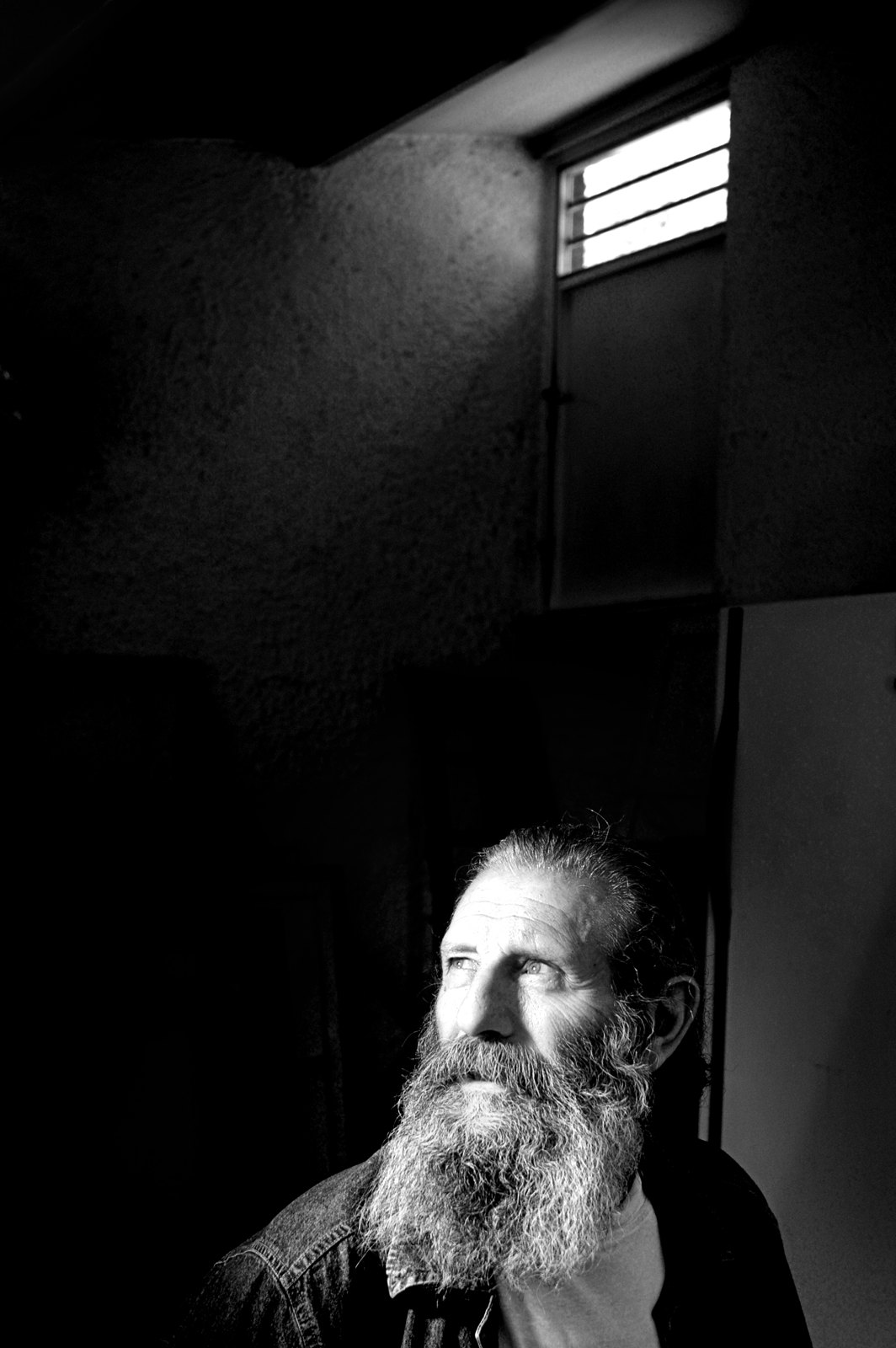
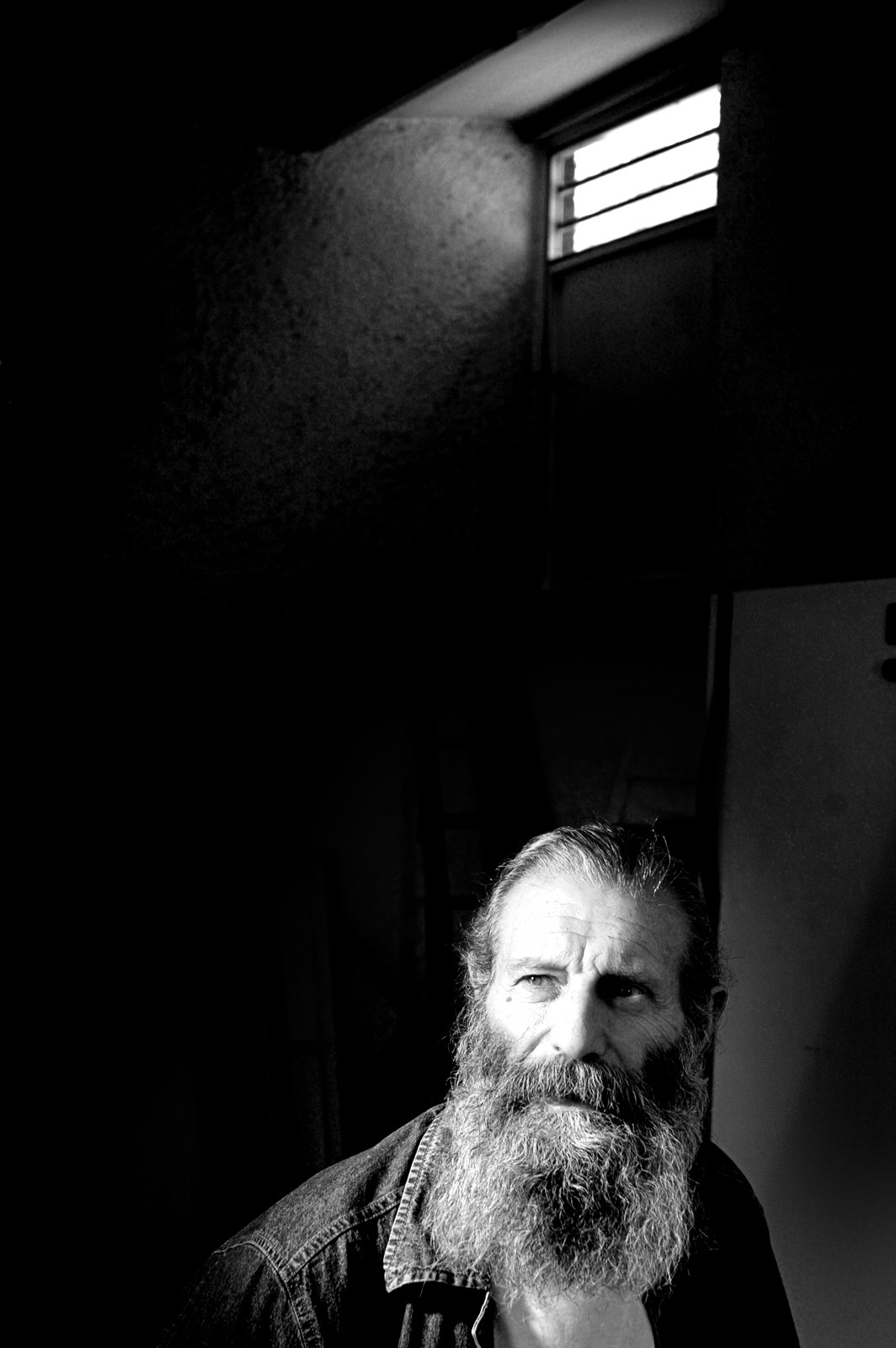
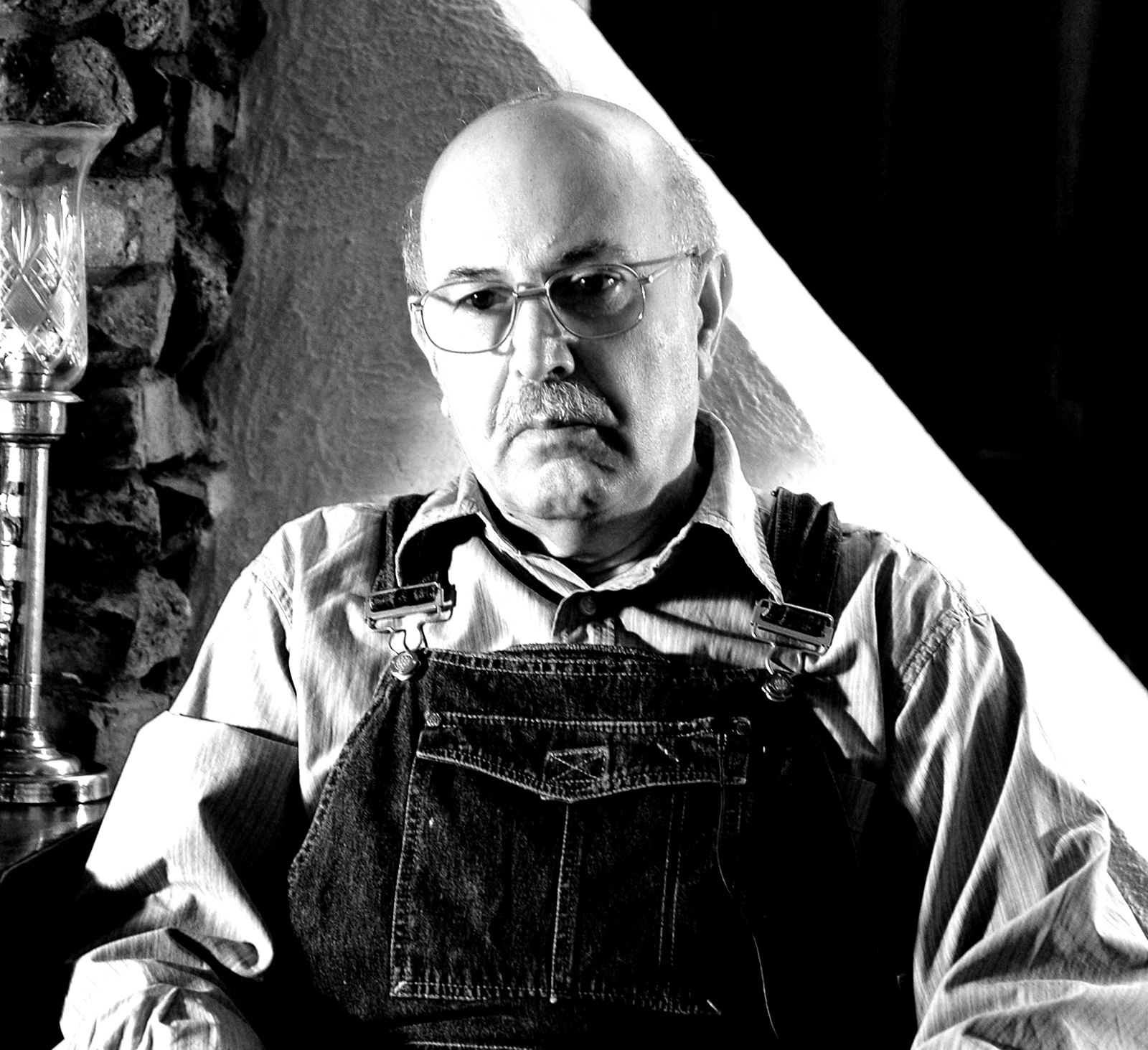

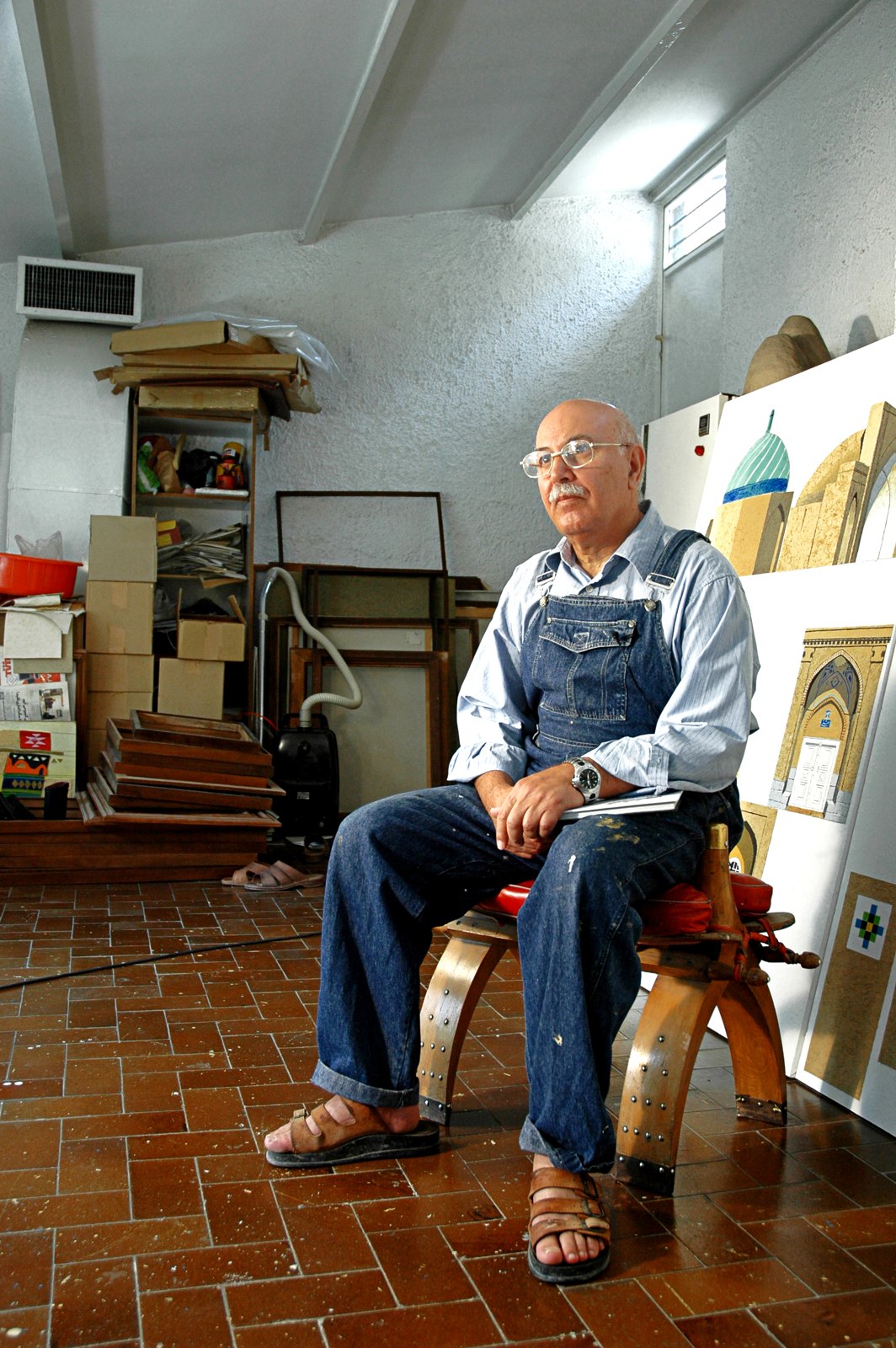
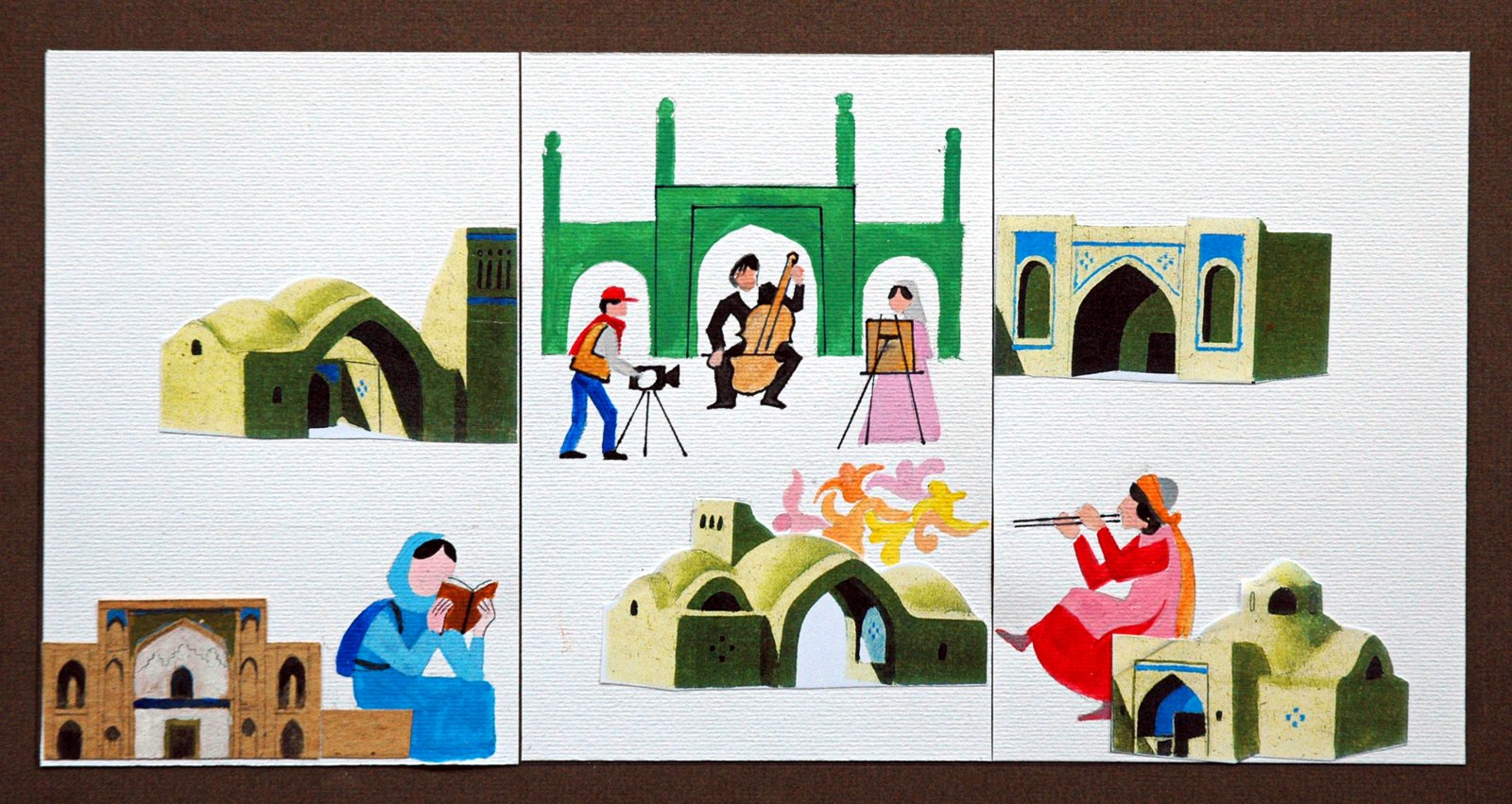
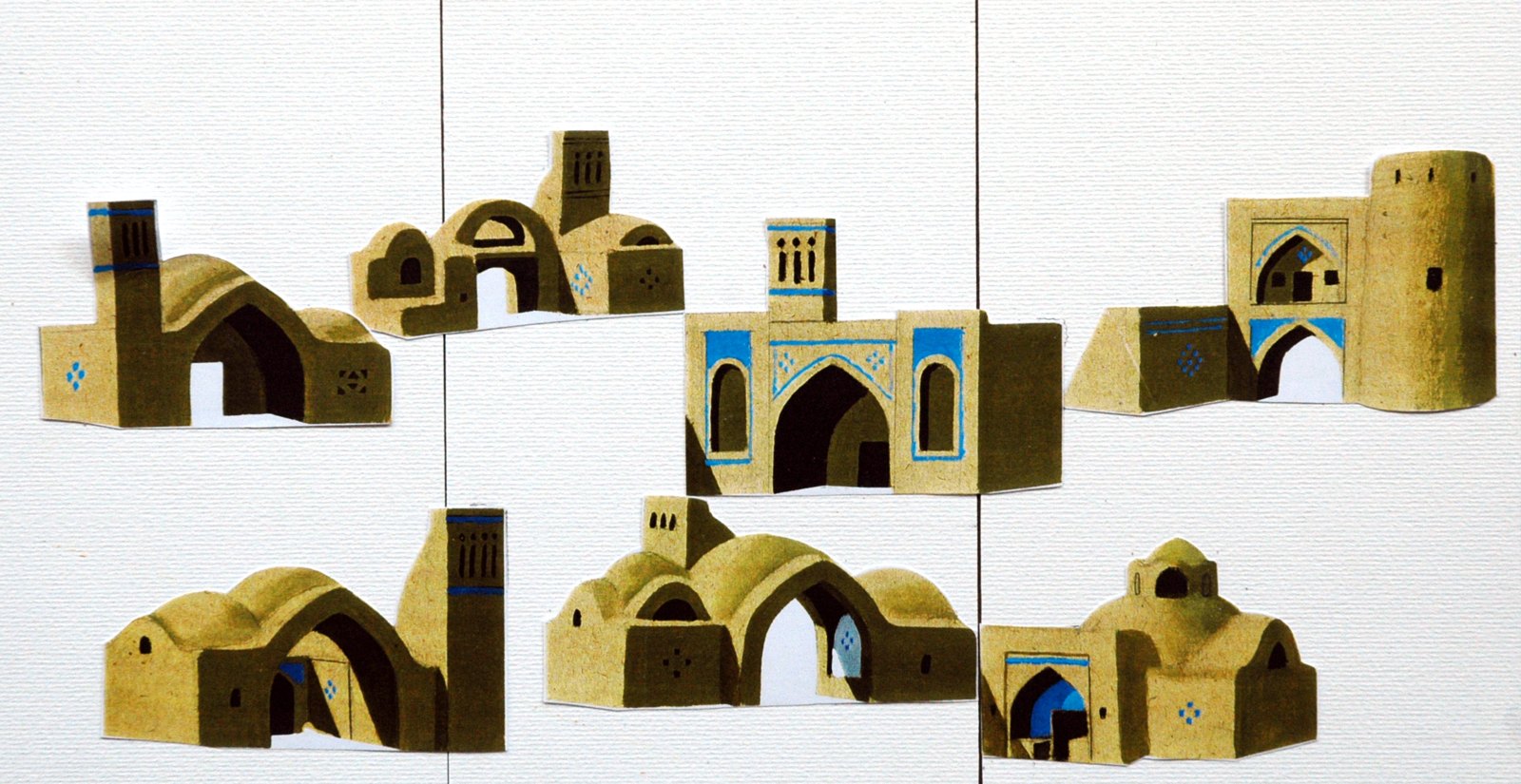
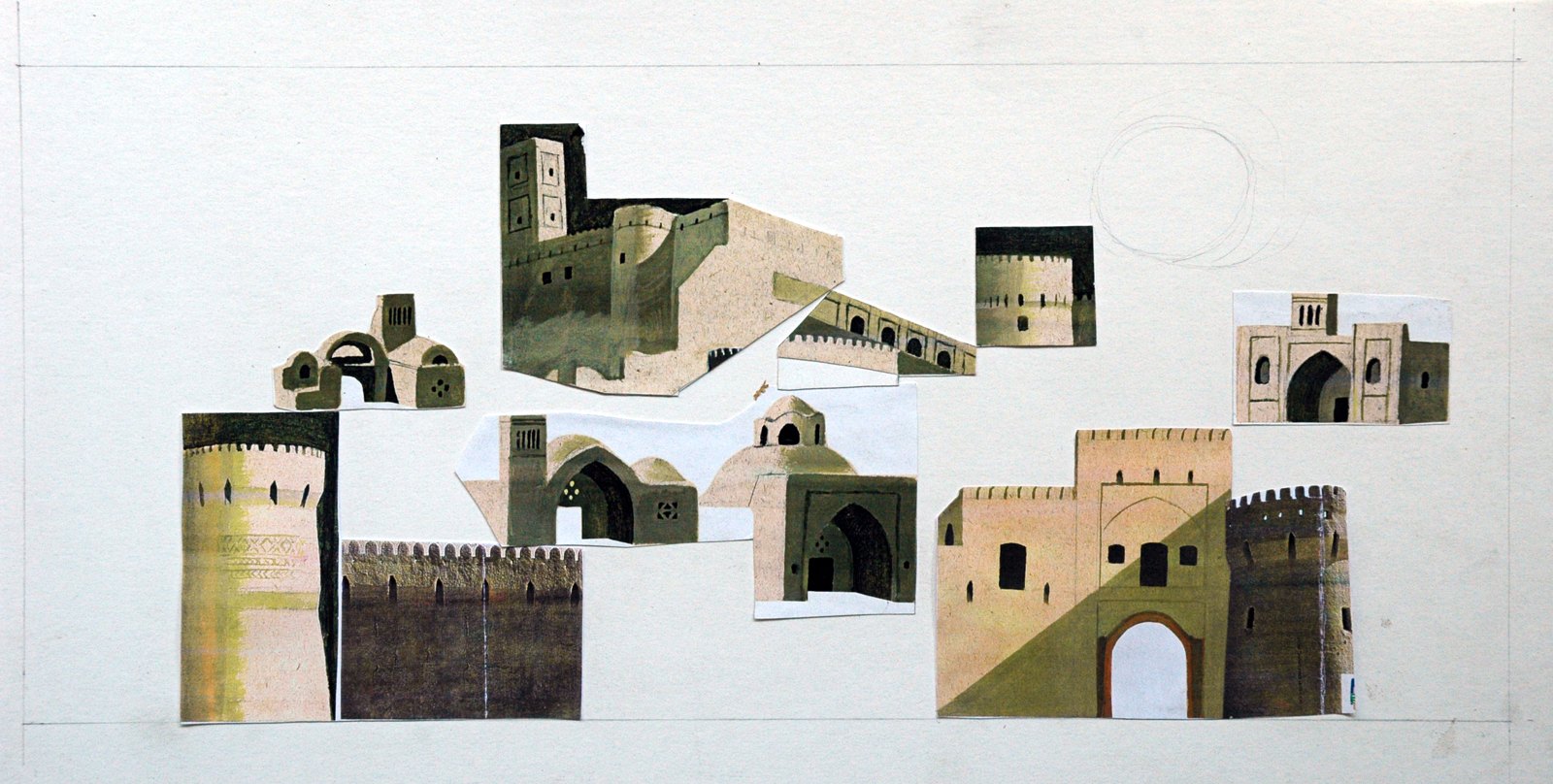
Studio, photographs & works






Biography references: Encyclopaedia Iranica · The Metropolitan Museum of Art