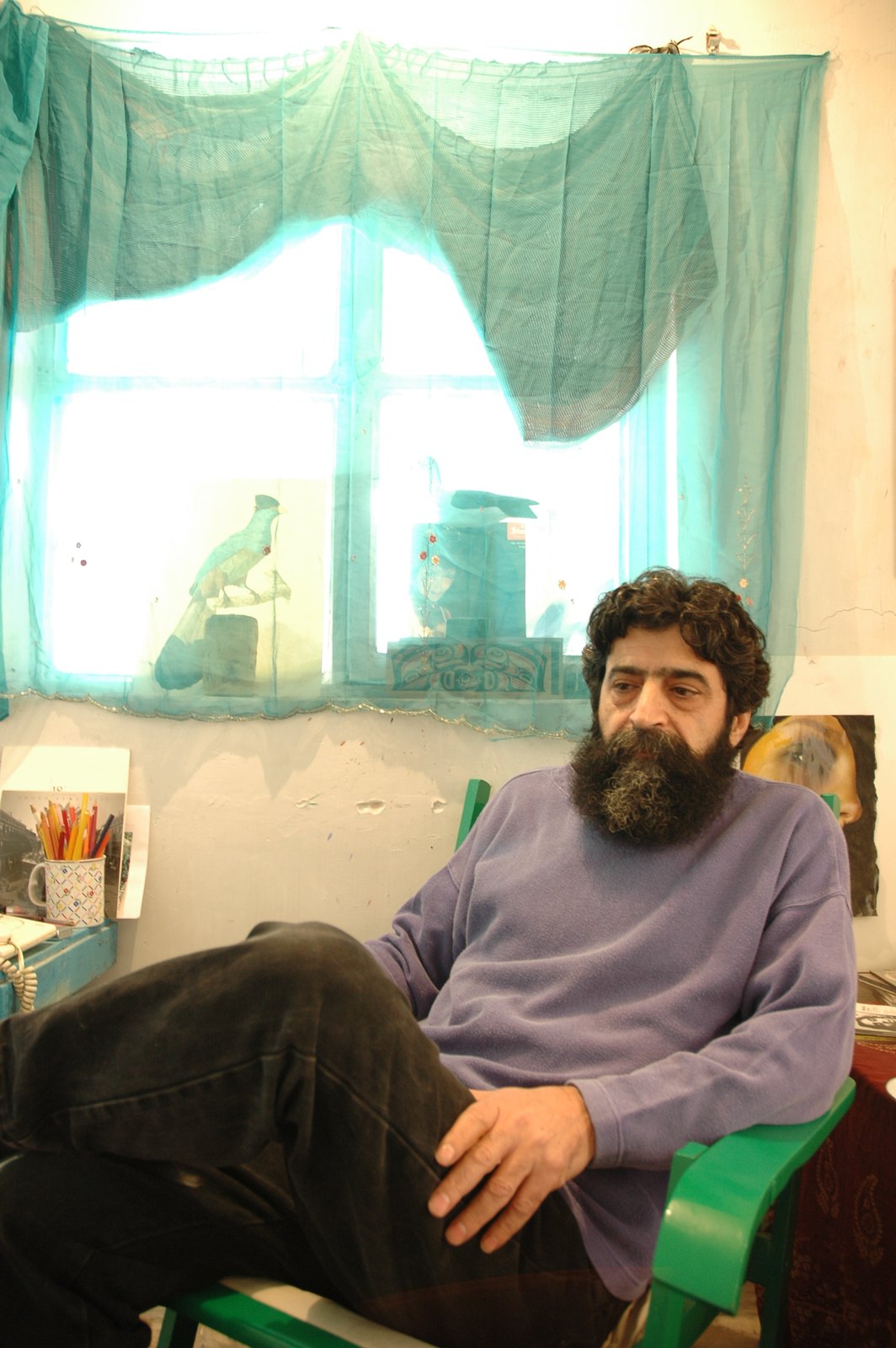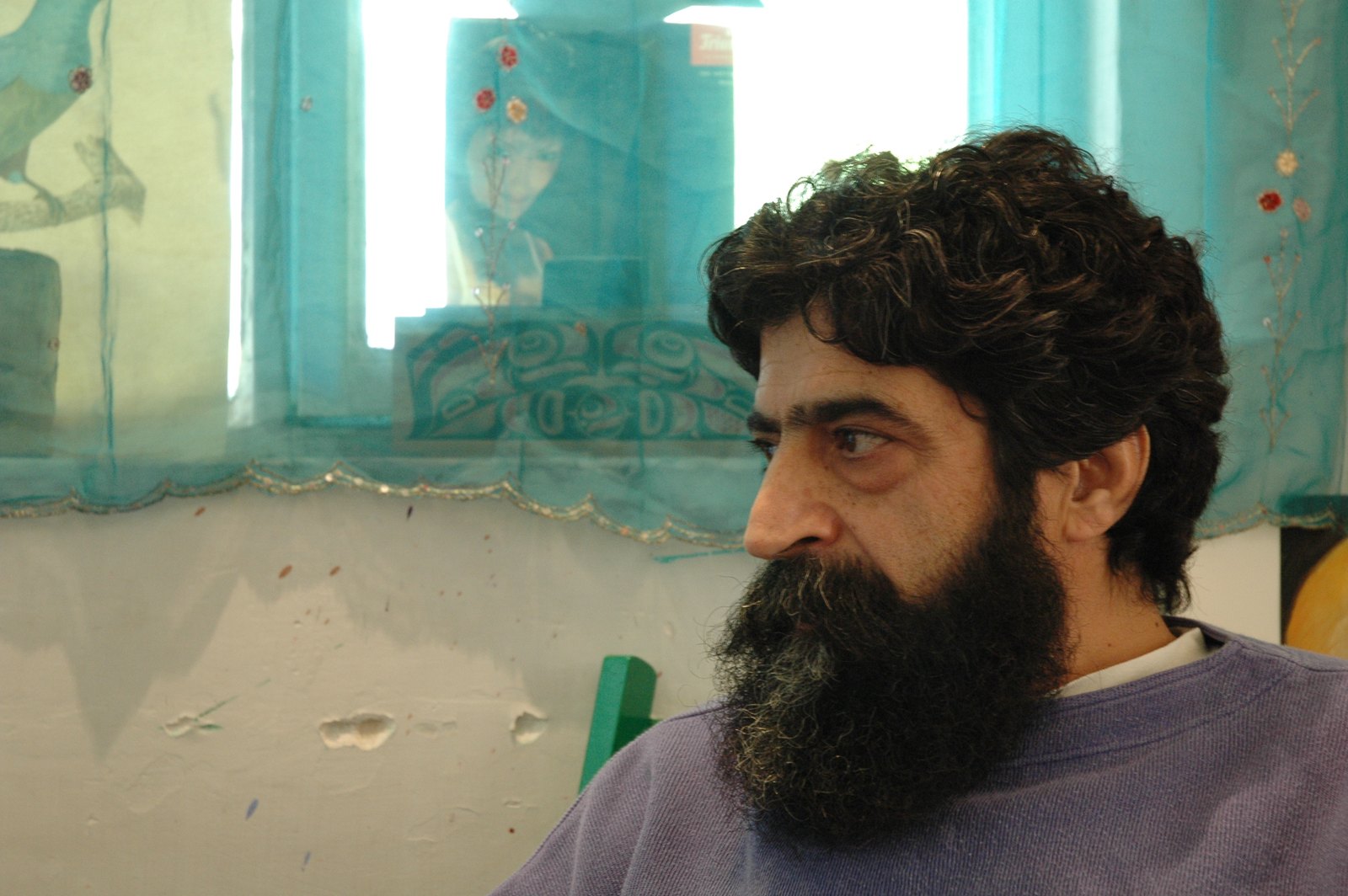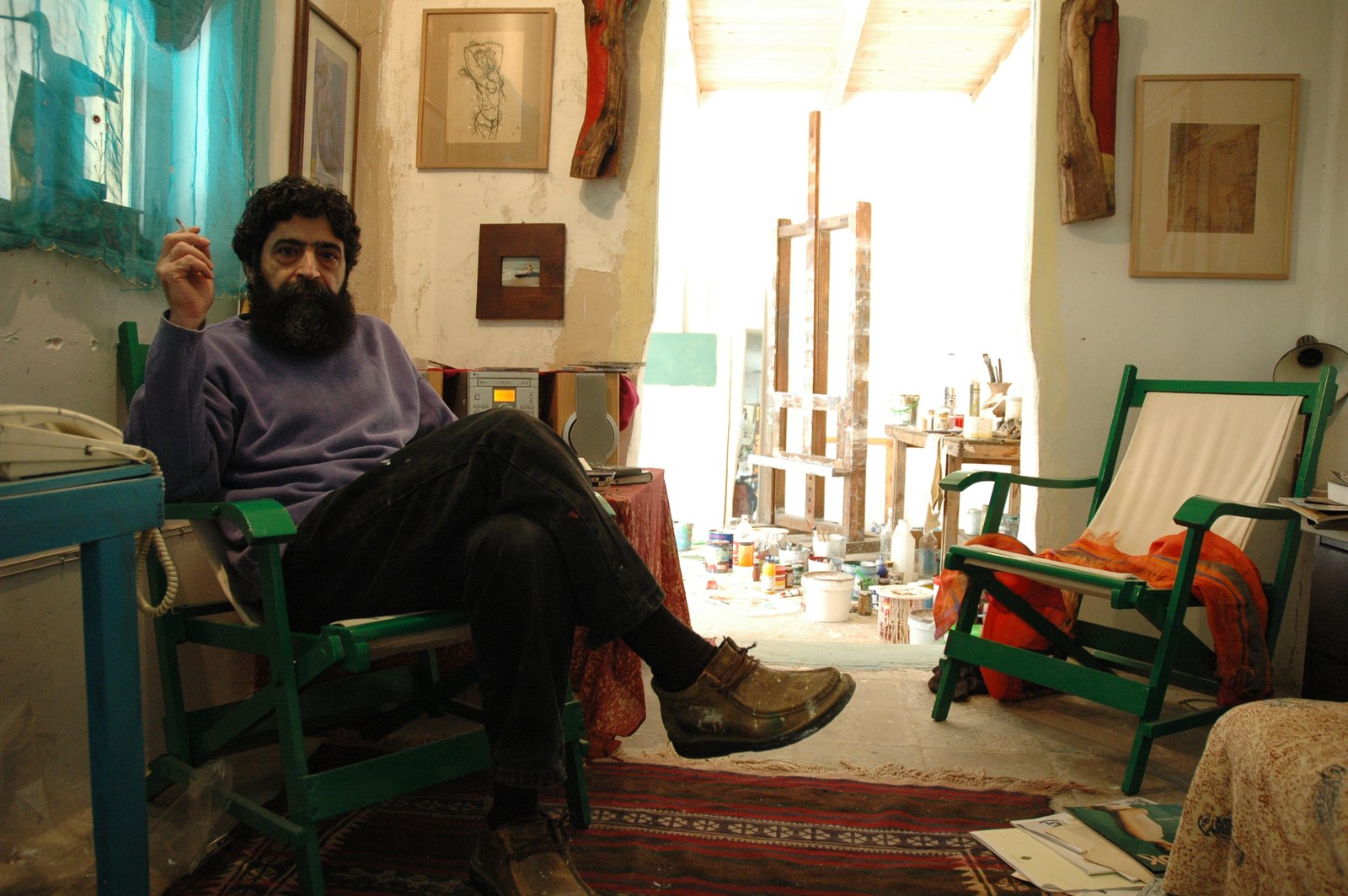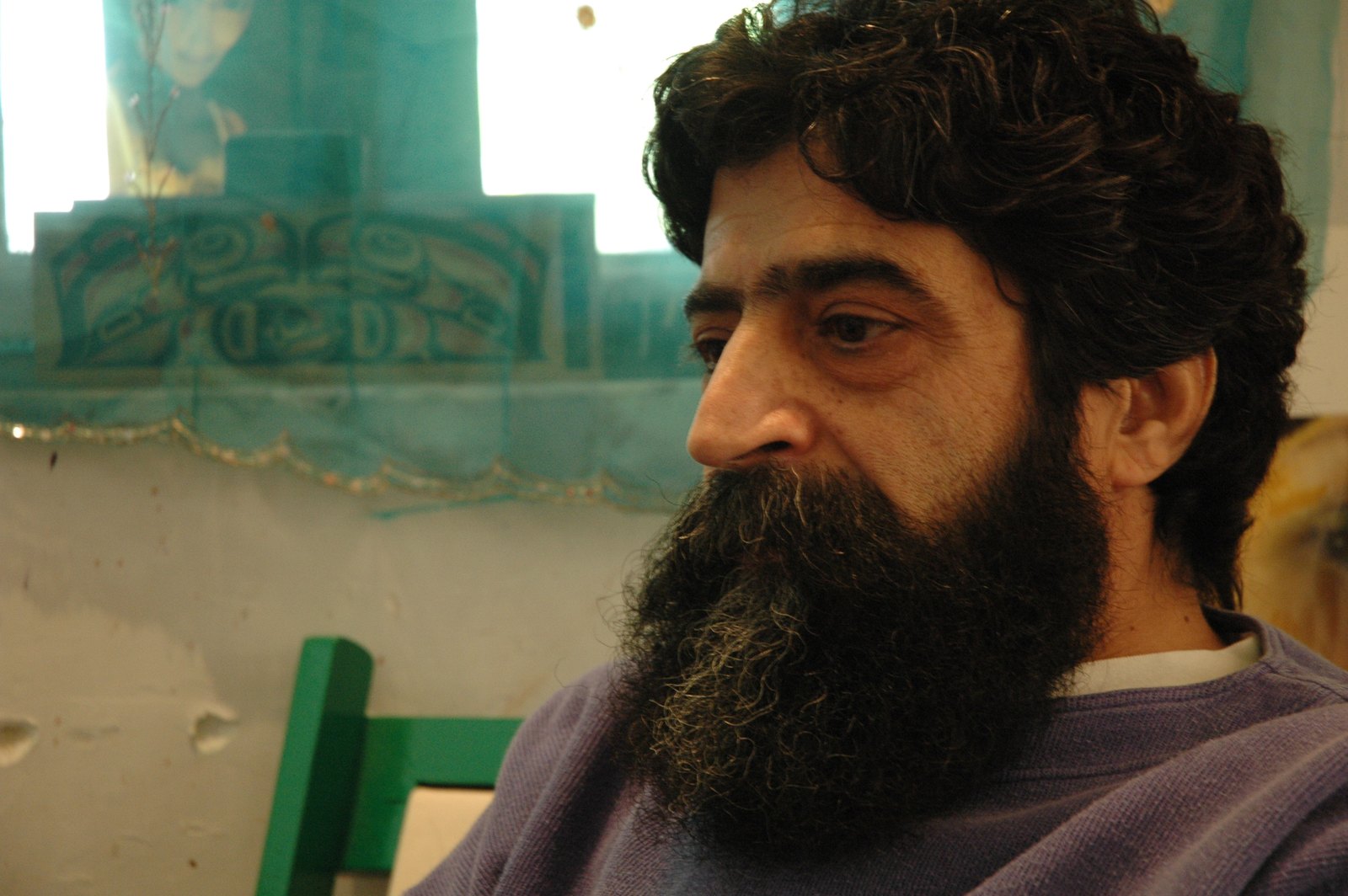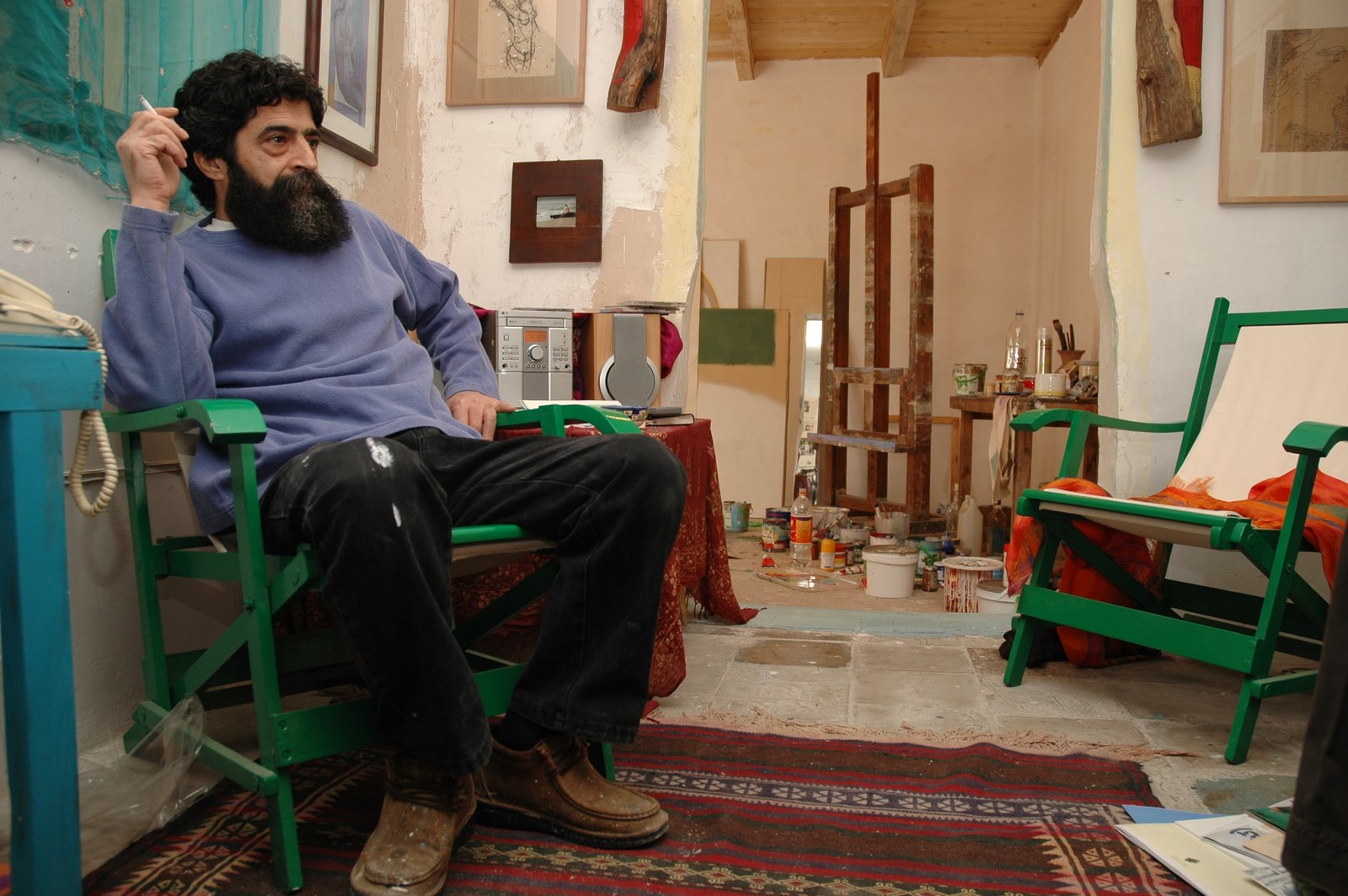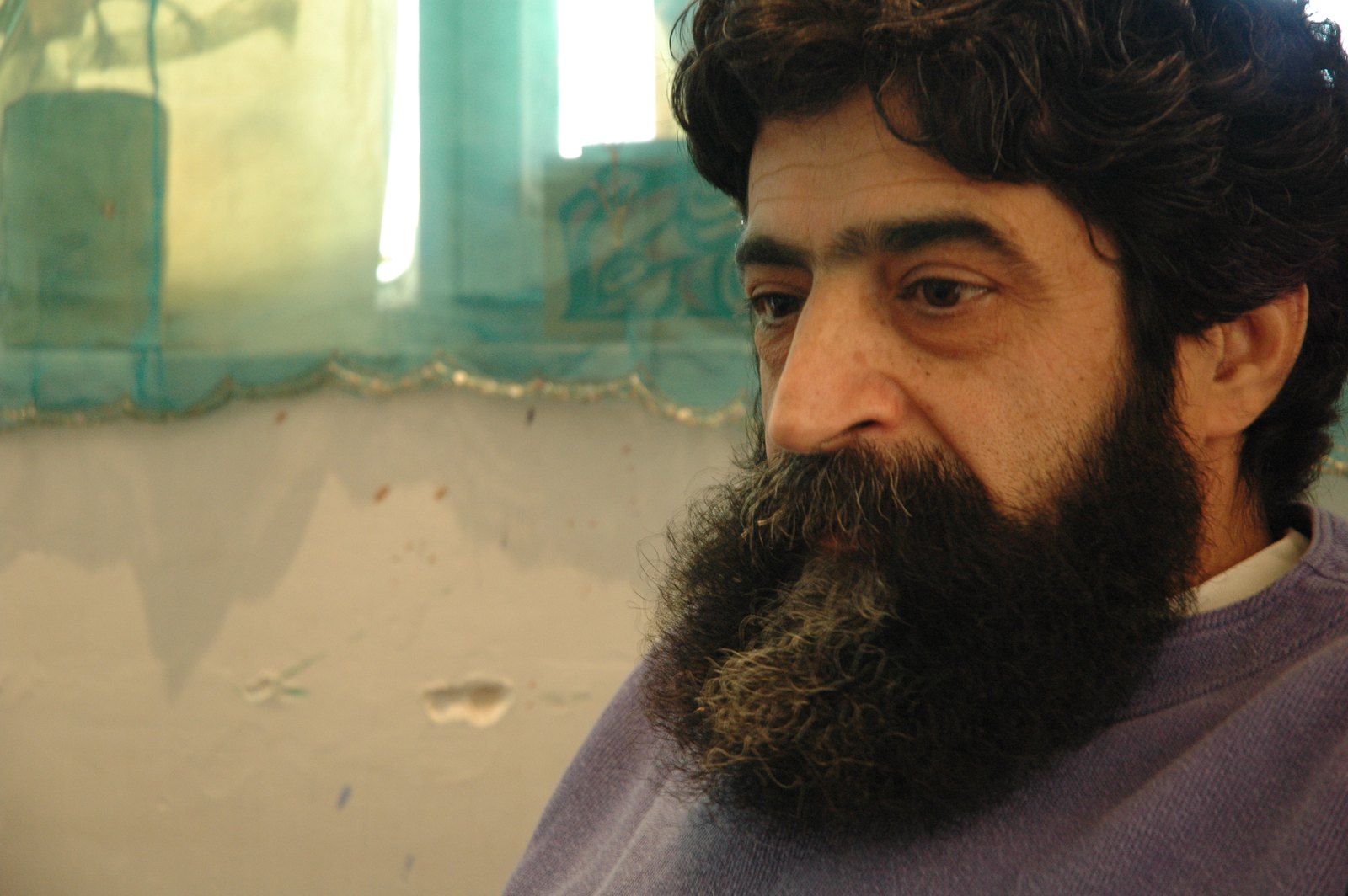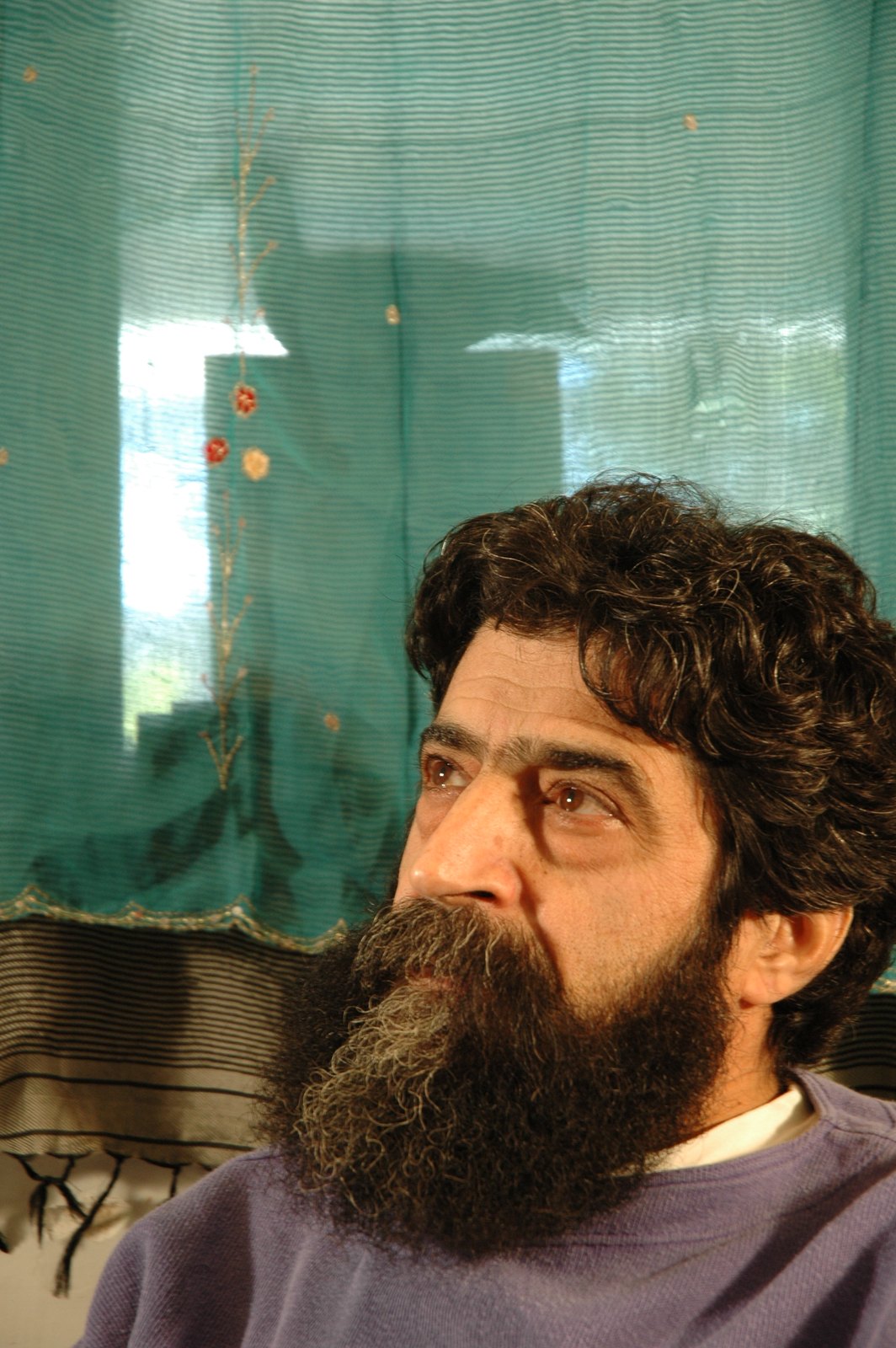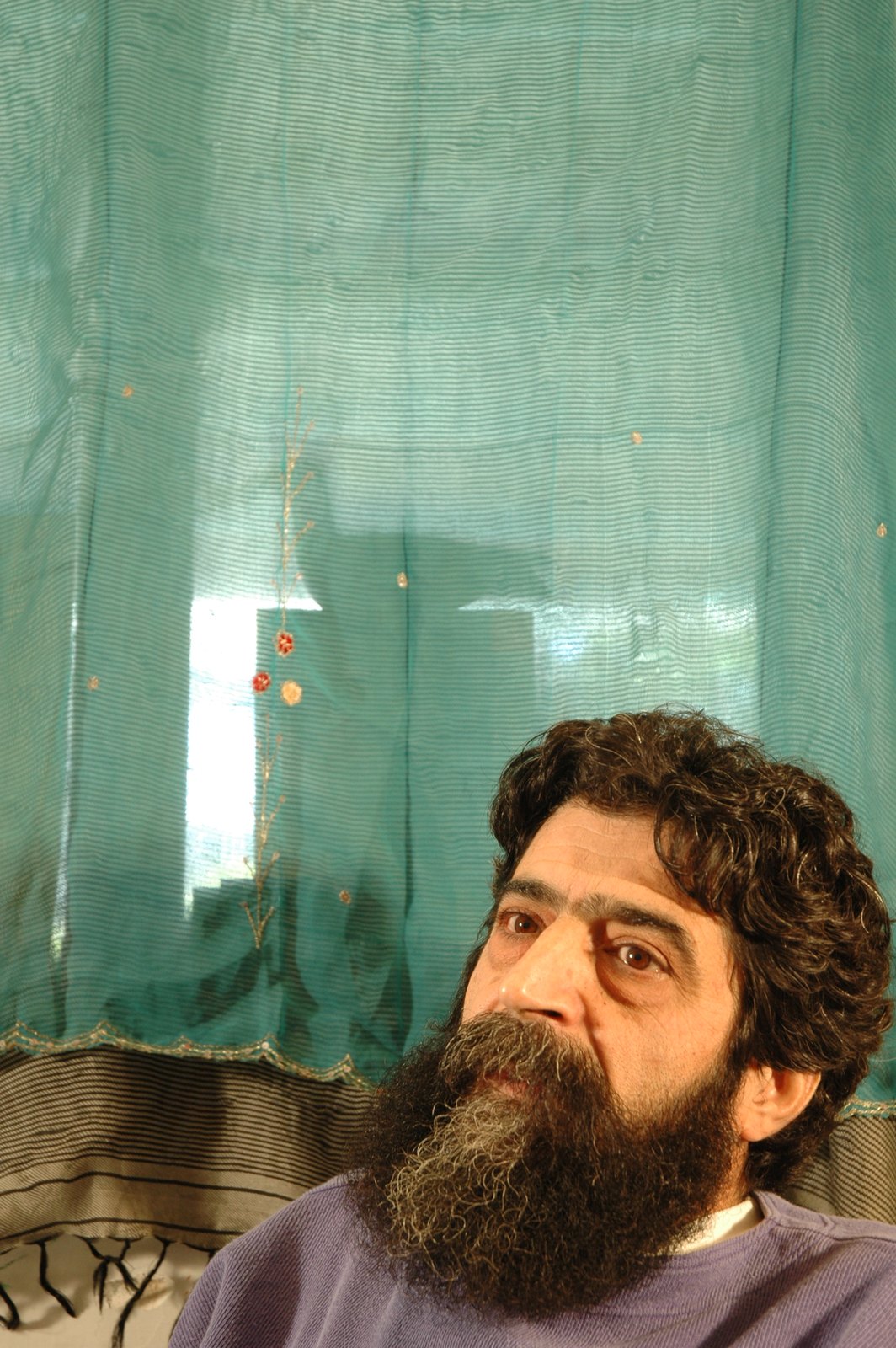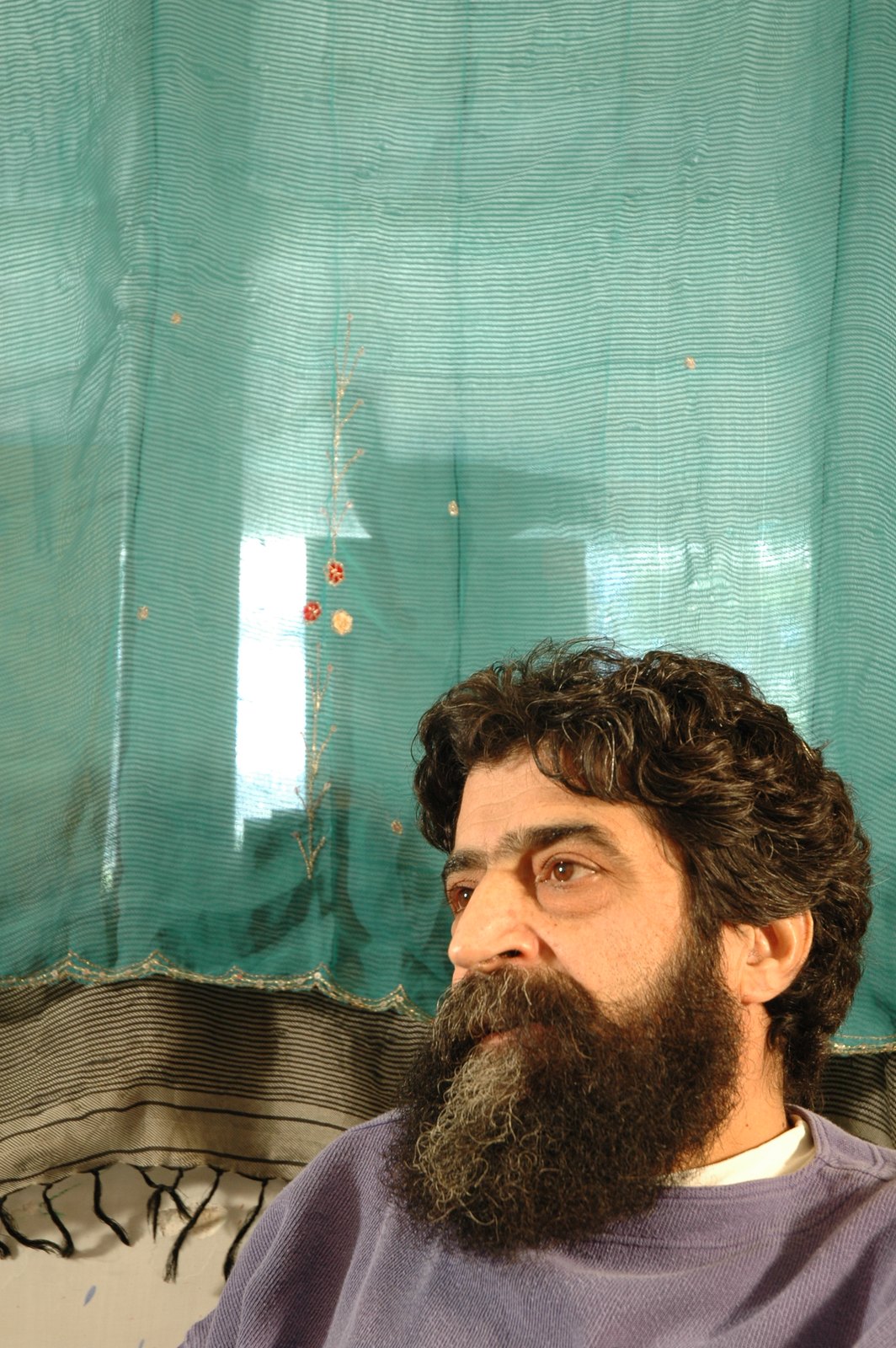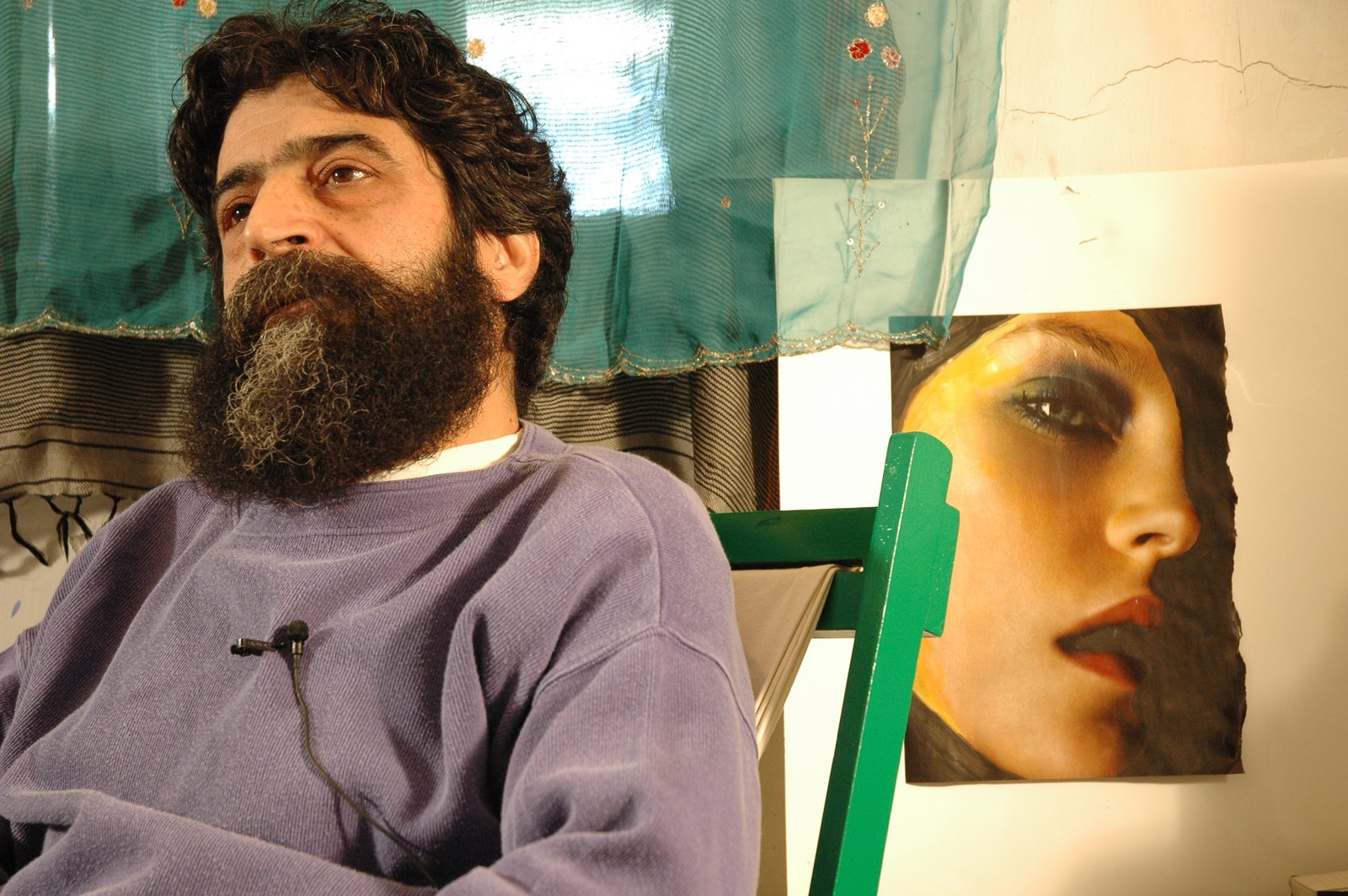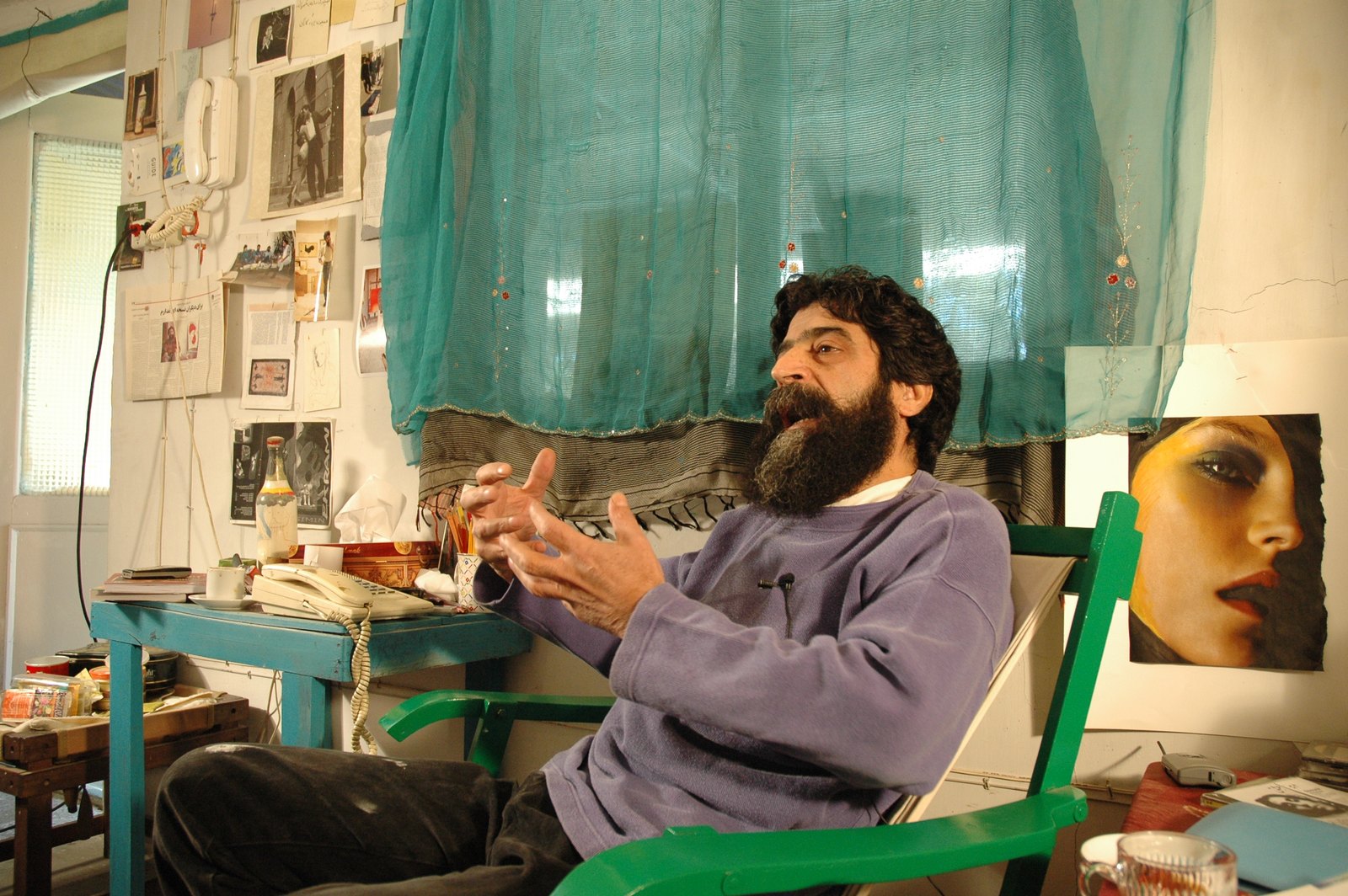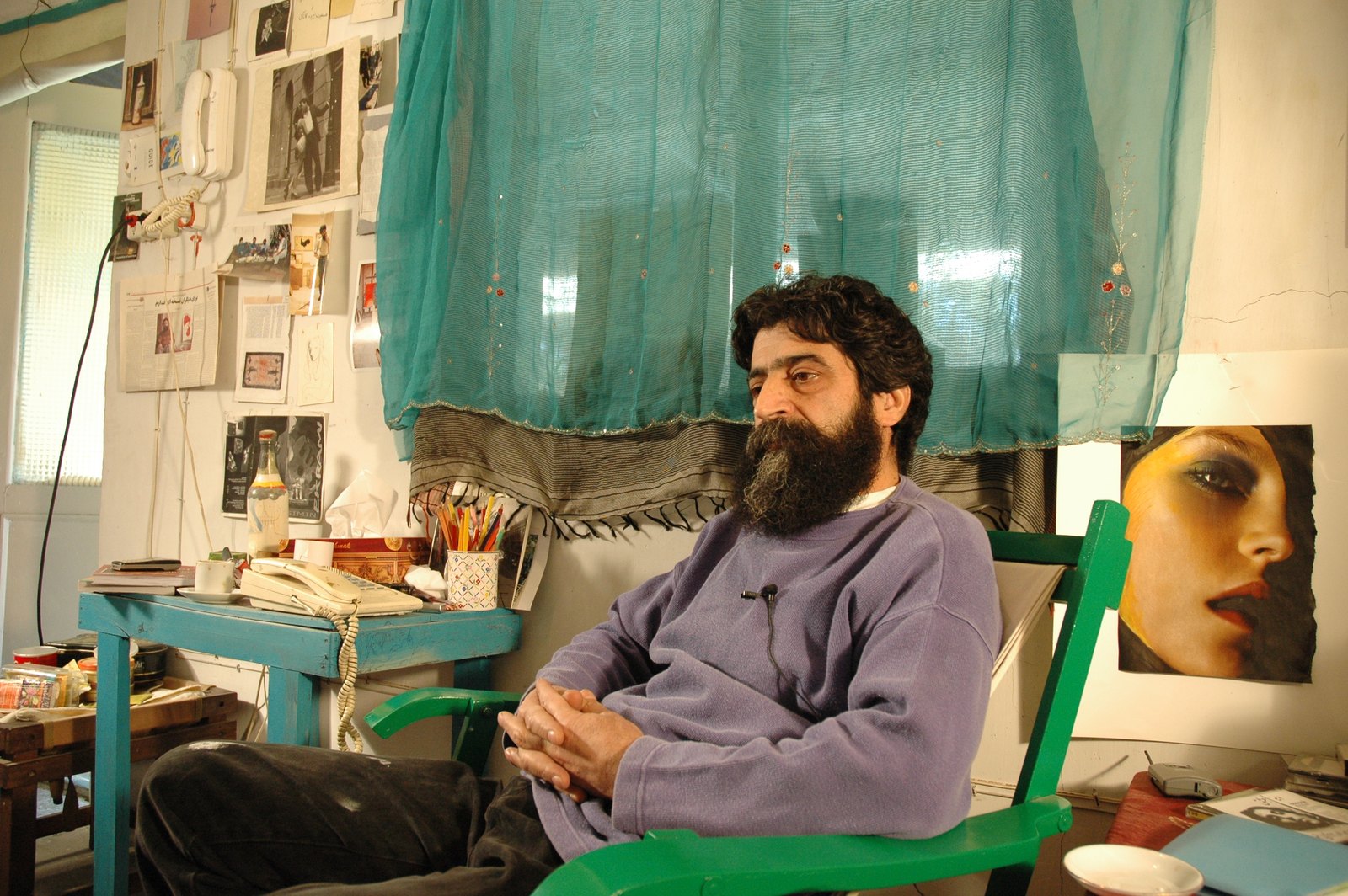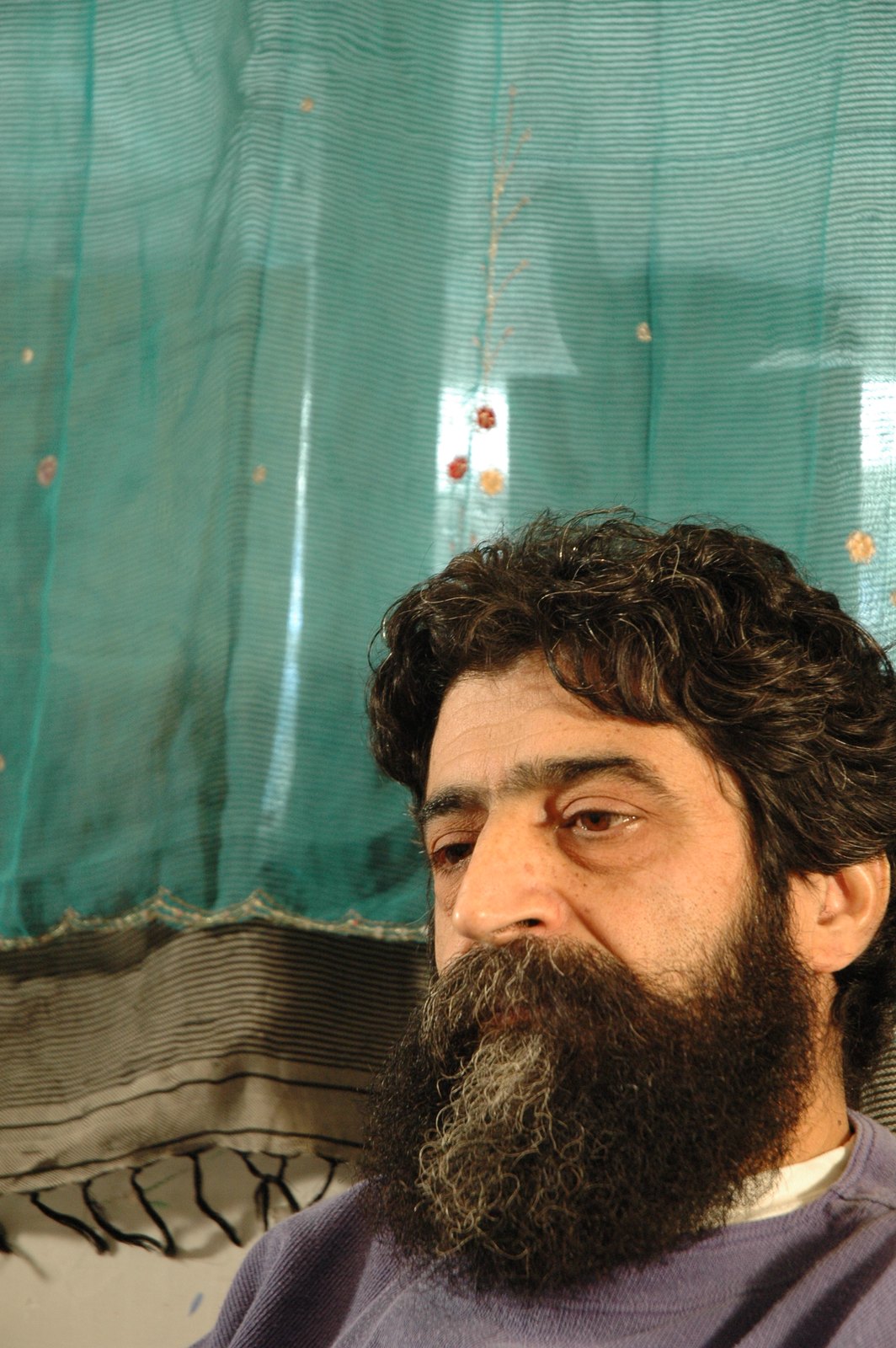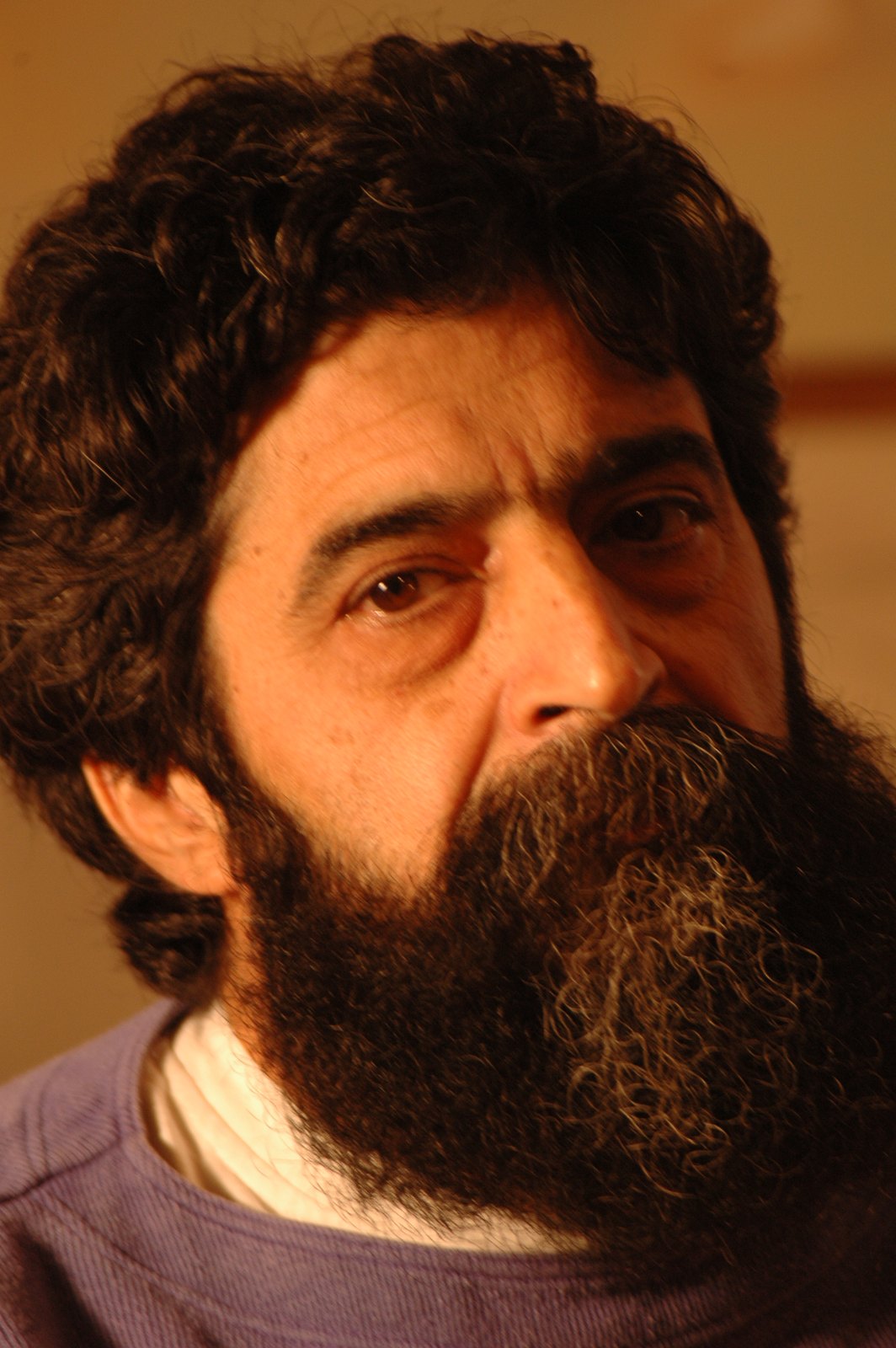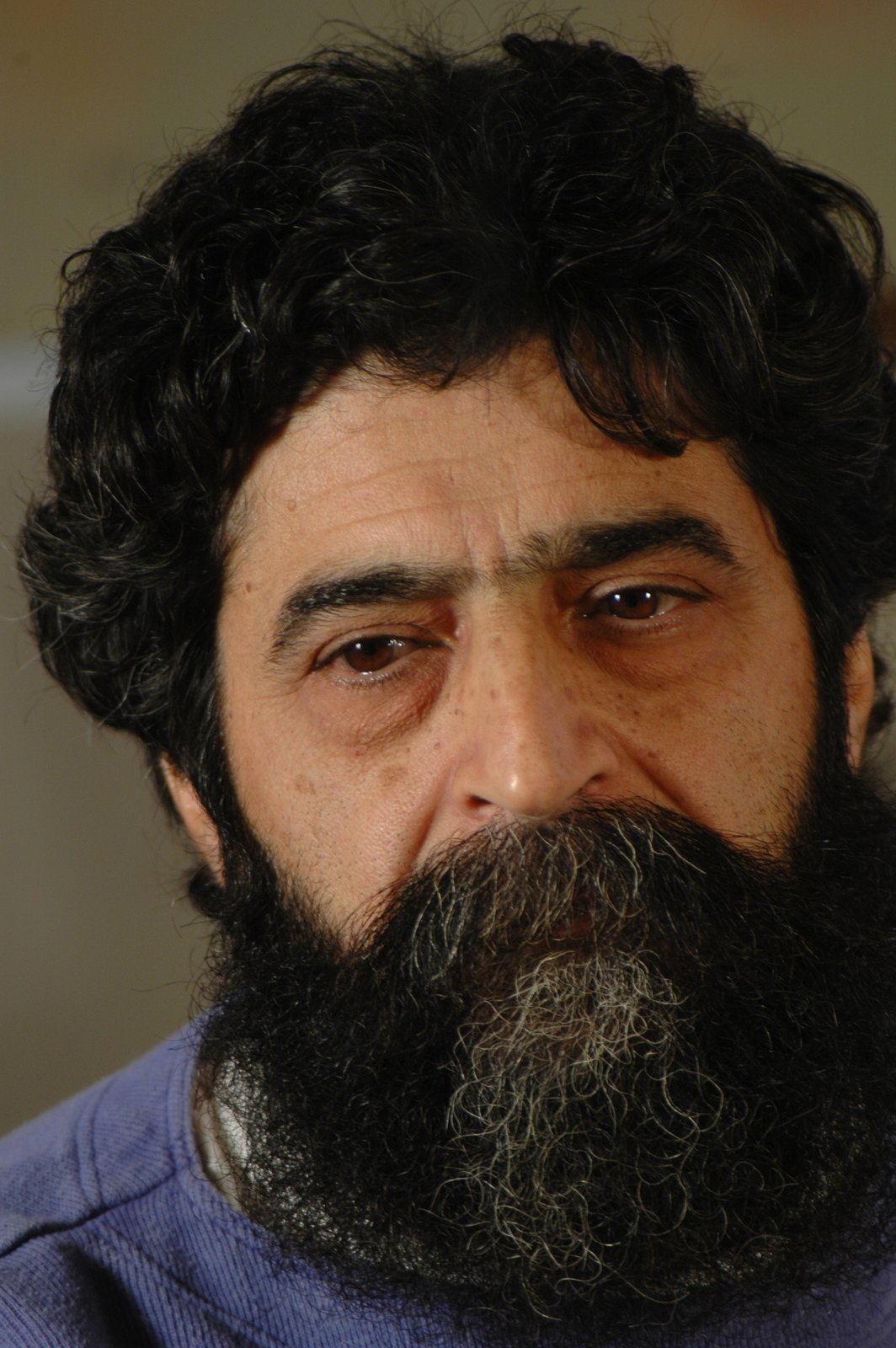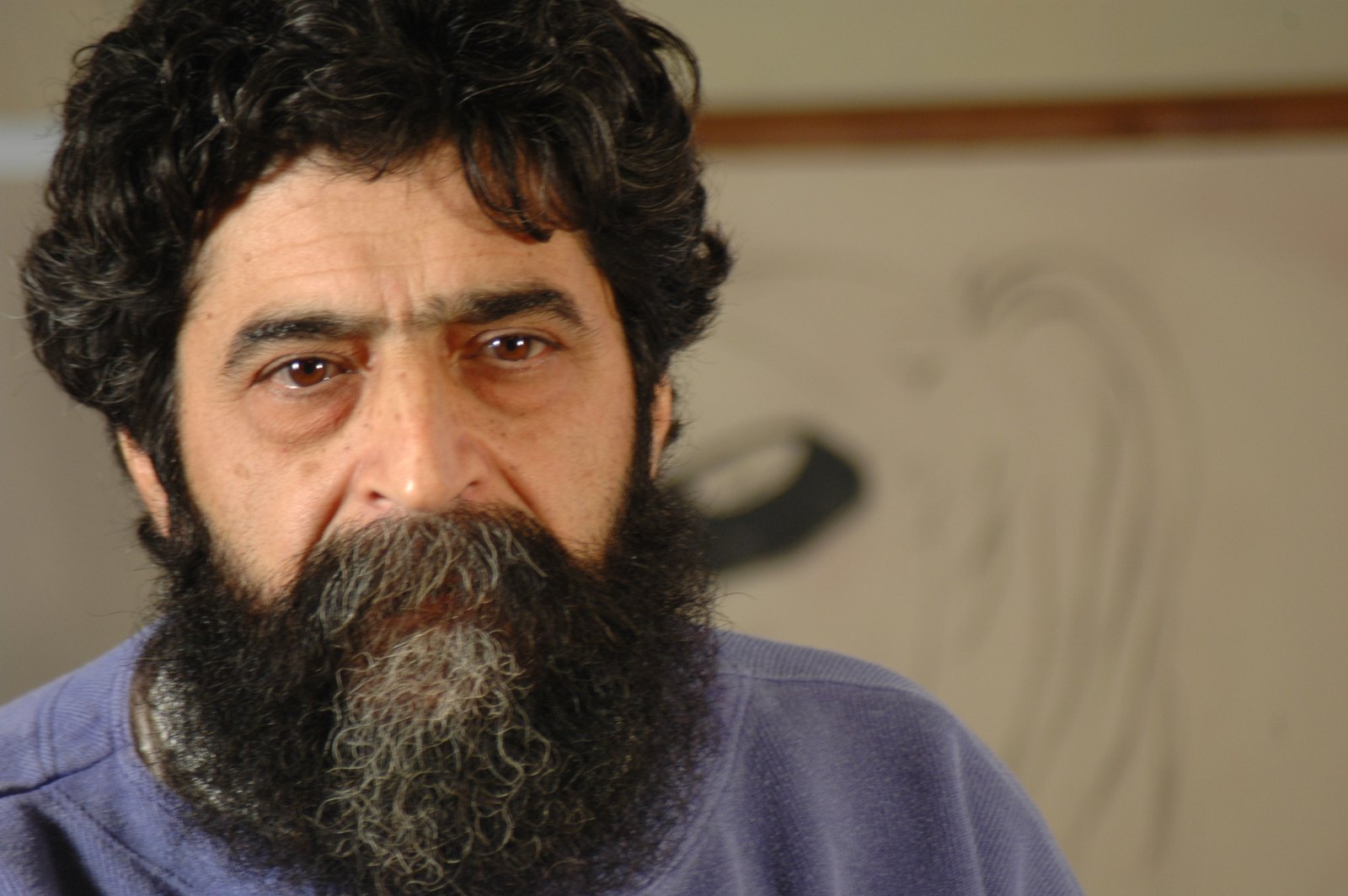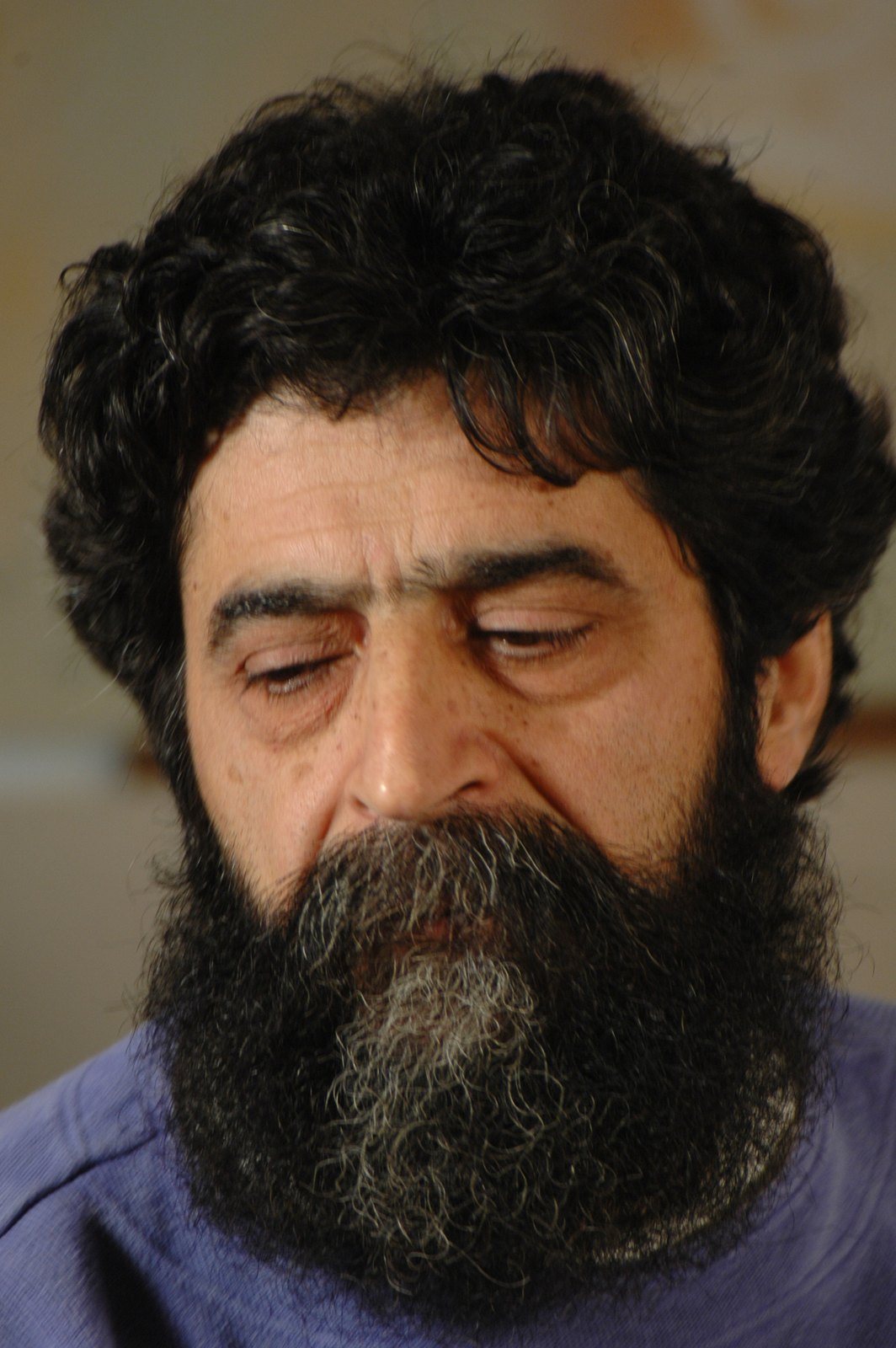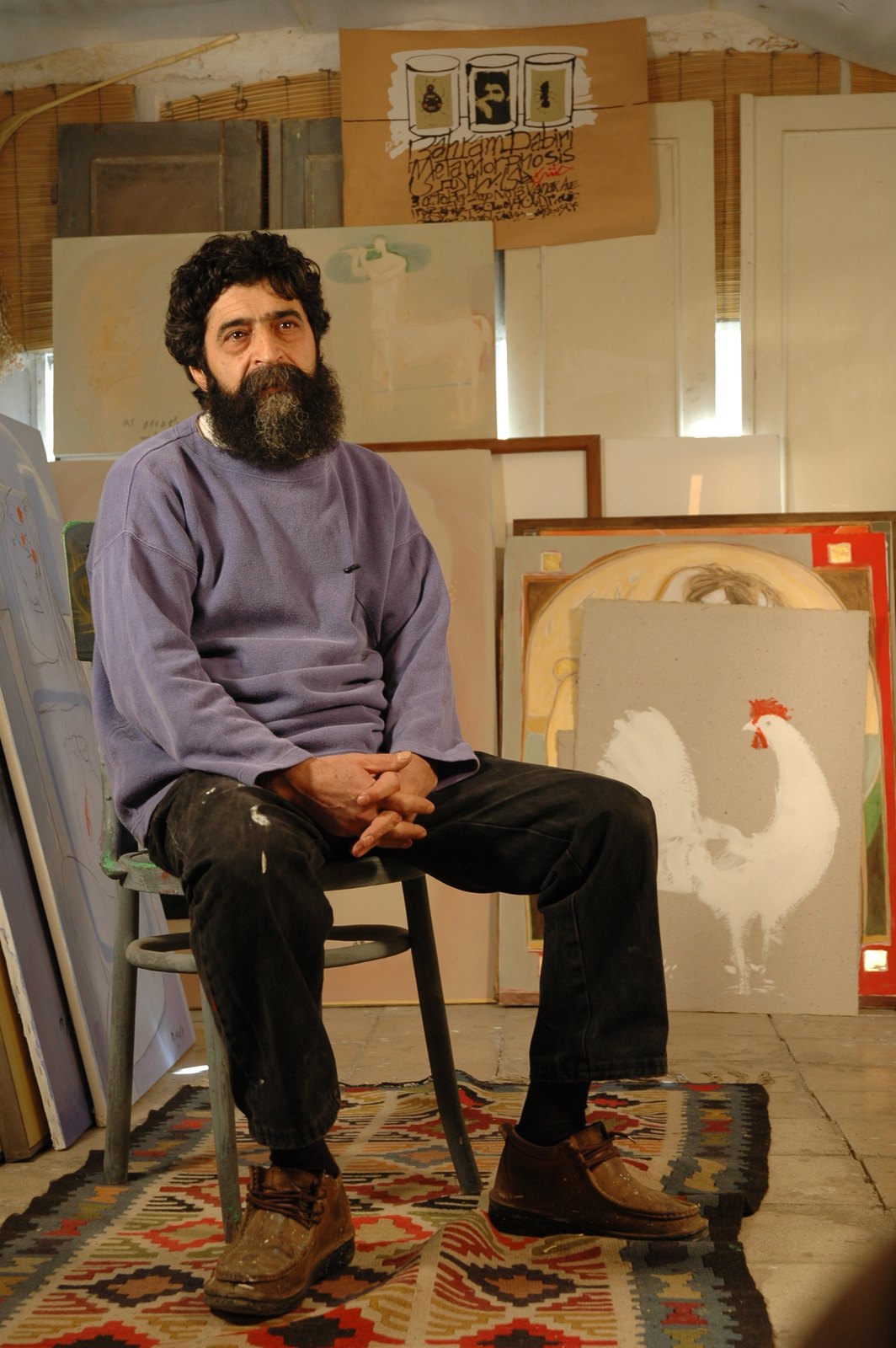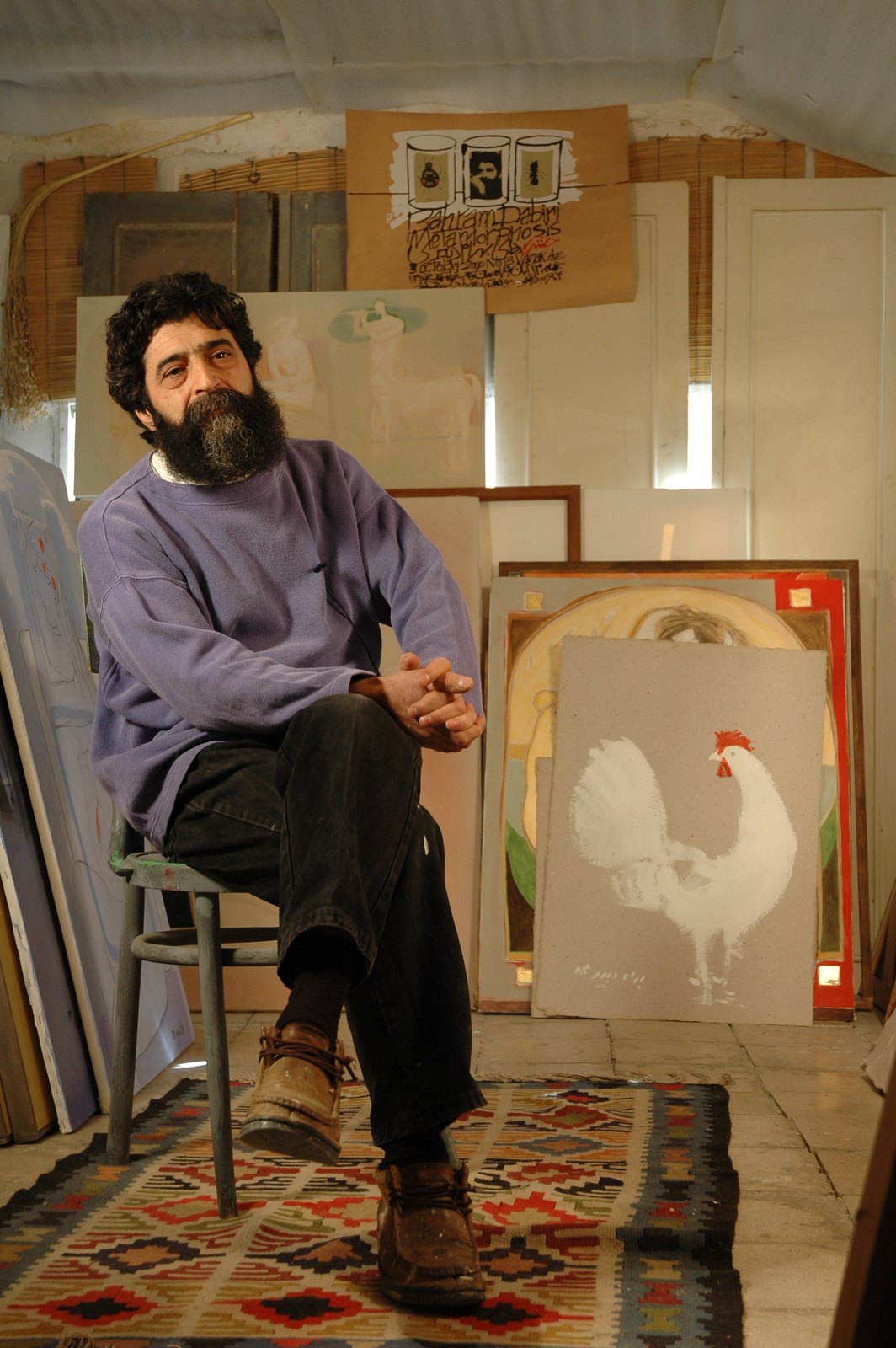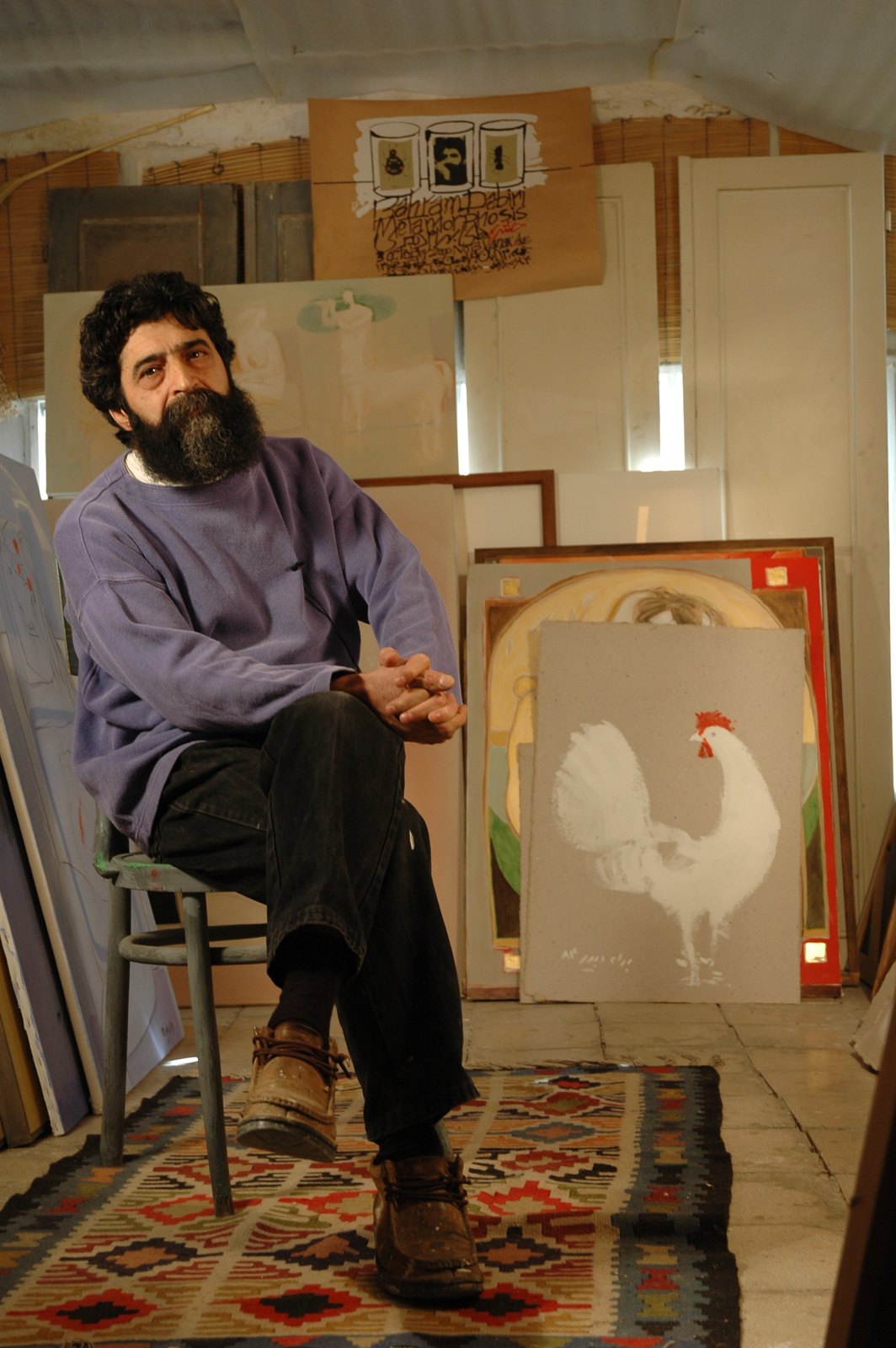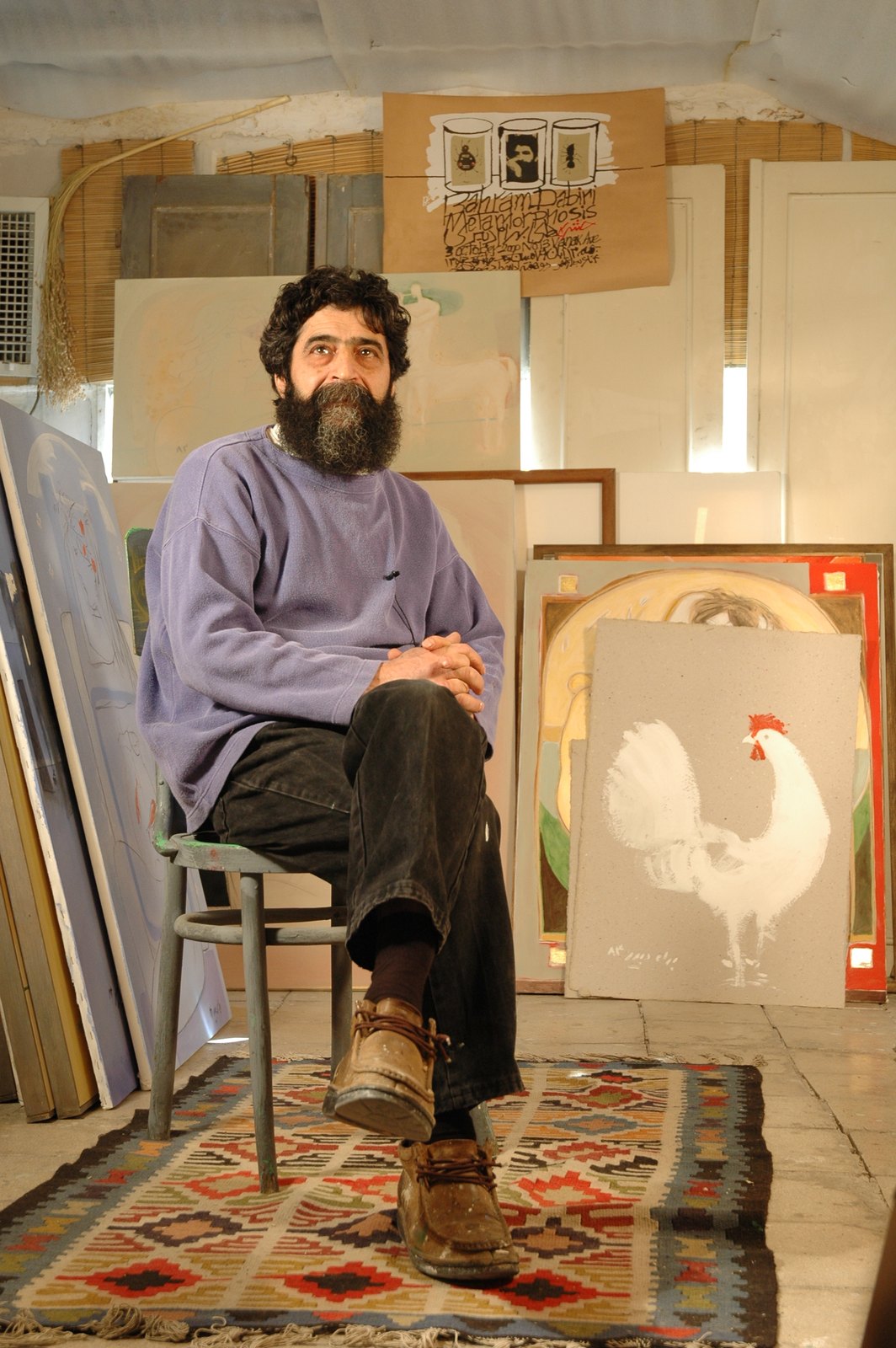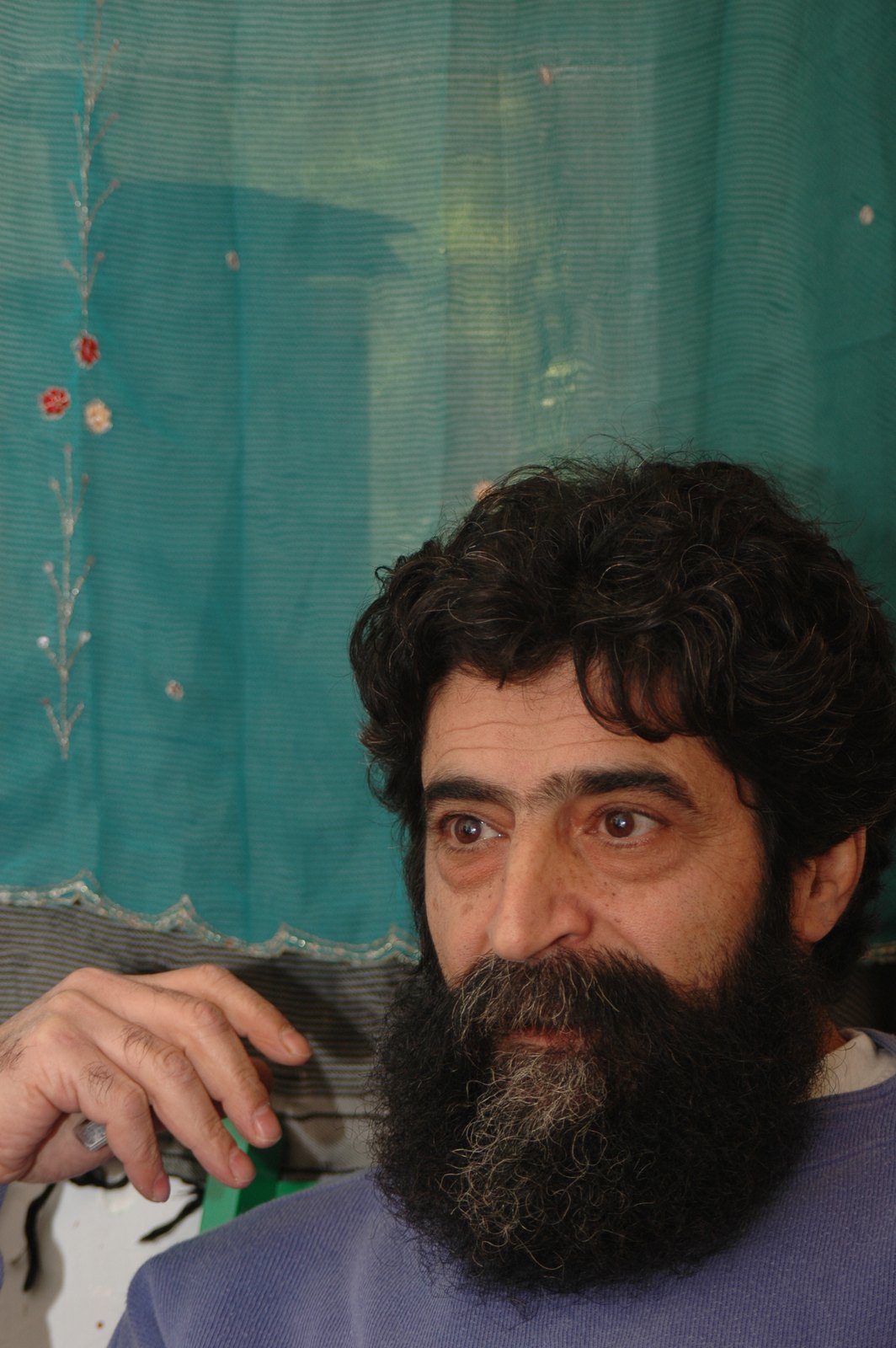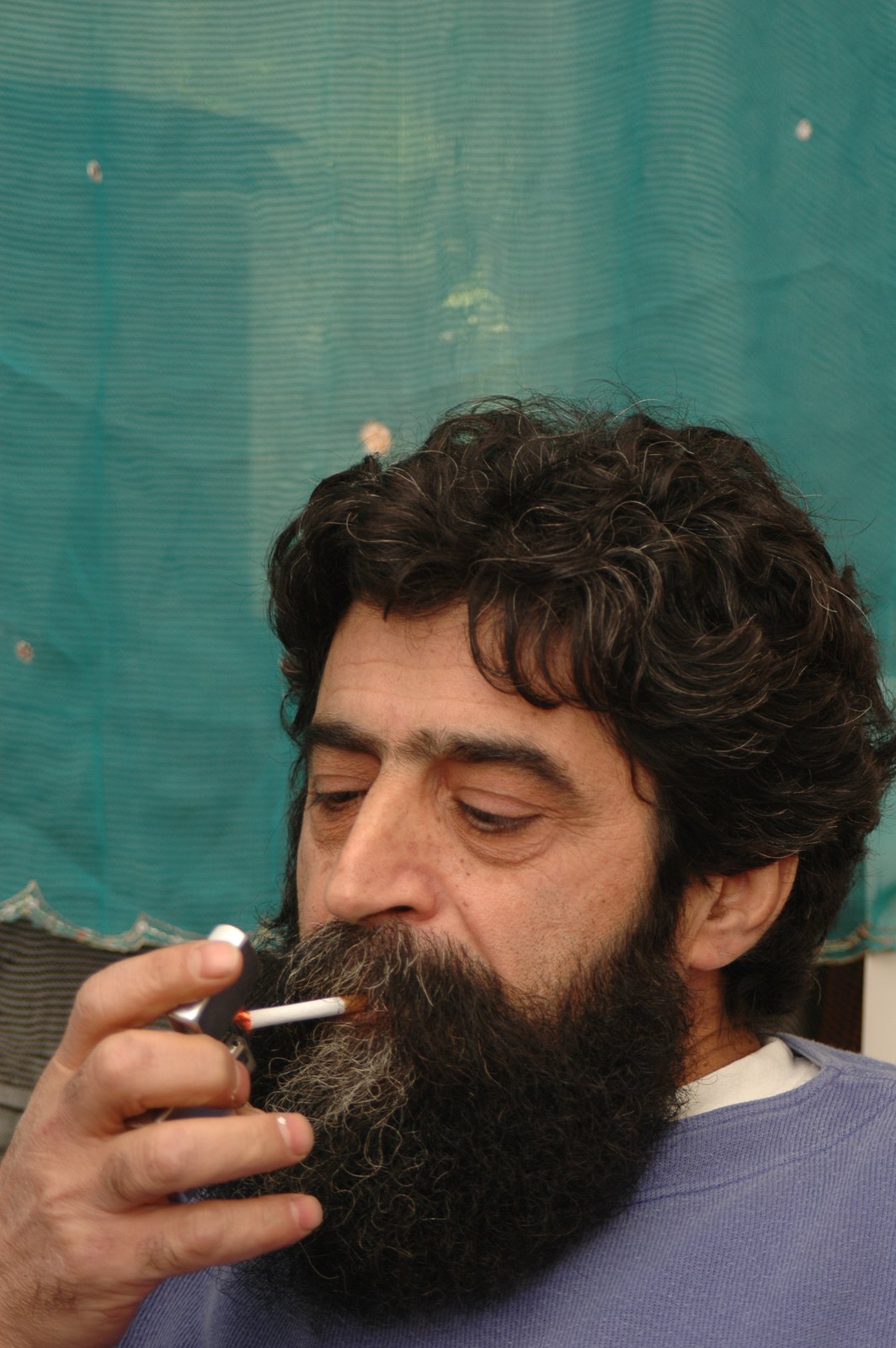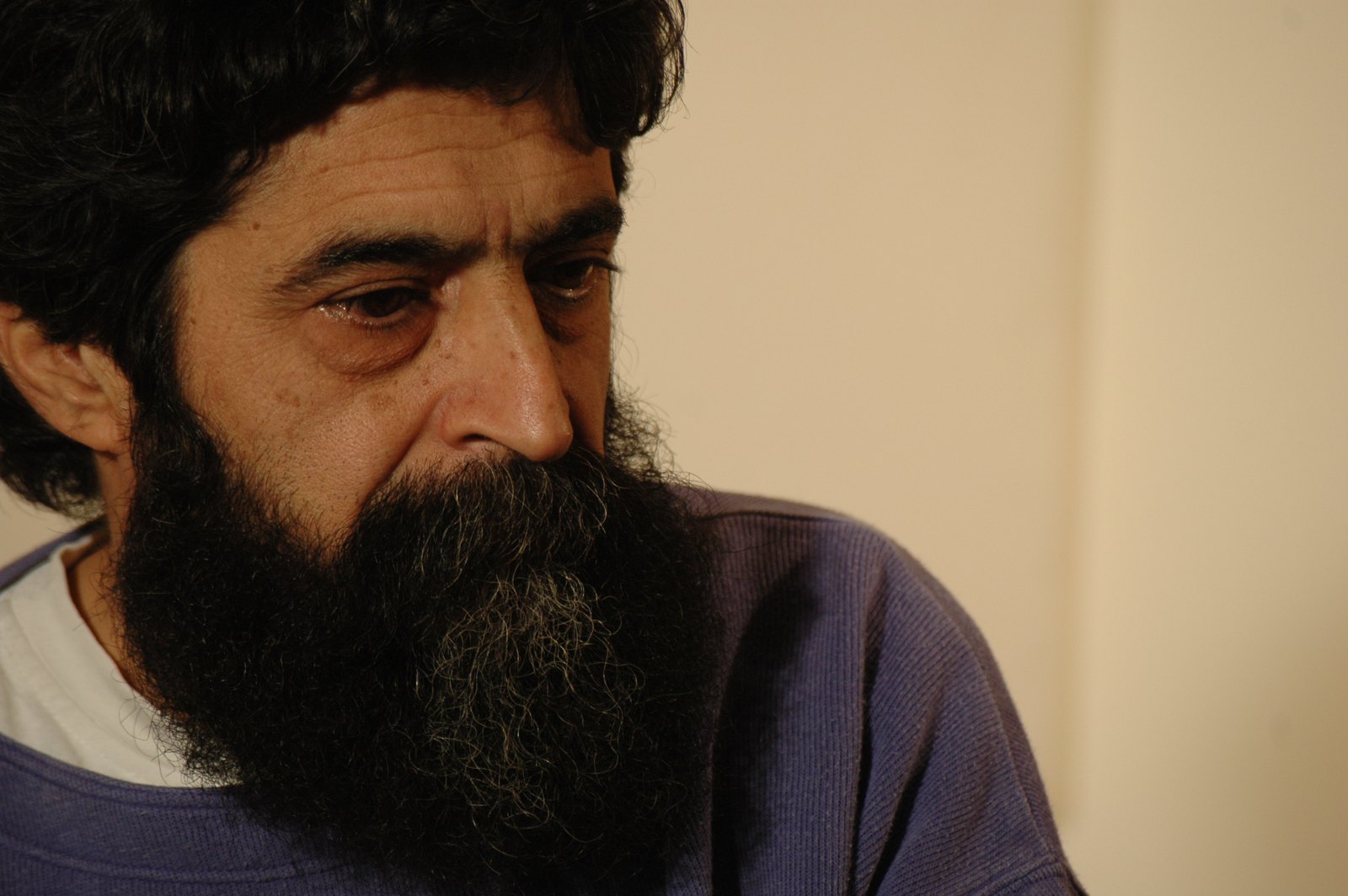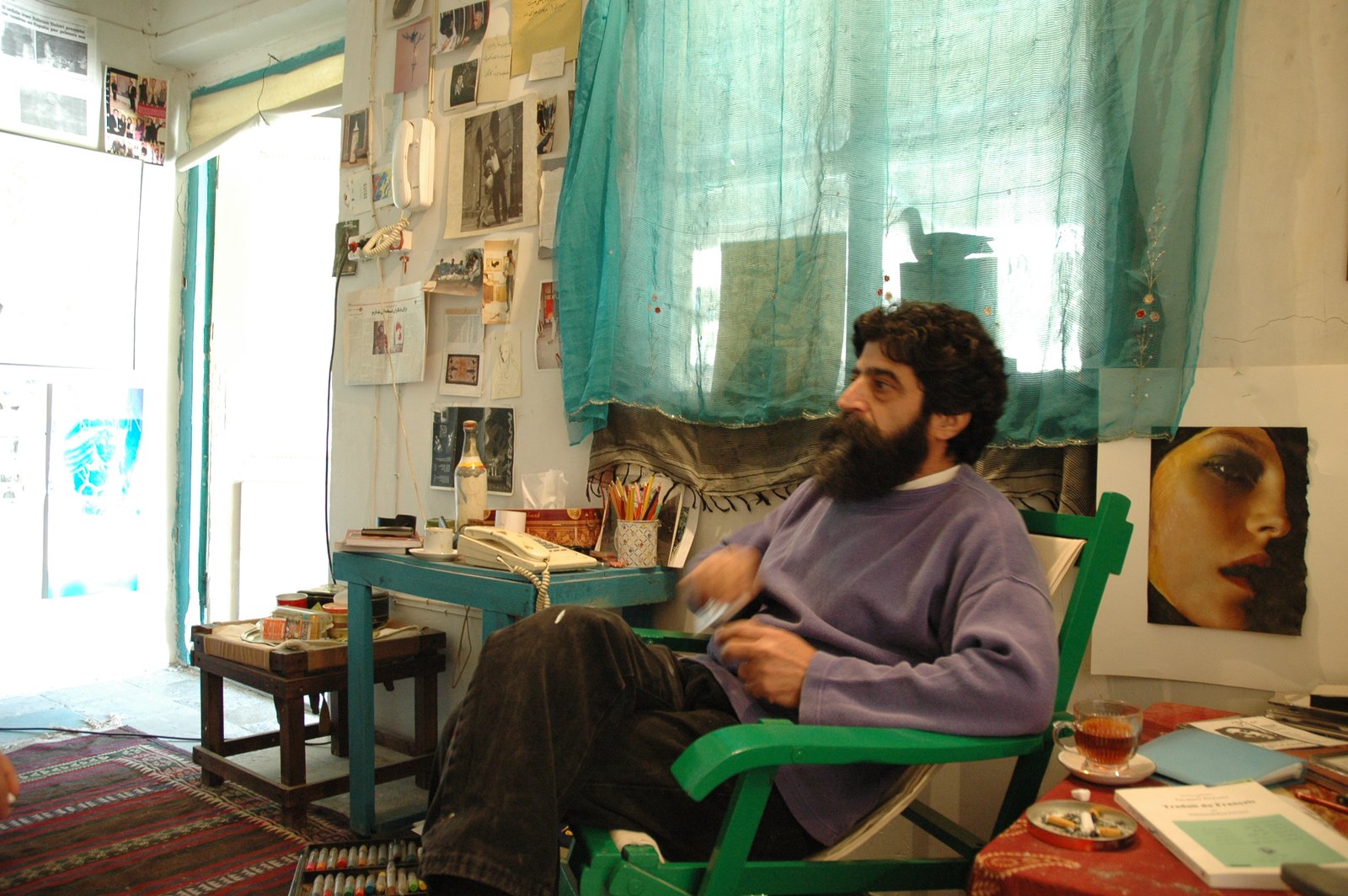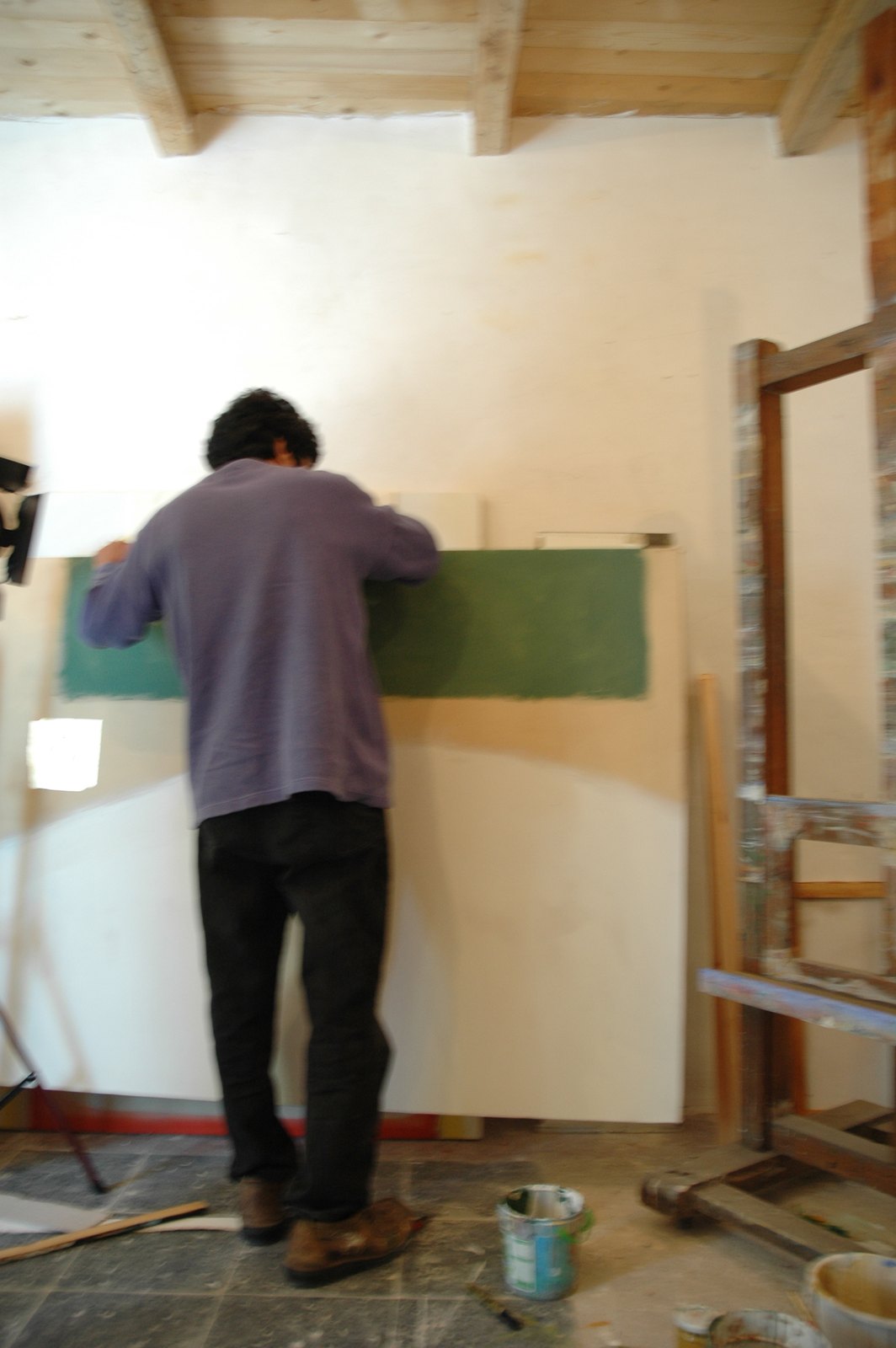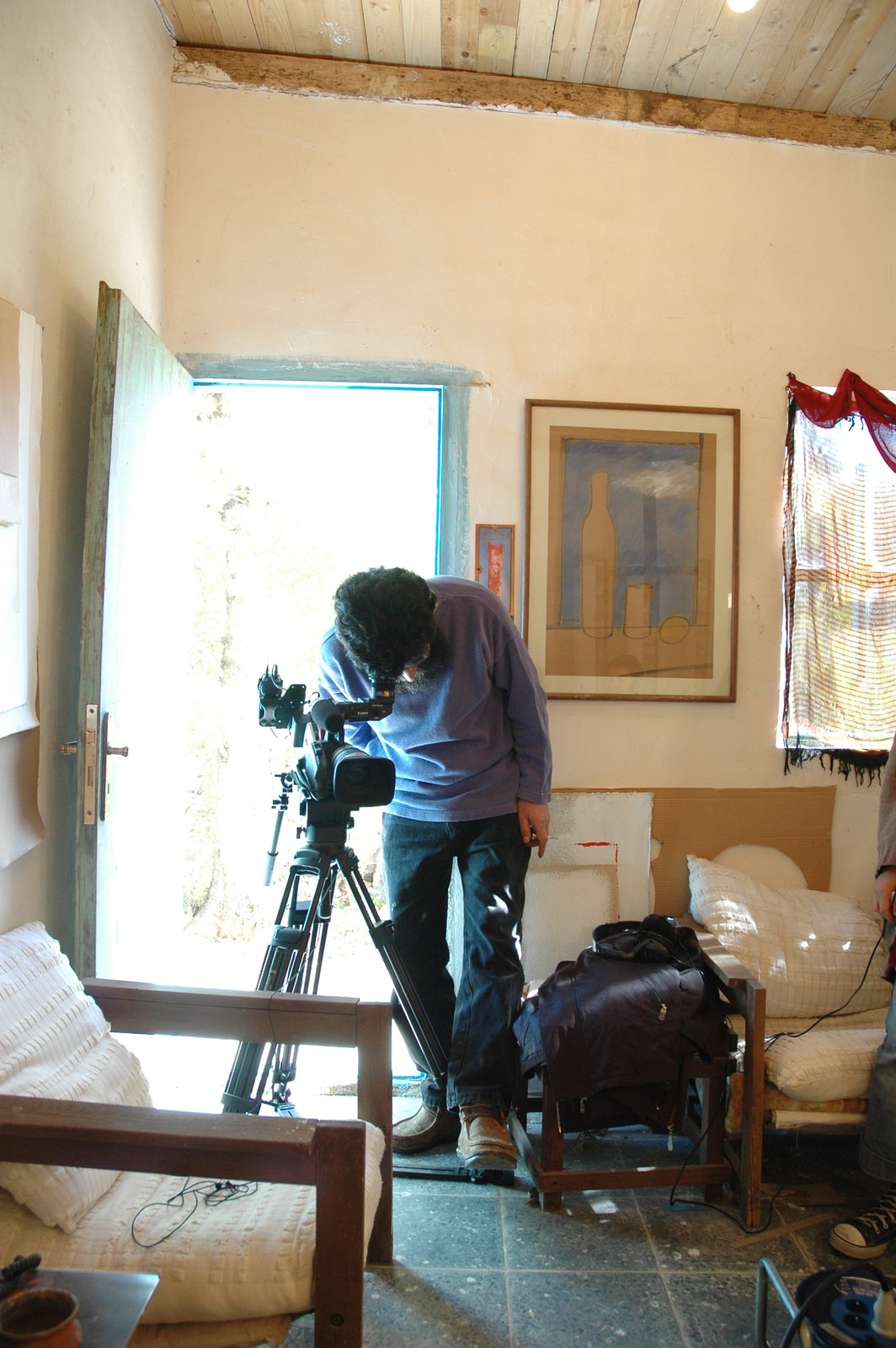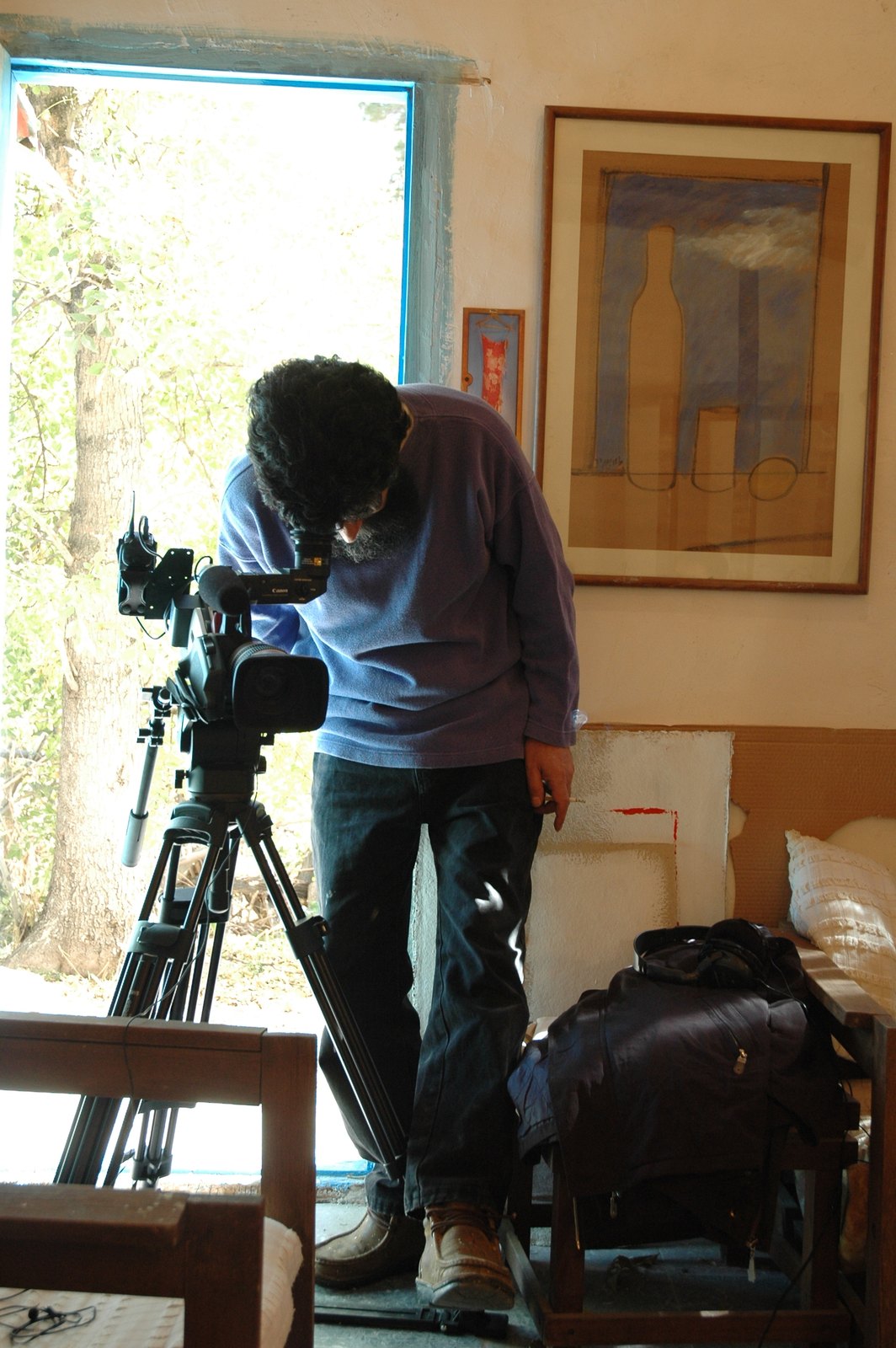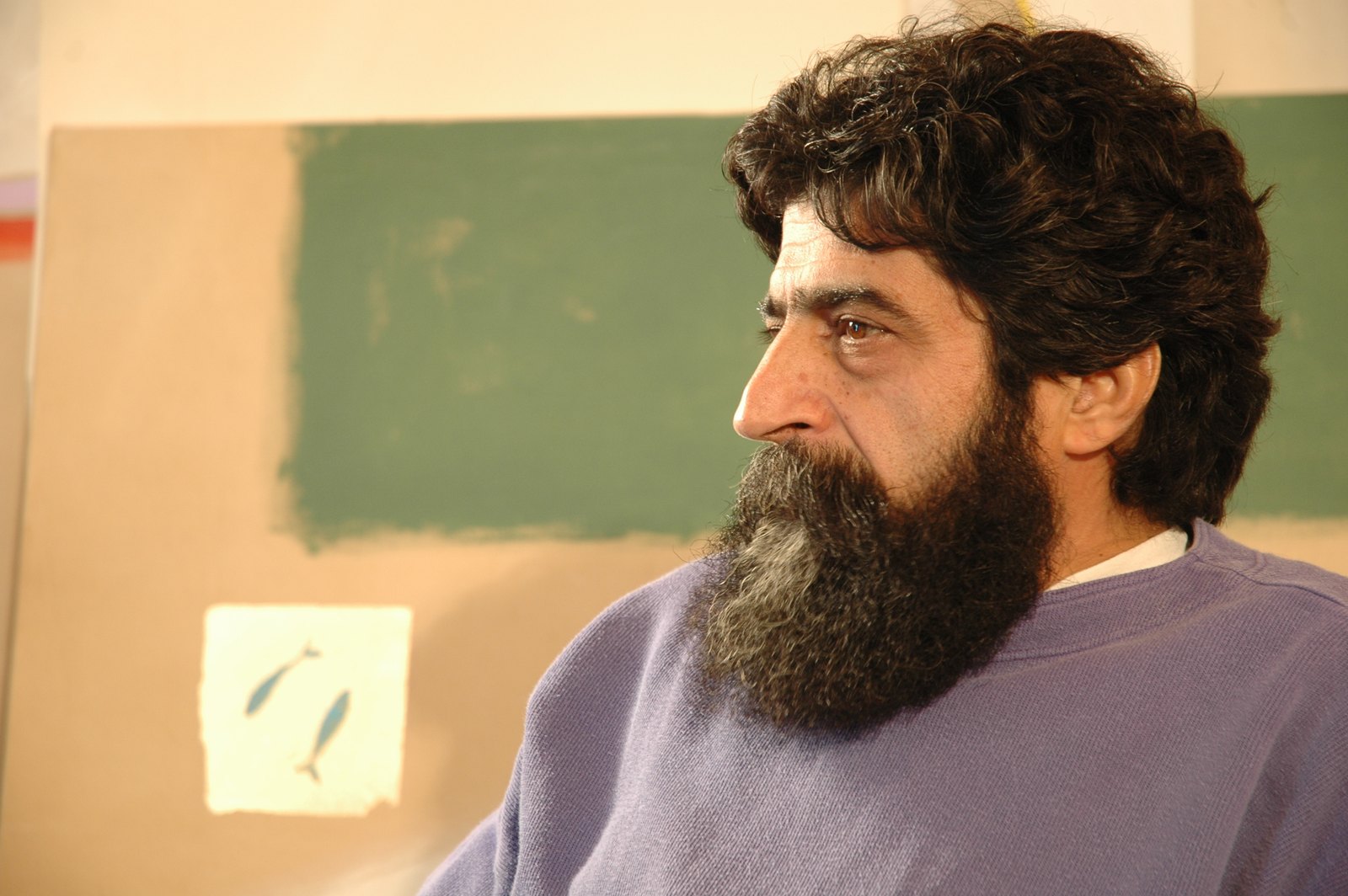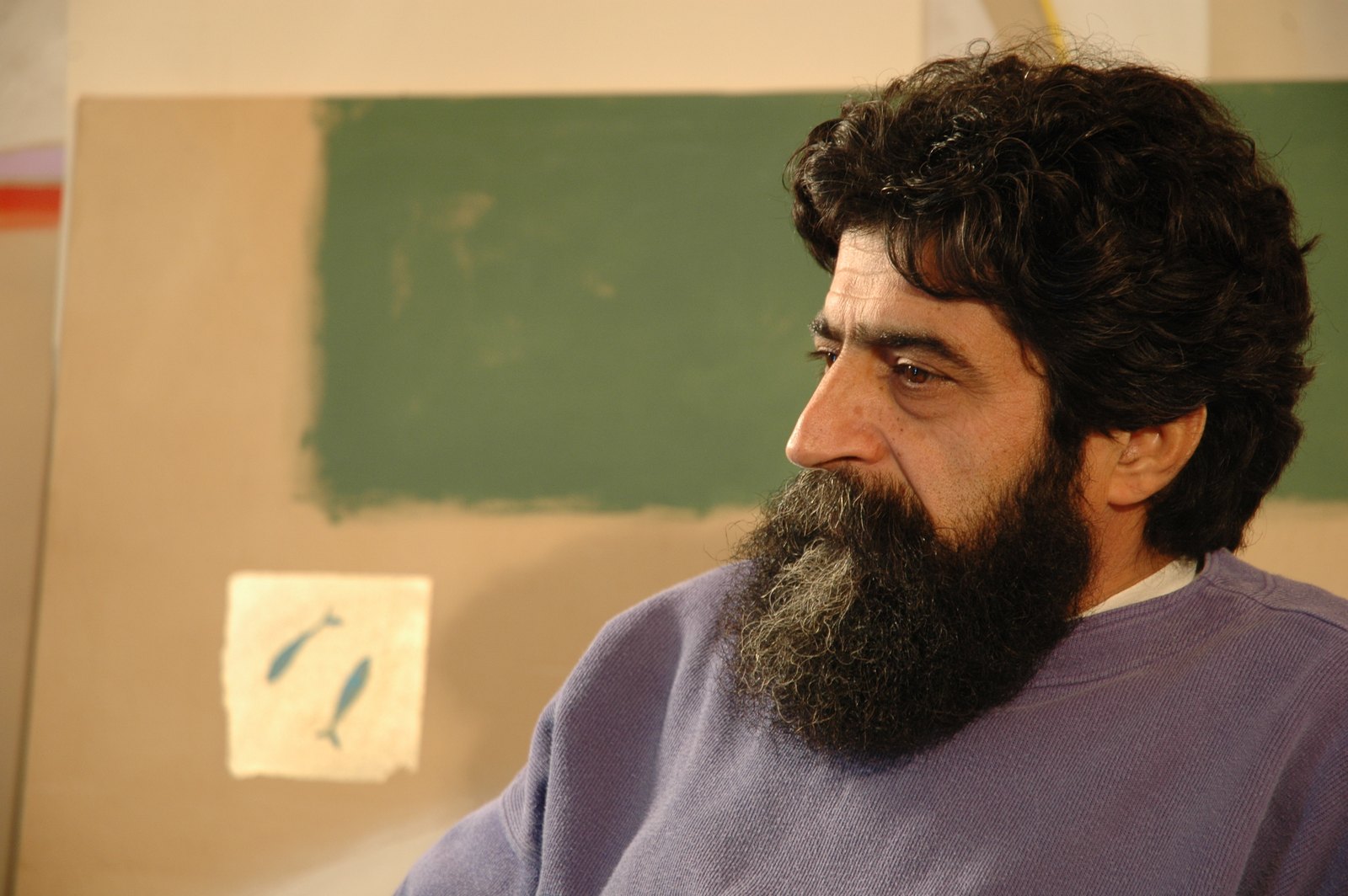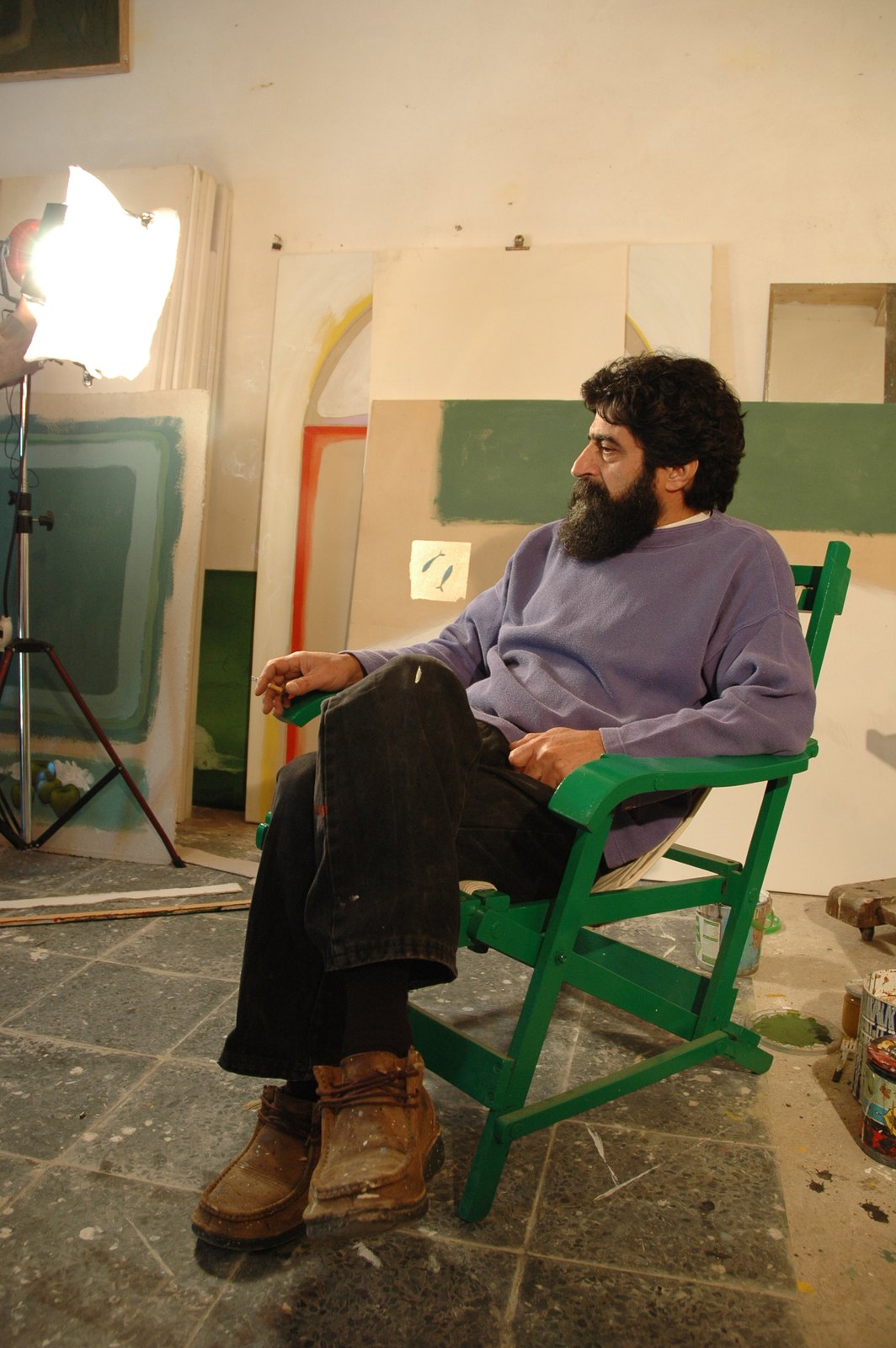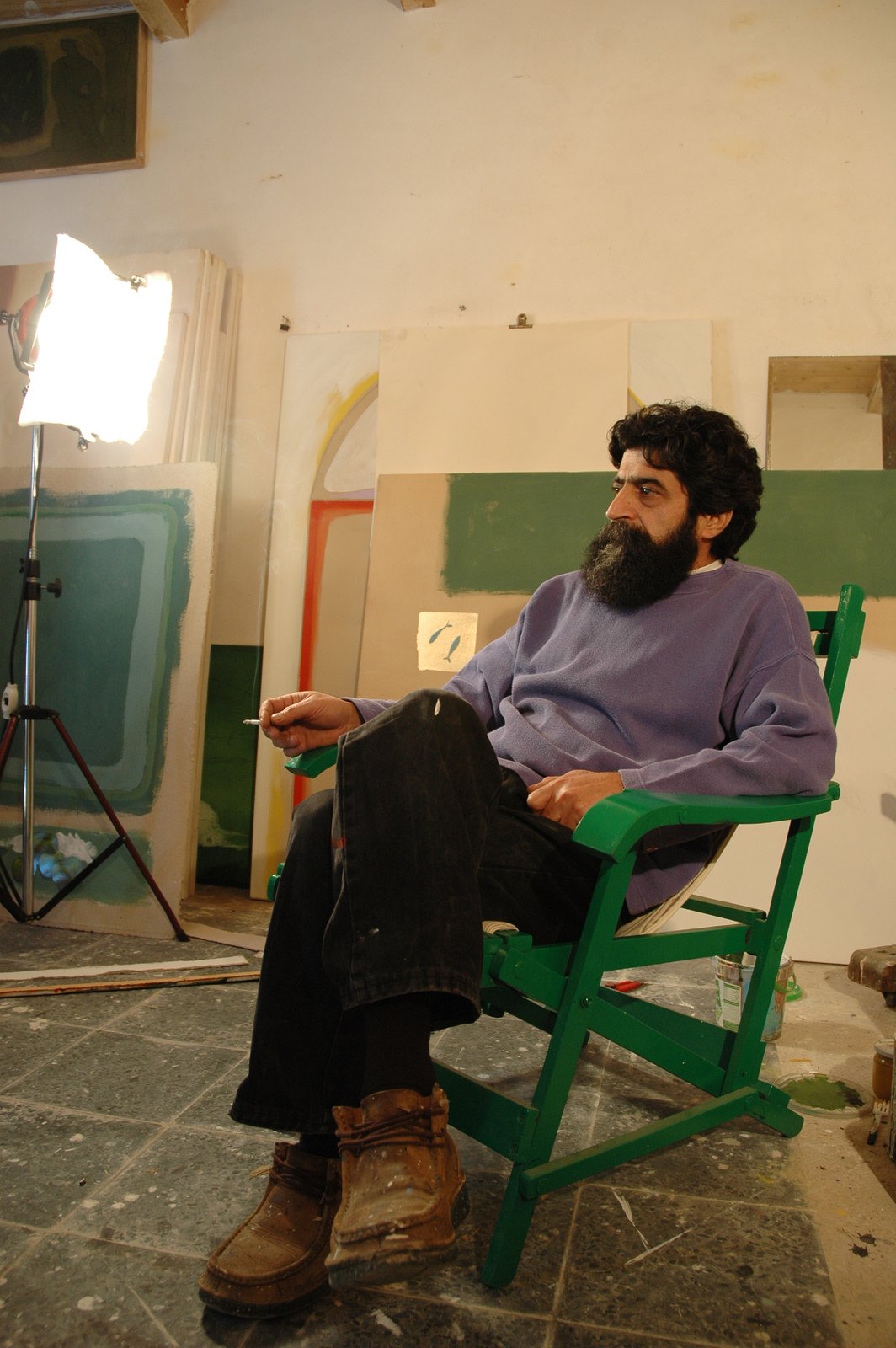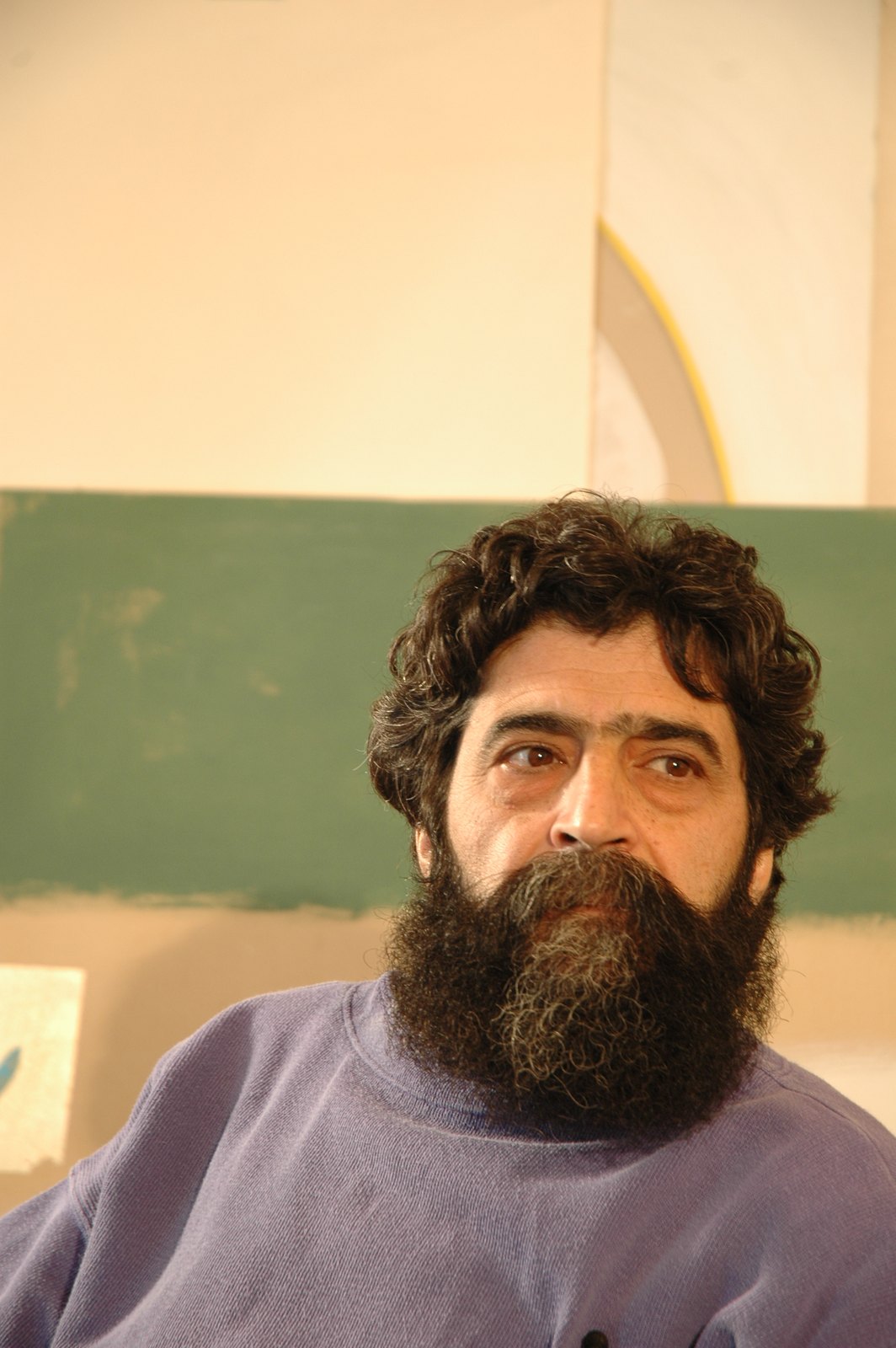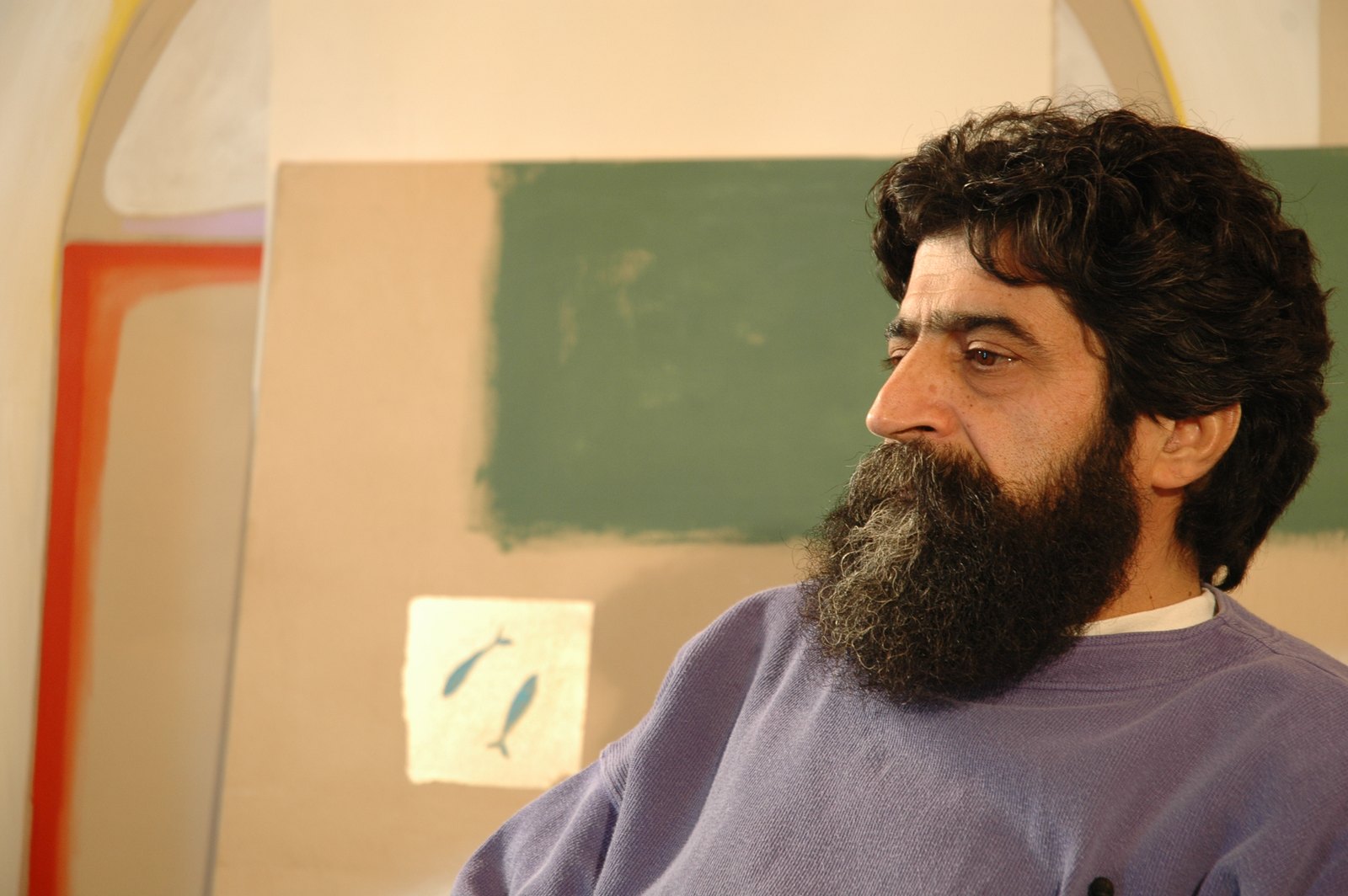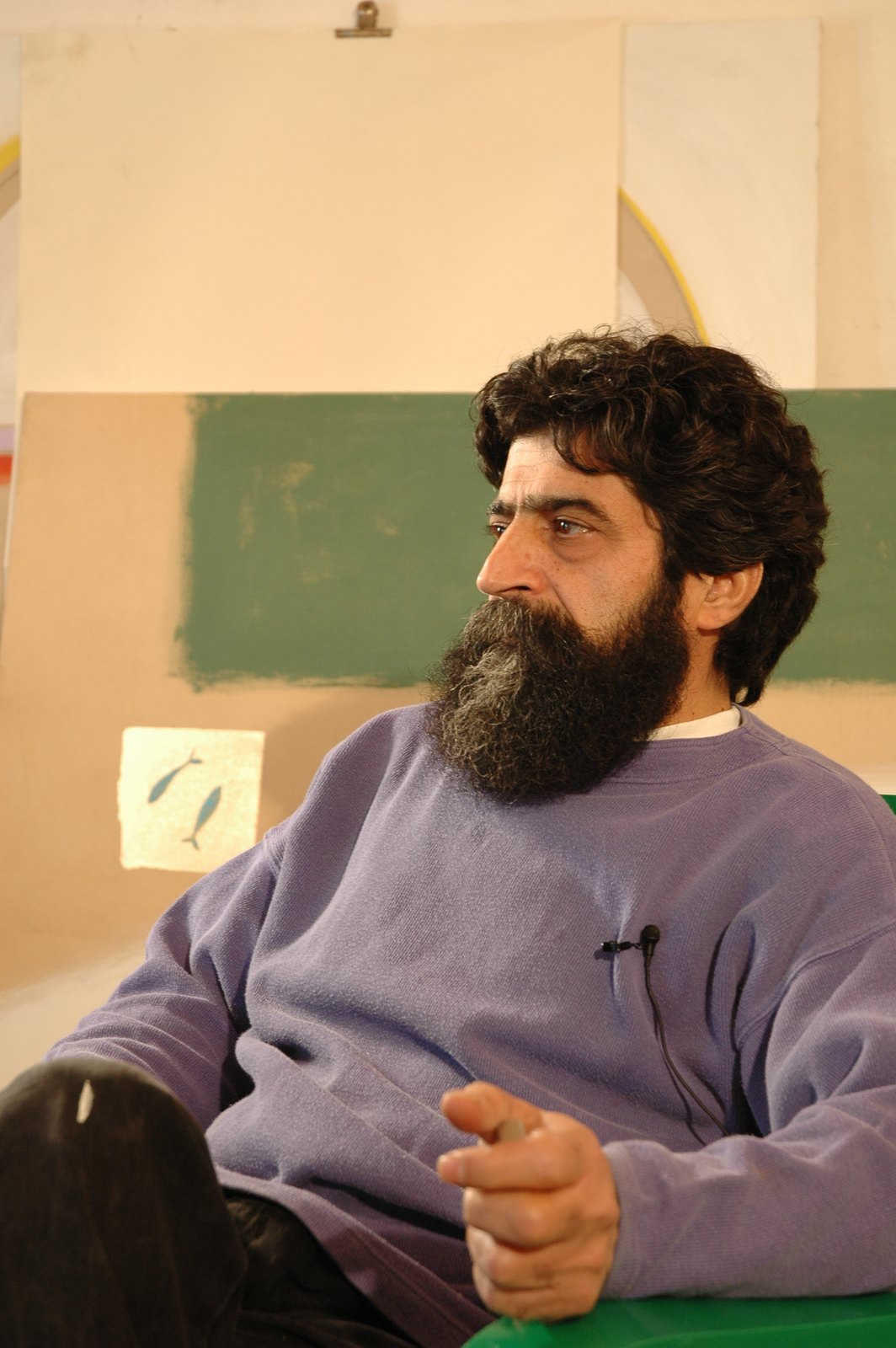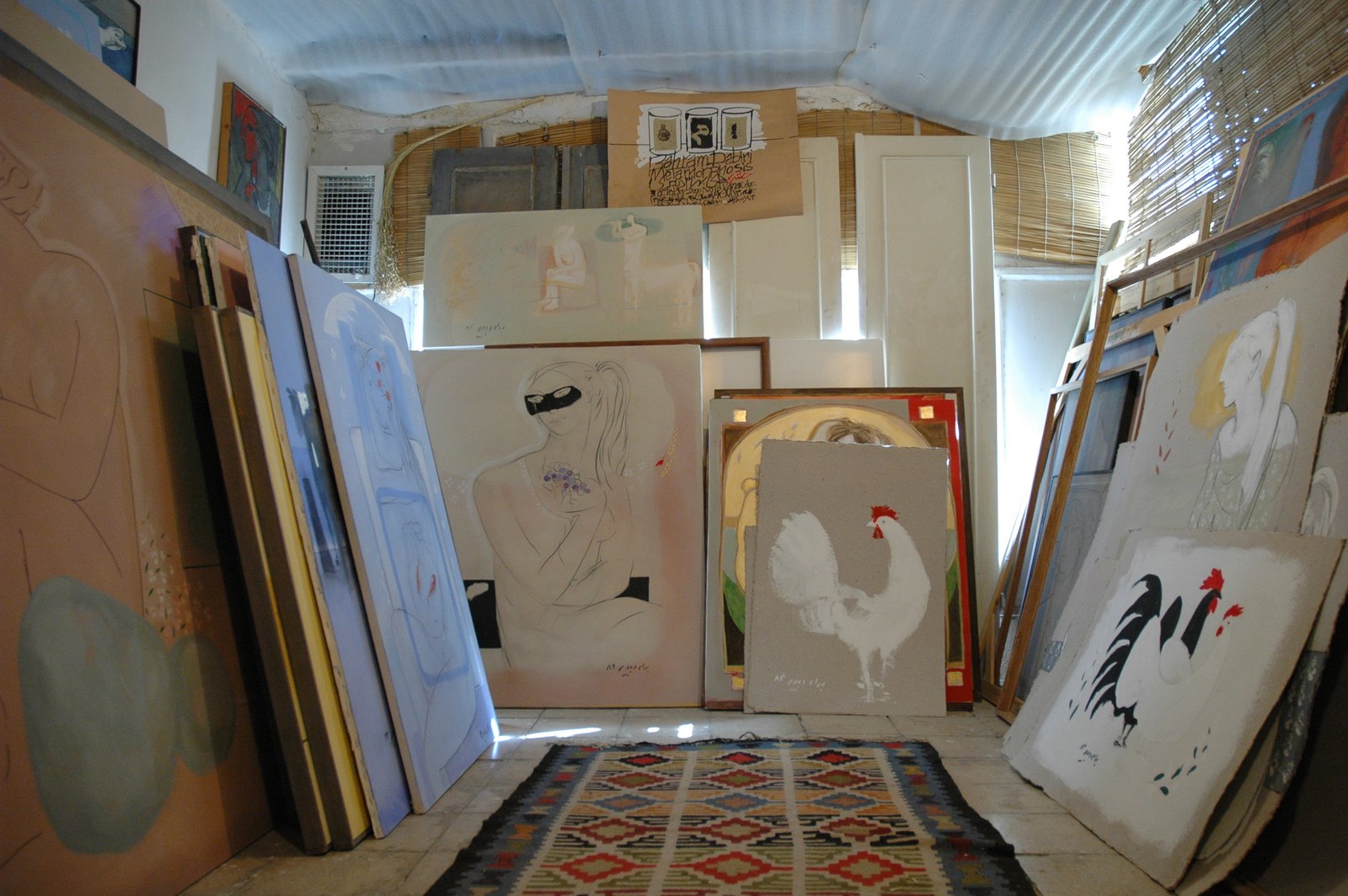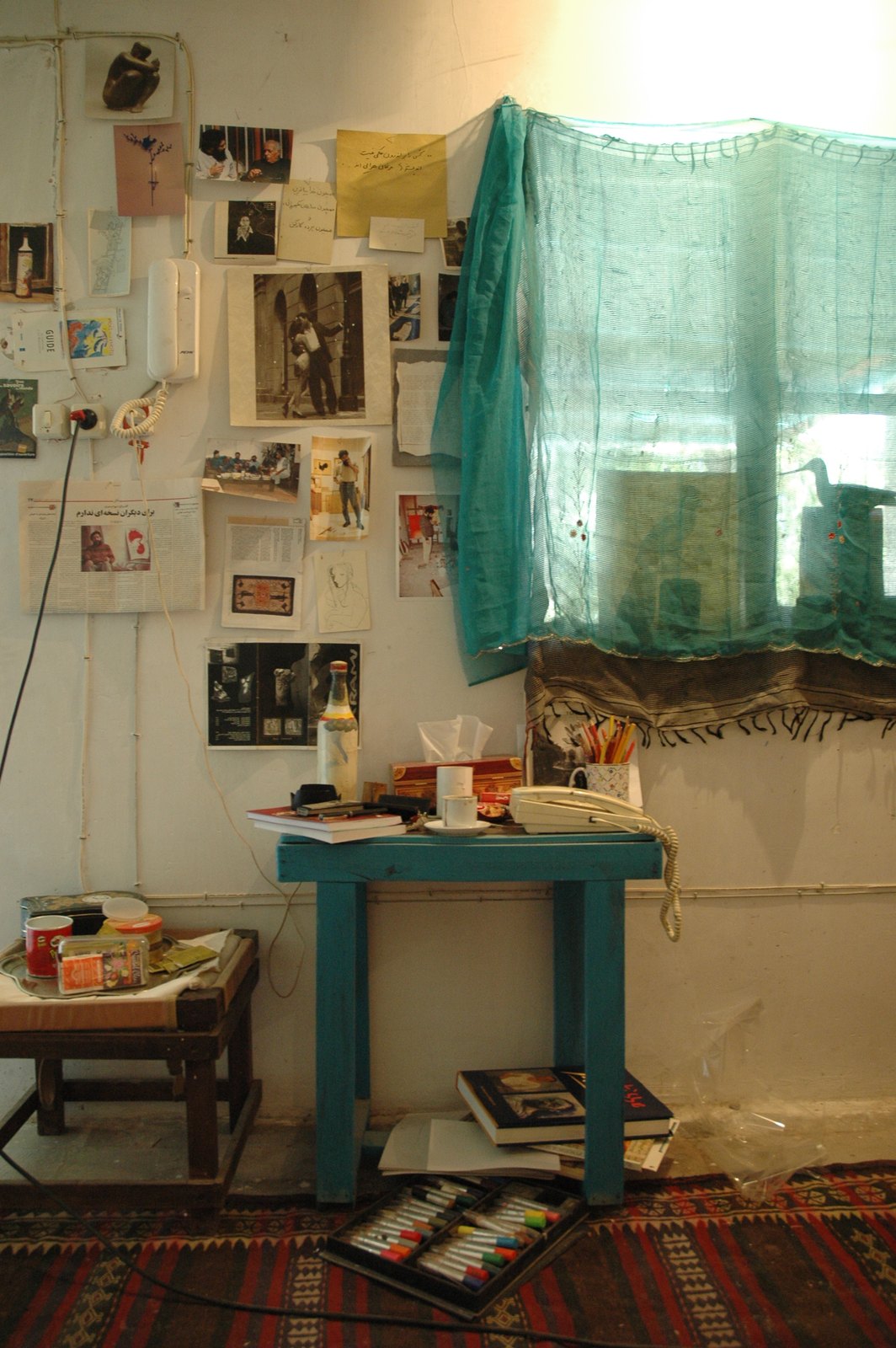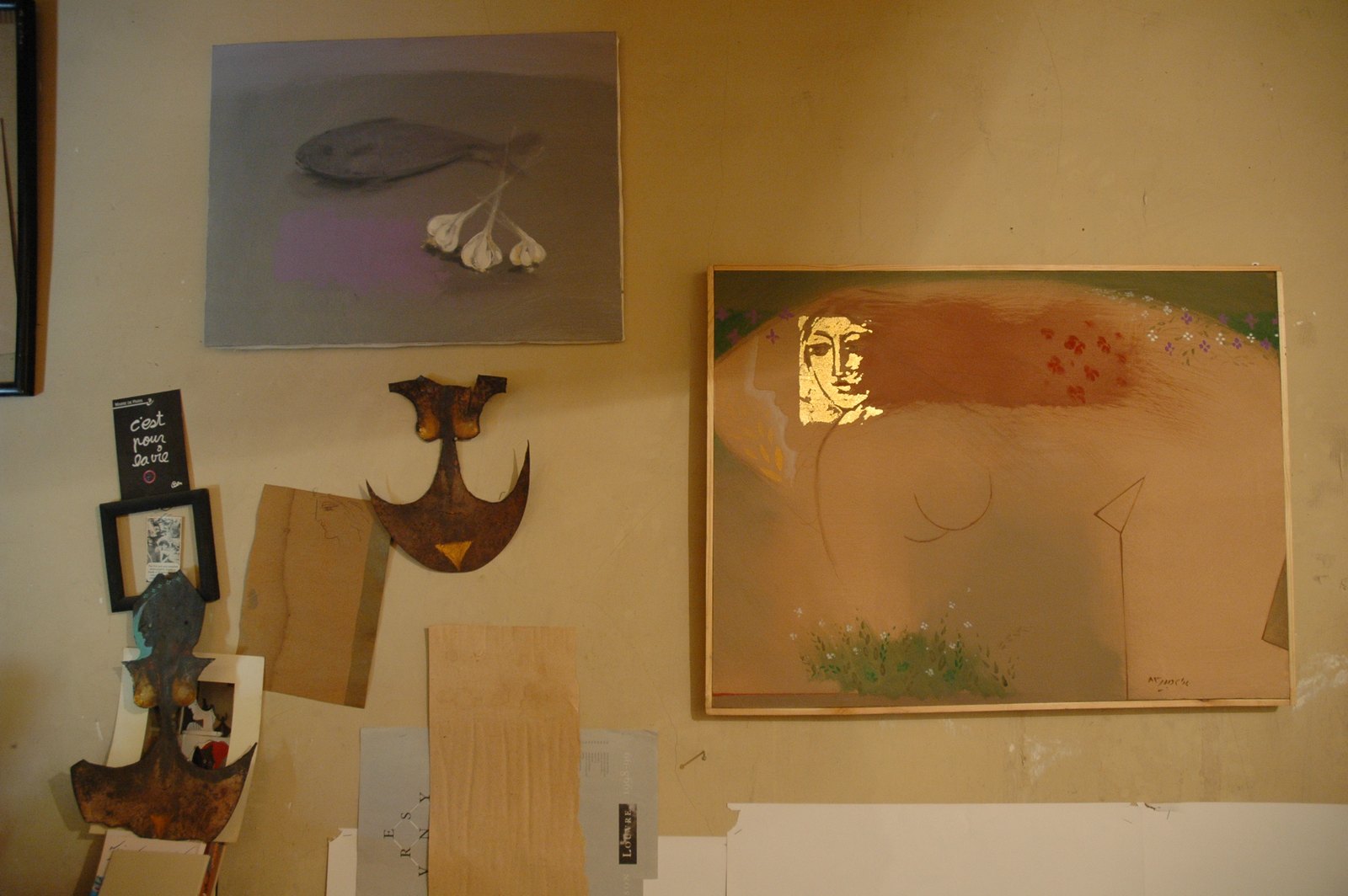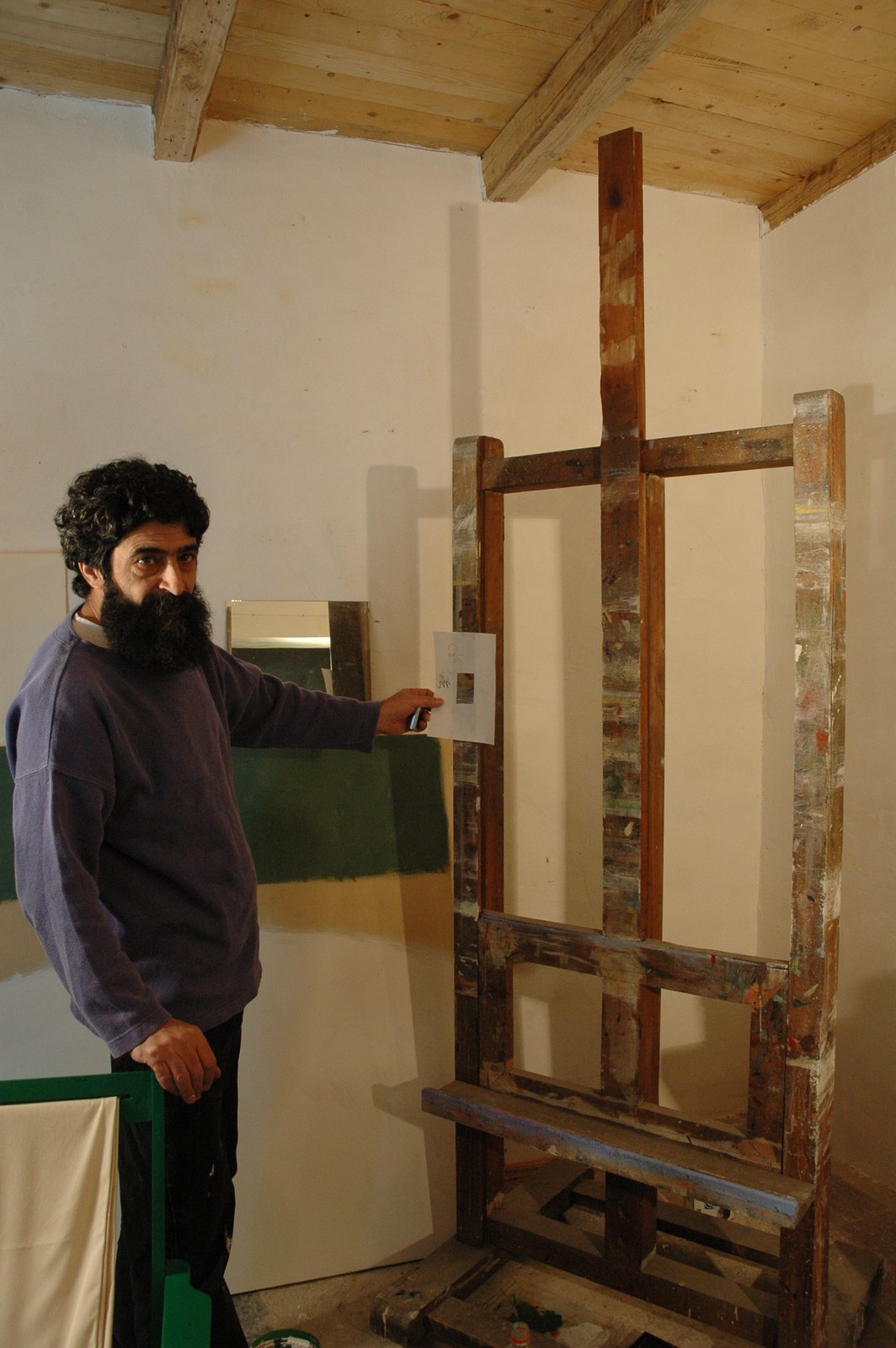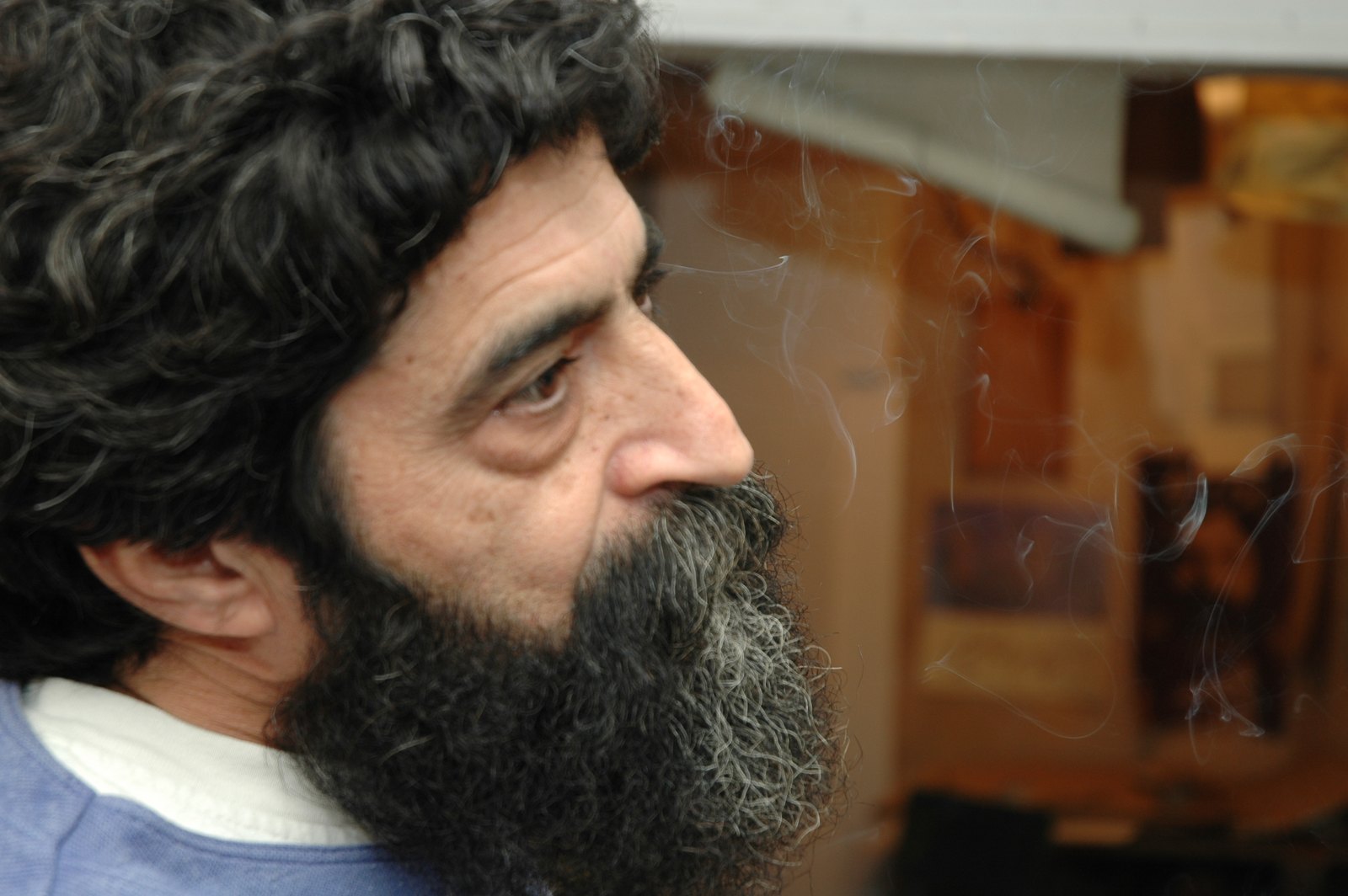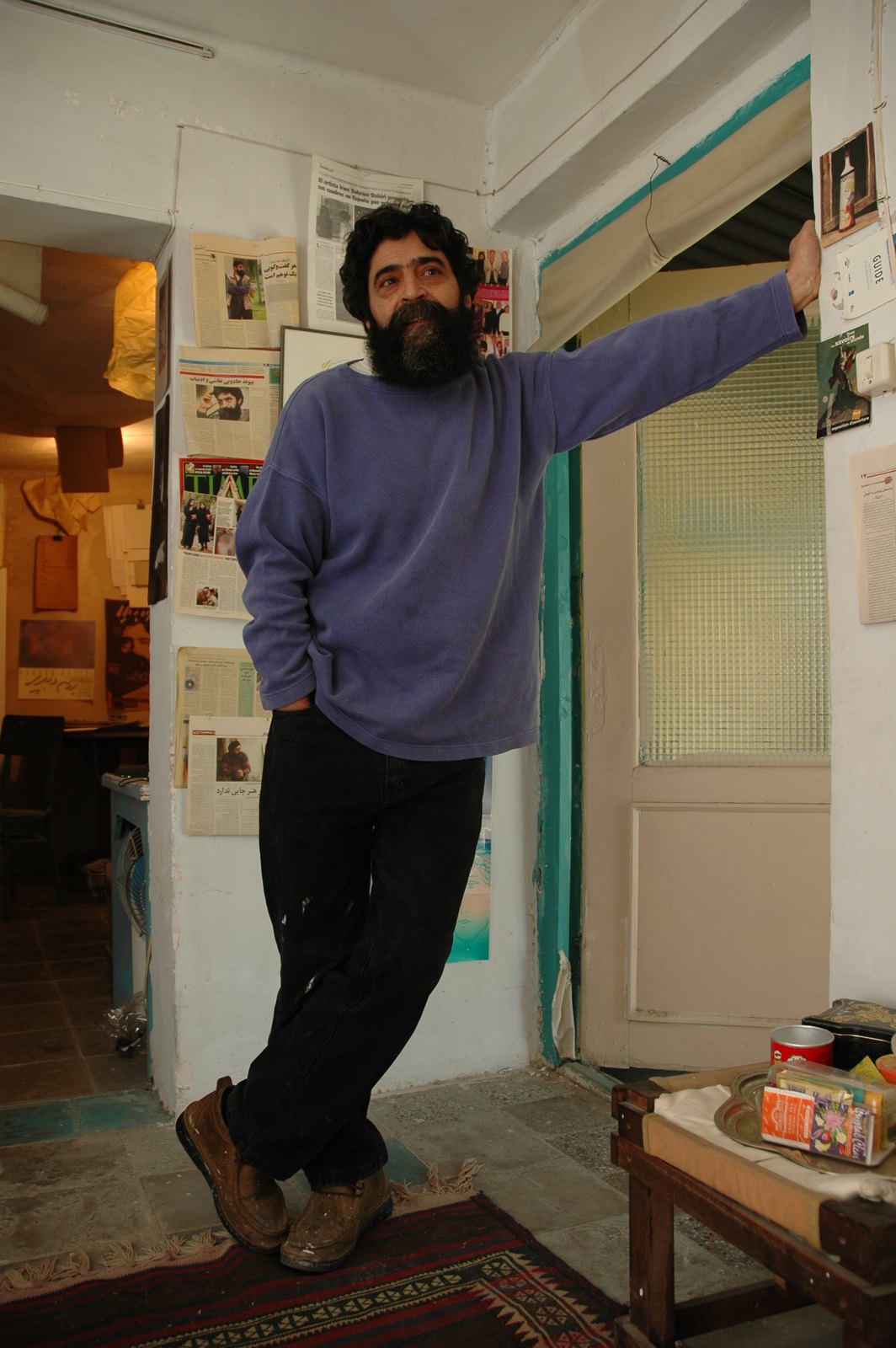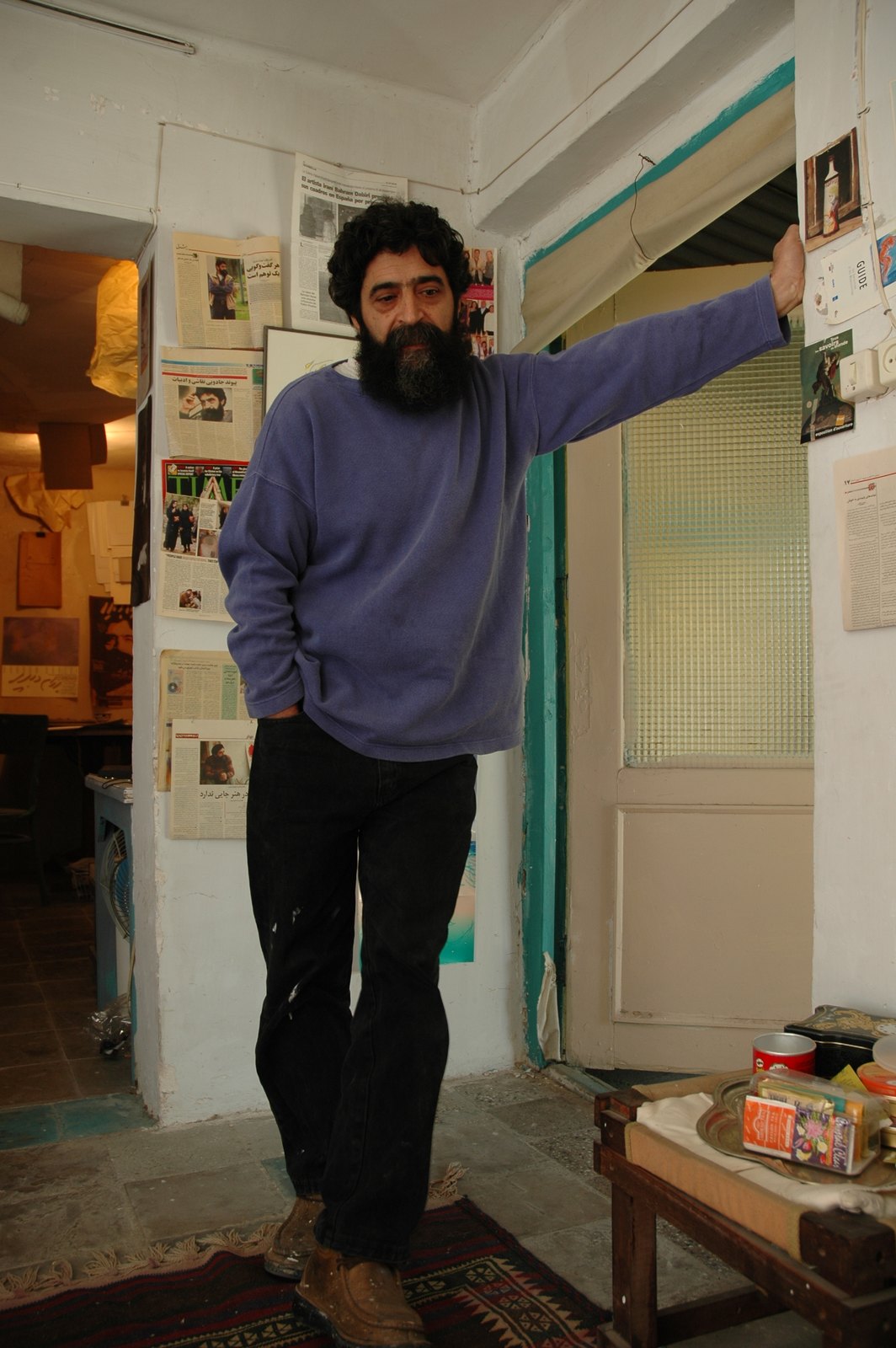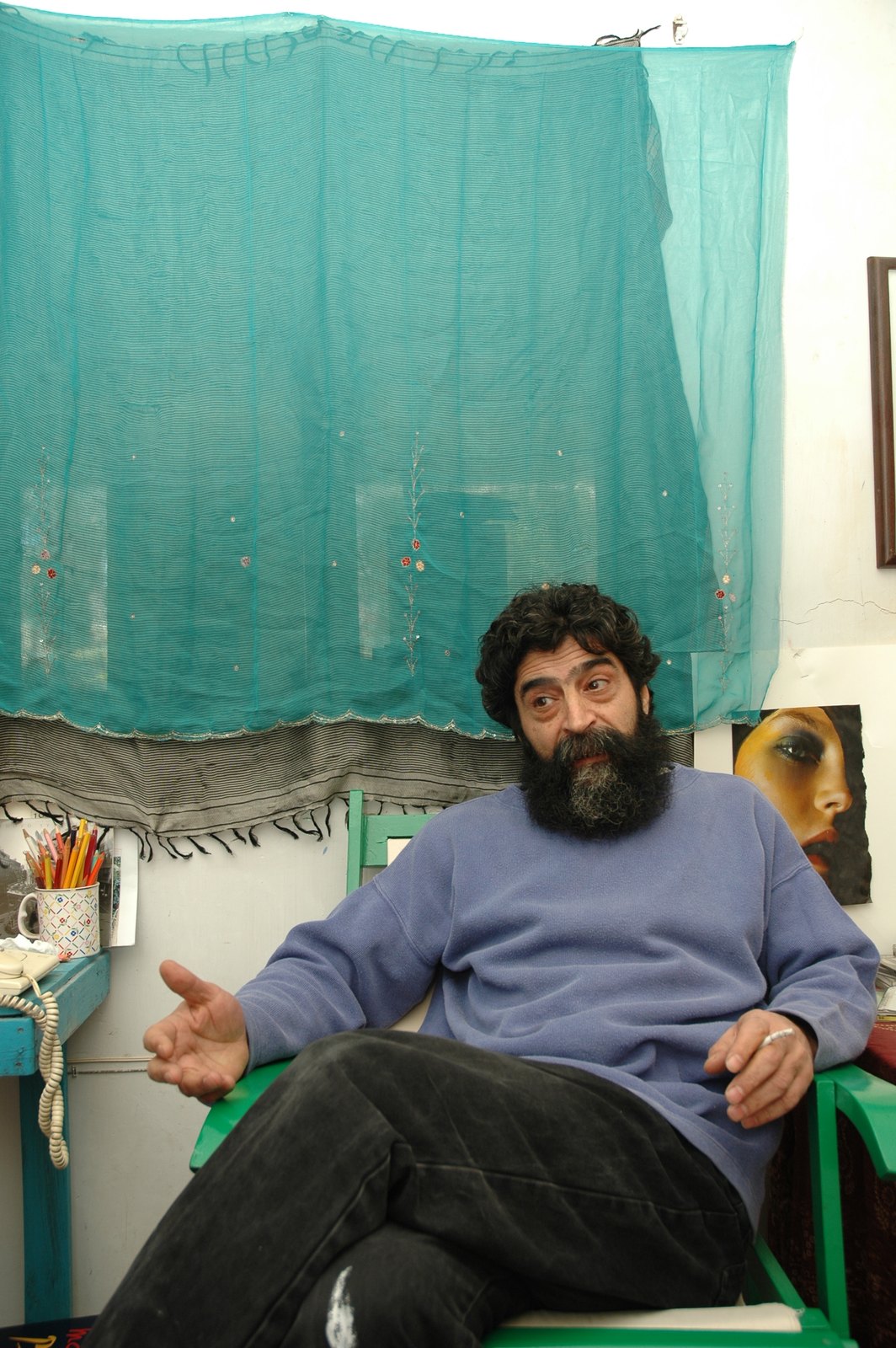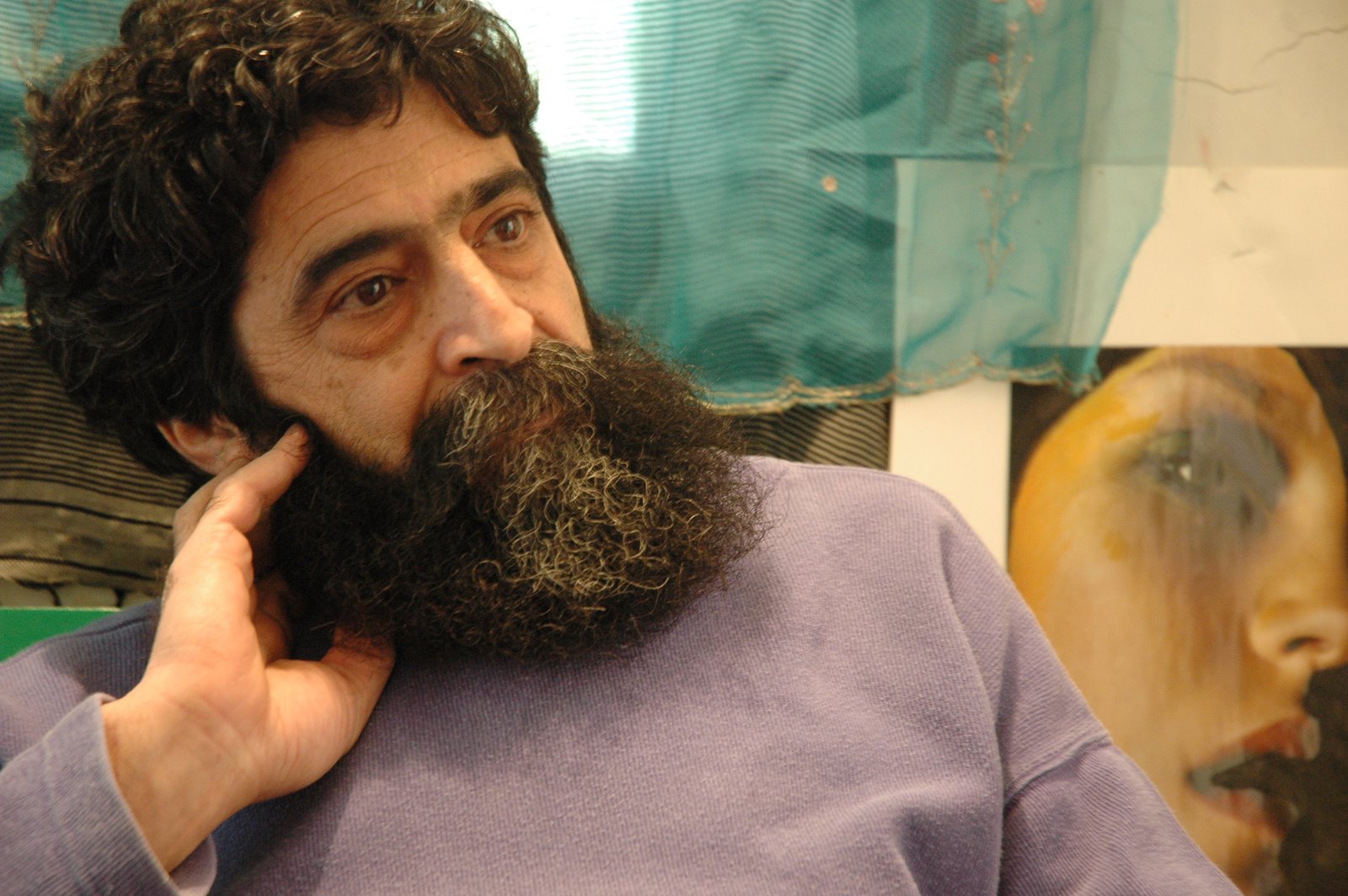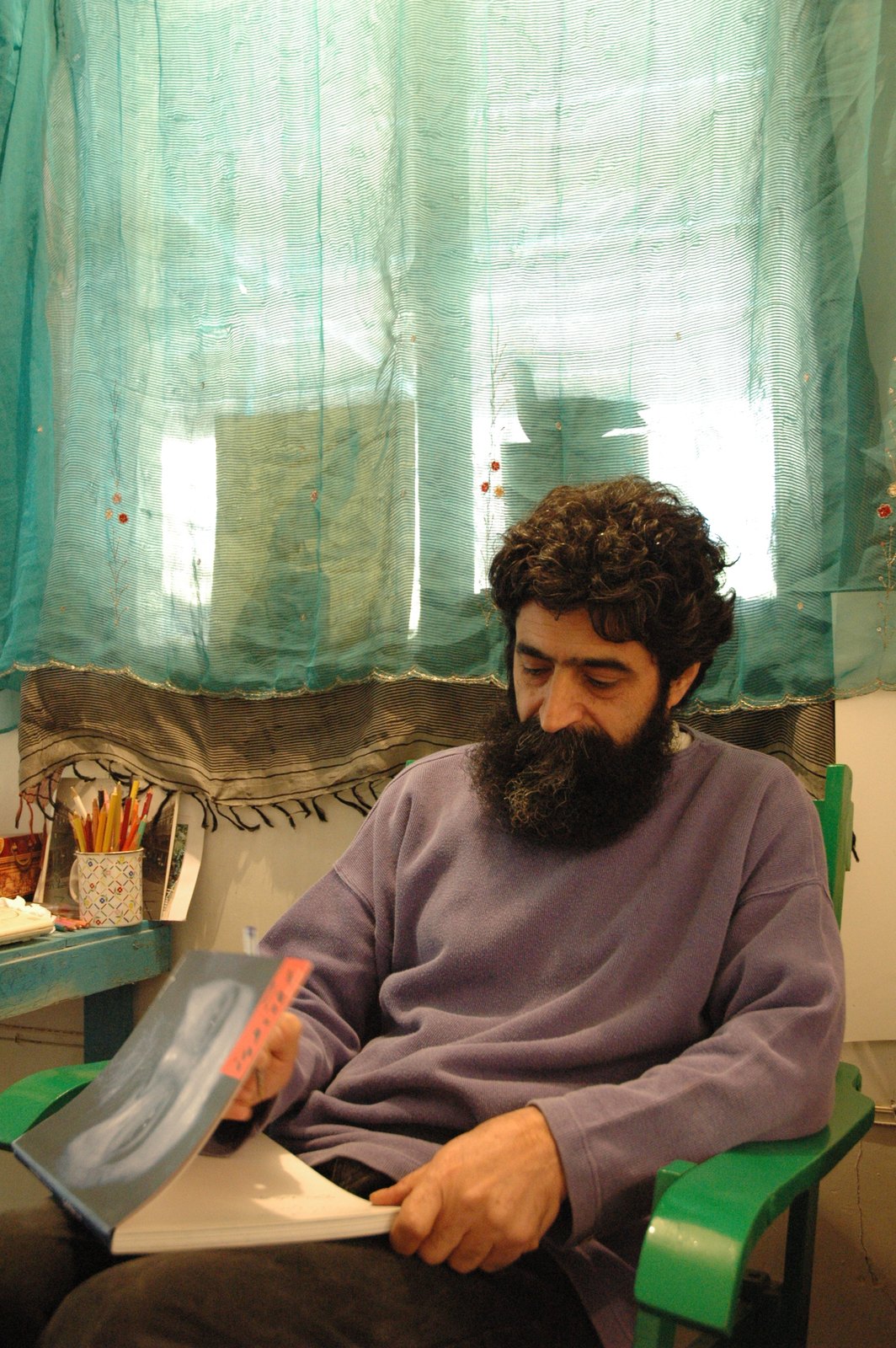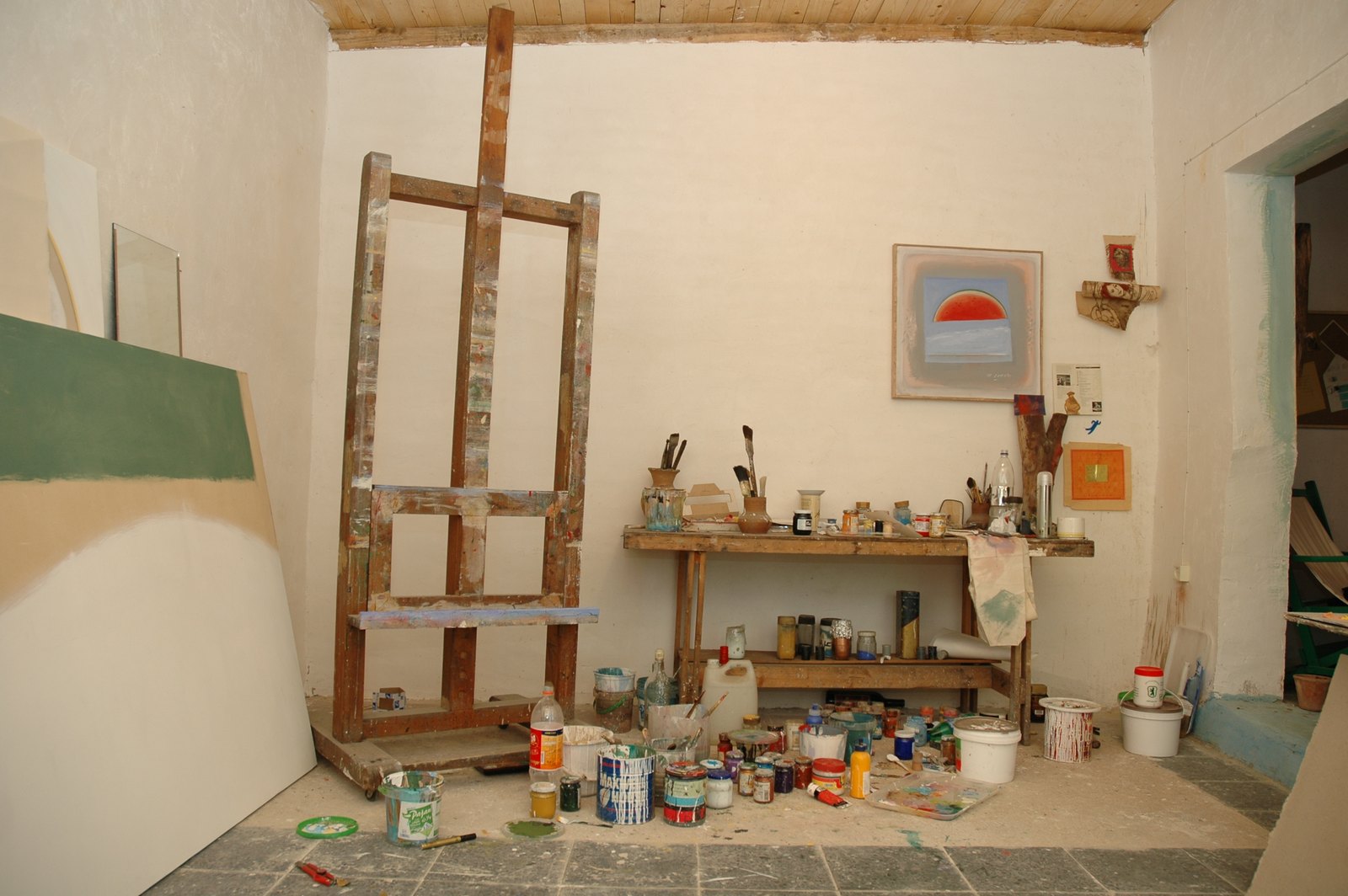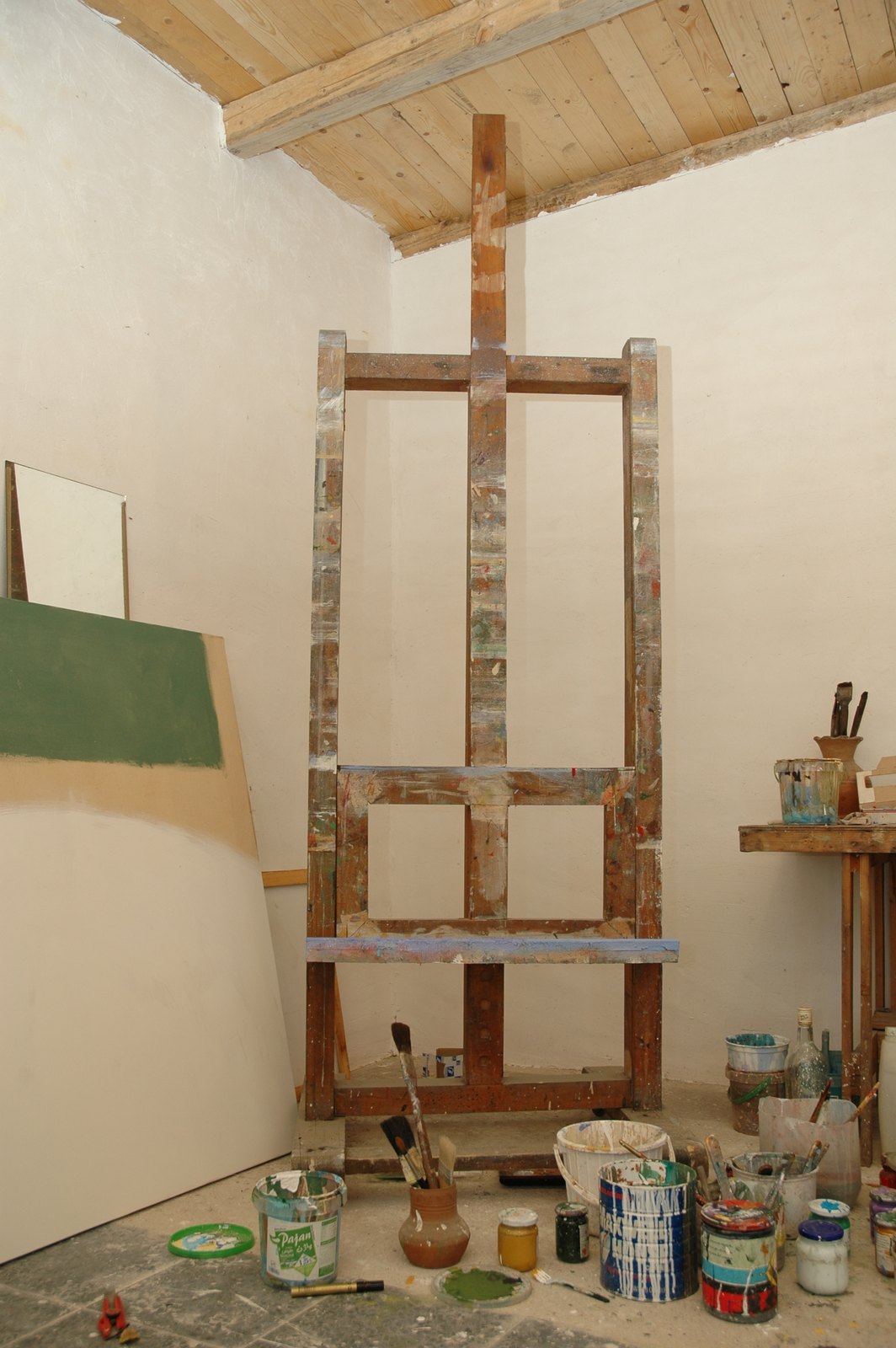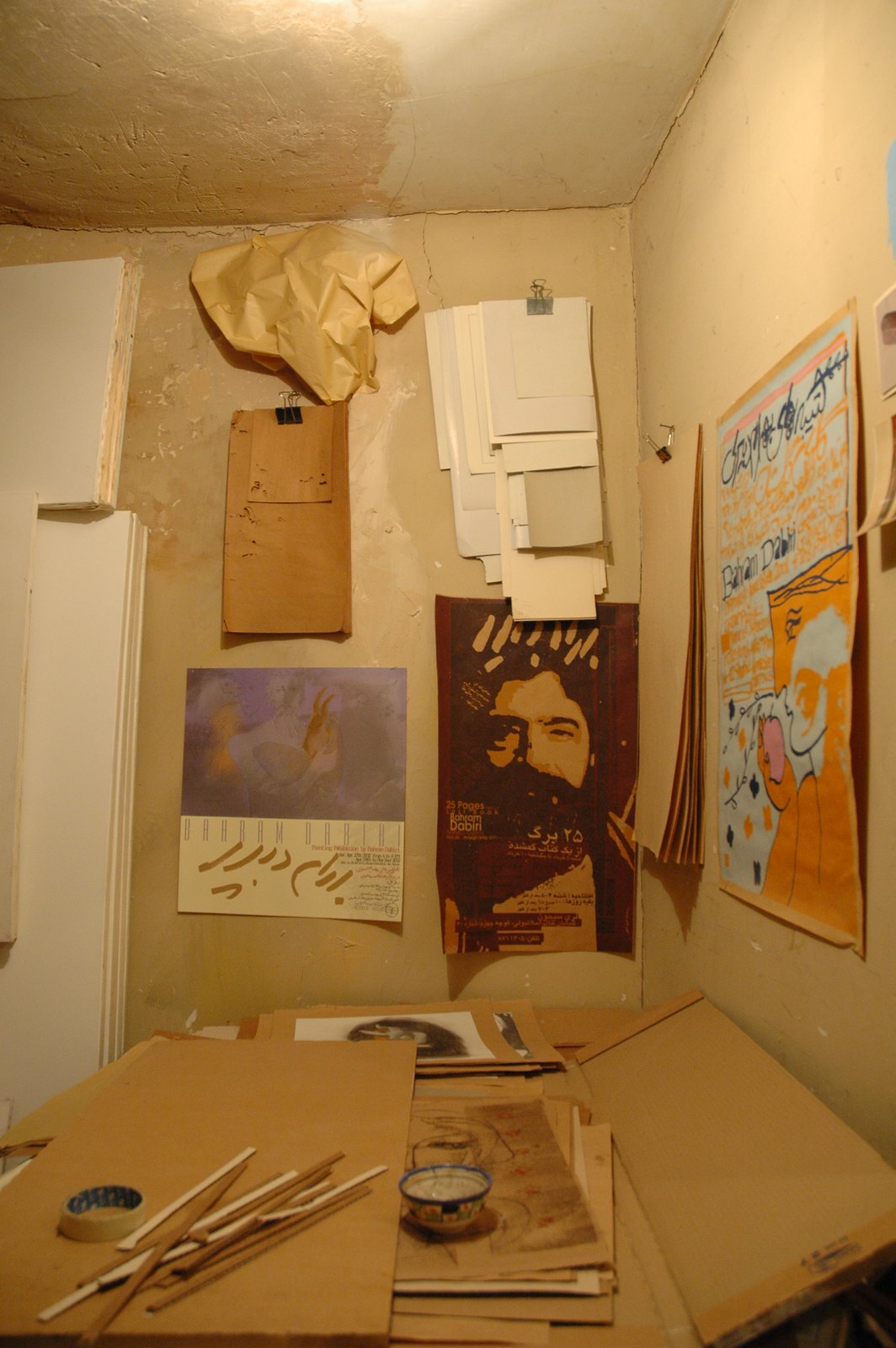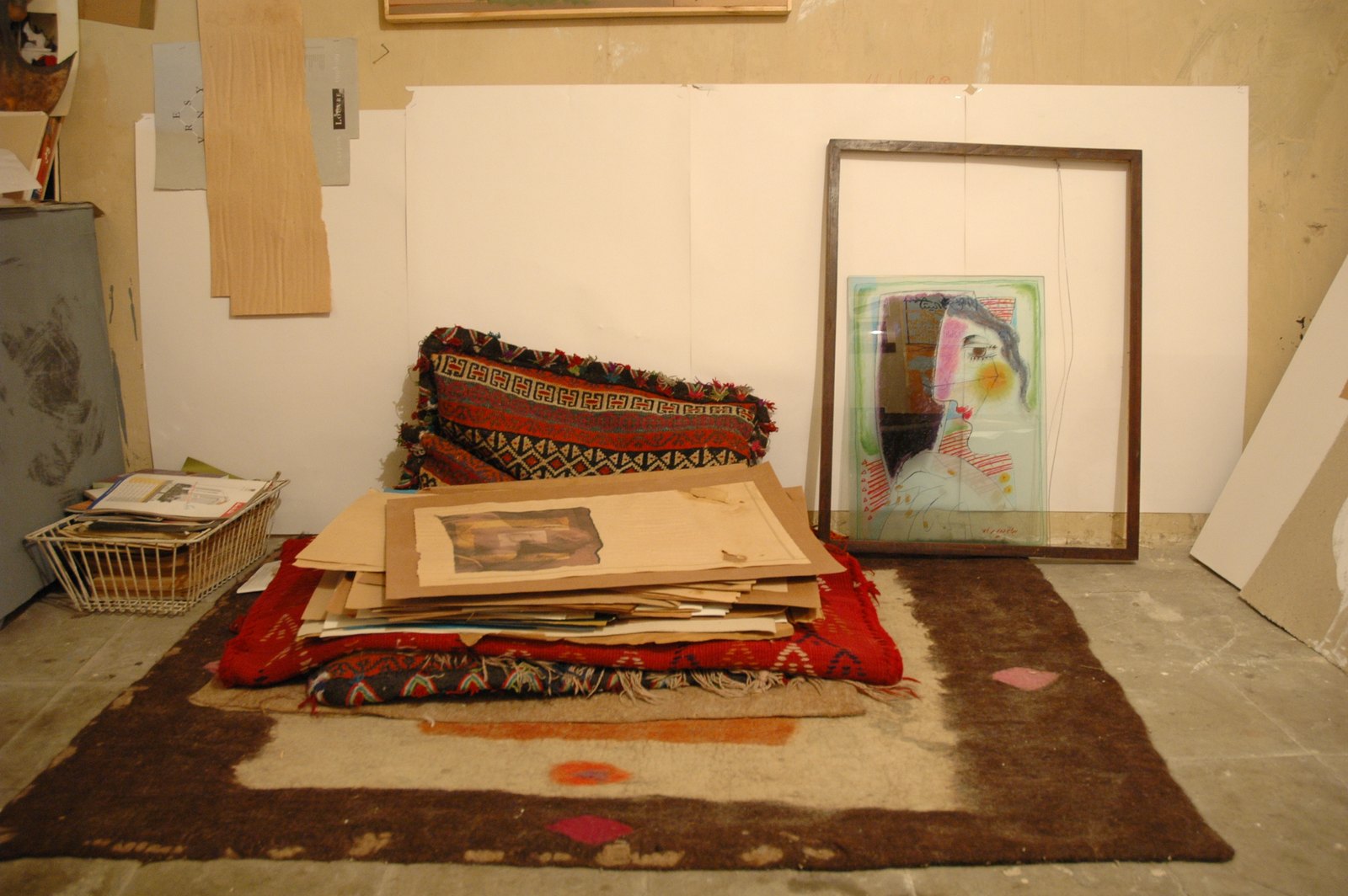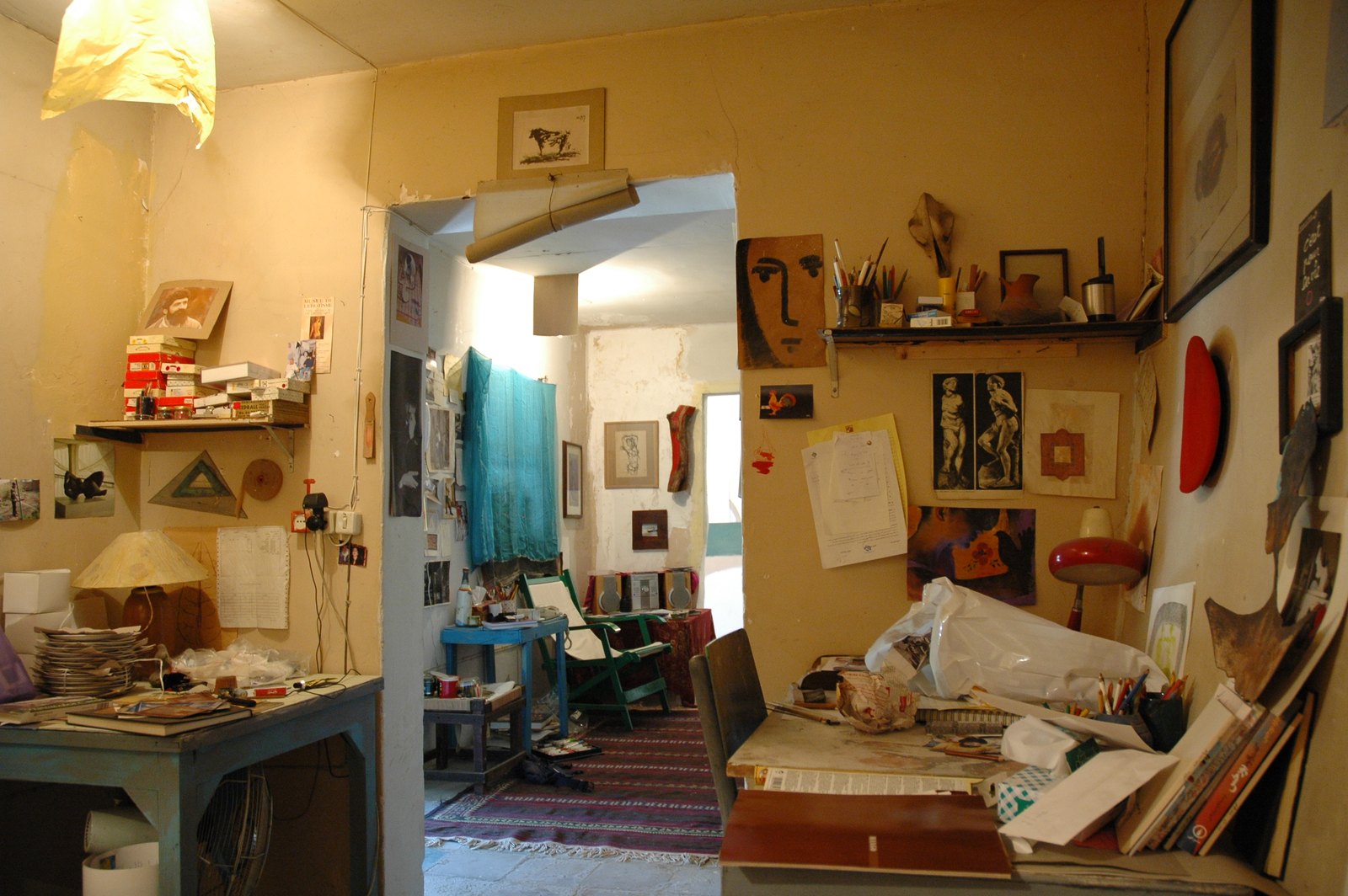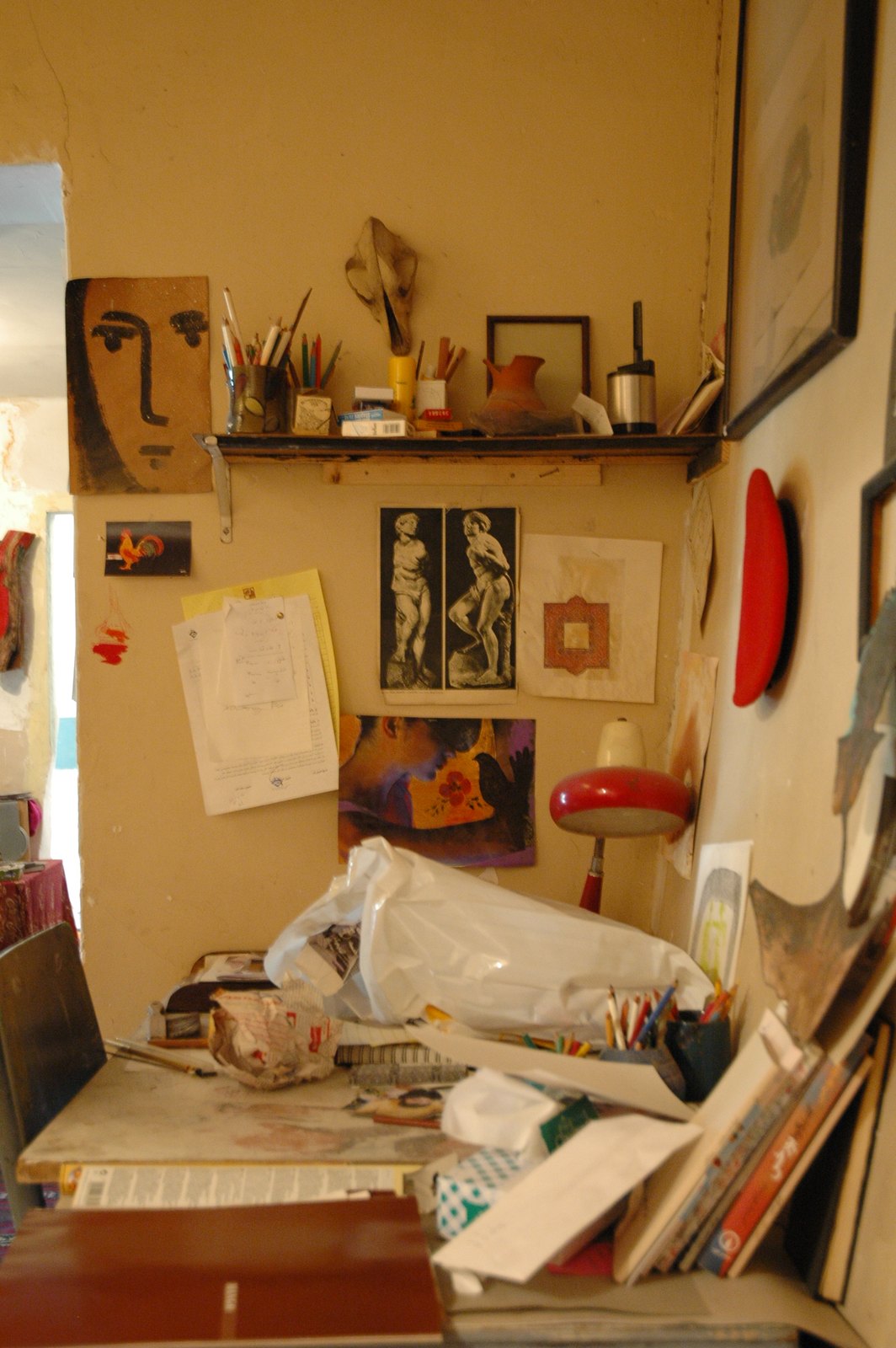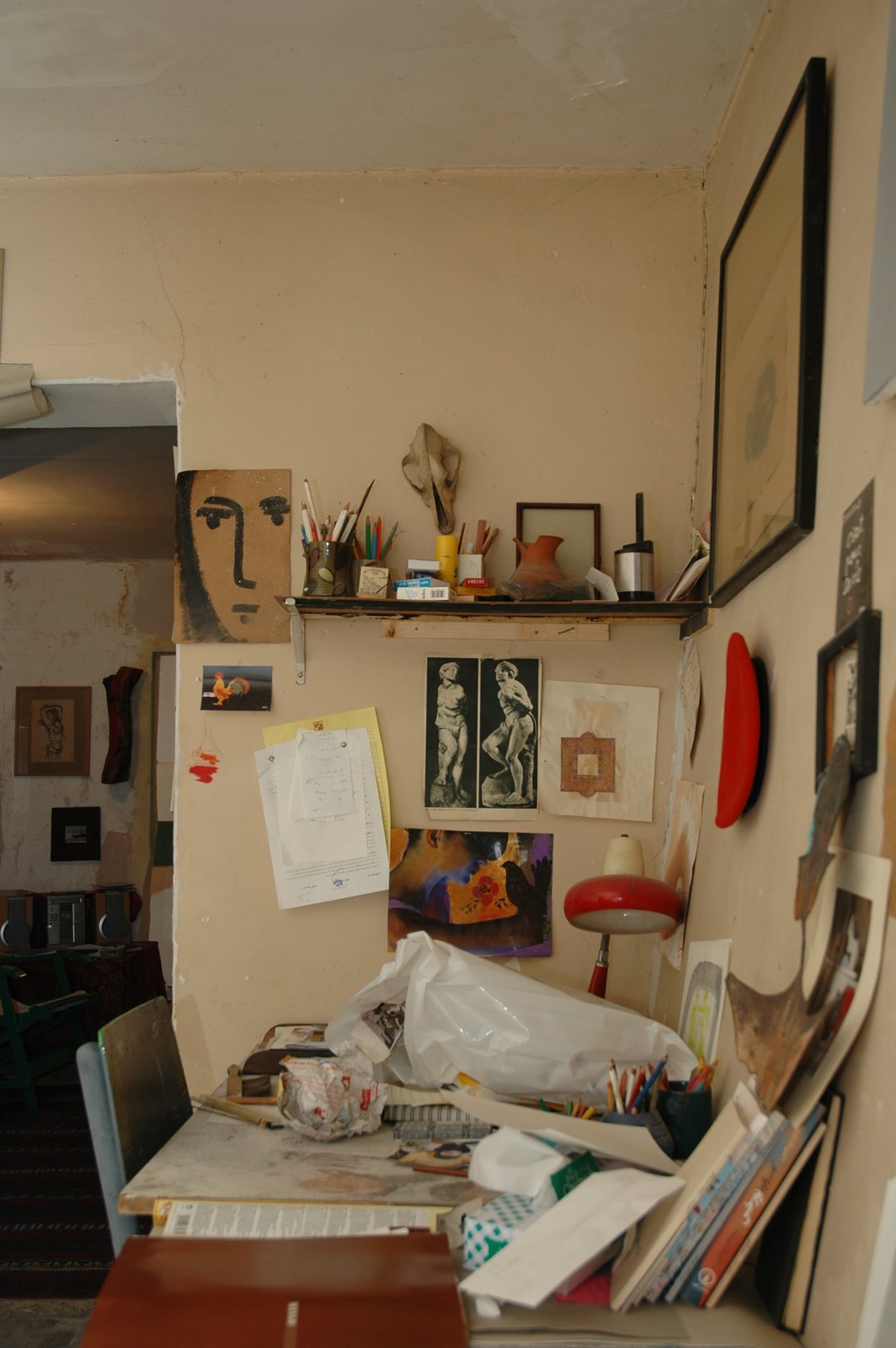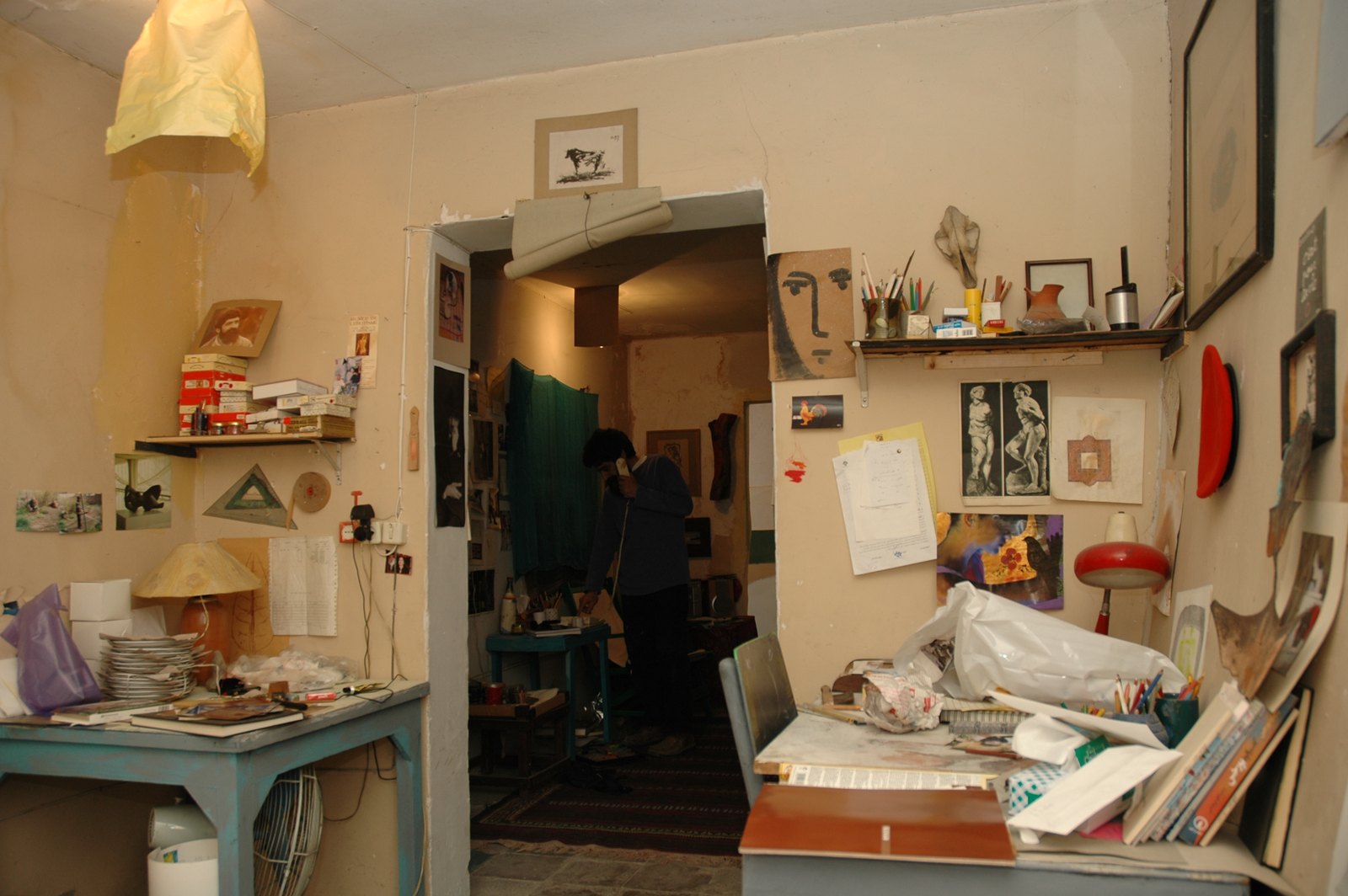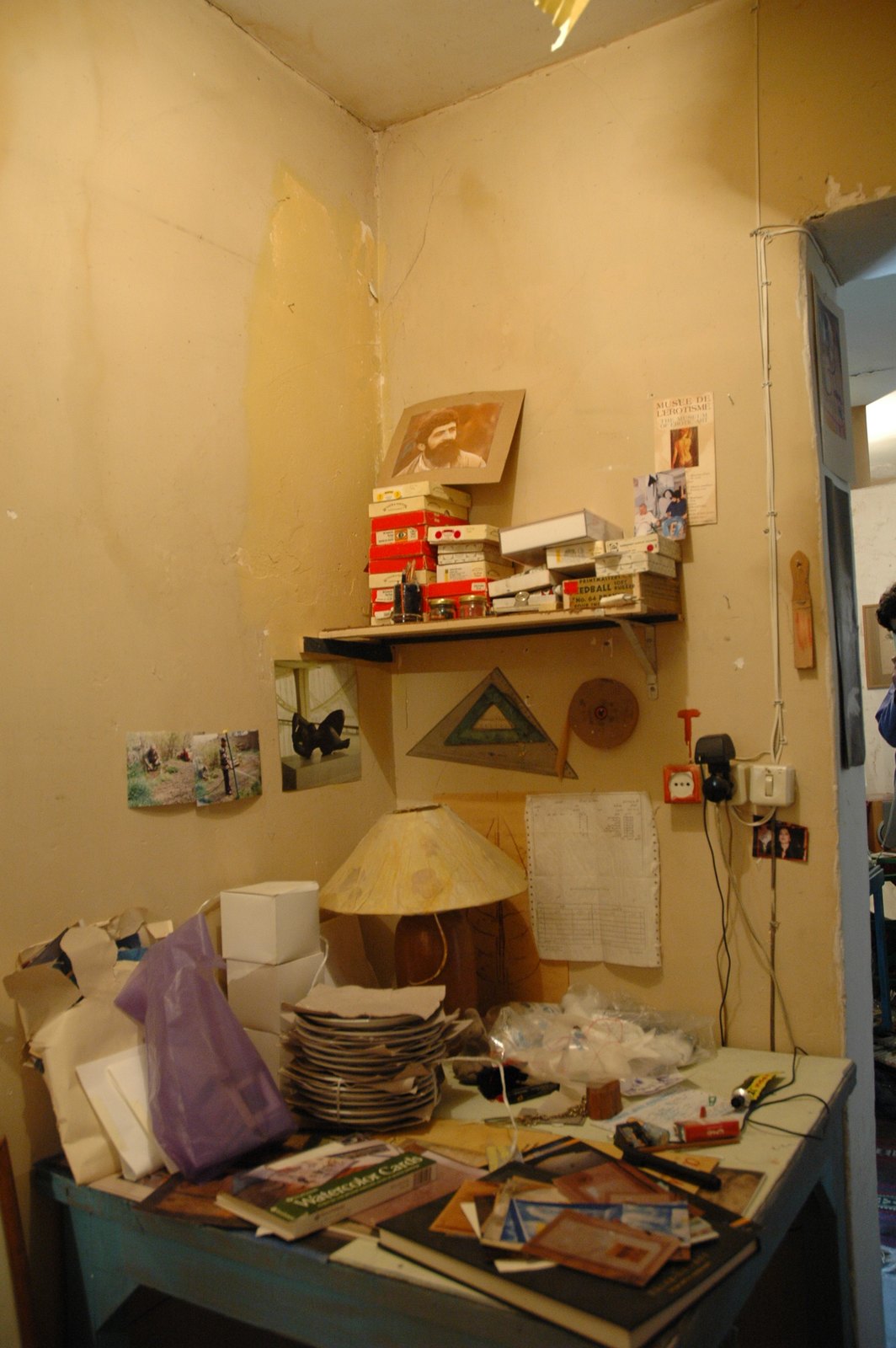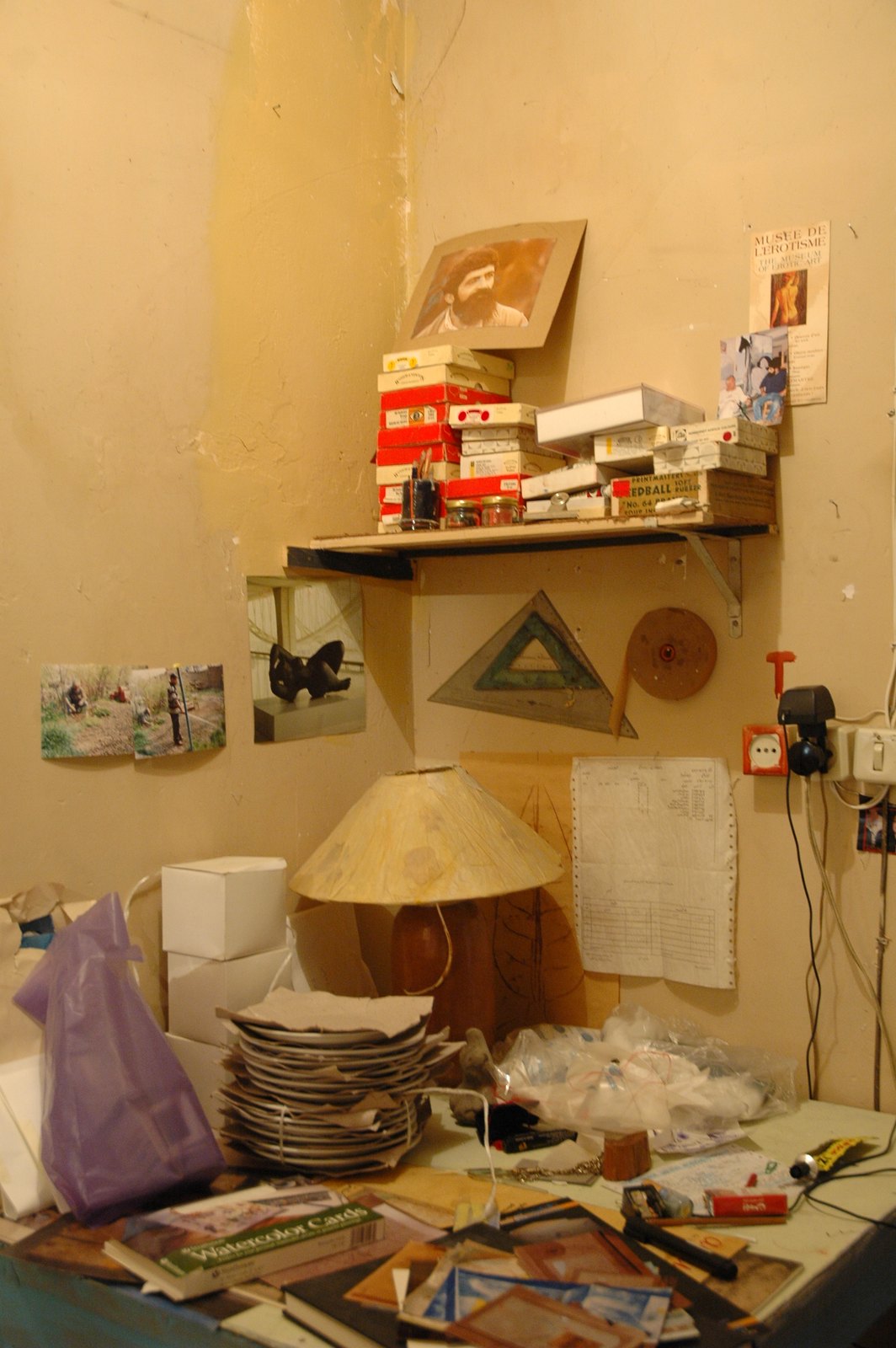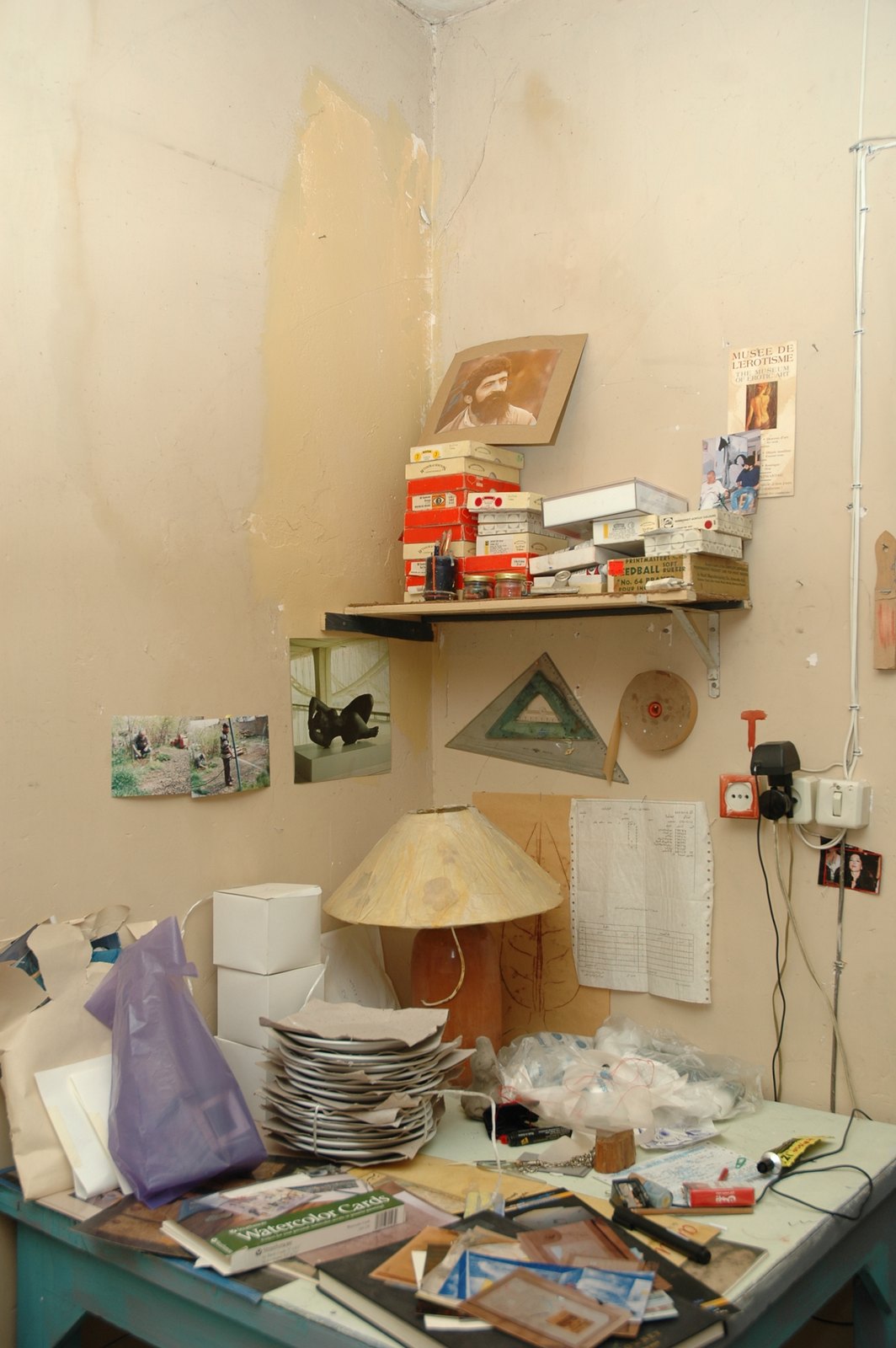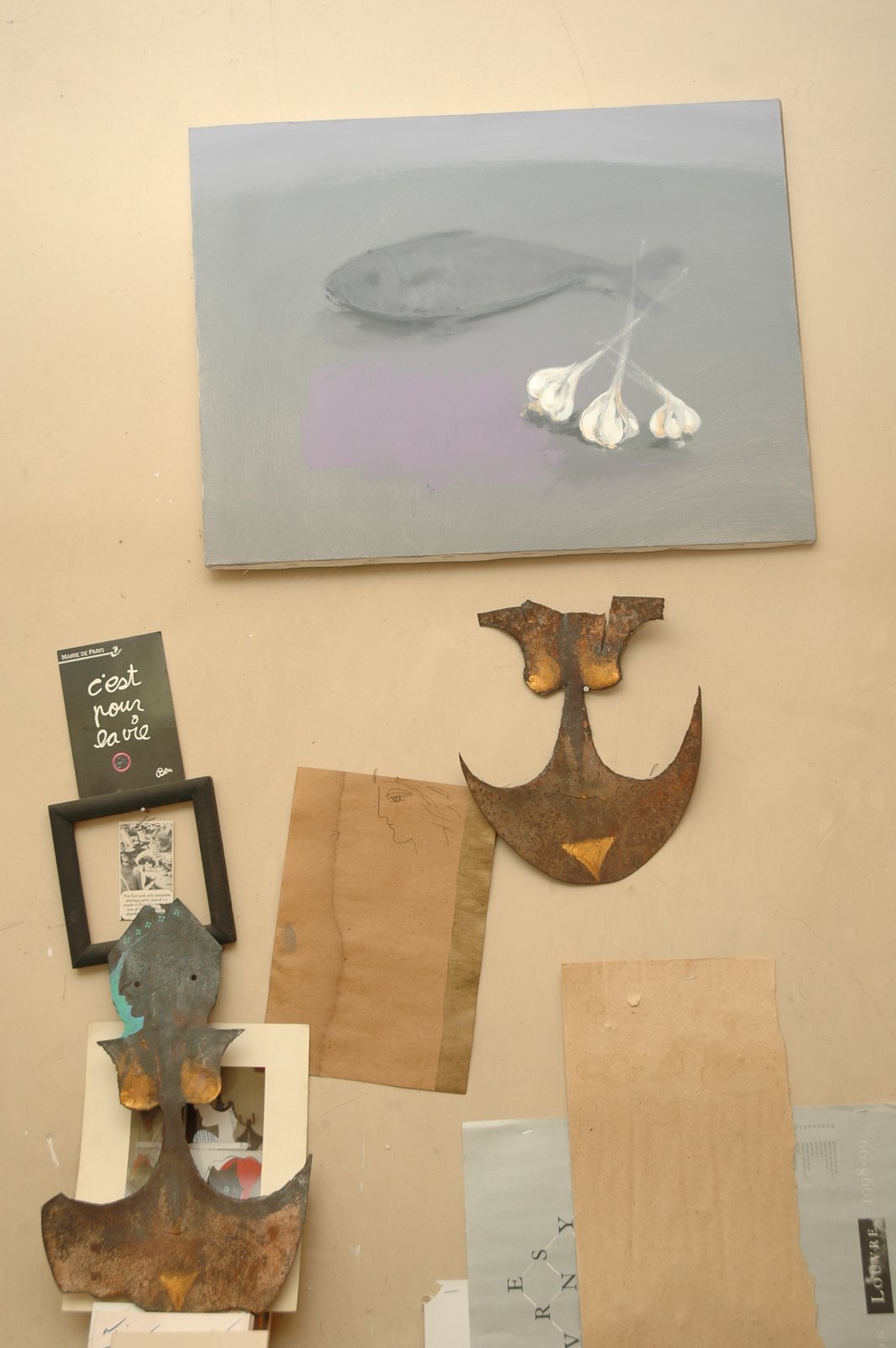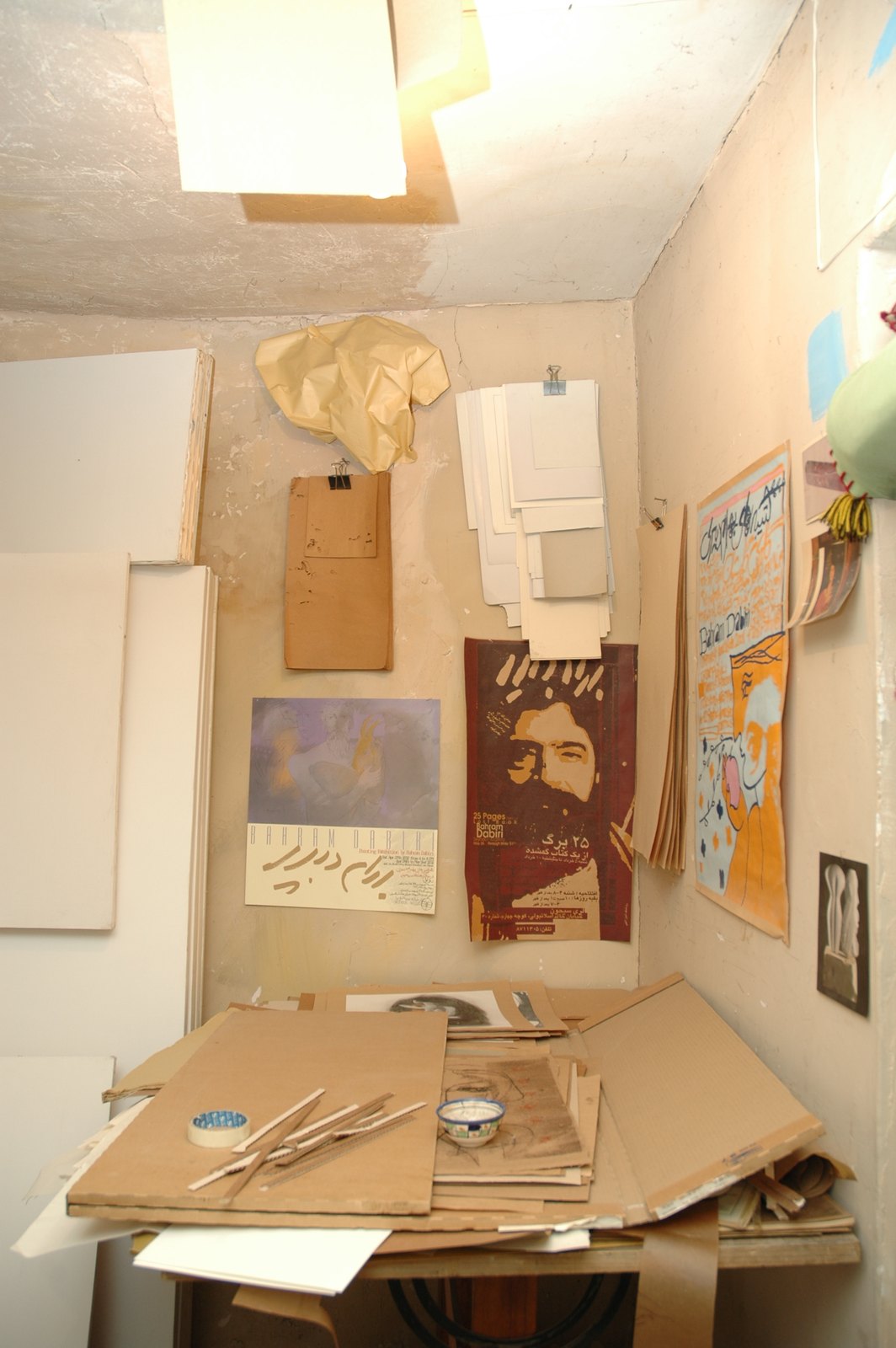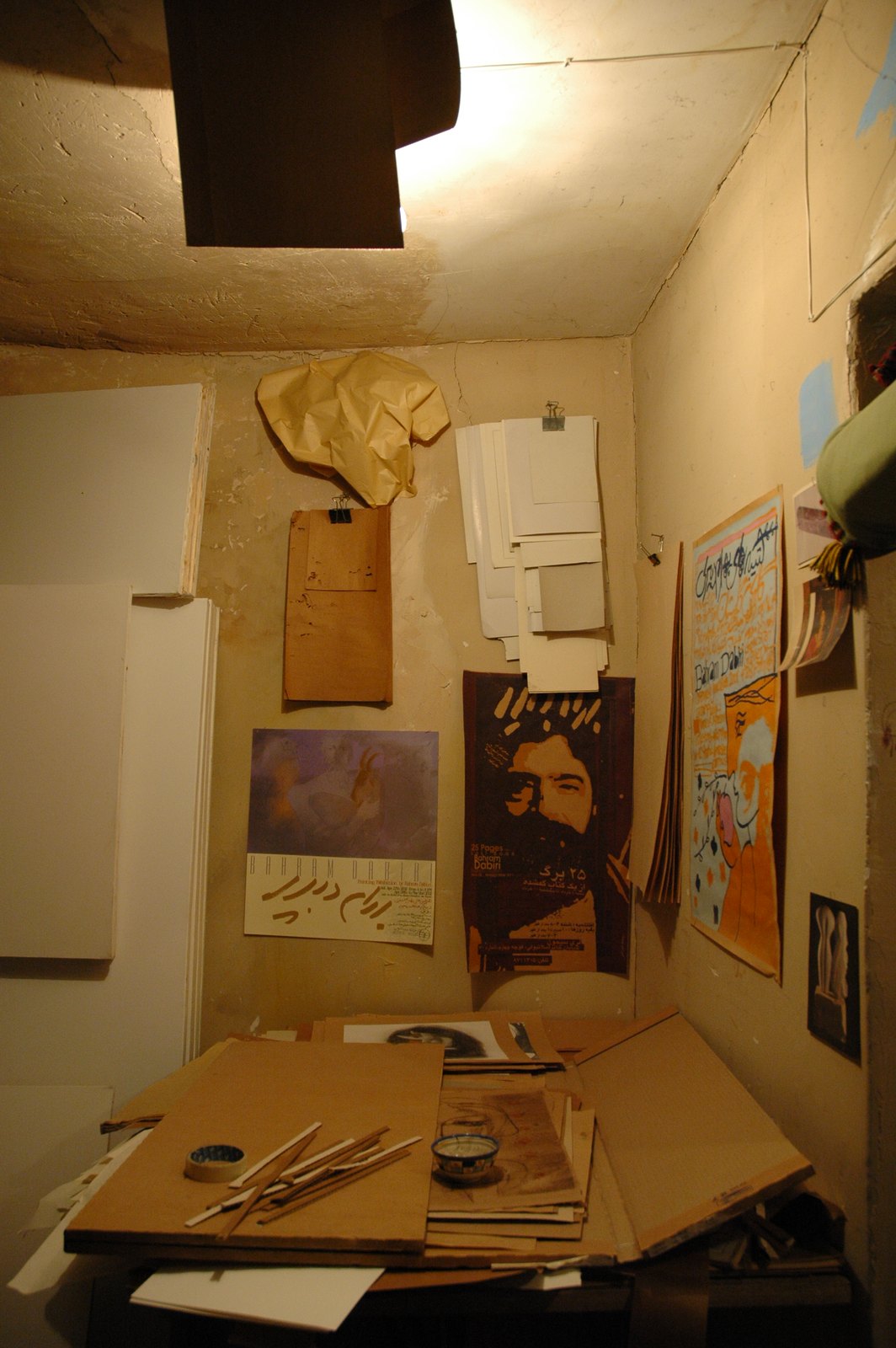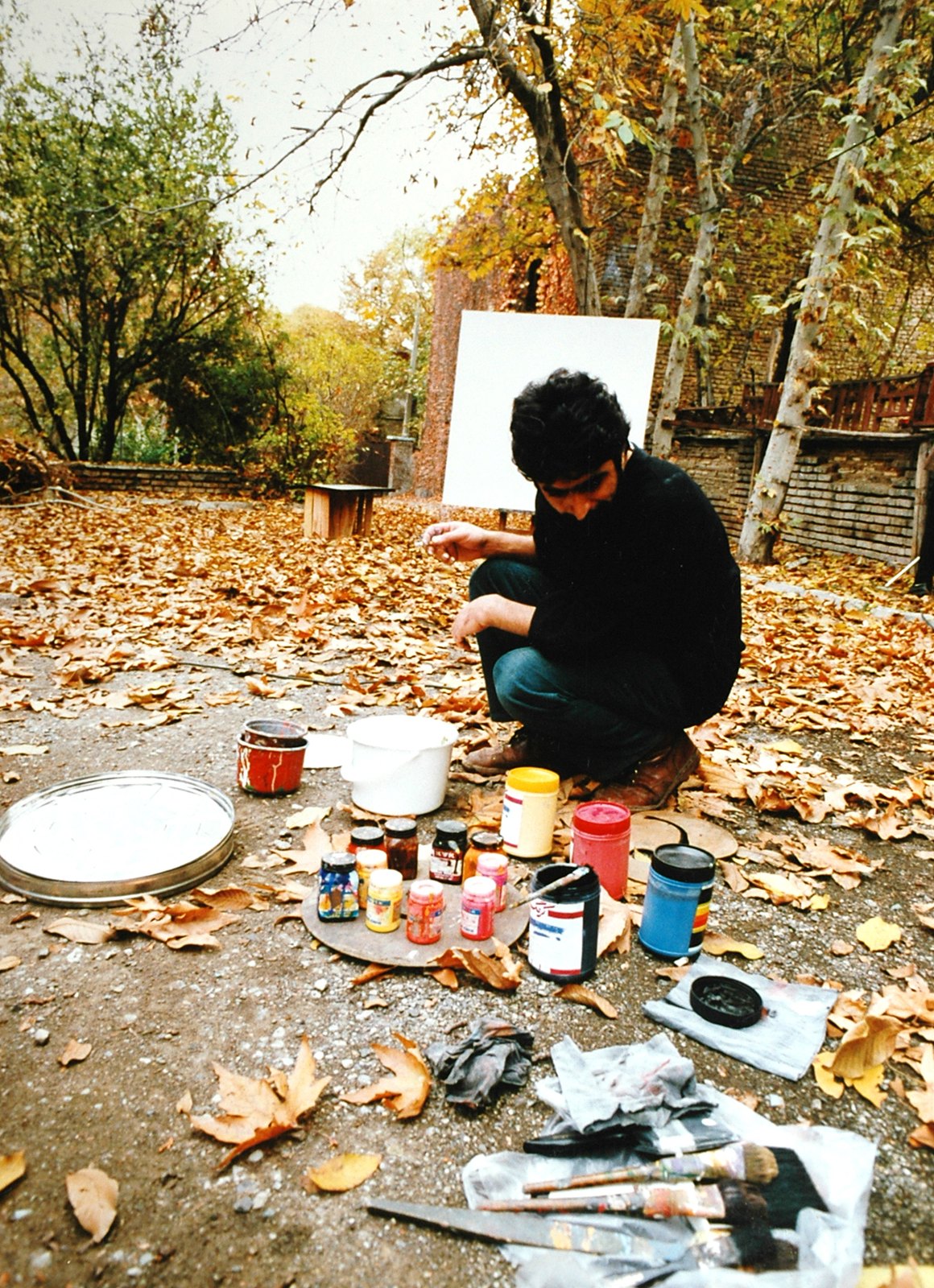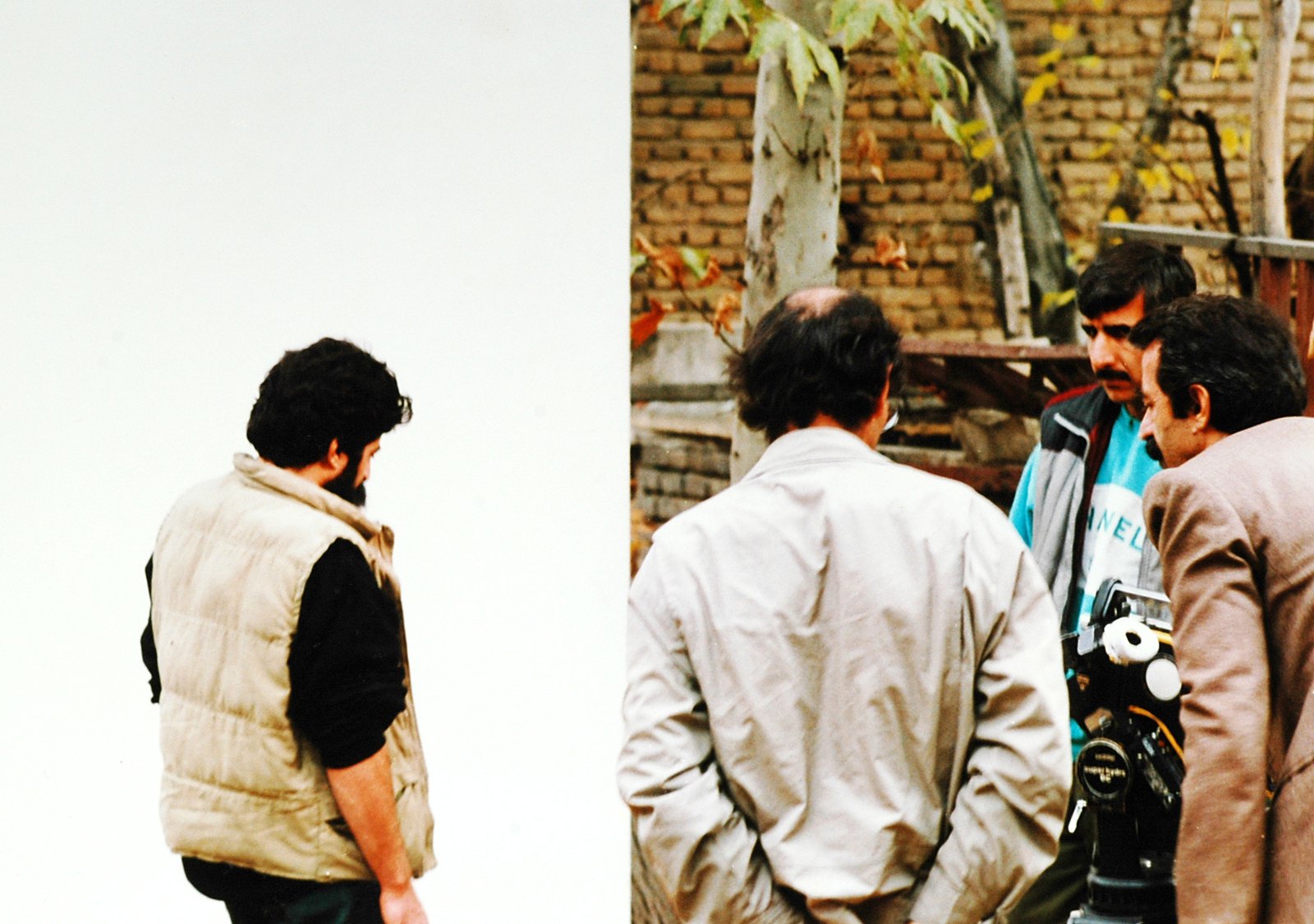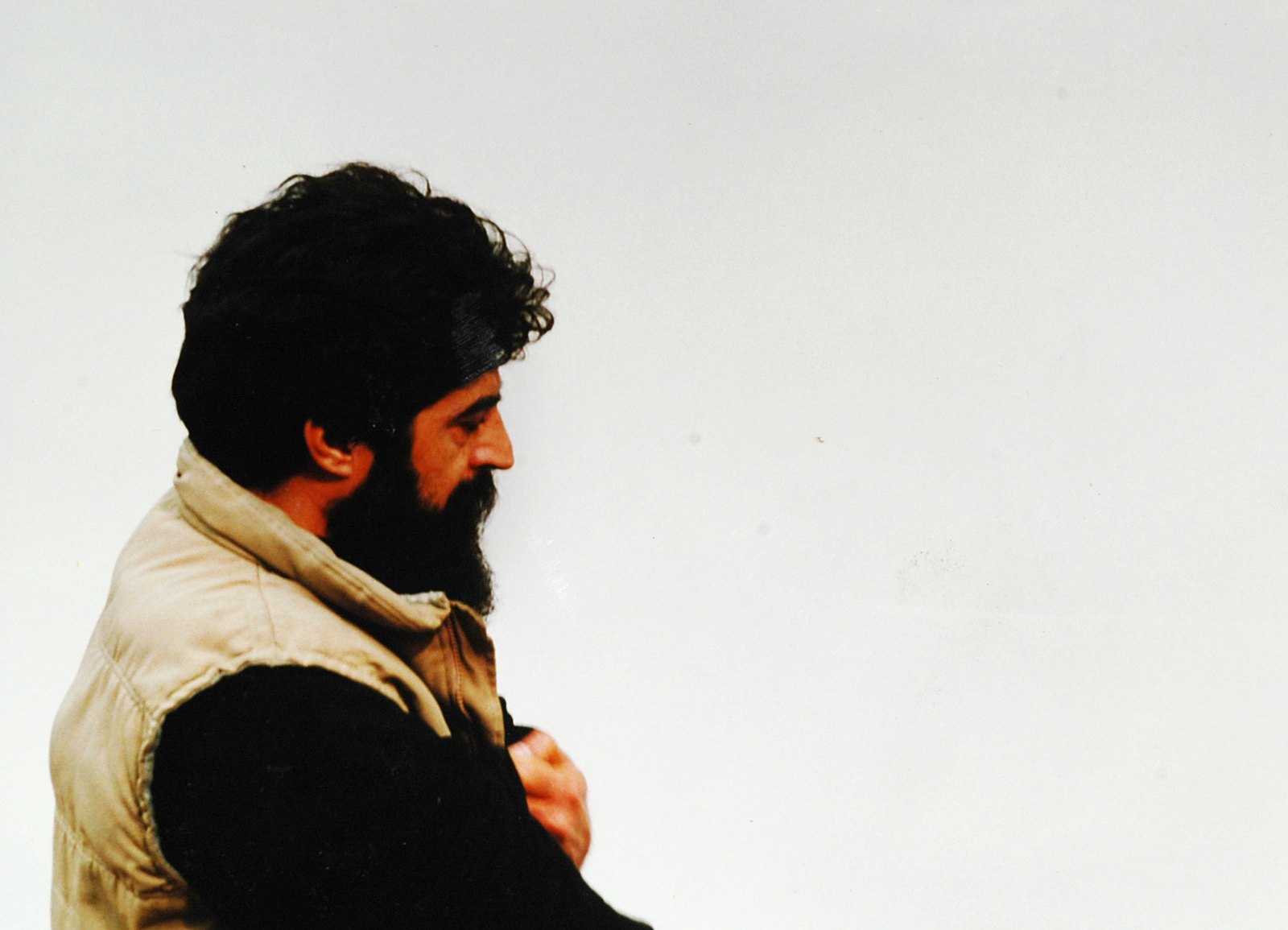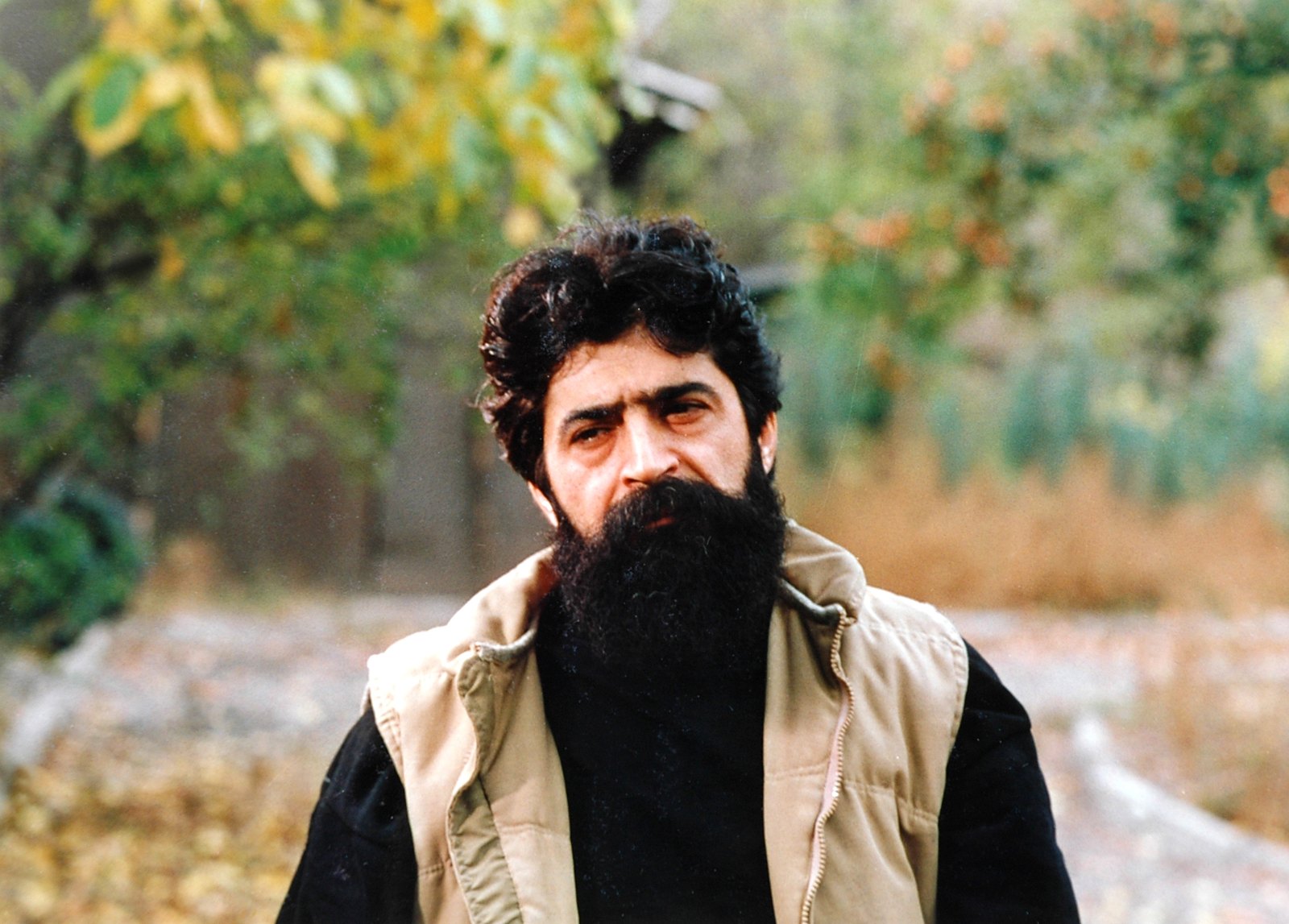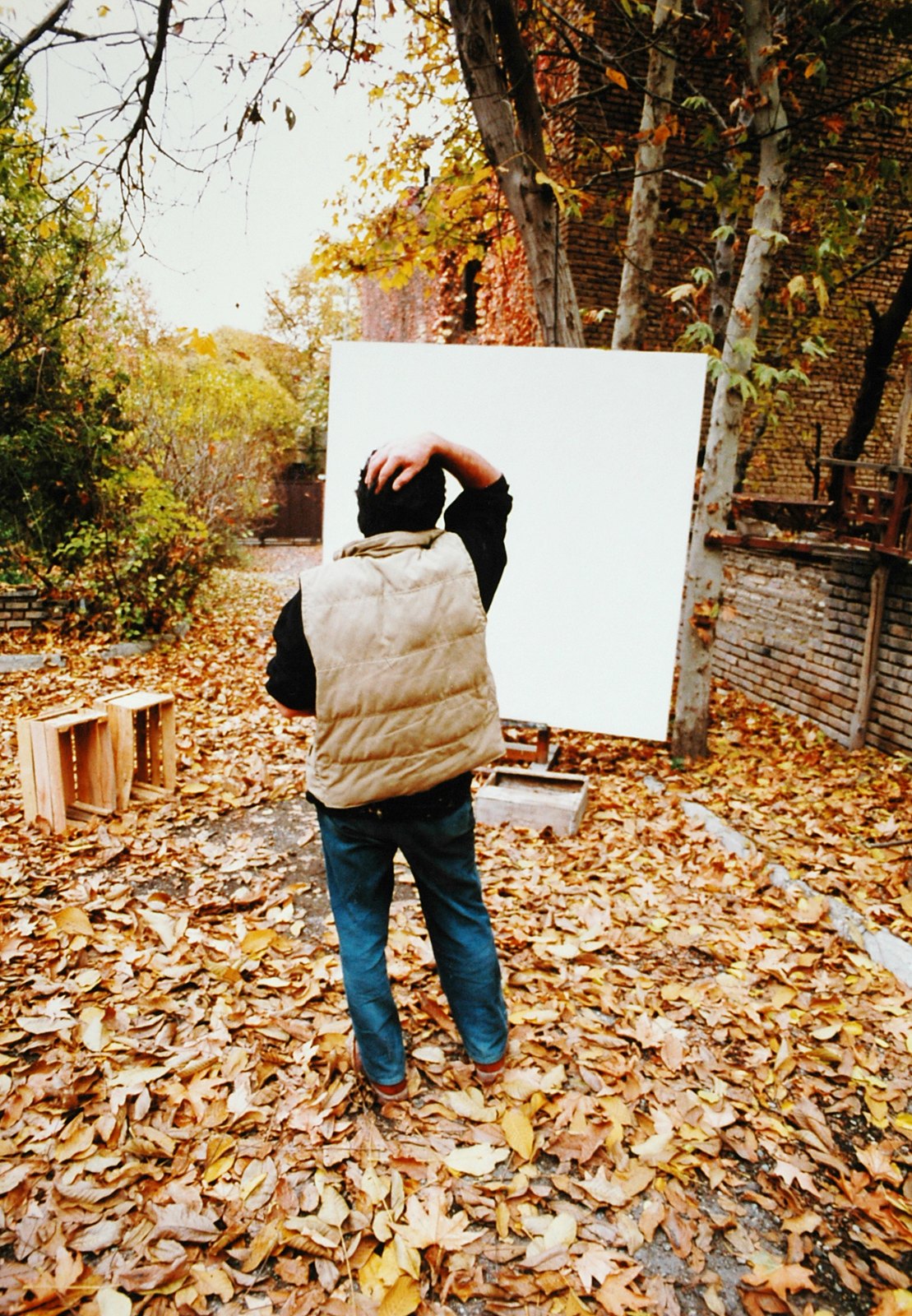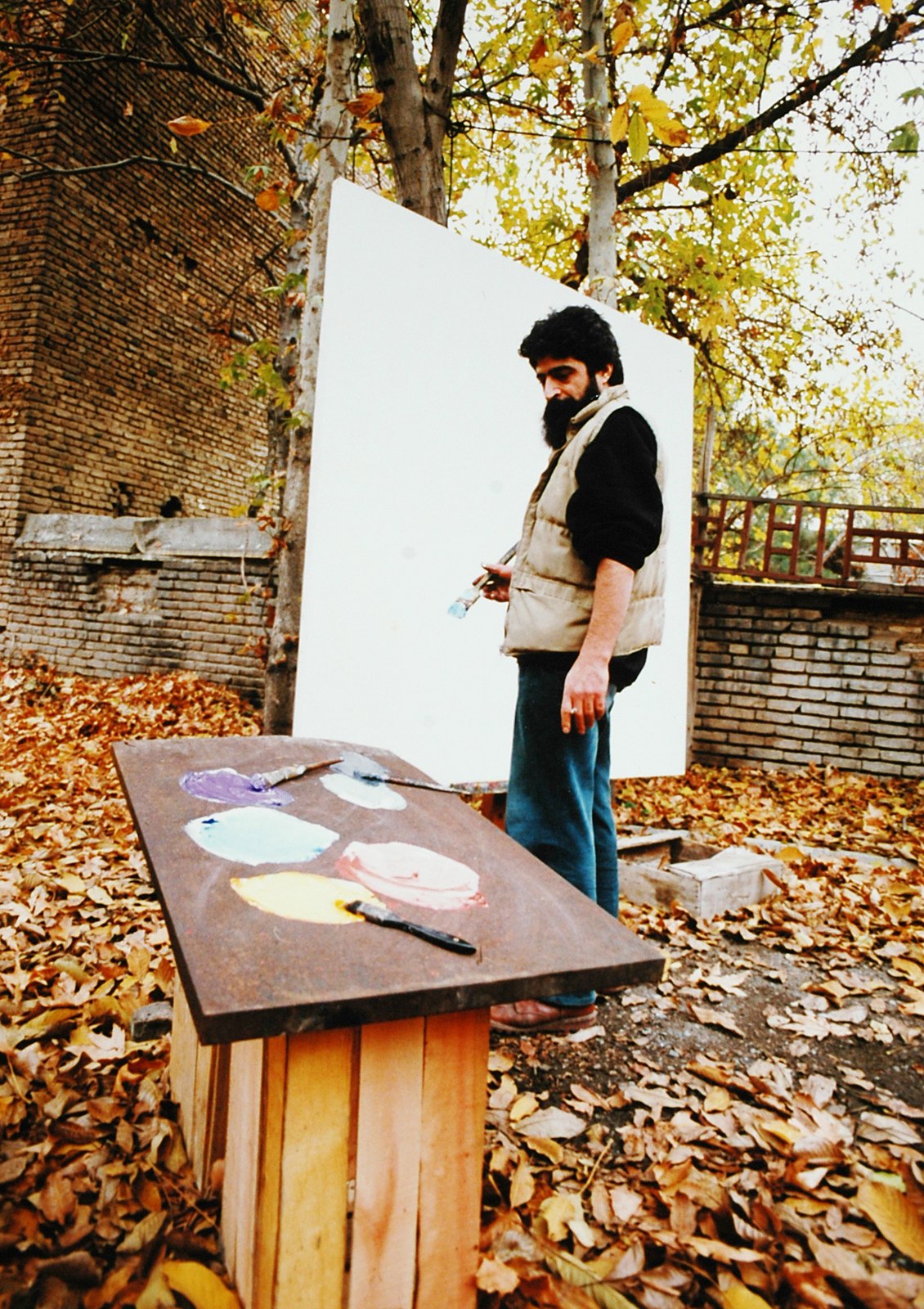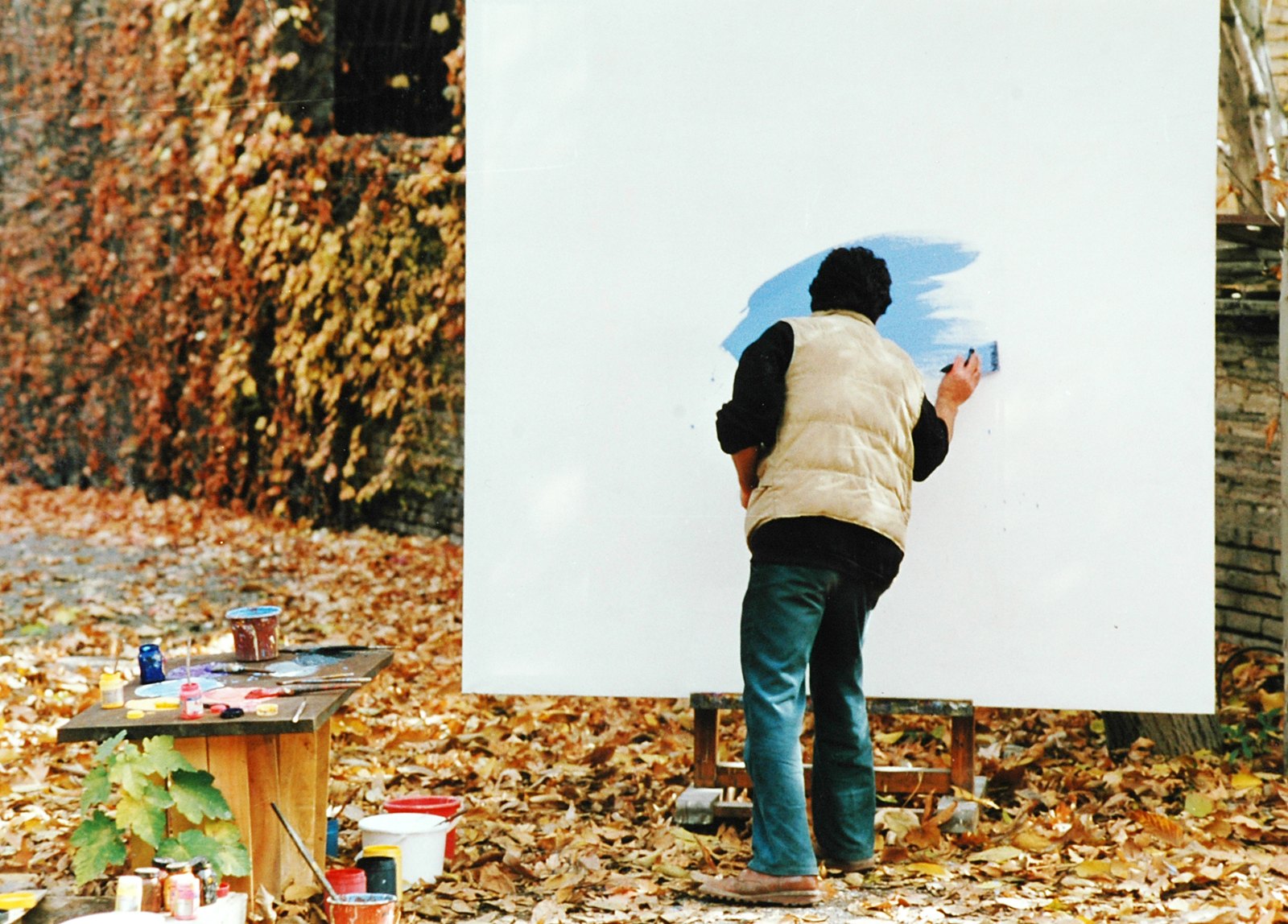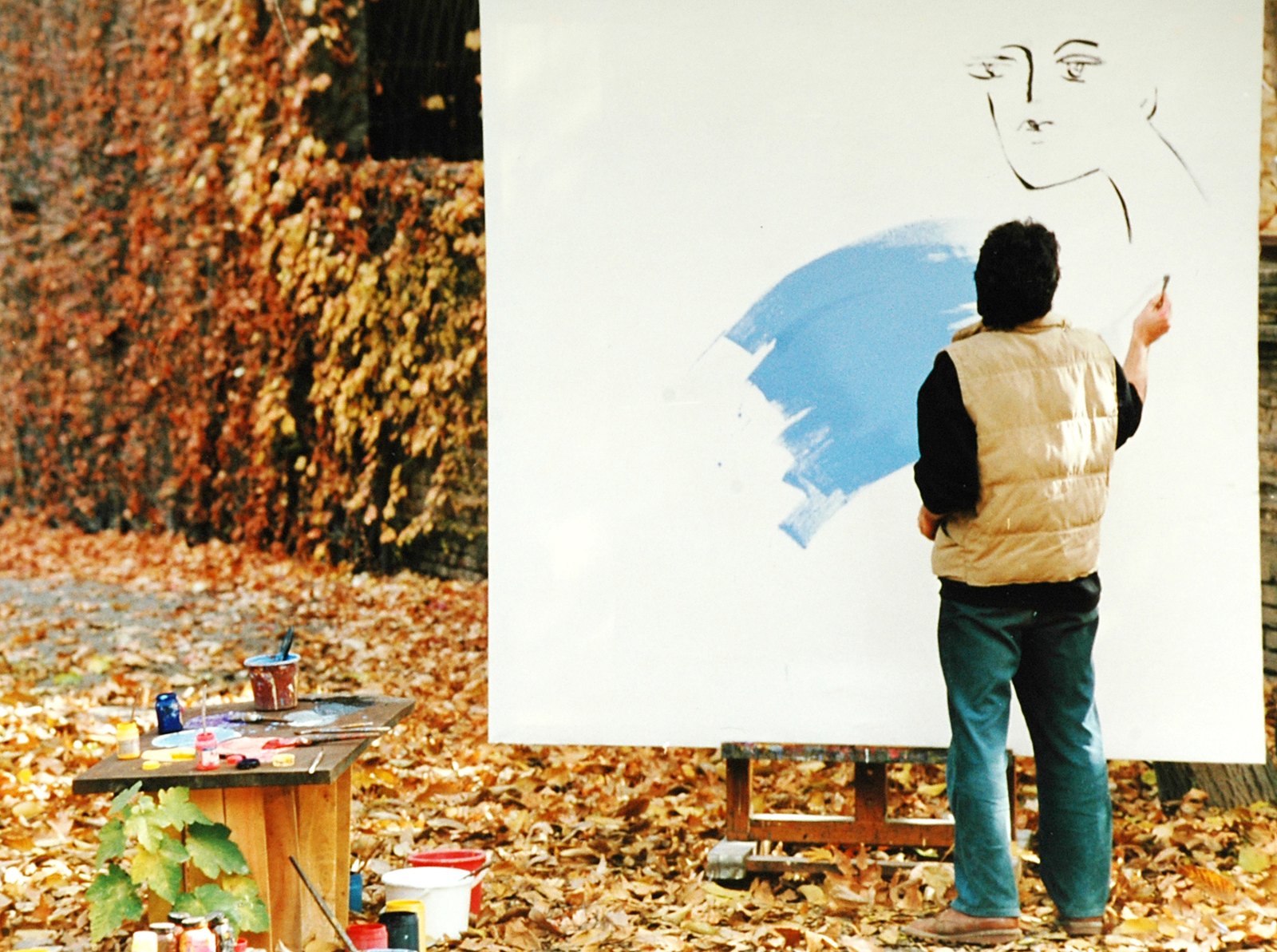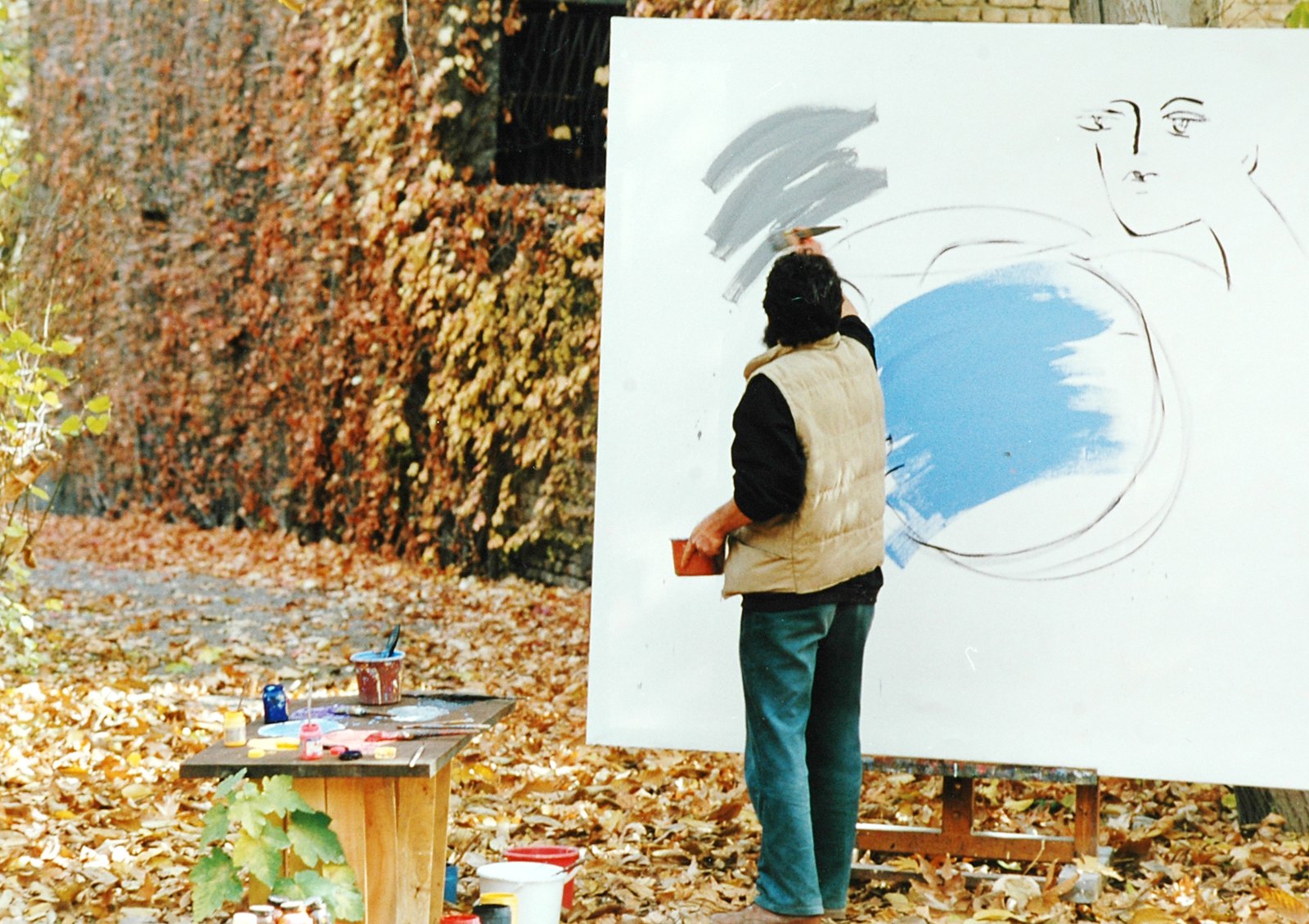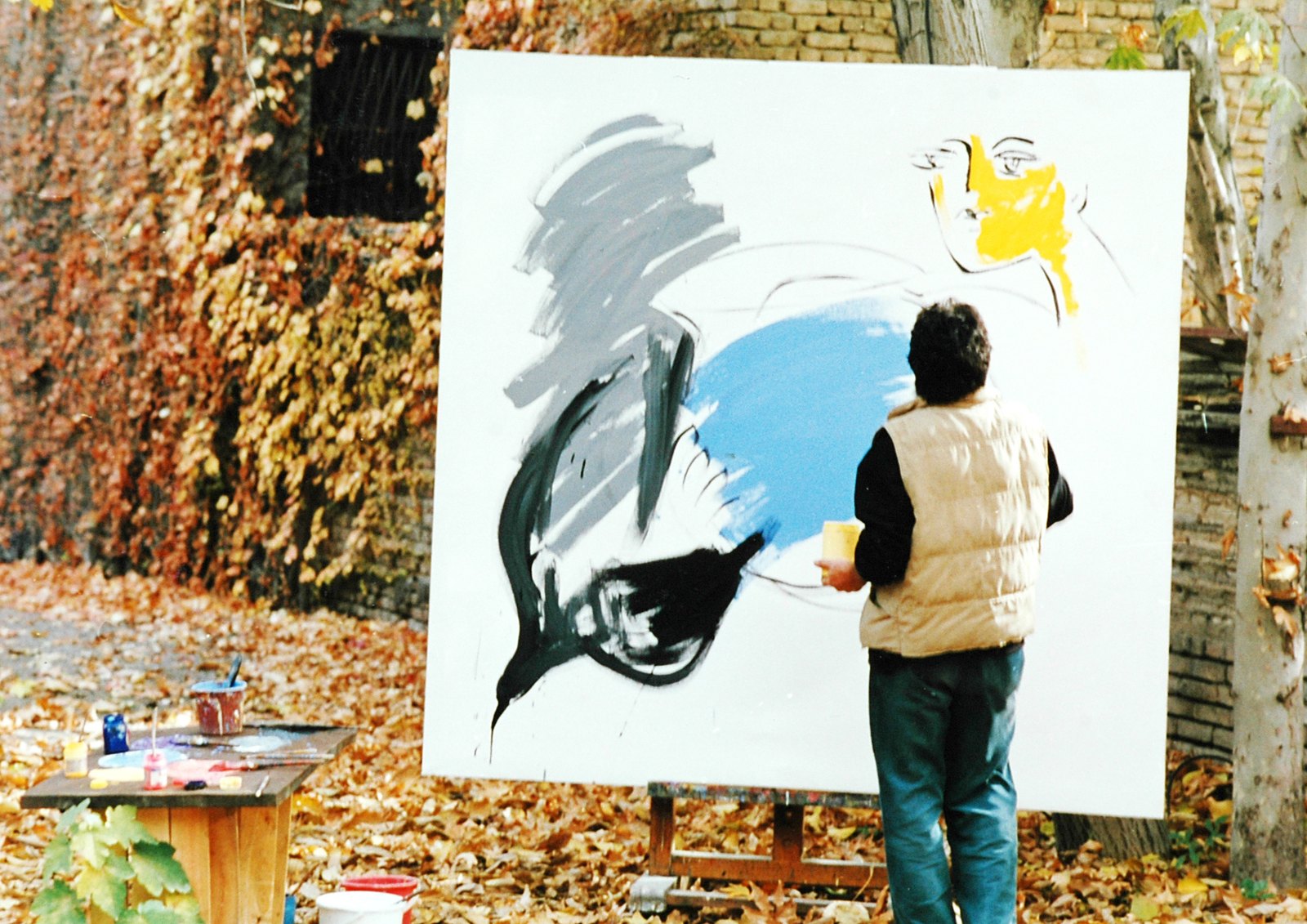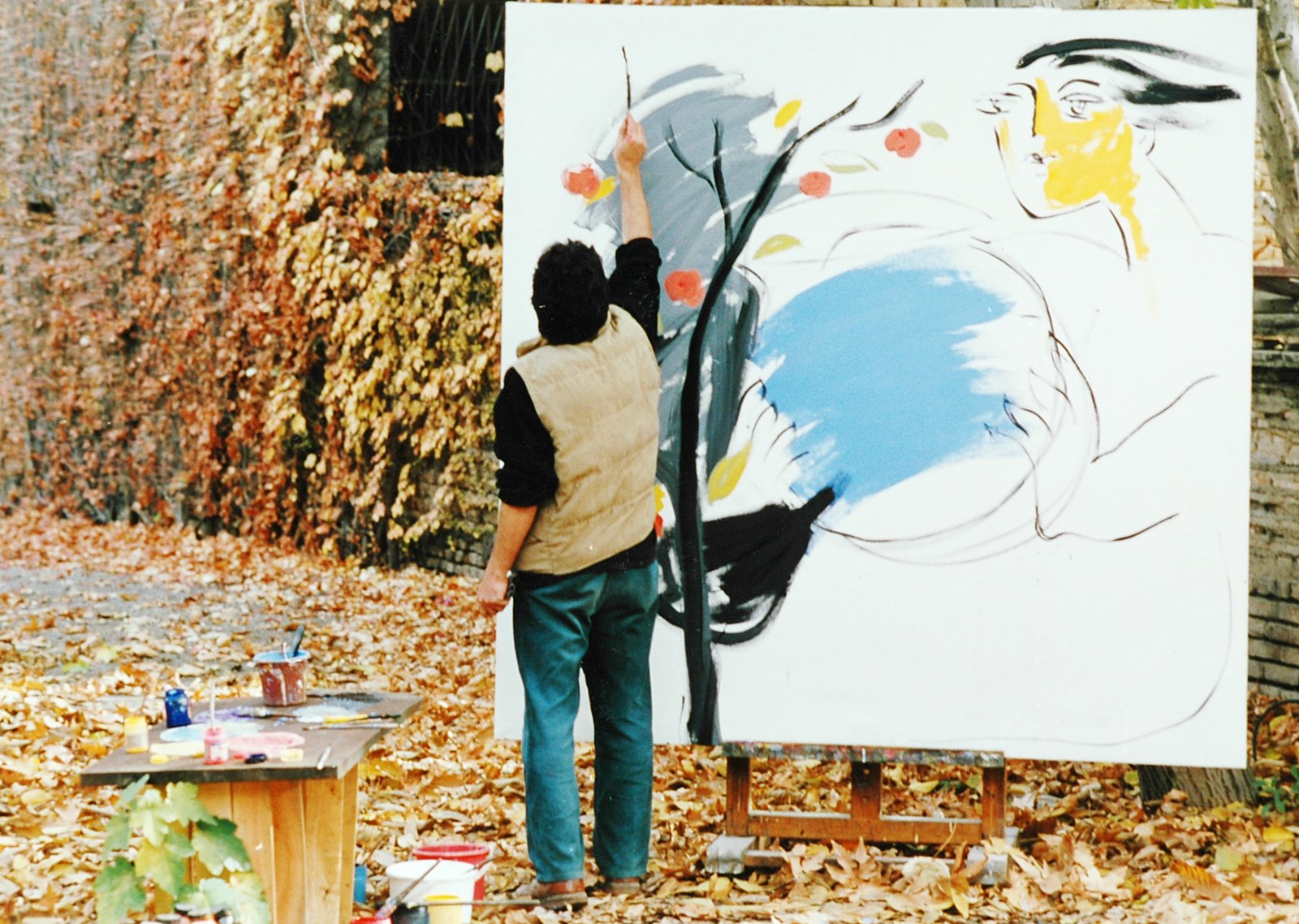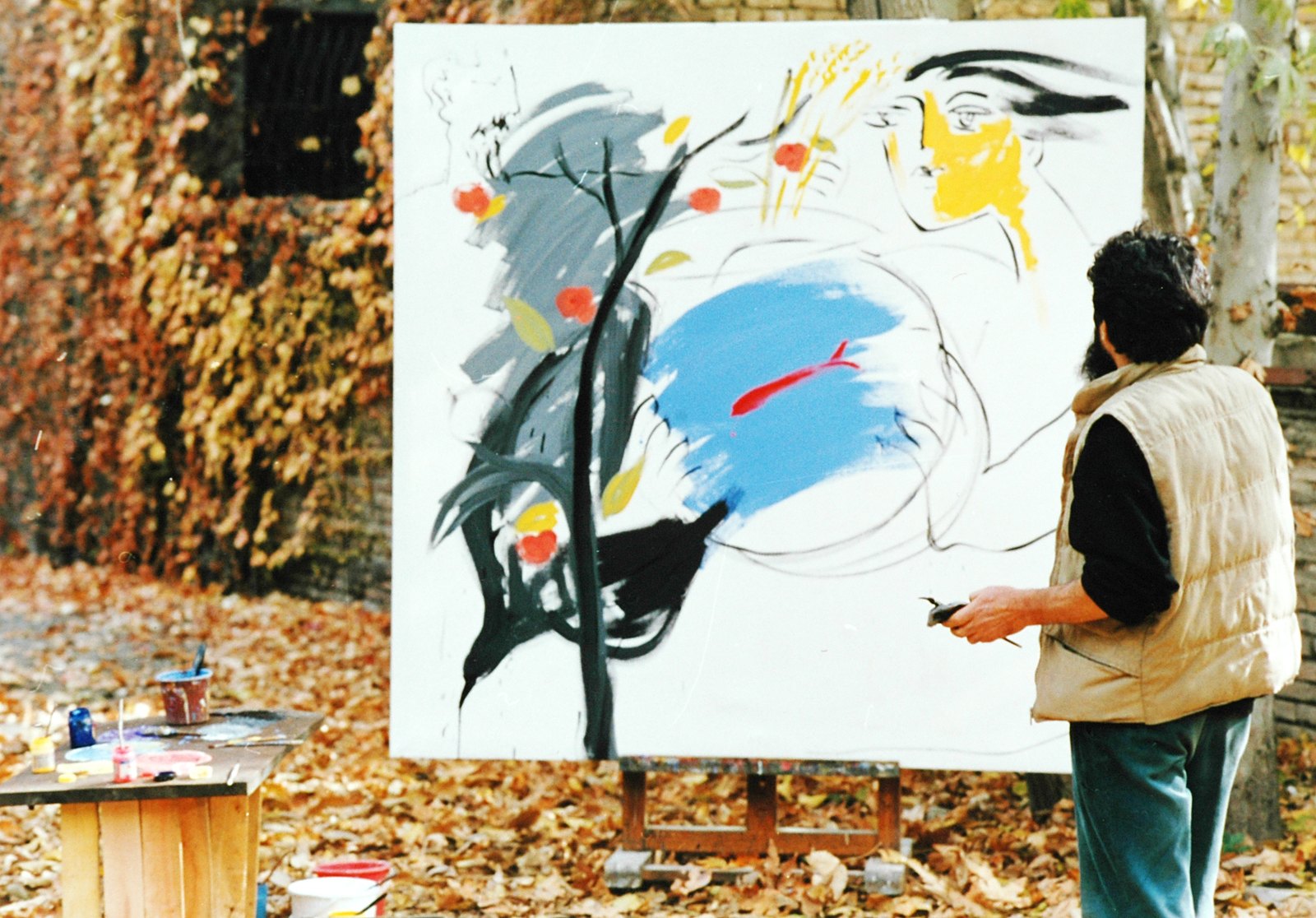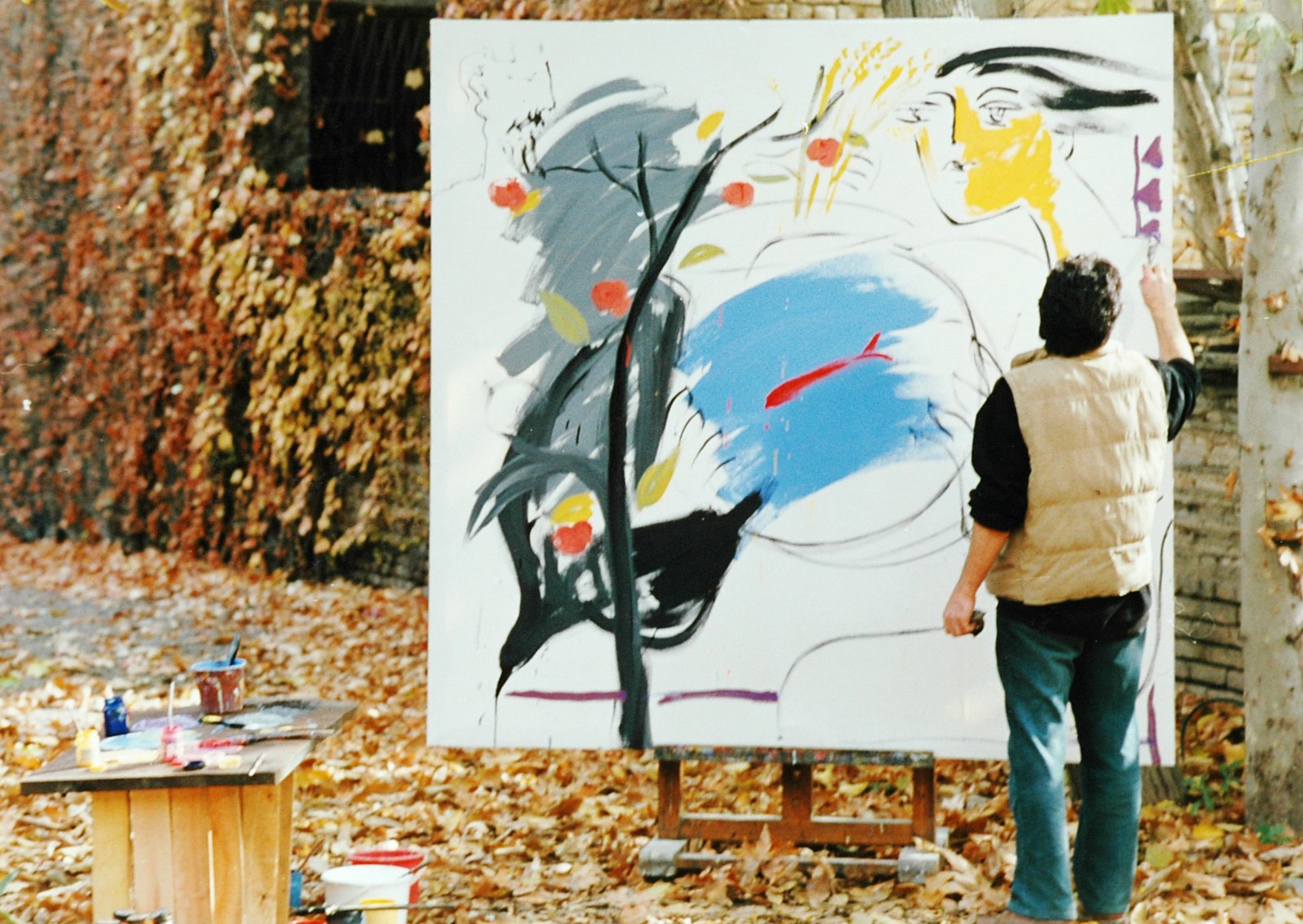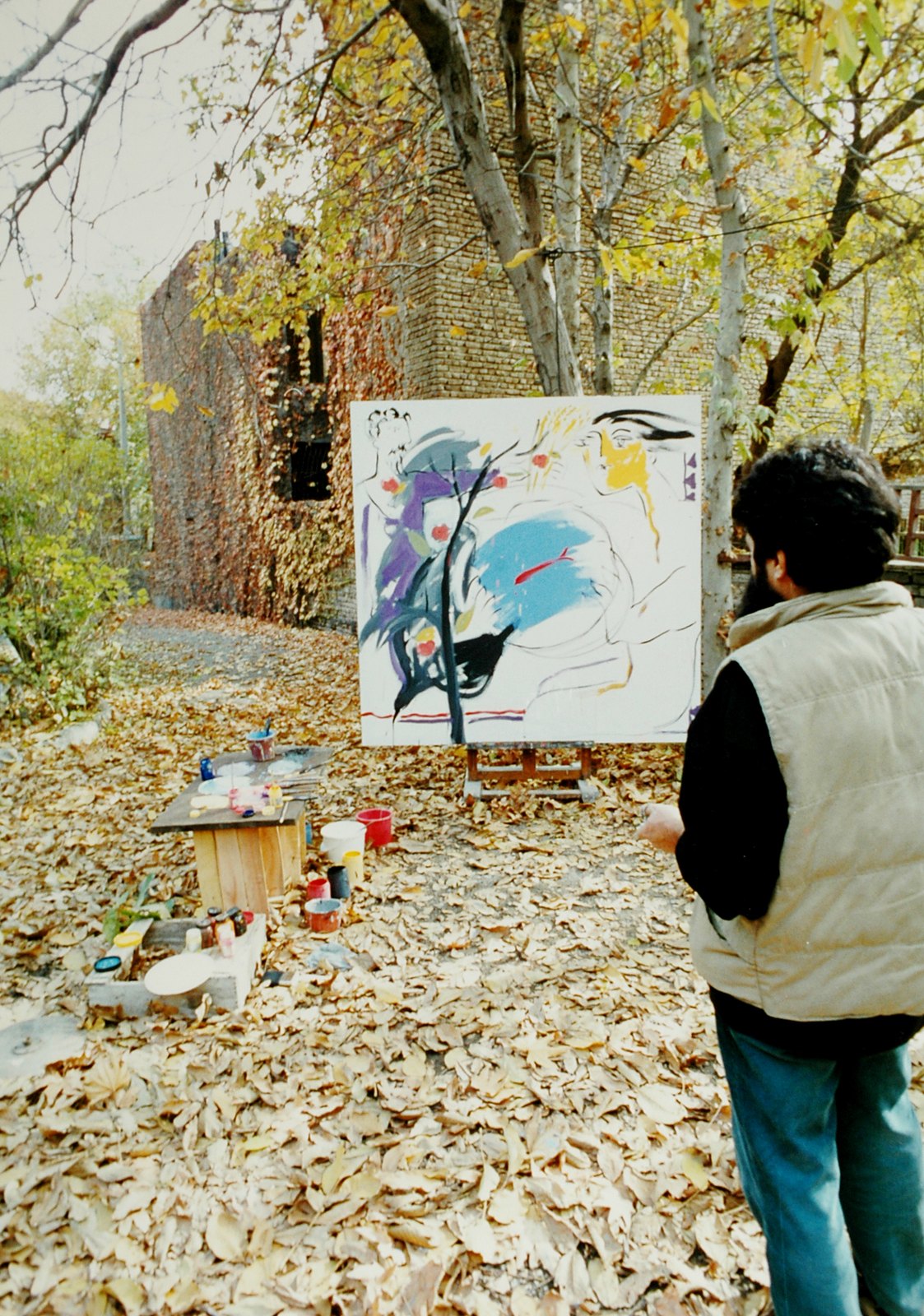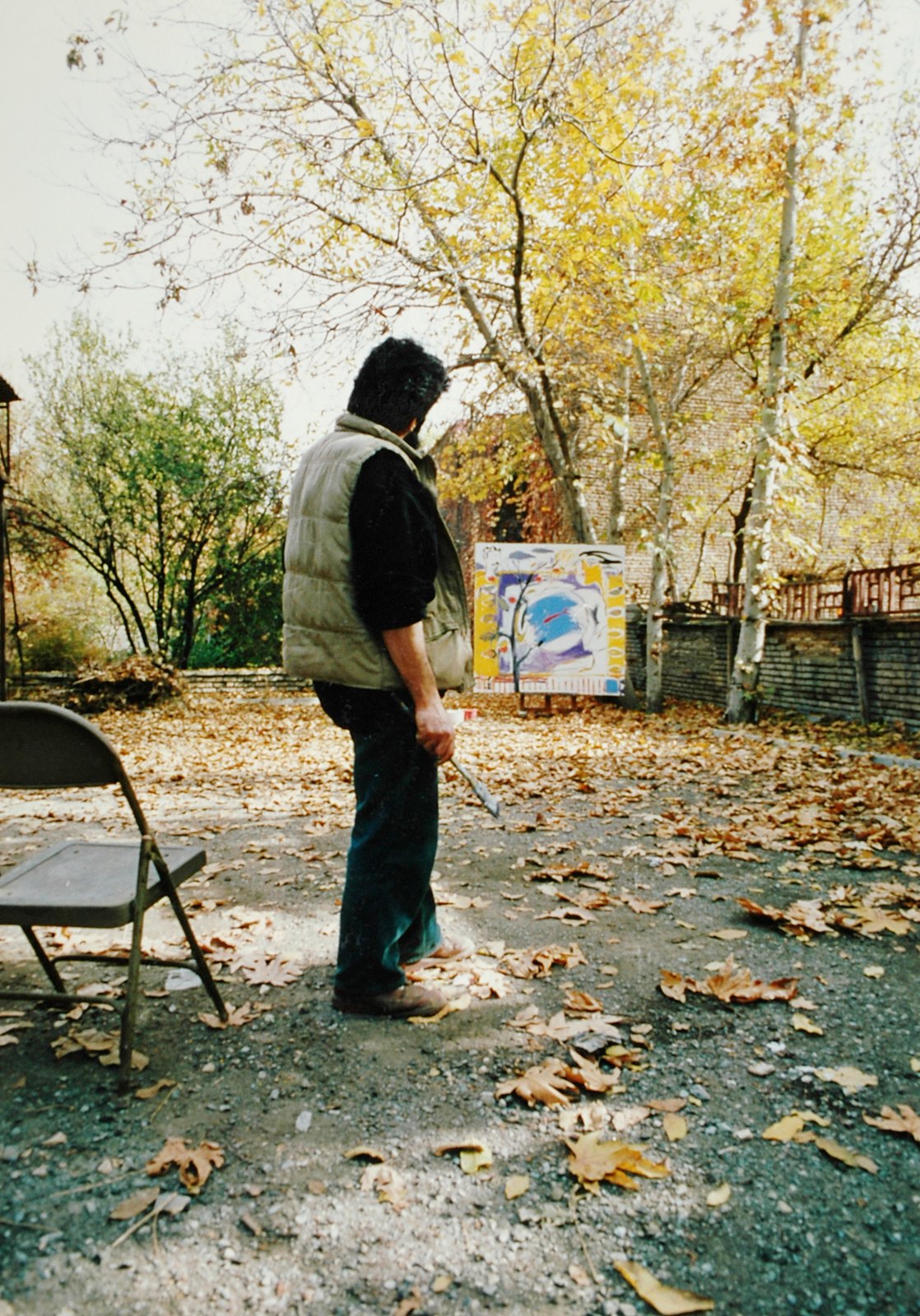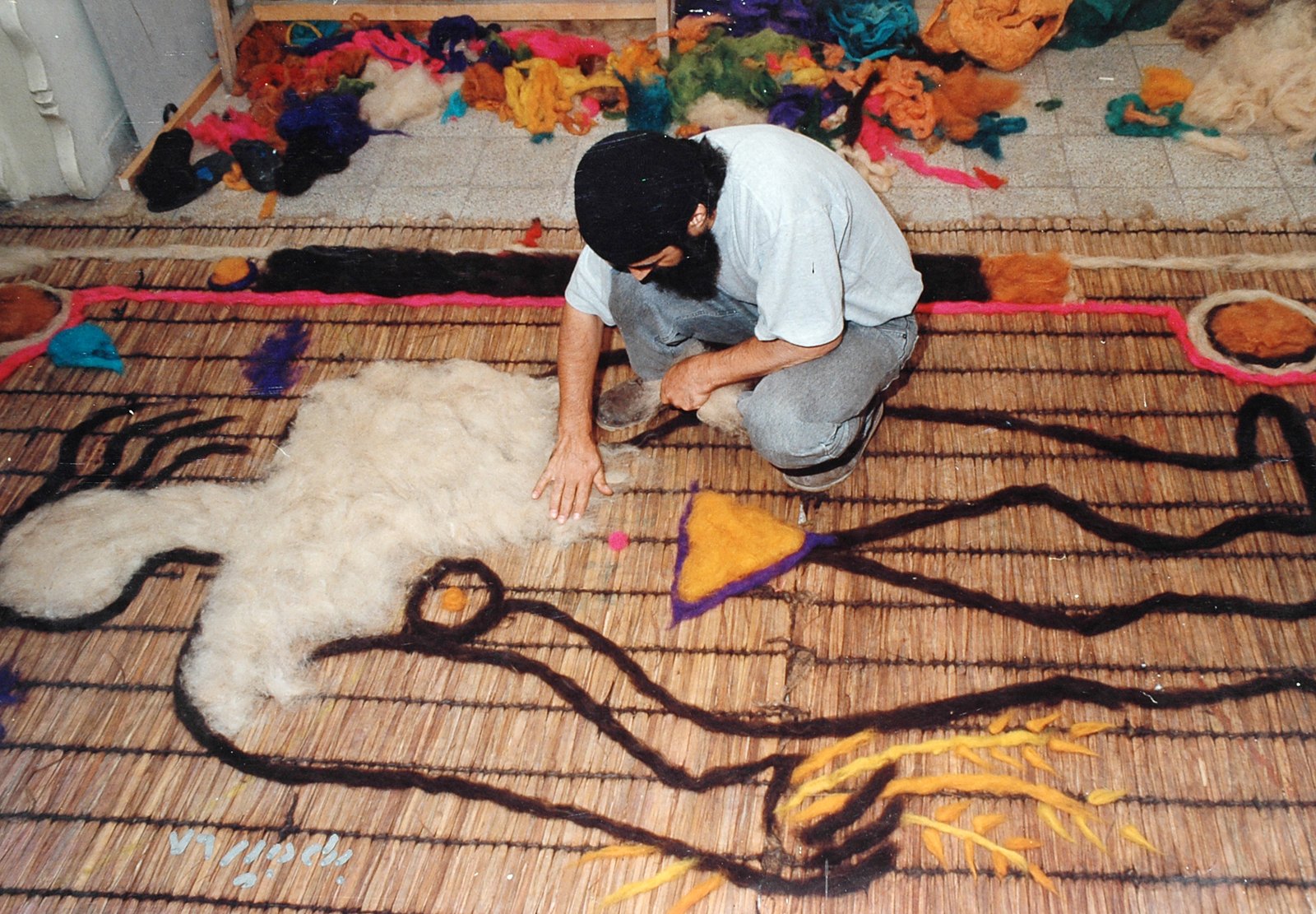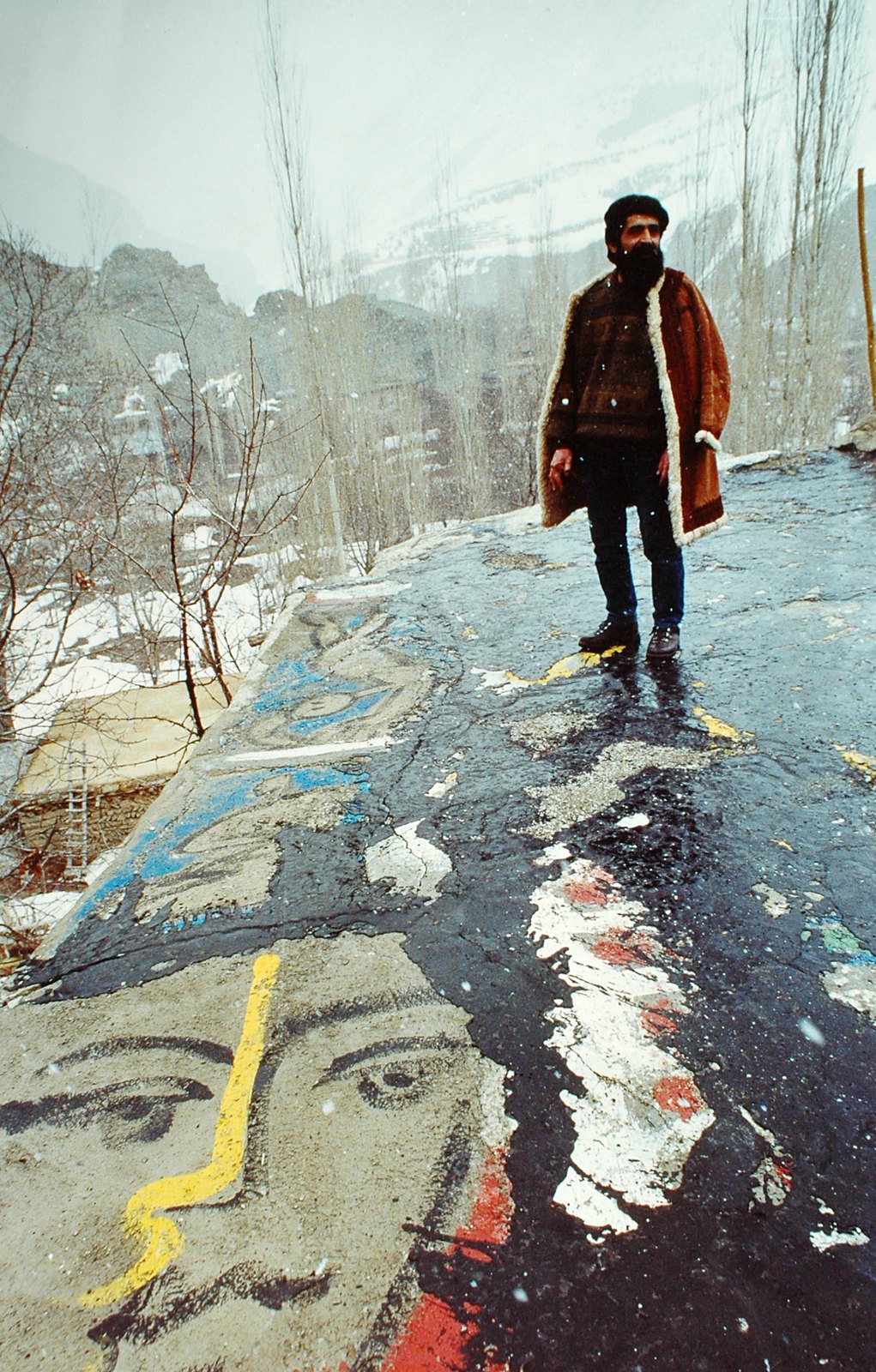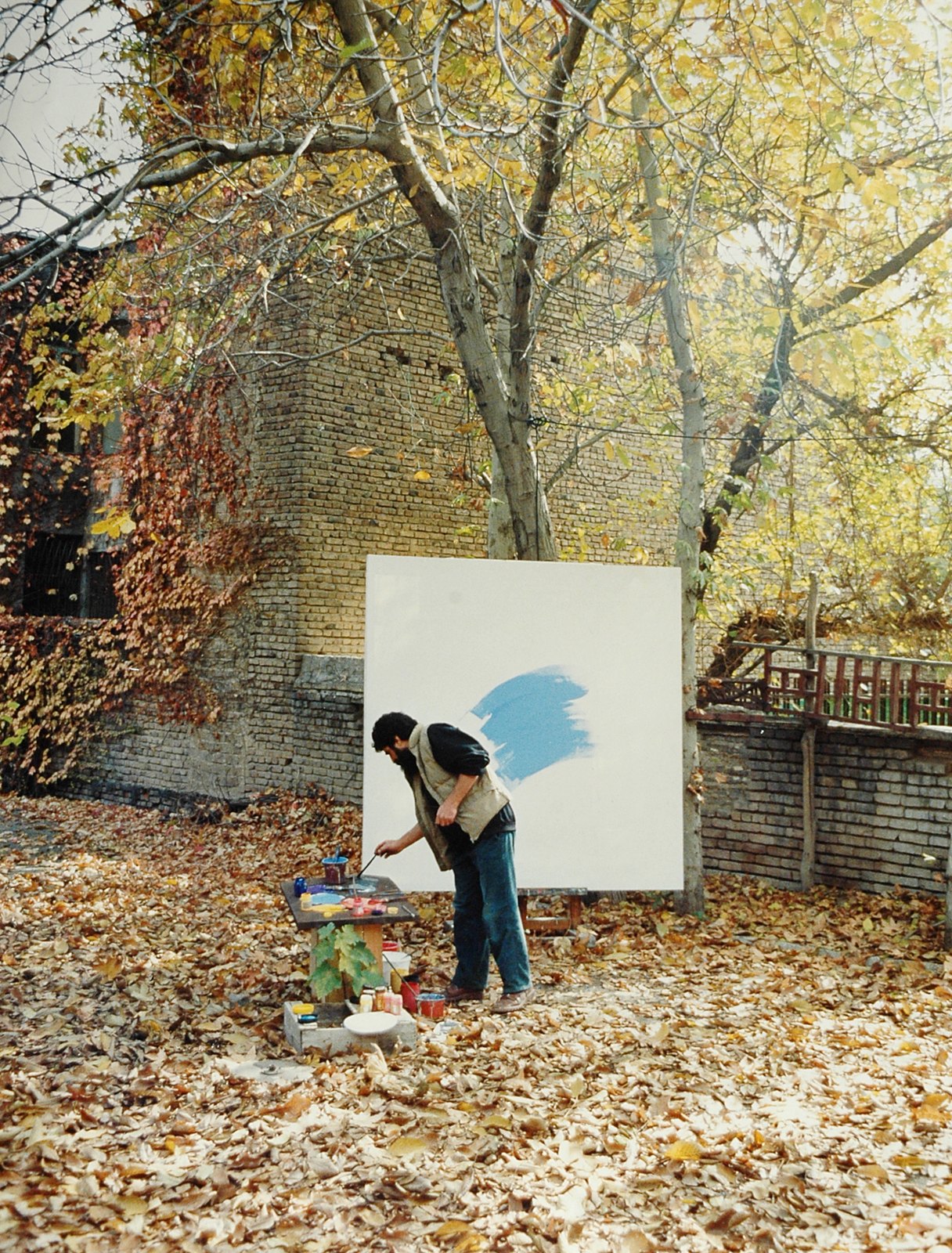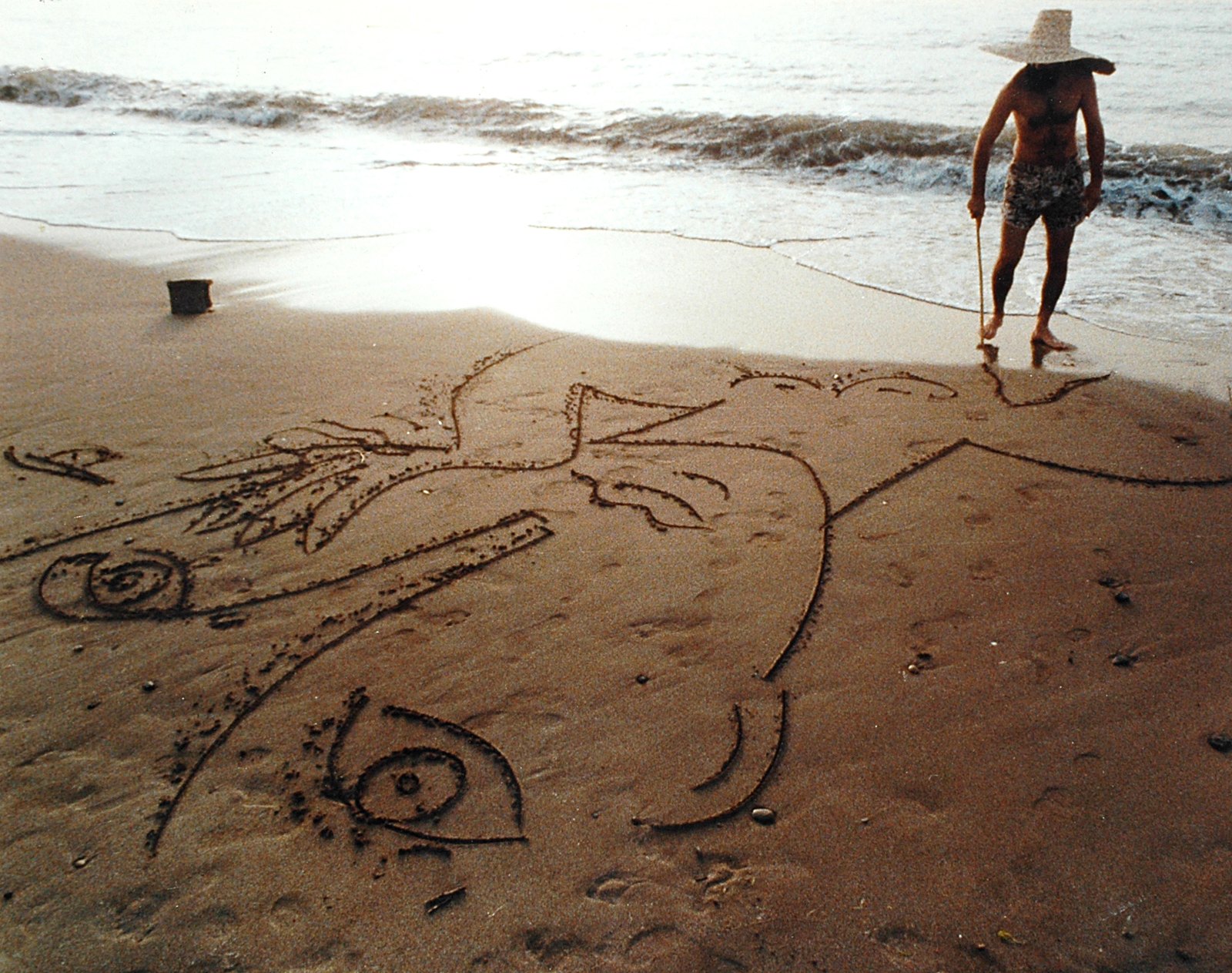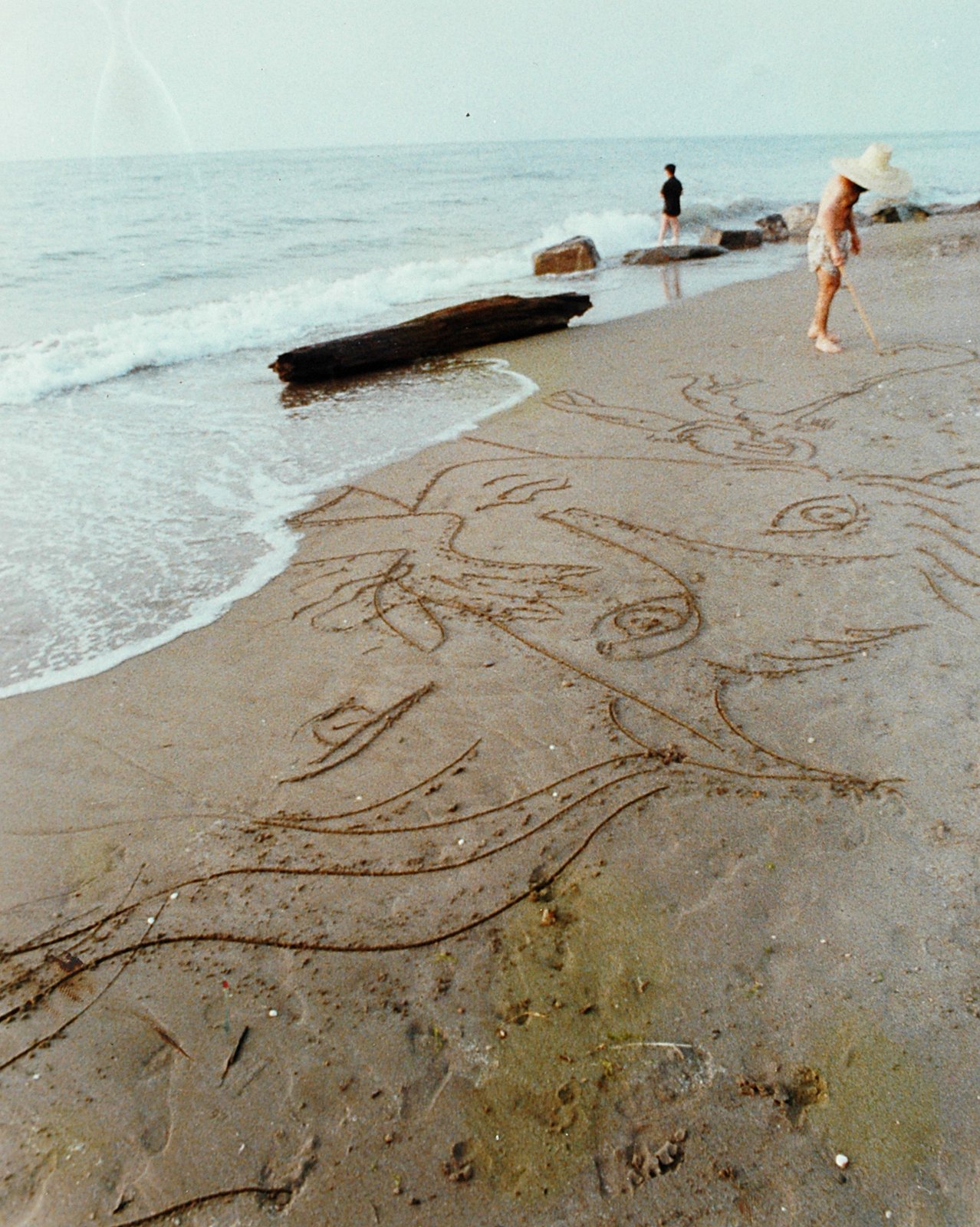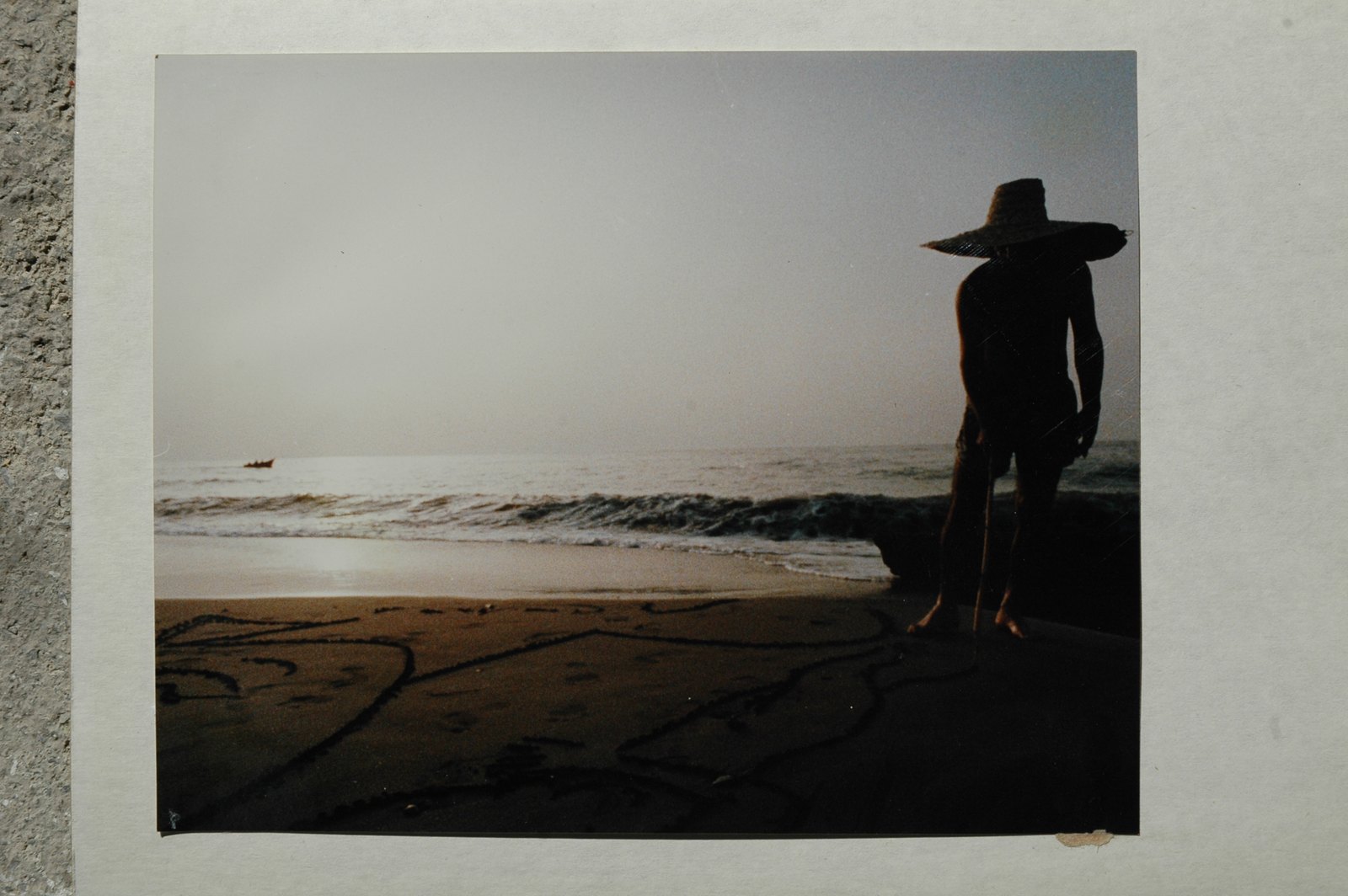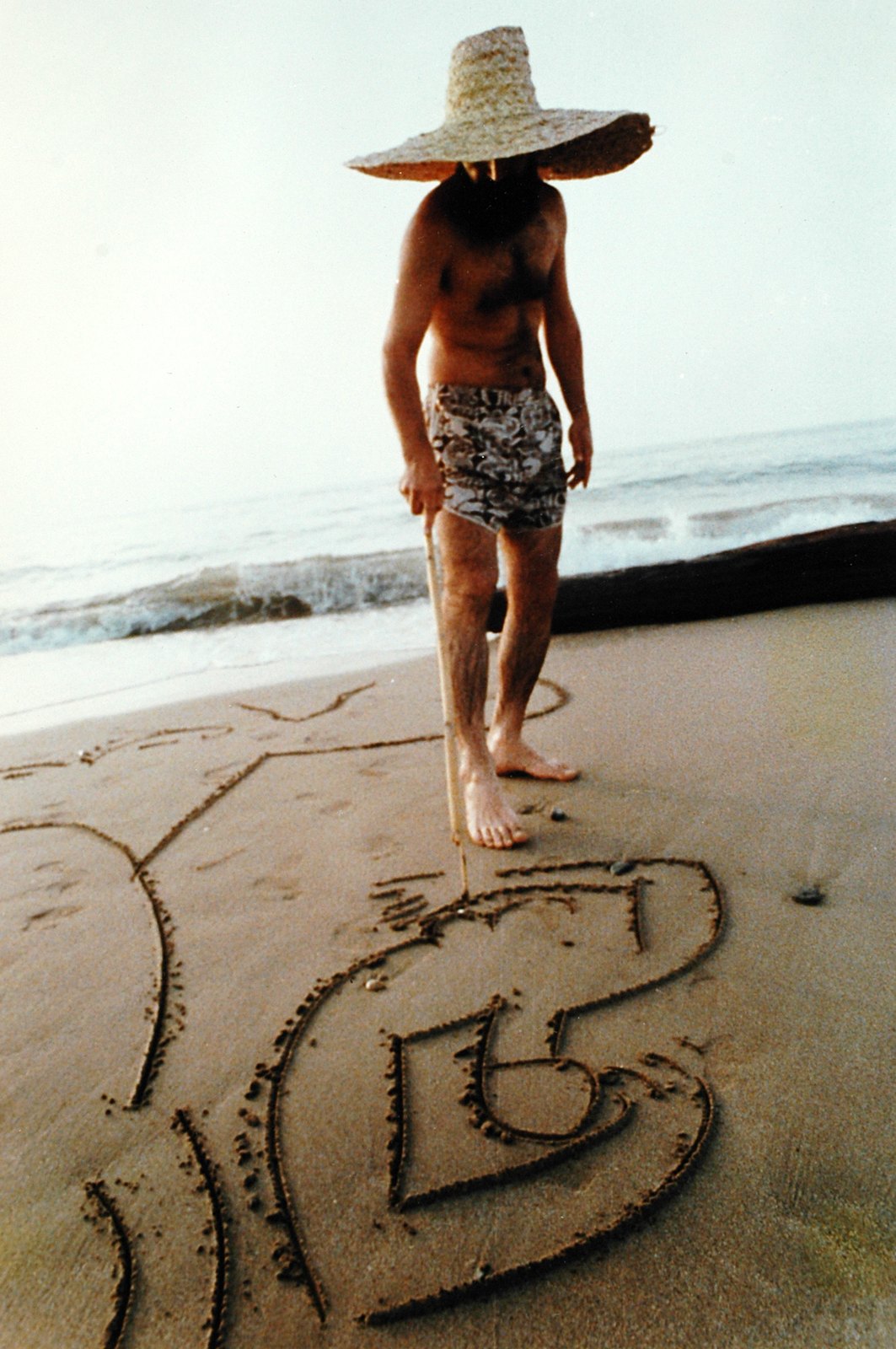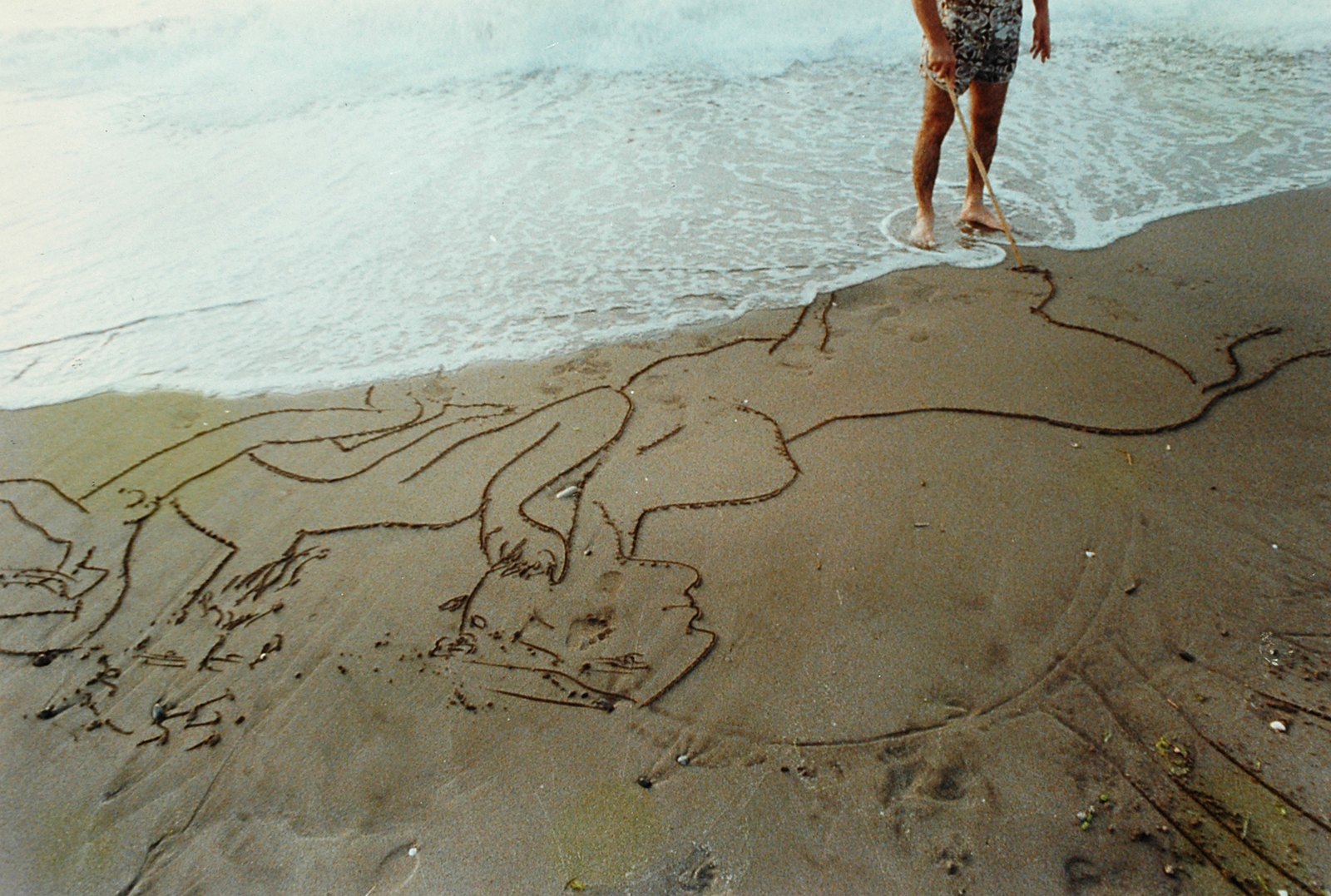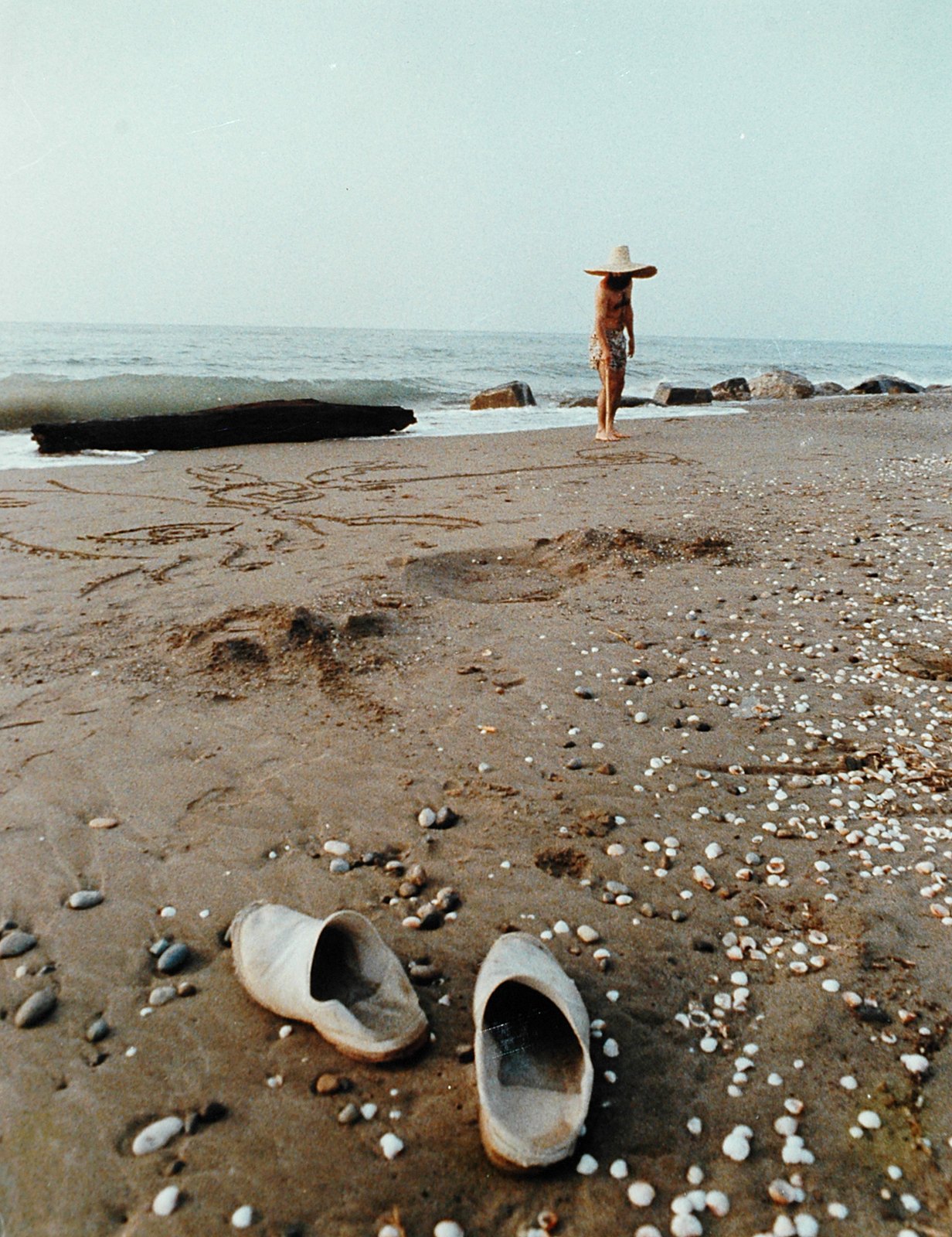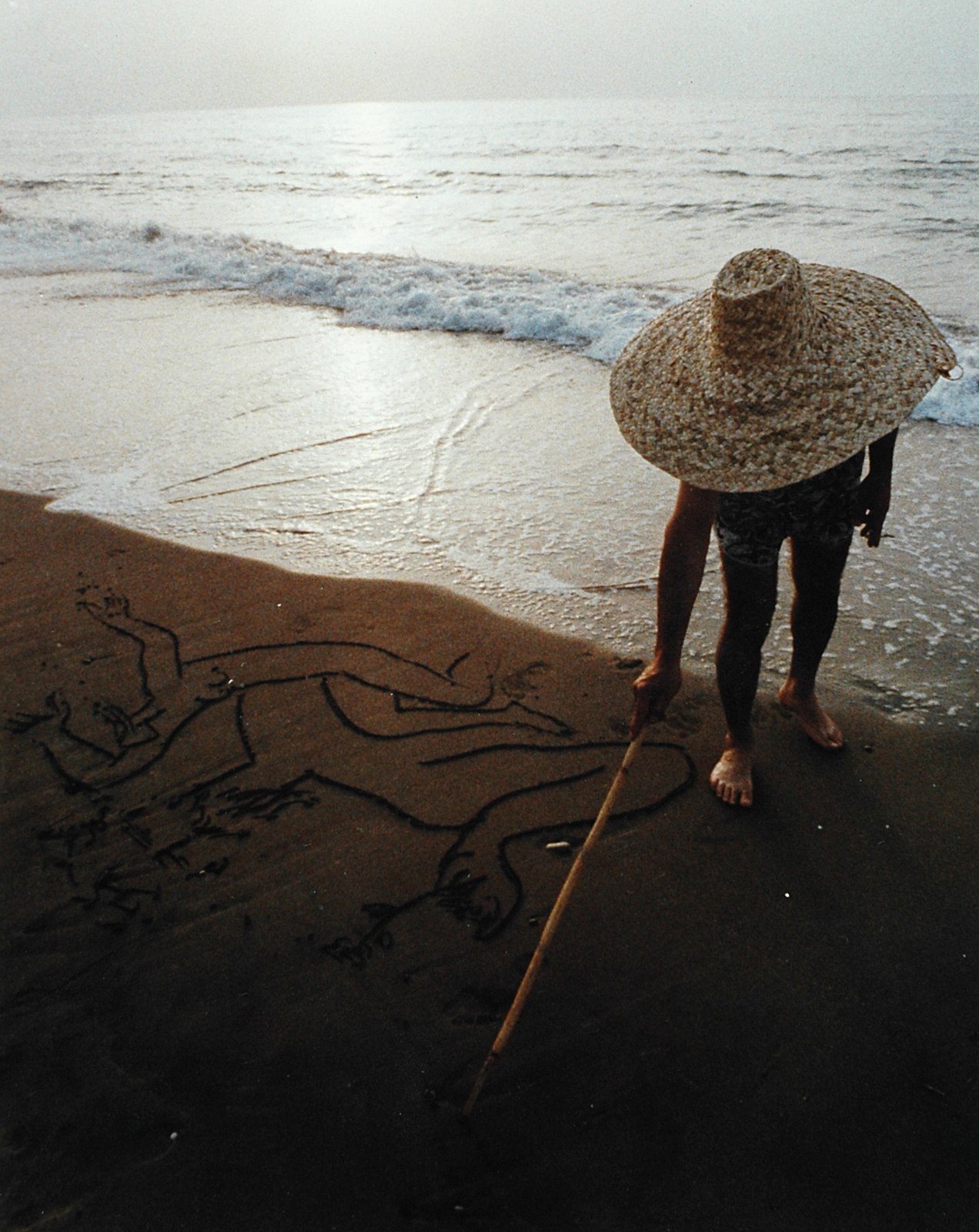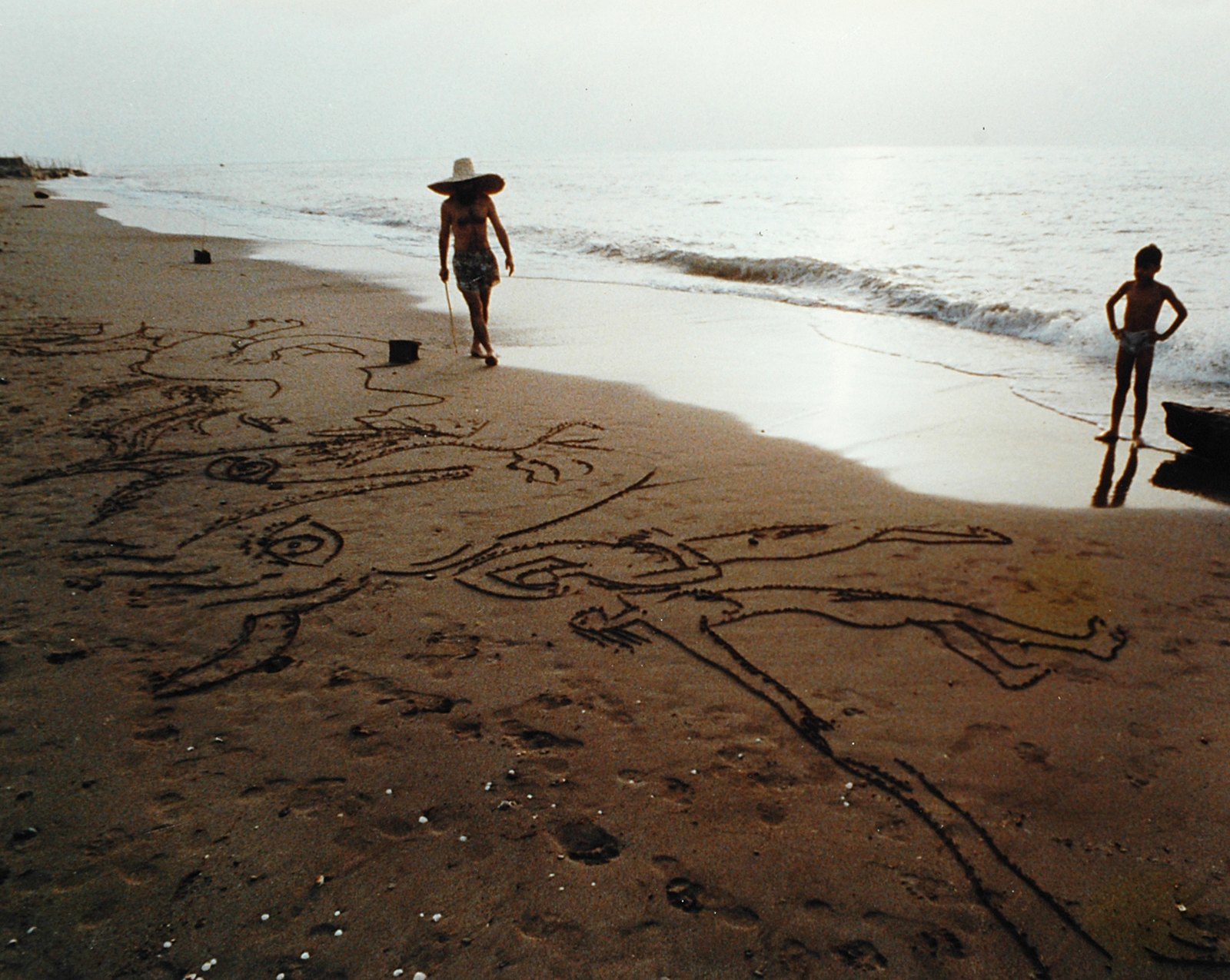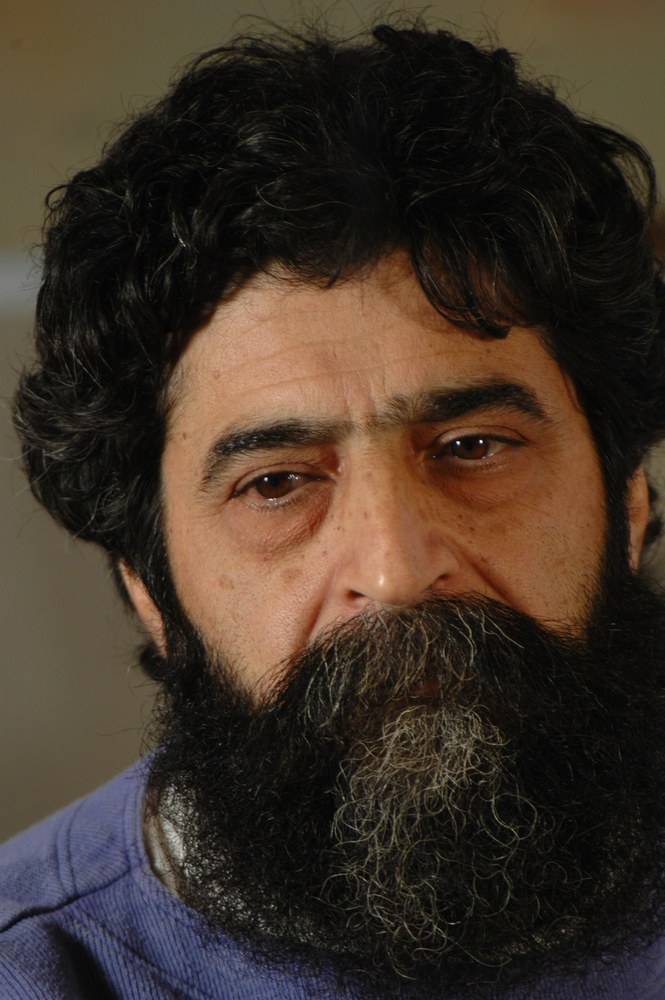
Bahram Dabiri (born 1950, Shiraz) is an Iranian painter and visual artist who studied painting at the University of Tehran’s Faculty of Fine Arts. Drawing on mythology and Iran’s visual heritage, his practice extends from painting to ceramics, metal and textiles.
بهرام دبیری، زادهٔ ۱۳۲۹ در شیراز، نقاش و هنرمند تجسمی ایرانی و دانشآموختهٔ نقاشی از دانشکدهٔ هنرهای زیبای دانشگاه تهران است. کار او با الهام از اسطورهها و میراث تصویری ایران، از نقاشی تا سرامیک، فلز و بافتهها گسترش مییابد.
Biography: the artist’s official website
Film
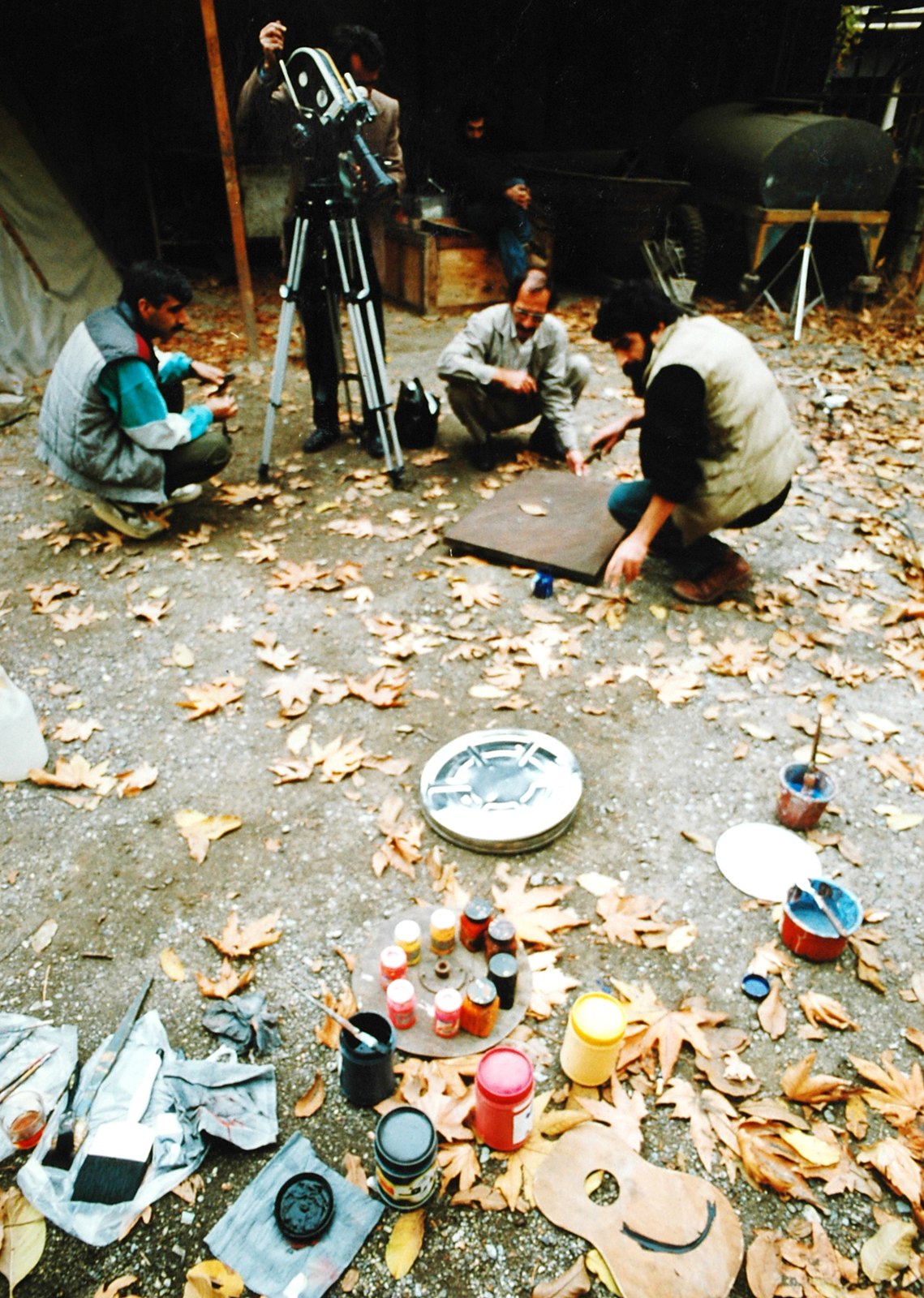
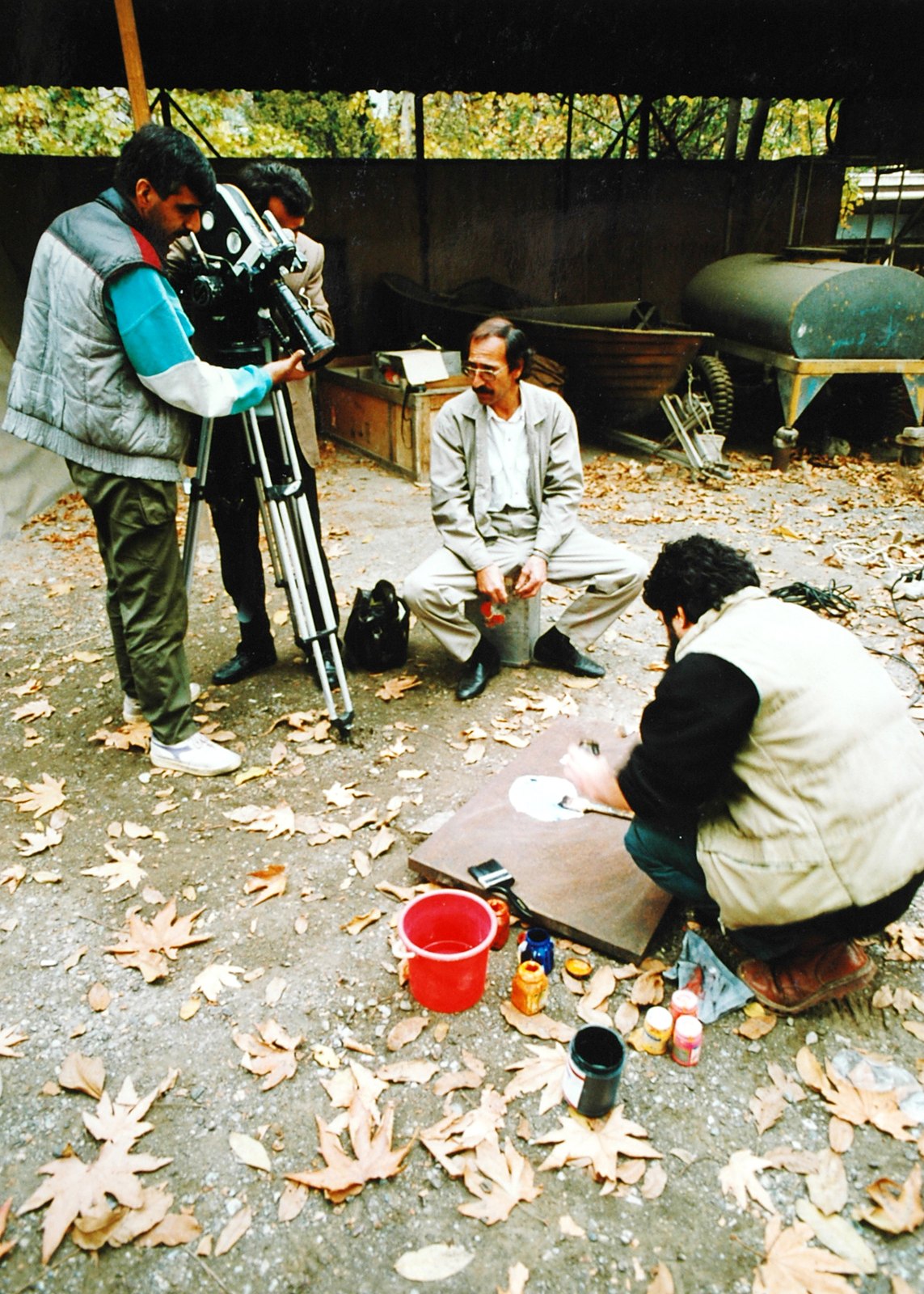
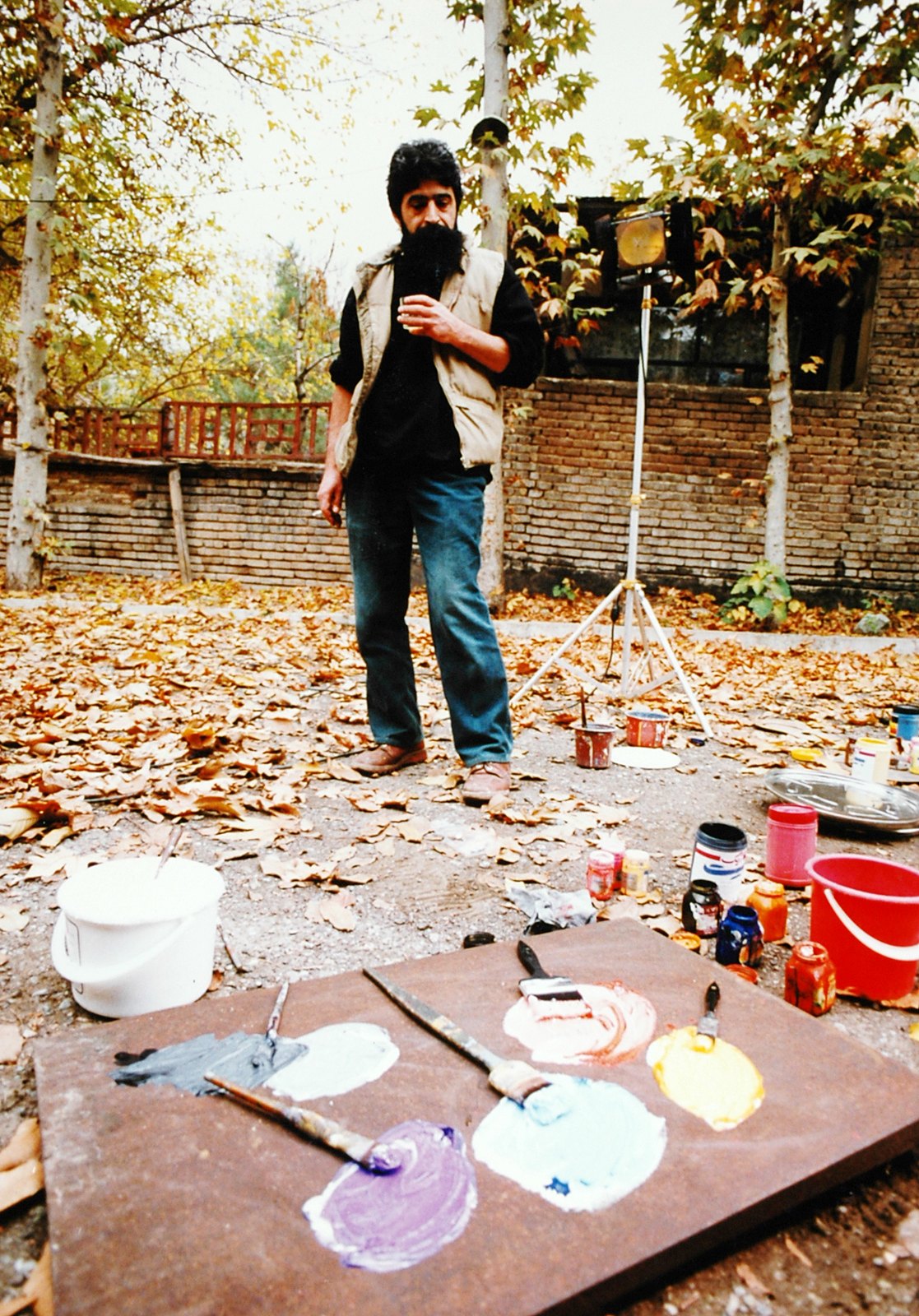
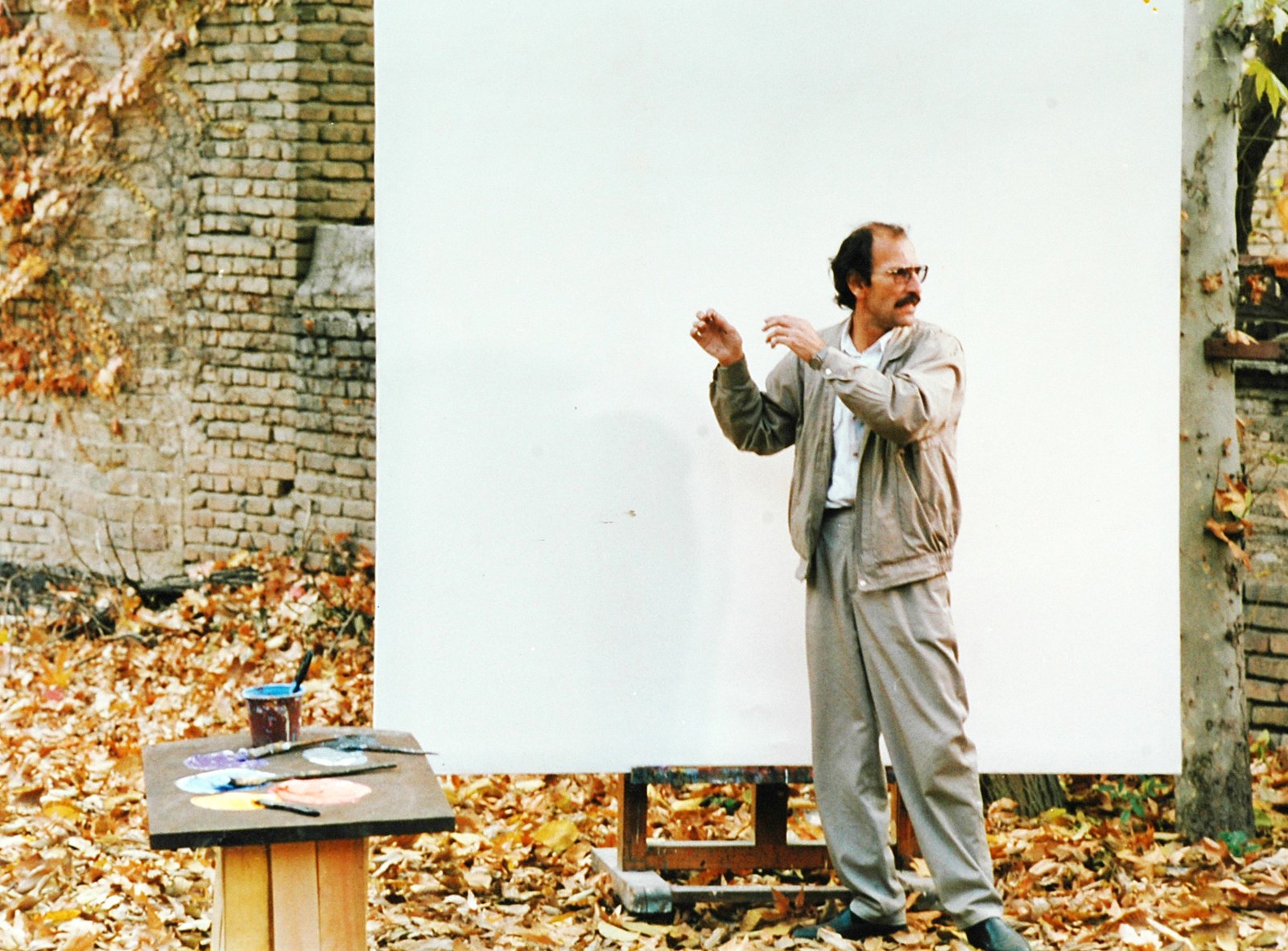
Palette and Clay · Film and interview by Farivar Hamzeyi
Watch on YouTube
Interview
Edited from the Persian interview transcript for clarity and readability. English translation. The film’s narration is identified separately.
Line, form and the past
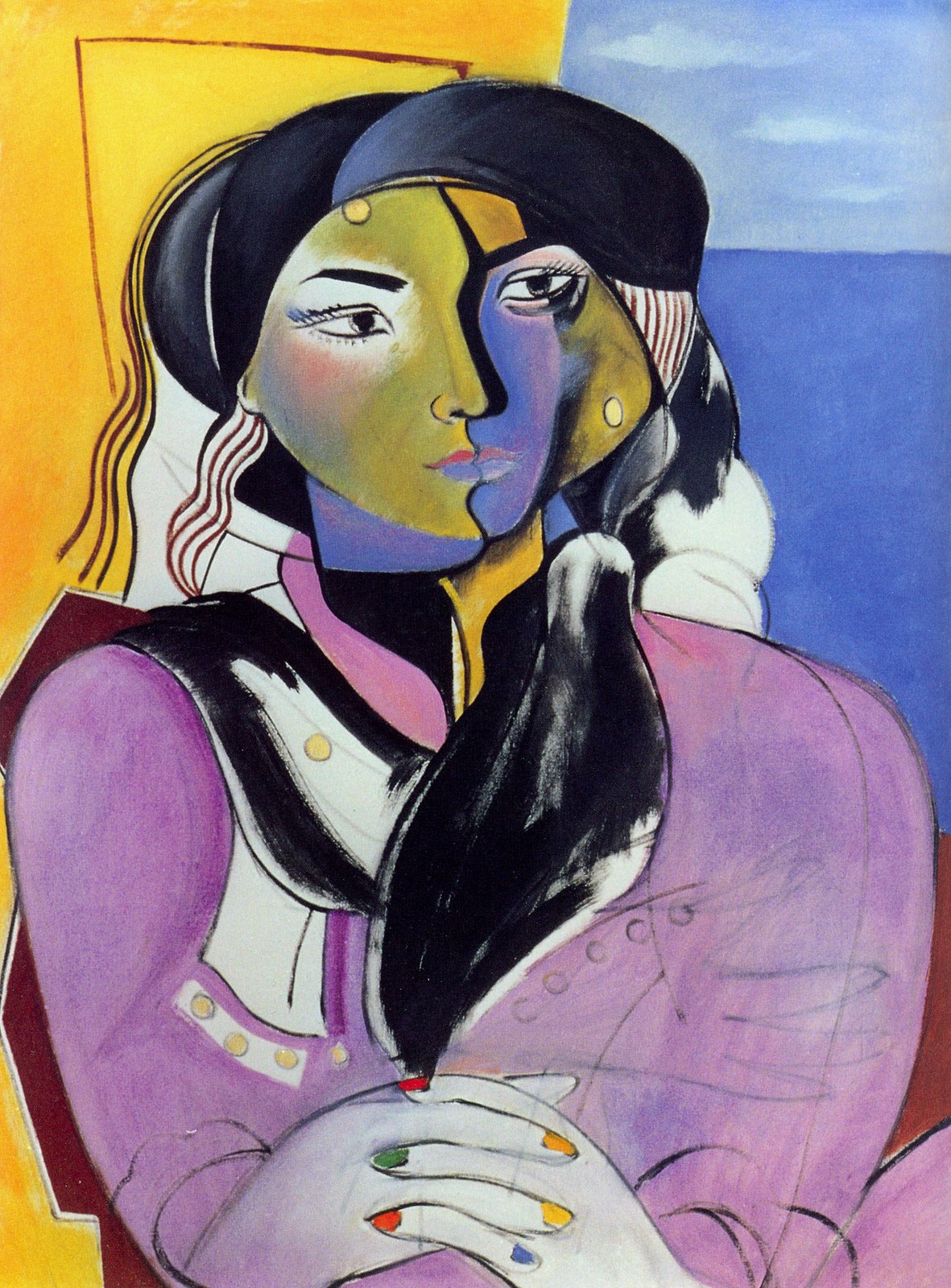
I was born in Shiraz in 1950. I have never been a Cubist painter in the strict sense, but Cubism taught me a great deal about volume, form and their arrangement within a painting. Its structural approach to drawing helped me understand how a work holds together.
Before the revolution, there were attempts to define an Iranian painting through familiar signs: women with joined eyebrows, particular cushions and other historical details. That is not how I understand the past. My attention is directed less toward Safavid or Qajar motifs than toward the painting and image-making of pre-Islamic Iran.
Show MoreShow Less
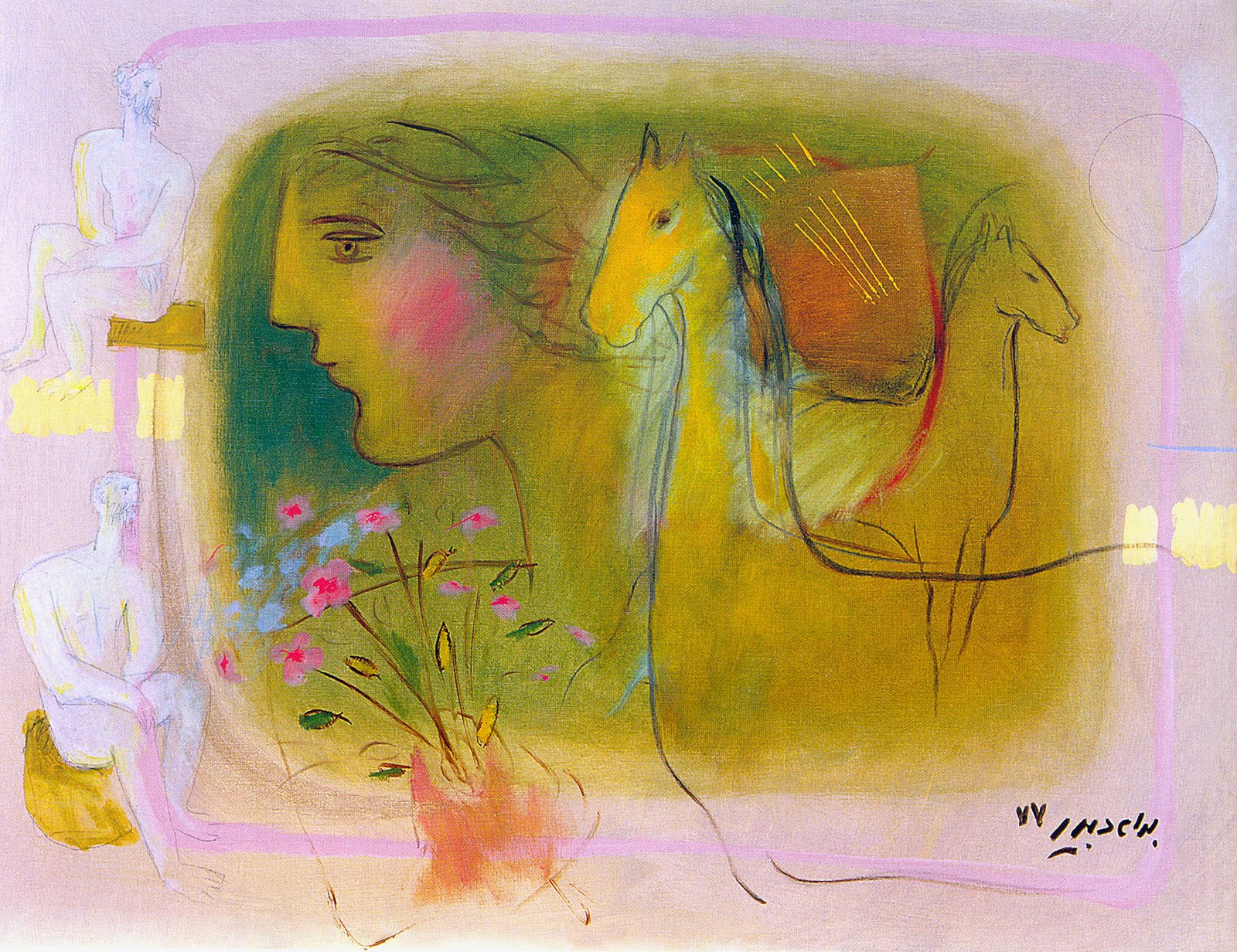
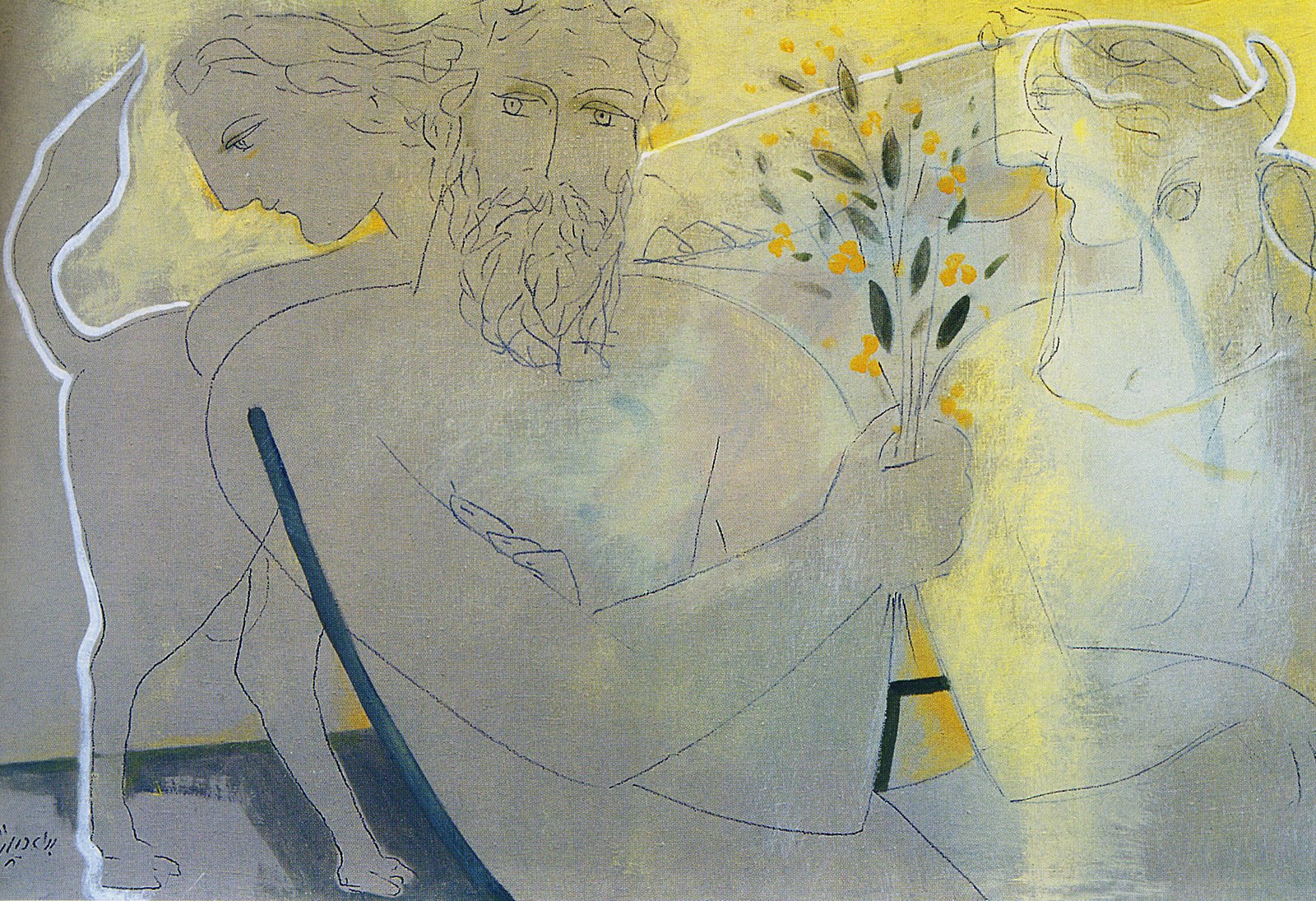
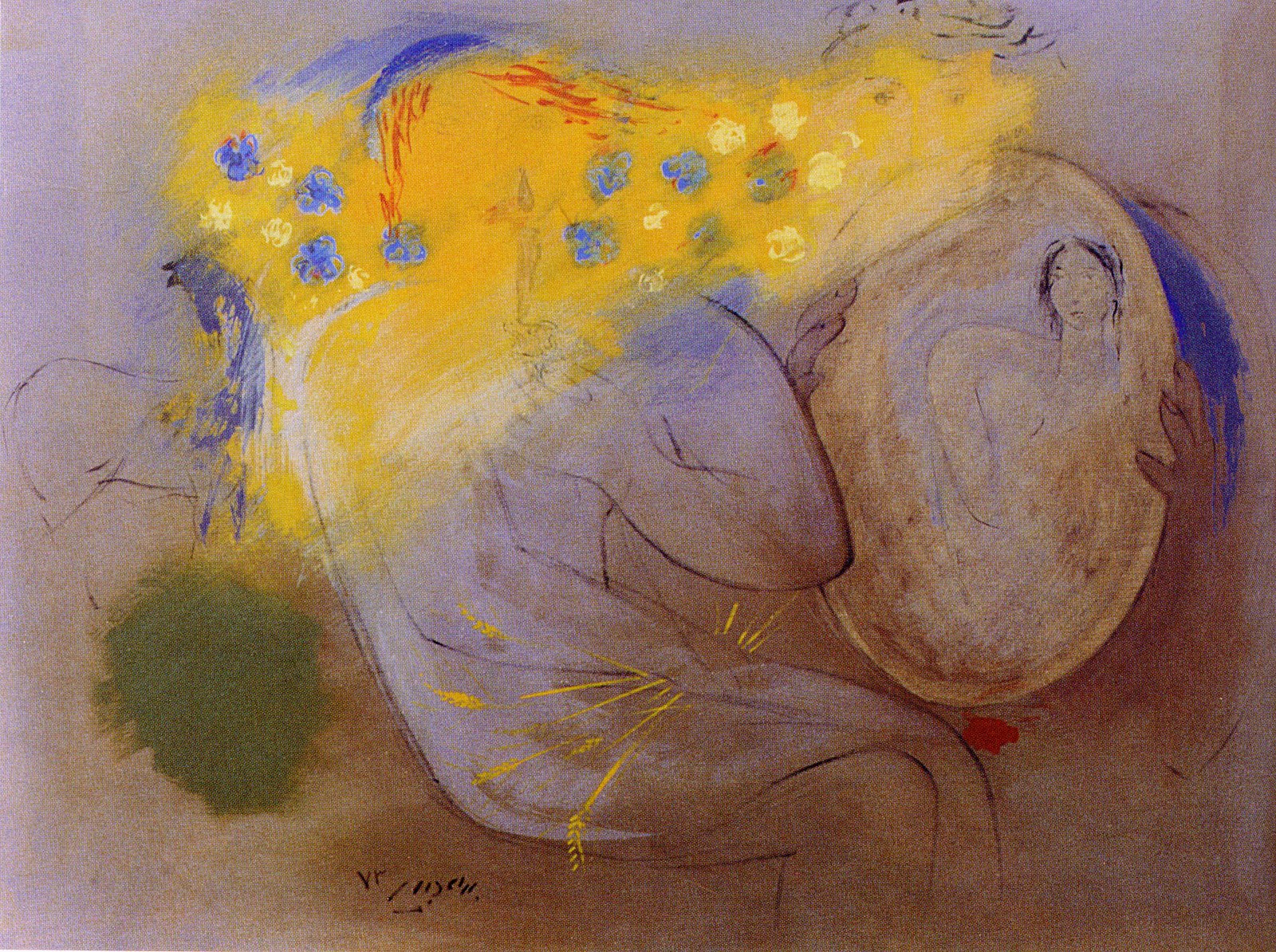
I spent a period reading mythology, not only Iranian myths but those of other cultures, especially Egypt. Their meanings, faces and signs became important to me: horses, ears of wheat and the ways such forms were represented.
Drawing and a continuous history
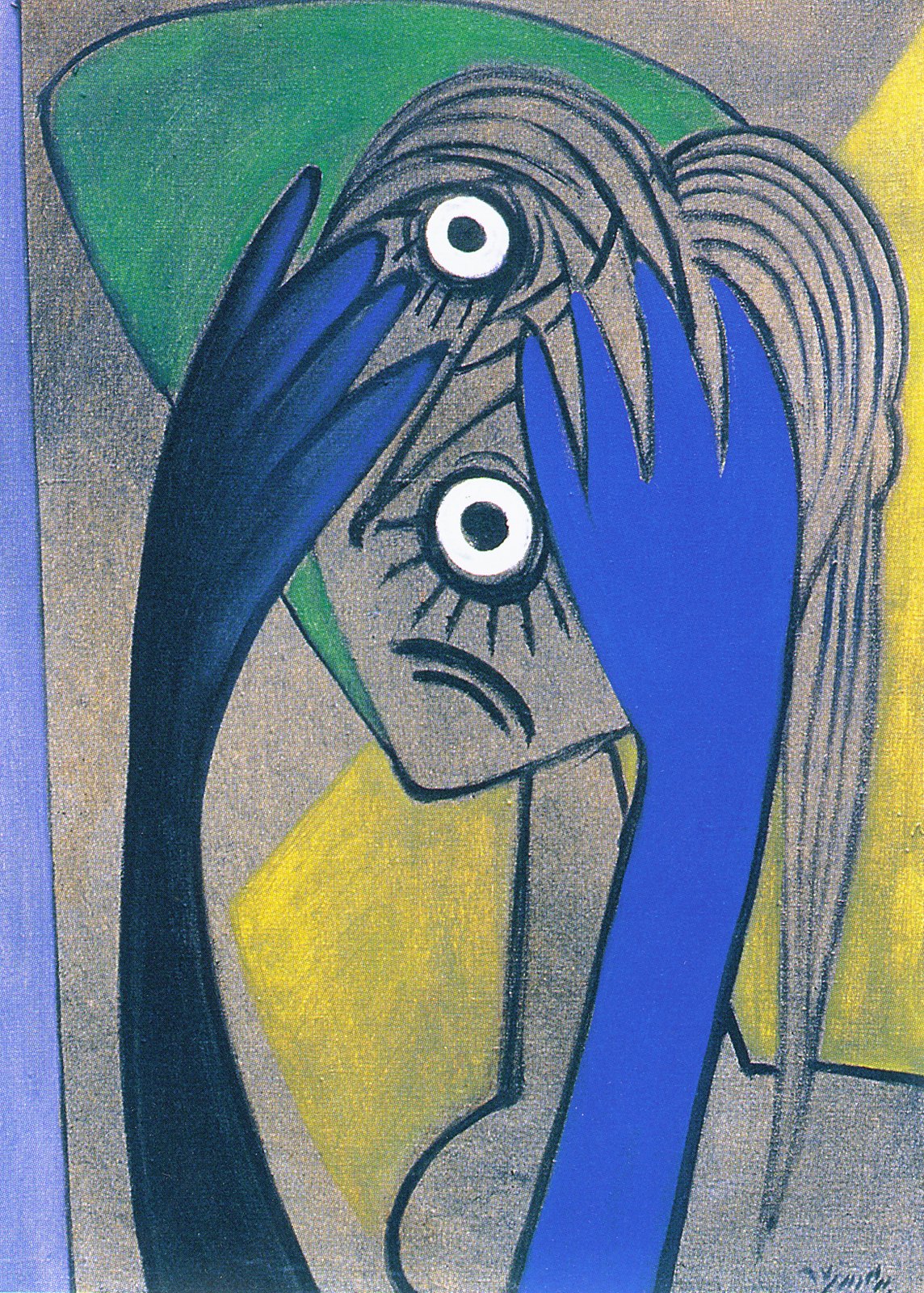
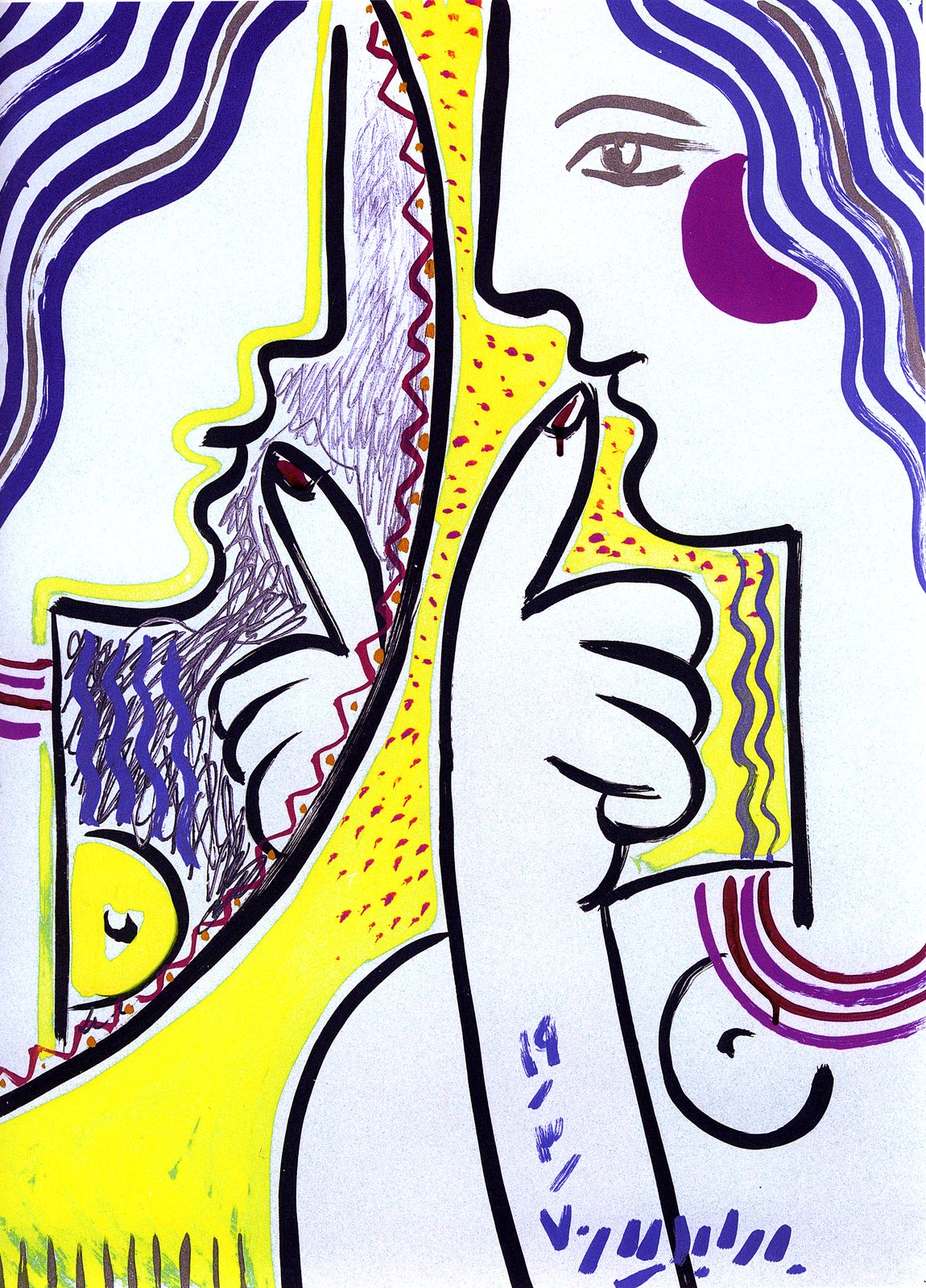
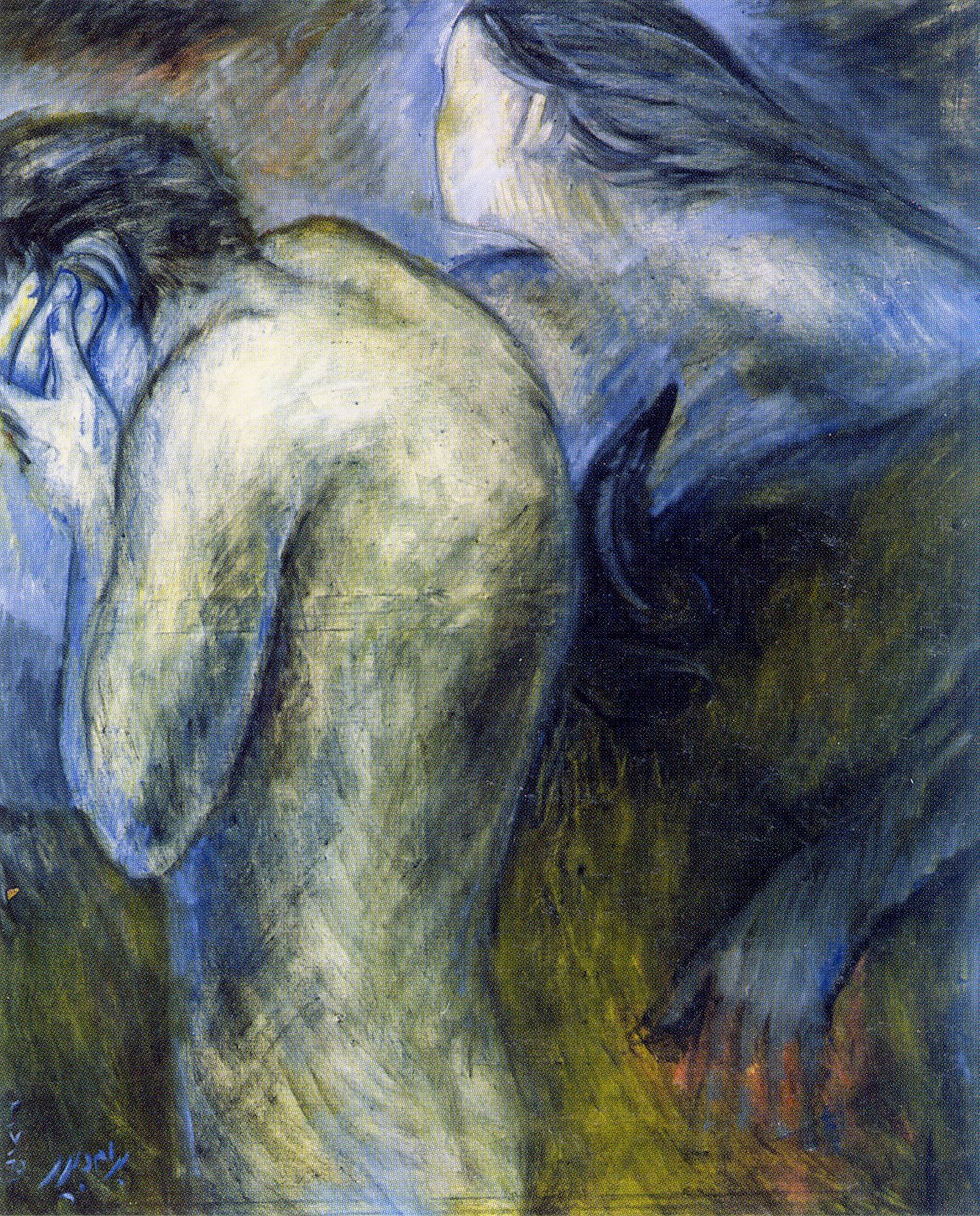
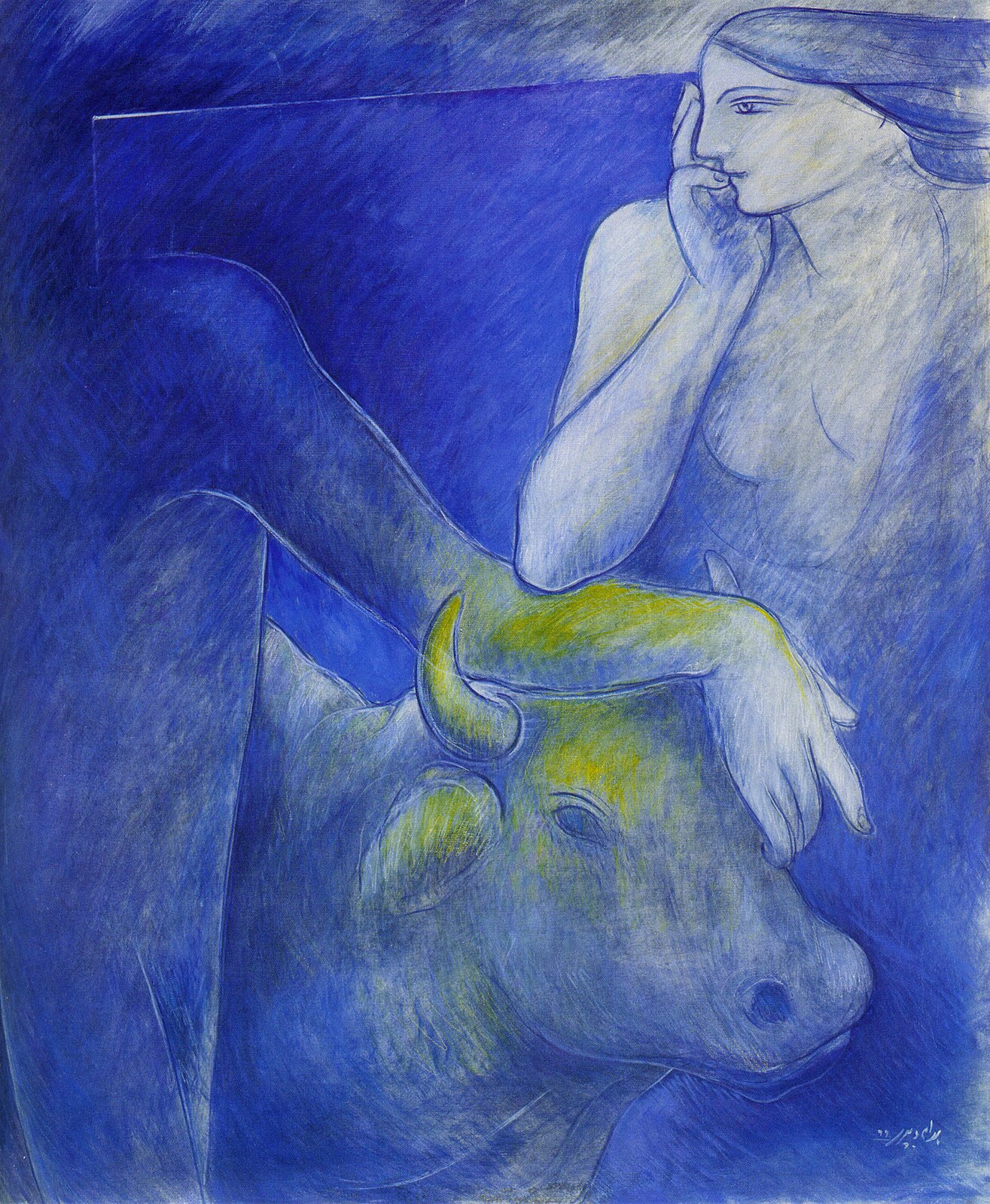
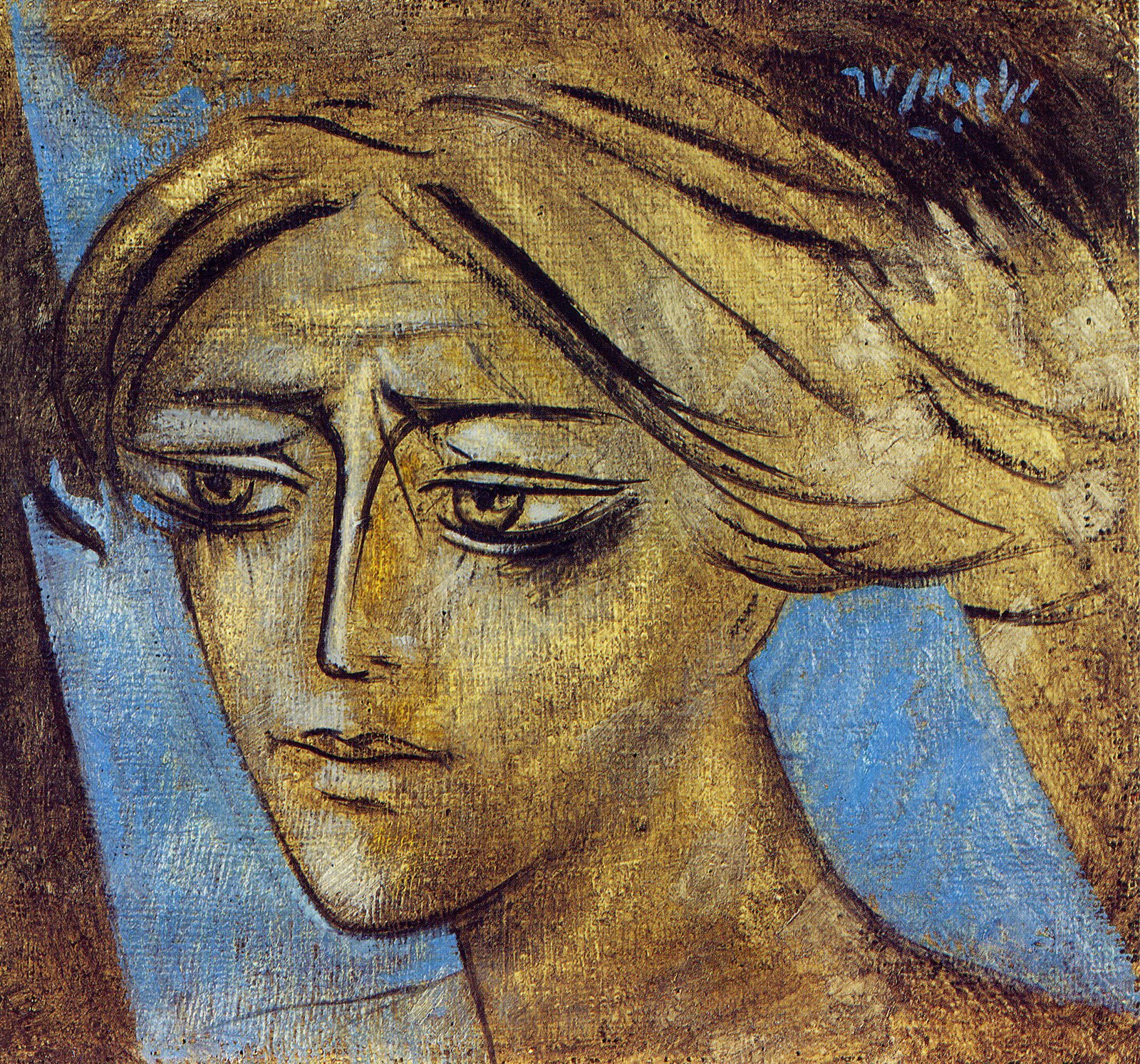
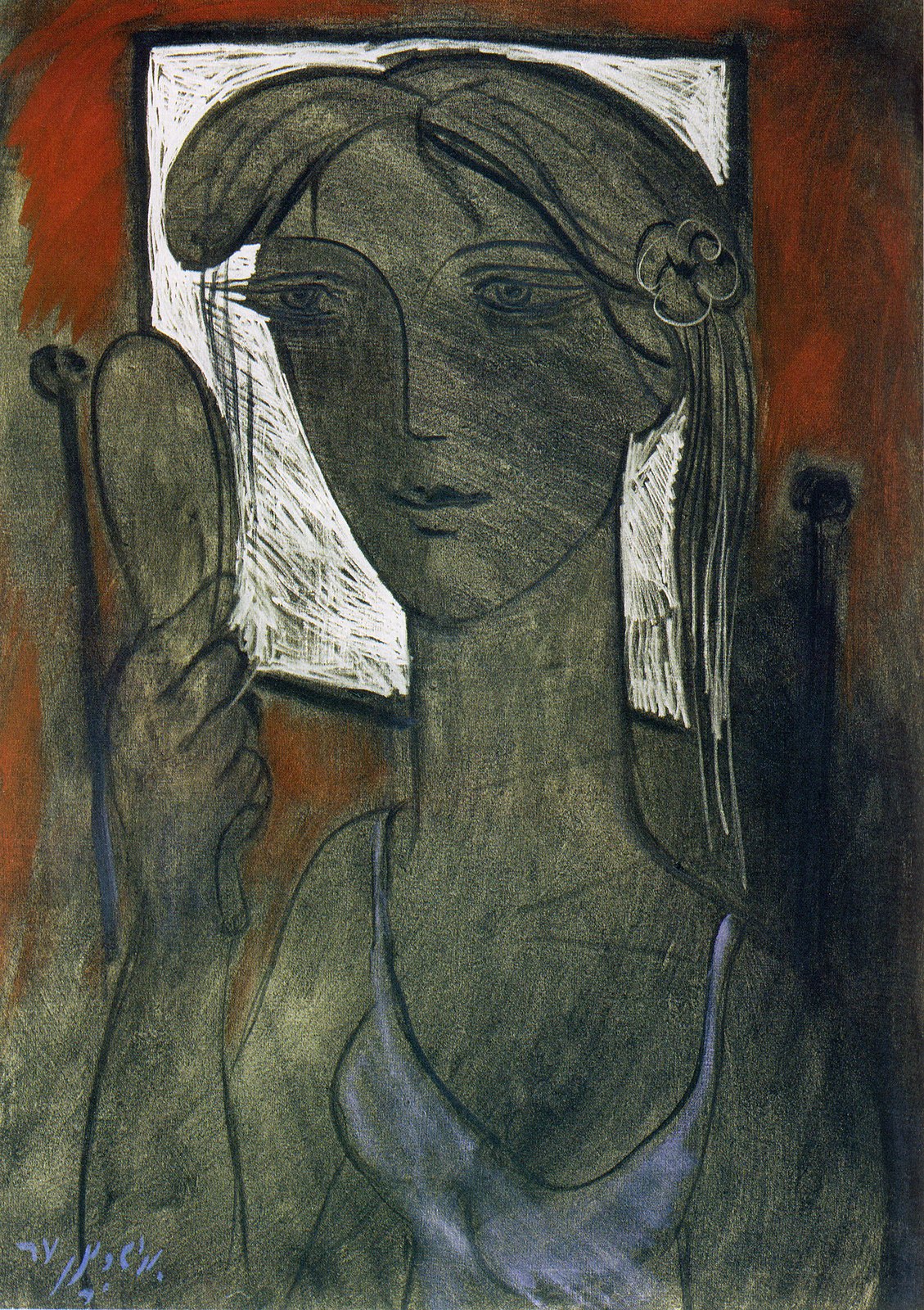
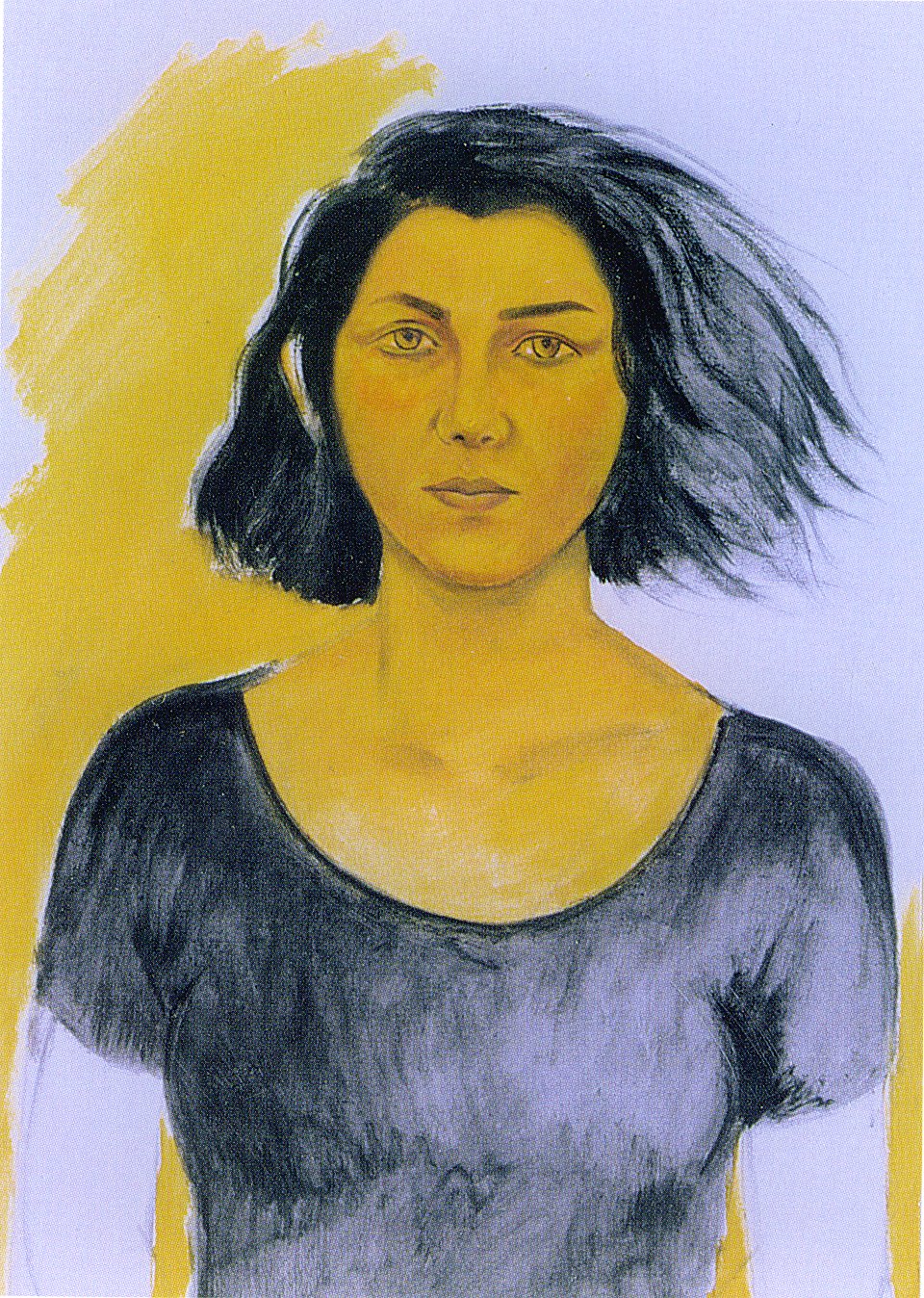
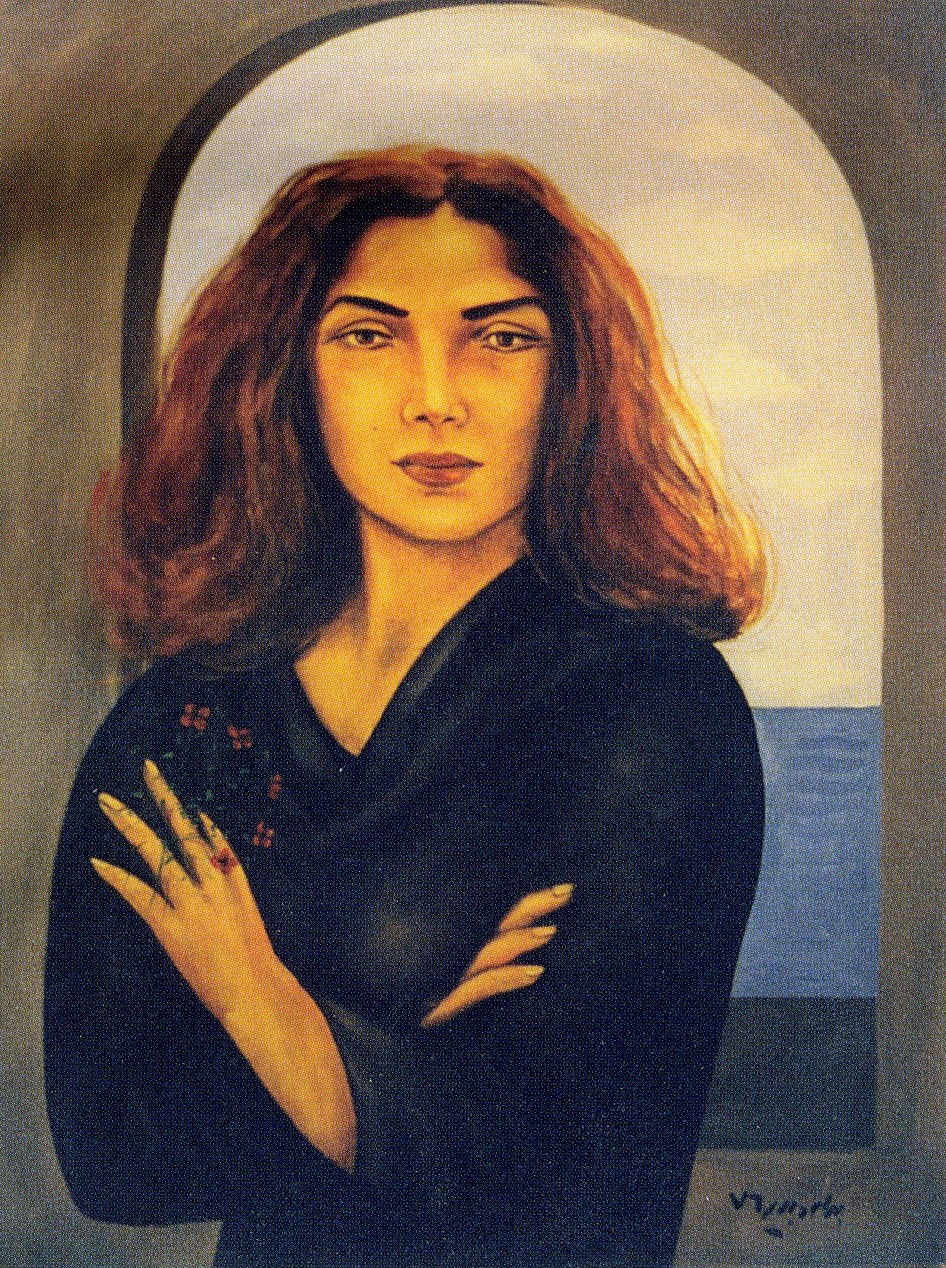
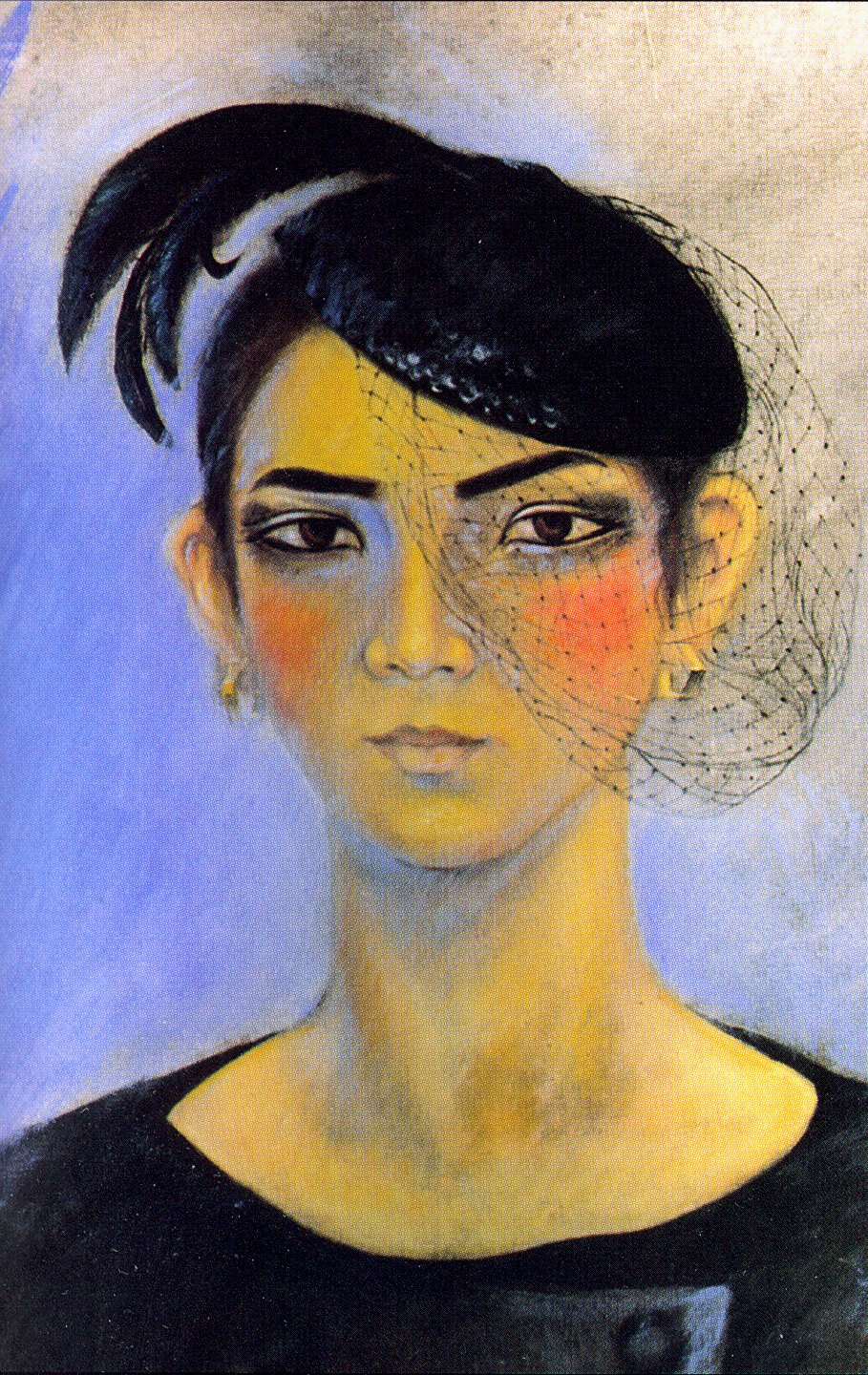
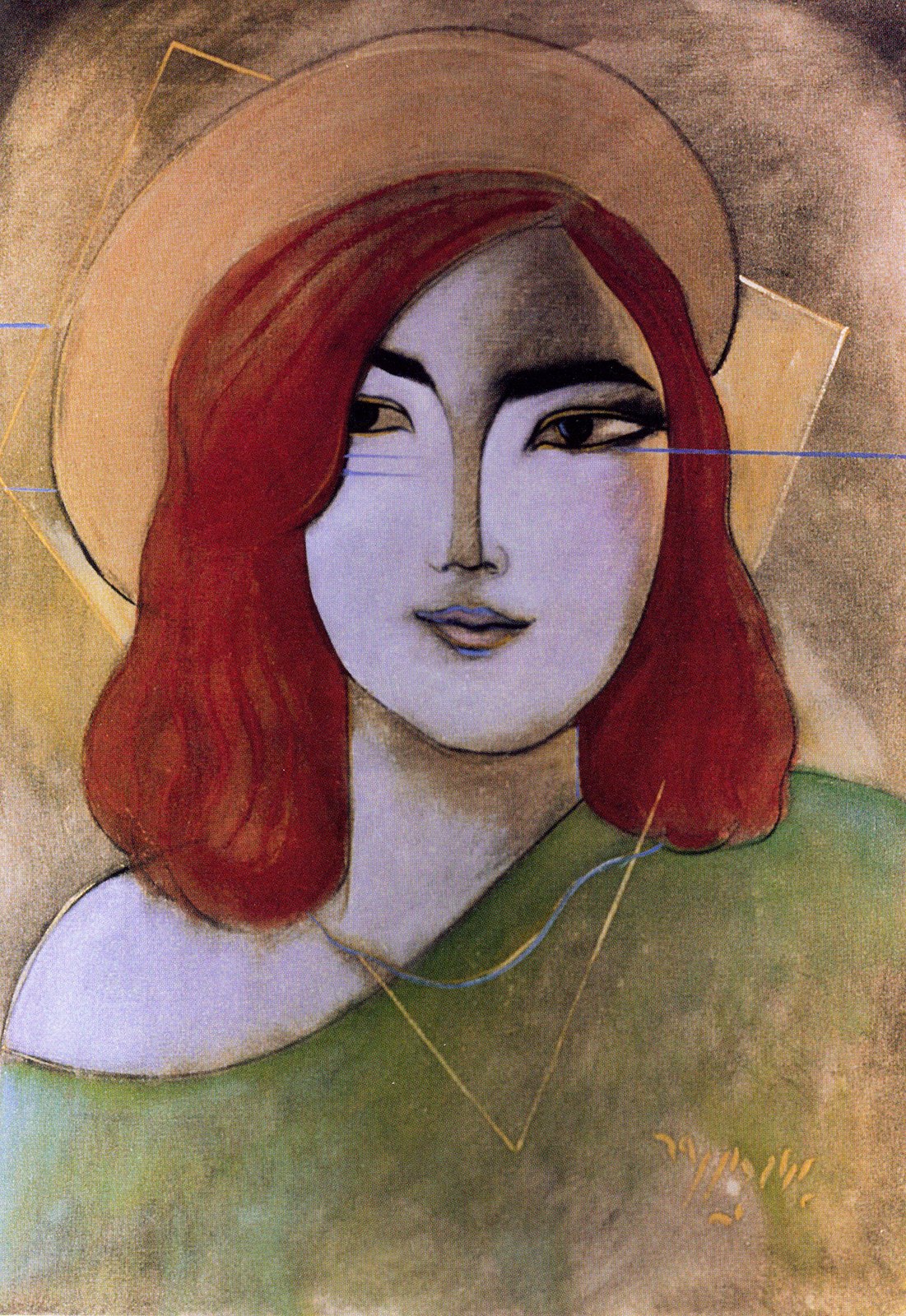
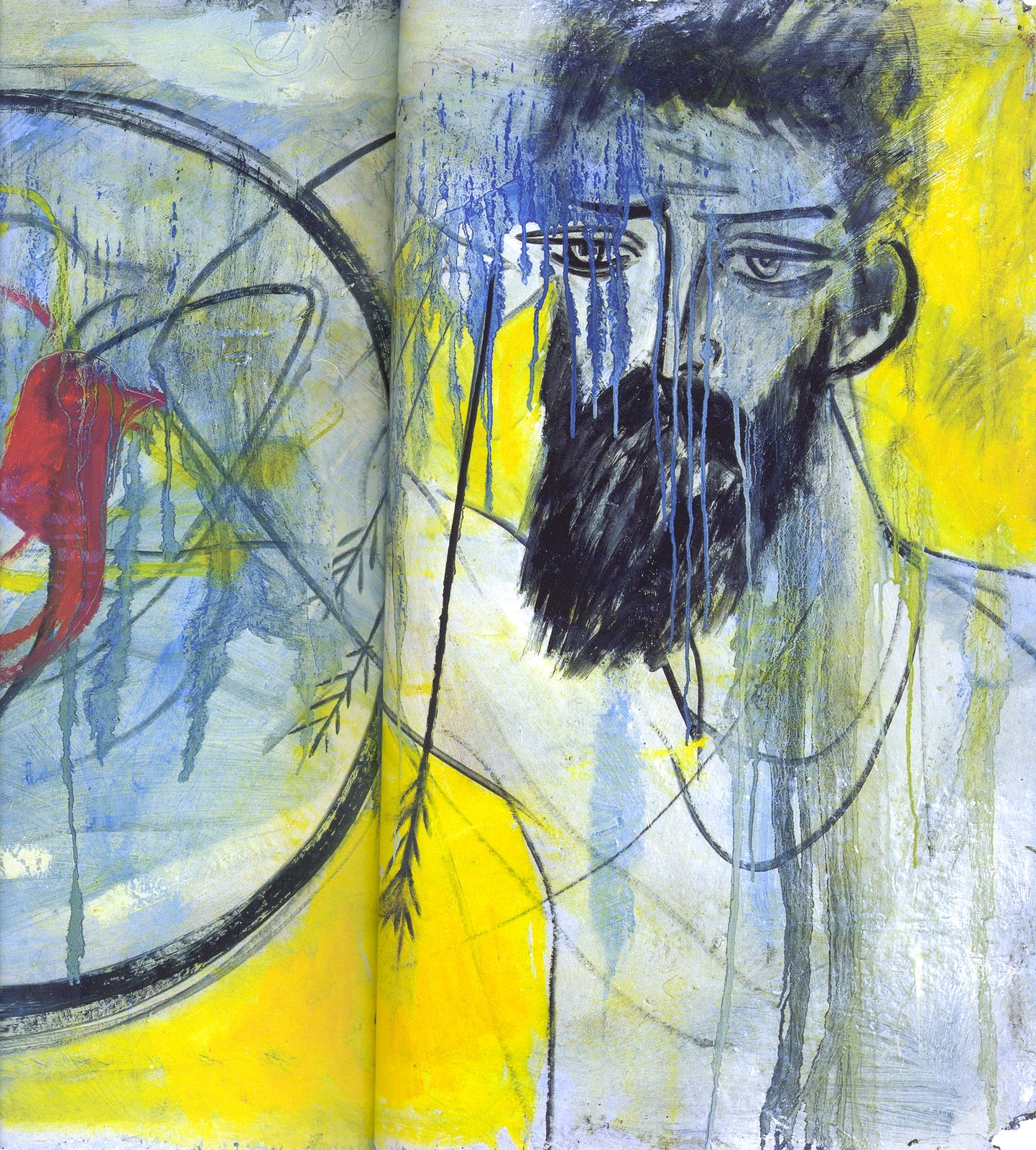
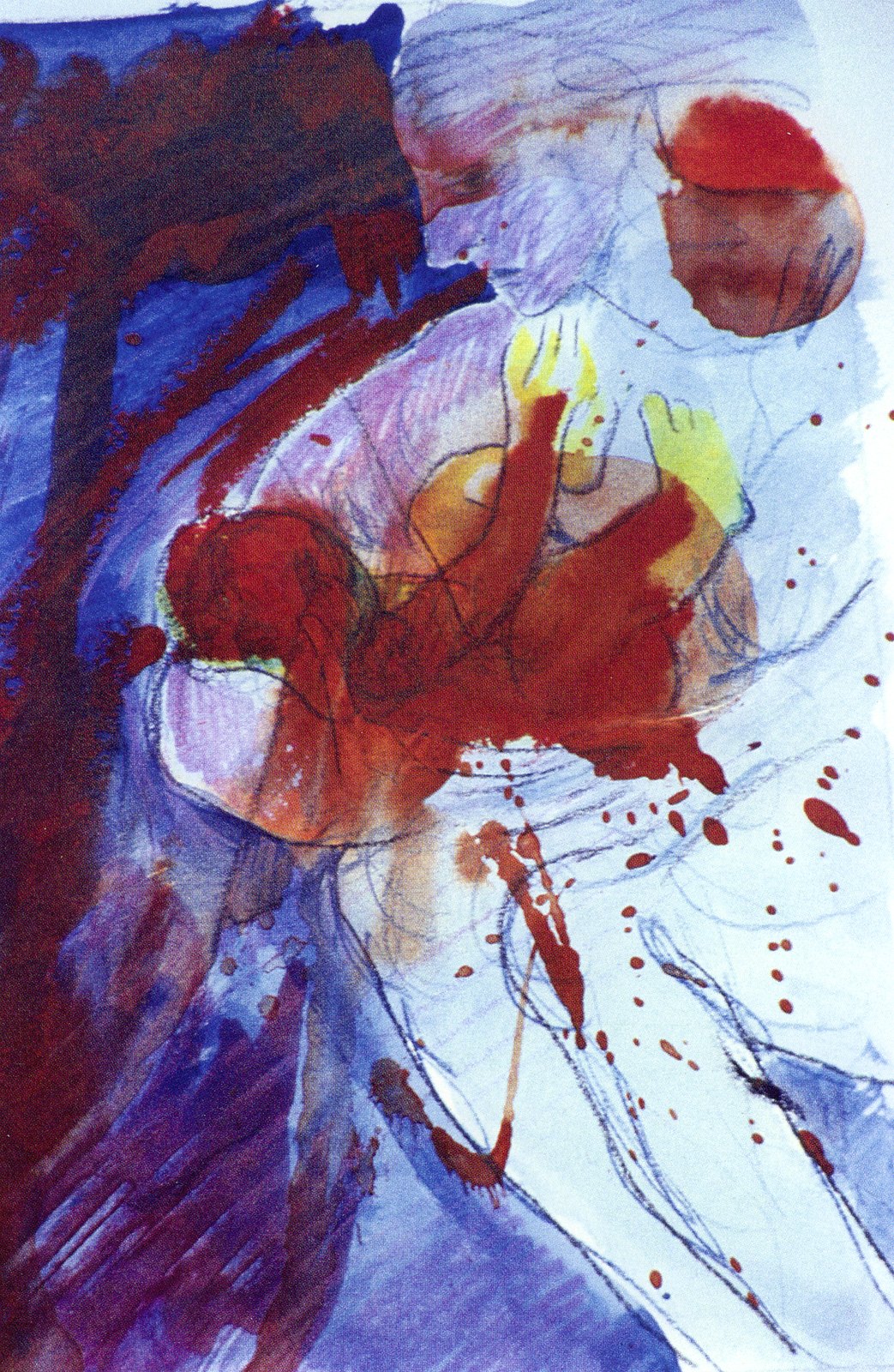
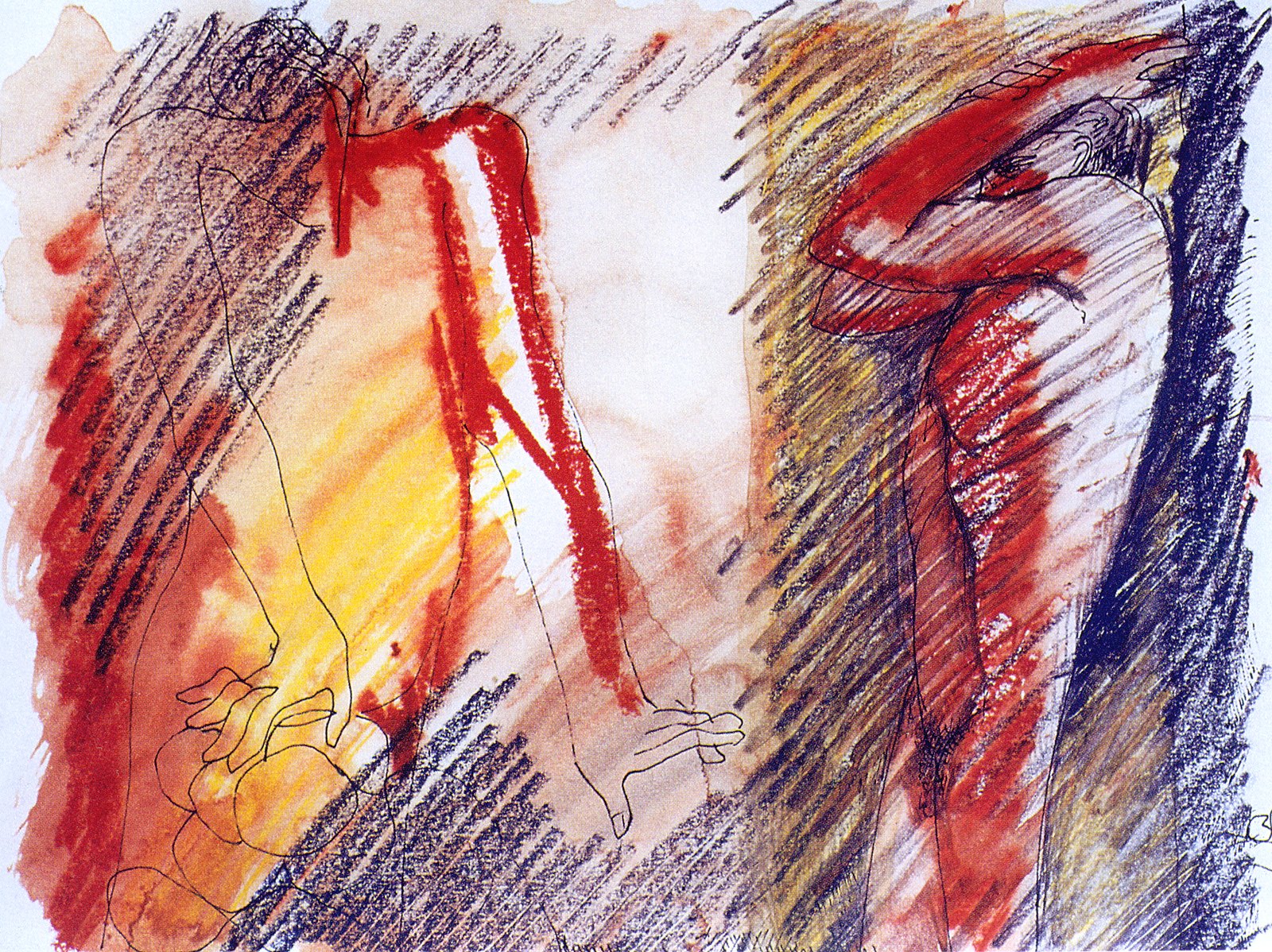
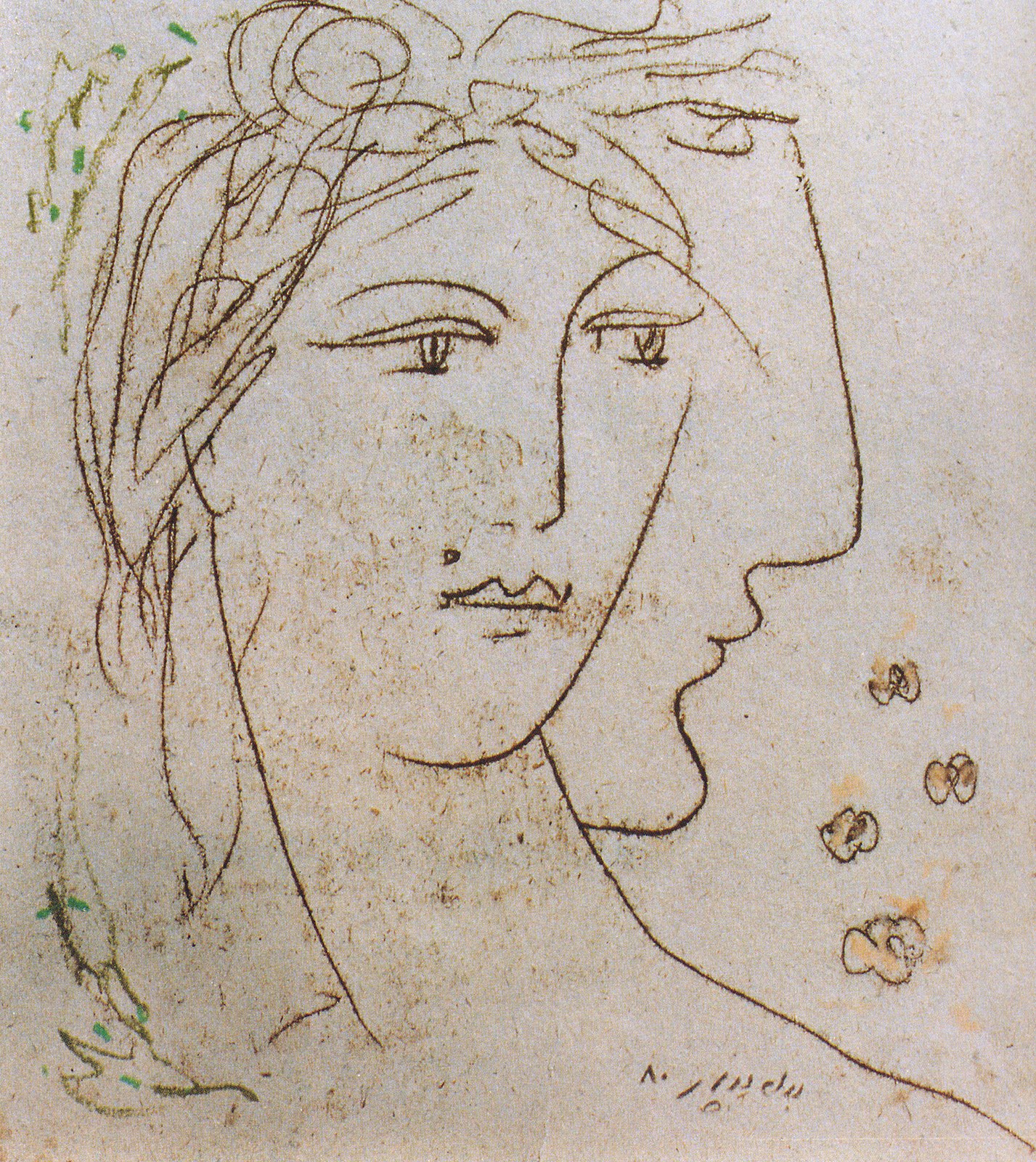
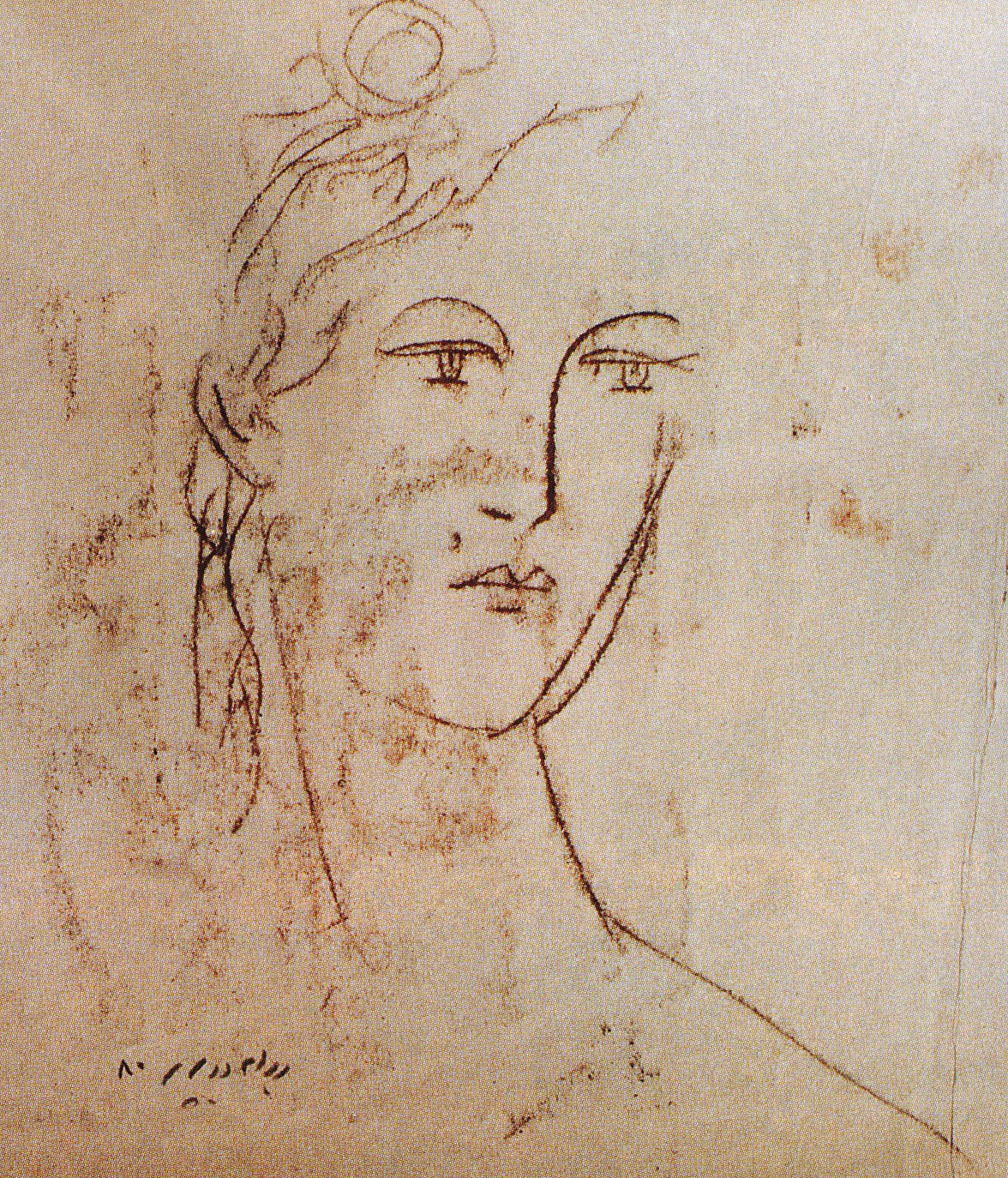
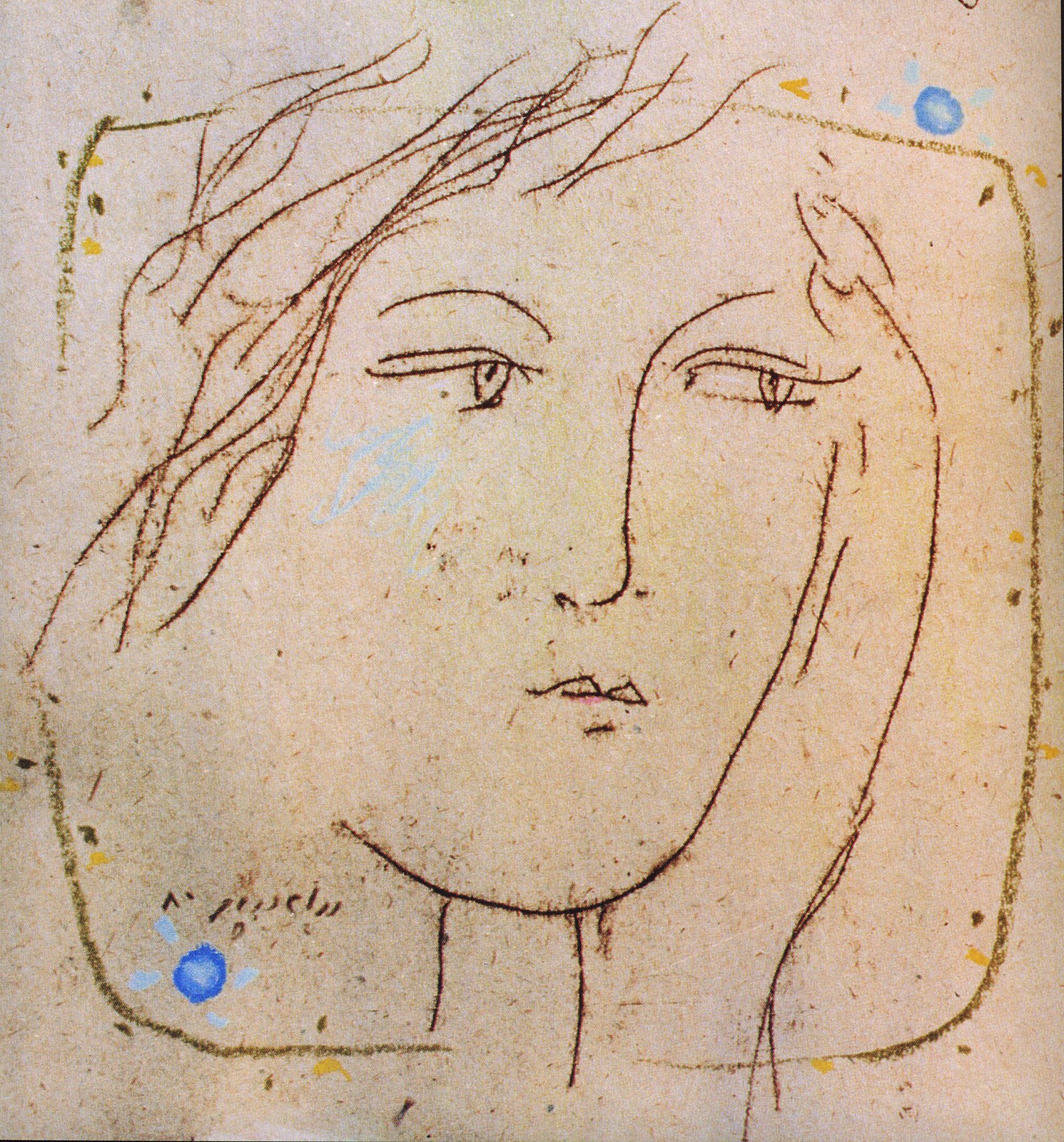
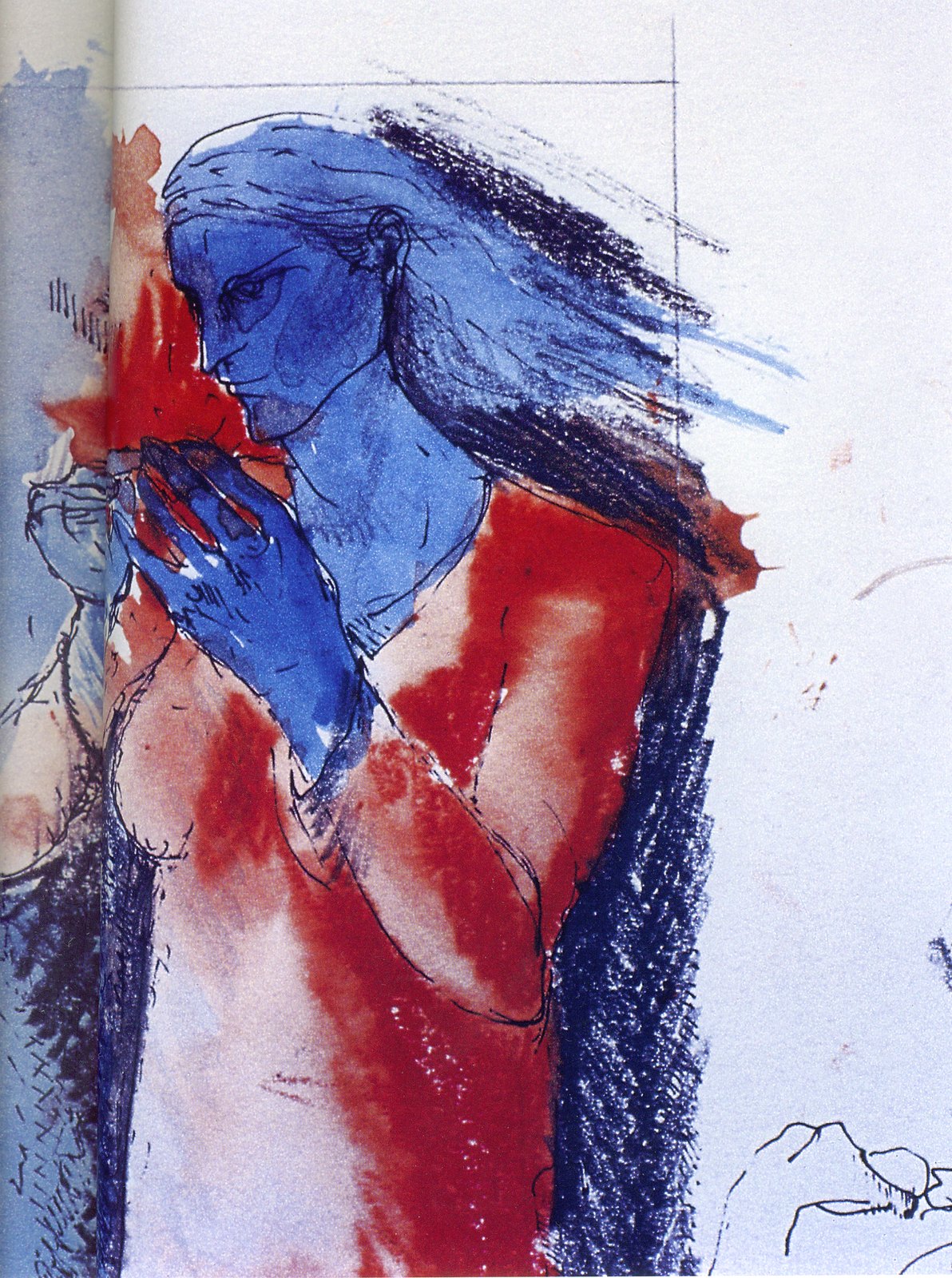
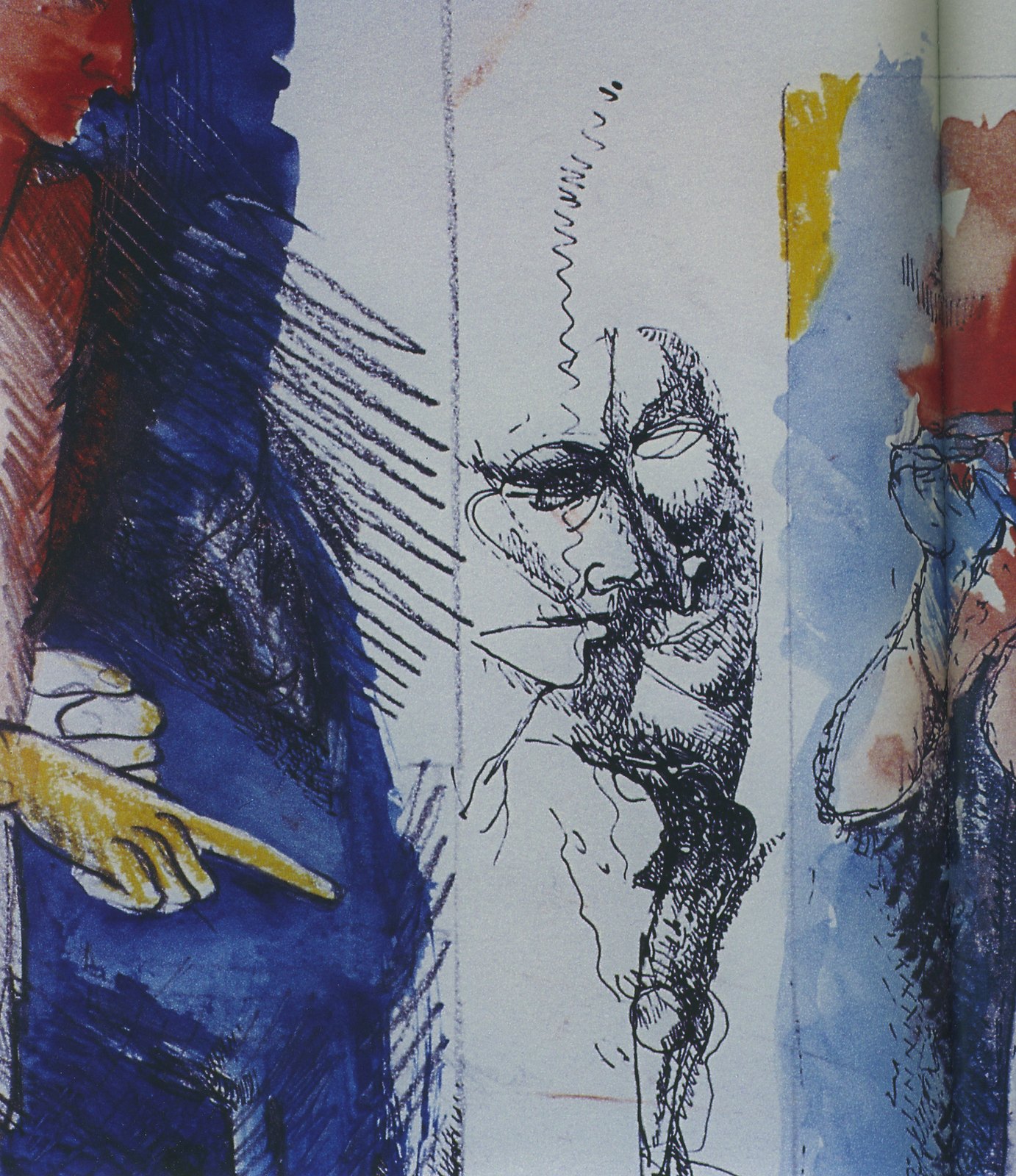
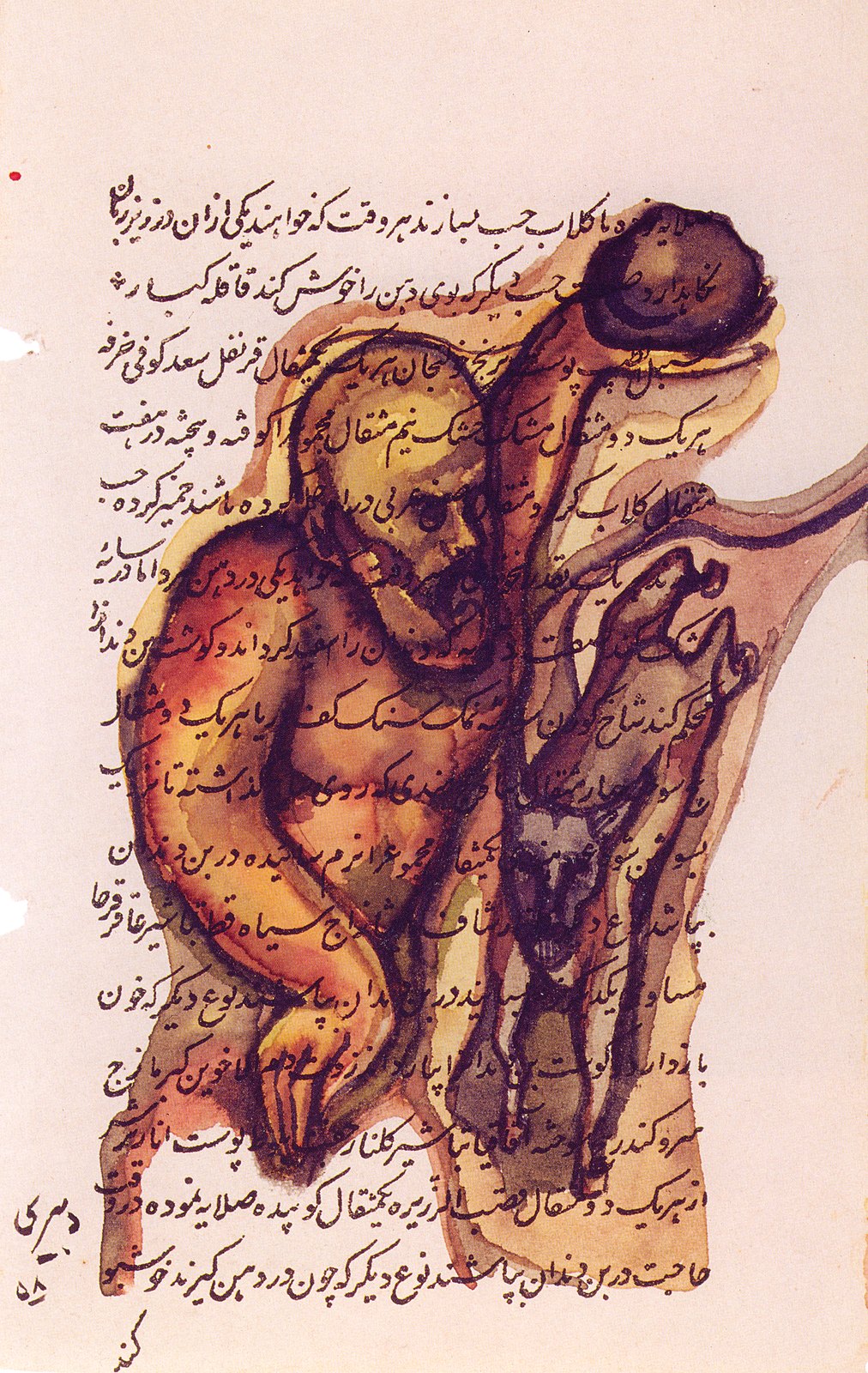
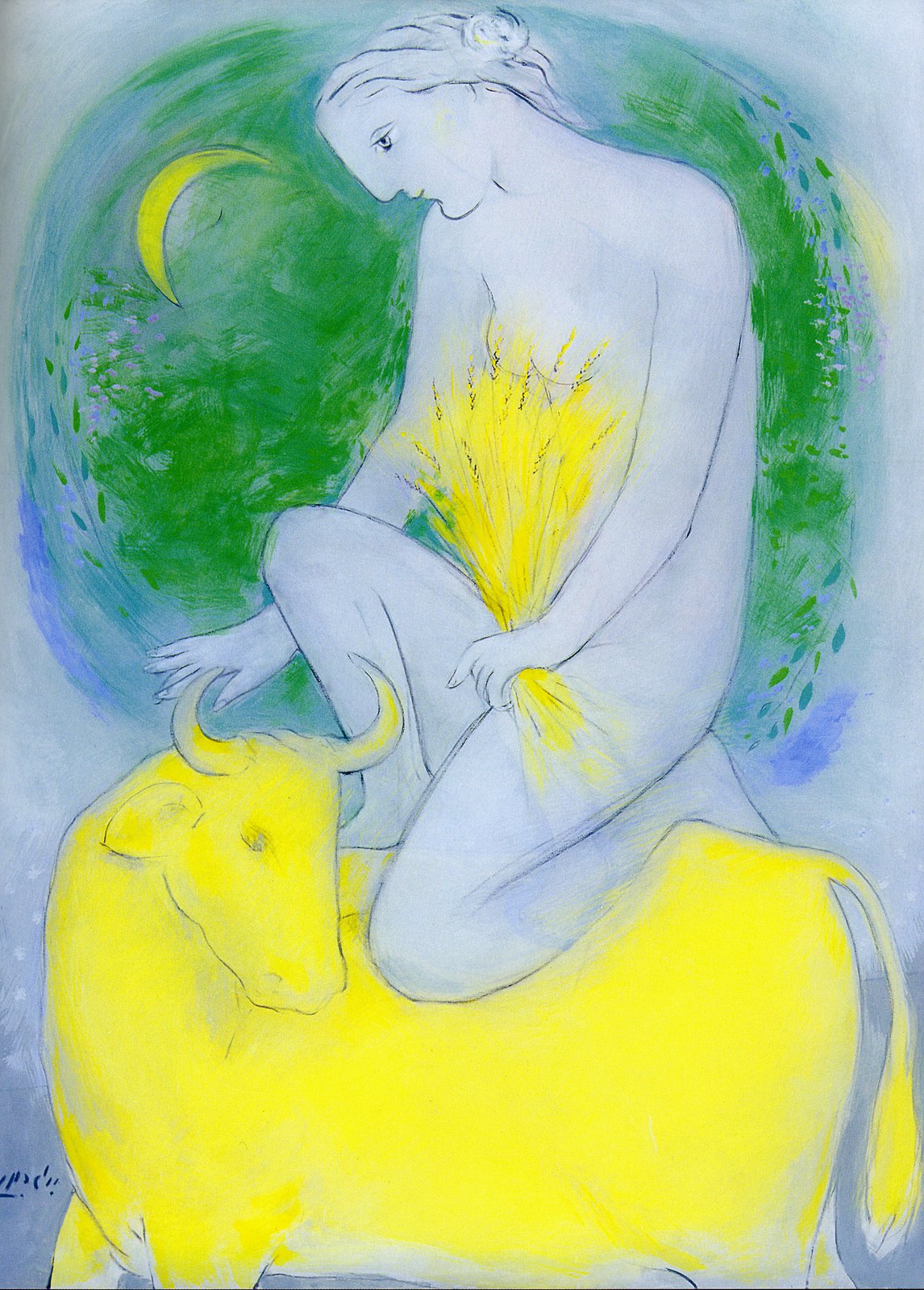
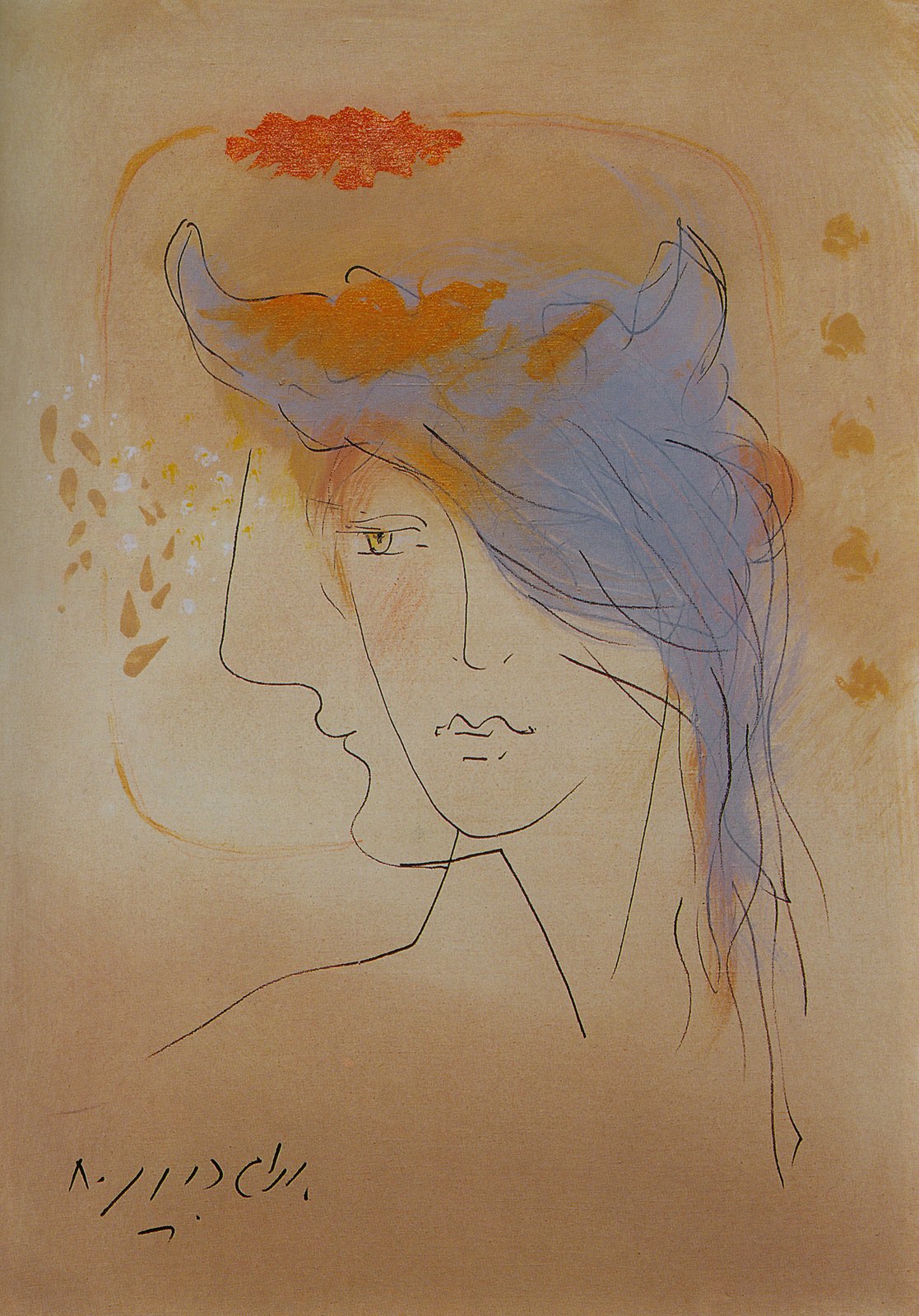
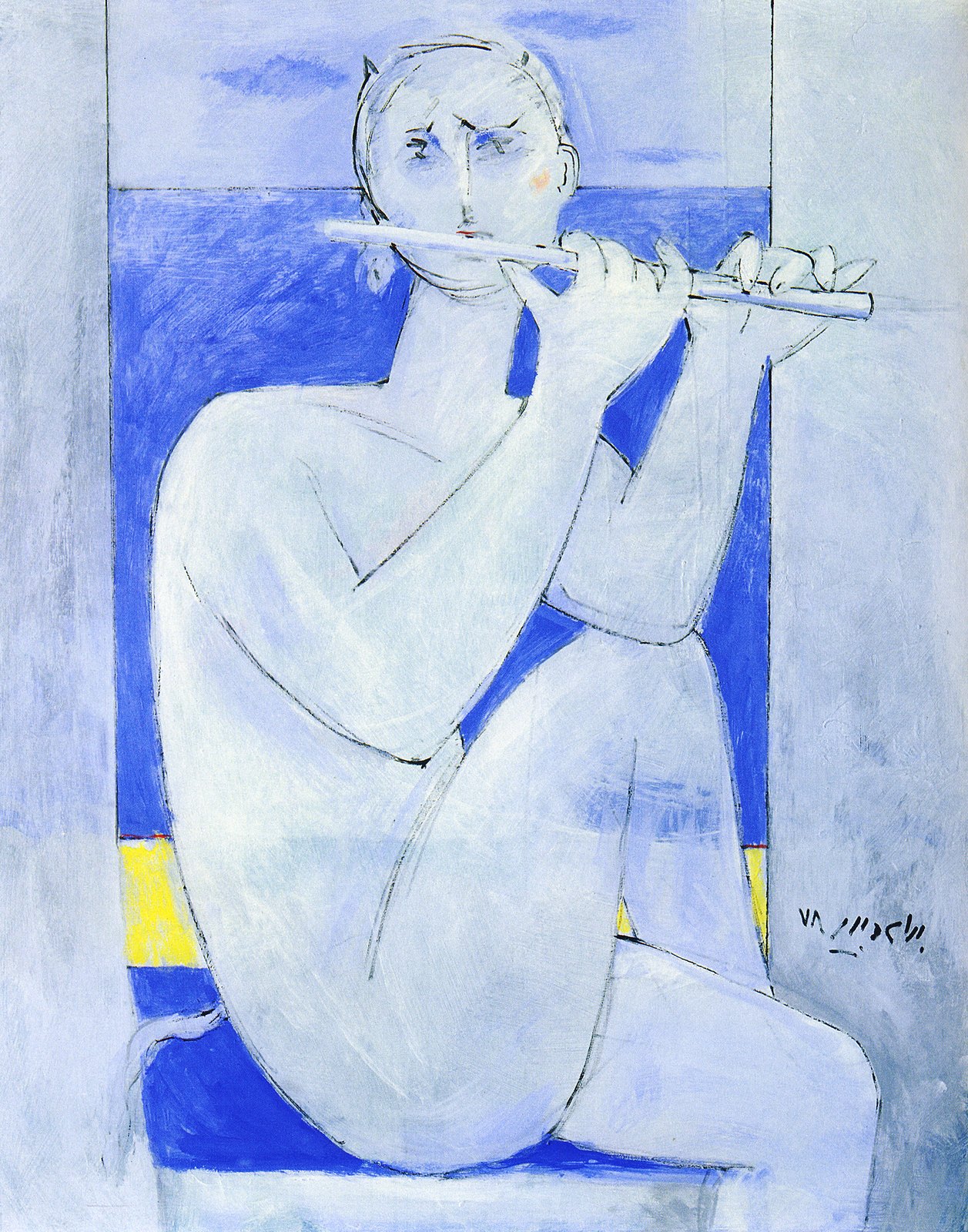
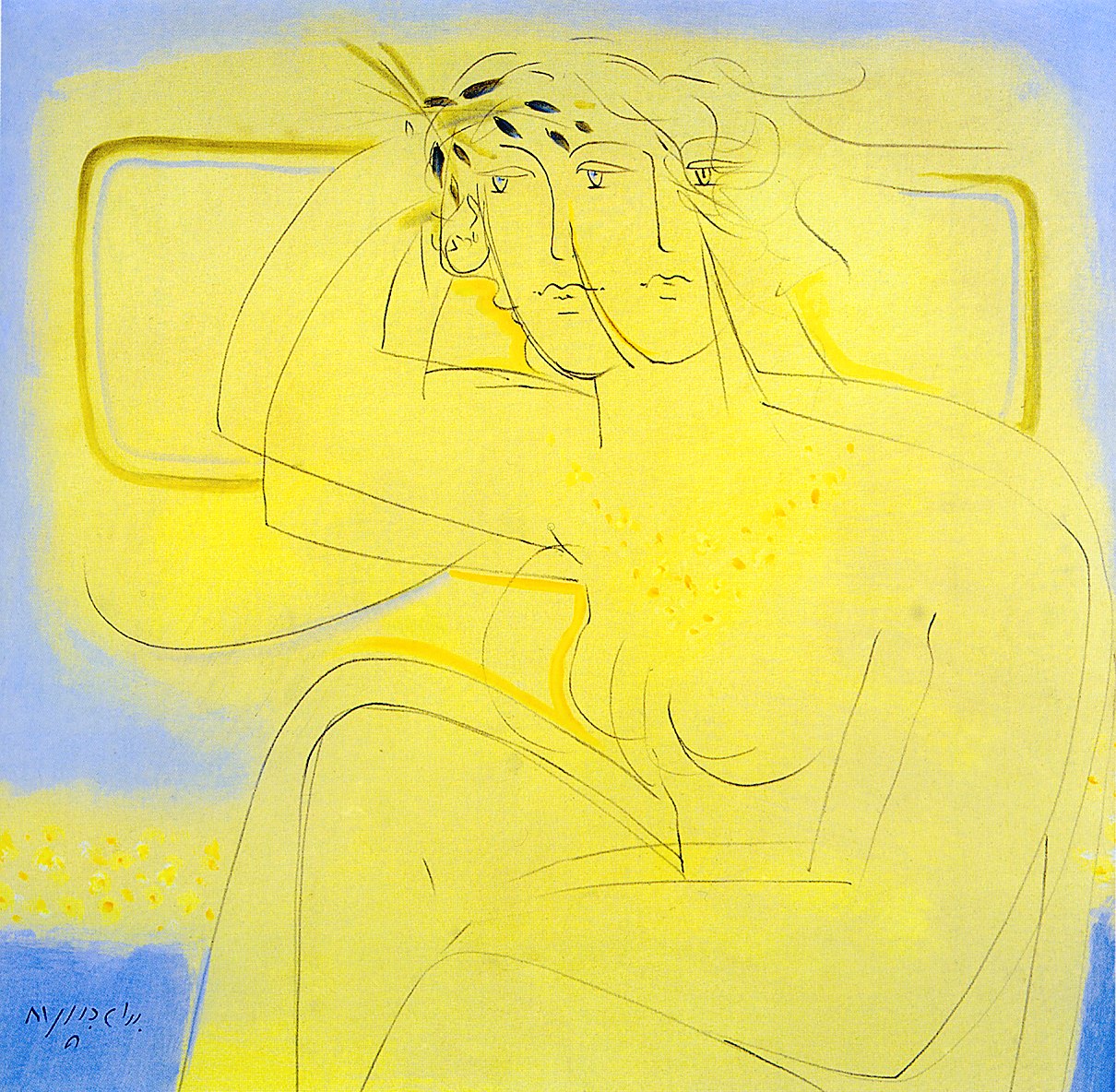
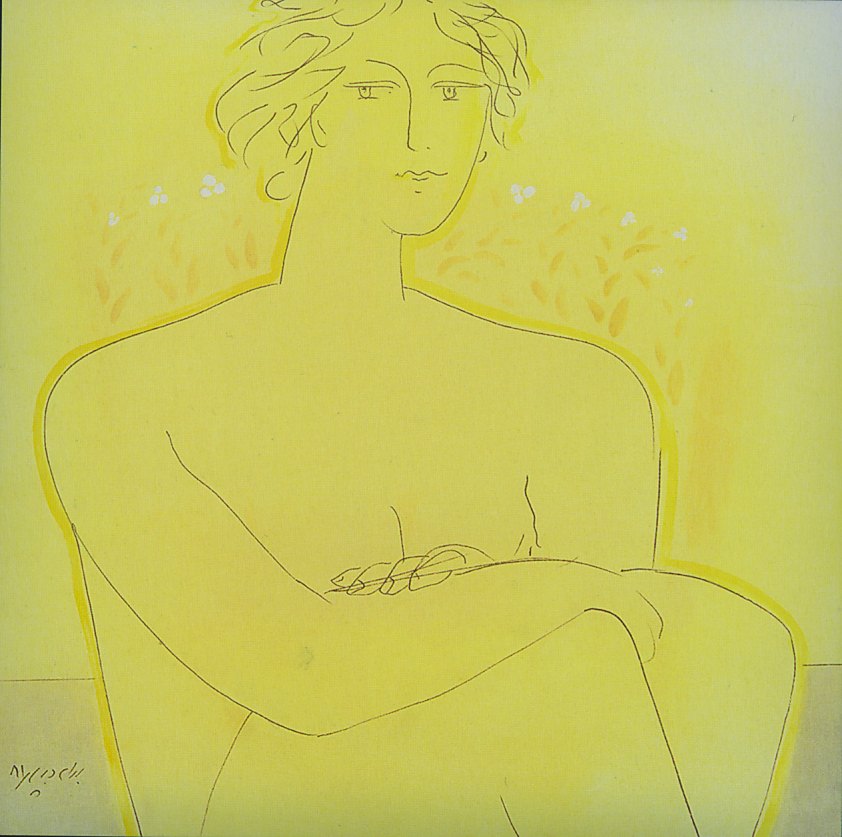
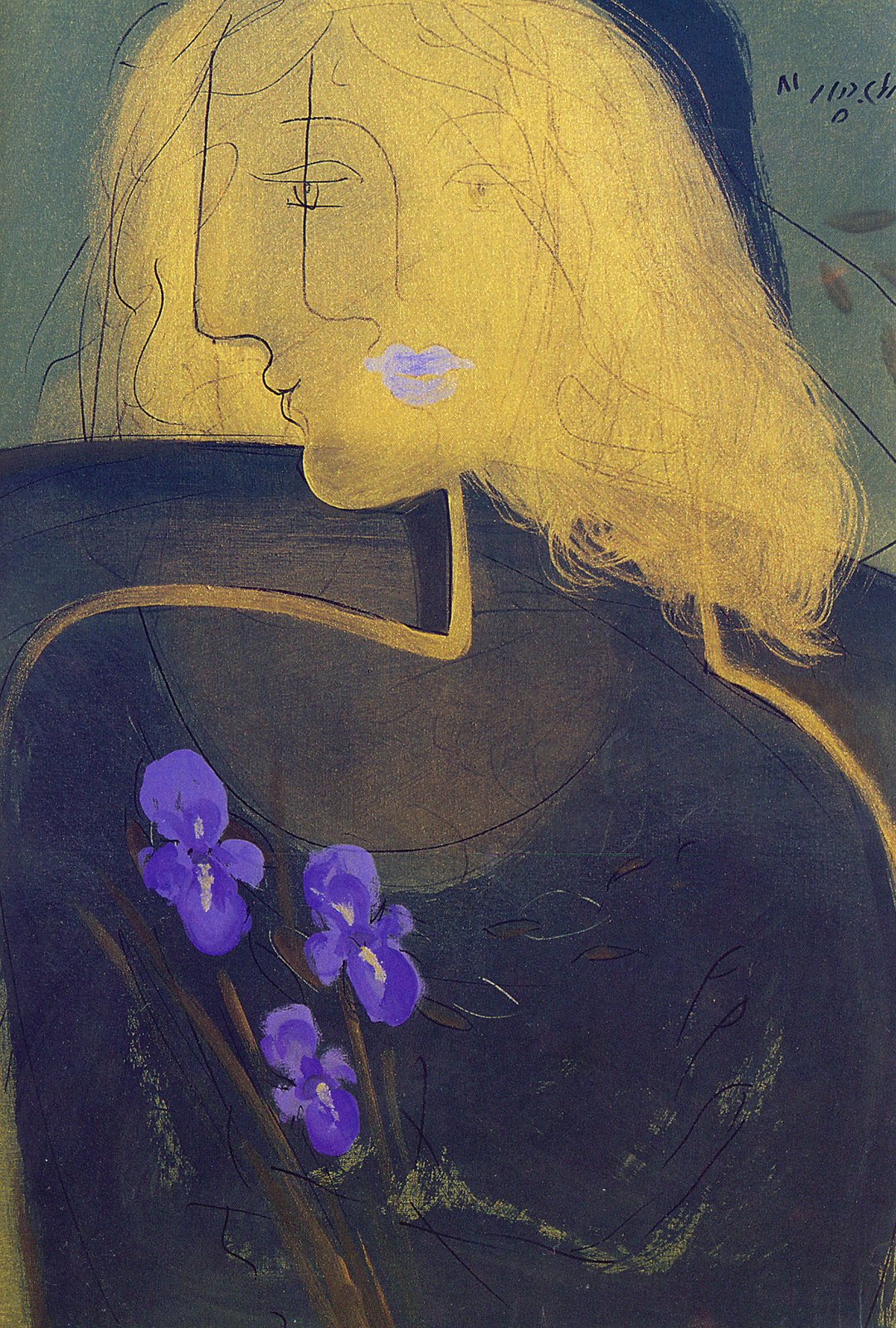
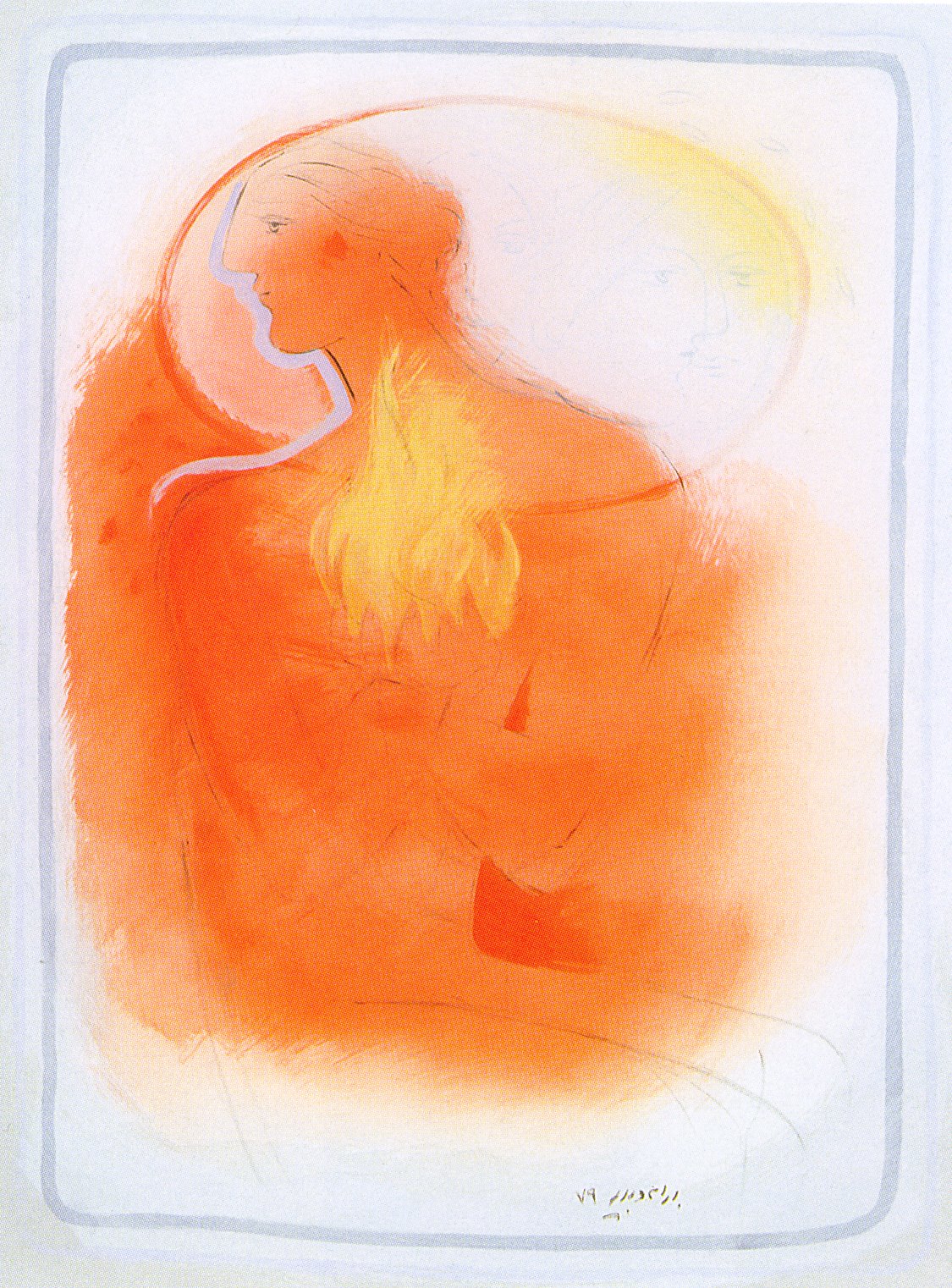
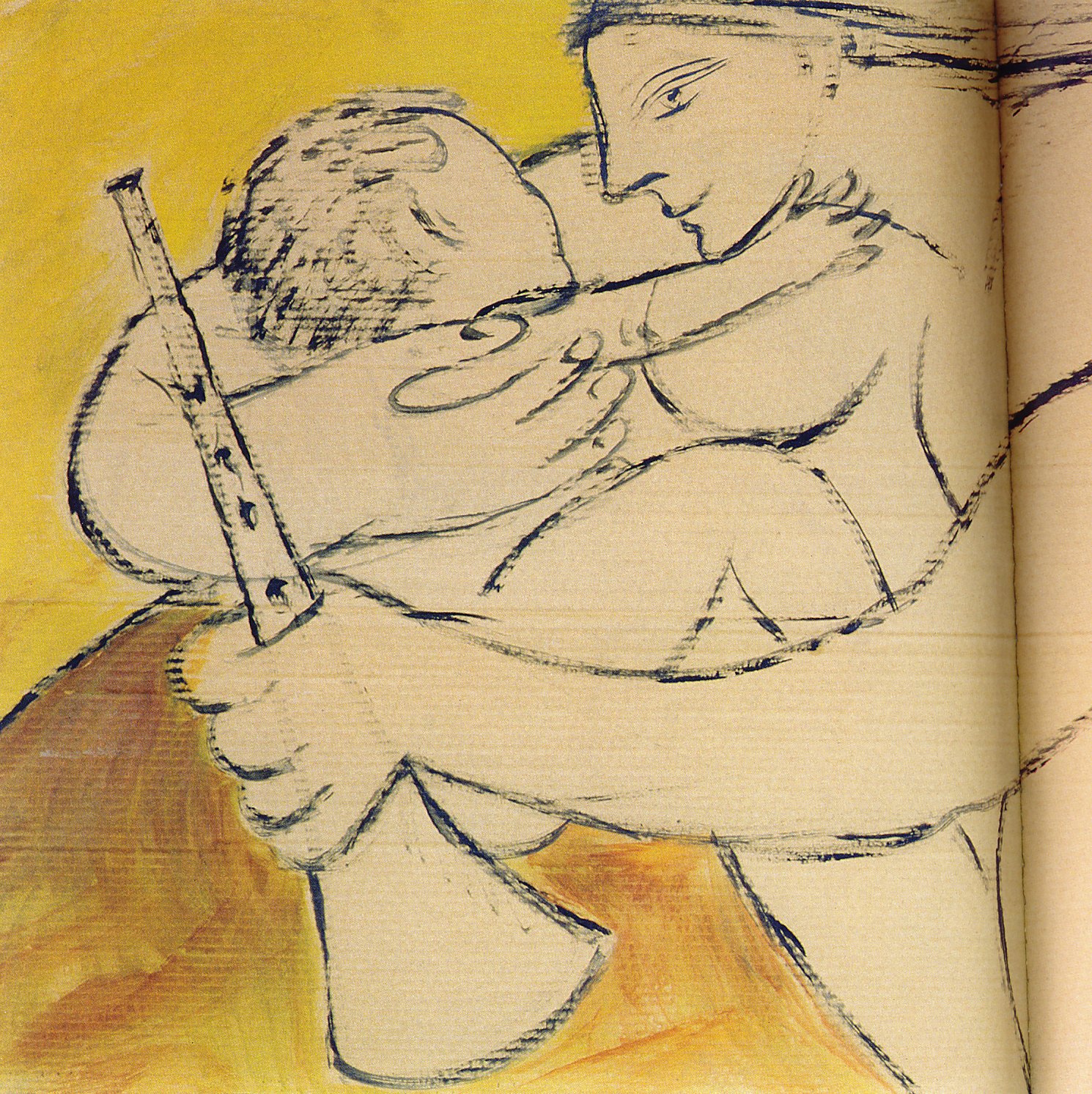
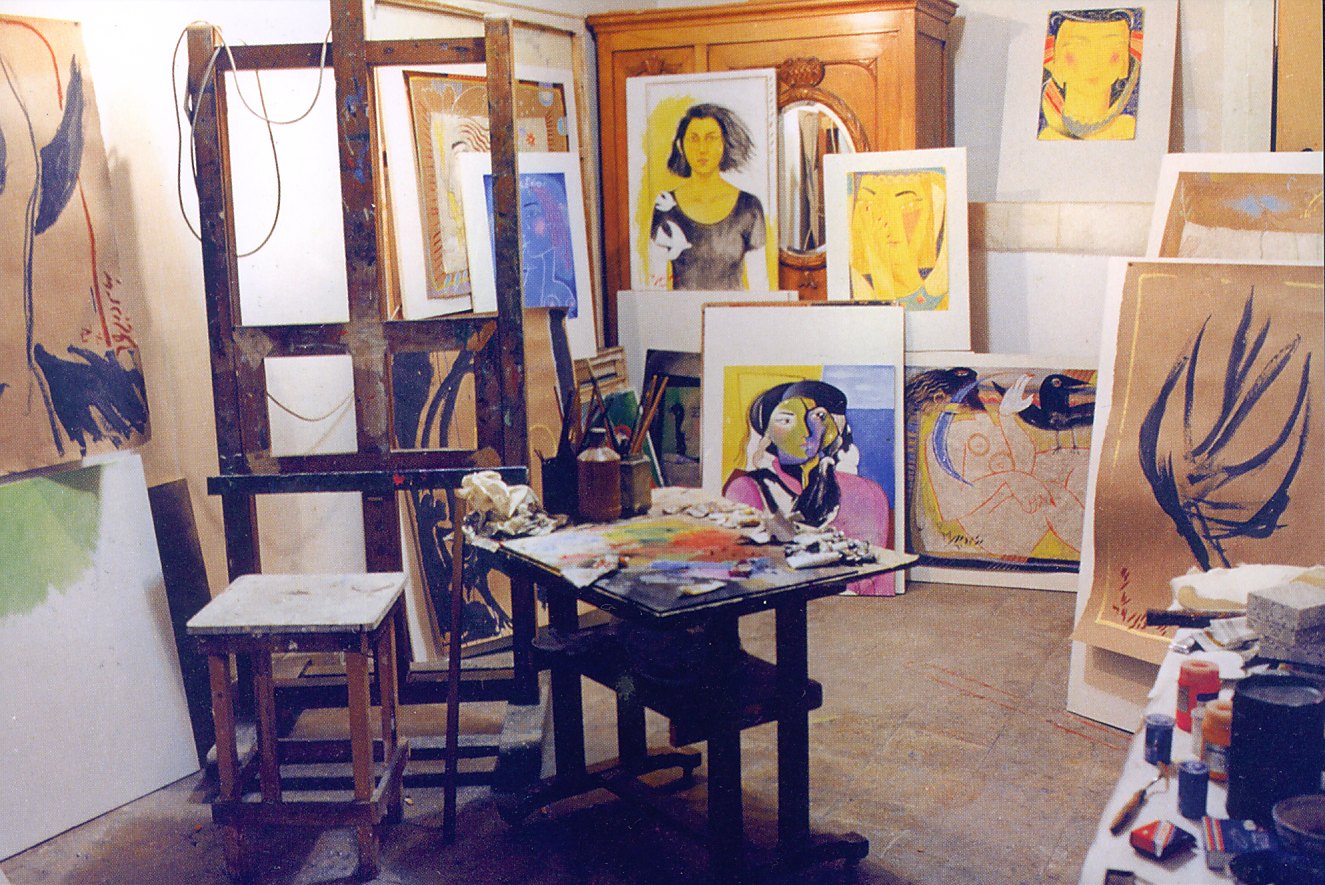
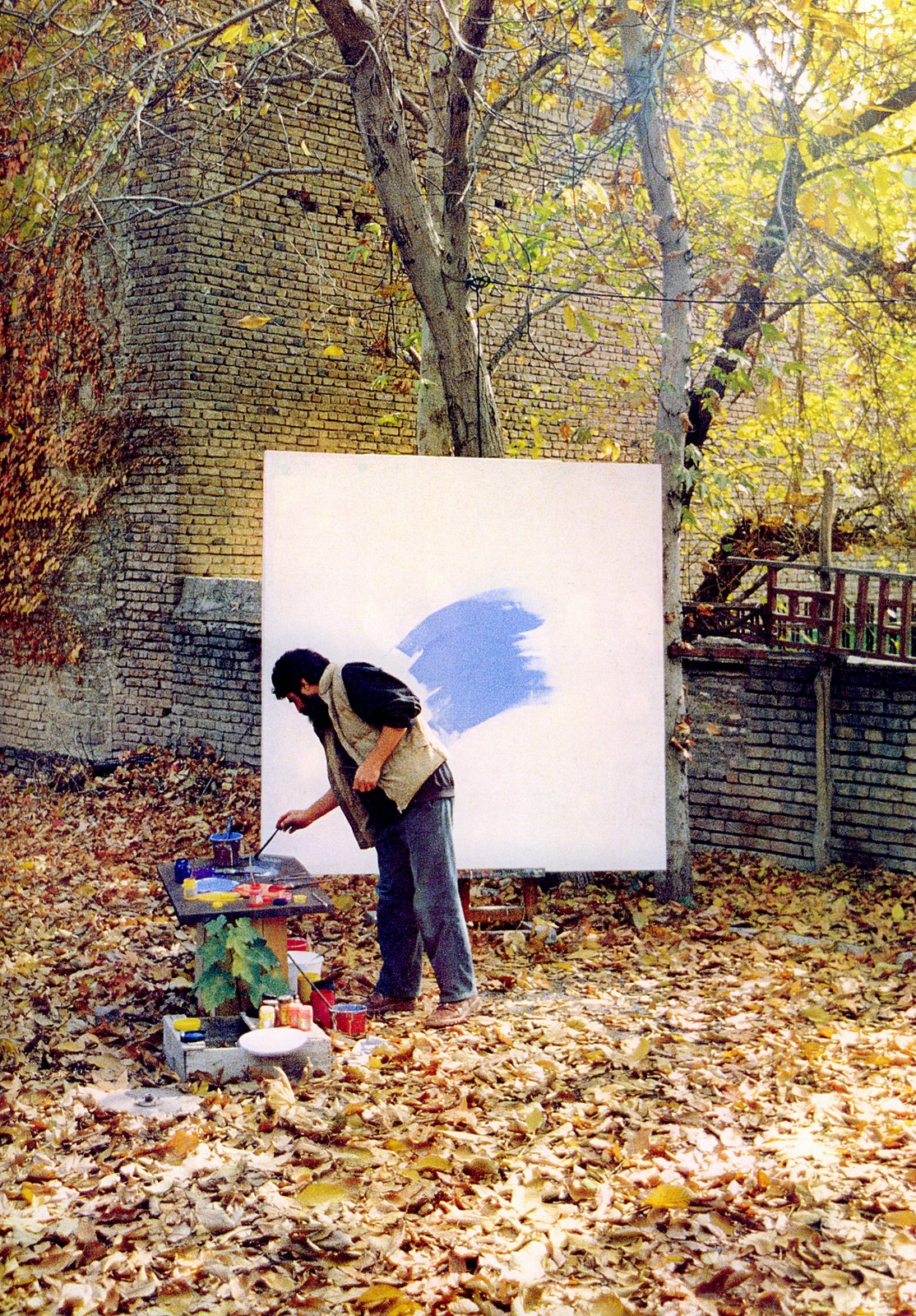
To arrive at the particular forms in my portraits of women, I drew every day for thirty-five years. In the works I am discussing here, the line moves freely: the brush touches the canvas and a body or a form is drawn without correction. This brings my work close to the practice of qalamgiri, the controlled delineation of forms in Iranian painting.
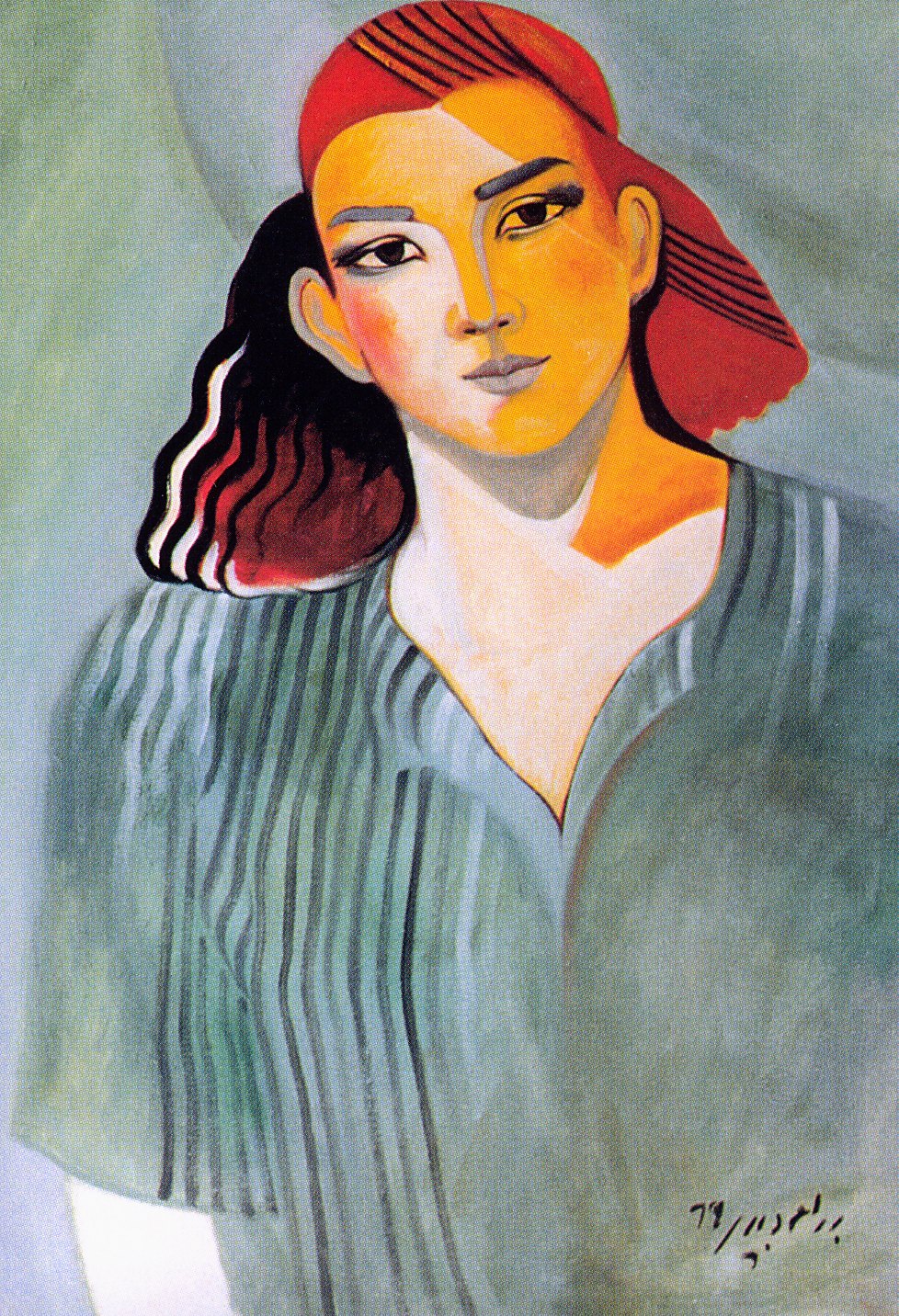
Comparing Matisse with Iranian painters, particularly those of the Shiraz school, can reveal affinities in palette, flowers, fabrics and brushwork. Visual possibilities are taken up and transformed from one period to another. I think of the entire history of art as a continuous river.
Change rather than progress
Art changes; it does not progress in the way medicine, law or the making of tools can progress. In those fields, a new stage may remedy the shortcomings of an earlier one. In art, change is where creativity and discovery become visible.
Who can say that Michelangelo’s David is better than the reliefs at Naqsh-e Rostam, or that Hafez is better than Goethe, Ferdowsi better than Homer? The same difficulty arises when comparing cultures or centuries. A work of art either exists as art or it does not, whether it is on a cave wall or hanging in a museum.
We cannot simply call Picasso more advanced than the paintings on the pottery of Sialk. Art continues to change with different people, times and circumstances, but that does not establish a hierarchy of progress.
A vocabulary of images
The subjects in my paintings attract me first through their visual structure, although their meanings matter too. I call them words: a vocabulary with which I paint.
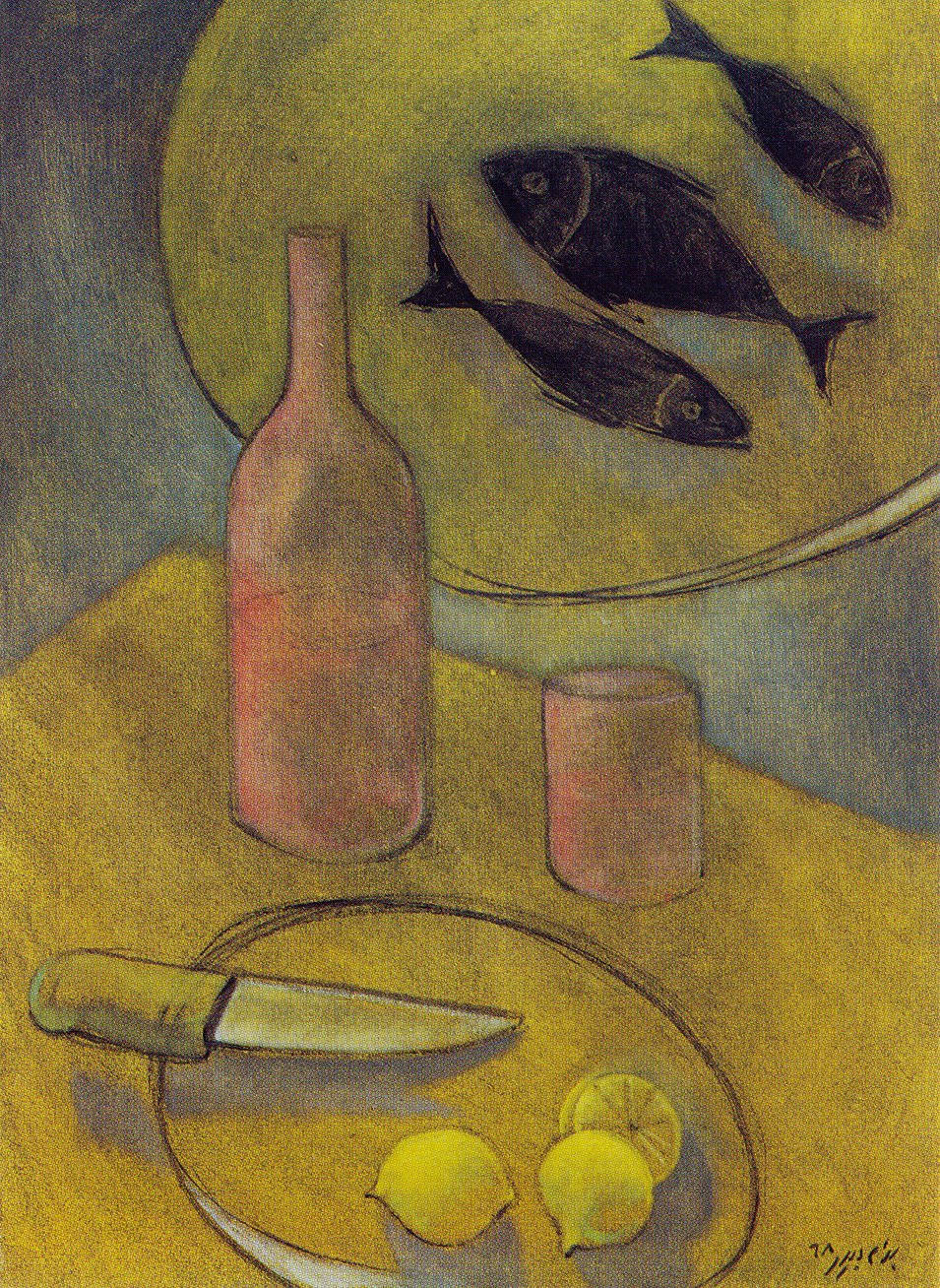
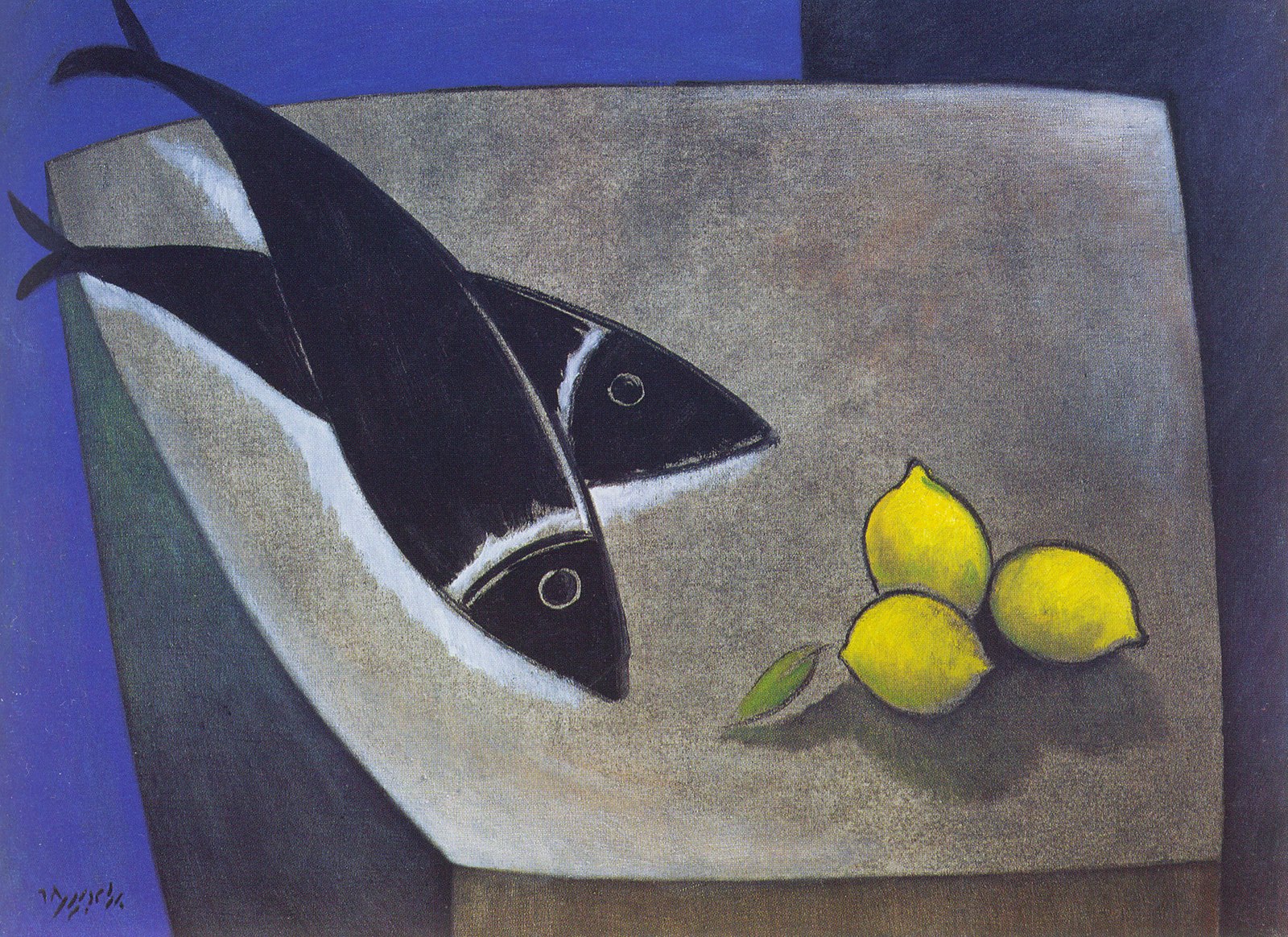
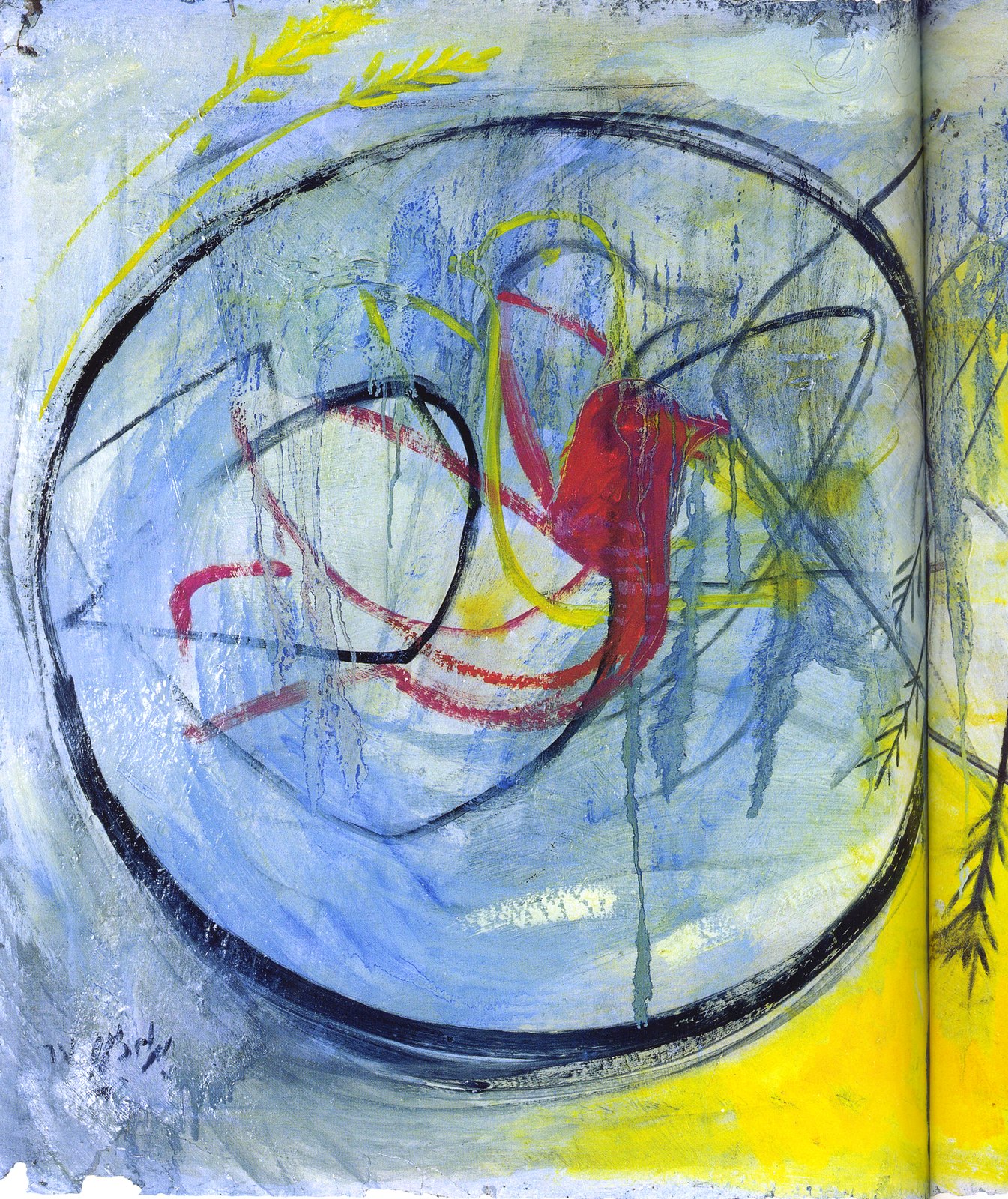
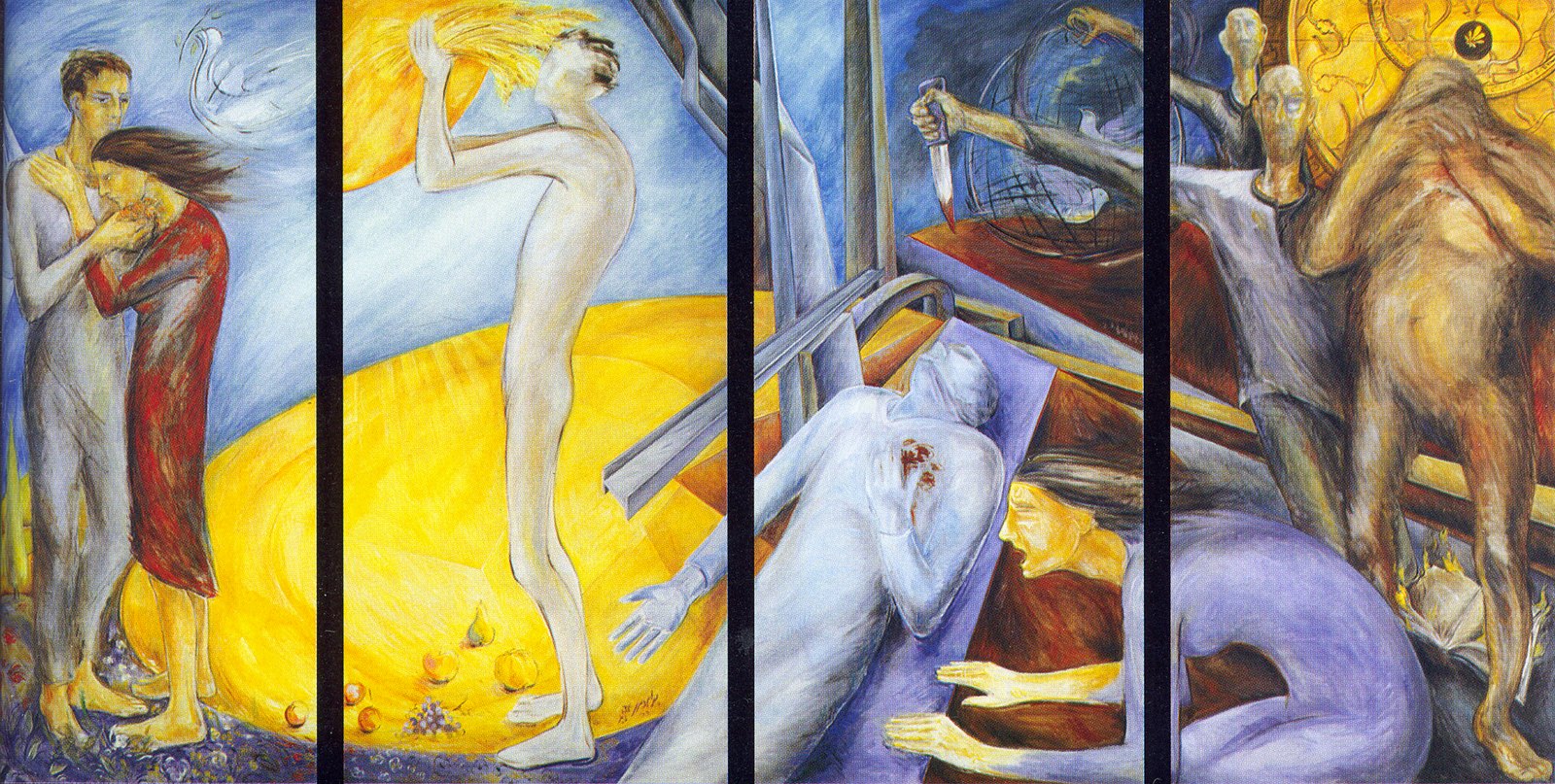
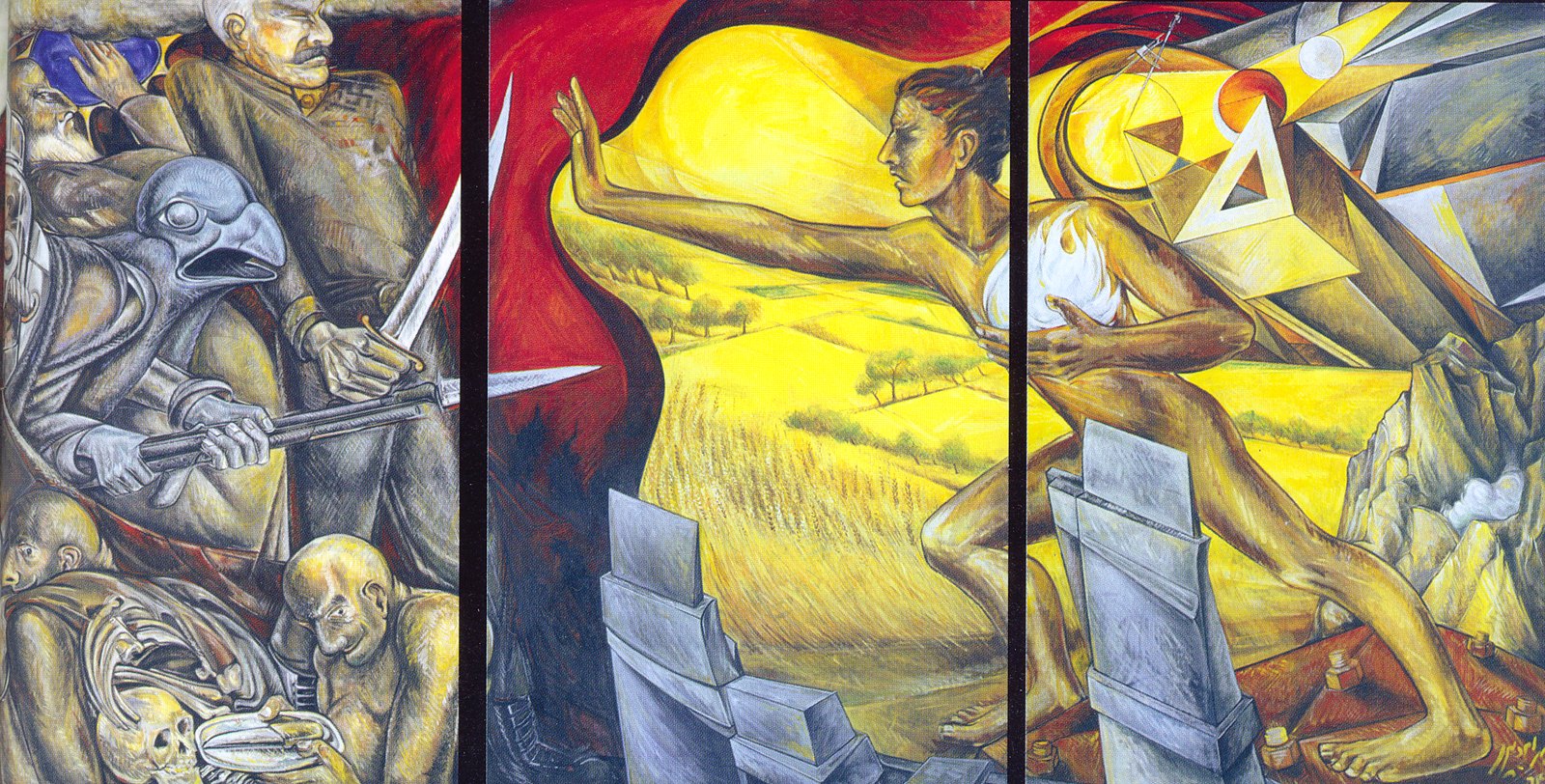
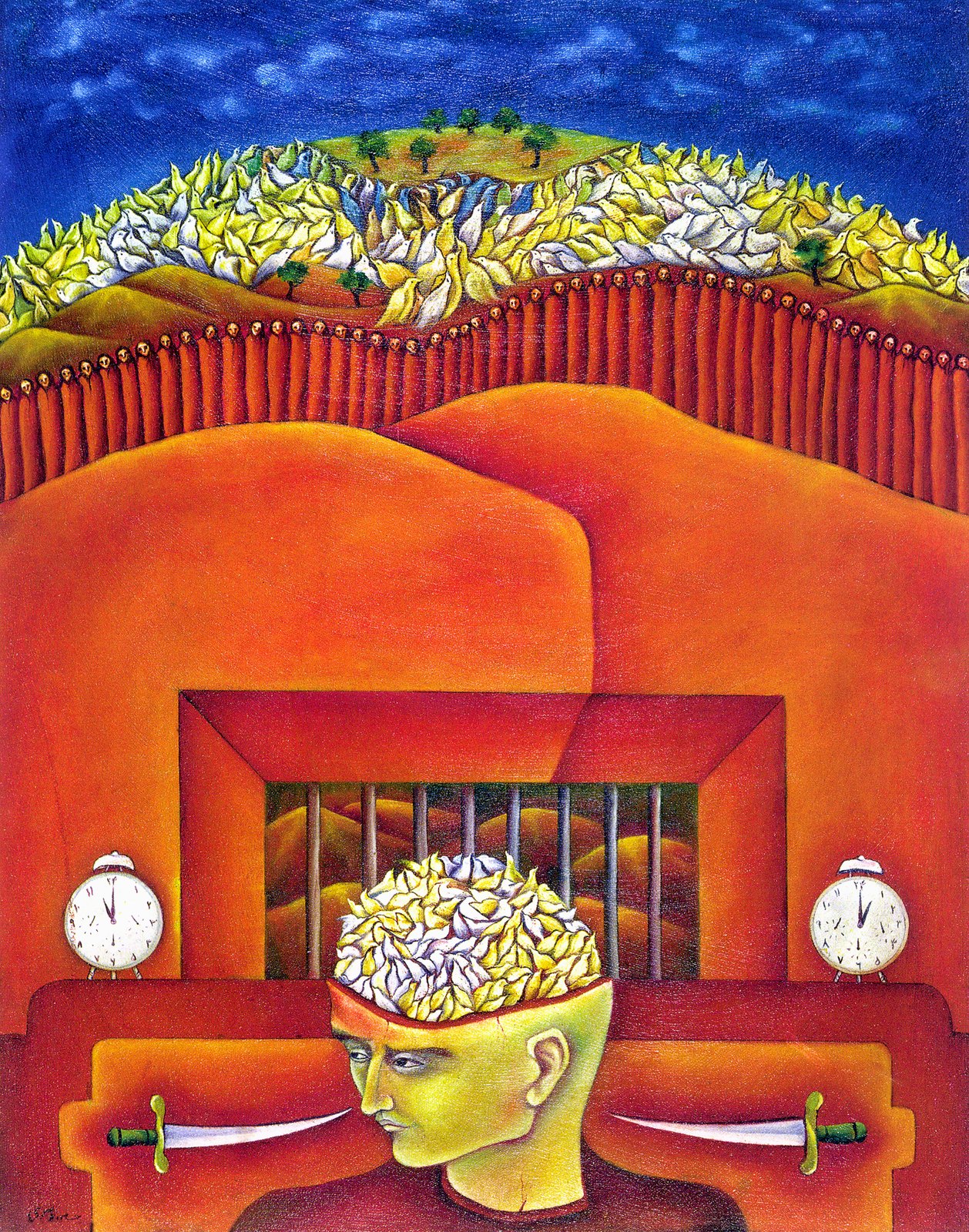
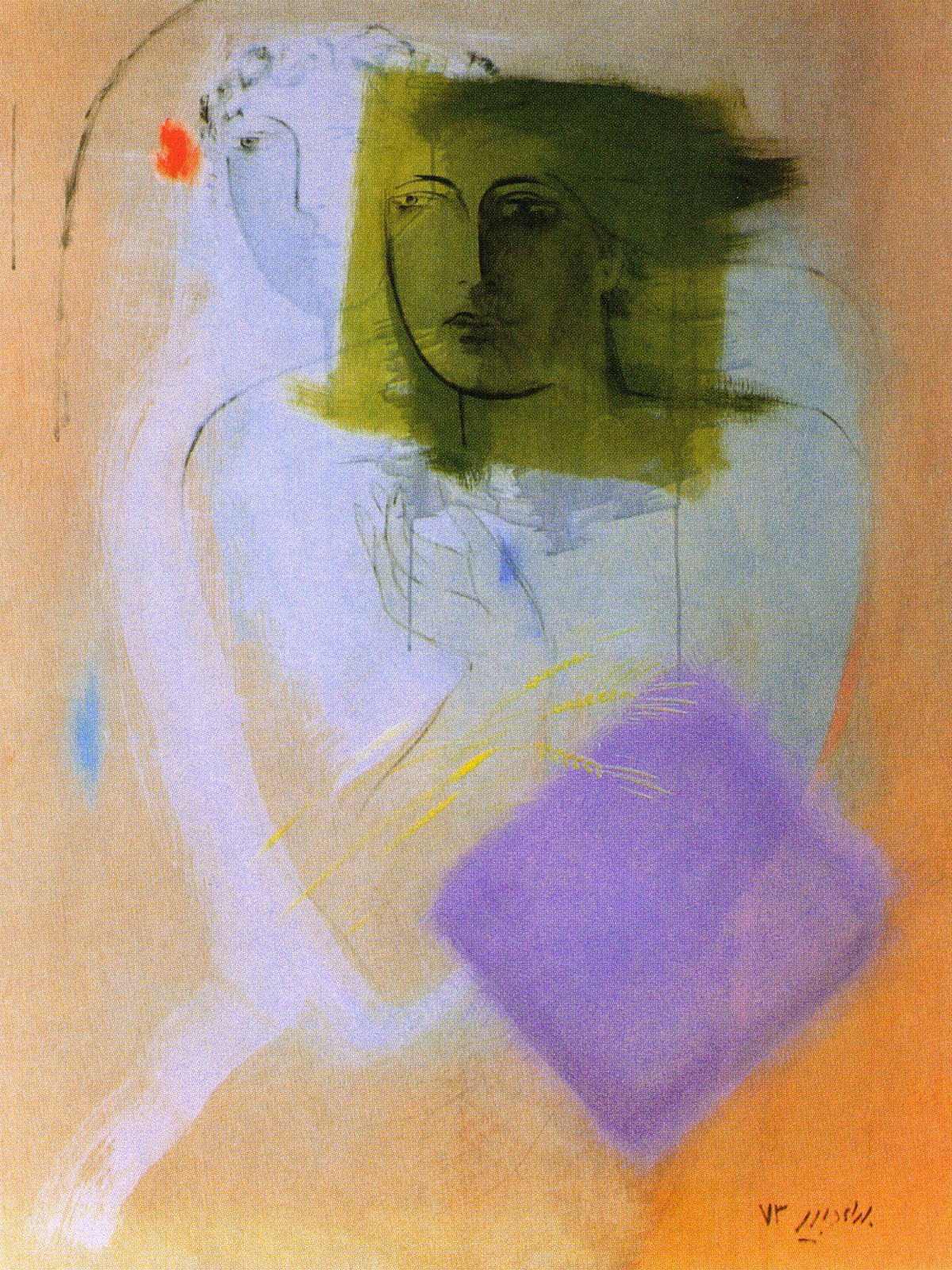
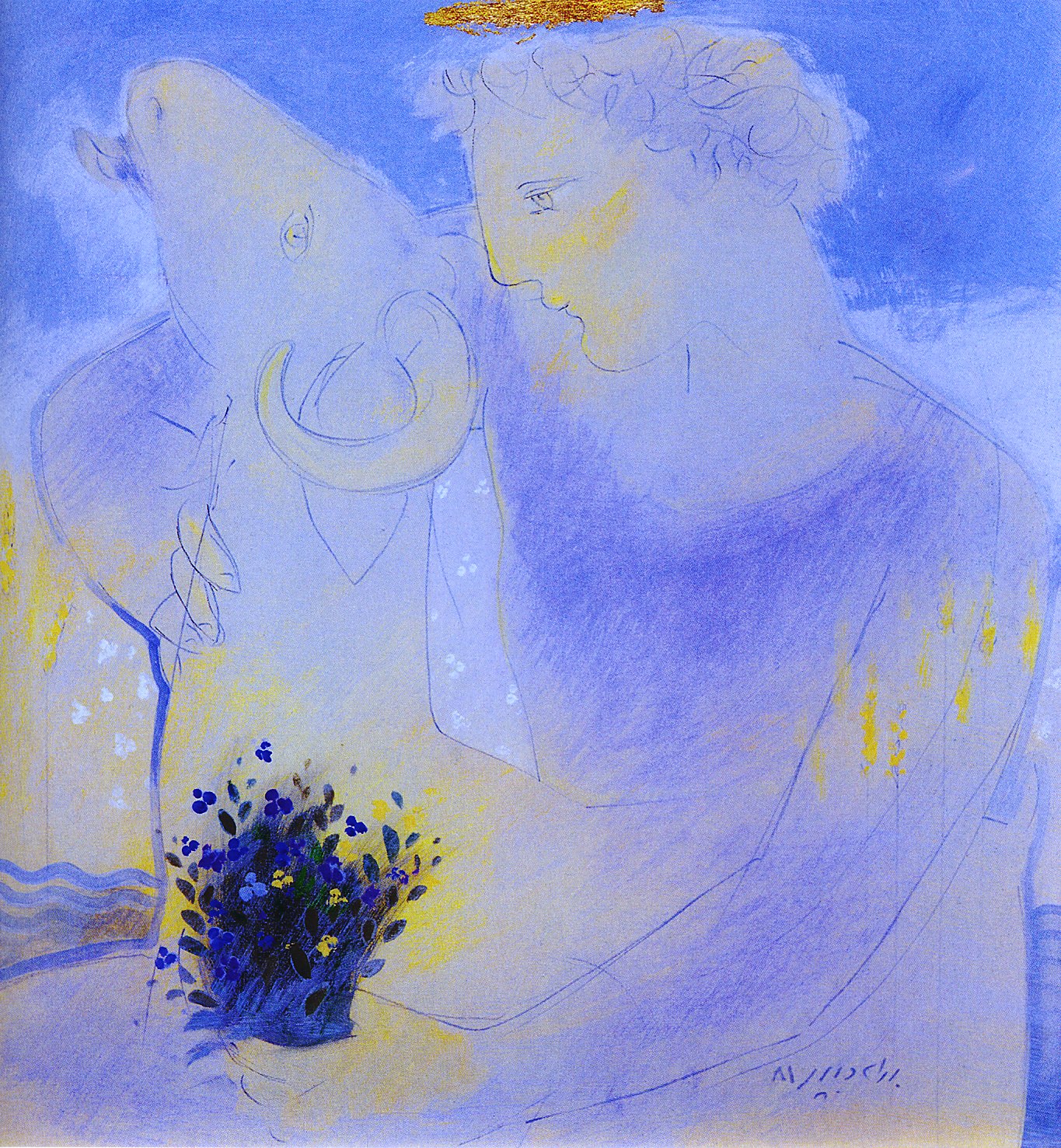
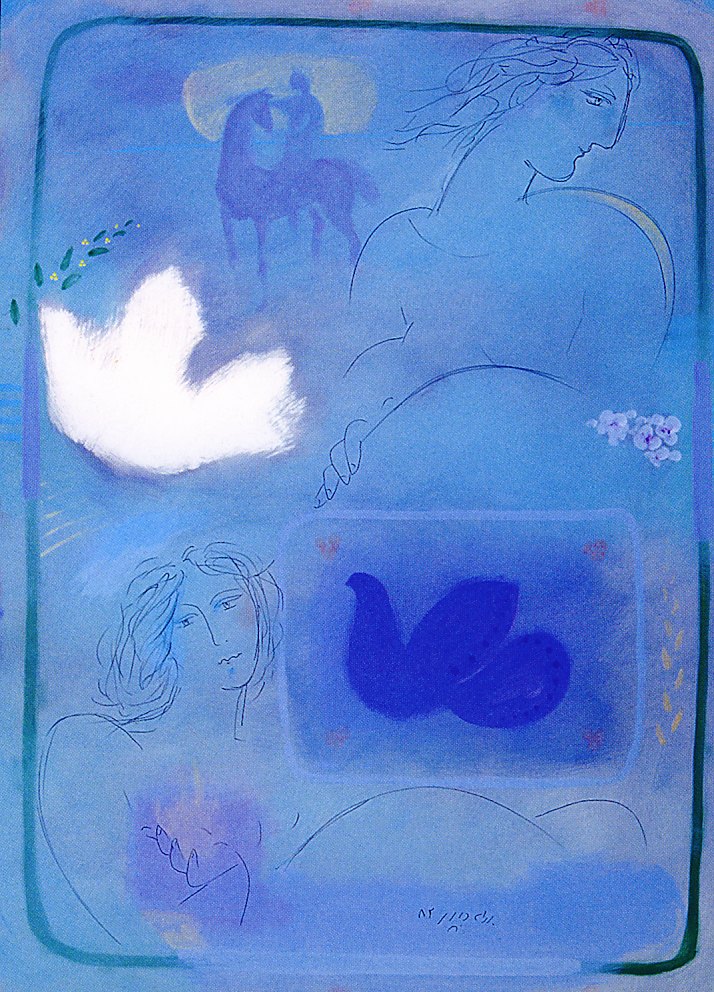
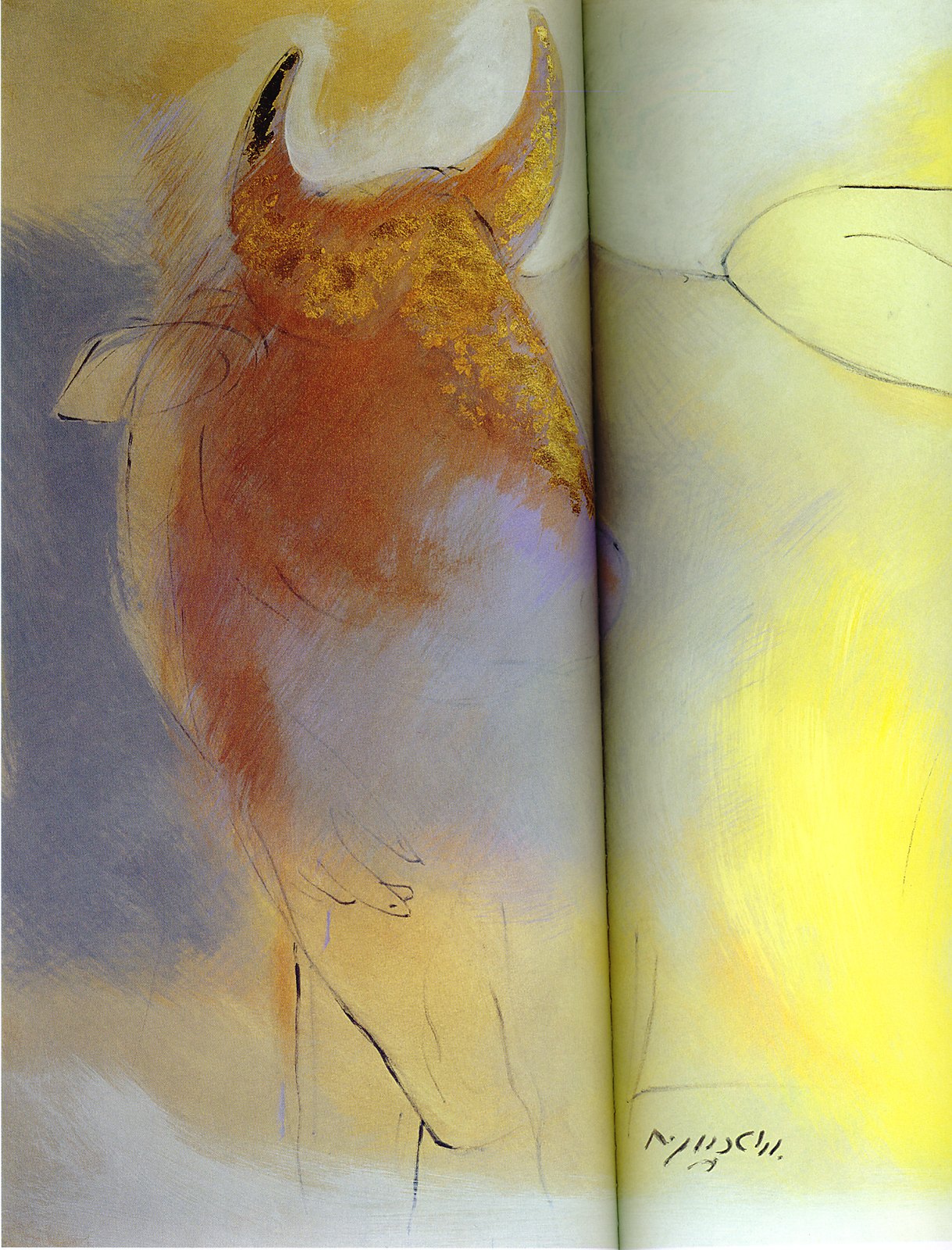
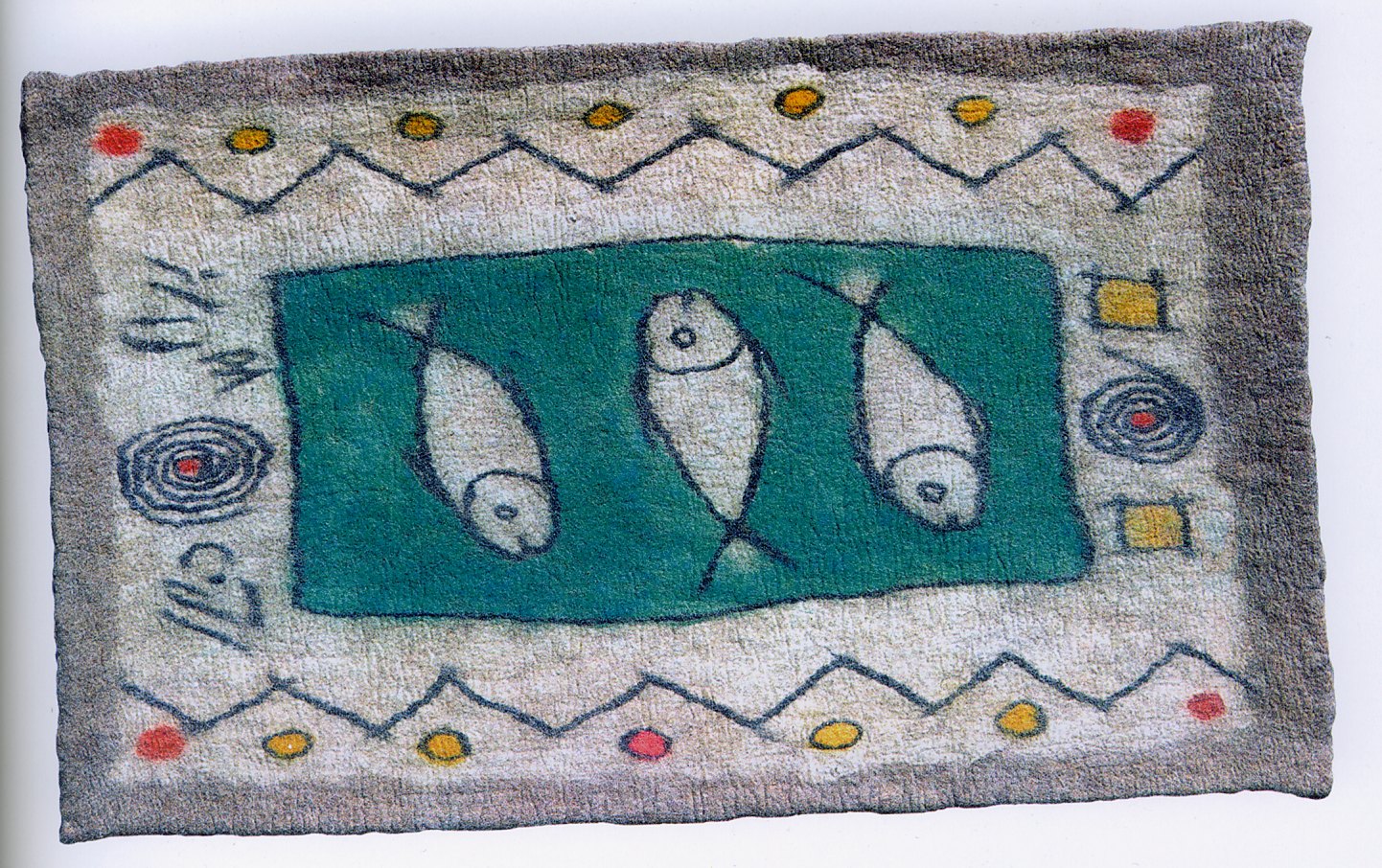
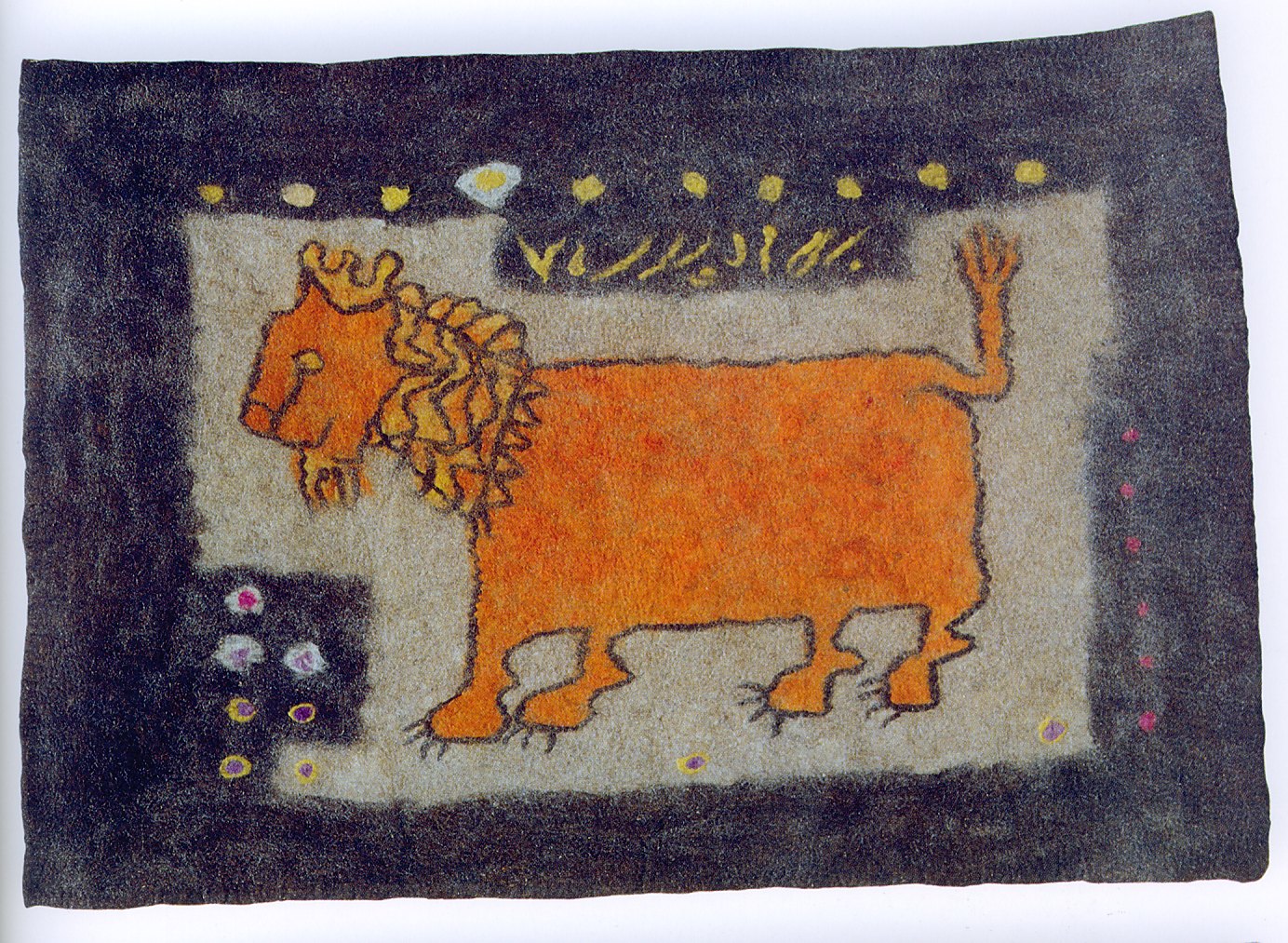
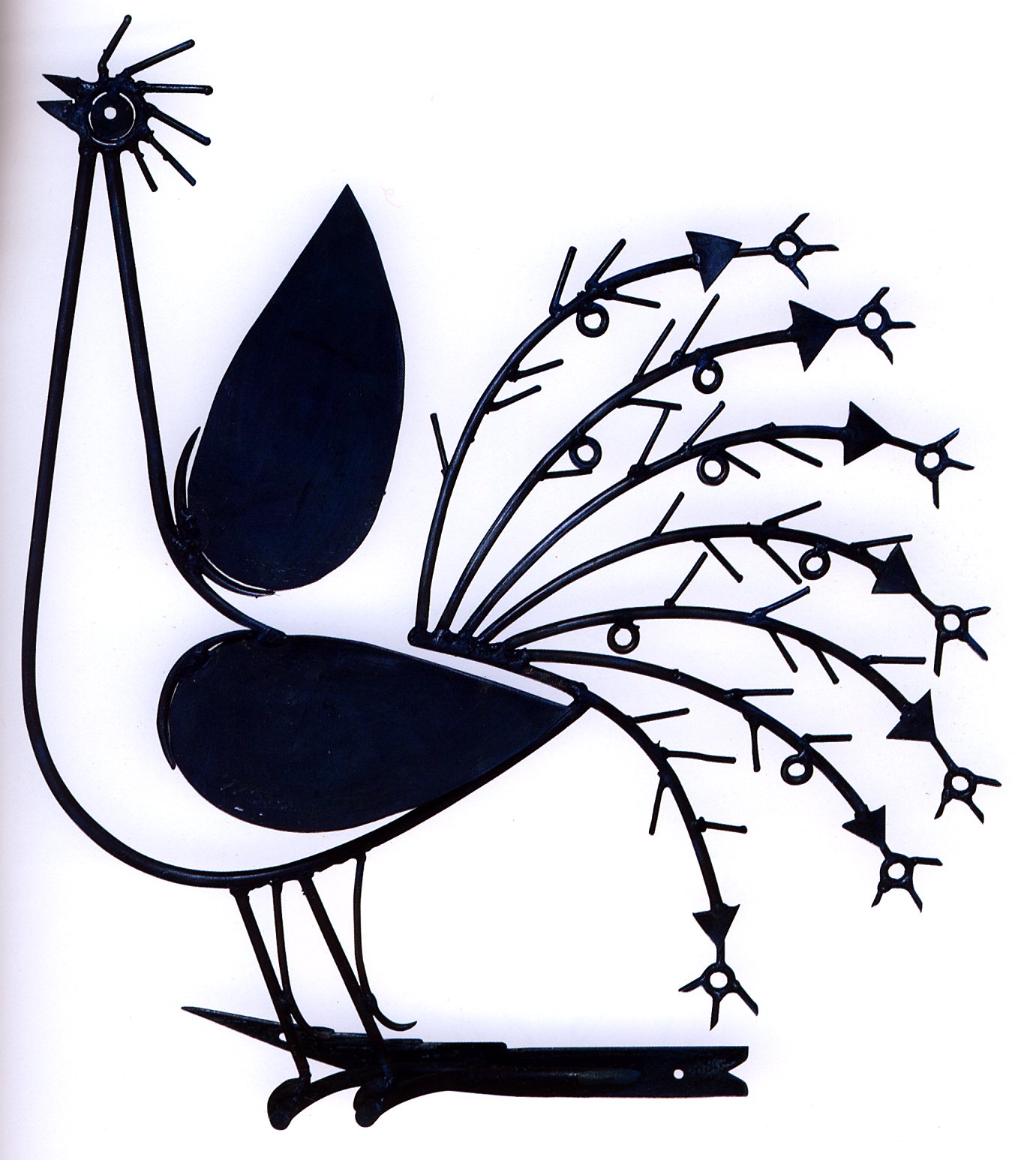
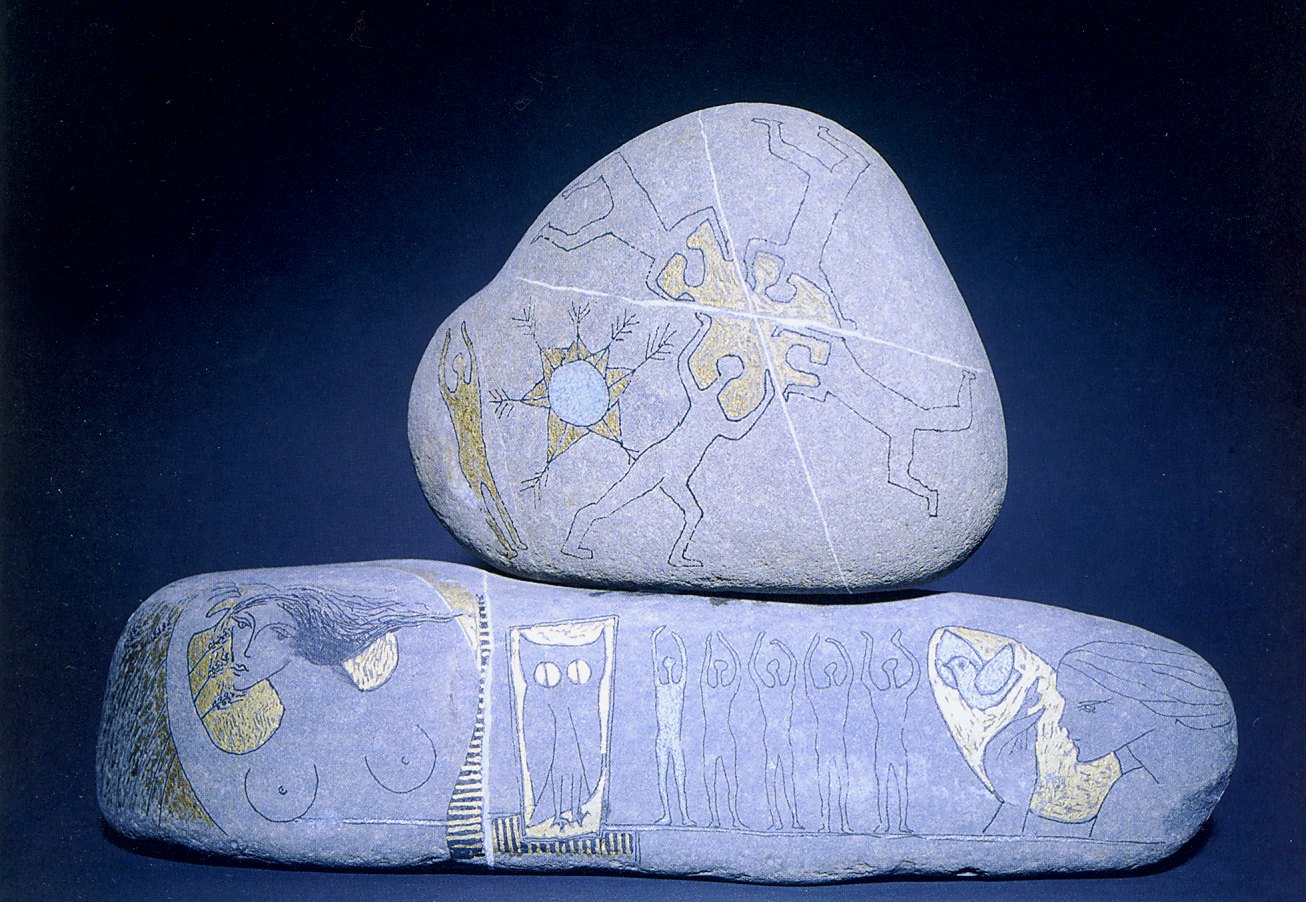
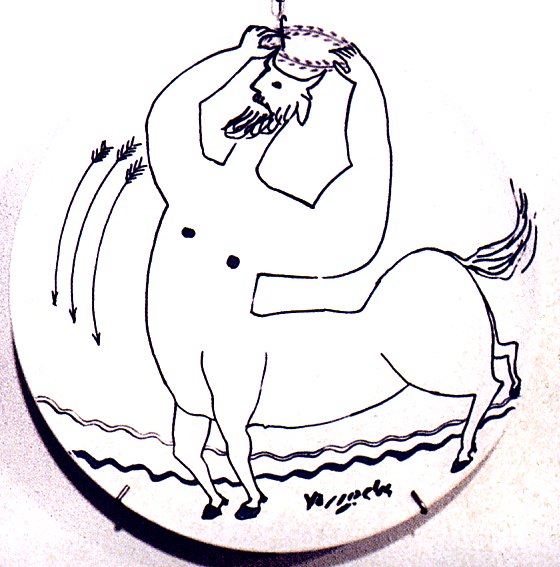
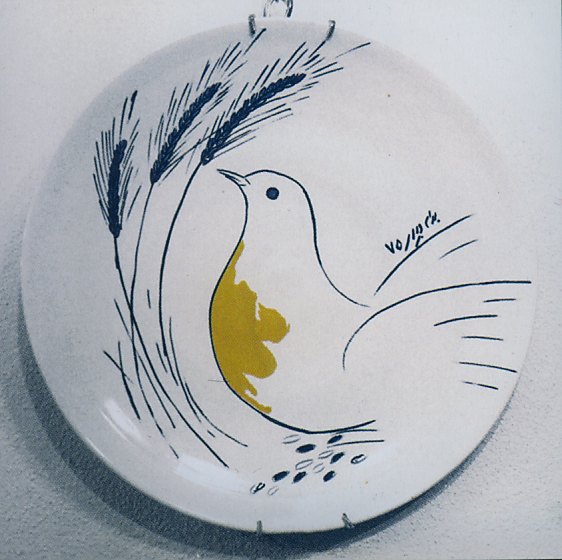
The woman is the most important of these words. A woman or a man appears as a sign of the human being. Around that presence are forms I love, forms that have belonged to my life or meant something to me at a particular moment: wheat, wildflowers, horses, goats, roosters, doves and grapes. Fish and pomegranates also enter this vocabulary. Their visual qualities and their place in my experience are inseparable.
Style and the limits of words
For me, what matters is the work itself. An artistic event passes through different periods, and its possibilities are carried into later ones. Calling a face Iranian on the basis of a fixed set of features raises a question: which features, when Iranian communities themselves are so varied?
I am wary of claims of ownership that arise from narrow definitions of style. When we speak about a painting, we translate a visual structure into words. That translation is also where misunderstandings about painting begin.
Cultures in conversation
Because we do not know large parts of our own past, we sometimes rediscover them through the West. I do not regard that as a bad thing. I believe in the continuous intermingling of cultures. They seek one another, absorb one another and remain alive through that exchange.
Signs encountered in Iranian mythology can also be found in Greek mythology. Classical subjects return in later art, including Picasso’s engagement with Greek forms, bodies and clothing.
The highly simplified animal forms on Marlik pottery show a profound understanding of visual structure. For that reason, I see no necessary contradiction between modernism and our painting traditions.
Modernism and cultural memory
Modernism began in Europe, and in painting particularly in France, but it drew enormously on other cultures. Japan, Africa, Iran and the Indigenous cultures of the Americas all contributed to that transformation. Art circulates. What matters is understanding the artistic language of your own time and being able to speak through it.
I believe in a collective cultural memory: something of your history, language and culture remains with you, whether or not you have consciously studied it. Learning can deepen that awareness, but an Iranian quality may emerge even when national identity is not your stated concern.
Consider Nima’s poetry. Its forms differ radically from the ghazal and the qasida, and it engages with French poetry, yet it remains recognizably Iranian. You can sense its mountains, the Caspian Sea and the shore.
The face beyond a passing expression
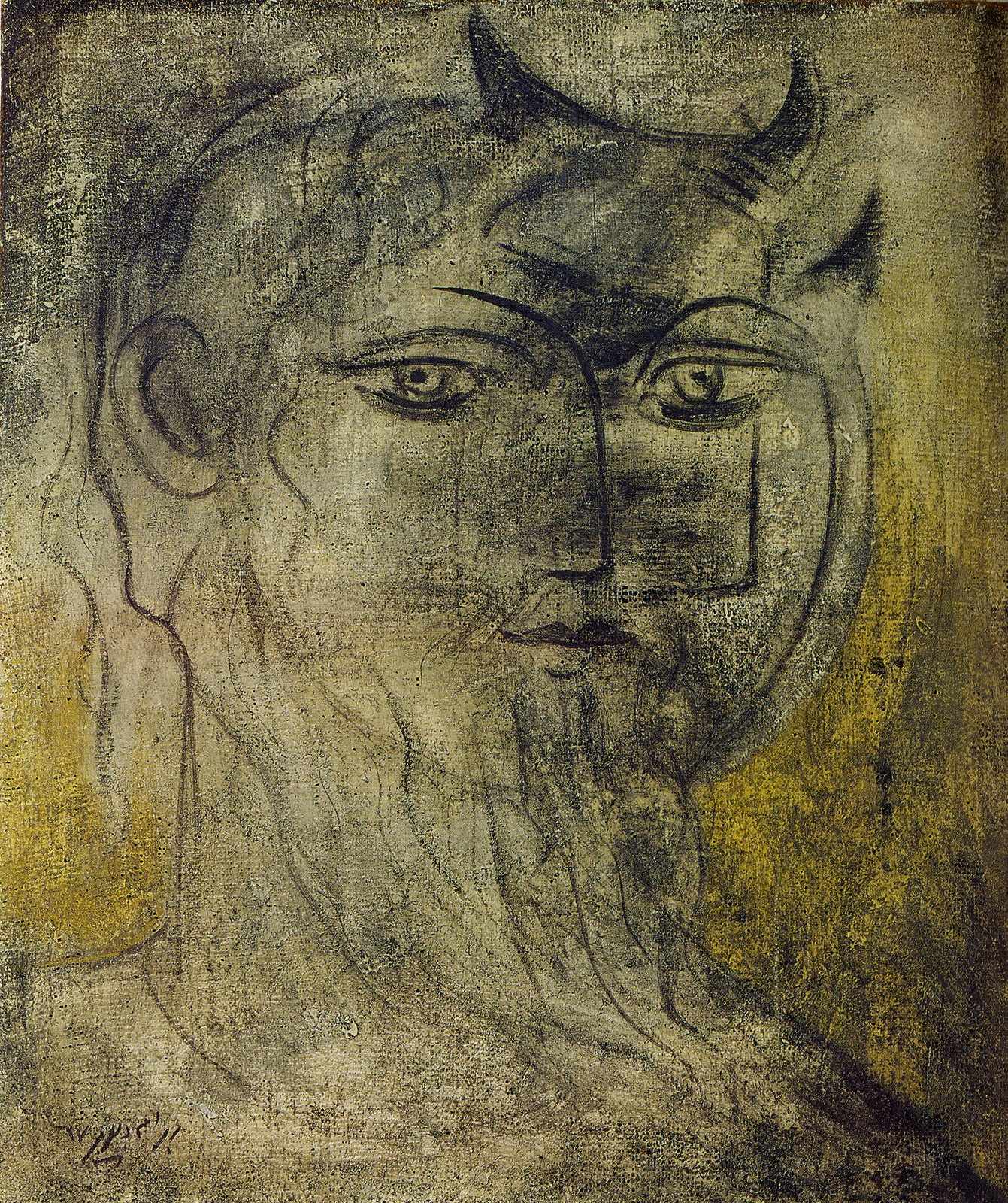
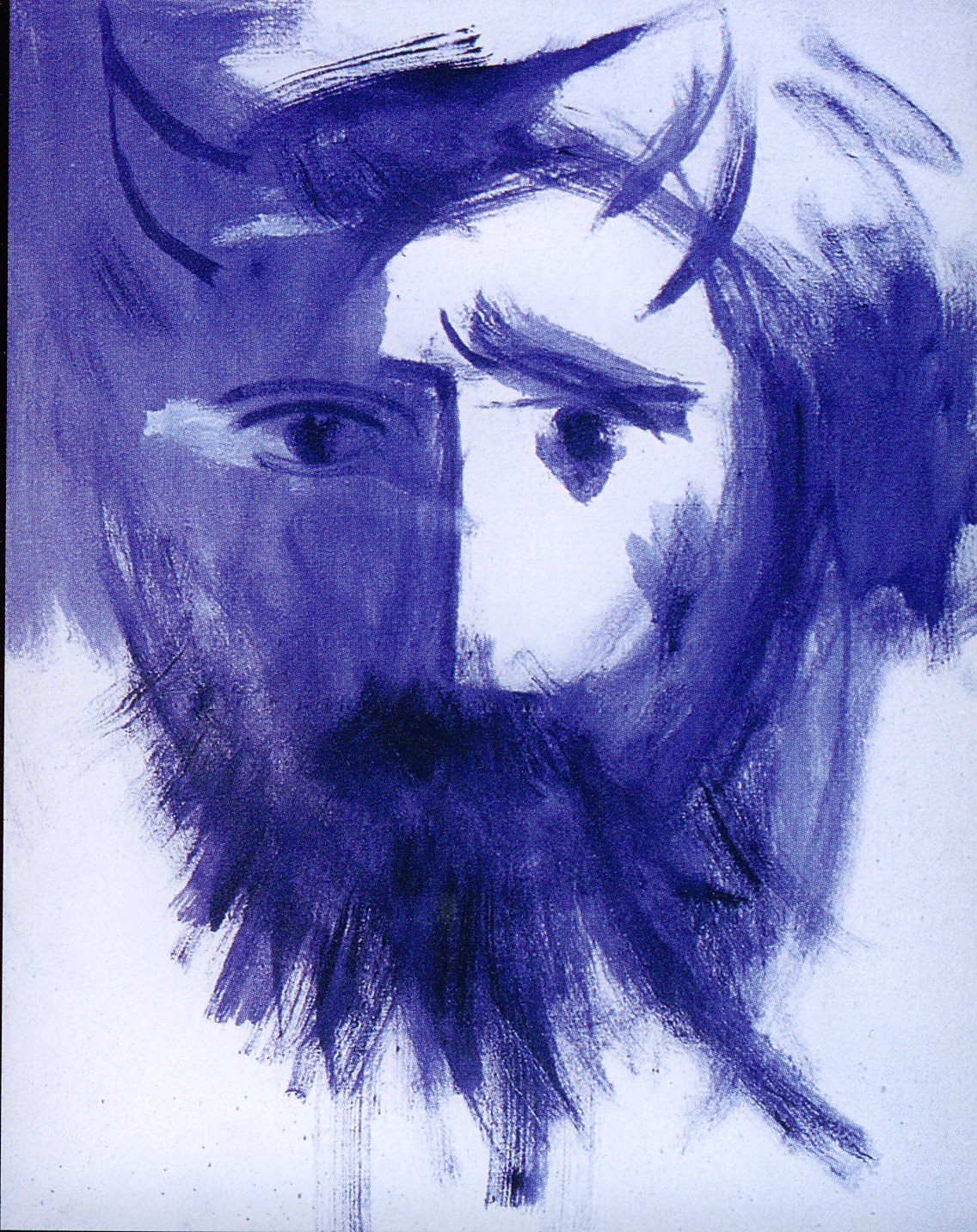
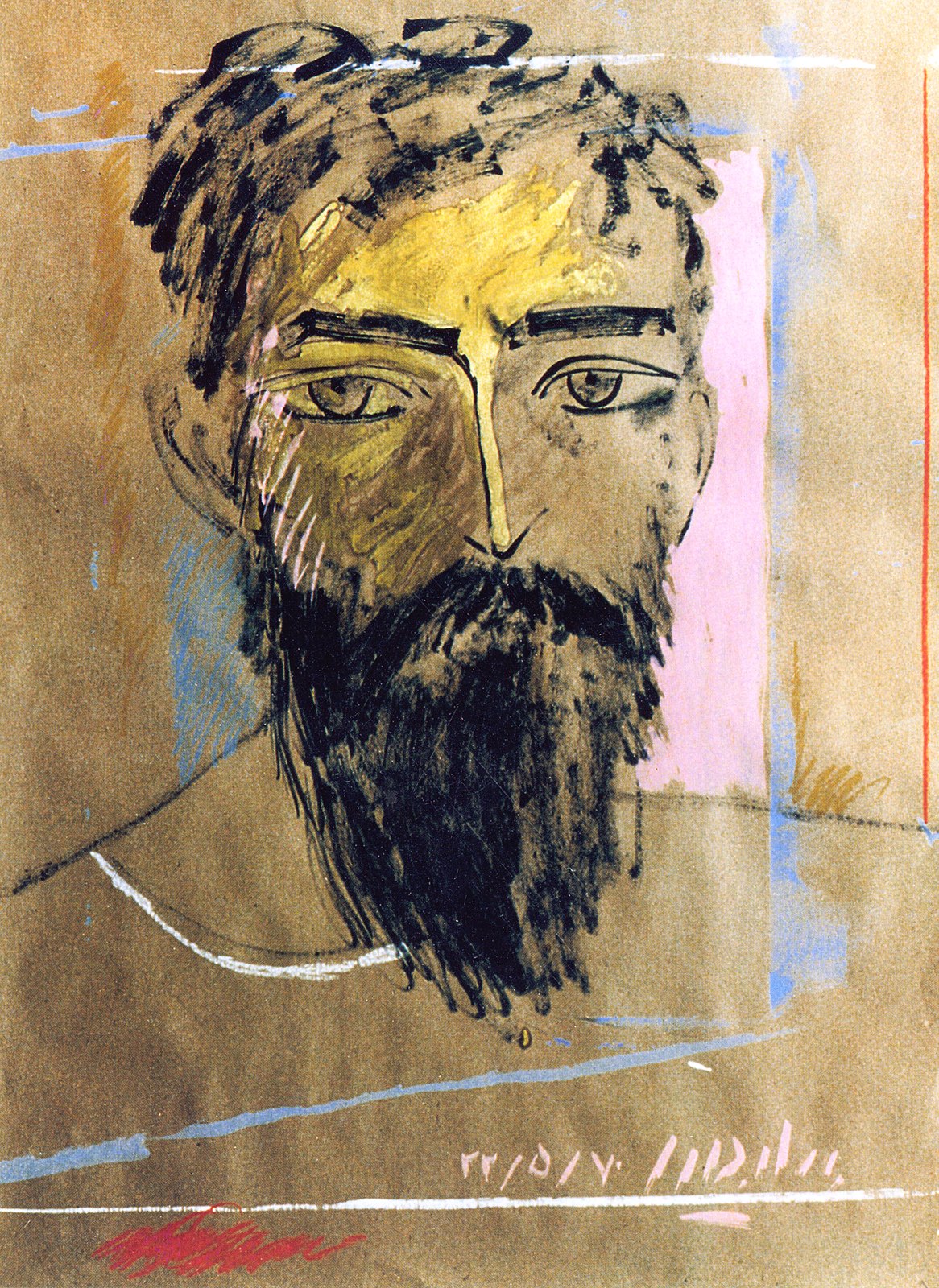
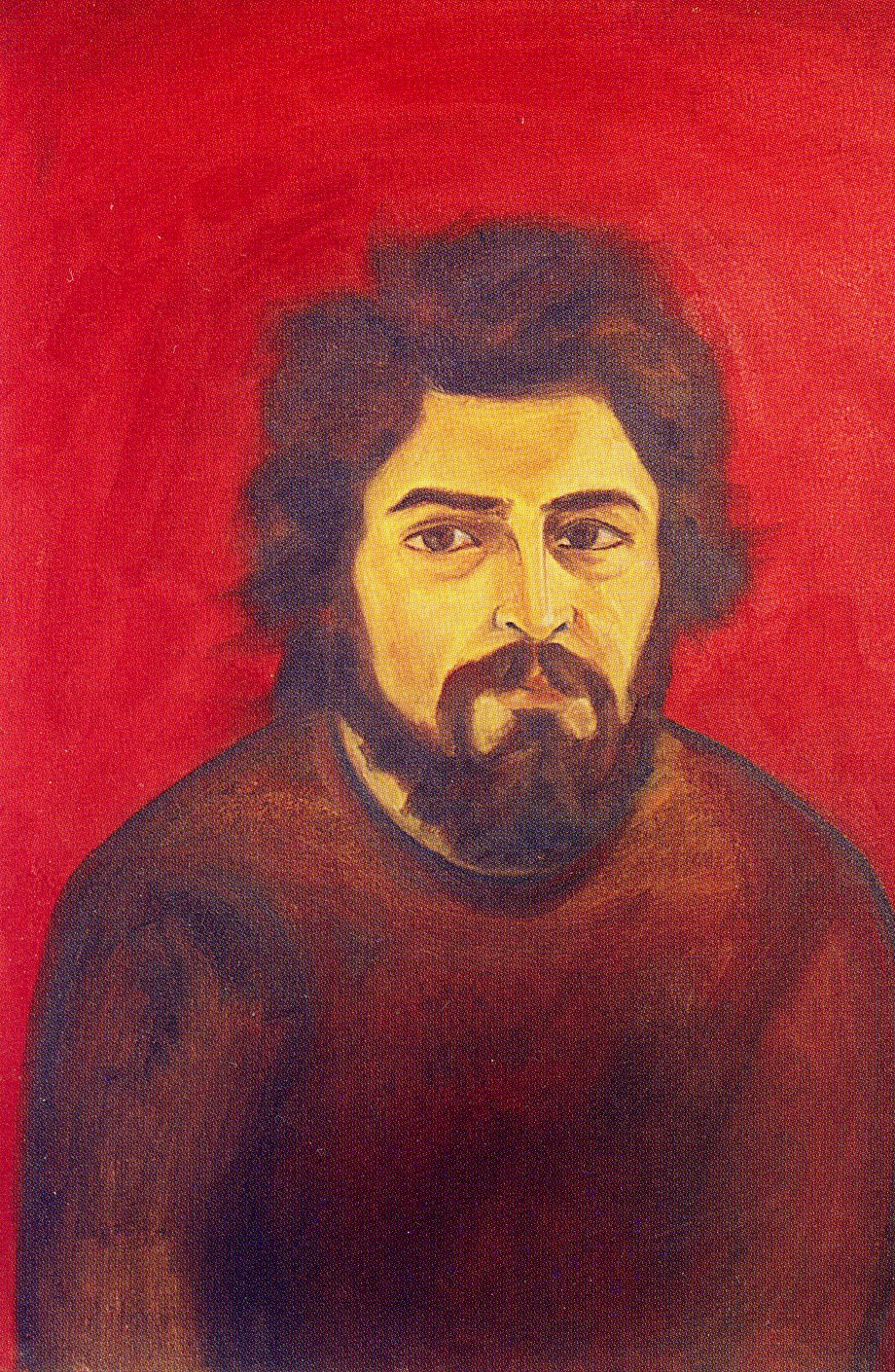
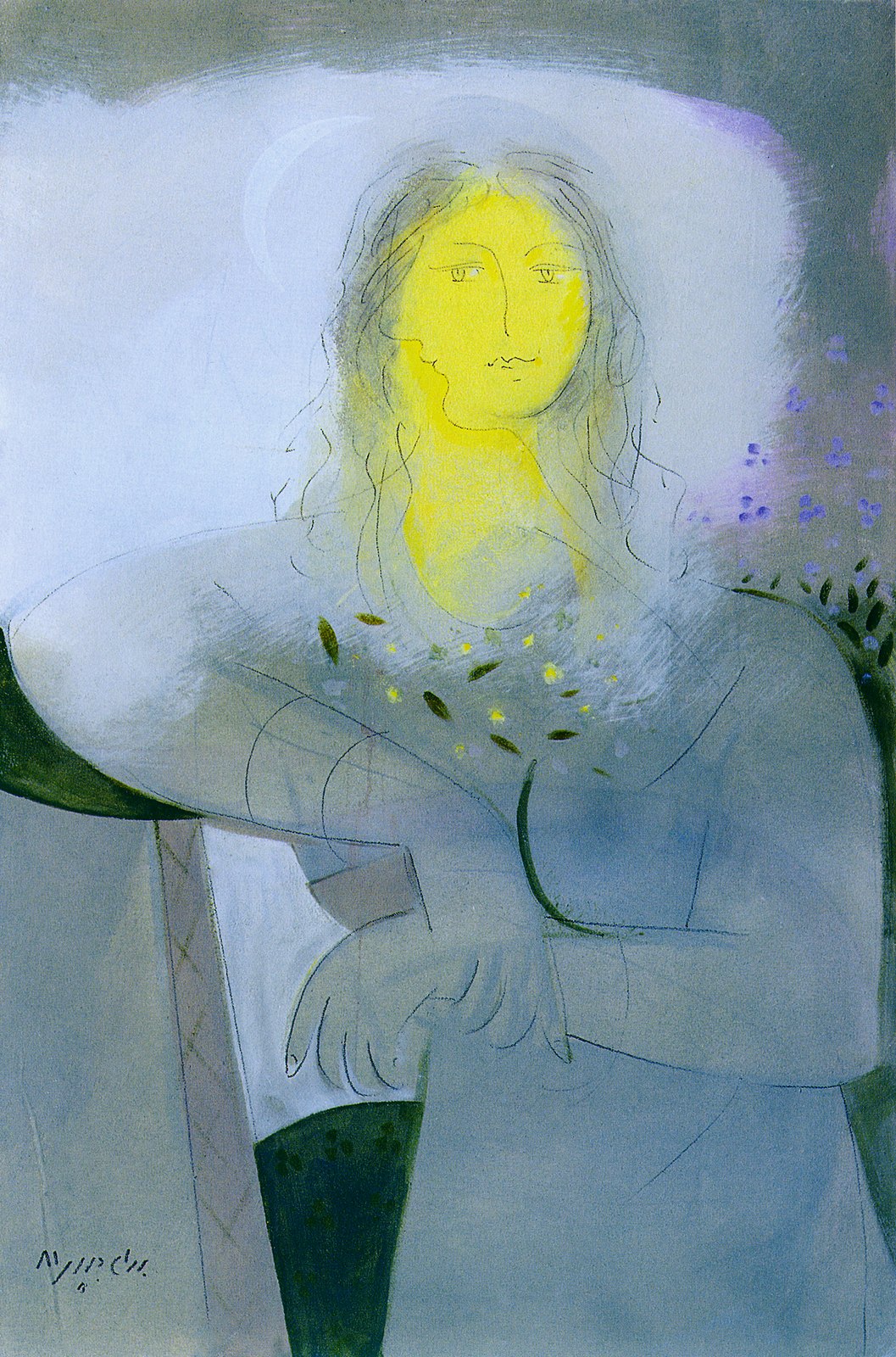
In a portrait, I prefer a sense of timelessness to a face that expresses a particular, passing emotion. The faces I paint are not identifiable people from the street. Their social position is unclear, and one cannot easily decide whether they are happy, sad or absorbed in thought.
They do not declare an emotional state. I find a related quality in the history of Iranian painting and sculpture: faces that are not crying, shouting or displaying an immediate earthly delight. They occupy a dignified, silent condition that I regard as one of the qualities of the classical.
Colour and light
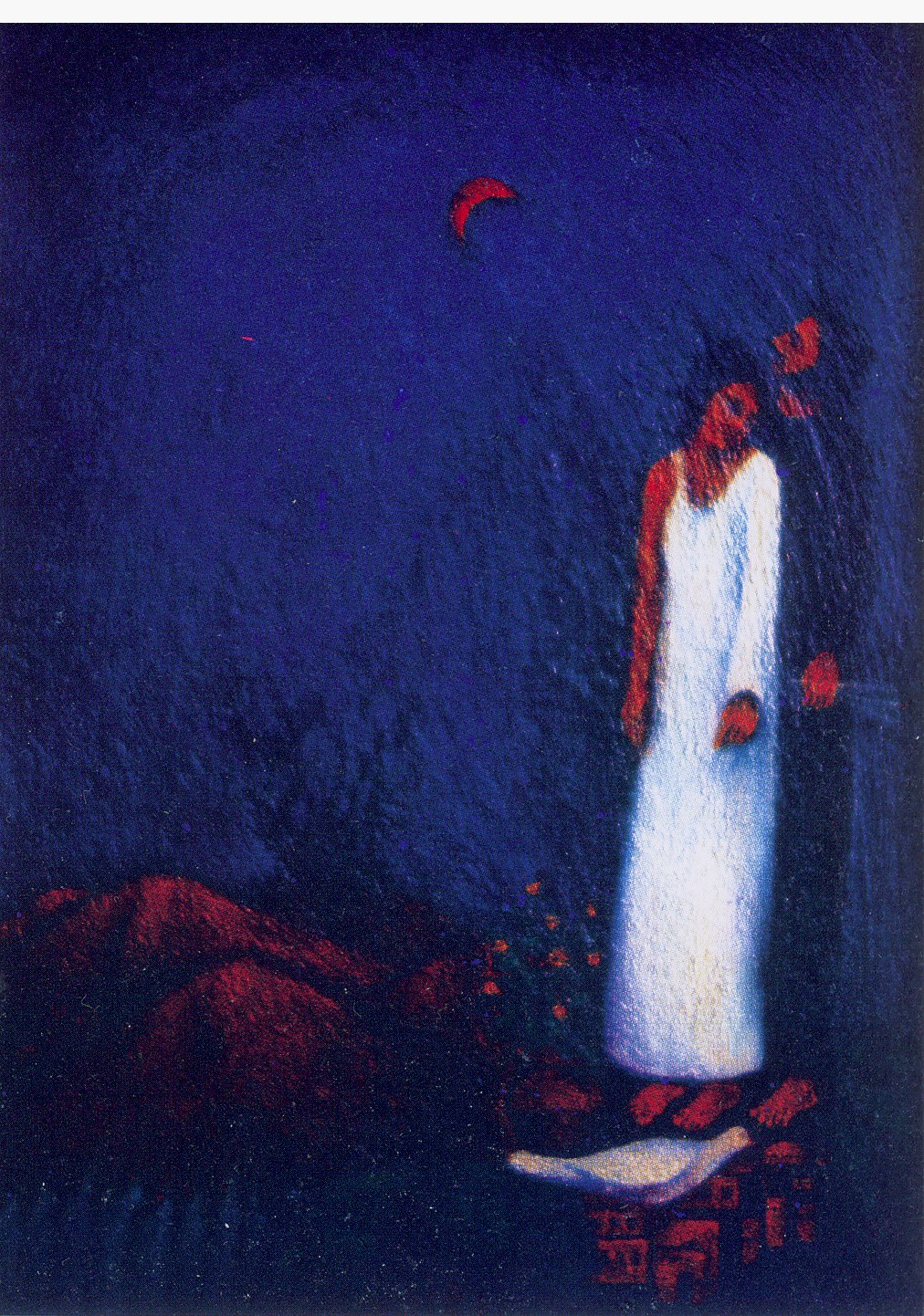
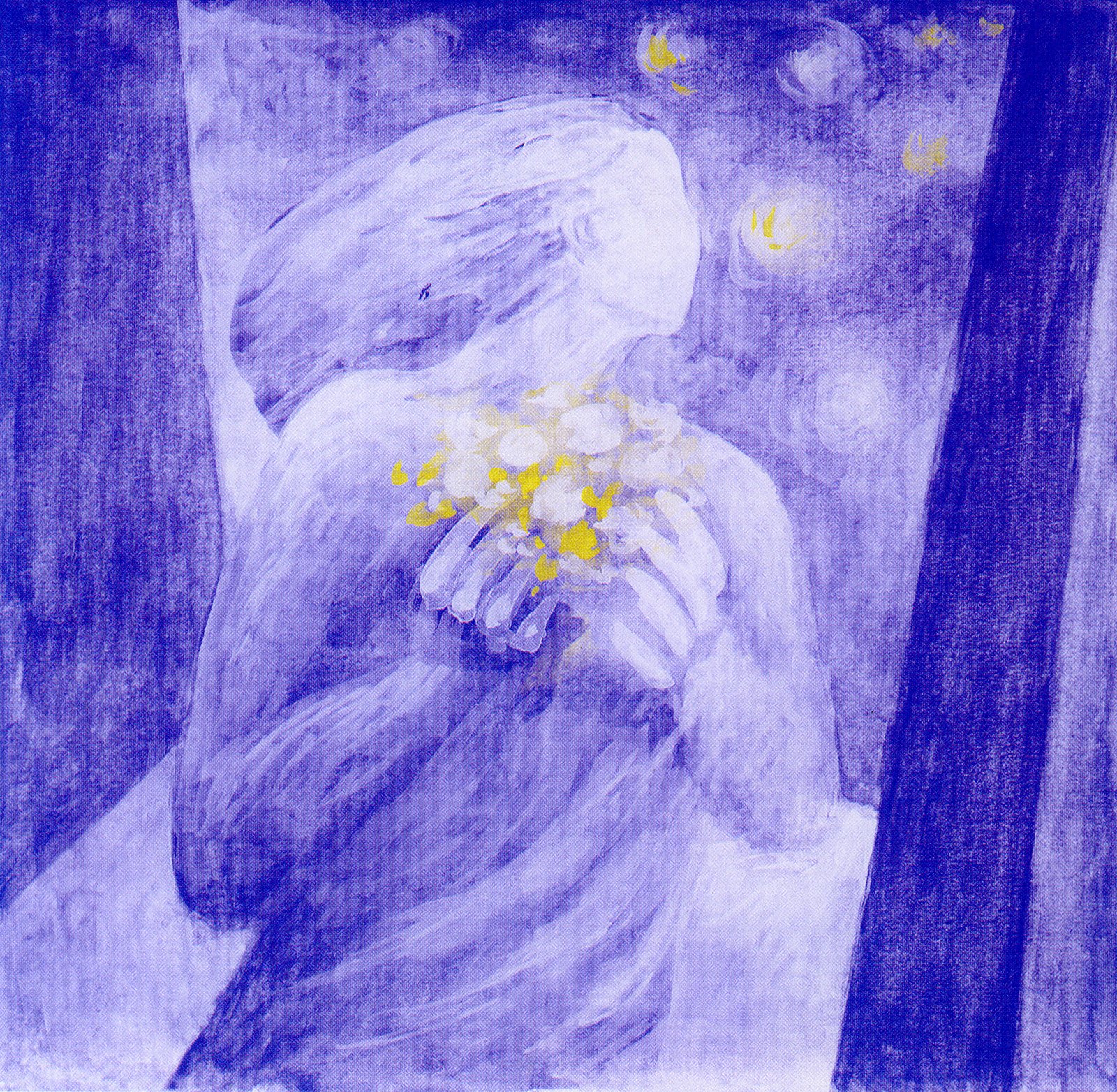
There are two ways of thinking about colour and light in painting. A painter can add light to the surface, often in oil painting, gradually bringing lighter colours forward. Or the painter can draw light out from within the painting, as though it were already present in the canvas.
Some of the works I discuss in this interview follow the second approach. My attention is less on light as a material effect than on the luminous structure of colour. Rather than simply naming a colour, the viewer may recognize the light within it.
The memory of a colour
A desert memory might lead me to ochre. In summer, the mountains north of Tehran can have that colour; at particular hours, the Caspian Sea offers blues and greys. Colours begin in observations of nature and remain in our minds.
Yet we cannot always know why we choose a particular colour for a particular painting. Its meeting with form can happen without a fully conscious explanation. Each work is a distinct event whose emergence we do not entirely understand.
Spontaneity and preparation
The line changes with the brush you hold. But spontaneity becomes possible only after you have acquired the necessary abilities. That sudden, apparently unplanned moment depends on technical preparation. Freedom in execution is supported by the work that came before it.
The two-dimensional surface
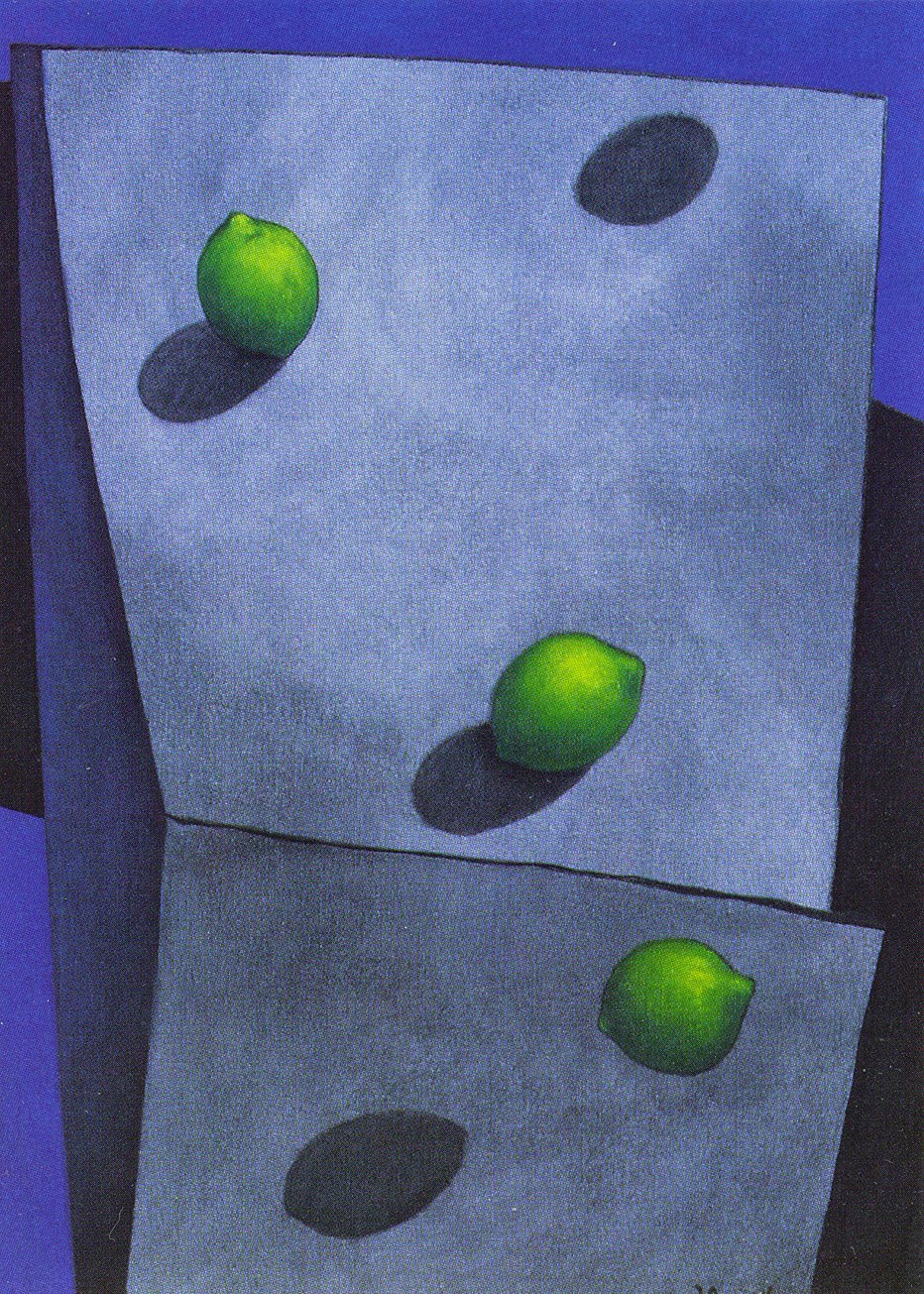
I question the need to create an illusion of three dimensions on a two-dimensional surface, or to treat linear perspective as the natural aim of painting. A distant object appears smaller, but it has not actually become smaller. We know that corresponding sides of a table are equal, yet perspective makes the farther edge shorter.
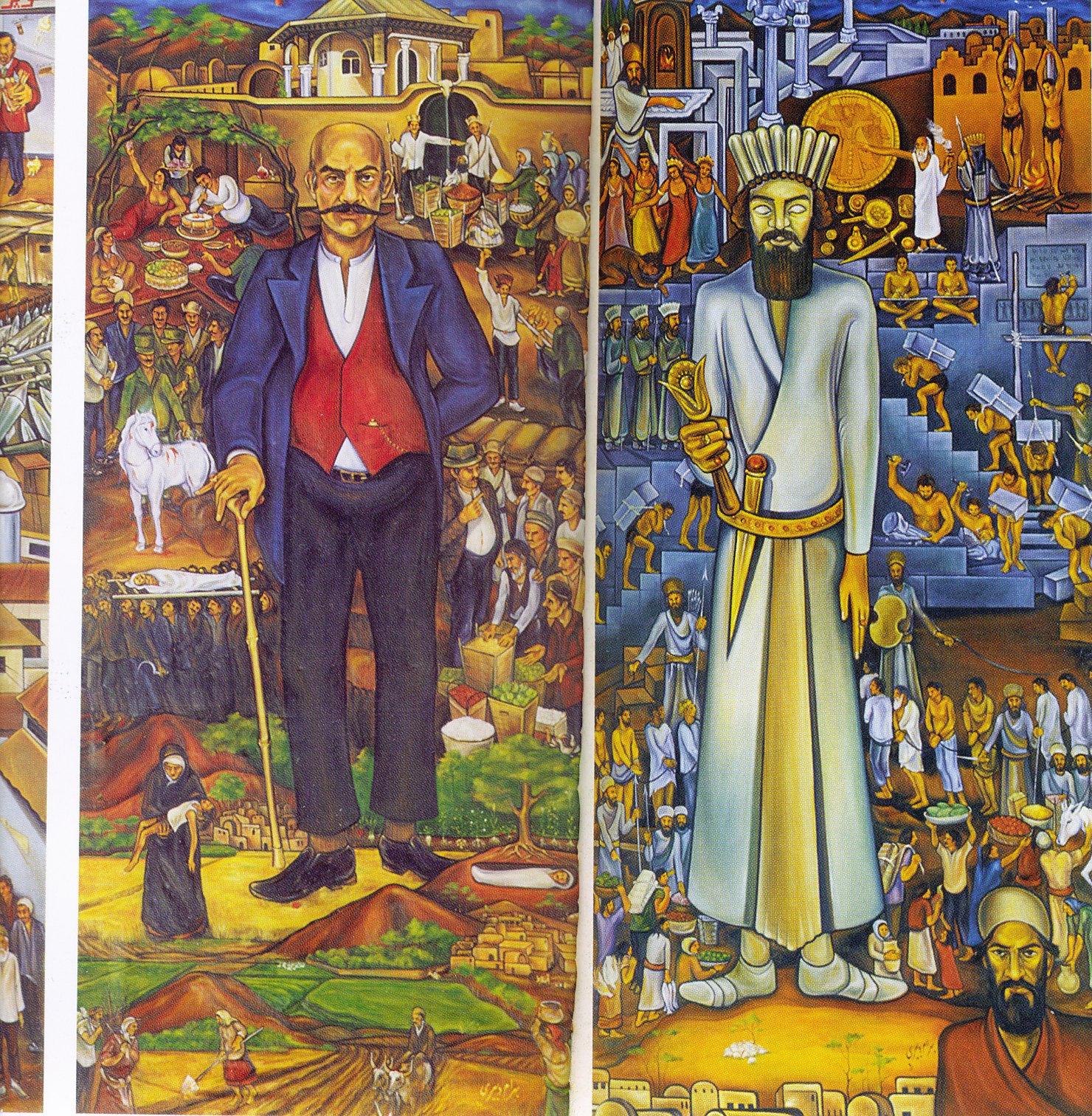
Iranian miniature painting does not rely on a single vanishing point. This is not a lack of knowledge. Space can be organized through successive levels: we see the foreground, the inside of a room, the roof, the hills behind a house and the soldiers upon them.
Such painting rests on knowledge as much as on eyesight. A figure in the distance may have eyes and eyebrows as carefully drawn as those of a figure in the foreground, although ordinary vision would blur those details. These are two different visual logics and two different aesthetics.
Perspective should not be mistaken for the sole measure of visual ability. I believe painting should remain faithful to being a two-dimensional art.
ویرایش متن فارسی مصاحبه برای وضوح و خوانایی، با حفظ مضمون گفتوگو. گفتار متن فیلم بهصورت جداگانه مشخص شده است.
خط، فرم و گذشته
من در سال ۱۳۲۹ در شیراز به دنیا آمدم. هیچوقت به معنای دقیق کلمه نقاش کوبیست نبودهام، اما کوبیسم دربارهٔ حجم، فرم و نحوهٔ استقرار آنها در اثر، چیزهای زیادی به من آموخته است. در روش کوبیسم نوعی استحکام برای درک طراحی وجود دارد که به من کمک کرده است.
پیش از انقلاب تلاشهایی میشد تا نقاشی ایرانی را با نشانههایی مانند زنان با ابروهای پیوسته، شکل خاص متکا و جزئیاتی از این دست تعریف کنند. استنباط من از گذشته چنین نیست. توجهم بیش از نشانههای دورهٔ صفویه یا قاجار، به نقاشی و تصویرسازی ایران پیش از اسلام است.
نمایش بیشترنمایش کمتر
دورهای اسطورههای ایران و دیگر فرهنگها، بهویژه مصر، را مطالعه کردم. معناها، چهرهها و نشانههای آنها برایم جذاب بودند؛ از اسب و خوشههای گندم تا شیوهٔ تصویرکردن این عناصر.
طراحی و پیوستگی تاریخ هنر
برای رسیدن به فرم مخصوص پرترهٔ زنان، سیوپنج سال هر روز طراحی کردم. در آثاری که اینجا دربارهشان صحبت میکنم، نوعی رفتار آزاد با خط دیده میشود: قلم روی بوم قرار میگیرد و اندام یا فرم، بدون اصلاح، طراحی میشود. این روش به رفتاری نزدیک است که در نقاشی ایرانی «قلمگیری» نام دارد.
مقایسهٔ ماتیس با نقاشان ایران، بهویژه مکتب شیراز، میتواند نزدیکیهایی را در پالت رنگ، گلها، پارچهها و شیوهٔ قلمگذاری نشان دهد. امکانات بصری در هر دوره با تغییراتی دوباره به کار گرفته میشوند. برای من، تمام تاریخ هنر رودخانهای بههمپیوسته است.
تغییر در هنر
در هنر تغییر وجود دارد، نه پیشرفت به معنایی که در پزشکی، حقوق یا ابزارسازی میشناسیم. در آن حوزهها، هر مرحله ممکن است کاستیهای مرحلهٔ پیشین را جبران کند. در هنر، خلاقیت و مکاشفه در همین تغییر آشکار میشوند.
چه کسی میتواند بگوید «داوود» میکلآنژ بهتر از نقشبرجستههای نقش رستم است، حافظ بهتر از گوته یا فردوسی بهتر از هومر؟ در مقایسهٔ فرهنگها و سدهها نیز همین مسئله وجود دارد. اثر هنری یا هست یا نیست؛ چه روی دیوار غار باشد و چه در موزه.
نمیتوان بهسادگی کار پیکاسو را پیشرفتهتر از نقاشی روی کوزههای سیلک دانست. هنر با انسانها، زمانها و شرایط مختلف پیوسته تغییر میکند، اما این تغییر به معنای سلسلهمراتب پیشرفت نیست.
واژگان تصویری
موضوعهای نقاشیهایم ابتدا با ساختار بصریشان مرا جذب میکنند، هرچند معنا هم اهمیت دارد. به آنها «واژه» میگویم؛ واژگانی که با آنها نقاشی میکنم.
زن مهمترین این واژههاست. زن یا مرد بهعنوان نشانهٔ آدمیزاد حضور دارد و در کنار آن، عناصری قرار میگیرند که دوستشان دارم یا در زندگی و دورهای خاص برایم معنا داشتهاند: خوشهٔ گندم، گلهای وحشی، اسب، بز، خروس، کبوتر و انگور. ماهی و انار نیز در همین واژگان جای دارند. جذابیت بصری و تجربهٔ زیستهام از این عناصر از هم جدا نیستند.
سبک و محدودیت واژهها
برای من، آنچه اهمیت دارد خودِ کار است. یک امکان هنری در دورههای مختلف جریان پیدا میکند و گرایشهای آن به دورههای بعد منتقل میشود. اگر چهرهای را با چند مشخصهٔ ثابت ایرانی بنامیم، باید پرسید کدام مشخصهها، وقتی خود اقوام ایرانی اینهمه تفاوت دارند؟
به ادعاهای مالکیتی که از تعریفهای محدود سبک پدید میآیند بدبینم. وقتی دربارهٔ نقاشی صحبت میکنیم، ساختاری بصری را به واژه تبدیل میکنیم؛ همین تبدیل میتواند آغاز سوءتفاهم دربارهٔ نقاشی باشد.
گفتوگوی فرهنگها
چون بخش بزرگی از گذشتهٔ خود را نمیشناسیم، گاهی آن را از راه غرب دوباره کشف میکنیم. این را اتفاق بدی نمیدانم. به تداخل دائمی فرهنگها باور دارم؛ فرهنگها یکدیگر را میخواهند، جذب میکنند و از راه این تبادل زنده میمانند.
نشانههایی که در اسطورههای ایران میبینیم، در اسطورههای یونان هم دیده میشوند. موضوعهای کلاسیک در هنر دورههای بعد بازمیگردند؛ از جمله در توجه پیکاسو به فرمها، اندامها و پوششهای یونانی.
صورتهای بسیار سادهشدهٔ حیوانات روی سفالهای مارلیک، شناخت عمیقی از ساختار بصری نشان میدهند. به همین دلیل، میان مدرنیسم و سنت نقاشی ما تضاد ناگزیری نمیبینم.
مدرنیسم و خاطرهٔ فرهنگی
مدرنیسم در اروپا و در نقاشی بهویژه در فرانسه آغاز شد، اما از فرهنگهای دیگر تأثیر بسیار گرفت. ژاپن، آفریقا، ایران و فرهنگهای بومی قارهٔ آمریکا در این دگرگونی سهم داشتند. هنر در گردش است. مهم این است که زبان هنری زمان خود را بشناسیم و بتوانیم با آن گفتوگو کنیم.
به نوعی خاطرهٔ جمعی فرهنگی باور دارم: چیزی از تاریخ، زبان و فرهنگ با ما میماند، چه آگاهانه آن را آموخته باشیم و چه نه. آموختن میتواند این ادراک را عمیقتر کند، اما حتی وقتی هویت ملی موضوع مستقیم کار نیست، ممکن است کیفیتی ایرانی در اثر پدیدار شود.
شعر نیما را در نظر بگیرید. ساختارش با غزل و قصیده تفاوت بنیادی دارد و با شعر فرانسه وارد گفتوگو میشود، اما همچنان ایرانی است؛ کوهها، دریای خزر و ساحل را میتوان در آن حس کرد.
چهره فراتر از حالت گذرا
در پرتره، حس بیزمانی را به چهرهای با بیان عاطفی مشخص و گذرا ترجیح میدهم. صورتهایی که میکشم، اشخاص قابلشناسایی کوچه و خیابان نیستند. جایگاه اجتماعیشان روشن نیست و بهآسانی نمیتوان گفت شادند، غمگیناند یا در فکر فرو رفتهاند.
این چهرهها حالت هیجانی معینی را اعلام نمیکنند. کیفیتی نزدیک به این را در تاریخ نقاشی و مجسمهسازی ایران میبینم: صورتهایی که نه میگریند، نه فریاد میزنند و نه شوقی زودگذر را نمایش میدهند. در وضعیتی فاخر و خاموش قرار دارند که آن را از ویژگیهای کلاسیک میدانم.
رنگ و نور
دو شیوه برای اندیشیدن به رنگ و نور در نقاشی وجود دارد. نقاش میتواند نور را به سطح اثر اضافه کند؛ روشی که در نقاشی رنگروغن، با پیشآوردن تدریجی رنگهای روشن، دیده میشود. یا میتواند نور را از درون تابلو بیرون بکشد، گویی نور از پیش در بوم حضور داشته است.
بخشی از آثاری که در این مصاحبه دربارهشان صحبت میکنم، با روش دوم شکل گرفتهاند. توجهم بیش از جلوهٔ مادی نور، به ساختار نوری رنگ است. بیننده شاید پیش از نامگذاری رنگ، نور درون آن را تشخیص دهد.
خاطرهٔ رنگ
ممکن است خاطرهای کویری مرا به رنگ اُکر برساند. کوههای شمال تهران در تابستان چنین رنگی دارند؛ آبیها و خاکستریها را هم در ساعتهایی از روز میتوان در دریای خزر دید. رنگها از مشاهدهٔ طبیعت آغاز میشوند و در ذهن میمانند.
با این حال، همیشه نمیدانیم چرا برای یک نقاشی رنگ مشخصی را انتخاب میکنیم. پیوند رنگ و فرم ممکن است بدون توضیحی کاملاً آگاهانه شکل بگیرد. هر اثر اتفاقی مستقل است که چگونگی پیدایشش را بهتمامی نمیشناسیم.
بداهه و آمادگی
خط با قلمی که در دست میگیریم تغییر میکند. اما بداههپردازی زمانی ممکن میشود که تواناییهای لازم را به دست آورده باشیم. آن لحظهٔ ناگهانی و بهظاهر بیبرنامه، به آمادگی فنی وابسته است. آزادی در اجرا بر کاری تکیه دارد که پیش از آن انجام شده است.
سطح دوبعدی
ضرورت ایجاد توهم سهبعدی روی سطح دوبعدی، یا تلقی پرسپکتیو خطی بهعنوان هدف طبیعی نقاشی را زیر سؤال میبرم. چیزی که دور میشود کوچکتر به نظر میرسد، اما واقعاً کوچکتر نشده است. میدانیم ضلعهای متناظر یک میز برابرند، ولی در پرسپکتیو ضلع دورتر کوتاهتر ترسیم میشود.
نقاشی مینیاتور ایرانی به یک نقطهٔ گریز متکی نیست و این به معنای ناآگاهی نیست. فضا میتواند با مرتبههای پیدرپی سامان یابد: پیشزمینه، داخل اتاق، پشتبام، تپههای پشت خانه و سربازان روی آنها را همزمان میبینیم.
چنین نقاشیای همانقدر که بر بینایی تکیه دارد، بر آگاهی نیز استوار است. چشم و ابروی پیکرهٔ دوردست ممکن است به دقت پیکرهٔ پیشزمینه ترسیم شود، هرچند در دید معمول آن جزئیات محو میشوند. اینها دو منطق بصری و دو زیباییشناسی متفاوتاند.
پرسپکتیو را نباید تنها معیار توانایی بصری دانست. به اعتقاد من، نقاشی باید به دوبعدیبودن خود وفادار بماند.
Artworks
Show MoreShow Less




Felt
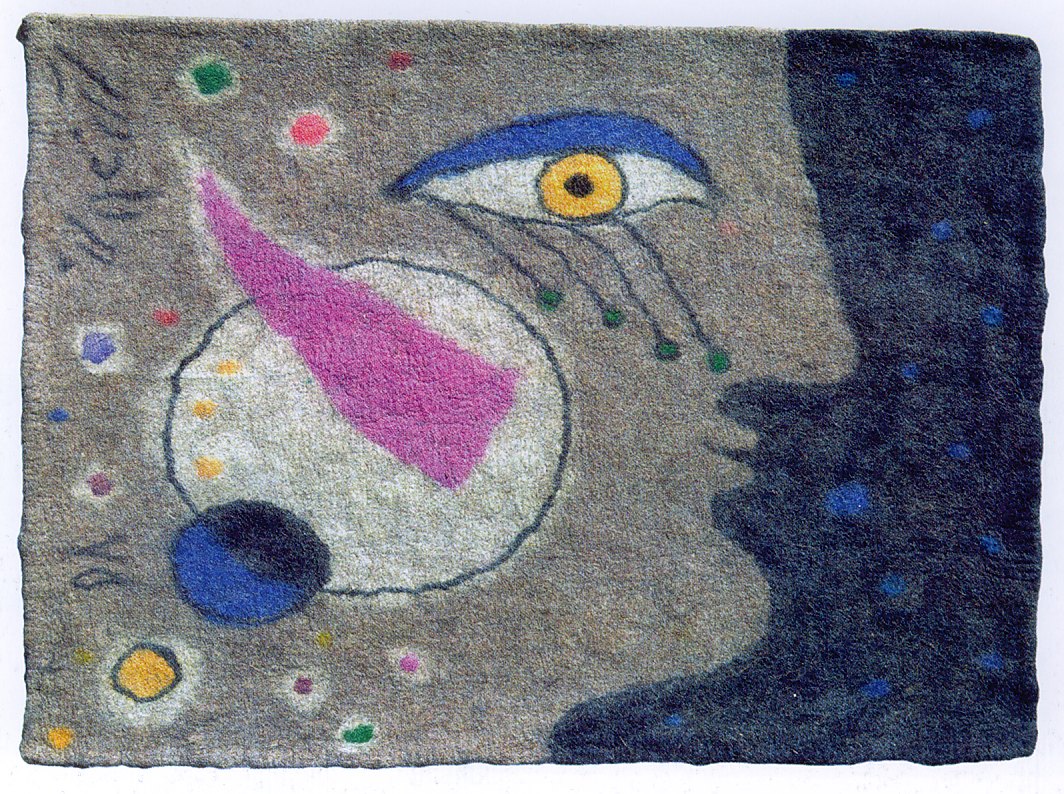
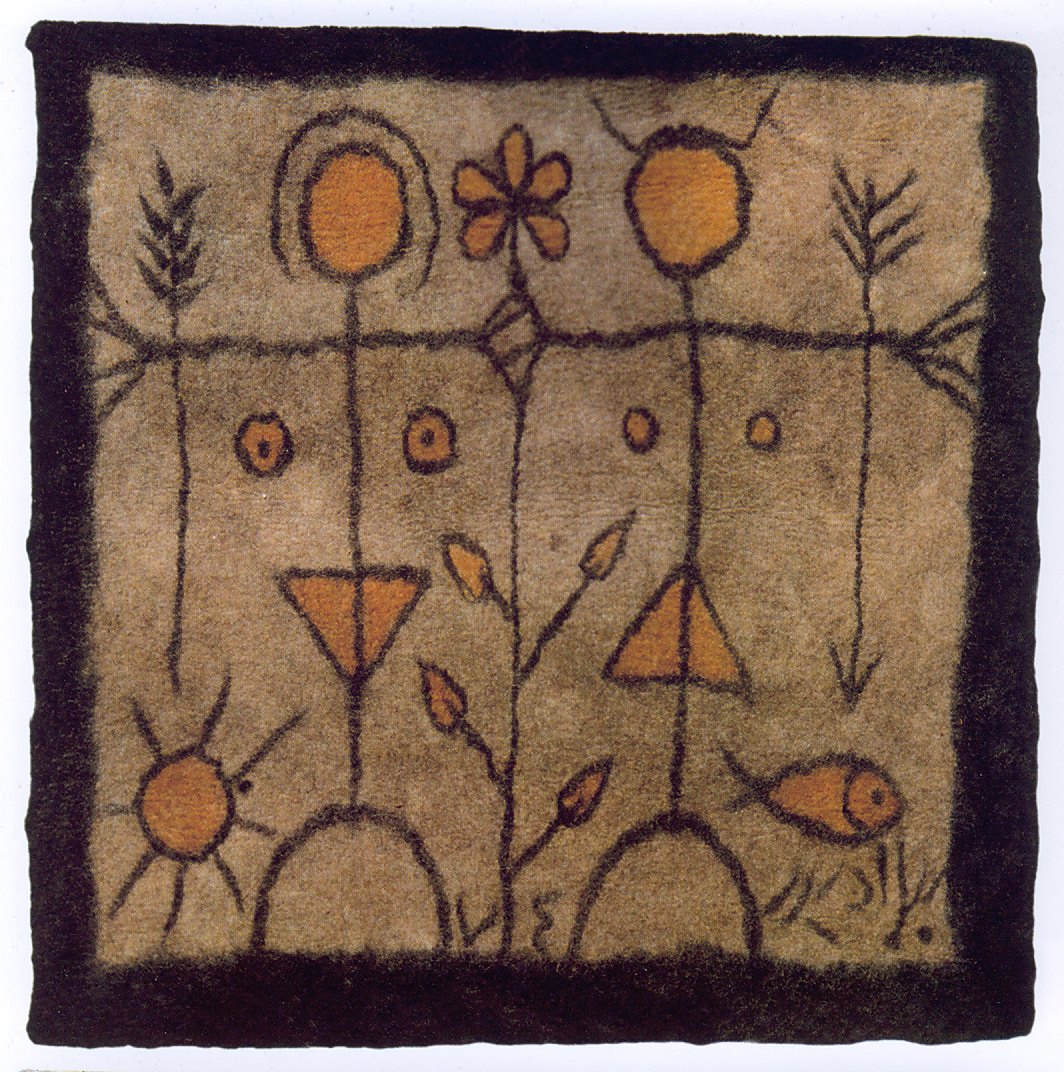
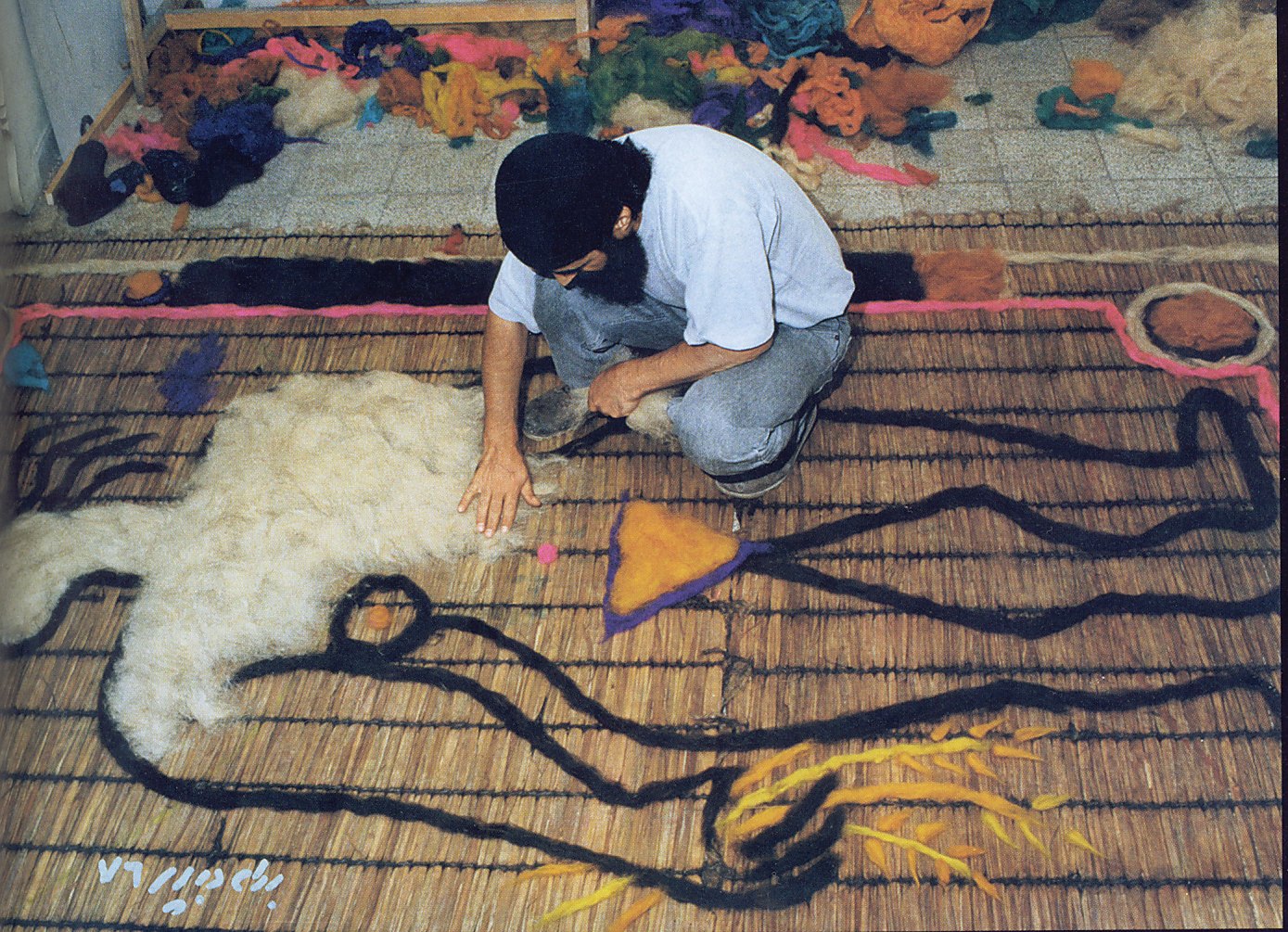
Metal
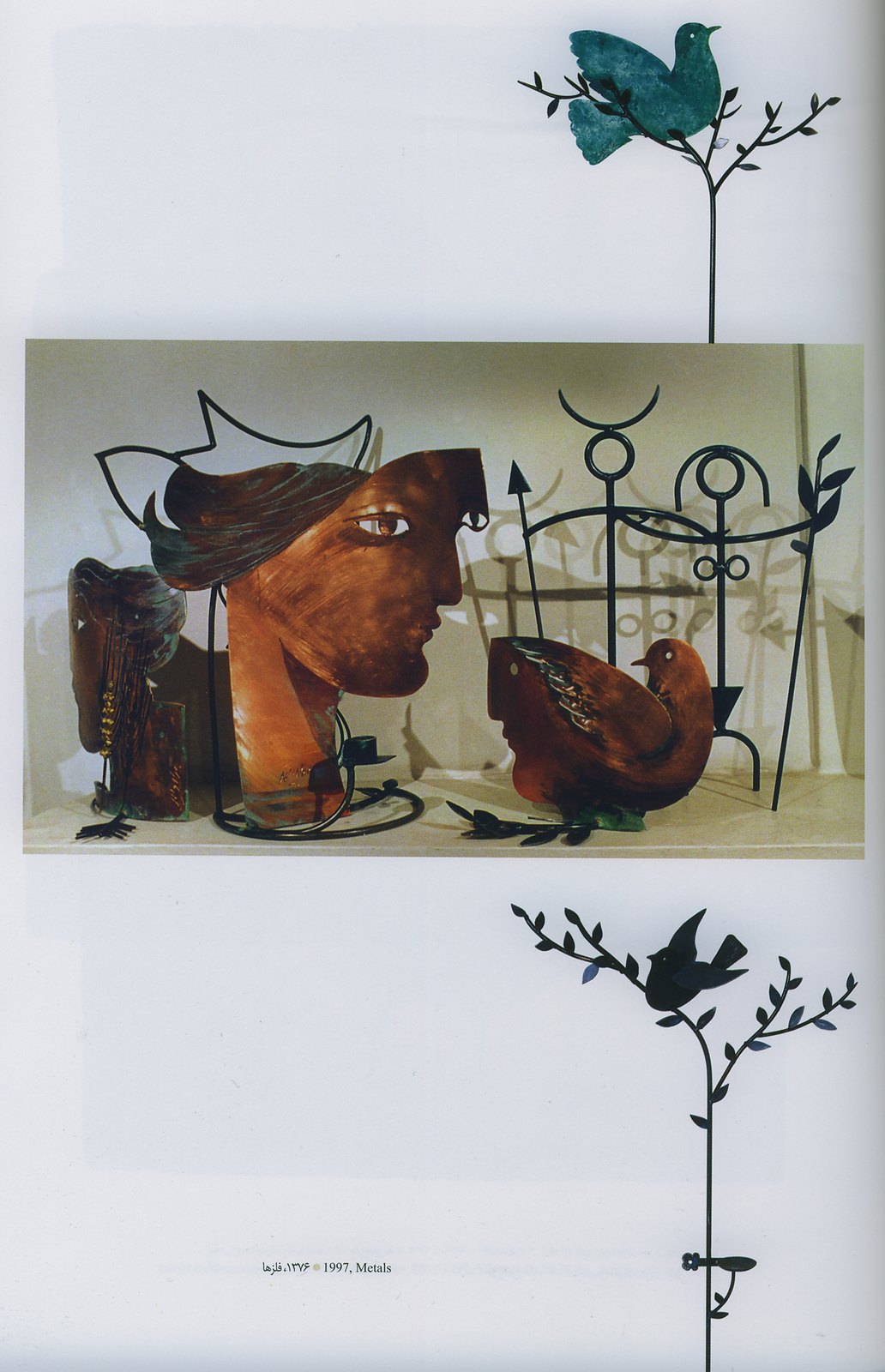
Plates
Archival photographs