Home · Artists · About Feri Motion Makers · Farivar Hamzeyi · Support · Contact
Jamshid Haghighat Shenas — جمشید حقیقتشناس

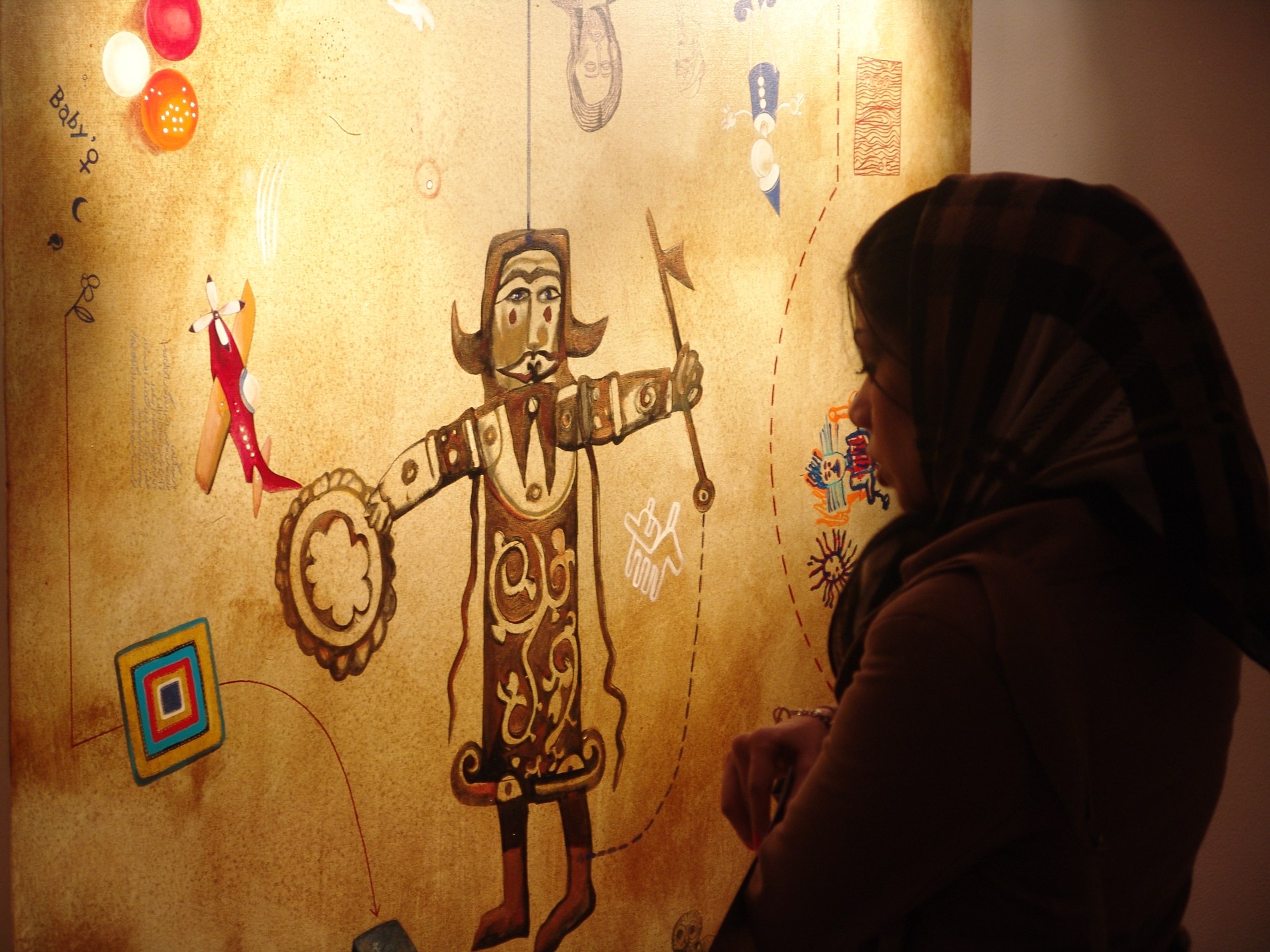
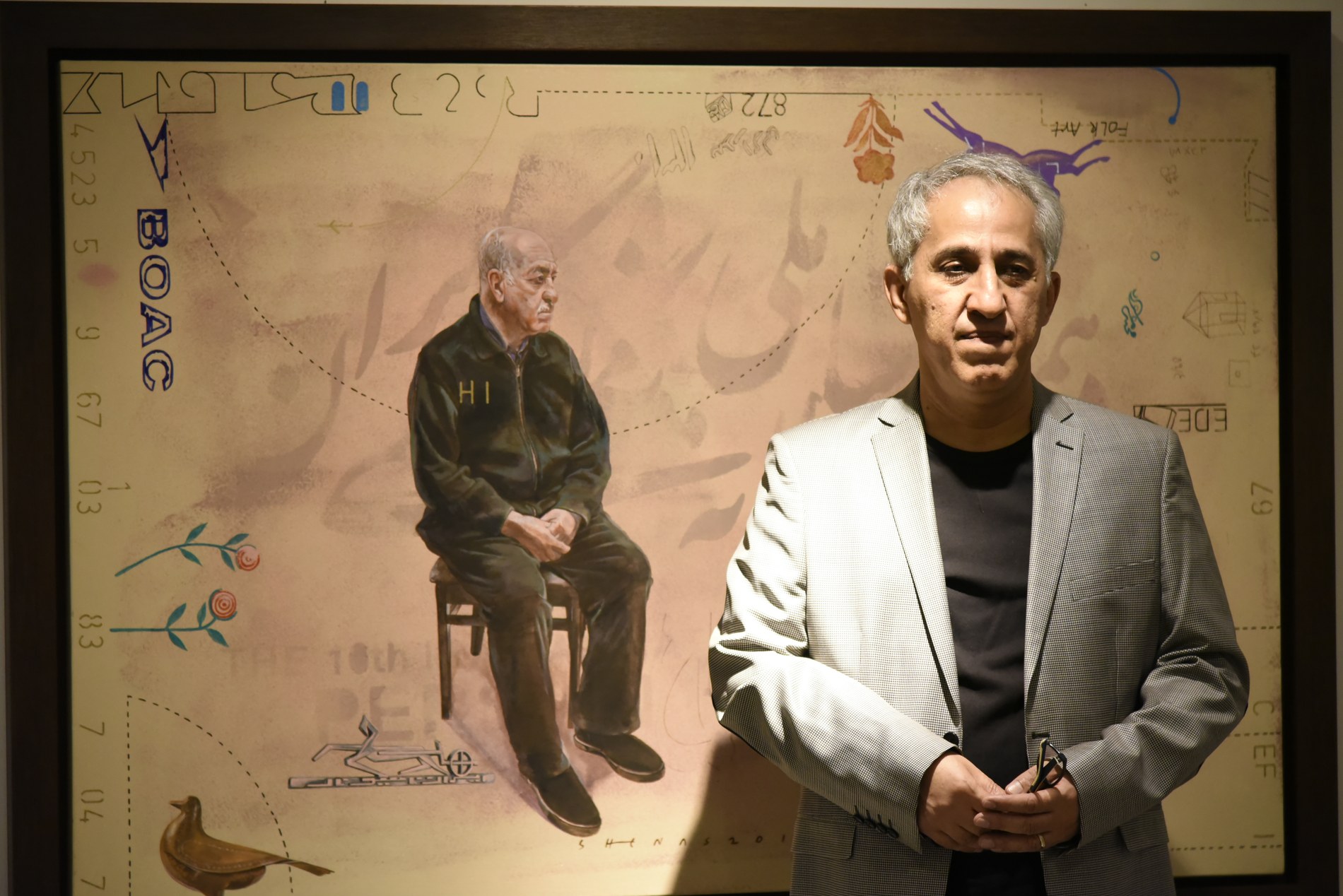
Jamshid Haghighat Shenas (born 1962 in Tehran) is an Iranian painter and arts administrator whose practice also extends to sculpture, installation and new media.
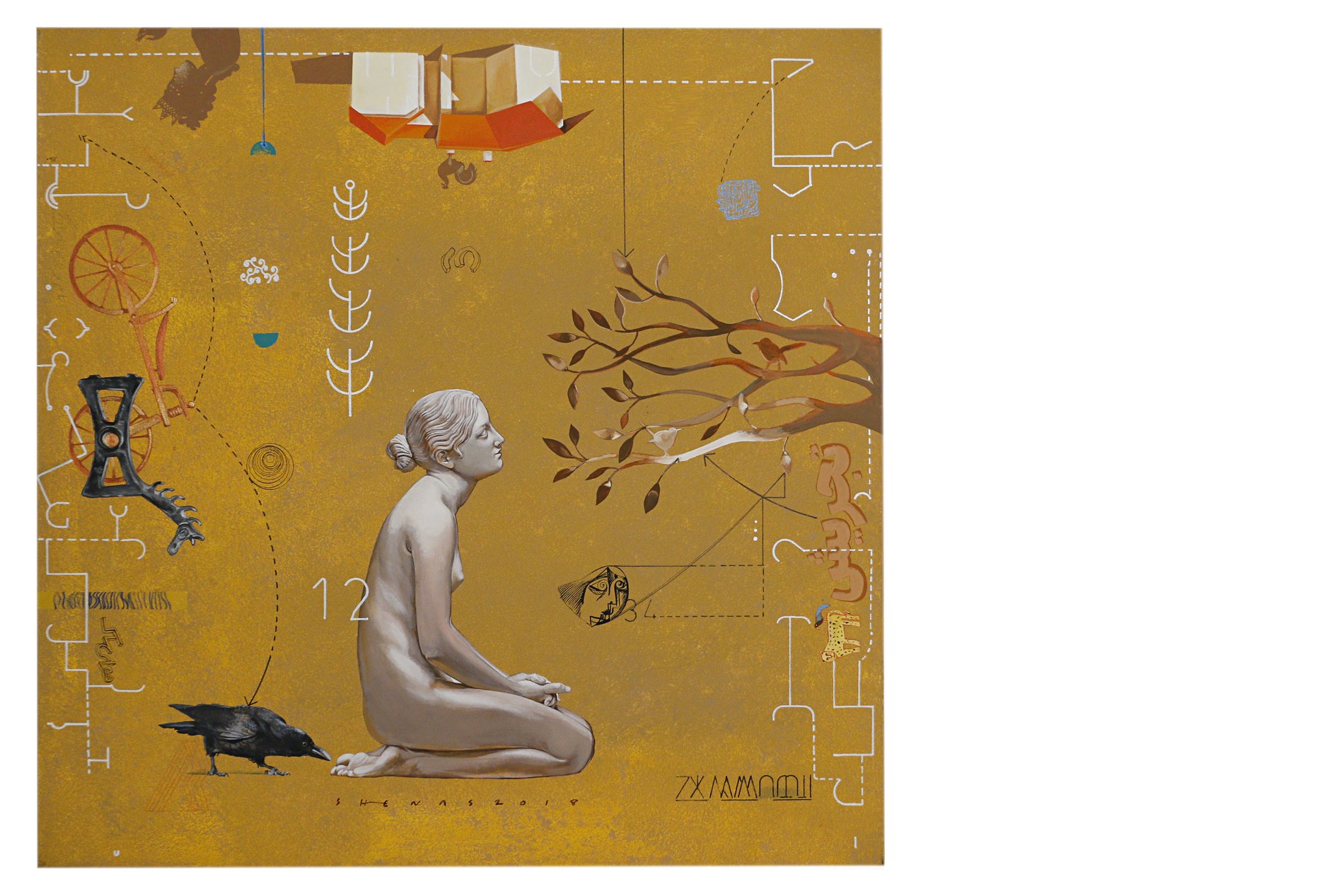
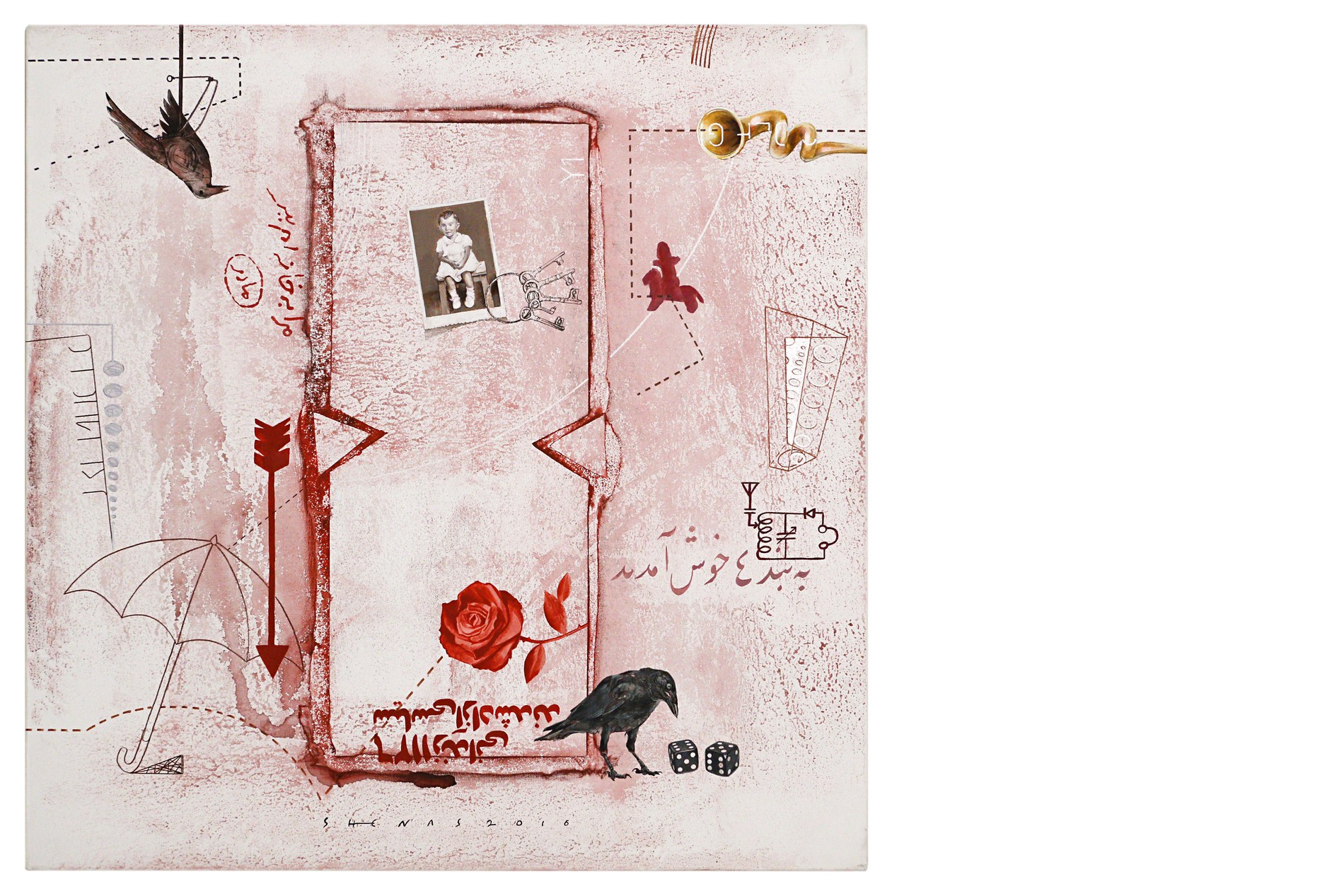
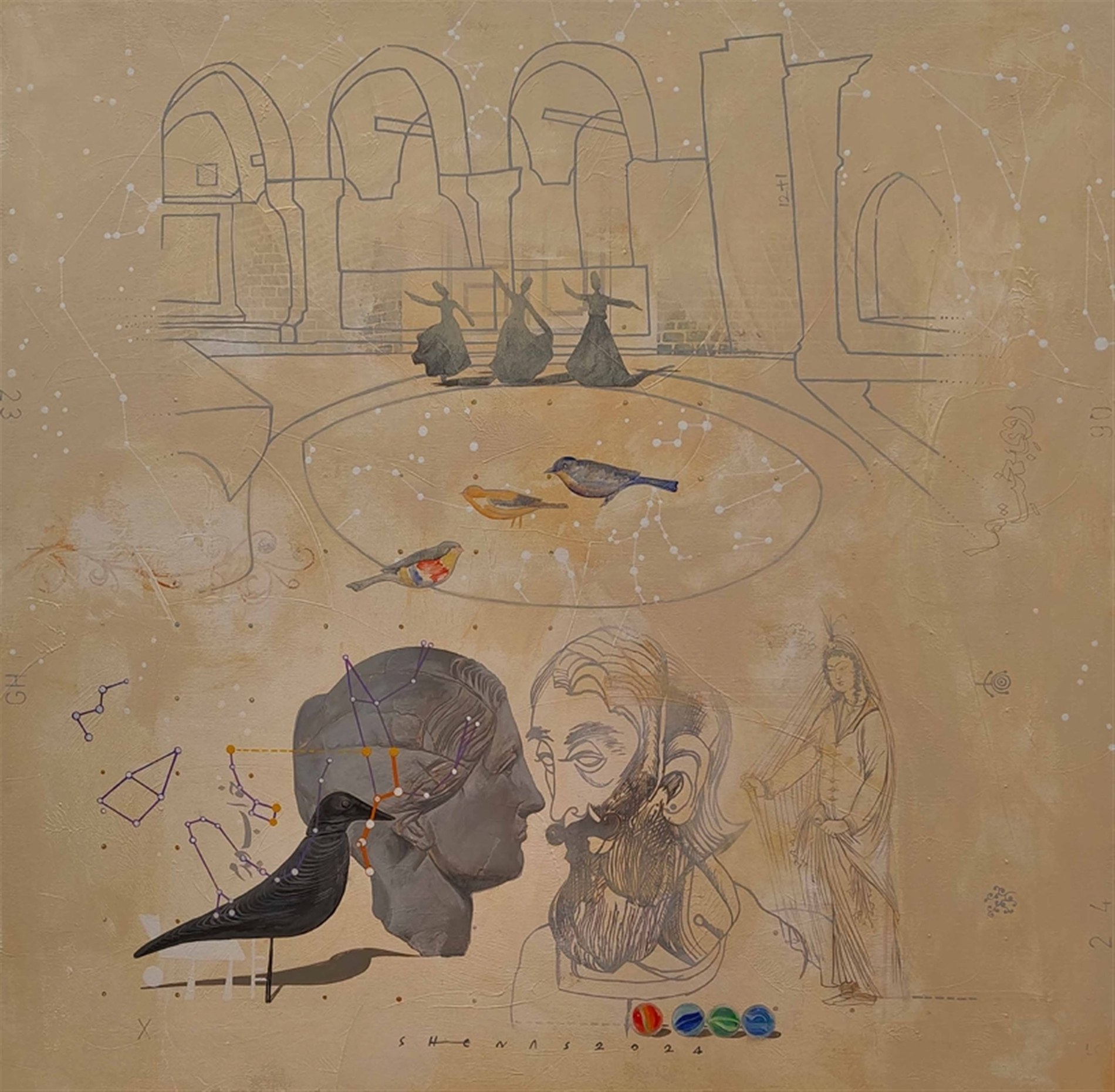
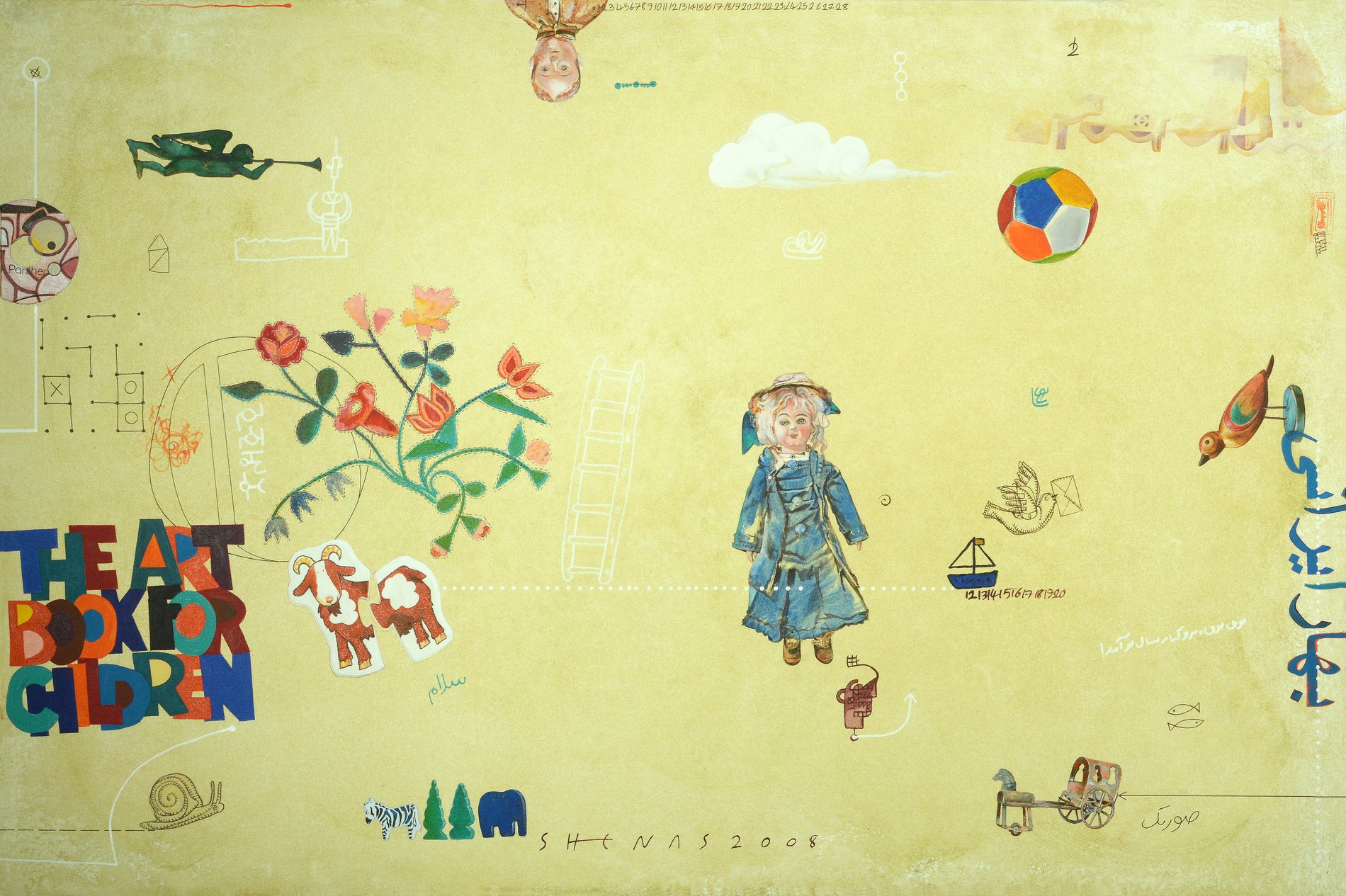
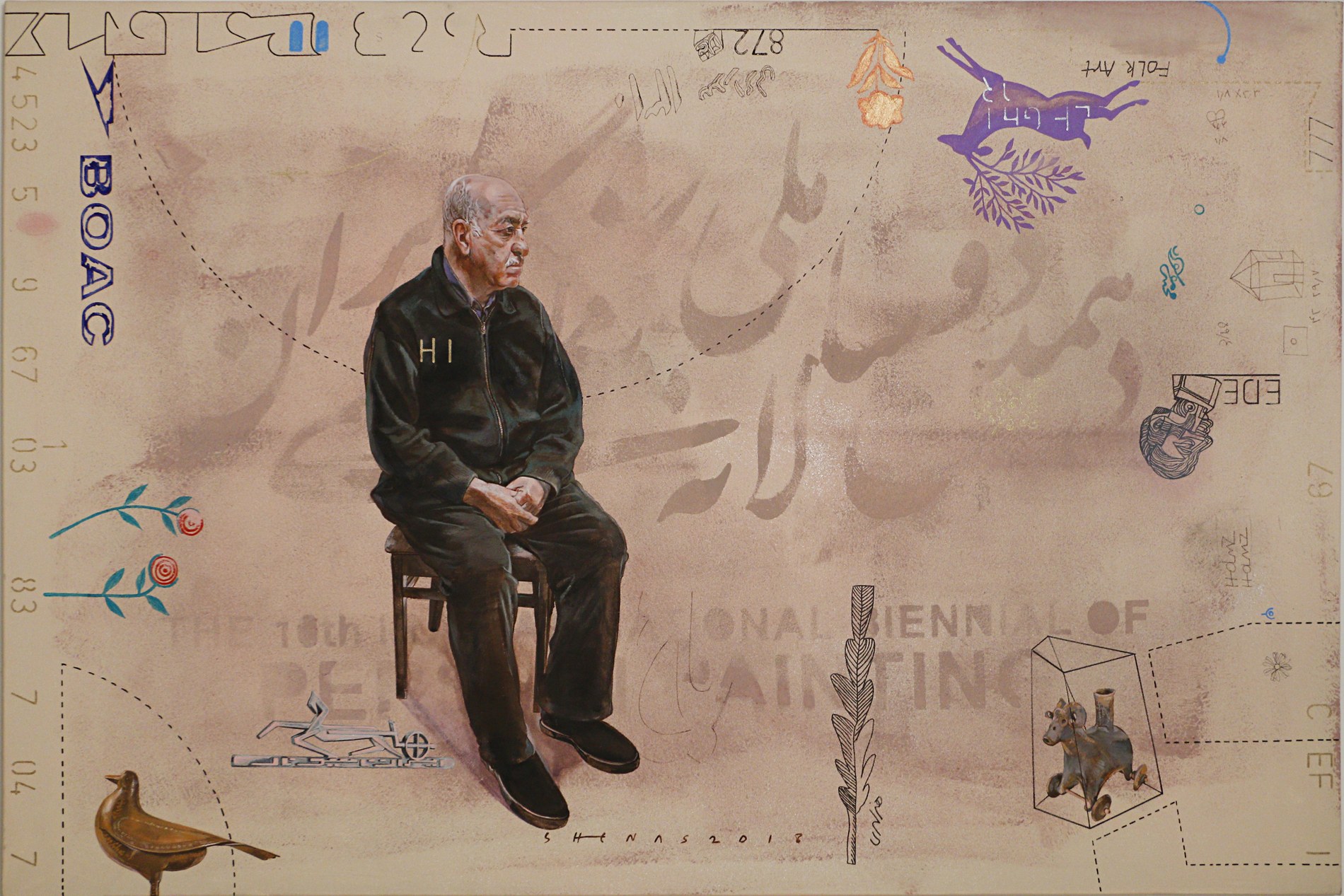
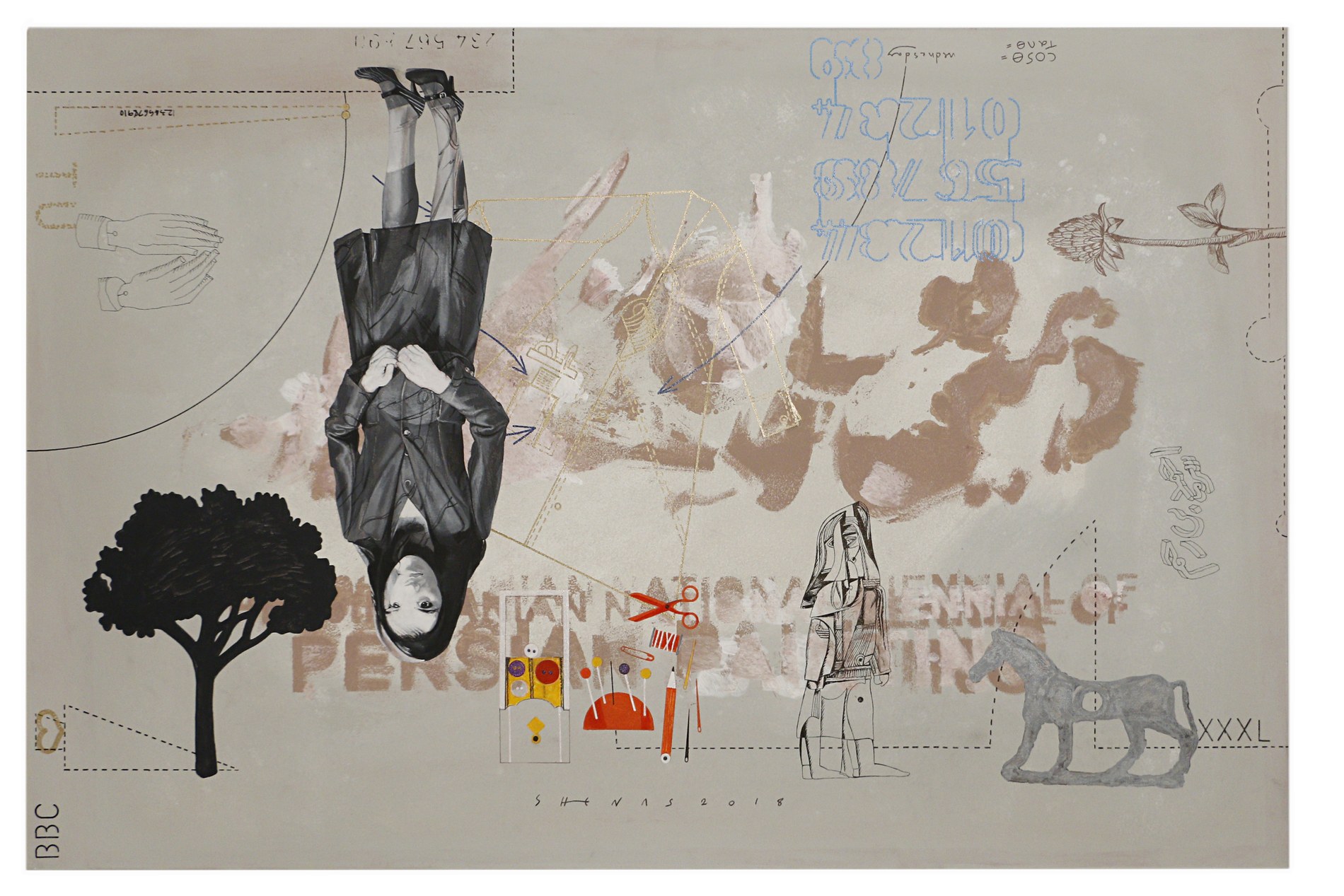
Drawing on Persian literature, mythology, astronomy, botany and architecture, his paintings examine how historical knowledge and contemporary life can be brought into a shared visual structure.
جمشید حقیقتشناس (متولد ۱۳۴۱ در تهران) نقاش و مدیر هنری ایرانی است که فعالیتهایش مجسمهسازی، چیدمان و هنر جدید را نیز در بر میگیرد.
آثار او با بهرهگیری از ادبیات فارسی، اسطوره، نجوم، گیاهشناسی و معماری، پیوند دانش تاریخی و زندگی معاصر را در ساختاری تصویری جستوجو میکنند.
Film · فیلم
Interview · گفتوگو
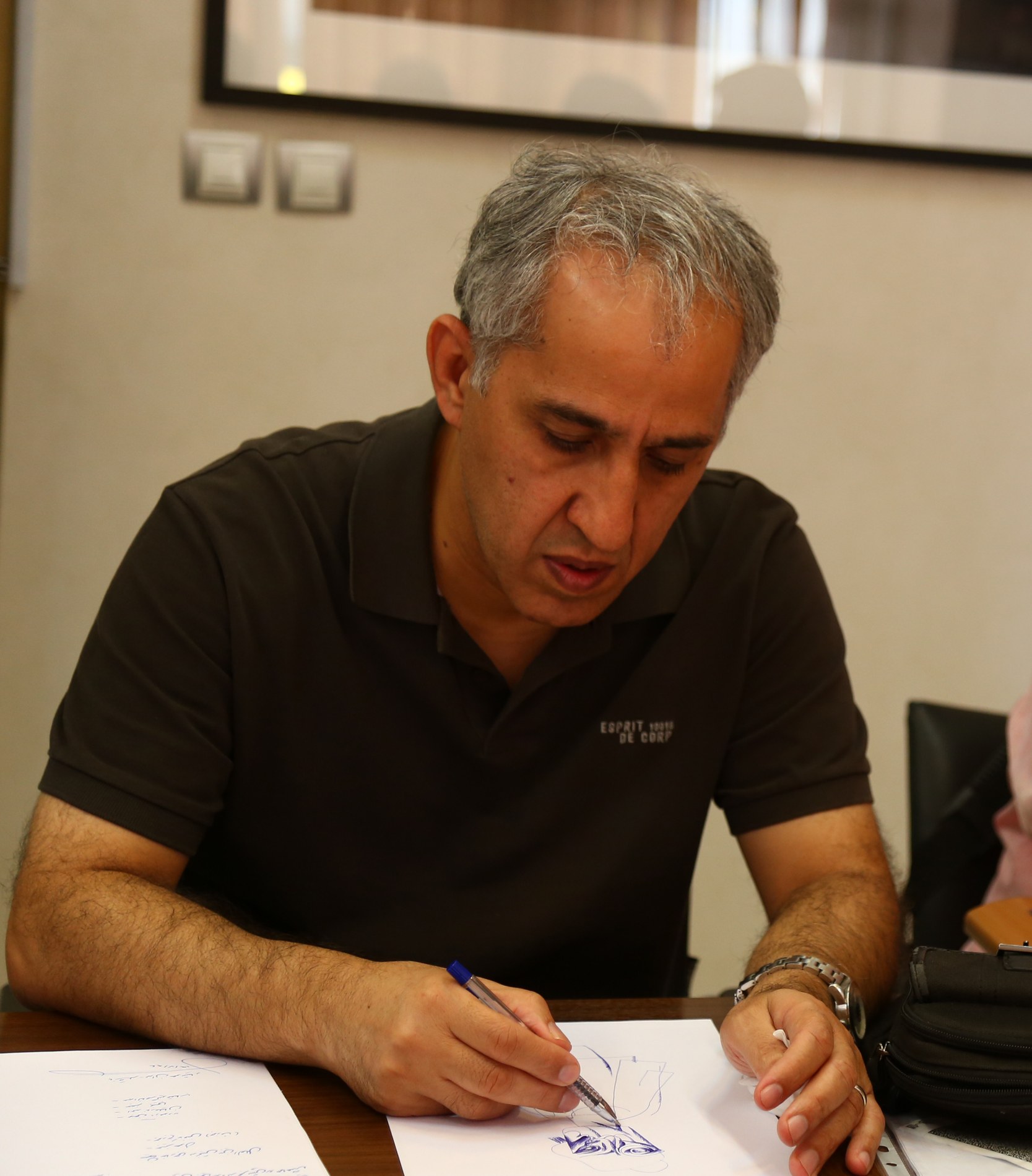
I am Jamshid Haqiqatshenas; a painter, born in 1962 in Tehran and graduated from the Faculty of Fine Arts of Tehran University with a degree in painting. Since I entered university in 1985—and of course I worked before that—I have been active in various fields of art, from painting and sculpture to installation, new art, and art management; in fact, anything directly or indirectly related to art.
جمشید حقیقتشناس هستم؛ نقاش، متولد ۱۳۴۱ در تهران و فارغالتحصیل رشتهٔ نقاشی از دانشکدهٔ هنرهای زیبای دانشگاه تهران. از سال ۱۳۶۴ که وارد دانشگاه شدم—و البته پیش از آن هم کار میکردم—تا امروز در زمینههای مختلف هنری، از نقاشی و مجسمه تا چیدمان، هنر جدید و مدیریت هنری فعالیت کردهام؛ در واقع هر چیزی که مستقیم یا غیرمستقیم به هنر مربوط باشد.
Show More / ادامهٔ گفتوگوShow Less / جمع کردن
Before art, I had studied another field and wanted to become a lawyer. Universities were closed during the Cultural Revolution, and it was unclear when they would reopen. I decided to study an art field in the meantime so that when I got older, I could spend my free time with it! I enrolled in various classes, one of which was painting. I started painting and never looked for another job. Before that, I was also economically active, but I reduced it very much and specialized in art.
One of the obstacles to entering university was completing my military service. At first, I was reluctant to join the military, but I saw that I had to go through this stage in order to move forward on this path and enter university. Before joining the military, I had been pursuing painting and drawing seriously and professionally, and I had made my decision.
I completed my training course in the 16th Armored Division of Qazvin. One day, we were preparing for a parade, when I vowed to myself that I would do nothing but art; while the surrounding environment had nothing to do with such a decision. Then we were divided; I was at the front for a while and behind the front for a while. That period was a very interesting experience for me. I think there was very little in the military that I had not drawn. Everyone knew me, called me by my name, and modeled for me; it was a very good practice.
I continued to do the same thing wherever I was transferred. I had various invitations to work for them. During those two years, from mural painting to various artistic experiences, I did things that might never have happened if I had not been in the military.
After my military service, I decided to study. The majors had changed, and for a few months I did nothing but study. I entered university with a good rank. In those years, the results of the entrance exam were announced in two rounds; the entrance in Mehr and the entrance in Bahman. Despite my good rank, I did not enter Mehr, and I used this gap to strengthen my drawing.
When I entered university, I put my first solo exhibition of drawings on the panels of Tehran University. From there, the door to many friendships opened; friendships that some still continue. I met many people.
University and the search for knowledge beyond painting
In university, my main question was what could university teach me that I could not learn outside of it. For this reason, I became acquainted with different disciplines: literature, philosophy, and especially architecture. Architecture was very attractive to me, although at that time I still did not know why.
We traveled a lot during those years. We had formed groups and went on work and design trips together. I was somewhere almost every week. I saw a large part of Iran at that time, I painted, and I enjoyed this experience very much.
Fortunately or unfortunately, I did not get involved in teaching very early. I thought that if I became a teacher from the beginning, I might not see many of the experiences that exist in the non-teaching space. Usually, a teacher gradually does what he teaches, while the story of art does not have these clear sizes and boundaries. I probably escaped from teaching for ten, twelve, or even twenty years and did various things during this time.
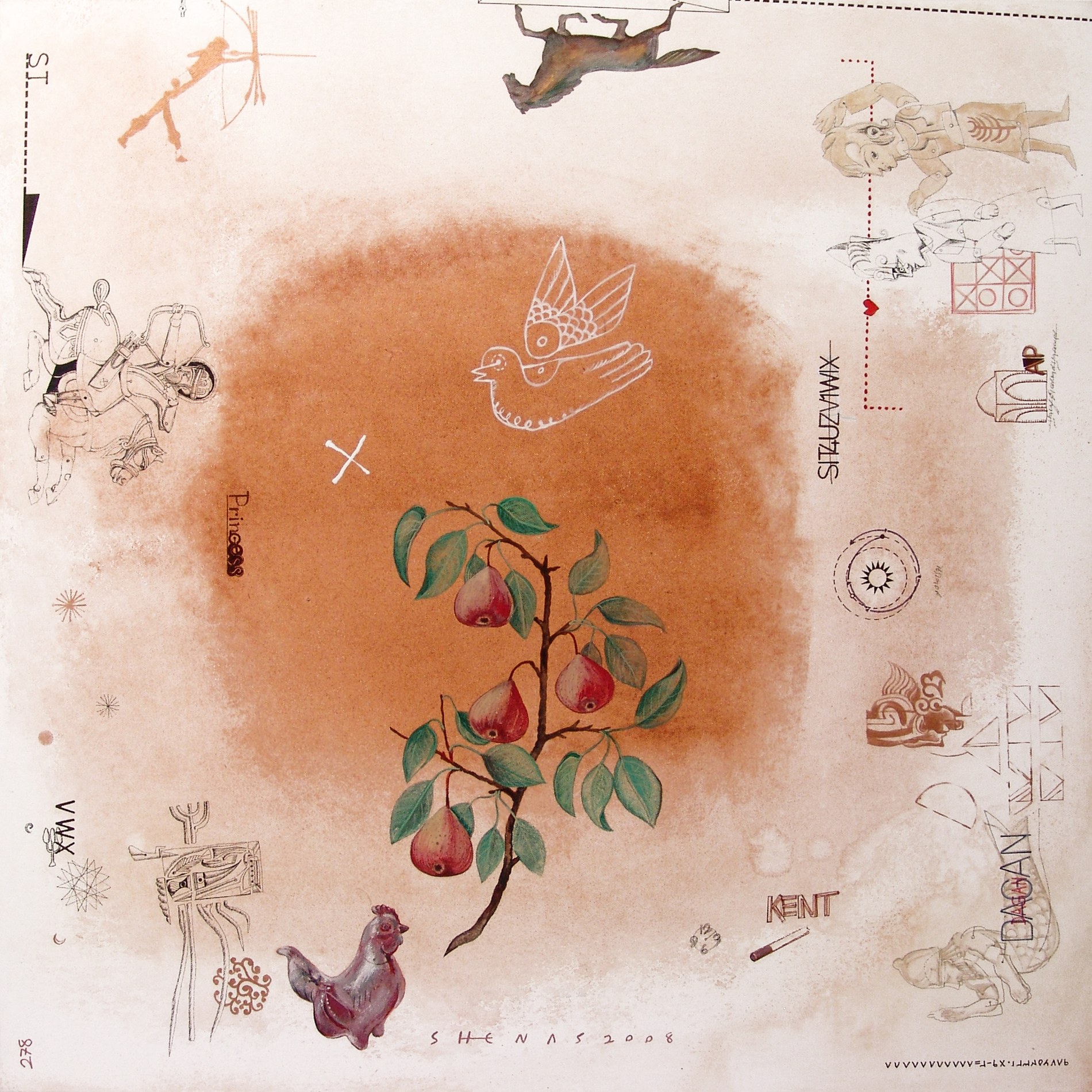
I made many collections. One of them was a large collection on the theme of Shahnameh that I painted on glass. For that collection, I had to change my design and do a lot of research. Research entered my work; the coloring, the size of my works, and the subjects changed.
I tried to put myself in the shoes of someone whose subject is the entire history of Iranian painting, from the beginning to the present. I had so many questions and I had to burst into tears while working to find the answers. The first exhibition I had after graduating at the Seyhun Gallery made friends who came to see the works ask, “Where have you been until now?” The works had brilliant colors; and that in the atmosphere of war. Where did these colors come from? This could only happen when you had searched the history and in that search you had found something worth seeing.
Many of the teachers we had were good artists themselves, but they didn’t necessarily know how to teach what they knew. It took me years to find drawing as drawing, painting as painting, and subject matter not as something imaginary and unrelated, but as something arising from social conditions and my own life; without necessarily having “society” or “community” as the subject of the work. This process is still ongoing.
Shahnameh, Iranian Mythology and Painting
The choices I make are interconnected. Without me wanting it, each topic leads to the next question and topic. When I was working on Shahnameh, I asked myself: Why is this text about the pre-Islamic world, even though it was composed in the Islamic period, in the fourth century? How do its characters and concepts change in the Islamic period? How are the same patterns re-emerging in the contemporary period?
After graduating, my first question was how and what the painters before me in Iran painted. This question seemed simple, but it was unusual in our education. Usually we repeat what we have been taught: if we learned figure drawing, we do the same, if we learned modernism, we do modern work, and if we learned painting, we do painting. I asked, if my father and grandfather had been painters, what and how would they have painted?
I saw that until the Pahlavi period, almost all our painters had worked with some kind of Shahnameh. When I turned to Shahnameh, I came across myths and characters that were present in our life, everyday language, literature, and painting, but I did not see their connection. By getting to know them, it was as if the scattered pieces of a puzzle suddenly fell into place. The colors, the design, and the place of everything became clearer to me.
I asked myself why, when the Seljuk painters depicted the Shahnameh, the heroes wore Seljuk clothing and appearance, and in the Qajar period the same characters became Qajar? In each period, the clothes, tools, lifestyle, and relationships of the time entered the picture. How could I go beyond the apparent repetition of these periods? I turned to archaeological findings; research that had expanded since the first Pahlavi period on pre-Islamic Iran and provided us with important information.
For example, I learned about the demons that they could be linked to the ancient inhabitants of the Iranian plateau and to narratives about the Dravidians. These same data changed the direction of the drawing. In pre-Islamic sculptures and images, everything was placed on one line: horses, people, and events. The earth was not a vast surface, but a line under the feet of man; the soles of the feet were on the ground and the whole body was in the sky. I used the same logic in my designs.
With these questions, I arrived at a collection of over a hundred paintings of pictorial situations from the Shahnameh: the meeting of Zal and Simorgh, the death of Rostam, the crossing of the river by Keykhosro and Farangis, weddings, battles, mourning, and the body of Esfandiar. I had to translate these narratives into a visual language that I had found during my research.
In the Shahnameh, Jamshid teaches Iranians crafts, weaving, and agriculture. I asked myself what the contemporary equivalent of these activities was and what trends and everyday matters the artist today deals with. I brought this same historical translation to the paintings.
Then I asked what would happen to our myths after the arrival of Islam? What characters would replace them, and what similarities and differences would emerge? I created a collection of about thirty-five works for this topic. The next question was what kind of medium these images should be used on.
In the tekiyas, there were trays that people ate from in the courtyard. I went to Isfahan, ordered special trays, and learned etching to create the shallow reliefs and patterns. I had to find the right color and shape for the decorations. I looked to tile work and historical forms for the patterns on the clothes and the borders. The tray was round, so I designed all the compositions based on a circle. The themes came from religious narratives, including the martyrdom of Muslim children.
From Hajj to the map of the sky
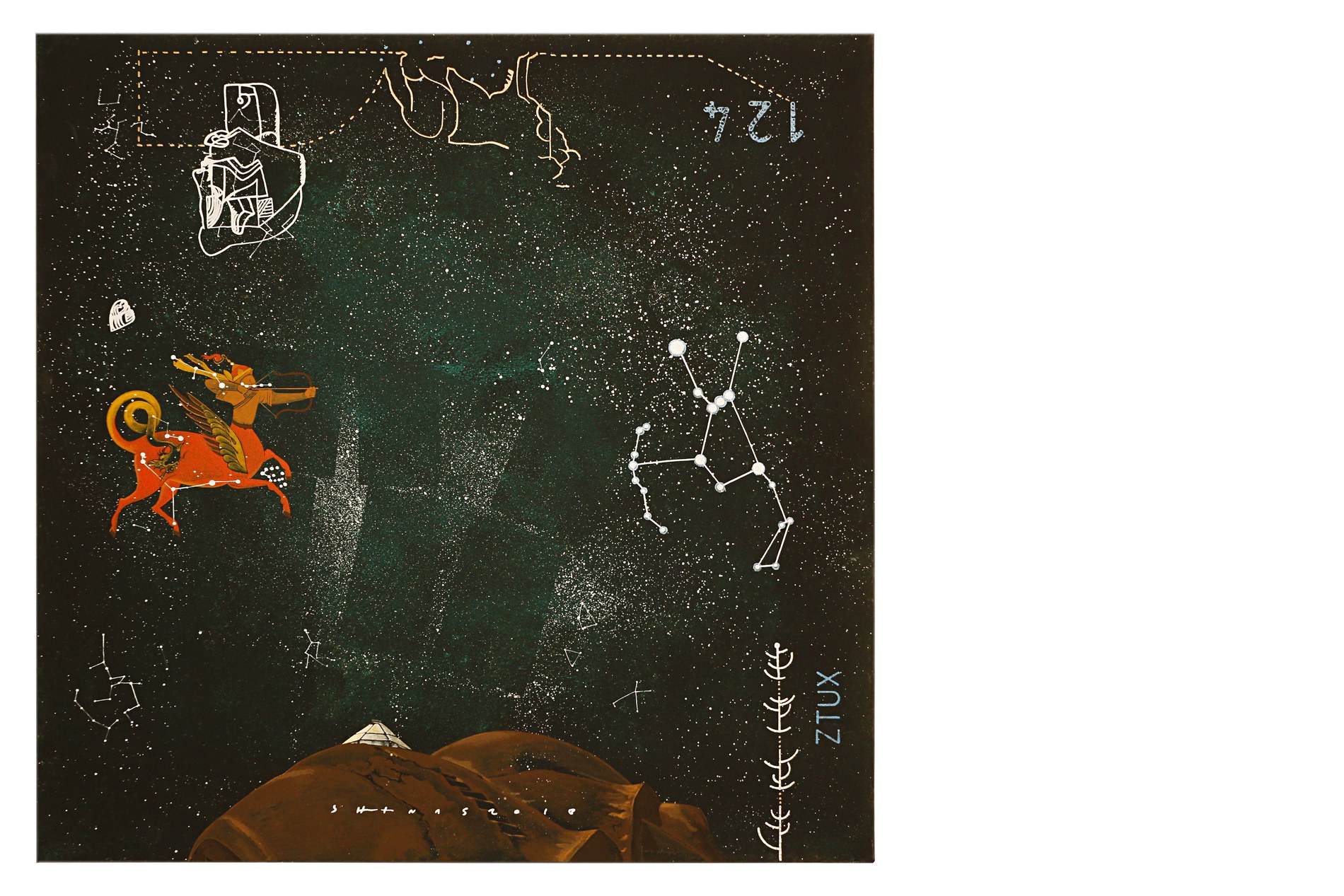
After that, I decided to examine the issue of religion more closely. I began studying the Hajj: what is Hajj? Why do we go on Hajj? Why should a Muslim make this journey, and how can this concept be depicted? I worked on it for about a year and was supposed to create seven paintings, but in the very first work, I was faced with a fundamental question: what does the sky look like in this picture? Will the sky be created if I paint the top of the painting blue? I saw that such a simple solution was not enough.
I had to go to astronomy and constellations; to recognize the northern and southern constellations, the constellations and planets, and to see what map of the sky different cultures have made and what names they have given to the stars: Orion, Ursa Major, Ursa Minor, the Spaceship, the Jedi, and other shapes.
Whatever religions talk about, it is present in the sky in some way. Man has needed a map of the sky to move on Earth; because on long journeys, nothing but the stars could save him from getting lost and lead him to his destination. We have forgotten this connection with the sky in our culture. Every great and growing civilization has looked to the sky and tried to reach it. Even the creation of a spaceship, an airplane, a tall tower, special music, or clothing that allows for new movement, somehow comes from this heavenly desire.
Working on this series took several years, and I exhibited part of it at the Mansoureh Hosseini Gallery. There were so many works that it was impossible to show them all.
One of the things I did in the series was to “take the lie out of the truth.” In different cultures, they would connect the star dots with arbitrary lines and say that this is a ship, a bear, or a fish, while the drawn shape sometimes had no clear connection to its name. I removed the imaginary lines, kept only the dots, and reconnected them in such a way that the ship, bear, or creature in question could actually be seen.
In this research, I came across amazing images. For example, the Big Dipper turned into a full-fledged bear, or in the constellations I saw creatures that were half human and half animal. Pisces was not just one fish, but two fish connected by a distance. The Capricorn was a goatfish; a goat with a fish tail. These images were astonishing to me.
I also learned a lot about color. I realized that it is possible to show a world with a limited number of colors and that the work does not necessarily have to be full of different colors. The color space became clearer and more confident for me.
Plant; simultaneous tendency towards darkness and light
The next question came from the same Hajj painting: If you were to paint a plant, what would that plant look like? I realized that I knew almost nothing about plants, so I spent a period studying plants.
One day, in a school science textbook, I saw a color image of the human nervous system and blood circulation. I turned the book over and suddenly the human head looked like a seed. It seemed to me that the human being was like an upside-down plant.
A plant has two simultaneous characteristics: a tendency towards darkness and a tendency towards light. The part that tends towards darkness takes root, goes down into the soil to reach water and the possibility of life and finds the necessary food. The other part moves towards the sun and light, pushing aside everything in its path. The plant cannot change its place, but it emerges from the soil and constantly improves. As long as the world exists, the possibility of this growth exists and the only limitation is the plant’s own talent.
Some plants, like grass, grow to a limited height; some grow trunks, some give flowers, fruit and shade. I saw that many of the definitions in religions are actually linked to trees and plants. They say that light nourishes man; a being whose food is light resembles a plant. It is about the genealogy and the tree, about the quality of man and about prophets who, like gardeners, help man grow.
The emergence of civilization is also related to the tree, because the tree presents the meaning of residence to us. Perhaps we learned about settlement and urbanization from the tree. When man was a herder and constantly moved with his herd, he would choose a place in the middle of the path that had a tree and shade. They would leave the elderly there. When winter arrived, the tent was no longer enough and the need for shelter arose. The elderly who stayed at that point knew the routes and problems of transportation, and others used their experience.
Gradually, it became clear that it was possible to build a permanent residence there. In a sense, the city began with a tree, but as cities expanded, the trees became fewer. From that same residence, agriculture, fire, stability, reading and writing, and trade emerged. These led me to create collections about plants.
Architecture; A Context for Culture
Next came architecture. Every question came out of the painting I wanted to paint: What is a staircase? What is a wall? What do roofs, doors, windows, and light mean? What is the climate, and in what context does this architecture take place? What is meant by the work must have a specific place.
During the same period, I also worked on dualities. In Shahnameh, good and bad, good and evil, demon and angel, hero and antihero all exist side by side. Darkness only makes sense when there is light and these two complete each other. The best artistic image for me is where light and darkness are in the most perfect relationship; because if there is only light or only darkness, nothing can be seen.
I created a series where the images could be read from both sides. On one side, the demon was seen, and by turning the work over, the angel was formed; the woman turned into a man, or Rostam into a fighting demon. These games made me abandon definitive judgments about good and bad; both have meaning together and have no place without the other.
I continued this path with the theme of dance, rhythmic movements, and games; including a series about games like Snakes and Ladders. However, I felt that even these were not enough.
In the years I worked with the Beautification Organization, I realized that many of the images that were executed on the walls of the city had a fundamental flaw. They looked like large postcards stuck to the building without understanding the architecture. A painting can be good, but it has no connection to the building on which it is placed. Why don’t we use the plan and structure of the city? Why do we still only see the work in the form of a square or rectangle with a certain length, width, and height, while the city goes beyond this frame?
I thought of platforms in which one could work over time. A point might be added today, another part three years later, and a new element six years later. In this view, time has no definite beginning or end and reaches a kind of infinity. The work only begins and continues in a long process. I brought this perspective into my paintings so that my different tendencies could be placed together on a common platform.
I also designed illustrations for music for years. I didn’t want to just put photos of musicians on the cover. If the subject was music, I would look for signs of southern life and culture; for example, nets and structures used on the coast and in the tides to catch fish. I wanted to translate the music into the language of images, not just show the face of the performer.
Dissonance in Contemporary Culture
Gradually, I saw that there was a problem with clothing, music, education, and many other things; the problem was that the components were not working properly. Everyone studied, but that lesson was not used in life. Paintings and sculptures were produced, but they did not leave an impact on our living space. Carpets, furniture, dishes, clothing, the way we spoke, our joy, our sadness, and even our wedding ceremonies were not in harmony with each other.
I asked myself if there was a time when these components did not have such a problem? For example, I saw that during the Qajar period, Qajar architecture, Qajar clothing, Qajar paintings, food, dishes, and music of the same period existed side by side. Architecture shapes culture and harmonizes other components within itself.
If our contemporary culture had an architecture that had some kind of agreement, many other components would have emerged from it: what to teach, what music to hear in that space, what size, color, and subject matter of a painting would be appropriate for it, and even what utensils and clothing would be used in that life.
When you enter a Gothic church, the height of the architecture, the resonance and tension of the music, and even the shape of the clothing are all related. In Islamic culture, too, a set of ideas reaches the architecture and then other components emerge from it. In the Achaemenid and Sasanian periods, architecture also connects utensils, fabrics, chariots, and other elements of culture.
Today, we do not have a common architecture. Everyone does whatever they want, without there being a place to measure and adapt it. That is why every film, music, concert, and play we make remains in a transitional period. In contrast, when Ta’ziyeh enters the tekke, it acquires its costume, mise-en-scène, duration, audience position, and manner of impact from the same structure.
Our acquaintance with the modern world has been largely an era of translation. We have translated architecture, music, and other achievements of the world for decades. Now these translations need to reach our own civilization and formulation. Until then, we must constantly examine what to teach in architecture and art, what workshops and factories we need, and how to connect the scattered components.
Map, Transparency, and Situational Awareness
To explain today’s situation, I am reminded of Rumi’s story about the elephant in the dark. Everyone touched a part of the elephant and based on that part, created a picture of the whole. We are also largely in the same darkness. The situation will not change until we know where we are standing and where we want to go. First, we must bring in light and illuminate the space. To illuminate, we need information; We must know the longitude, latitude, and altitude of our location and have an accurate map of where we are.
One of the factors in the progress of contemporary civilizations has been that they quickly produced maps and determined where the smallest thing in the world is and how far it is from the origin. The British produced maps of different parts of the world and the Americans made maps of the sky. Initially, preparing a map can even be a military and defensive task, but it is also essential for cultural growth.
We must know what facilities we have and where we are going. Everyone must provide their information in producing this map. Such a system prevents parallel work and repetition of mistakes and makes the space transparent. In transparency, we can understand who really has knowledge and competence and who is just making a claim and entering a position that does not belong to them.
With a map, we can see the place of paintings, articles, music, culture, economy, and education and measure what has grown compared to the previous year, what we have achieved, and what we have lost. This awareness is essential for the growth of a person, culture or country.
Even in planning a simple trip, we need to know where the destination is, what facilities it has and how much time we have. Much of this information is not transparent about ourselves. When I searched for Iran on Google Earth, there was very little information, while about some other countries, I could see a lot of details and even walk the streets. This transparency helps us find what we are looking for.
Works of art, books, research, natural resources, water and ancient monuments should be properly recorded and their information should be available to everyone. When information is public, security also increases. I remember years when parks had fences and people used them less. When the fences were removed and public presence increased, park security also increased. When everyone knows what is where and who is using it, abuse loses its meaning.
Much of the secrecy is the result of a lack of security and transparency. Maps and public information help us to accelerate, to improve, to have something to offer, and to avoid becoming outdated; to produce something today that has expired years ago.
Transparency inevitably brings with it laws to prevent abuse. These components are interrelated. I have always wondered how Tehran could be made more beautiful. My wife once made an interesting suggestion: What would happen if the courtyard walls were removed? In some architecture, the courtyard wall in our usual form does not exist. In the Netherlands, I saw houses that were located one behind the other, and from the window of one house you could see several houses next to it.
At first glance it may seem scary, but when everything is seen, the pathological sensitivity to seeing disappears. In Tehran, because all the windows have curtains, the slightest change in the curtains attracts everyone’s attention. If there are no curtains, that endless curiosity ends and people learn to spend their time on other things.
The solution to some problems is to define the problem and question correctly, to tear down unnecessary walls and to accept that we cannot do everything. For a person to die before doing something useful is a tragedy that afflicts many and leads to depression. Most people want to do something, make a film, paint a picture and be useful to themselves and others. They should be given the opportunity to experience. Like a child who is never allowed to approach the heat of a fire, how will he know that fire will burn his hand?
Cultural Management and Restoring Meaning
Wherever I was invited to help manage or consult, my first task was to return the conditions, place, and subject to their original point and meaning. The first time I was invited to the cultural center, I saw that the space was in disarray; partitions and things had been added that were not necessary, parts had been damaged, and things that should have been there had not been added. The uses had changed.
I tried to return the space to the original vision of the architect, the ideator, and the builder, as well as the needs of the person who was going to use it. If I added something, I tried to think like the original designer: What would he or she do if he or she were here?
I followed this path during my years of working at the Artists’ House, the Beautification Organization, and other projects. If I were invited to a festival, I would start with its name and theme and try to restore it to a meaning and essence that had changed or lost its value over the years. Destroying is quick; you move something or you mess up. But repairing is difficult and takes a long time, because people get used to the status quo and forget what the original form was.
In a festival, it is not enough to simply convey the overall meaning. The walls and the space of the festival should speak to the artists. When an artist thinks individually, he creates his own work, but the collection of works in a festival should also have meaning together. We needed to talk to the artists about the work and the best way to present it.
At a festival I worked at many years ago, we came to the conclusion that separating disciplines did not help to improve the event. We put aside disciplines and based on “art” and “project”. The artist himself proposed a project, and from the projects a more accurate picture of the artist, his works, and the atmosphere of the festival was created.
One of the problems is that the artist does not know the client, and the client does not understand the artist’s language. The student does not always do what the teacher wants, and the client does not necessarily create what the client wants. The stubbornness and inconsistency between the two has caused a lot of damage. If we have a unique work, brilliant architecture, or a great symphony, part of its success goes back to the client or the knowledgeable client.
I once gave a practice class. I asked about twenty students to each draw whatever they wanted in ten minutes. Then I told them to give their drawing to the person next to them and they would work on it. This exchange continued until everyone had worked on all the drawings. In the end, instead of twenty masterpieces, we ended up with twenty disasters! Everyone did whatever they wanted to the previous person’s work, and no one asked what the original designer intended and how I could help; or if I didn’t help, why not give the work intact to the next person?
If twenty people work consciously on a work, the result should be something brilliant and unique, not a collection of unrelated interventions. In our culture, religion, science, culture, and education are often treated in the same way: everyone does whatever they want, without asking what the previous person wanted to make, what I can help do, and how the next person should continue my work.
I have seen this problem in art groups too. Someone comes up with an idea, but instead of helping the idea grow, others want to make it their own. In management, I have always tried to help an existing process, not just leave my mark on it.
I have said many times that every street needs someone to take care of it. It is not necessary for one person to take care of the whole city. At home, one person can take care of food, another of the economy, and another of another part of life. Everyone should take care of it to the extent of their ability, but everyone should do it in the area they know and can really improve. Sometimes, in the name of helping, we do something that makes the situation worse, and then, without examining the source of the problem, we continue on the same path again. In various cultural fields, we need people who can read, translate, and explain experiences.
Art Consumption and the Necessity of the Market
What makes art progress and directly or indirectly creates culture and achievement is the consumption of art. If you create the greatest works but they are not consumed, they do nothing in culture. One of the most complete forms of consumption is buying; receiving gifts is not consumption in the same sense.
If there is a real need for the product that the artist produces and that need is matched by the work, the possibility of a masterpiece is greater. Wherever this connection does not occur, there is a defect. If a work has no commissioner and audience and is produced only for the artist’s personal need, a mass of useless things may arise.
In a culture, art and industry are related. Art achieves achievements and those achievements are consumed in industry; just as technology is the industrial form of using science. We have the artist and the work of art, but until the work enters the process of consumption and application and does not go through the necessary requirements to find its audience and owner, the cycle is not complete.
Art needs a real market; a market with different ranges, from weaker works to good works. Sometimes a person has to experience an unsuitable car or television before he thinks of choosing a better example. In art, too, one may first buy an ordinary work and gradually recognize who creates a masterpiece and move on to better works. As culture and people gradually improve, their choice and perception of a work of art also grows.
In my management activities, I have always tried to establish this transaction and connection between the artist, the work, and the audience. Until this connection is formed, many activities will not bear fruit and have real results.
پیش از هنر، رشتهٔ دیگری خوانده بودم و میخواستم وکیل شوم. دانشگاهها در جریان انقلاب فرهنگی بسته شدند و معلوم نبود چه زمانی دوباره باز میشوند. تصمیم گرفتم در این فاصله یک رشتهٔ هنری یاد بگیرم تا وقتی پیر شدم، اوقات فراغتم را با آن بگذرانم! در کلاسهای مختلف ثبتنام کردم و یکی از آنها کلاس نقاشی بود. نقاشی را شروع کردم و دیگر سراغ کار دیگری نرفتم. پیش از آن فعالیت اقتصادی هم داشتم، اما آن را بسیار کم کردم و بهطور تخصصی به هنر پرداختم.
یکی از موانع ورود به دانشگاه، گذراندن دورهٔ سربازی بود. ابتدا تمایلی نداشتم به سربازی بروم، اما دیدم برای اینکه در این مسیر پیش بروم و وارد دانشگاه شوم باید این مرحله را بگذرانم. پیش از سربازی نقاشی و طراحی را جدی و حرفهای دنبال میکردم و تصمیمم را گرفته بودم.
دورهٔ آموزشی را در لشکر ۱۶ زرهی قزوین گذراندم. یک روز برای رژه آماده میشدیم که با خودم عهد کردم جز هنر به کار دیگری نپردازم؛ در حالی که فضای اطراف هیچ ارتباطی با چنین تصمیمی نداشت. بعد تقسیم شدیم؛ مدتی در جبهه و مدتی پشت جبهه بودم. آن دوران برایم تجربهٔ بسیار جالبی شد. فکر میکنم در سربازی کمتر کسی بود که طراحیاش نکرده باشم. همه مرا میشناختند، صدایم میکردند و مدل میشدند؛ تمرین بسیار خوبی بود.
هر جا منتقل میشدم همین کار را ادامه میدادم. دعوتهای مختلفی داشتم که برایشان کار کنم. در طول آن دو سال، از نقاشی دیواری تا تجربههای گوناگون هنری، کارهایی انجام دادم که اگر سربازی نبود شاید هیچوقت پیش نمیآمدند.
بعد از سربازی تصمیم گرفتم درس بخوانم. رشتهها تغییر کرده بود و برای چند ماه هیچ کاری جز مطالعه نکردم. با رتبهٔ خوبی وارد دانشگاه شدم. آن سالها نتایج کنکور را در دو نوبت اعلام میکردند؛ ورودی مهر و ورودی بهمن. با وجود رتبهٔ خوب، ورودی مهر نبودم و از این فاصله هم استفاده کردم تا طراحیام را تقویت کنم.
وقتی وارد دانشگاه شدم، نخستین نمایشگاه انفرادی طراحیهایم را روی پانلهای دانشگاه تهران گذاشتم. از همانجا باب دوستیهای زیادی باز شد؛ دوستیهایی که بعضی هنوز ادامه دارند. آدمهای بسیاری را شناختم.
دانشگاه و جستوجوی دانشی فراتر از نقاشی
در دانشگاه، پرسش اصلیام این بود که دانشگاه چه چیزی میتواند به من یاد بدهد که بیرون از آن نمیتوانم بیاموزم. به همین دلیل با رشتههای مختلف آشنا شدم: ادبیات، فلسفه و بهویژه معماری. معماری برایم بسیار جذاب بود، هرچند آن زمان هنوز نمیدانستم چرا.
در همان سالها زیاد سفر میکردیم. گروههایی تشکیل داده بودیم و با هم به سفرهای کاری و طراحی میرفتیم. تقریباً هر هفته جایی بودم. بخش بزرگی از ایران را در همان دوران دیدم، نقاشی کردم و از این تجربه بسیار لذت بردم.
خوشبختانه یا متأسفانه، خودم را خیلی زود درگیر تدریس نکردم. فکر میکردم اگر از ابتدا معلم شوم، ممکن است بسیاری از تجربههایی را که در فضای غیرآموزشی وجود دارد نبینم. معمولاً معلم بهتدریج همان چیزی را انجام میدهد که آموزش میدهد، در حالی که داستان هنر این اندازهها و مرزهای مشخص را ندارد. شاید ده، دوازده یا حتی بیست سال از تدریس فرار کردم و در این مدت کارهای مختلفی انجام دادم.
مجموعههای بسیاری ساختم. یکی از آنها مجموعهٔ بزرگی با موضوع شاهنامه بود که روی شیشه نقاشی کردم. برای آن مجموعه ناچار شدم طراحیام را تغییر بدهم و تحقیقات زیادی انجام دهم. پژوهش وارد کارم شد؛ رنگآمیزی، اندازهٔ آثار و موضوعاتم تغییر کردند.
سعی کردم خودم را جای کسی بگذارم که موضوعش تمام تاریخ نقاشی ایران، از ابتدا تا امروز است. پرسشهای زیادی داشتم و باید هنگام کار منفجر میشدم تا پاسخها را پیدا کنم. نخستین نمایشگاهی که بعد از فارغالتحصیلی در گالری سیحون گذاشتم، باعث شد دوستانی که به دیدن آثار آمده بودند بپرسند: «تا امروز کجا بودی؟» کارها رنگهایی درخشان داشتند؛ آن هم در فضای جنگ. این رنگها از کجا آمده بودند؟ فقط وقتی ممکن بود چنین چیزی شکل بگیرد که سابقه را جستوجو کرده باشی و در آن جستوجو چیزی شایستهٔ دیدن یافته باشی.
بسیاری از معلمانی که داشتیم خودشان هنرمندان خوبی بودند، اما الزاماً نمیدانستند چگونه آنچه را میدانند آموزش دهند. سالها طول کشید تا من طراحی را به معنای طراحی، رنگآمیزی را به معنای رنگآمیزی و موضوع را نه بهعنوان چیزی تخیلی و بیارتباط، بلکه بهعنوان امری برخاسته از شرایط اجتماعی و زندگی خودم پیدا کنم؛ بیآنکه الزاماً موضوع اثر «اجتماع» یا «جامعه» باشد. این فرایند هنوز هم ادامه دارد.
شاهنامه، اسطوره و نقاشی ایران
انتخابهایی که میکنم به هم متصلاند. بدون اینکه خودم از پیش بخواهم، از دل هر موضوع پرسش و موضوع بعدی بیرون میآید. وقتی روی شاهنامه کار میکردم از خودم پرسیدم: این متن با آنکه در دورهٔ اسلامی و در قرن چهارم تدوین شده، چرا دربارهٔ جهان پیش از اسلام است؟ شخصیتها و مفاهیم آن در دورهٔ اسلامی چه تغییراتی پیدا میکنند؟ چگونه همان الگوها در دورهٔ معاصر دوباره بهروز میشوند؟
بعد از فارغالتحصیلی نخستین پرسشم این بود که نقاشان پیش از من در ایران چگونه و چه چیزهایی را نقاشی میکردند. این پرسش در ظاهر ساده، اما در آموزش ما نامعمول بود. معمولاً هرچه را آموزش دیدهایم تکرار میکنیم: اگر طراحی از فیگور آموختهایم همان را انجام میدهیم، اگر مدرنیسم آموختهایم مدرن کار میکنیم و اگر نگارگری آموختهایم نگارگری میکنیم. من پرسیدم اگر پدر و پدربزرگ من نقاش بودند، چه چیزی را و چگونه نقاشی میکردند؟
دیدم تا پیش از دورهٔ پهلوی، تقریباً همهٔ نقاشان ما بهنوعی از شاهنامه کار کردهاند. وقتی سراغ شاهنامه رفتم با اسطورهها و شخصیتهایی روبهرو شدم که در زندگی، زبان روزمره، ادبیات و نقاشی ما حضور داشتند، اما من ارتباطشان را نمیدیدم. با شناختن آنها انگار قطعات پراکندهٔ یک پازل ناگهان سر جای خود نشستند. رنگها، طراحی و جایگاه هر چیز برایم روشنتر شد.
از خودم پرسیدم چرا وقتی نقاشان دورهٔ سلجوقی شاهنامه را تصویر میکنند، پهلوانان لباس و هیئت سلجوقی دارند و در دورهٔ قاجار همان شخصیتها قاجاری میشوند؟ در هر دوره، لباس، ابزار، شیوهٔ زندگی و مناسبات همان زمان وارد تصویر شده است. چگونه میتوانستم از تکرار ظاهری این دورهها فراتر بروم؟ به یافتههای باستانشناسی رجوع کردم؛ پژوهشهایی که از دورهٔ پهلوی اول دربارهٔ ایران پیش از اسلام گسترش یافته بود و اطلاعات مهمی در اختیارمان میگذاشت.
مثلاً دربارهٔ دیوها فهمیدم که میتوان آنها را به ساکنان کهن فلات ایران و روایتهایی دربارهٔ دراویدیها مرتبط دانست. همین دادهها مسیر طراحی را تغییر میدادند. در حجاریها و تصویرهای پیش از اسلام، همهچیز روی یک خط قرار میگرفت: اسبها، آدمها و رویدادها. زمین نه سطحی وسیع، بلکه خطی زیر پای انسان بود؛ کف پا روی زمین و تمام بدن در آسمان قرار داشت. من هم در طراحیهایم از همین منطق استفاده کردم.
با این پرسشها به مجموعهای بیش از صد نقاشی از موقعیتهای قابلتصویر شاهنامه رسیدم: دیدار زال و سیمرغ، مرگ رستم، گذر کیخسرو و فرنگیس از رود، عروسیها، نبردها، سوگواریها و پیکر اسفندیار. باید این روایتها را به زبان تصویریای ترجمه میکردم که در جریان پژوهش یافته بودم.
در شاهنامه، جمشید به ایرانیان صنعت، بافندگی و کشاورزی میآموزد. از خودم پرسیدم معادل معاصر این فعالیتها چیست و هنرمند امروز با چه گرایشها و امور روزمرهای سروکار دارد. همین ترجمهٔ تاریخی را به نقاشیها آوردم.
بعد پرسیدم پس از ورود اسلام بر سر اسطورههای ما چه میآید؟ چه شخصیتهایی جانشین آنها میشوند و چه شباهتها و تفاوتهایی شکل میگیرد؟ برای این موضوع مجموعهای حدود سیوپنج اثر ساختم. مسئلهٔ بعدی این بود که این تصاویر باید روی چه بستری اجرا شوند.
در تکیهها سینیهایی وجود داشت که در حیاط با آنها غذا میخوردند. به اصفهان رفتم، سینیهای مخصوص سفارش دادم و اسیدکاری یاد گرفتم تا نقش و برجستگیهای کمعمق را بسازم. باید رنگ مناسب و شکل تزئینات را پیدا میکردم. برای نقوش لباسها و حاشیهها به کاشیکاری و فرمهای تاریخی رجوع کردم. سینی گرد بود، پس تمام ترکیببندیها را بر اساس دایره طراحی کردم. موضوعها از روایتهای مذهبی، از جمله شهادت طفلان مسلم، میآمدند.
از حج تا نقشهٔ آسمان
پس از آن تصمیم گرفتم مسئلهٔ مذهب را دقیقتر بررسی کنم. مطالعه دربارهٔ حج را شروع کردم: حج چیست؟ چرا به حج میرویم؟ چرا مسلمان باید این سفر را انجام دهد و این مفهوم چگونه میتواند تصویر شود؟ حدود یک سال روی آن کار کردم و قرار بود هفت تابلو بسازم، اما در همان اثر نخست با پرسشی اساسی روبهرو شدم: آسمان این تصویر چه شکلی است؟ آیا اگر بالای تابلو را آبی کنم، آسمان ساخته میشود؟ دیدم چنین راهحل سادهای کافی نیست.
مجبور شدم سراغ نجوم و صورتهای فلکی بروم؛ صورتهای شمالی و جنوبی، برجها و سیارات را بشناسم و ببینم فرهنگهای مختلف چه نقشهای از آسمان ساختهاند و چه نامهایی بر ستارهها گذاشتهاند: جبار، دب اکبر، دب اصغر، سفینه، جدی و دیگر صورتها.
هرچه ادیان دربارهاش سخن میگویند، بهنوعی در آسمان حضور دارد. انسان برای حرکت روی زمین به نقشهٔ آسمان احتیاج داشته است؛ زیرا در سفرهای دور، چیزی جز ستارگان نمیتوانست او را از گمراهی نجات دهد و به مقصد برساند. ما این پیوند با آسمان را در فرهنگ خود فراموش کردهایم. هر تمدن بزرگ و روبهرشد، نگاهش به آسمان بوده و کوشیده به آن دست پیدا کند. حتی ساختن یک سفینه، هواپیما، برج بلند، موسیقی خاص یا لباسی که امکان حرکت تازهای بدهد، بهنحوی از همین تمنای آسمانی میآید.
کار روی این مجموعه چند سال طول کشید و بخشی از آن را در گالری منصوره حسینی نمایش دادم. تعداد آثار زیاد بود و امکان نمایش همهٔ آنها وجود نداشت.
یکی از کارهایی که در مجموعه انجام دادم این بود که «دروغ را از راست بیرون بیاورم». در فرهنگهای مختلف، نقطههای ستارهای را با خطوطی دلخواه به هم وصل میکردند و میگفتند این یک کشتی، خرس یا ماهی است، در حالی که شکل رسمشده گاهی ارتباط روشنی با نامش نداشت. من خطوط فرضی را حذف کردم، فقط نقطهها را نگه داشتم و دوباره آنها را طوری به هم وصل کردم که واقعاً کشتی، خرس یا موجود مورد نظر دیده شود.
در این پژوهش با تصویرهای شگفتانگیزی روبهرو شدم. مثلاً دب اکبر به خرسی کامل تبدیل شد، یا در صورتهای فلکی موجوداتی دیدم که نیمی انسان و نیمی حیوان بودند. حوت فقط یک ماهی نبود، بلکه دو ماهی بود که با فاصلهای به هم متصل میشدند. جدی بزماهی بود؛ بزی با دم ماهی. این تصویرها برایم حیرتآور بودند.
در رنگ هم بسیار آموختم. فهمیدم میشود با چند رنگ محدود یک جهان را نشان داد و لازم نیست اثر حتماً پر از رنگهای گوناگون باشد. فضای رنگی برایم روشنتر و مطمئنتر شد.
گیاه؛ تمایل همزمان به تاریکی و نور
پرسش بعدی از دل همان تابلوی حج بیرون آمد: اگر در تصویر گیاهی میروید، آن گیاه باید چگونه باشد؟ دیدم تقریباً چیزی دربارهٔ گیاه نمیدانم، پس دورهای را صرف مطالعهٔ گیاهان کردم.
یک روز در کتاب علوم تجربی دورهٔ مدرسه، تصویر رنگی سیستم عصبی و گردش خون انسان را دیدم. کتاب را برگرداندم و ناگهان سر انسان شبیه دانه شد. به نظرم رسید انسان مانند گیاهی وارونه است.
گیاه دو ویژگی همزمان دارد: تمایل به تاریکی و تمایل به نور. بخشی که به تاریکی میل میکند ریشه میشود، در خاک پایین میرود تا به آب و امکان حیات برسد و غذای لازم را پیدا کند. بخش دیگر به سمت خورشید و نور حرکت میکند و هرچه بر سر راهش باشد کنار میزند. گیاه نمیتواند جای خود را عوض کند، اما از خاک بیرون میآید و پیوسته ارتقا پیدا میکند. تا وقتی جهان هست، امکان این رشد وجود دارد و تنها محدودیت، استعداد خود گیاه است.
بعضی گیاهان مثل چمن تا ارتفاعی محدود رشد میکنند؛ بعضی تنه پیدا میکنند، بعضی گل، میوه و سایه میدهند. دیدم بسیاری از تعریفهایی که در ادیان وجود دارد در واقع با درخت و گیاه پیوند دارد. میگویند انسان را نور سیر میکند؛ موجودی که نور غذایش است به گیاه شباهت دارد. سخن از شجره و درخت، از کیفیتیافتن انسان و از پیامبرانی است که مثل باغبان به رشد انسان کمک میکنند.
پیدایش تمدن هم با درخت ارتباط دارد، چون درخت معنای سکونت را پیش روی ما میگذارد. شاید یکجانشینی و شهرنشینی را از درخت آموخته باشیم. زمانی که انسان دامدار بود و همراه گله دائماً جابهجا میشد، در میان مسیر جایی را انتخاب میکرد که درخت و سایهای داشت. پیران را آنجا میگذاشتند. با رسیدن زمستان، چادر دیگر کافی نبود و نیاز به سرپناه شکل گرفت. پیرانی که در آن نقطه میماندند، مسیرها و مشکلات رفتوآمد را میشناختند و دیگران از تجربهشان استفاده میکردند.
کمکم معلوم شد میتوان همانجا سکونت دائمی ساخت. به یک معنا شهر با یک درخت آغاز شد، اما در جریان گسترش شهرها درختان کمتر شدند. از همان سکونت، کشاورزی، آتش، ثبات، خواندن و نوشتن و دادوستد پدید آمد. اینها مرا به ساخت مجموعههایی دربارهٔ گیاه رساند.
معماری؛ بستری برای فرهنگ
بعد نوبت معماری بود. هر پرسش از درون همان تابلویی بیرون میآمد که میخواستم نقاشی کنم: پله چیست؟ دیوار چیست؟ سقف، در، پنجره و نور چه معنایی دارند؟ اقلیم چیست و این معماری در چه بستری اتفاق میافتد؟ چیزی که قرار است در اثر به وجود آید باید جای مشخصی داشته باشد.
در همان دوره دربارهٔ دوگانگیها هم کار کردم. در شاهنامه نیک و بد، خیر و شر، دیو و فرشته، پهلوان و ضدقهرمان کنار هم حضور دارند. تاریکی فقط وقتی معنا پیدا میکند که نور باشد و این دو یکدیگر را کامل میکنند. بهترین تصویر هنری برای من جایی است که نور و تاریکی در کاملترین رابطه با هم باشند؛ چون اگر فقط نور یا فقط تاریکی باشد چیزی دیده نمیشود.
مجموعهای ساختم که تصاویر از دو سو خوانده میشدند. از یک طرف دیو دیده میشد و با برگرداندن اثر فرشته شکل میگرفت؛ زن به مرد یا رستم به دیوی در حال نبرد تبدیل میشد. این بازیها باعث شدند قضاوت قطعی دربارهٔ خوب و بد را کنار بگذارم؛ هر دو در کنار هم معنا دارند و بدون دیگری جایگاهی ندارند.
این مسیر را با موضوع رقص، حرکات موزون و بازیها ادامه دادم؛ از جمله مجموعهای دربارهٔ بازیهایی مانند مار و پله. با این حال احساس کردم اینها هم کافی نیستند.
در سالهایی که با سازمان زیباسازی همکاری داشتم، متوجه شدم بسیاری از تصویرهایی که روی دیوارهای شهر اجرا میشوند اشکالی اساسی دارند. شبیه کارتپستالی بزرگاند که بدون شناخت معماری به ساختمان چسبانده شده است. نقاشی میتواند خوب باشد، اما ارتباطی با بنایی که روی آن قرار گرفته ندارد. چرا از پلان و ساختار شهر استفاده نمیکنیم؟ چرا هنوز اثر را فقط در قالب مربع یا مستطیلی با طول و عرض و ارتفاع معین میبینیم، در حالی که شهر از این قاب فراتر میرود؟
به بسترهایی فکر کردم که بتوان در آنها طی زمان کار کرد. ممکن است امروز نقطهای، سه سال بعد بخشی دیگر و شش سال بعد عنصری تازه به آنها اضافه شود. در این نگاه، زمان آغاز و پایان قطعی ندارد و به نوعی بیکرانگی میرسد. اثر فقط شروع میشود و در فرایندی طولانی ادامه پیدا میکند. این نگاه را وارد نقاشیهایم کردم تا گرایشهای مختلفم بتوانند در یک بستر مشترک کنار هم قرار بگیرند.
سالهایی هم برای موسیقی تصویر طراحی میکردم. نمیخواستم صرفاً عکس نوازندهها را روی جلد بگذارم. اگر موضوع موسیقی زار بود، سراغ نشانههای زیست و فرهنگ جنوب میرفتم؛ مثلاً تورها و سازههایی که در ساحل و جزرومد برای گرفتن ماهی استفاده میشوند. میخواستم موسیقی را به زبان تصویر ترجمه کنم، نه اینکه فقط چهرهٔ اجراکننده را نشان بدهم.
ناهماهنگی در فرهنگ معاصر
بهتدریج دیدم در لباس، موسیقی، آموزش و بسیاری چیزهای دیگر مشکلی وجود دارد؛ مشکل به این معنا که اجزا درست کار نمیکنند. همه درس میخوانند، اما از آن درس در زندگی استفاده نمیشود. نقاشی و مجسمه تولید میشود، اما اثری بر فضای زیست ما نمیگذارد. فرش، مبلمان، ظرف، پوشش، شیوهٔ حرفزدن، شادی، اندوه و حتی مراسم عروسی ما با یکدیگر هماهنگ نیستند.
از خودم پرسیدم آیا زمانی بوده که این اجزا چنین مشکلی نداشته باشند؟ دیدم مثلاً در دورهٔ قاجار معماری قاجاری، لباس قاجاری، نقاشی قاجاری، غذا، ظرف و موسیقی همان دوره در کنار یکدیگر وجود دارند. معماری به فرهنگ قالب میدهد و اجزای دیگر را در خود هماهنگ میکند.
اگر فرهنگ معاصر ما معماریای داشت که بر سر آن نوعی توافق به وجود آمده بود، بسیاری از اجزای دیگر از دلش بیرون میآمدند: اینکه چه چیزی آموزش دهیم، چه موسیقیای در آن فضا شنیده شود، چه نقاشیای با چه اندازه، رنگ و موضوعی برای آن مناسب باشد و حتی چه ظرف و لباسی در آن زندگی کاربرد پیدا کند.
وقتی وارد کلیسایی گوتیک میشوید، ارتفاع معماری، طنین و کشیدگی موسیقی و حتی شکل لباسها با هم ارتباط دارند. در فرهنگ اسلامی نیز مجموعهای از ایدهها به معماری میرسد و بعد اجزای دیگر از دل آن بیرون میآیند. در دورههای هخامنشی و ساسانی هم معماری، ظرف، پارچه، ارابه و دیگر عناصر فرهنگ را به هم پیوند میدهد.
امروز معماری مشترکی نداریم. هرکس هر کاری میکند، بدون اینکه جایی برای سنجیدن و تطبیق آن وجود داشته باشد. به همین دلیل هر فیلم، موسیقی، کنسرت و نمایش ما در دورهای گذار باقی میماند. در مقابل، تعزیه وقتی وارد تکیه میشود لباس، میزانسن، مدت اجرا، جای تماشاگر و شیوهٔ اثرگذاریاش را از همان ساختار به دست میآورد.
دوران آشنایی ما با جهان مدرن تا حد زیادی دوران ترجمه بوده است. دههها معماری، موسیقی و دیگر دستاوردهای جهان را ترجمه کردهایم. اکنون لازم است این ترجمهها به مدنیت و صورتبندی خودمان برسند. تا آن زمان باید مدام بررسی کنیم چه چیزی را در معماری و هنر آموزش بدهیم، چه کارگاه و کارخانهای لازم داریم و چگونه اجزای پراکنده را به هم وصل کنیم.
نقشه، شفافیت و شناخت موقعیت
برای توضیح وضعیت امروز، یاد داستان مولوی دربارهٔ فیل در تاریکی میافتم. هرکس بخشی از فیل را لمس میکرد و بر اساس همان قسمت، تصویری از کل آن میساخت. ما نیز تا حد زیادی در همان تاریکی هستیم. تا وقتی ندانیم کجا ایستادهایم و به کجا میخواهیم برویم، وضعیت تغییر نمیکند. نخست باید نور وارد کنیم و فضا را روشن کنیم. برای روشنکردن به اطلاعات نیاز داریم؛ باید طول، عرض و ارتفاع موقعیت خود را بشناسیم و نقشهای دقیق از جایی که در آن هستیم داشته باشیم.
یکی از عوامل پیشرفت تمدنهای معاصر این بوده که با سرعت نقشه تولید کردند و مشخص کردند کوچکترین چیز در جهان کجاست و چه فاصلهای با مبدأ دارد. انگلیسیها از نقاط مختلف جهان نقشه تهیه کردند و آمریکاییها از آسمان نقشه ساختند. تهیهٔ نقشه در آغاز حتی میتواند کاری نظامی و دفاعی باشد، اما برای رشد فرهنگی هم ضروری است.
باید بدانیم چه امکاناتی داریم و قرار است به کجا برویم. همه باید در تولید این نقشه اطلاعات خود را عرضه کنند. چنین سیستمی از انجام کارهای موازی و تکرار اشتباه جلوگیری میکند و فضا را شفاف میسازد. در شفافیت میتوان فهمید چه کسی واقعاً دانش و صلاحیت دارد و چه کسی فقط ادعایی کرده و وارد جایگاهی شده که متعلق به او نیست.
با نقشه میتوان جای نقاشی، مقاله، موسیقی، فرهنگ، اقتصاد و آموزش را دید و سنجید که نسبت به سال گذشته چه چیزی رشد کرده، چه دستاوردی داشتهایم و چه چیزی را از دست دادهایم. این آگاهی برای رشد یک انسان، فرهنگ یا کشور ضروری است.
حتی در برنامهریزی یک سفر ساده باید بدانیم مقصد کجاست، چه امکاناتی دارد و چقدر زمان در اختیار داریم. بسیاری از این اطلاعات دربارهٔ خودمان شفاف نیستند. زمانی که در گوگلارث دربارهٔ ایران جستوجو میکردم، اطلاعات بسیار کمی وجود داشت، در حالی که دربارهٔ بعضی کشورهای دیگر میشد جزئیات فراوانی دید و حتی در خیابانها حرکت کرد. این شفافیت کمک میکند آنچه را میخواهیم پیدا کنیم.
آثار هنری، کتابها، پژوهشها، منابع طبیعی، آبها و آثار باستانی باید بهدرستی ثبت شوند و اطلاعاتشان در اختیار همگان باشد. وقتی اطلاعات عمومی باشد، امنیت هم بیشتر میشود. سالهایی را به یاد میآورم که پارکها نرده داشتند و مردم کمتر از آنها استفاده میکردند. وقتی نردهها برداشته شد و حضور عمومی افزایش یافت، امنیت پارک هم بیشتر شد. وقتی همه میدانند چه چیزی کجاست و چه کسانی از آن استفاده میکنند، سوءاستفاده معنای خود را از دست میدهد.
بخش زیادی از پنهانکاری حاصل نبود امنیت و شفافیت است. نقشه و اطلاعات عمومی به ما کمک میکنند سرعت بگیریم، ارتقا پیدا کنیم، چیزی برای عرضه داشته باشیم و از تاریخزدگی نجات پیدا کنیم؛ از اینکه امروز چیزی تولید کنیم که تاریخ مصرفش سالها پیش تمام شده است.
شفافیت ناچار قانون جلوگیری از سوءاستفاده را هم به همراه میآورد. این اجزا به هم مربوطاند. همیشه از خودم میپرسیدم تهران چگونه میتواند زیباتر شود. همسرم یکبار پیشنهاد جالبی داد: اگر دیوار حیاطها برداشته شوند چه اتفاقی میافتد؟ در بعضی معماریها دیوار حیاط به شکل رایج ما وجود ندارد. در هلند خانههایی دیدم که پشت سر هم قرار داشتند و از پنجرهٔ یک خانه میشد تا چندین خانهٔ بعد را دید.
در نگاه اول ممکن است ترسناک به نظر برسد، اما وقتی همهچیز دیده میشود، حساسیت بیمارگونه به دیدن از بین میرود. در تهران، چون همهٔ پنجرهها پرده دارند، کوچکترین تغییر در پرده نگاه همه را جلب میکند. اگر پردهای در کار نباشد، آن کنجکاوی بیپایان هم تمام میشود و انسان یاد میگیرد وقتش را صرف کارهای دیگری کند.
راه حل بعضی مسائل این است که خود مسئله و پرسش را درست تعریف کنیم، دیوارهای اضافی را کنار بزنیم و بپذیریم که نمیتوانیم همهچیز را انجام دهیم. اینکه انسانی پیش از انجام کاری مفید بمیرد، فاجعهای است که گریبان بسیاری را گرفته و به افسردگی میانجامد. بیشتر آدمها میخواهند کاری کنند، فیلمی بسازند، نقاشی بکشند و برای خود و دیگران مفید باشند. باید امکان تجربهکردن را به آنها داد. مثل کودکی که اگر هیچوقت اجازه نداشته باشد به گرمای آتش نزدیک شود، از کجا بفهمد آتش دست را میسوزاند؟
مدیریت فرهنگی و بازگرداندن معنا
هر جا از من دعوت میشد برای مدیریت یا مشاوره کمک کنم، نخستین کارم این بود که شرایط، مکان و موضوع را به نقطهٔ آغازین و معنای اصلیاش برگردانم. نخستینبار که به فرهنگسرایی دعوت شدم، دیدم فضا بههم ریخته است؛ پارتیشنها و چیزهایی اضافه شده که لازم نبود، بخشهایی آسیب دیده و چیزهایی که باید وجود میداشتند اضافه نشده بودند. کاربریها تغییر کرده بود.
سعی کردم فضا را به نگاه اولیهٔ معمار، ایدهپرداز و سازنده و نیز نیاز کسی که قرار بود از آن استفاده کند برگردانم. اگر چیزی اضافه میکردم، تلاش میکردم مثل همان طراح اولیه فکر کنم: اگر او اینجا بود چه میکرد؟
در سالهای فعالیت در خانهٔ هنرمندان، سازمان زیباسازی و پروژههای دیگر همین مسیر را دنبال کردم. اگر به جشنوارهای دعوت میشدم، از نام و موضوعش شروع میکردم و تلاش میکردم آن را به معنا و ماهیتی بازگردانم که در طول سالها تغییر کرده یا ارزشش را از دست داده بود. خرابکردن سریع است؛ چیزی را جابهجا میکنید یا کلنگی میزنید. اما درستکردن دشوار و طولانی است، چون آدمها به وضعیت موجود عادت کرده و فراموش کردهاند شکل اولیه چه بوده است.
در یک جشنواره فقط انتقال معنای کلی کافی نیست. دیوارها و فضای جشنواره باید با هنرمندان حرف بزنند. هنرمند وقتی انفرادی فکر میکند، اثر شخصی خود را میسازد، اما مجموعهٔ آثار یک جشنواره نیز باید در کنار هم معنایی داشته باشند. لازم بود با هنرمندان دربارهٔ کار و بهترین شیوهٔ ارائهٔ آن گفتوگو کنیم.
در جشنوارهای که سالها پیش در آن فعالیت داشتم، به این نتیجه رسیدیم که تفکیک رشتهها کمکی به ارتقای رویداد نمیکند. رشتهها را کنار گذاشتیم و «هنر» و «پروژه» را مبنا قرار دادیم. خود هنرمند پروژهای پیشنهاد میداد و از میان پروژهها تصویر دقیقتری از هنرمند، آثارش و فضای جشنواره ساخته میشد.
یکی از مشکلات این است که هنرمند، کارفرما را نمیشناسد و کارفرما هم زبان هنرمند را نمیفهمد. دانشجو همیشه چیزی را که معلم میخواهد انجام نمیدهد و سفارشگیرنده هم لزوماً آنچه سفارشدهنده میخواهد نمیسازد. لجاجت و ناهماهنگی میان این دو آسیب بسیاری ایجاد کرده است. اگر اثری بینظیر، معماریای درخشان یا سمفونیای عالی داریم، بخشی از موفقیت آن به سفارشدهنده یا کارفرمای آگاه برمیگردد.
یک بار در کلاس تمرینی دادم. از حدود بیست دانشجو خواستم هرکدام در ده دقیقه هرچه میخواهند طراحی کنند. بعد گفتم طراحی خود را به نفر کناری بدهند و او روی آن کار کند. این جابهجایی ادامه یافت تا همهٔ افراد روی تمام طراحیها کار کردند. در پایان، به جای بیست شاهکار با بیست فاجعه روبهرو شدیم! هرکس هرچه دلش خواسته بود روی کار نفر قبلی انجام داده و هیچکس نپرسیده بود طراح نخست چه قصدی داشته و من چگونه میتوانم به آن کمک کنم؛ یا اگر کمکی نمیکنم، چرا اثر را دستنخورده به نفر بعدی ندهم؟
اگر بیست نفر آگاهانه روی یک اثر کار کنند باید نتیجه چیزی درخشان و منحصربهفرد باشد، نه مجموعهای از مداخلات بیارتباط. در فرهنگ ما اغلب با دین، علم، فرهنگ و آموزش هم همین رفتار میشود: هرکس هر کاری دلش میخواهد انجام میدهد، بیآنکه بپرسد نفر قبلی چه میخواسته بسازد، من چه کمکی میتوانم بکنم و نفر بعدی چگونه باید کار مرا ادامه دهد.
در گروههای هنری نیز این مشکل را دیدهام. کسی ایدهای مطرح میکند، اما دیگران بهجای کمک به رشد همان ایده میخواهند آن را به ایدهٔ خودشان تبدیل کنند. در مدیریت همیشه تلاش کردم به یک روند موجود کمک کنم، نه اینکه صرفاً رد خودم را روی آن بگذارم.
بارها گفتهام هر خیابان به یک نفر نیاز دارد که مراقبش باشد. لازم نیست یک نفر مراقب همهٔ شهر باشد. در خانه هم یک نفر میتواند مراقب غذا، دیگری اقتصاد و دیگری بخش دیگری از زندگی باشد. همه باید به اندازهٔ توانشان مراقبت کنند، اما هرکس در حوزهای که آن را میشناسد و واقعاً میتواند بهترش کند. گاهی به نام کمک کاری انجام میدهیم که وضعیت را بدتر میکند و بعد بدون بررسی منشأ مشکل، دوباره همان مسیر را ادامه میدهیم. در عرصههای مختلف فرهنگی به کسانی نیاز داریم که تجربهها را بخوانند، ترجمه کنند و توضیح دهند.
مصرف هنر و ضرورت بازار
چیزی که باعث پیشرفت هنر میشود و مستقیم یا غیرمستقیم فرهنگسازی و دستاورد ایجاد میکند، مصرف هنر است. اگر عالیترین اثرها را بسازید اما مصرف نشوند، کاری در فرهنگ انجام نمیدهند. یکی از کاملترین شکلهای مصرف، خریدن است؛ هدیهگرفتن به همان معنا مصرف نیست.
اگر برای محصولی که هنرمند تولید میکند نیازی واقعی وجود داشته باشد و آن نیاز با اثر انطباق پیدا کند، امکان شکلگیری شاهکار بیشتر میشود. هرجا این ارتباط رخ ندهد، نقصی وجود دارد. اگر اثری سفارشدهنده و مخاطب نداشته باشد و فقط برای نیاز شخصی هنرمند تولید شود، ممکن است انبوهی از چیزهای بیکارکرد پدید بیاید.
در یک فرهنگ، هنر و صنعت با هم ارتباط دارند. هنر دستاوردهایی به دست میآورد و آن دستاوردها در صنعت مصرف میشوند؛ همانطور که تکنولوژی شکل صنعتیِ استفاده از علم است. ما هنرمند و اثر هنری داریم، اما تا زمانی که اثر وارد فرایند مصرف و کاربرد نشود و ضرورتهای لازم را برای پیداکردن مخاطب و صاحب خود طی نکند، چرخه کامل نمیشود.
هنر به بازاری واقعی نیاز دارد؛ بازاری با طیفهای مختلف، از آثار ضعیفتر تا آثار خوب. انسان گاهی باید ماشین یا تلویزیونی نامناسب را تجربه کند تا به فکر انتخاب نمونهٔ بهتر بیفتد. در هنر هم ممکن است ابتدا اثری معمولی بخرد و بهتدریج تشخیص دهد چه کسی شاهکار خلق میکند و سراغ آثار بهتر برود. همانطور که فرهنگ و مردم بهتدریج ارتقا پیدا میکنند، انتخاب و دریافتشان از اثر هنری هم رشد میکند.
در فعالیتهای مدیریتی همیشه سعی کردم این دادوستد و ارتباط میان هنرمند، اثر و مخاطب برقرار شود. تا زمانی که این ارتباط شکل نگیرد، بسیاری از فعالیتها ثمر و نتیجهٔ واقعی نخواهند داشت.
Artworks · آثار
Featured works · آثار منتخب


Show More / ادامهٔ آثارShow Less / جمع کردن
Artworks · آثار